


Internet addiction has become a growing public health concern as digital devices, social media, online gaming, and streaming services consume more of people’s daily lives. It affects healthcare providers treating behavioral disorders and educators working to improve student well-being and academic outcomes. As internet access continues to expand across the US and worldwide, understanding the latest statistics helps businesses, policymakers, educators, and families make informed decisions. Explore the latest data to understand how internet addiction is evolving and where the biggest challenges lie.
Editor’s Choice
- Around 6 billion people, or roughly 75% of the global population, used the internet in 2025, up from approximately 5.8 billion in 2024, expanding the population potentially exposed to problematic internet use.
- A 2026 umbrella review covering more than 2 million participants across 64 countries reported a pooled internet addiction prevalence of 14.2% worldwide.
- During pandemic-focused analyses included in the same review, internet addiction prevalence reached 10.6%, while smartphone addiction rose to 30.7%.
- The latest international adolescent survey found 11% of teenagers showed signs of problematic social media behavior, compared with 7% in 2018.
- Among adolescents, 12% were identified as being at risk of problematic gaming, with boys reporting notably higher rates than girls.
- A multinational study involving 12,449 young people across 26 countries confirmed internet addiction remains a significant public health concern among people aged 15 to 24.
- Recent systematic reviews estimate adolescent and young adult internet addiction prevalence generally ranges between 7% and 15% globally, although rates vary considerably by region.
Recent Developments
- In 2025, the world’s internet population increased by more than 240 million users, highlighting continued growth in digital exposure worldwide.
- The International Telecommunication Union estimated 2.2 billion people still remained offline in 2025 despite continued expansion of internet connectivity.
- A 2026 umbrella review synthesized evidence from 504 prevalence studies, making it one of the largest analyses of internet addiction published to date.
- Researchers published a new longitudinal study in 2026 showing internet addiction predicts worsening depression, suicidality, and self-harm among adolescents, especially those with ADHD.
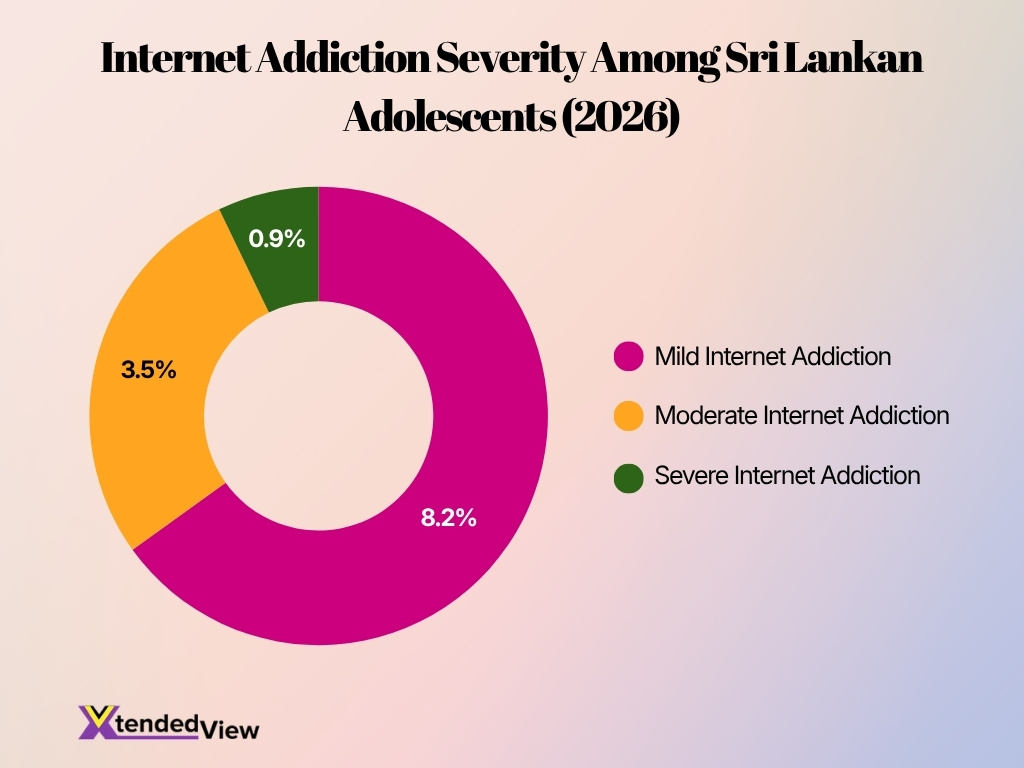
- A 2026 study among Sri Lankan adolescents reported an overall internet addiction prevalence of 12.6% among active internet users.
- The same study found 8.2% experienced mild internet addiction, 3.5% moderate addiction, and 0.9% severe addiction.
- WHO highlighted in 2024 that problematic social media use among adolescents increased substantially compared with the previous international survey cycle.
- A 2026 systematic review on gaming disorder confirmed internet gaming continues to emerge as a major behavioral concern among children and adolescents worldwide.
- Researchers continue shifting toward standardized assessment tools such as the Young Internet Addiction Test (IAT) and Compulsive Internet Use Scale (CIUS) to improve cross-country comparisons.
Internet Addiction Overview
- Internet addiction refers to excessive online behavior that interferes with work, education, relationships, or mental health and increasingly falls under broader behavioral addiction research.
- Current global evidence places pooled internet addiction prevalence at approximately 14.2%, although estimates differ based on diagnostic criteria and population studied.
- Among adolescents and young adults, reported prevalence typically ranges between 7% and 15% across systematic reviews.
- Studies consistently identify social media, online gaming, streaming platforms, and smartphone use as major contributors to problematic internet behavior.
- Young people remain the highest-risk demographic because of greater daily screen exposure and higher engagement with digital entertainment.
- Researchers increasingly classify problematic internet use alongside related conditions such as smartphone addiction and gaming disorder because they frequently overlap.
- Mental health conditions including anxiety, depression, ADHD, impulsivity, and emotional distress frequently appear alongside problematic internet use.
- Experts continue emphasizing early screening in schools, colleges, and primary healthcare settings to reduce long-term behavioral and psychological consequences.
- Despite growing awareness, there is still no universally accepted diagnostic definition, contributing to differences across prevalence studies worldwide.
Internet Addiction by Global Region
- A global meta-analysis indicates that worldwide internet addiction affects approximately 6.0% of the general population.
- The Middle East reports the highest regional prevalence of internet addiction at roughly 10.9%.
- Northern and Western Europe experience the lowest regional prevalence, averaging just 2.6%.
- Recent studies show Asian college students face internet addiction rates ranging from 10.6% to 13.6%.
- Secondary school students in Southeast Asia report potential internet addiction prevalence reaching up to 47.4%.
- The prevalence of social media addiction among youth globally ranges widely from 5% to 31%.
- North America generally reports an average internet addiction prevalence of around 8.0%.
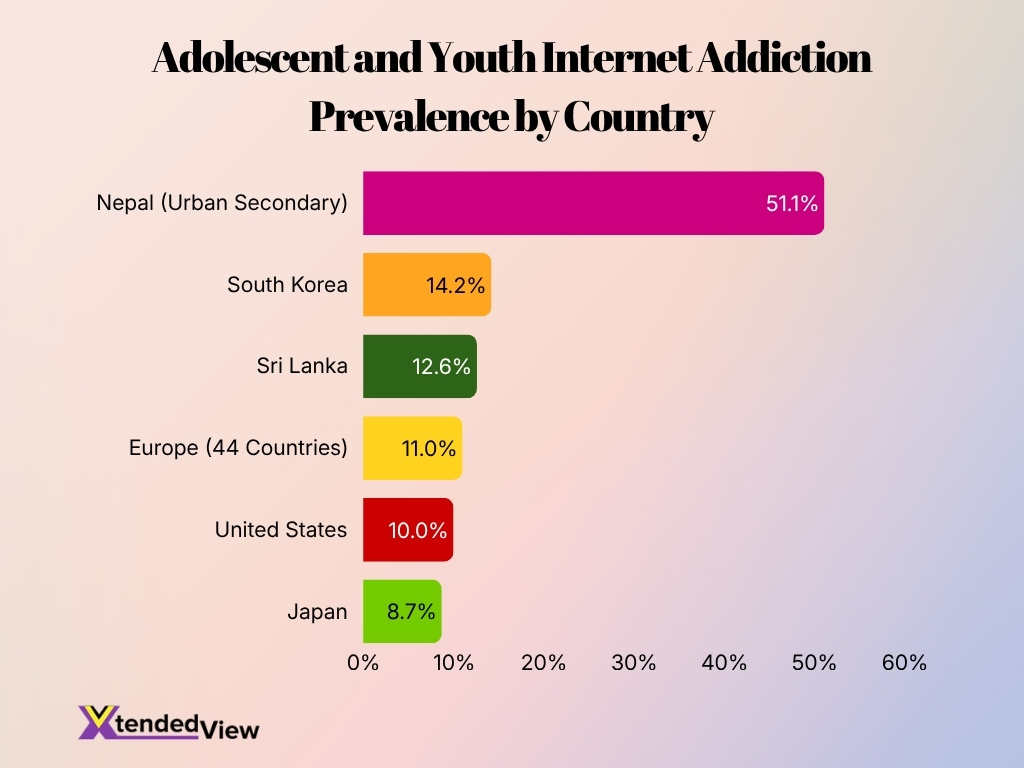
- A recent cross-sectional study in Nepal found a staggering 51.1% prevalence among urban secondary students.
- Problematic internet use among Greek university students ranges from 12% to 34.7%.
Internet Addiction by Country
- South Korea has reported an adolescent internet addiction prevalence of approximately 14.2%.
- Japan reported an estimated adolescent prevalence of around 8.7% in recent national studies.
- Indian student populations show prevalence estimates ranging from 19.85% to over 40%.
- A recent Sri Lankan adolescent study estimated internet addiction prevalence at 12.6% among active users.
- European surveillance across 44 countries found 11% of adolescents displayed problematic behavior.
- The highest global prevalence of internet addiction is found in the Middle East at 10.9%.
- A recent cross-sectional study in Nepal found an overall internet addiction prevalence of 51.10%.
- North and West Europe currently show the lowest percentage of internet addiction prevalence at 2.6%.
- In the United States, an estimated 10% or 33.19 million Americans are addicted to social media.
- Research in Italy indicates that internet addiction rates range from 8% to 12% among young adults.
Internet Addiction by Age Group
- Data indicates that 11% of adolescents demonstrate problematic social media behavior.
- Among teenagers, 15-year-old girls report the highest rate at 44% for constant online contact.
- Approximately 34% of adolescents report engaging in digital gaming on a daily basis.
- Roughly 22% of adolescent gamers spend at least four hours gaming on active days.
- Research reveals that 40% of young adults aged 18 to 22 self-report being addicted to social media.
- Children aged 8 to 12 years currently average 4 hours and 44 minutes of daily screen time.
- Global engagement statistics show that 71% of all active internet users fall into the 15 to 24 age bracket.
- Approximately 37% of teenagers aged 13 to 18 show signs of addiction, with an average of 3 hours of daily use.
Internet Addiction by Gender
- A 2026 study reported that 58.2% of male adolescents use the internet primarily for social networking, compared to 42.8% of females.
- Male adolescents engage in online gaming nearly three times more than females, accounting for 40.7% versus 13.3%.
- The World Health Organization highlights that 44% of 15-year-old girls are more likely than boys to stay in constant online contact with friends.
- A global meta-analysis found that male college students experience an internet addiction rate of 16%, doubling the 8% rate of female students.
- Diagnostic studies estimate the prevalence of internet addiction in Asian demographics at 8.4% for males and 4.5% for females.
- Research on college cohorts shows that 10.3% of boys and 6.8% of girls develop an impairing internet dependence.
- In a comprehensive global survey, the overall prevalence of problematic internet use was found to be 4.4%, with males frequently exhibiting higher usage.
- Longitudinal data reveals the persistence of internet addiction varies globally between 1% and 26%, heavily influenced by gender-specific online behaviors.
Internet Addiction by Device Type
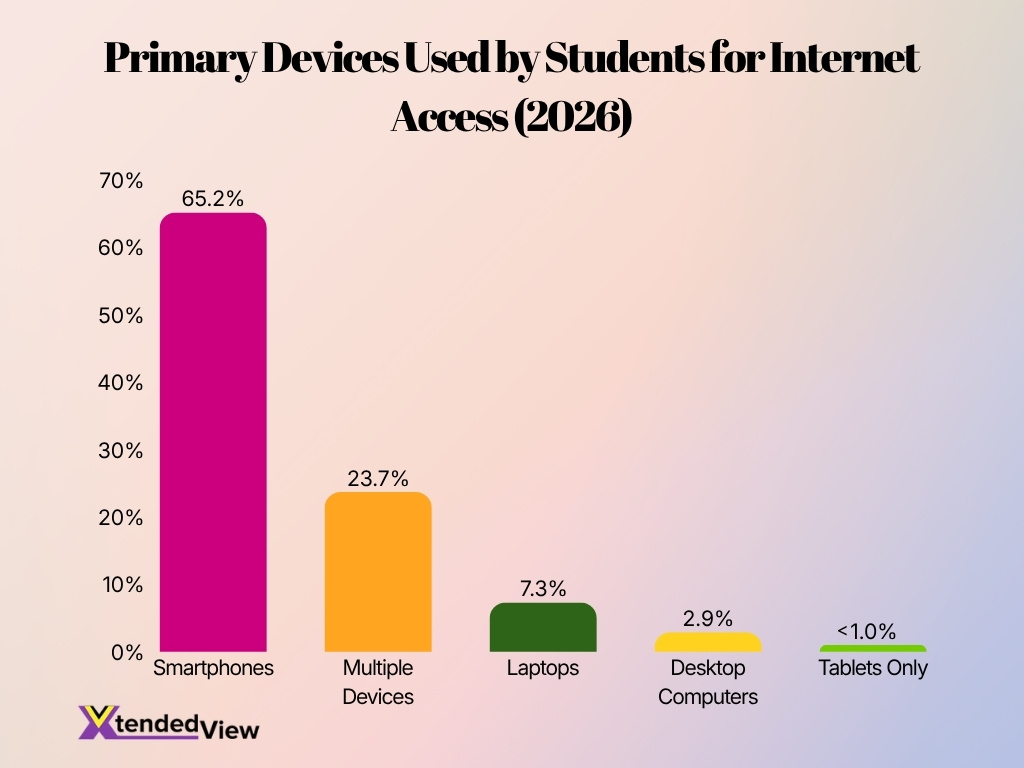
- A 2026 undergraduate study found that 65.2% of students primarily access the internet through smartphones.
- Only 7.3% of surveyed students reported using laptops as their main device for connectivity.
- A mere 2.9% of users relied primarily on desktop computers for their daily internet access.
- About 23.7% of individuals reported using multiple devices regularly to browse the web.
- Exclusive tablet-only internet usage remains extremely uncommon at less than 1%.
- Global data estimates smartphone addiction prevalence at 30.7%, surpassing general internet addiction rates.
- Approximately 16% of adolescents struggle directly with smartphone addiction compared to other electronics.
- Roughly 15% of adults are now classified as smartphone-only internet users with no traditional home connection.
- Research shows that 60% of teens exhibit signs of cell phone addiction due to continuous device accessibility.
Internet Addiction by Internet Usage Time
- Over 50% of teenagers who spend more than 5 hours online daily exhibit signs of internet addiction.
- Young adults averaging over 6 hours on screens face a threefold higher risk of problematic usage.
- Roughly 73% of heavy internet users report withdrawal symptoms after just 24 hours completely offline.
- Children spending upwards of 4 hours on social media show a 60% increase in severe anxiety risk.
- Nearly 33% of surveyed university students log more than 8 hours of recreational screen time daily.
- Approximately 15% of global users online for over 35 hours weekly meet clinical addiction criteria.
- Over 85% of individuals with internet gaming disorder average at least 6 hours of gameplay daily.
- Professionals spending more than 4 hours on non-work browsing daily experience a 40% productivity drop.
Internet Addiction Statistics by Platform Type
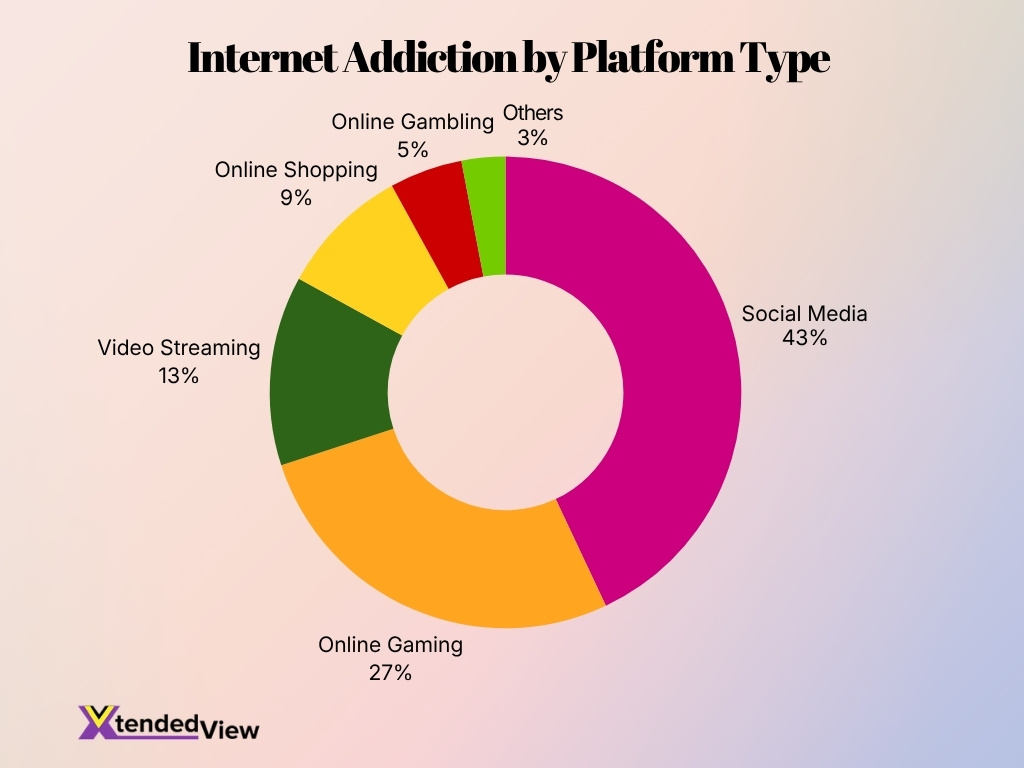
- Social media leads reported problematic internet use at 43%, making it the largest platform category.
- Online gaming ranks second with a 27% share, 16 percentage points below social media.
- Together, social media and online gaming account for 70% of reported problematic internet use.
- Video streaming represents 13%, less than half the share reported for online gaming.
- Online shopping contributes 9%, placing it fourth among the listed digital activities.
- Online gambling accounts for 5%, although gambling-related digital behavior can involve distinct clinical and financial risks.
- Other digital activities make up the smallest share at just 3%.
- The top three categories, social media, gaming, and video streaming, collectively represent 83% of reported cases.
- Overall, the data suggests that entertainment and social platforms dominate problematic internet use compared with commerce-related activities.
Internet Addiction Among Students
- A multinational review estimates the global prevalence of internet addiction among young adults ranges between 7% and 15%.
- Recent systematic reviews suggest that 20% to 40% of college students in India are currently at risk for internet addiction.
- Research indicates that students with moderate to severe internet addiction register 0.7 points lower in their GPA compared to their peers.
- Students who play mobile games online are 1.84 times more likely to develop an internet addiction.
- A cross-sectional study found that approximately 52.7% of medical students exhibited some form of internet addiction.
- University students experiencing depression are 2.38 times more likely to develop internet addiction than those without it.
- Around 68% of addicted students report social networking as their primary reason for excessive internet use.
- Studies show that the prevalence of internet addiction among university students in Saudi Arabia reached 42.5%.
Internet Addiction Among College Students
- A 2025 university study involving 526 students found social media use averaged 3.13 hours per day.
- The same study revealed 68.8% of participants were female and aged 17 to 25 years old.
- Global estimates indicate that internet addiction reaches a prevalence of up to 40.7% among college students.
- An analysis of 50 studies found that 20% to 40% of university students are currently at risk for internet addiction.
- Students with severe internet addiction consistently registered 0.7 points lower in their overall GPA compared to peers.
- Research indicates that college students who play online mobile games are 1.84 times more likely to develop addictive behaviors.
- Over 55% of surveyed university students exhibited moderate to severe levels of internet dependence globally.
- Students currently facing clinical depression were found to be 2.38 times more susceptible to developing internet addiction.
- A recent comprehensive study of 772 participants found an alarming internet addiction prevalence of 53.6% among active students.
- College students over 30 years old demonstrated a significant 65% decreased risk of internet addiction compared to their younger peers.
Internet Addiction Among Teens
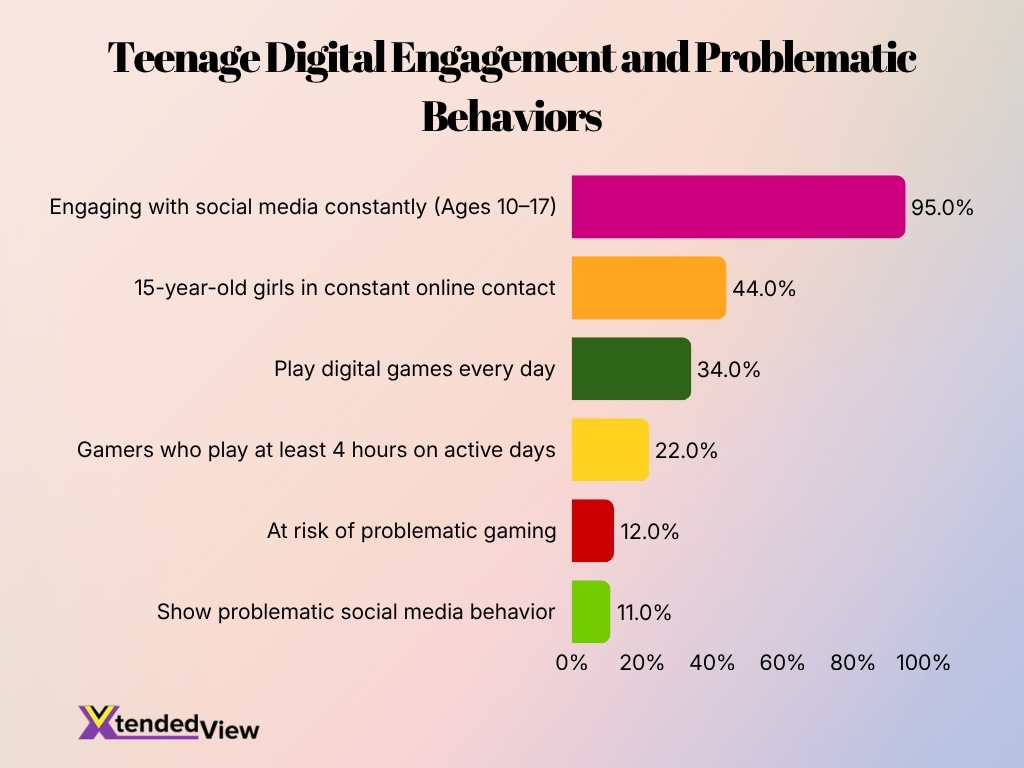
- WHO reported that 11% of adolescents showed problematic social media behavior across 44 regions.
- An international survey found 12% of adolescents were at risk of problematic gaming.
- About 34% of adolescents reported playing digital games every day.
- 22% of adolescent gamers spent at least four hours gaming during gaming days.
- Constant online communication peaked among 15-year-old girls, with 44% reporting continuous contact.
- Teenagers average 8 hours and 39 minutes of daily screen time strictly for entertainment and social media.
- Roughly 95% of children aged 10 to 17 are engaging with social media constantly.
- Global statistics reveal that teen social media addiction rates surged from 7% to 11% over a four-year period.
Internet Addiction and Mental Health
- Approximately 36.7% of the global population experiences some level of internet addiction.
- A study of 4,000 participants found addicted youths are 2 to 3 times more likely to have suicidal thoughts.
- Compulsive internet users are 3.1 times more likely to suffer from severe depression.
- Nearly 64% of adolescents report significant sleep disturbances linked to late-night digital habits.
- Problematic digital multitasking is associated with a 39% increase in co-occurring ADHD diagnoses.
- Around 40% of young adults report experiencing symptoms of problematic social media addiction.
- Over 58% of teenagers experience elevated anxiety when separated from their digital devices.
- Early behavioral interventions and digital detox programs show a 72% success rate in reducing distress.
Internet Addiction and Academic Performance
- A 2026 scoping review of 1,325 research records across 15 studies analyzed internet addiction and academic performance.
- The review found internet addiction prevalence ranging from 6% to 84% depending on student populations and diagnostic methods.
- A 2025 meta-analysis of 124,166 students found smartphone addiction was strongly associated with lower academic achievement.
- Recent research shows that 49.0% of medical undergraduates exhibit internet addiction, with 11.45% classified as severe.
- Students with moderate-to-severe internet addiction are significantly more likely to have poor or failing academic performance (P < 0.001).
- A large-scale analysis of 129,996 college students revealed a pooled smartphone addiction prevalence of 28.49%.
- Surveys indicate that 87.5% of students self-reporting poor academic performance also struggle with significant smartphone addiction.
- Internet addiction severity has a statistically significant negative correlation (r = -0.43) with students’ academic performance scores.
Major Causes and Risk Factors Behind Internet Addiction
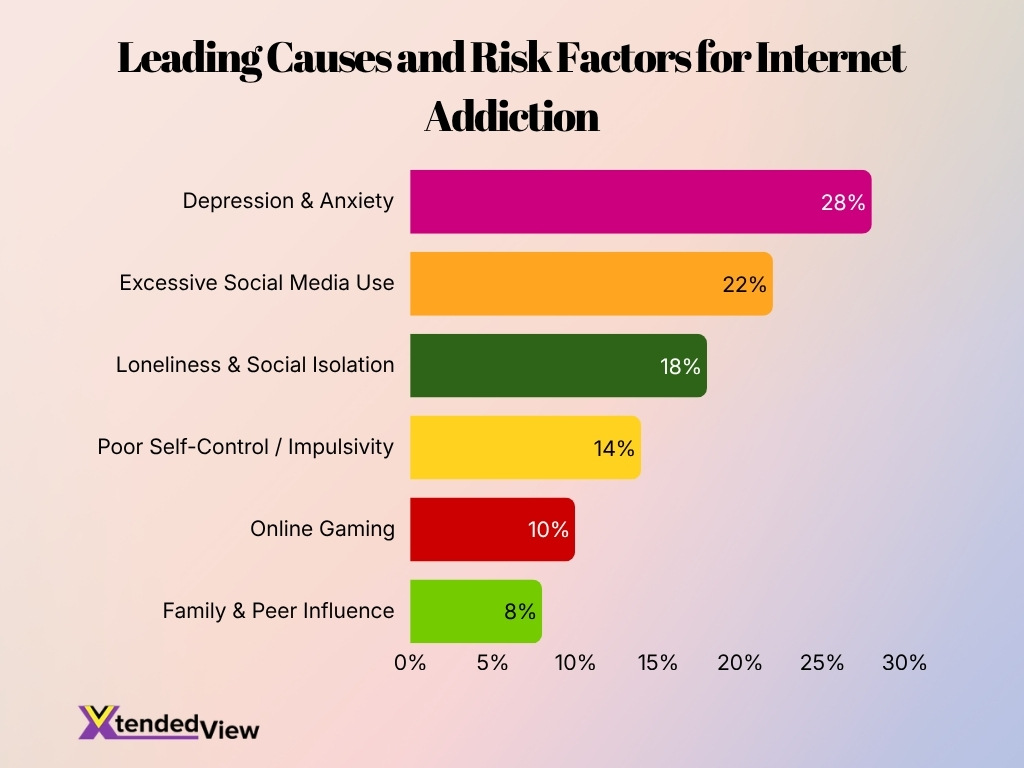
- Depression and anxiety are the largest contributors to internet addiction, representing 28% of the total relative risk and highlighting the strong connection between mental health challenges and excessive internet use.
- Excessive social media use accounts for 22%, making it the second-leading factor and showing how constant scrolling, notifications, and online engagement can encourage compulsive digital behavior.
- Loneliness and social isolation contribute 18%, suggesting that many people may turn to the internet for companionship, emotional support, or relief from limited real-world social interaction.
- Poor self-control and impulsivity represent 14% of the overall risk, as difficulty managing screen time and resisting online urges can lead to unhealthy and repetitive internet habits.
- Online gaming contributes 10%, indicating that competitive gameplay, reward systems, and long gaming sessions can increase the likelihood of problematic internet use.
- Family and peer influence accounts for 8%, showing that household habits, social pressure, and the behavior of friends can also shape an individual’s internet usage patterns.
- Combined, the top three factors, depression and anxiety, social media use, and loneliness, make up 68% of the total relative contribution to internet addiction risk.
Internet Addiction Trends Over Time
- Global internet adoption reached approximately 75% of the world’s population by 2025.
- A 2026 umbrella review estimated pooled global internet addiction prevalence at 14.2%.
- Problematic social media behavior among adolescents increased from 7% in 2018 to 11% recently.
- Smartphone addiction prevalence reached approximately 30.7% across pooled international studies.
- Researchers report increasing overlap between internet, smartphone, gaming, and social media addiction.
- Mental health researchers have shifted from measuring screen time to evaluating compulsive digital behaviors.
- Healthcare organizations are expanding digital well-being programs to address rising treatment demands.
- Schools and universities increasingly incorporate digital wellness education into preventive health initiatives.
- Current research focuses on personalized prevention strategies targeting specific online activities.
Internet Addiction Treatment and Recovery
- A 2026 review analyzed 66,530 participants to evaluate digital addiction treatment methods.
- Treatment interventions demonstrated a strong symptom reduction with a mean difference of -1.70.
- An estimated 33.19 million Americans currently struggle with severe social media addiction.
- Global prevalence rates of internet addiction among school students range from 4.0% to 25.3%.
- Cognitive-behavioral therapy conducted over 10 weeks significantly reduces compulsive use.
- In a recent trial, 94% of patients reported harmful consequences before beginning therapy.
- Specialized adolescent intervention programs yielded a moderate to large effect size of 0.67.
- Demographic surveys indicate that 32% of women and 6% of men self-report internet addiction.
- Intensive residential rehab programs for internet addiction cost between $3,400 and $6,800 monthly.
Frequently Asked Questions (FAQs)
Current umbrella reviews estimate the global prevalence of internet addiction at 14.2% across more than 2 million participants from 64 countries.
The latest international survey found that 11% of adolescents exhibit problematic social media behavior, up from 7% in 2018.
Recent international data shows that 12% of adolescents are at risk of problematic gaming behaviors.
A recent umbrella review estimated the pooled global prevalence of smartphone addiction at 30.7%.
A 2026 meta-analysis found psychological treatments reduced problematic internet use with a pooled effect size of -2.68, indicating a strong treatment benefit.
Conclusion
Internet addiction continues to affect millions of people worldwide, with adolescents, college students, and heavy smartphone users remaining the most vulnerable groups. Recent studies published show that problematic internet use extends beyond excessive screen time and increasingly overlaps with mental health disorders, academic challenges, and reduced quality of life. At the same time, growing evidence supports the effectiveness of structured interventions such as cognitive behavioral therapy, family-based approaches, and digital wellness programs.
As internet access and digital engagement continue to expand, early identification, education, and evidence-based treatment will remain essential for reducing the long-term impact of internet addiction on individuals and society.
