

Social media is used by 75% of REALTORS and remained the top lead-generating technology at 39%, per a July 2025 member survey. The National Association of REALTORS (NAR) ran that survey, and in its May 2024 survey, 52% named social media for the highest number of quality leads. In these real estate social media statistics, social media still tops agents’ lead list, but fewer agents name it. Buyers are on the same platforms. Realtor.com surveyed 1,000 US adults interested in buying or selling their primary residence, or who had done so within the past two years, in August 2025. Nearly…
Supriya Gharat
Amazon Echo and Google Nest remain two of the most established smart-speaker ecosystems. Consumers use them for smart-home control, music, household routines, and AI assistance, while Alexa+ and Gemini for Home are making these devices more conversational. In February 2026, 35% of U.S. adults owned a smart speaker, while Amazon’s Echo represented about two-thirds of the U.S. installed smart-speaker market. Amazon also reports more than 600 million Alexa devices/endpoints, while Google’s wider Home ecosystem reaches hundreds of millions of connected devices. Editor’s Choice Recent Developments Smart Speaker Brand Share by Voice Assistant Amazon Echo vs Google Nest Market Share Amazon…
YouTube influencer marketing now sits at the intersection of creator content, connected TV, social commerce, and performance advertising. The global influencer advertising market is projected to reach $39.03 billion, up from $32.53 billion in 2025, while YouTube gives brands access to creator-led product launches, shopping campaigns, long-form product education, and TV-scale awareness. YouTube Shopping’s gross merchandise volume grew 5X year over year, and more than 500,000 creators had enrolled globally by July 2025. Meanwhile, viewers exposed to an organic YouTube video about a brand were 13X more likely to conduct a branded search and 5X more likely to purchase, according…
Adobe Creative Cloud remains one of the world’s most influential creative software ecosystems, supporting workflows across graphic design, photography, video production, illustration, publishing, and digital content creation. Its product portfolio includes widely used applications such as Photoshop, Illustrator, Premiere Pro, Lightroom, and InDesign, while newer services such as Firefly have expanded the platform into generative AI. The platform has also moved well beyond its original desktop-focused model. Creative Cloud now combines subscription software, cloud storage, web and mobile tools, collaboration features, generative credits and enterprise administration in a broader creative production environment. At the same time, Adobe is facing stronger…
Microsoft OneNote remains a widely used digital note-taking and knowledge-management tool, serving individuals, businesses, educators, and students across desktop, mobile, and web environments. Its 1 billion-plus Android download footprint demonstrates the scale of its distribution, while Microsoft 365 integration makes OneNote a practical workspace for meeting notes, project planning, research, classroom activities, and collaborative knowledge sharing. Recent Copilot developments have expanded the platform beyond traditional note-taking by adding AI-assisted summarization, task extraction, content organization, project planning, and audio overviews. The statistics in this article examine OneNote’s users, downloads, adoption, market position, business and education usage, cross-platform capabilities, AI features, and…
Tesla’s AI strategy has evolved from highway-focused driver assistance into a broader autonomy ecosystem covering city driving, automated lane changes, parking, ride-hailing, and large-scale neural-network training. Autopilot and FSD (Supervised) operate across millions of vehicles, while accumulated FSD mileage now runs into the billions. This growing fleet gives Tesla a substantial stream of real-world driving data to train, validate, and update its autonomous-driving software. The company is also extending its AI program beyond privately owned vehicles. Commercial Robotaxi operations, Cybercab production, expanding AI-compute infrastructure and new international FSD approvals show how autonomy is becoming a larger part of Tesla’s business…
Xiaomi remains one of the world’s largest smartphone manufacturers, with a broad presence across China, India, Europe, Latin America, and Southeast Asia. However, its smartphone business is navigating a more difficult operating environment as rising memory and component costs, weaker entry-level demand, and intense competition affect shipment volumes. At the same time, Xiaomi is moving further into premium price segments, increasing average selling prices and expanding higher-end product lines to improve its revenue mix. These trends matter across both consumer and industry markets. Retailers and distributors can use Xiaomi’s regional shipment patterns to understand where demand remains strongest, while investors…
AI PCs are becoming a major part of the global computer market as manufacturers add dedicated neural processing units and other AI-focused hardware to laptops, desktops, and workstations. These systems can run more AI tasks directly on the device, supporting applications such as document summarization, meeting transcription, image editing, security monitoring, and software development without relying entirely on cloud processing. For enterprises, AI PCs can support faster workflows, stronger data control and new productivity tools, while consumers are gaining access to increasingly capable AI features in mainstream notebooks. The statistics in this article examine how AI PC shipments, adoption, market…
Airtable has evolved from a flexible database and collaboration tool into a broader platform for building business applications, automating workflows, organizing operational data, and supporting AI-assisted work. Its use now extends across marketing, product development, content production, customer research, project management, and other business functions. Real-world deployments show teams using Airtable to analyze large volumes of customer feedback, coordinate global campaigns, manage product launches, and automate repetitive operational tasks. With 10 million active users and more than 500,000 organizations reported on the platform, Airtable has established a sizable footprint across businesses of different sizes. The following Airtable statistics examine its…
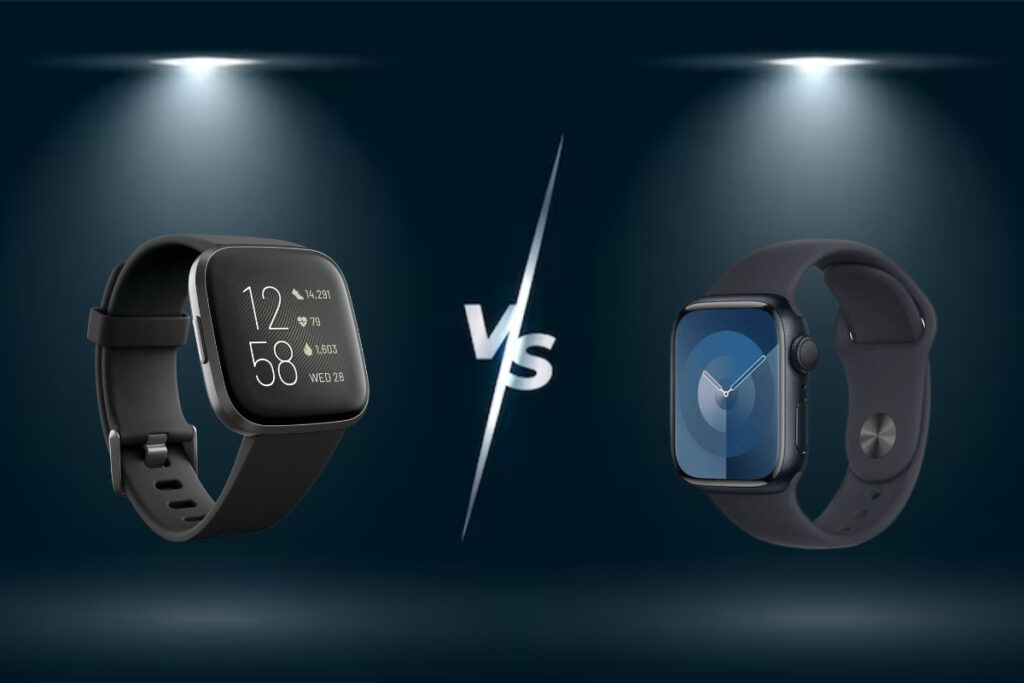
Fitbit and Apple Watch remain two of the most recognizable names in wearable technology, but their product strategies have become increasingly different. Apple Watch focuses on a full smartwatch experience that combines communication, apps, workouts, health monitoring, and safety features, while Fitbit places greater emphasis on fitness tracking, sleep, recovery, battery life, and continuous health insights. These differences matter as more consumers use wearables not only for exercise, but also for monitoring heart-rate trends, sleep quality, daily activity, and long-term wellness patterns. The statistics in this article compare the two platforms across market share, sales, pricing, subscriptions, battery life, health…
Wireless adapters remain a critical link between computers, connected devices and modern Wi-Fi networks. In homes, USB adapters help extend the useful life of desktops and older laptops, while businesses rely on PCIe, M.2 and embedded wireless connectivity to support hybrid work, high-density offices, industrial systems and edge devices. The shift toward Wi-Fi 6E and Wi-Fi 7 is accelerating these upgrade cycles by adding access to 6 GHz spectrum, wider channels, lower latency and faster multi-gigabit performance. These improvements matter for real-world applications such as cloud gaming, AI workloads, video collaboration and large-file transfers. As more routers, access points and…
4D printing builds on 3D printing by creating objects that can change shape, properties, or function after production when they encounter triggers such as heat, moisture, light, magnetic fields, pressure, or changes in pH. This added time-based behavior gives manufacturers a way to design components that can adapt after printing instead of remaining fixed in one form. In healthcare, researchers are testing responsive implants, tissue-engineering scaffolds, drug-delivery systems, and other structures that can react to conditions inside the body. Aerospace and defense teams are also exploring shape-changing materials for lightweight components, self-deploying structures, and systems that could reduce reliance on…
Artificial intelligence is becoming a core part of modern transportation, influencing how vehicles operate, freight moves, transit agencies plan service, and cities manage traffic. Transportation companies are using AI for route optimization, predictive maintenance, autonomous driving, traffic control, driver assistance, and real-time fleet management. These applications can reduce delays, improve fuel efficiency, strengthen safety, and help operators make faster decisions with large volumes of transportation data. Autonomous trucks and robotaxis show how quickly AI is moving into commercial service, while public transit agencies and logistics providers are using AI to improve scheduling, maintenance, and asset utilization. The statistics in this…
Smart doors have evolved from basic connected locks into integrated entry systems that combine video, mobile credentials, sensors, AI detection and home automation. Homeowners now use smart locks and video doorbells to monitor deliveries, verify visitors and control access remotely, while apartments, hotels, offices and other commercial properties increasingly rely on digital credentials to simplify access management. Growth in smart locks, video doorbells and interoperable standards shows that connected entry is becoming a core part of the wider smart-home and building-security market. At the same time, buyers are paying closer attention to privacy, subscription costs, installation options and compatibility with…
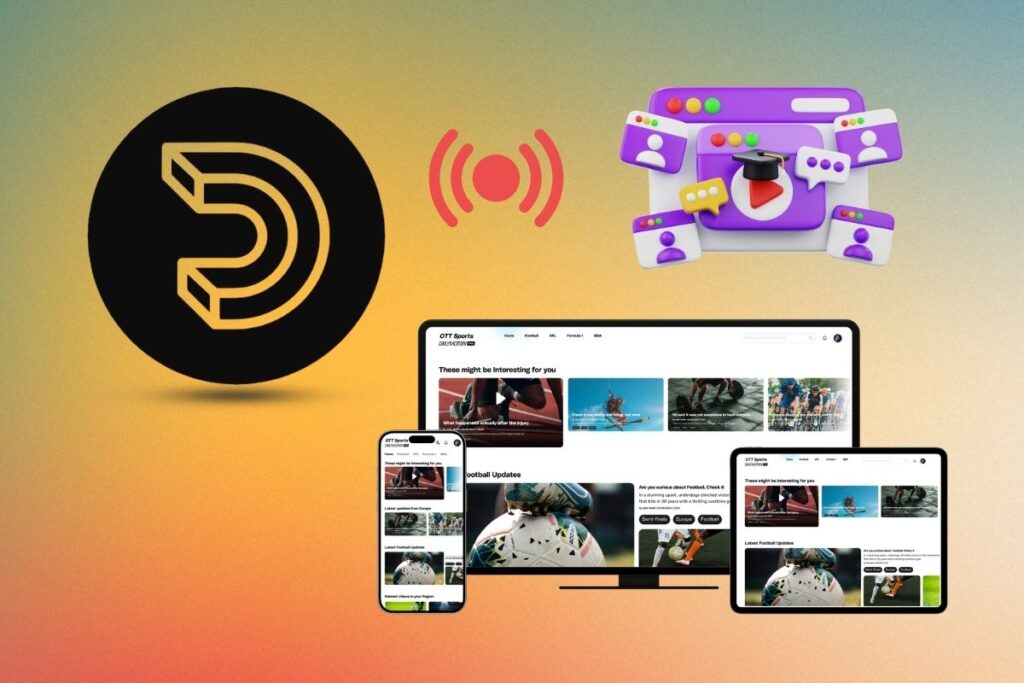
Dailymotion remains one of the most established video platforms outside the largest US-owned social networks. Founded in Paris in 2005, it has expanded from a video-sharing website into a broader video technology business covering consumer viewing, creator publishing, professional hosting, advertising, and monetization. Dailymotion reports more than 400 million monthly users, about 4 billion video views per month, availability across 191 countries, and support for 35 languages. Its growing creator tools, publisher network, and advertising technology show how the platform continues to serve both consumers and media companies. This article explores the latest Dailymotion statistics across traffic, demographics, creators, revenue…
Facebook remains one of the most important digital channels for businesses, combining broad consumer reach with advertising, video, messaging, local commerce, and customer-service tools. Companies use Facebook Pages to maintain a public presence, Reels and Feed content to reach new audiences, Messenger to handle inquiries and lead conversations, and paid campaigns to generate traffic, sales, and qualified leads. Retailers also use Marketplace and video content to support product discovery, while local service businesses rely on targeted advertising and messaging to connect with nearby customers. At the same time, Facebook’s business value is shifting away from follower counts alone. AI-powered recommendations,…
Webex remains a major enterprise collaboration platform, combining meetings, cloud calling, messaging, contact centers, devices and AI-assisted workflows in one ecosystem. Organizations use it for everyday team collaboration, large-scale virtual events, enterprise phone migrations and customer-service operations. In practical terms, a multinational company can standardize cloud calling across dozens of markets, while a contact center can use AI agents to handle routine inquiries before they reach human staff. The platform also sits within a growing collaboration market. Webex Calling has surpassed 18 million users, while the broader Collaboration category generated $4.30 billion in fiscal 2026. At the same time, Webex…
AMD enters the year with record revenue, rapidly expanding data center sales, and a broader role in AI infrastructure. Its chips now support real-world workloads ranging from hyperscale AI model training and cloud computing to enterprise PCs, gaming systems and embedded industrial applications. In particular, large AI deployments and rising EPYC server adoption show how AMD has moved beyond the traditional PC processor market. Explore the statistics below for a clearer view of AMD’s latest financial momentum. AMD generated $34.64 billion in revenue during 2025, up 34% from $25.79 billion in 2024. In Q1 2026, AMD revenue reached $10.25 billion,…