


Microsoft Copilot has evolved from an experimental generative AI assistant into a major productivity and automation layer across Microsoft 365, enterprise software, and business workflows. Organizations now use Copilot to summarize meetings, draft and revise documents, analyze spreadsheets, prepare presentations, search internal information, and automate multistep tasks through AI agents. Adoption has also expanded beyond private companies into banking, health care, professional services, manufacturing and government, where large deployments now involve tens or even hundreds of thousands of employees.
The data shows that Microsoft is gaining traction not only through paid Copilot licenses but also through broader Copilot Chat access, custom agents and deeper integration across Teams, Outlook, Word, Excel and PowerPoint. Paid Microsoft 365 Copilot seats have increased rapidly, enterprise deployments have grown larger, and usage intensity has risen among existing customers. At the same time, productivity studies continue to measure time savings and workflow improvements, while newer agent-based capabilities are shifting Copilot from simple assistance toward more autonomous task execution. The following Microsoft Copilot statistics examine its users, adoption, market position, pricing, productivity impact, industry usage, platform distribution, and future growth.
Editor’s Choice
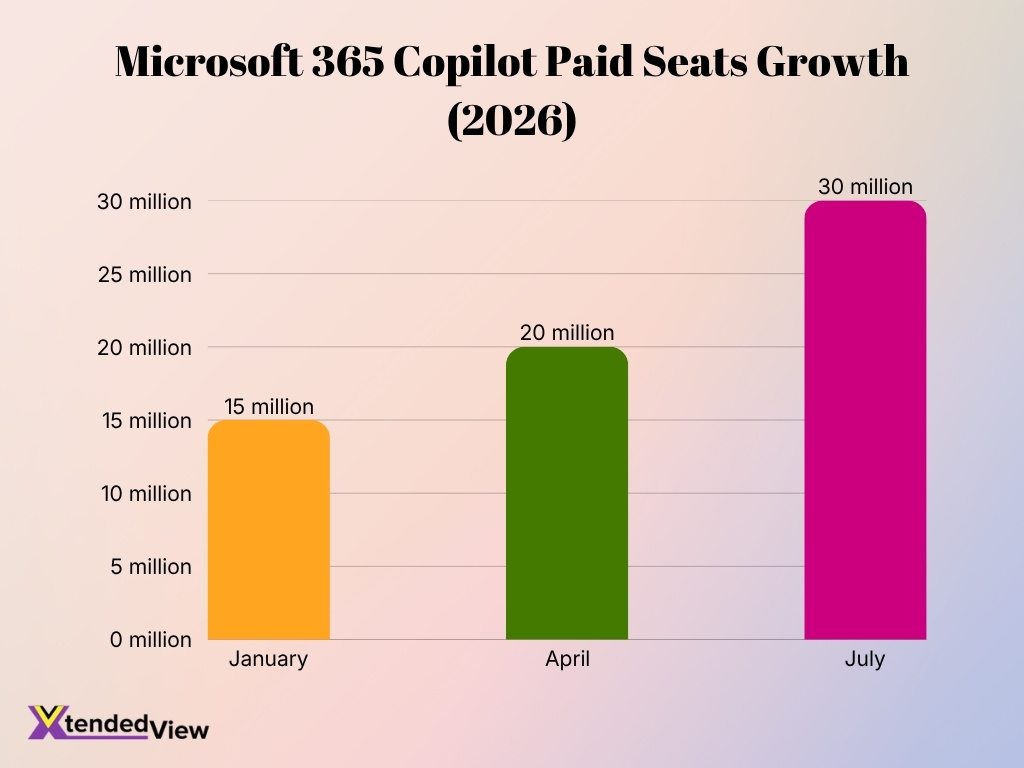
- 30 million+: Microsoft 365 Copilot surpassed 30 million paid seats in July 2026, compared with 15 million in January.
- 100 million+: The broader Copilot family exceeded 100 million monthly active commercial and consumer users in fiscal 2025.
- 90%+: More than nine in 10 Fortune 500 companies were using Microsoft 365 Copilot by late 2025.
- 250%: Microsoft 365 Copilot seat additions increased 250% year over year during the fiscal 2026 third quarter, marking its fastest growth since launch at that point.
- 230,000+: More than 230,000 organizations were using Copilot Studio to extend Microsoft 365 Copilot or develop their own AI agents.
- 740,000+: Accenture had more than 740,000 Microsoft 365 Copilot seats by the fiscal 2026 third quarter, making it the largest disclosed deployment at that time.
- 4x: The number of customers with more than 50,000 Microsoft 365 Copilot seats quadrupled year over year by the fiscal 2026 third quarter.
Recent Developments
- In July 2026, Microsoft 365 Copilot passed 30 million paid seats, with net paid-seat additions more than doubling from the previous quarter.
- In April 2026, paid Microsoft 365 Copilot seats had risen above 20 million, compared with 15 million three months earlier.
- That January-to-April increase represented roughly 33% sequential growth in disclosed paid seats, calculated from the reported 15 million and 20 million figures.
- Microsoft 365 Copilot seat additions grew 250% year over year in the fiscal 2026 third quarter, accelerating from growth of more than 160% in the preceding quarter.
- By July 2026, the number of new paid seats added during the quarter had more than doubled quarter over quarter.
- Copilot’s model strategy broadened in 2026 as Microsoft introduced Anthropic Claude models alongside OpenAI-based options for selected Microsoft 365 Copilot experiences.
- Copilot Cowork entered early-access testing in March 2026, extending Copilot beyond conversational assistance toward longer, multistep work execution.
- Microsoft also reported nearly 40 million agents registered in Agent 365 just two months after that platform’s introduction, showing that the Copilot ecosystem increasingly includes autonomous and semi-autonomous agents rather than chat alone.
- In August 2025, GPT-5 became available in Microsoft 365 Copilot for licensed users, while standard access began rolling out to users without a paid Copilot license.
Microsoft Copilot User Statistics
- Microsoft reported more than 100 million monthly active users across its commercial and consumer Copilot products during fiscal 2025.
- Microsoft 365 Copilot alone had more than 30 million paid seats by July 2026. This figure measures paid workplace licenses rather than the broader Copilot-family audience.
- Paid Microsoft 365 Copilot seats stood at 15 million in January 2026, providing a clear baseline for the rapid expansion that followed.
- By April 2026, paid seats had passed 20 million, adding more than 5 million seats within one quarter.
- Microsoft 365 had more than 450 million commercial paid seats by early 2026. Against that installed base, the 15 million Copilot seats disclosed in January represented about 3.3% of commercial Microsoft 365 seats at that point.
- Copilot Chat expands the potential user pool beyond paid Microsoft 365 Copilot seats because web-grounded Copilot Chat comes with eligible Microsoft 365 subscriptions at no additional Copilot-license charge.
- More than 230,000 organizations were using Copilot Studio by fiscal 2025, indicating that a large share of Copilot usage also extends through custom agents and business automations.
- The U.S. House of Representatives announced a Copilot deployment for more than 6,000 staff members, showing that the user base now includes large public-sector workforces as well as commercial customers.
Microsoft Copilot Adoption Rate Statistics
- Nearly 70% of Fortune 500 companies were using Microsoft 365 Copilot by November 2024.
- By October 2025, adoption among Fortune 500 companies had increased to more than 90%.
- This shift represents an increase of more than 20 percentage points in reported Fortune 500 adoption in roughly one year.
- Microsoft reported that customers continued adopting Microsoft 365 Copilot faster than any previous new Microsoft 365 suite during fiscal 2026.
- Paid seats rose from 15 million to more than 20 million between January and April 2026, an increase of at least one-third in a single quarter.
- Paid seats then climbed from more than 20 million to more than 30 million by July 2026, while quarterly net seat additions more than doubled.
- The number of enterprises holding more than 50,000 Copilot seats quadrupled year over year by the fiscal 2026 third quarter, signaling a shift from pilots toward large deployments.
- In early 2026, Microsoft reported that paid Copilot seat additions were already up more than 160% year over year; the growth rate accelerated to 250% in the following quarter.
- Copilot Studio reached more than 230,000 organizational users by fiscal 2025, creating an additional adoption channel through custom AI agents and automated processes.
Microsoft Copilot Active Users Statistics
- The broadest disclosed engagement figure reached more than 100 million monthly active users across consumer and commercial Copilot products in fiscal 2025.
- That 100 million-plus figure covers the Copilot family, not Microsoft 365 Copilot alone, so it includes a wider population than paid workplace seats.
- By January 2026, Microsoft 365 Copilot had 15 million paid seats, while enterprise Copilot Chat usage was described as “multiples” of the licensed-seat population.
- The distinction matters because eligible organizations can access web-grounded Copilot Chat without purchasing the full Microsoft 365 Copilot license for every employee.
- Microsoft 365 Copilot expanded to more than 30 million paid seats by July 2026, creating a much larger potential base of regularly active workplace users than at the start of the year.
- The 2026 Copilot Dashboard categorizes employee usage into frequency bands such as 1-5, 6-14, and 15-plus actions per selected period, reflecting a shift in enterprise measurement from simple license assignment toward engagement intensity.
- The dashboard also includes a returning-users metric that compares employees who consistently use Copilot with the previous month, allowing organizations to distinguish recurring adoption from one-time experimentation.
- Active usage now spans several Microsoft 365 surfaces, including Word, Excel, PowerPoint, Outlook, and Teams, meaning a user’s Copilot activity can occur across multiple work applications rather than in a standalone chatbot alone.
Microsoft Copilot Usage by Industry Statistics
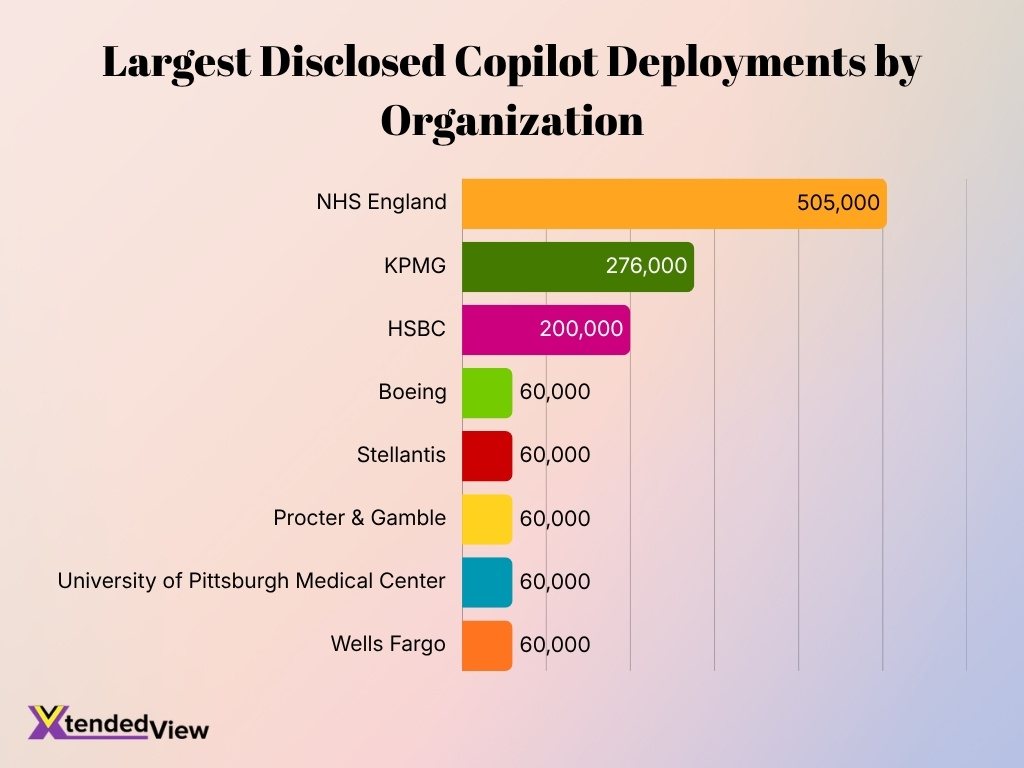
- NHS England began rolling out Microsoft 365 Copilot to 505,000 clinicians and staff in 2026, creating one of the largest disclosed workplace AI deployments. A prior trial reported average savings of 43 minutes per employee per day.
- HSBC committed to 200,000 Copilot seats, highlighting the growing scale of generative AI deployment in global banking.
- KPMG expanded Copilot across a global workforce of more than 276,000 professionals, demonstrating large-scale adoption in accounting and professional services.
- Boeing purchased at least 60,000 seats, providing a sizable example of Copilot adoption in aerospace and industrial operations.
- Stellantis also purchased 60,000 or more seats, extending large-scale Copilot adoption into automotive manufacturing.
- Procter & Gamble joined the group of organizations purchasing at least 60,000 Copilot seats, showing adoption at scale in consumer products.
- University of Pittsburgh Medical Center purchased 60,000 or more seats, adding another major health care deployment alongside the NHS rollout.
- Wells Fargo purchased at least 60,000 seats, adding another large U.S. financial-services implementation to Copilot’s enterprise base.
- In specialized health care AI, Dragon Copilot reached more than 4,000 providers at Mass General Brigham after research linked ambient AI use with a 21% reduction in burnout.
- Across health care workloads more broadly, AI systems in the Copilot ecosystem were on pace to automate more than 100 million patient encounters during 2026, including 28 million in the fiscal fourth quarter alone.
Microsoft Copilot Enterprise Usage Statistics
- More than 90% of Fortune 500 companies were using Microsoft 365 Copilot by October 2025, compared with nearly 70% one year earlier.
- Accenture had more than 740,000 Microsoft 365 Copilot seats by the fiscal 2026 third quarter, the largest disclosed Copilot deployment at that time.
- The number of customers with deployments exceeding 50,000 seats increased fourfold year over year by that same quarter.
- Lloyds Banking Group deployed 30,000 Copilot seats and reported average time savings of 46 minutes per employee per day.
- Accenture, Bristol Myers Squibb, EY Global and the U.K. tax authority each purchased more than 15,000 seats in a single quarter during fiscal 2026.
- Vodafone previously announced a rollout to 68,000 employees after a trial found average savings of three hours per person each week.
- UBS announced plans for 50,000 seats, which at the time represented the largest disclosed Copilot financial-services deployment.
- More than 230,000 organizations were using Copilot Studio by fiscal 2025, demonstrating enterprise demand not only for standard Copilot features but also for custom agents and automations.
- Enterprise adoption continued expanding into government in 2026, with the U.S. House of Representatives preparing Copilot access for more than 6,000 staff members for secure legislative work.
- By January 2026, Microsoft reported “multiples more” enterprise Copilot Chat users than its 15 million paid Microsoft 365 Copilot seats, suggesting that free or included enterprise chat access had already extended Copilot’s organizational reach beyond fully licensed employees.
Microsoft Copilot License Utilization Statistics
- Microsoft 365 Copilot surpassed 30 million paid seats by July 2026. Net paid-seat additions more than doubled from the previous quarter, showing continued conversion of enterprise deployments into paid licenses.
- The number of customers holding more than 50,000 Microsoft 365 Copilot seats increased more than 7x year over year by the end of fiscal 2026.
- Enterprise customers deploying Copilot to the majority of their information workers increased nearly 75% quarter over quarter in the same period.
- Organizations can now reach “high usage,” defined as monthly active usage above 80% of deployed users, within days. A year earlier, reaching that level typically took months.
- Average Copilot conversations per user nearly doubled year over year by July 2026, indicating that license holders were using the product more intensively rather than merely activating it.
- Microsoft now treats an AI adoption score of 100 as a scenario in which every licensed user engages with Copilot on an average of at least three days per week, equivalent to 12 days during a 28-day period.
- Hundreds of enterprise customers purchased millions of E7 seats within two months of the integrated suite’s launch, combining Copilot with security, identity, and agent-management products.
- EY deployed the integrated E7 offering to 400,000 employees in 2026, representing the largest disclosed E7 deployment at that point.
- Microsoft added usage-based billing alongside per-seat licensing in 2026. Within weeks, thousands of customers were already paying for and actively using the consumption-based Cowork experience.
Microsoft Copilot Demographics Statistics
- A large government Microsoft 365 Copilot experiment collected survey responses from 7,115 users, giving researchers a sizable sample for examining workplace adoption patterns.
- Researchers also analyzed anonymized usage data from 14,500 Copilot users in that experiment.
- Participants represented 14 professional groups, with the respondent sample designed to distribute participants evenly across age and gender.
- A separate 2026 workplace AI survey covered 20,000 AI-using knowledge workers across 10 major markets, including the United States.
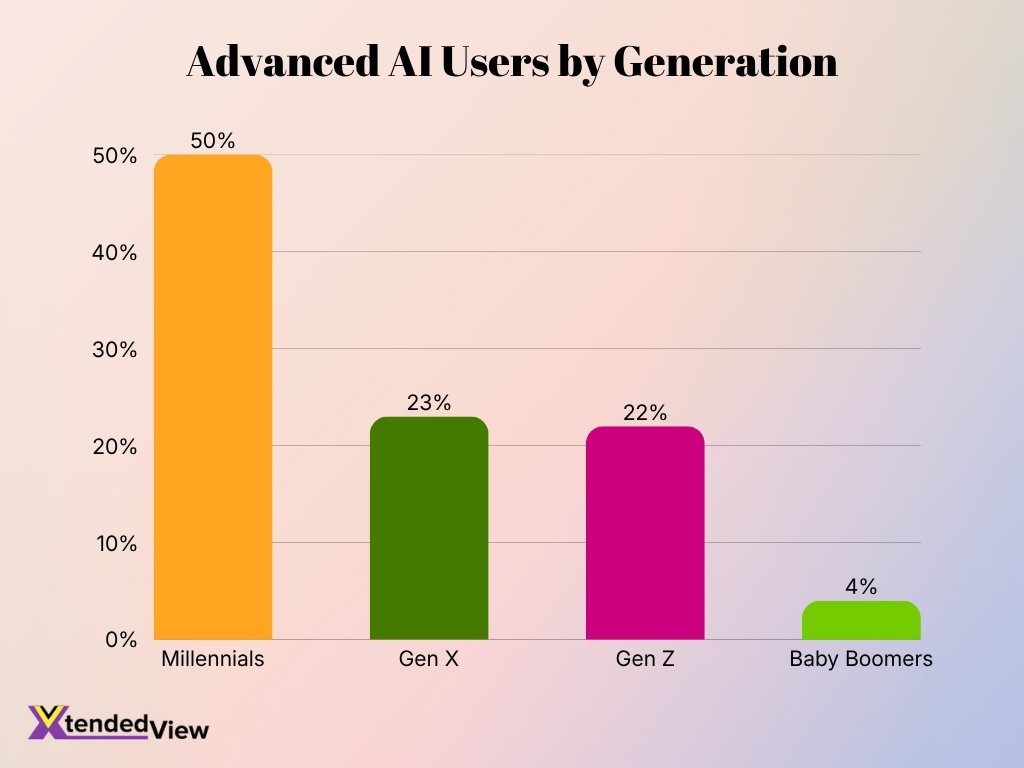
- Among the survey’s most advanced AI users, 50% were millennials, making them the largest generational group.
- Gen X accounted for 23% of these advanced AI users, while Gen Z represented 22% and baby boomers represented 4%.
- Advanced AI users were split between 56% employees and 44% business decision-makers, showing that sophisticated usage extends well beyond executive roles.
- 35% of advanced users worked in technology, while 12% worked in financial services, making these two of the most prominent industries in the group.
- From a job-function perspective, 36% worked in IT, while 11% held finance or accounting roles.
- More than half (53%) of advanced AI users worked for organizations with at least 500 employees, supporting the view that sophisticated AI use remains concentrated in medium and large organizations.
Microsoft Copilot Platform Distribution Statistics
- Teams recorded the strongest application adoption in a large workplace deployment, reaching a maximum Copilot adoption rate of 71%.
- 34% of employees used Copilot in Teams every day, making it the highest-frequency application measured in the study.
- Outlook followed closely, with 33% of respondents using Copilot in the email application daily.
- Word recorded daily Copilot usage among 25% of respondents, while another 43% reported weekly use, highlighting its importance for document creation.
- Excel’s highest application-level adoption reached 23%, considerably below communication-focused applications.
- PowerPoint peaked at 24% adoption, suggesting that presentation-generation workflows remained less habitual than email and meeting assistance.
- More than 55% of respondents did not use Copilot at all within OneNote or Business Chat during the trial, highlighting significant differences between application entry points.
- In 13 of 15 professional groups examined, more than one-quarter of employees used Copilot in Teams every day.
- In 11 of 15 professional groups, at least 40% of respondents used Copilot in Word weekly, making document drafting one of the most consistent cross-role use cases.
- Since July 2025, web-grounded Copilot Chat activity inside both Teams and Outlook has counted toward those applications’ usage totals, broadening how administrators measure platform-level engagement.
Microsoft Copilot Market Share Statistics
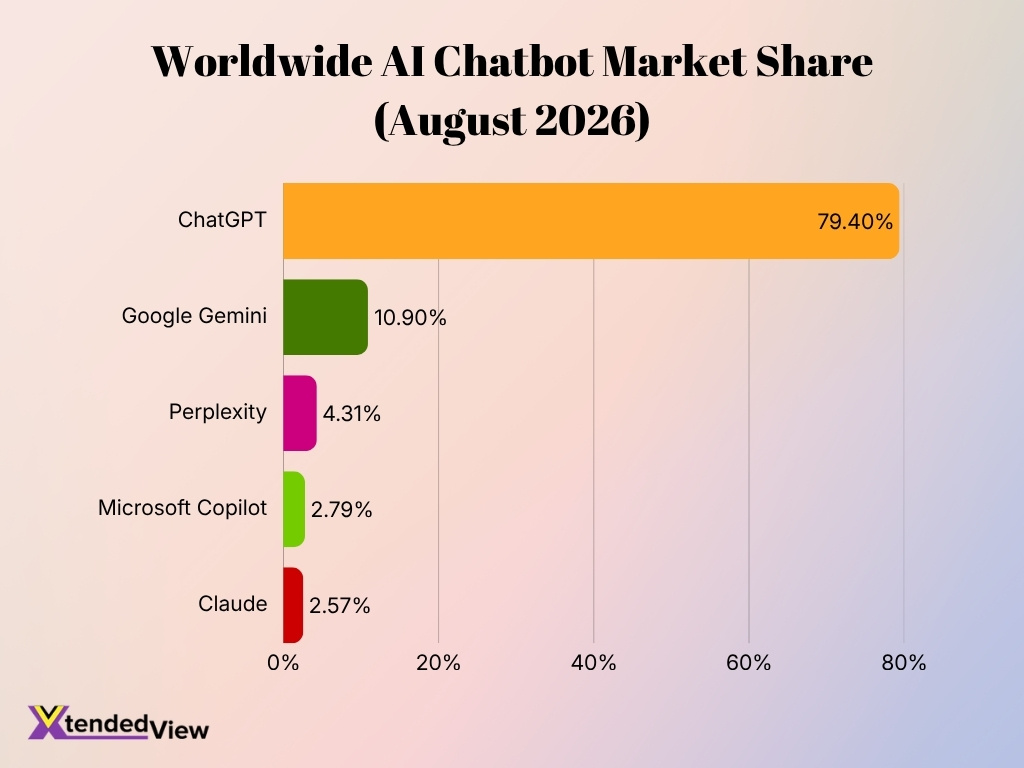
- Microsoft Copilot accounted for 2.79% of worldwide AI chatbot usage share in August 2026.
- That result placed Copilot fourth worldwide among the six major AI chatbots measured during the month.
- In the United States, Copilot’s AI chatbot share reached 7.95%, substantially higher than its global figure.
- Copilot ranked third in the U.S. market, ahead of Claude and Perplexity during August 2026.
- Its U.S. share was roughly 2.85 times its worldwide share, suggesting that Copilot’s relative position remains particularly strong in Microsoft’s home market.
- On desktop devices worldwide, Copilot reached a 3.02% share of measured AI chatbot activity.
- On mobile devices worldwide, Copilot held just 0.46%, showing that its relative strength remains concentrated in desktop and workplace-oriented environments.
- Copilot’s worldwide desktop share was about 6.6 times its mobile share in August 2026, reinforcing the product’s stronger position in computer-based workflows.
- Despite its modest open-web chatbot share, Microsoft reported that more than 90% of Fortune 500 companies were using Microsoft 365 Copilot by fiscal 2026, illustrating the difference between consumer chatbot traffic and enterprise penetration.
Microsoft Copilot vs Competitors Statistics
- ChatGPT controlled 79.4% of worldwide AI chatbot activity in August 2026, making it the clear traffic leader among measured assistants.
- Google Gemini held 10.9% worldwide, giving it the second-largest measured share.
- Perplexity accounted for 4.31% globally, placing it ahead of Copilot in standalone chatbot activity.
- Claude captured 2.57% worldwide, leaving Copilot only about 0.22 percentage points ahead of it during August 2026.
- In the U.S., ChatGPT’s share exceeded Copilot’s by about 64.2 percentage points, reflecting the large difference in direct chatbot traffic even though both products have substantial workplace use.
- Google Gemini’s U.S. share exceeded Copilot’s by approximately 3.7 percentage points, a much narrower difference than the gap between Copilot and ChatGPT.
- On mobile devices worldwide, ChatGPT generated about 184 times Copilot’s measured share in August 2026, emphasizing Copilot’s weaker position in mobile-first consumer AI usage.
- On desktop, the gap narrowed: Copilot generated roughly one unit of measured share for every 26 units generated by ChatGPT, reflecting its comparatively stronger desktop footprint.
- Microsoft increasingly competes through model choice rather than a single underlying AI model. By July 2026, its enterprise AI catalog contained more than 11,000 models from multiple providers, and the number of customers building with models from multiple providers had increased fivefold since the start of the year.
- This multi-model approach extends into Copilot-era products: millions of developers had used MAI-Code-1-Flash by mid-2026, while customers retained access to frontier models from OpenAI and Anthropic. The internally developed model delivered 10% lower median token usage while maintaining higher code acceptance rates in reported deployments.
Microsoft Copilot ROI and Productivity Statistics
- An enterprise economic-impact model estimated a 116% three-year ROI from Microsoft 365 Copilot, with a net present value of $19.7 million for the modeled organization.
- A separate small and midsize business model projected a three-year ROI ranging from 132% to 353%, indicating greater potential returns for some smaller deployments.
- In a large government trial, employees reported average savings of 26 minutes per working day when using Microsoft 365 Copilot.
- More than one-third of users in that experiment said they saved over 30 minutes per day.
- More than 70% of participants said Copilot reduced time spent searching for information and completing routine work while freeing additional time for strategic activities.
- An experimental study involving 147 knowledge workers found that Copilot users completed a set of search, summarization and writing tasks 29% faster, averaging 29 minutes and 42 seconds versus 42 minutes and 6 seconds without Copilot.
- An Australian public-sector evaluation found that Copilot generated estimated savings of around one hour per day for specific high-value activities such as summarization, searching for information and preparing first drafts.
- About 65% of managers in that evaluation said Copilot had a positive effect on team quality and efficiency, particularly for briefing materials and written outputs.
- A large U.K. deployment reported average savings of 43 minutes per employee per day during an earlier Copilot trial, providing another real-world benchmark for high-volume health care administration.
- These results require context: the 26-minute government estimate relied on self-reported time savings, so organizations should compare employee perceptions with actual workflow, output, and business-performance data when measuring ROI.
Microsoft Copilot Revenue and Pricing Statistics
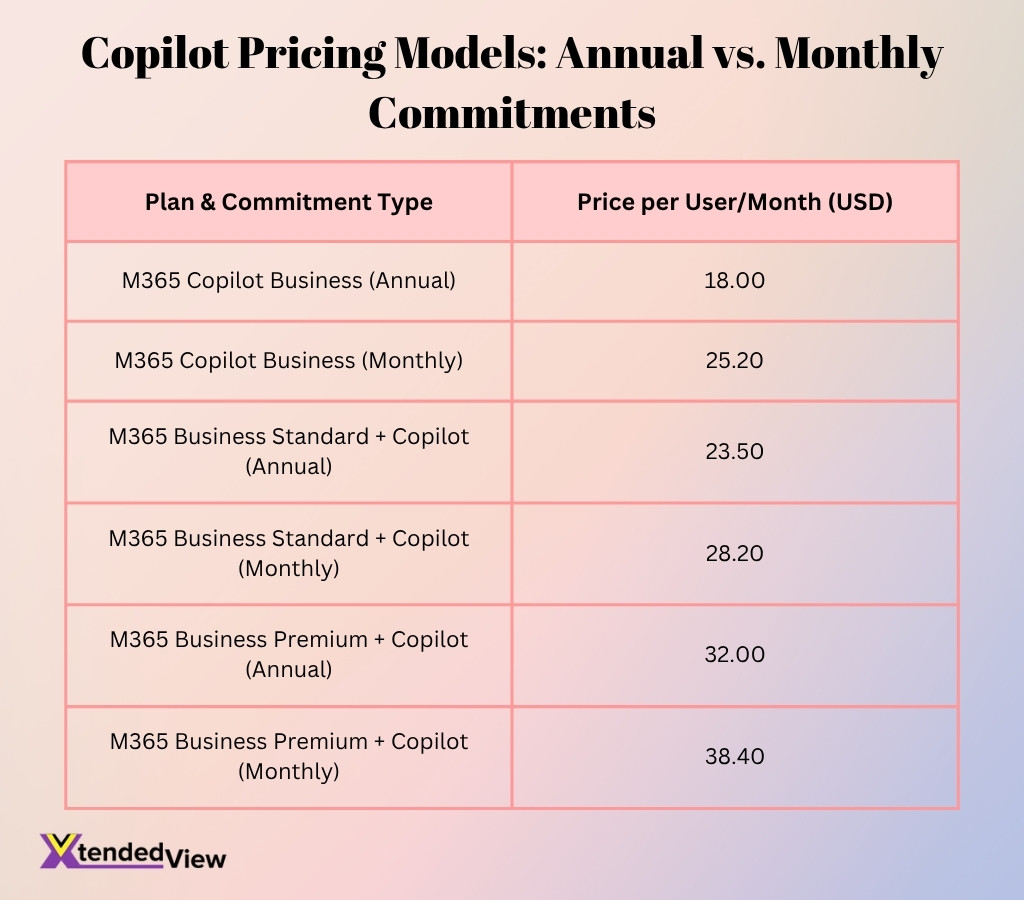
- Microsoft 365 Copilot Business currently starts at $18 per user per month when paid annually, down from a listed starting price of $21 under the current promotional structure.
- The month-to-month Microsoft 365 Copilot Business option costs $25.20 per user per month, creating a premium for organizations that want shorter commitments.
- Microsoft 365 Business Standard with Copilot costs $23.50 per user per month with annual billing, compared with $28.20 on a monthly subscription.
- Microsoft 365 Business Premium with Copilot costs $32 per user per month when paid annually and $38.40 when billed monthly.
- Paid Microsoft 365 Copilot seats exceeded 30 million in July 2026, creating a substantial recurring-revenue base even before usage-based charges and larger bundled plans are considered.
- At the earlier list price of $30 per user per month, 15 million paid seats represented a theoretical annualized license value of roughly $5.4 billion before discounts, bundling, and contract differences. This is an estimate rather than disclosed Copilot revenue.
- The broader AI business surpassed a $37 billion annual revenue run rate during fiscal 2026’s third quarter, up 123% year over year. That figure includes AI operations beyond Microsoft 365 Copilot and should not be treated as Copilot-only revenue.
- Pricing increasingly includes consumption. Copilot Cowork uses metered billing, adding usage-based costs to the underlying Copilot subscription for qualifying workflows.
- Fiscal 2026 companywide revenue reached approximately $331 billion, while fourth-quarter revenue reached about $90 billion. Copilot’s seat acceleration therefore sits within a much larger cloud and enterprise software business.
Microsoft Copilot Features and Capabilities Statistics
- Copilot operates across at least five core productivity applications alongside standalone experiences.
- The GPT-5 model became available in Microsoft 365 Copilot in August 2025 for improved reasoning.
- Business plans by 2026 featured priority access to upgraded GPT-5.X models.
- The platform currently offers at least three prebuilt agents, including Researcher, Analyst, and Facilitator.
- Over 230,000 organizations and 90% of Fortune 500 companies utilized Copilot Studio by April 2025.
- Agent 365 registered nearly 40 million agents across tens of thousands of organizations within two months in 2026.
- Active agents within the ecosystem increased 15x year over year and 18x among large enterprises by May 2026.
- Consumer subscriptions support up to 25 premium agent tasks per month.
Microsoft Copilot Growth Trends Statistics
- Paid Microsoft 365 Copilot seats rose from 15 million in January 2026 to more than 30 million by July, meaning the disclosed paid-seat base more than doubled in roughly six months.
- Paid seats increased from 15 million to more than 20 million between January and April 2026, representing growth of at least 33% within one quarter.
- They then increased from more than 20 million to more than 30 million by July, equivalent to approximately 50% quarter-over-quarter growth based on the disclosed milestones.
- Copilot seat additions grew more than 160% year over year in fiscal 2026’s second quarter.
- That growth accelerated to 250% year over year in the third quarter, marking the fastest seat-addition growth since launch at that time.
- By the fourth quarter, net seat additions had more than doubled quarter over quarter, showing that absolute additions were still accelerating despite the larger installed base.
- The number of customers with more than 50,000 seats increased over 7x year over year by July 2026. Three months earlier, that customer group had grown fourfold year over year.
- Customers deploying Copilot to the majority of their information workers increased nearly 75% quarter over quarter, signaling a move from limited pilots toward organization-wide availability.
- Copilot conversations per user nearly doubled year over year, indicating that growth came from both new licenses and greater usage intensity among existing users.
- The time required for customers to exceed 80% monthly active usage fell from months to days over the preceding year, suggesting that enterprise adoption cycles are becoming much shorter.
Key Reasons Enterprise Users Abandon Copilot
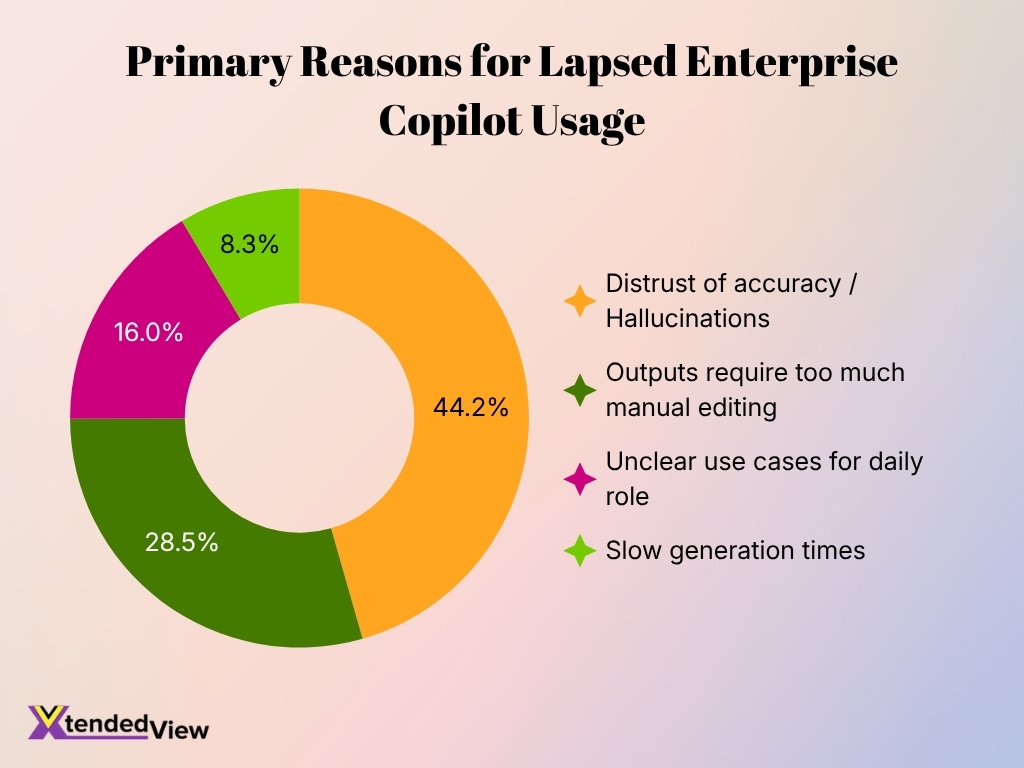
- Distrust of accuracy and hallucinations is the leading reason for lapsed Copilot usage, cited by 44.2% of users.
- Manual editing requirements rank second, with 28.5% saying Copilot outputs require too much additional work.
- Unclear daily use cases contribute to abandonment for 16.0% of lapsed enterprise users, highlighting challenges in integrating Copilot into routine workflows.
- Slow generation times are a comparatively smaller concern, accounting for 8.3% of lapsed users.
- Combined, accuracy concerns and excessive manual editing account for 72.7% of reported abandonment reasons, suggesting output quality is a much larger issue than speed.
Microsoft Copilot Future Projections Statistics
- 82% of business leaders expected to use digital labor to expand workforce capacity within the following 12 to 18 months, making AI agents a central near-term workforce strategy.
- 46% of leaders already said their organizations were using agents to fully automate business processes or workstreams in 2025, providing a base for further expansion through 2026 and beyond.
- Active agents in the Microsoft 365 ecosystem grew 15x year over year by May 2026, suggesting that future Copilot usage will increasingly include nonhuman agent activity alongside employee prompts.
- Among large enterprises, active-agent growth reached 18x year over year, indicating that the largest organizations are moving toward agent deployment particularly quickly.
- Nearly 40 million agents were registered in Agent 365 within two months, giving the ecosystem an early base for large-scale agent governance and management.
- The broader Copilot family had already surpassed 150 million active users by the 2025 annual shareholder meeting, expanding the population that can transition toward newer agent-based experiences.
- AI engagement across the broader product portfolio had exceeded 800 million monthly active users by mid-2025, showing that Copilot growth can draw from a much larger installed base than paid Microsoft 365 Copilot alone.
- More than 450 million commercial Microsoft 365 paid seats existed by early 2026. With 30 million-plus paid Copilot seats by July, a large portion of the existing commercial base had still not purchased the full Copilot license, leaving substantial theoretical expansion capacity.
- At the 15 million-seat level in January 2026, Copilot represented only about 3.3% of the commercial Microsoft 365 seat base. Even after the paid total doubled to more than 30 million, penetration remained well below the size of the underlying commercial installed base.
- Future revenue is also likely to depend less exclusively on seat counts because Copilot is moving toward a seat-plus-consumption model for agentic workloads such as Cowork, where organizations pay for both access and AI usage.
Frequently Asked Questions (FAQs)
Microsoft 365 Copilot surpassed 30 million paid seats by July 2026, with net seat additions more than doubling quarter over quarter.
Microsoft’s first-party Copilot family has surpassed 150 million active users across work, coding, security, science, health, and consumer use cases.
More than 90% of Fortune 500 companies use Microsoft 365 Copilot.
Microsoft 365 Copilot seat additions increased 250% year over year in fiscal 2026’s third quarter, the fastest growth reported since launch at that point.
Microsoft 365 Copilot is priced at $30 per user per month, paid annually, for enterprise customers in the U.S.
Conclusion
Microsoft Copilot statistics show a platform moving well beyond early enterprise experimentation and into broader deployment, more frequent usage, and increasingly agent-driven automation. Microsoft 365 Copilot surpassed 30 million paid seats, while the broader Copilot family exceeded 150 million active users, giving the company a large base for further workplace AI adoption. Major organizations across financial services, health care, consulting, manufacturing and the public sector have also expanded deployments from limited trials to tens of thousands, and in some cases hundreds of thousands, of employees.
The data also suggests that Copilot’s long-term performance will depend on more than license growth alone. Organizations are increasingly measuring active usage, conversations per user, time savings, workflow completion, and return on investment rather than simply counting purchased seats. Productivity studies have reported measurable reductions in task completion time, while rapid growth in AI agents indicates that future Copilot use will increasingly involve automated processes alongside employee prompts. With a large Microsoft 365 installed base still outside the full paid Copilot tier, substantial expansion potential remains. However, the strongest indicator of future success will be whether organizations can convert wider access into sustained usage, measurable business outcomes, and reliable AI-supported workflows.
