

OpenAI has become one of the most influential AI companies, shaping how people search for information, write code, create content, and automate business workflows. Its products power consumer applications, enterprise software, developer platforms, and AI assistants across industries such as healthcare, finance, education, retail, and customer support. As adoption accelerates in the US and worldwide, OpenAI continues to influence AI investment, enterprise transformation, and software development. Explore the statistics below to understand how OpenAI’s growth has evolved.
Editor’s Choice
- OpenAI surpassed 1 billion active users across its products in 2026 following continued global expansion and lower model pricing.
- ChatGPT serves more than 800 million weekly active users, making it one of the fastest-growing consumer applications worldwide.
- OpenAI completed a $122 billion funding round in March 2026, reaching a post-money valuation of $852 billion.
- More than 1 million business customers now use OpenAI products across enterprise and API offerings.
- OpenAI now supports over 7 million ChatGPT workplace seats, reflecting rapid enterprise adoption during 2025.
- Enterprise organizations increased average reasoning-token consumption by approximately 320x year over year, indicating production-scale AI deployment.
- More than 9,000 organizations have processed over 10 billion API tokens, while nearly 200 organizations have exceeded 1 trillion tokens.
Recent Developments
- OpenAI announced significant price reductions for GPT-5.6 Luna and Terra in July 2026 to make enterprise AI more affordable.
- GPT-5.6 Luna input pricing fell by 80%, while Terra pricing decreased by 20%, improving enterprise ROI.
- The company introduced a high-speed API mode for GPT-5.6 Sol that delivers up to 2.5x faster performance for developers.
- OpenAI’s annual recurring revenue continued climbing during July 2026, supported by GPT-5.6 adoption and workplace usage.
- Enterprise customers now contribute more than 40% of OpenAI’s revenue, with that share expected to approach parity with consumer revenue by the end of 2026.
- OpenAI raised $122 billion in fresh capital to accelerate research, infrastructure, and global deployment of AI systems.
- The company positioned compute capacity as a long-term competitive advantage by expanding investment in infrastructure and model training.
- OpenAI continues expanding AI agents and developer tooling, with Codex becoming a larger part of enterprise software development workflows.
OpenAI User Statistics
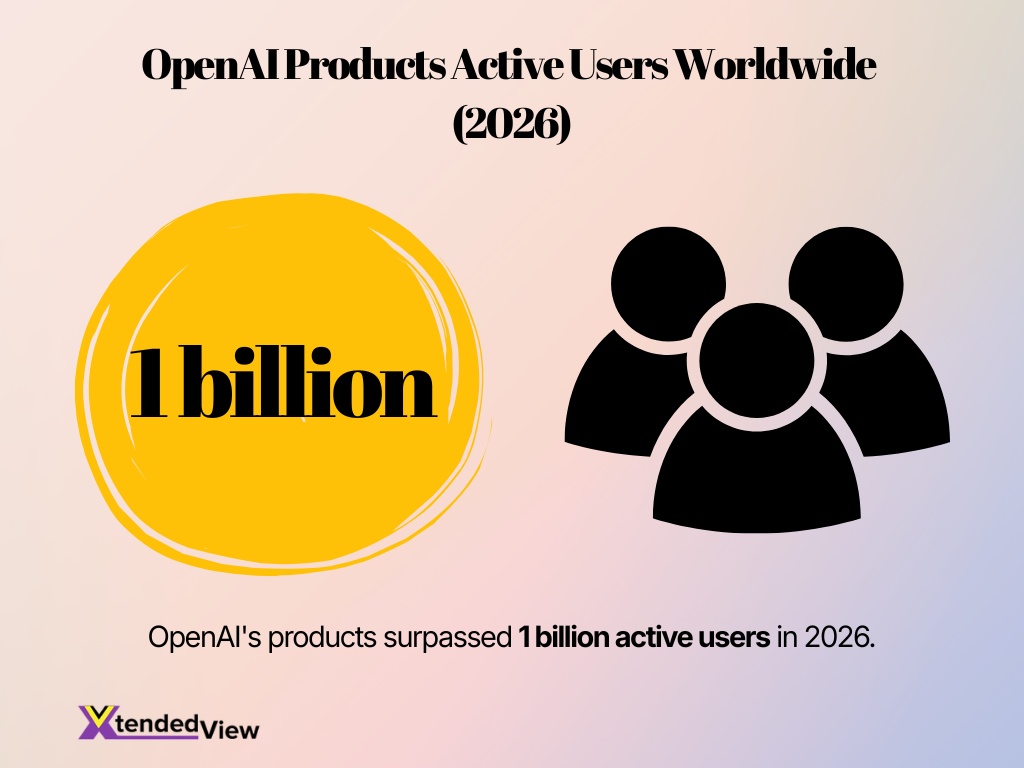
- OpenAI’s products surpassed 1 billion active users in 2026.
- ChatGPT alone now reaches more than 800 million weekly users, representing one of the largest AI user communities worldwide.
- More than 1 million businesses actively use OpenAI products.
- OpenAI supports over 7 million enterprise workplace seats across ChatGPT business offerings.
- Weekly enterprise message volume increased approximately 8x since late 2024 as organizations integrated AI into daily workflows.
- Around 20% of Enterprise messages now run through Custom GPTs or Projects instead of standard chats.
- Australia, Brazil, France, and the Netherlands each recorded more than 143% year-over-year growth in business customers among OpenAI’s largest international markets.
- International API customer growth exceeded 70% over six months, highlighting expanding global adoption beyond North America.
ChatGPT User Statistics
- ChatGPT now serves over 800 million weekly users, according to OpenAI’s 2025 enterprise report.
- OpenAI surpassed 1 billion active users across products during 2026, with ChatGPT remaining its flagship application.
- More than 7 million workplace seats now rely on ChatGPT across enterprise organizations.
- Weekly Enterprise ChatGPT messages increased approximately 8x year over year.
- The average enterprise employee sends roughly 30% more ChatGPT messages than a year earlier, reflecting deeper workflow integration.
- ChatGPT Enterprise usage expanded approximately 9x year over year, making it one of OpenAI’s fastest-growing business products.
- Workers using ChatGPT commonly report saving 40 to 60 minutes per day through AI-assisted productivity.
- Technical teams primarily use ChatGPT for coding, debugging, data analysis, automation, and documentation, while business teams emphasize writing, research, and customer communication.
OpenAI Revenue Statistics
- Enterprise business has become a massive driver, accounting for more than 40% of total revenue.
- The company’s annualized revenue run rate reached an estimated $25 billion by mid-2026.
- Monthly revenue averaged roughly $2 billion in 2026, fueled by rapid workplace subscription growth.
- Enterprise revenue is on a rapid trajectory and expected to reach parity with consumer revenue by late 2026.
- ChatGPT subscriptions currently dominate the income stream, representing approximately 70% of total revenue.
- Growing API consumption for production AI deployments constitutes roughly 25% of overall revenue.
- Broad corporate adoption continues, with 92% of Fortune 500 companies now utilizing the platform.
- Despite massive growth, heavy infrastructure investments will drive a projected $14.1 billion in inference costs during 2026.
- The platform has successfully scaled its user base to 50 million consumer subscribers and 9 million paying business users.
OpenAI Valuation Statistics
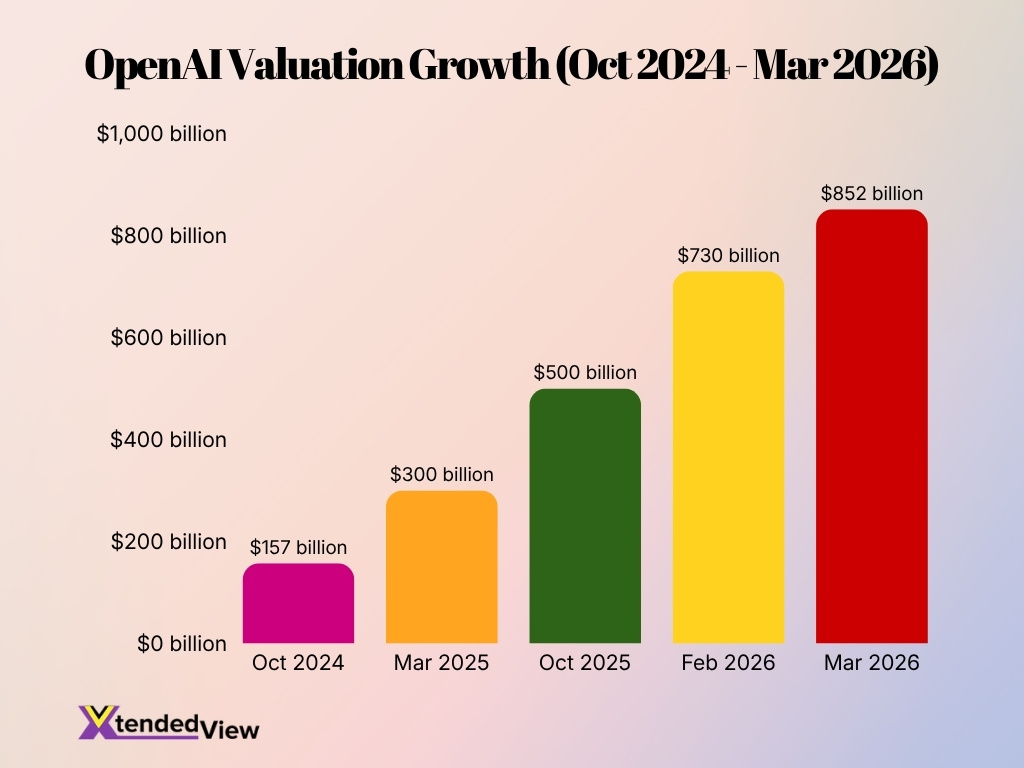
- OpenAI closed a $122 billion funding round in March 2026, giving the company a post-money valuation of $852 billion.
- Before the round closed, OpenAI announced $110 billion in new investment at a $730 billion pre-money valuation in February 2026.
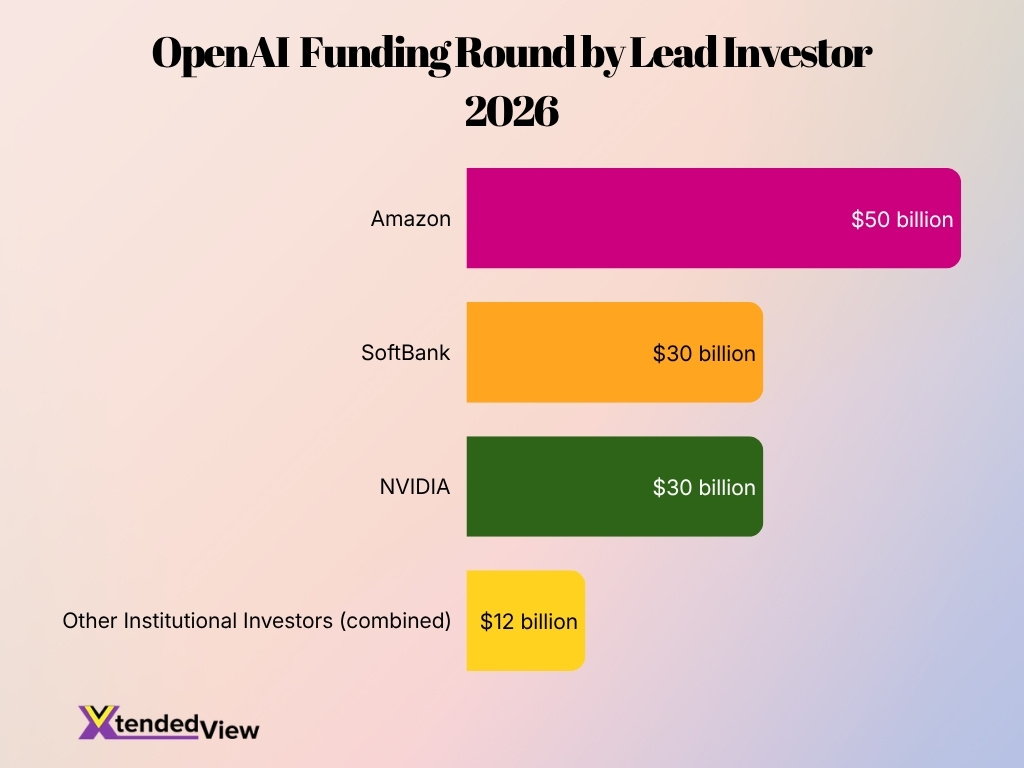
- The February 2026 financing commitments included $50 billion from Amazon, $30 billion from NVIDIA and $30 billion from SoftBank.
- OpenAI’s valuation reached $500 billion after current and former employees sold about $6.6 billion in shares in October 2025.
- That October 2025 secondary transaction increased OpenAI’s valuation by approximately 66.7% from its earlier $300 billion level.
- A March 2025 financing agreement valued OpenAI at $300 billion and targeted as much as $40 billion in new capital.
- OpenAI’s October 2024 funding round raised $6.6 billion at a valuation of $157 billion.
- The company’s valuation increased by roughly 443% between the $157 billion round in October 2024 and the $852 billion valuation reported in March 2026.
- OpenAI was reportedly preparing for a possible initial public offering that could value the company at up to $1 trillion, although no completed IPO had occurred as of August 2026.
OpenAI API Statistics
- OpenAI’s API platform processed more than 15 billion tokens per minute by April 2026.
- API throughput had stood at approximately 6 billion tokens per minute during DevDay 2025, indicating growth of more than 150% by April 2026.
- More than 9,000 organizations had each processed at least 10 billion tokens by the end of 2025.
- Nearly 200 organizations had each exceeded 1 trillion processed tokens, showing that a growing group had moved beyond small-scale tests.
- Average reasoning-token consumption per organization increased by approximately 320 times year over year in 2025.
- International API customer growth exceeded 70% over six months, highlighting demand outside the US.
- OpenAI reduced the price of its Luna model by 80% in 2026, while Terra became 20% less expensive.
- A faster API processing mode made the Sol model as much as 2.5 times faster, supporting lower-latency software and agent workflows.
- The platform supports pay-as-you-go access, allowing developers to scale usage without purchasing fixed infrastructure capacity.
Enterprise Adoption Statistics
- More than 1 million paying business customers used OpenAI products by November 2025.
- These customers included organizations using ChatGPT for Work and companies consuming models directly through the developer platform.
- OpenAI supported more than 7 million workplace seats, up 40% in only two months during 2025.
- ChatGPT Enterprise seat volume increased approximately ninefold year over year.
- Enterprise customers generated about eight times more weekly ChatGPT messages than they had one year earlier.
- Enterprise operations contributed more than 40% of OpenAI’s revenue by April 2026.
- OpenAI expected enterprise revenue to reach parity with consumer revenue by the end of 2026, implying a potential share near 50%.
- More than 25% of US workers reported using ChatGPT for work, rising to 45% among workers with postgraduate degrees.
- OpenAI’s fastest-growing enterprise sectors included technology, healthcare and manufacturing, while finance and professional services ranked among the largest users.
- Morgan Stanley reported that 98% of its financial advisers used OpenAI tools daily, while access to internal documents increased from 20% to 80%.
OpenAI Market Share Statistics
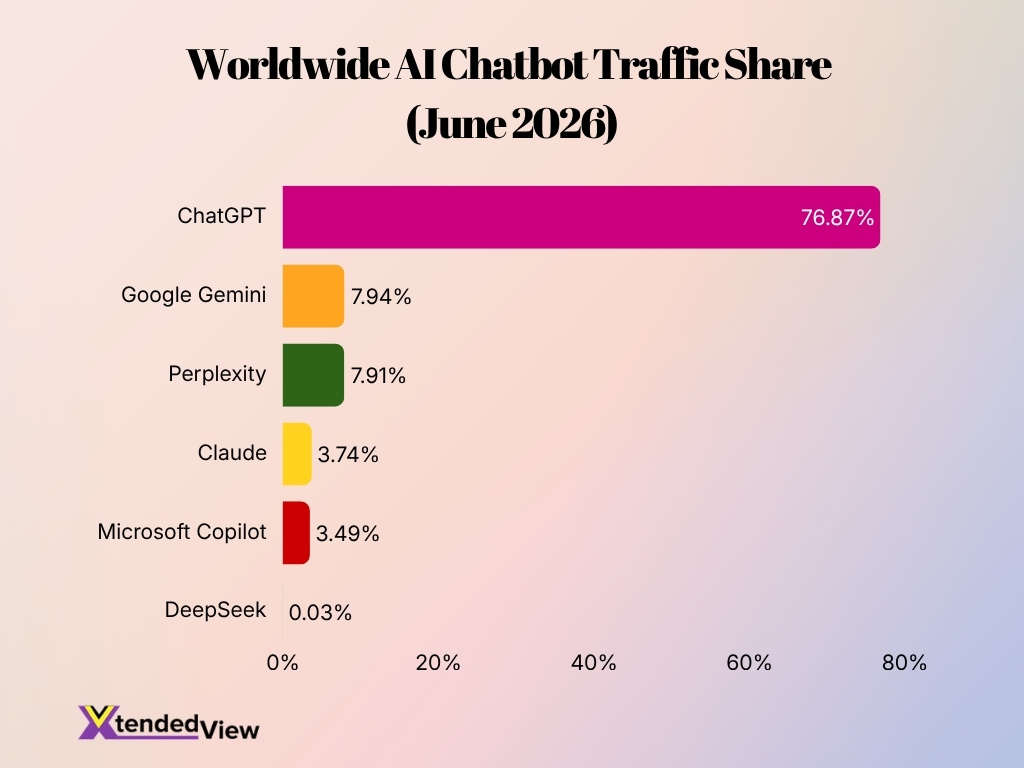
- ChatGPT held approximately 76.87% of worldwide AI chatbot traffic share in June 2026.
- Google Gemini ranked second in June 2026 with a 7.94% share, leaving ChatGPT with nearly 9.7 times more traffic share.
- Perplexity accounted for approximately 7.91% of the worldwide AI chatbot market during the same month.
- Claude held a 3.74% share, while Microsoft Copilot represented about 3.49% of tracked AI chatbot traffic.
- DeepSeek’s measured worldwide share stood at approximately 0.03% in June 2026.
- ChatGPT’s average market share across 2025 reached about 79.74%, compared with 10.83% for Perplexity and 3.6% for Microsoft Copilot.
- ChatGPT’s June 2026 market share was about 2.87 percentage points lower than its 2025 average, reflecting faster growth among competing AI assistants.
- Despite that decline, ChatGPT controlled more traffic than its five listed competitors combined in June 2026.
- ChatGPT referred ecommerce visitors who converted at an estimated 11.4% rate in 2025, compared with 5.3% for visitors from organic search.
Developer Ecosystem Statistics
- More than 4 million developers had built products with OpenAI technology by DevDay 2025.
- Codex reached 3 million weekly active users by April 2026.
- More than 1 million developers used Codex during the month preceding its desktop app launch in February 2026.
- Overall Codex usage doubled after the launch of GPT-5.2-Codex in December 2025.
- By May 2026, 80.6% of sampled individual Codex users had submitted at least one task estimated to require more than 30 minutes of human work.
- About 70.2% of sampled users assigned Codex at least one task representing more than one hour of estimated human work.
- A further 25.6% submitted at least one task estimated to require more than eight hours of human effort.
- Non-developer Codex adoption grew 137 times among individual users and 189 times among organizational users between August 2025 and mid-2026.
- Codex generated 99.8% of weekly output tokens within OpenAI by June 2026, reflecting its internal use across engineering and nontechnical departments.
- Median internal Codex use increased 56 times in research, 32 times in customer support and 27 times in engineering between November 2025 and June 2026.
Website Traffic Statistics
- ChatGPT recorded an estimated 5.35 billion website visits in February 2026.
- Estimated visits rose to about 5.51 billion in April 2026, an increase of roughly 160 million visits in two months.
- Those April figures translate to an average of approximately 184 million visits per day.
- Third-party estimates indicate that ChatGPT crossed 1 billion monthly active users in June 2026.
- An analysis of app activity estimated approximately 1.19 billion monthly active users based on the ratio between weekly and monthly usage.
- The measured monthly-to-weekly active-user ratio reached approximately 1.32 between August 2025 and January 2026.
- ChatGPT website traffic grew 88% during 2024, making it the fastest-growing major website in the tracked digital ranking published in January 2025.
- ChatGPT processed more than 2 billion user queries per day, according to 2026 industry estimates.
- At 2 billion daily prompts, the service would handle an average of approximately 23,000 queries every second.
- ChatGPT’s large web audience also supports referral traffic, visitors sent to ecommerce websites through ChatGPT converted at more than twice the rate of organic-search visitors in one 2025 analysis.
openai.com Web Traffic by Country
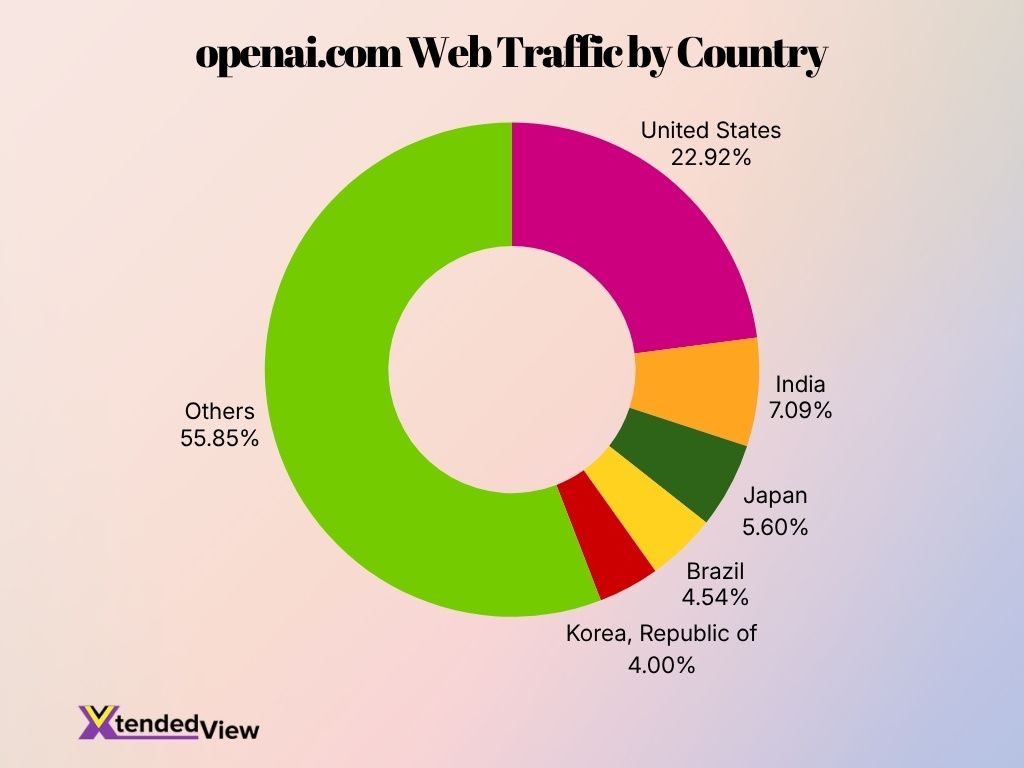
- The United States accounted for the largest individual share of openai.com traffic at 22.92%, despite recording a 4.95% decline.
- India ranked as the second largest traffic source, contributing 7.09% of total visits, with traffic decreasing by 8.03%.
- Japan generated 5.60% of website traffic, making it the third largest country, while experiencing a 3.76% decline.
- Brazil represented 4.54% of openai.com traffic and posted the largest decline among the top five countries at 11.14%.
- Korea, Republic of contributed 4.00% of total traffic, with visits falling by 7.37% compared to the previous period.
- Other countries collectively accounted for the majority of website traffic at 55.85%, highlighting OpenAI’s broad global user base beyond its top five markets.
- Among the top five countries, Japan recorded the smallest traffic decline at 3.76%, indicating relatively stable user engagement.
- The top five countries together generated 44.15% of all openai.com traffic, while 55.85% originated from the rest of the world, demonstrating the platform’s widespread international reach.
Mobile App Statistics
- The ChatGPT mobile app crossed 1 billion monthly active users worldwide in May 2026, roughly three years after its launch.
- ChatGPT became the fastest mobile app on record to reach the 1 billion monthly-user milestone, surpassing the adoption pace of several major social, video and mapping apps.
- ChatGPT’s global mobile audience grew 62% year over year during the second quarter of 2026.
- Claude reached 56 million monthly active app users during the second quarter of 2026, giving ChatGPT an audience nearly 18 times larger.
- US users who installed Claude in the first quarter of 2026 spent 5% less time on ChatGPT one month later than their average during the previous eight months.
- ChatGPT ranked first among free productivity apps in the US Android market during the tracked 2026 period.
- The app also ranked second among top-grossing US Android productivity apps, showing that paid plans generated substantial mobile demand.
- Estimated monthly downloads reached approximately 64 million across the market covered by the mobile-app ranking.
- By July 2026, ChatGPT’s mobile advertising program included more than 820 advertisers, up from about 300 in April.
- OpenAI’s estimated mobile advertising run rate reached $100 million annually in 2026 as the company expanded commercial placements below selected responses.
AI Model Performance Statistics
- GPT-5.3-Codex scored 56.8% on SWE-Bench Pro, compared with 56.4% for GPT-5.2-Codex and 55.6% for GPT-5.2.
- The model achieved 77.3% on Terminal-Bench 2.0, exceeding GPT-5.2-Codex by 13.3 percentage points.
- GPT-5.3-Codex scored 64.7% on OSWorld-Verified, compared with 38.2% for GPT-5.2-Codex.
- Its OSWorld-Verified result represented a relative improvement of approximately 69% over the preceding Codex model.
- GPT-5.3-Codex won or tied in 70.9% of GDPval evaluations, which cover professional tasks across 44 occupations.
- The model achieved 77.6% on cybersecurity capture-the-flag challenges, up from 67.4% for GPT-5.2-Codex.
- GPT-5.3-Codex recorded 81.4% on SWE-Lancer IC Diamond, compared with 76% for GPT-5.2-Codex.
- GPT-5.3-Codex operated 25% faster than its predecessor while using fewer tokens on major coding evaluations.
- GPT-5.6 Sol achieved a 28.7% pass rate on the 129-question GeneBench-Pro scientific benchmark, rising to 31.5% in Pro mode.
- GPT-5.6 Sol solved nearly six times as many GeneBench-Pro questions as GPT-5.2 at its highest reasoning setting while using about one-third fewer tokens.
Partnerships and Investment Statistics
- OpenAI secured $110 billion in new investments at a $730 billion pre-money valuation in February 2026.
- Commitments included $50 billion from Amazon and $30 billion each from NVIDIA and SoftBank.
- OpenAI and NVIDIA partnered to deploy 10 gigawatts of AI systems containing millions of GPUs.
- NVIDIA indicated it could invest up to $100 billion as each planned gigawatt becomes operational.
- The first gigawatt of NVIDIA infrastructure is targeted for deployment in the second half of 2026.
- OpenAI and Oracle will develop 4.5 gigawatts of capacity valued at $300 billion over five years.
- Five new US data centers were chosen from over 300 proposals spanning more than 30 states.
- Three Oracle locations could yield 5.5 gigawatts of capacity and create 25,000 on-site jobs.
- Two SoftBank locations are projected to scale to 1.5 gigawatts within 18 months.
- The Stargate initiative targets $500 billion in US AI infrastructure and 10 gigawatts of capacity.
Infrastructure and Compute Statistics
- Stargate had secured nearly 7 gigawatts of planned capacity across its announced projects by September 2025.
- The announced projects represented more than $400 billion in planned investment over the following three years.
- The Abilene, Texas, campus had already begun operating and processing early training and inference workloads by September 2025.
- The first NVIDIA GB200 server racks arrived at the Abilene site in June 2025.
- A possible expansion near the Abilene campus could add 600 megawatts of capacity.
- The planned NVIDIA infrastructure program alone would equal at least 10 gigawatts, exceeding Stargate’s initial announced capacity target when considered as a separate partnership commitment.
- OpenAI’s API platform processed more than 15 billion tokens per minute by April 2026, increasing the pressure to expand inference infrastructure.
- ChatGPT supported more than 900 million weekly active users and 50 million consumer subscribers by February 2026, creating sustained demand for computing capacity.
- New US infrastructure locations covered Texas, New Mexico, Ohio and Wisconsin, reducing dependence on a single data-center region.
- The five-location expansion was expected to create tens of thousands of additional indirect jobs beyond the projected on-site workforce.
Future Outlook
- Infrastructure plans target at least 10 gigawatts of new AI capacity.
- Business products may reach half of total revenue by the end of 2026.
- The platform has grown to 900 million weekly users globally.
- There are currently 50 million consumer subscribers generating recurring revenue.
- ChatGPT possesses a massive billion-user mobile audience for distribution.
- Non-English usage has officially risen above 50% across the platform.
- GPT-5.6 Sol achieved a 31.5% maximum score on GeneBench-Pro.
- More than two-thirds of evaluated scientific tasks remain unsolved.
- Claude’s mobile audience surged by 640% year over year in early 2026.
- ChatGPT’s mobile audience grew by 62% during the same 2026 timeframe.
Frequently Asked Questions (FAQs)
OpenAI has more than 1 billion active users across its products as of 2026.
OpenAI reached a post-money valuation of $852 billion after closing a $122 billion funding round in March 2026.
More than 2 million businesses use OpenAI’s products and services worldwide.
OpenAI generates approximately $12.7 billion in annual recurring revenue (ARR), according to 2026 estimates.
ChatGPT serves approximately 900 million weekly active users, making it one of the world’s largest AI applications.
Conclusion
OpenAI continued its rapid expansion, strengthening its position across consumer AI, enterprise software and developer platforms. The company reached major milestones in user growth, valuation, infrastructure investment and model performance while expanding its global footprint. Although increasing competition, infrastructure costs and regulatory oversight remain important challenges, OpenAI’s continued investment in advanced AI models, enterprise adoption and large-scale computing capacity positions it for sustained long-term growth and a leading role in the evolving artificial intelligence market.