


YouTube influencer marketing now sits at the intersection of creator content, connected TV, social commerce, and performance advertising. The global influencer advertising market is projected to reach $39.03 billion, up from $32.53 billion in 2025, while YouTube gives brands access to creator-led product launches, shopping campaigns, long-form product education, and TV-scale awareness.
YouTube Shopping’s gross merchandise volume grew 5X year over year, and more than 500,000 creators had enrolled globally by July 2025. Meanwhile, viewers exposed to an organic YouTube video about a brand were 13X more likely to conduct a branded search and 5X more likely to purchase, according to February 2026 global internal data. The statistics below show how YouTube influencer marketing is developing.
Editor’s Choice
- $39.03 billion: The global influencer advertising market is projected to reach this value in 2026, compared with $32.53 billion in 2025.
- 50.2%: Roughly half of U.S. marketers were forecast to use YouTube for influencer marketing in 2025, taking platform adoption above the halfway mark.
- 3 million+: YouTube Creator Partnerships gives advertisers access to more than 3 million creators participating in the YouTube Partner Program.
- 78%: More than three-quarters of surveyed viewers say YouTube has the most trusted creators for product recommendations.
- 13X: Viewers who saw an organic YouTube video about a brand were 13 times more likely to make a branded search in February 2026 global data.
- 5X: Those viewers were also five times more likely to make a purchase, highlighting the link between creator content and lower-funnel behavior.
- 5X: YouTube Shopping GMV increased fivefold year over year, while more than 500,000 creators were enrolled globally by July 2025.
- $100 billion: YouTube reported in September 2025 that it had paid creators, artists and media companies $100 billion during the preceding four years.
- $60 billion+: YouTube’s creative ecosystem contributed more than $60 billion to U.S. GDP in 2025 and supported more than 540,000 full-time-equivalent jobs.
Recent Developments
- In March 2026, YouTube consolidated its creator-brand tools under YouTube Creator Partnerships, integrating creator discovery and partnership functions with YouTube Studio, Google Ads, and Display & Video 360.
- The 2026 system provides advertisers with access to more than 3 million YouTube Partner Program creators, significantly expanding the pool that brands can search when planning partnerships.
- Creator discovery has also become more data-driven. Creators who opted to share additional channel insights appeared 60% more often in advertiser search results on average.
- YouTube said its creator-matching technology would analyze billions of data points, including subscriber growth, audience similarity, and organic brand mentions, to improve creator recommendations for advertisers.
- In May 2026, YouTube expanded advertiser opportunities around creator programming with new Creator Shows and commerce products. The company also introduced features designed to connect creator content more directly with purchases.
- The platform’s 2026 commerce expansion includes two-click purchases on connected TVs through Google Pay, reducing the steps between watching content and completing a transaction.
- Affiliate Partnerships Boost, another 2026 addition, allows brands to amplify organic videos in which creators have already tagged their products. This connects creator affiliate activity with paid amplification.
- In August 2026, eligible U.S. creators gained the ability to tag Amazon products across Shorts, long-form videos and livestreams, adding another major retail catalog to the YouTube Shopping Affiliate Program.
- These 2026 changes build on strong 2025 shopping growth: YouTube Shopping GMV had already risen 5X year over year, with more than 500,000 creators enrolled globally by July 2025.
YouTube Influencer Marketing Market Size and Growth
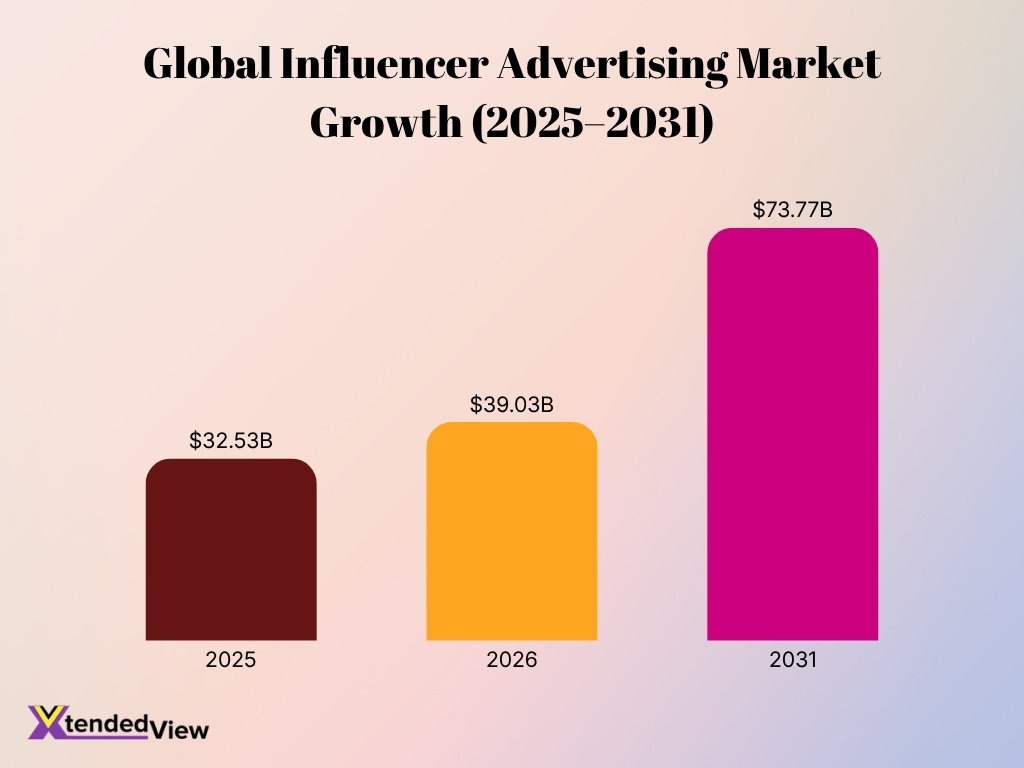
- The broader global influencer advertising market provides the clearest benchmark for YouTube’s addressable creator-marketing opportunity. The market is projected to grow from $32.53 billion in 2025 to $39.03 billion in 2026.
- That $6.5 billion annual increase equals approximately 20% growth from 2025 to 2026, based on the published market estimates.
- Longer-term projections put global influencer advertising at $73.77 billion by 2031, implying a 13.58% compound annual growth rate from 2026 through 2031.
- Another 2025 industry dataset estimated influencer marketing spending at $32.55 billion in 2025, compared with $24 billion in 2024. Although methodologies vary between reports, both datasets point to substantial market expansion.
- U.S. influencer marketing spending alone was projected to reach $10.52 billion in 2025, adding about $1.37 billion in a single year.
- The same U.S. forecast put 2025 influencer spending growth at 15%, following estimated growth of 23.7% in 2024. The slower rate indicates a larger and more mature market rather than a contraction in spending.
- YouTube’s creator economy extends beyond sponsorship payments. By September 2025, YouTube reported paying $100 billion over four years to creators, artists and media companies through its broader monetization ecosystem.
- The U.S. economic footprint also grew materially: YouTube’s creative ecosystem generated more than $60 billion in U.S. GDP during 2025 and supported more than 540,000 full-time-equivalent jobs.
- Internationally, India illustrates the scale of YouTube’s creator supply. More than 100 million channels in India uploaded content during the year reported in May 2025, while more than 15,000 had exceeded 1 million subscribers.
YouTube’s Share of Influencer Marketing Spending
- Precise platform-by-platform influencer spending remains less transparent than total market spending. However, marketer adoption data show that YouTube captured a substantial share of U.S. influencer activity, with 50.2% of U.S. marketers forecast to use the platform for influencer marketing in 2025.
- Total U.S. influencer marketing spending was projected at $10.52 billion in 2025, giving YouTube a growing addressable pool as more marketers added the platform to their creator strategies.
- YouTube advertising data also points to continued budget expansion. Spending on YouTube video ad campaigns increased 5% year over year in Q1 2025.
- Growth accelerated in the second quarter, when YouTube video ad spending rose 9% year over year in Q2 2025.
- In Q3 2025, comparable advertiser spending increased another 12% year over year, while impressions climbed 30%.
- By Q4 2025, advertiser spending on YouTube inventory was 13% higher year over year, accompanied by a 38% increase in impressions. These figures cover advertising inventory rather than creator sponsorship fees, but they show the broader direction of brand spending on YouTube.
- Shorts represented 23% of segmented YouTube video ad spending in Q3 2025, making it the second-largest reported format behind skippable in-stream video at 58%.
- Connected TV has also reshaped budget distribution. TV screens accounted for 65% of traditional YouTube video campaign spending in Q3 2025, up sharply from 38% one year earlier.
- By Q4 2025, TV screens represented 67% of traditional video campaign spending, while Shorts accounted for just under 21% of YouTube video ad campaign spending.
YouTube Influencer Engagement Statistics
- Product recommendation trust remains one of YouTube’s strongest creator-engagement signals: 78% of surveyed viewers said the platform has the most trusted creators for product recommendations.
- Community also strengthens engagement. 79% of Gen Z viewers surveyed said YouTube creators build communities that give them a sense of belonging.
- YouTube’s format mix contributes to that relationship. 76% of U.S. respondents said access to both short- and long-form content was a leading reason YouTube was their go-to platform.
- Creator content can translate engagement into search behavior. In February 2026 global data, users who watched an organic YouTube video about a brand were 13 times more likely to search for that brand.
- Purchase behavior showed a similar pattern: users exposed to an organic video about a brand were 5 times more likely to purchase than the comparison group measured in the same 2026 analysis.
- Live video adds another engagement layer. More than 30% of daily logged-in YouTube viewers watched live content during an average day in Q2 2025.
- YouTube’s early testing of an easier TV subscribe button generated more than a 40% increase in net subscribers through TVs, showing that interface changes can materially affect creator-audience engagement on the living-room screen.
- Shopping engagement is growing alongside content engagement. YouTube Shopping GMV increased 5X year over year, suggesting that viewers increasingly move from watching creator content to interacting with products.
- In India, shopping-related watch time grew more than 250% year over year between February 2024 and February 2025, while more than 200 million logged-in users conducted shopping-related searches on YouTube in July 2025.
YouTube Influencer Engagement by Creator Size and Content Format
- Creator size continues to shape influencer campaign strategy. In a 2025 industry survey, 49.6% of campaigns worked with just one to five influencers, while only 2.8% used more than 100 creators. This indicates that many brands favor smaller, more focused creator groups rather than large influencer rosters.
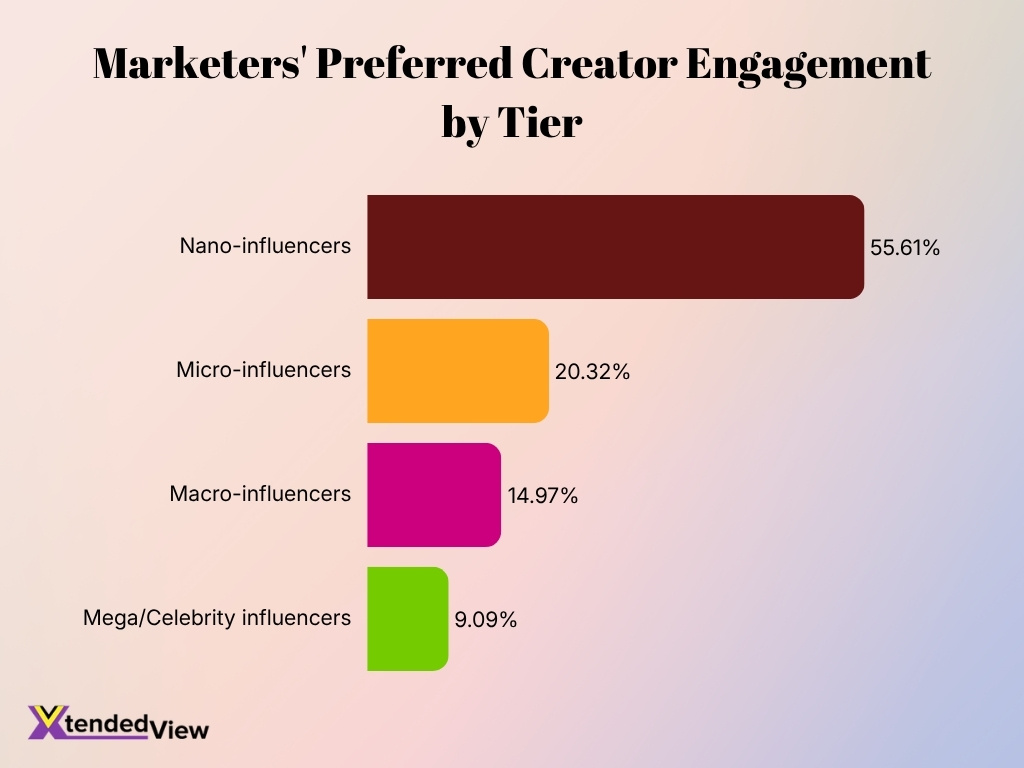
- Nano-influencers accounted for 55.61% of the creators marketers primarily engaged with in one industry dataset, compared with 20.32% for micro-influencers, 14.97% for macro-influencers, and 9.09% for mega or celebrity influencers.
- The same dataset recorded a 12.9% increase in marketers primarily engaging nano-influencers between its May and June measurements. Macro-influencer preference increased 19.8%, while mega or celebrity preference fell 27.3%.
- Smaller creators have gained additional commercial opportunities in 2026. Eligible creators can now participate in YouTube Shopping with as few as 500 subscribers, lowering the entry point for creator-led affiliate commerce.
- That 2026 expansion covers Shorts, video-on-demand and live content, allowing smaller creators to connect product recommendations with several viewing formats rather than relying on standard videos alone.
- Long-form creator content remains commercially important because YouTube viewers collectively watch more than 1 billion hours of video each day. That scale gives product reviews, tutorials, and sponsored integrations room to reach viewers beyond short-form feeds.
- Shorts provides the opposite end of the format spectrum. In 2026, Shorts averaged 200 billion daily views, creating a high-volume discovery channel for creator partnerships and branded content.
- Live content provides another engagement route. More than 30% of daily logged-in viewers watched live content on an average day in Q2 2025, making livestreams relevant for demonstrations, launches, and creator-led shopping events.
- Creator monetization has also diversified across formats. More than 50% of channels earning at least five figures in the prior year earned money from sources beyond advertising and Premium revenue, while channel memberships increased more than 40%.
Brand Adoption and Campaign Statistics
- YouTube crossed an important adoption threshold in 2025: 50.2% of U.S. marketers were expected to work with creators and influencers on the platform.
- Across influencer marketing more broadly, research covering more than 2,500 campaigns found that nearly half of brands increased influencer budgets by at least 11% in 2025.
- The same research found that one in four brands used AI to help plan or price influencer campaigns in 2025, showing how campaign selection and budgeting are becoming more automated.
- Multi-platform influencer campaigns outperformed single-channel campaigns in the 2025 dataset, supporting the use of YouTube alongside complementary creator platforms rather than treating each channel in isolation.
- YouTube’s Creator Partnerships system now exposes more than 3 million Partner Program creators to advertiser discovery tools, giving brands a large searchable creator pool for campaign planning.
- In 2026, 78% of surveyed viewers said YouTube had the most trusted creators for product recommendations, giving brands a measurable reason to use creator partnerships for consideration-stage campaigns.
- YouTube’s 2026 campaign infrastructure also connects organic creator partnerships with paid media. Affiliate Partnerships Boost lets brands promote existing creator content containing tagged products.
- Brands increasingly have a commerce layer available after creator exposure. YouTube Shopping had more than 500,000 enrolled creators globally by July 2025, while GMV increased fivefold year over year.
- Brand adoption now extends into connected TV. In Q2 2025, 55% of YouTube video ad spending came from TV screens, compared with 37% one year earlier, while TV-screen spending itself rose nearly 62%.
YouTube Audience and Influencer Statistics
- YouTube reached more than 244 million U.S. adults aged 18 and older across all devices, demonstrating the audience scale available to brands working with creators.
- YouTube Creator Partnerships gives advertisers access to 3 million+ creators participating in the YouTube Partner Program as of 2026.
- India alone had more than 100 million channels uploading content during the year referenced in May 2025, illustrating the enormous long-tail supply of channels outside the U.S.
- More than 15,000 Indian channels had over 1 million subscribers, highlighting the depth of large-scale creator audiences in one of YouTube’s biggest markets.
- YouTube reported paying more than $70 billion to creators, artists and media companies during the three years leading up to June 2025. By September, the platform reported $100 billion paid over the preceding four years.
- Live video remains a significant part of audience behavior. More than 30% of daily logged-in viewers watched live content on an average basis during Q2 2025.
- TV viewing is increasingly important to creator reach. The number of YouTube channels earning six figures or more from TV screens rose more than 45% in the July 2024-June 2025 period compared with the prior 12 months.
- Shopping-related creator content also attracts substantial viewing. Users watched 35 billion hours of shopping-related videos worldwide during the 12 months reported in October 2025.
- The U.S. creator ecosystem has spread well beyond major media hubs. Every U.S. state had at least 10 channels generating more than 1 million monthly views, according to the 2025 U.S. impact findings released in 2026.
YouTube Influencer Marketing Audience Demographics
- 84% of U.S. adults reported using YouTube in 2025, compared with 71% for Facebook, 50% for Instagram and 37% for TikTok. This broad penetration lets creator campaigns reach audiences beyond younger social media users.
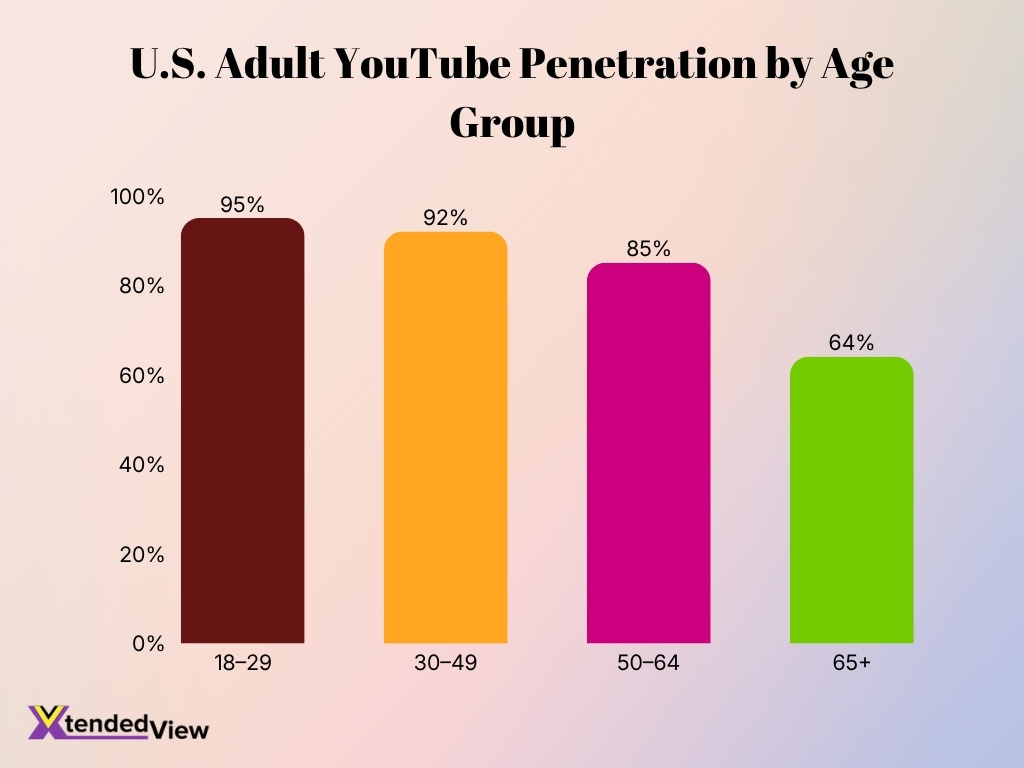
- Usage reaches 95% among U.S. adults ages 18 to 29 and 92% among those ages 30 to 49. It remains high at 85% for ages 50 to 64 and 64% for people 65 and older.
- YouTube also reaches both genders at similar rates in the U.S. In 2025, 86% of men and 83% of women reported using the platform.
- Usage varies moderately by race and ethnicity. YouTube reached 92% of Asian American adults, 88% of Hispanic adults, 85% of Black adults, and 82% of White adults in the 2025 survey. The Asian American estimate represents English-speaking respondents.
- Household income creates another distinction. YouTube usage ranged from 77% among adults earning under $30,000 annually to 89% among those in households earning $100,000 or more.
- Education also correlates with adoption: 89% of college graduates used YouTube, compared with 87% of adults with some college education and 78% of those with a high school education or less.
- YouTube maintains broad geographic reach within the U.S. Usage stood at 85% among urban adults, 87% among suburban adults, and 79% among rural adults in 2025.
- Teen penetration remains even higher. Roughly nine in 10 U.S. teens ages 13 to 17 used YouTube in 2025, while about one in five reported using it almost constantly.
- Among U.S. teens, YouTube usage reached 94% for boys and 89% for girls in 2025. Unlike most platforms measured, usage showed no meaningful difference between younger teens ages 13 to 14 and older teens ages 15 to 17.
YouTube Shorts and Long-Form Influencer Marketing Statistics
- YouTube Shorts averaged 200 billion daily views in 2026, making short-form video one of the largest creator-discovery surfaces available to influencer marketers.
- Shorts’ daily viewing volume has expanded rapidly. The platform reported roughly 70 billion daily Shorts views in early 2024, meaning the 200 billion figure reported for 2026 represents nearly three times that earlier scale.
- Despite Shorts’ scale, long-form video remains central to YouTube’s positioning. Viewers globally watch more than 1 billion hours of YouTube content per day, covering long-form videos, Shorts and other formats.
- Format variety itself influences platform preference. In research cited in 2026, 76% of U.S. respondents said access to both short- and long-form content was a leading reason YouTube was their preferred video platform.
- Shorts increasingly supports direct brand partnerships. In 2026, creators gained tools that allow them to add links to a brand’s website in Shorts, reducing friction between short-form sponsored content and advertiser destinations.
- Shopping functionality also crosses format boundaries. Creators eligible for the affiliate program can tag products across Shorts, long-form VOD and livestreams, allowing brands to follow consumers from discovery to deeper product research.
- Long-form videos can continue generating commercial value after their initial publication. Newer partnership tools let creators replace branded segments after a sponsorship ends, which can turn older video libraries into recurring sponsorship inventory.
- Shopping research analyzed the 5,000 most-purchased products during the first half of 2025 and the 1,000 videos generating the most tagged-product transactions during a 60-day period, showing that product discovery spans multiple creator formats.
- The combination of Shorts and long-form content gives brands two distinct influencer use cases: high-frequency discovery through short videos and deeper product explanation through reviews, tutorials and other longer creator formats.
YouTube Influencer Marketing Reach, Views, and Watch Time
- YouTube operates in more than 100 countries and 80 languages, giving influencer campaigns the potential to move beyond domestic audiences without requiring brands to rely on a single geographic creator market.
- Globally, YouTube attracts billions of monthly viewers, while its audience collectively watches more than 1 billion hours of content per day.
- Short-form content adds exceptional viewing volume to that reach. Shorts averaged 200 billion views per day in 2026, expanding the potential discovery pool for creators and sponsored videos.
- In the U.S., 84% of adults reported using YouTube in a survey conducted between February and June 2025, keeping it ahead of every other online platform measured in that research.
- YouTube’s potential U.S. advertising audience stood at 253 million people in early 2025, equivalent to 73% of the country’s total population and 78.5% of its internet users. These figures represent advertising reach rather than monthly active users.
- Daily usage also remains substantial. 48% of U.S. adults said they used YouTube daily in a 2025 survey. Among adults ages 18 to 29, daily usage climbed to 66%.
- Connected TV expands influencer reach beyond smartphones and computers. YouTube now records more than 1 billion hours of watch time on TVs each day, according to 2026 performance data.
- YouTube has ranked first in U.S. streaming watch time for nearly three years as of early 2026, strengthening the case for treating creator content as both social media and living-room entertainment.
- Reach also extends beyond established media centers. In 2025, every U.S. state had at least 10 channels attracting more than 1 million monthly views, illustrating the geographic spread of high-reach creator businesses.
YouTube Influencer Marketing Statistics by Country and Industry
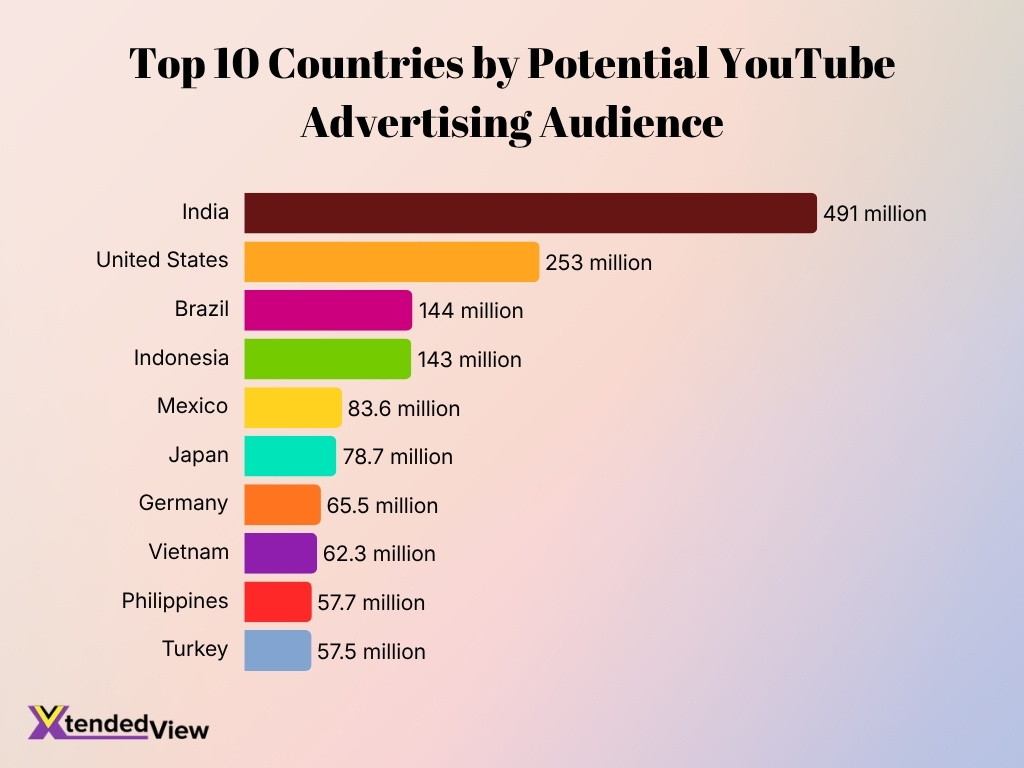
- India represented YouTube’s largest potential advertising audience in early 2025, with 491 million users reachable through advertising tools. The figure equaled 60.9% of India’s internet user population.
- The U.S. ranked second with 253 million potential advertising users, followed by Brazil with 144 million and Indonesia with 143 million.
- Mexico had a potential YouTube advertising audience of 83.6 million in early 2025, while Japan reached 78.7 million and Germany reached 65.5 million.
- Vietnam reached 62.3 million potential advertising users, followed by the Philippines at 57.7 million and Turkey at 57.5 million. These country figures measure advertising reach rather than confirmed monthly active users.
- India’s YouTube ad audience expanded by approximately 29 million people, or 6.3%, between early 2024 and early 2025.
- India’s creator supply is equally notable. More than 100 million channels in India uploaded content during the 12 months reported in May 2025, and over 15,000 Indian channels had surpassed 1 million subscribers.
- YouTube paid Indian creators, artists and media companies more than INR 21,000 crore over the three years leading to May 2025 and announced plans to invest more than INR 850 crore in India’s creator ecosystem over the following two years.
- Retail and e-commerce represent an increasingly measurable creator-marketing category. Research into shopping behavior examined the top 5,000 products purchased through the ecosystem in the first half of 2025, alongside the 1,000 highest-transaction tagged-product videos.
- Creator-led marketing also matters to small and midsize businesses: 76% of U.S. small and midsize businesses with a YouTube channel said the platform helped them grow their customer base by reaching new audiences.
YouTube Influencer Marketing Consumer Behavior and Purchase Statistics
- Product discovery is one of the clearest creator-led behaviors on YouTube. 61% of U.S. online Gen Z consumers ages 14 to 24 said YouTube helped them discover brands or products they previously did not know about in an April 2025 survey.
- Creator content also influences personal preferences before consumers reach the checkout stage. 59% of online Gen Z respondents said online content had influenced their personal style.
- Trust provides another indicator of purchase influence. Viewers were reported to be 98% more likely to trust creator recommendations on YouTube than recommendations elsewhere in research cited during the 2025 holiday shopping period.
- The shopping ecosystem has reached significant creator scale. By early 2026, more than 500,000 creators were participating in YouTube Shopping.
- Shopping eligibility expanded further in March 2026 when qualifying Partner Program creators with 500 or more subscribers gained access to the affiliate program.
- Consumers can encounter those product recommendations across three major formats: Shorts, VOD and live video. This lets creator recommendations appear during discovery, product research, and real-time interaction.
- Individual creator videos can generate substantial purchase activity. One documented creator generated hundreds of thousands of dollars in sales from a single cashmere-cardigan review video, illustrating the commercial potential of high-intent product content.
- Shopping behavior increasingly depends on creator expertise and community. Analysis of the top 5,000 purchased products found that creators, communities, content formats, and product trends worked together to drive transactions.
- YouTube’s 2026 commerce strategy further reduces purchase friction by moving toward in-app purchasing after creator recommendations, which allows consumers to move from watching product content to checkout without leaving the viewing environment.
YouTube Influencer Marketing Conversion and Brand Awareness Statistics
- Creator content can produce measurable search intent. In February 2026 global data, viewers exposed to an organic YouTube video about a brand were 13X more likely to search for that brand than the comparison audience.
- The same 2026 analysis found that viewers exposed to an organic brand-related YouTube video were 5X more likely to make a purchase, connecting creator exposure with lower-funnel behavior.
- Among young U.S. consumers, 61% of online Gen Z respondents ages 14 to 24 said YouTube helped them discover previously unknown brands or products. This provides a direct measure of the platform’s role near the top of the purchase funnel.
- Creator recommendations can carry substantial credibility during consideration. Viewers were reported as 98% more likely to trust creator recommendations on YouTube than elsewhere, strengthening the bridge between awareness and purchase intent.
- YouTube also creates measurable customer acquisition value for smaller companies. 76% of U.S. small and midsize businesses with a YouTube channel said it helped them expand their customer base by reaching new audiences.
- Brand awareness benefits from YouTube’s demographic breadth. 84% of U.S. adults used the platform in 2025, while adoption remained above 80% among adults through age 64.
- Shorts adds high-frequency discovery potential, averaging 200 billion daily views in 2026. For influencer campaigns, that scale provides another route for introducing products before consumers move into long-form research or shopping content.
- The living-room audience creates another awareness channel. YouTube records more than 1 billion hours of TV watch time each day, allowing creator-led campaigns to reach viewers on screens traditionally associated with television advertising.
- Finally, the platform’s global footprint extends creator-led brand awareness across 100+ countries and 80 languages, which allows brands to combine international reach with creators serving specific languages, interests and regional communities.
YouTube Influencer Marketing Cost, Pricing, and Sponsorship Statistics
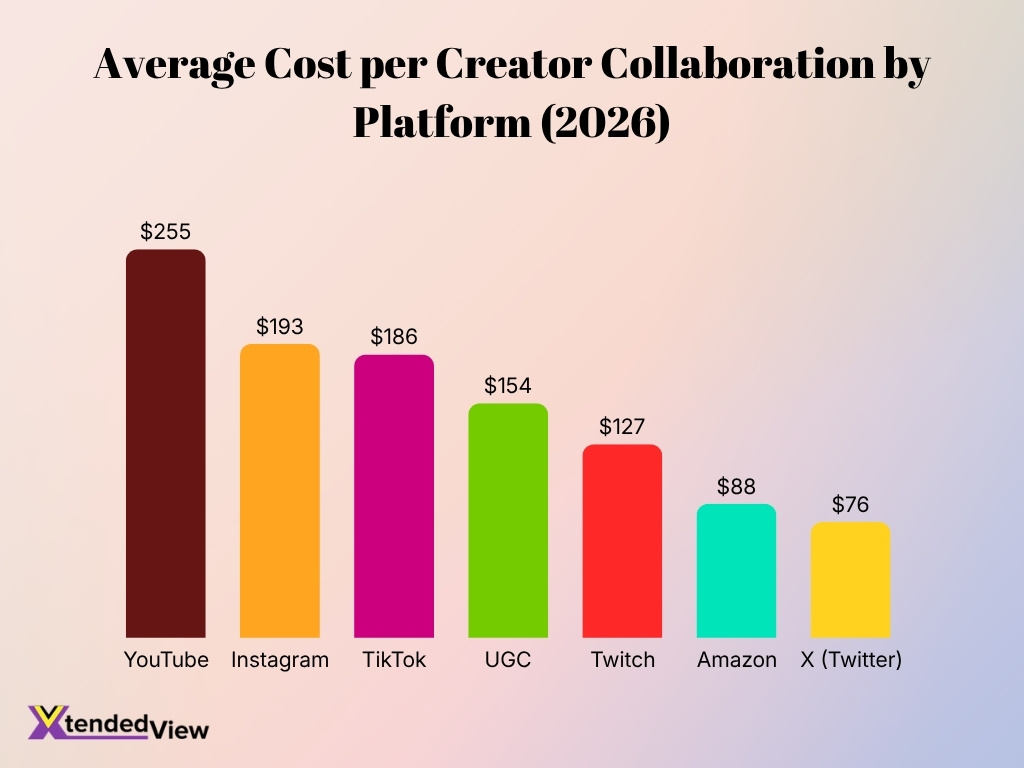
- YouTube remained a relatively expensive influencer platform in 2026. Marketplace data covering 21,000 collaborations and more than 472,000 packages put the average listed YouTube creator package at $311.
- Brands actually paid an average of $255 per YouTube collaboration in that dataset, indicating that negotiated payouts came in below listed package prices.
- That $255 average was higher than Instagram at $193, TikTok at $186, UGC at $154, Twitch at $127, Amazon at $88 and X at $76.
- The 2026 YouTube payout figure represented a 63% year-over-year decline from the previous dataset’s $418 average, reflecting a market with more creators and lower-priced collaborations.
- In 2025 data, creators’ average YouTube asking price stood at $675.23, while brands actually spent an average of $418.09 per YouTube influencer.
- YouTube asking prices had already fallen approximately 17.25% year over year in 2025, showing that pricing pressure began before the further decline recorded in the 2026 report.
- Broader 2026 pricing benchmarks put nano creators at roughly $100-$500 per post, micro creators at $500-$2,500 and macro creators at $2,500-$10,000 or more. Actual YouTube rates can run higher because video production requires more work.
- A 2025 YouTube-specific benchmark placed sponsored videos at $500-$5,000 for nano-to-micro creators, while macro-to-mega sponsorships could exceed $25,000. Product placements commonly ranged from $1,000 to $5,000 or more.
- For campaign budgeting, 2026 guidance recommends directing 50%-60% of influencer budgets to creator fees and another 20%-30% to usage rights and paid amplification, with the remainder available for contingencies and additional revisions.
YouTube Influencer Marketing Trust and Creator Recommendation Statistics
- In 2026, 78% of surveyed viewers said YouTube has the most trusted creators for product recommendations. That trust gives sponsored reviews, demonstrations and integrations a stronger role in purchase research.
- Among Gen Z viewers, 79% said YouTube creators form communities that give them a sense of belonging. That community relationship can make creator recommendations feel more relevant than conventional advertising.
- Research published in late 2025 found viewers were 98% more likely to trust creator recommendations on YouTube than elsewhere, reinforcing the platform’s position in product discovery and evaluation.
- YouTube ranked as the No. 1 social platform viewers turned to when researching, evaluating or making decisions about brands and products in research cited in March 2026.
- Trust translates into search activity. When creators discuss products on YouTube, viewers were 13X more likely to search for the brand, according to February 2026 global data.
- The same research found viewers were 5X more likely to purchase after exposure to creator discussion of a product, connecting recommendation influence with measurable commercial behavior.
- More than 500,000 creators were participating in YouTube Shopping by 2026, expanding the number of trusted creator recommendations that brands can connect directly with commerce.
- YouTube lowered Shopping affiliate eligibility to 500 subscribers for qualifying Partner Program creators in March 2026. The change gives smaller, community-focused channels more opportunities to monetize recommendations.
- Creator recommendations now extend across Shorts, long-form video and live content, allowing brands to build trust at different stages of a consumer’s research and purchase journey.
YouTube Influencer Marketing ROI and ROAS
- Creator marketing has moved deeper into performance budgets. In a 2026 survey of paid media leaders and marketing executives, more than 8 in 10 respondents reported at least 2X ROI from creator marketing programs.
- Creator content represented an average 44% of brands’ paid media creative assets in the same 2026 research, indicating that brands increasingly reuse influencer assets beyond creators’ organic audiences.
- 92% of respondents said they used creator content in paid media in some capacity. This expands influencer ROI beyond the initial sponsored post or video.
- Average creator investment among organizations covered by that 2026 paid-media study reached $6.6 million, showing that creator marketing has become a material budget category for large advertisers.
- Earlier research found 94% of organizations believed creator content generated greater ROI than traditional digital advertising, up 20% from the comparable 2023 measurement.
- Creator content generated 12X the impressions of brand-owned content in a 2024 analysis covering 39 leading Fortune 100 brands.
- In the same analysis, creator content generated 17X the engagements and 20X the earned media value of owned brand content.
- Campaign evidence from 2025 also shows measurable commercial scale: creator campaigns in one ecosystem generated 1.8 billion impressions, 37 million engagements and $1.4 billion in GMV during the year.
- ROI measurement remains an operational priority. In earlier benchmark research, 33% of industry leaders identified dedicated creator marketing software as the best way to track creator performance, versus 23% of brands overall.
YouTube Influencer Marketing Platform Comparisons
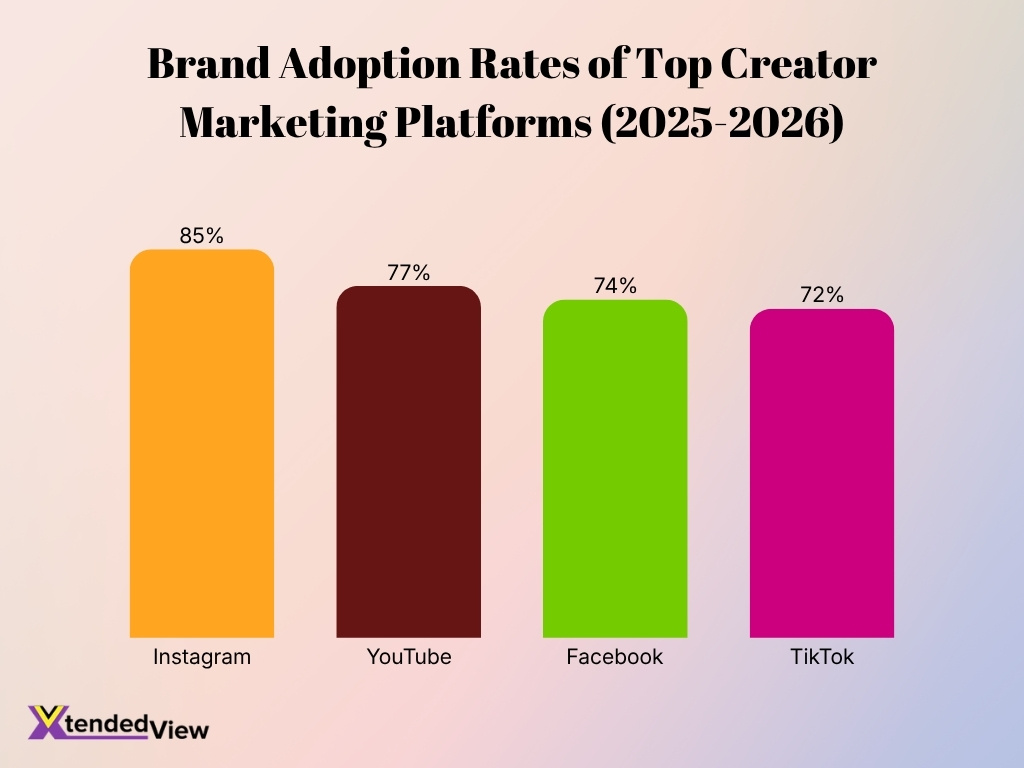
- In 2025-26 research, 77% of brands used YouTube for creator marketing, placing it behind Instagram at 85% but ahead of Facebook at 74% and TikTok at 72%.
- Among agencies, YouTube adoption reached 79%, compared with 82% for Instagram, 74% for TikTok, and 71% for Facebook.
- YouTube usage was even higher among enterprise organizations at 82%, versus 84% for Instagram and 74% for TikTok.
- Organizations used an average of five social platforms for influencer campaigns, showing that YouTube increasingly functions as one component of multi-platform creator programs rather than a standalone channel.
- Earlier 2024 research showed a similar competitive pattern: 73% of brands identified YouTube as a top creator-marketing platform, compared with 84% for Instagram and 71% for TikTok.
- Creators viewed the platforms differently. In that survey, 23% called YouTube their most lucrative platform, compared with 28% for Instagram and 27% for TikTok.
- 19% of creators selected YouTube as the most creator-friendly platform, versus 31% for TikTok and 29% for Instagram.
- YouTube’s production demands translate into higher sponsorship costs. In 2026 marketplace data, brands paid $255 per YouTube creator collaboration on average, compared with $193 on Instagram and $186 on TikTok.
- Short-form competition remains intense. In 2024 campaign data, Instagram Reels generated 520,000 tracked posts, TikTok generated 398,000, and YouTube Shorts generated 94,000, with Shorts volume rising 59% year over year.
YouTube Influencer Marketing Statistics by Creator Tier
- Nano creators generally cover accounts with roughly 1,000-10,000 followers, with 2026 cross-platform rates commonly ranging from $100 to $500 per post.
- Micro creators, typically defined as 10,000-100,000 followers, generally command $500-$2,500 per post in 2026 benchmarks.
- Macro creators with roughly 100,000 to 1 million followers commonly charge $2,500-$10,000 or more, although platform, engagement, usage rights and content requirements can push rates higher.
- Mega creators with 1 million or more followers can command $10,000-$50,000 or more per post in broader 2026 influencer pricing benchmarks.
- YouTube lowered its Shopping affiliate threshold to 500 subscribers for eligible Partner Program creators in 2026. This gives emerging creators access to commerce tools well before reaching traditional micro-influencer scale.
- Mid-tier creators remain important for brands because earlier industry research identified them as a strong balance between audience reach and engagement, while established creators with 300,000-1 million followers delivered the greatest perceived impact for long-term partnerships.
- Creator earnings remain highly concentrated. The top 10% of creators received 62% of creator payments in 2025, compared with 53% in 2023.
- The top 1% captured 21% of payments in 2025, up from 15% in 2023, showing how quickly compensation rises at the upper end of the creator market.
- Across campaigns covered by the 2025 compensation dataset, average creator earnings reached $11,400 per campaign, but median earnings were only $3,000. The gap illustrates why averages can overstate typical creator compensation.
- A separate 2026 survey of more than 5,000 creators found 67% earned less than $10,000 annually from content creation, while 62% said creating content was not their primary source of income.
YouTube Influencer Marketing Trends and Future Outlook
- Creator advertising spending is projected to reach $44 billion in 2026, up from $37 billion in 2025, according to industry research cited in June 2026.
- Average annual influencer marketing budgets increased 171% year over year in 2025-26 research, while 71% of organizations reported increasing their investment.
- Among enterprise organizations, 80% increased influencer marketing investment, showing that budget growth extends beyond smaller experimental programs.
- Nearly two-thirds of incremental creator spending came from budgets previously assigned to paid media and digital channels, suggesting creator marketing increasingly competes directly for mainstream advertising dollars.
- YouTube Creator Partnerships gives advertisers access to more than 3 million Partner Program creators, while AI-based matching uses signals such as audience similarity, subscriber growth and organic brand mentions.
- Shorts now generates more than 200 billion daily views, giving brands a rapidly expanding short-form environment alongside YouTube’s established long-form creator ecosystem.
- TV viewing is another major growth area. YouTube now records more than 1 billion hours of viewing on TV screens each day, expanding creator content into the same screen environment as traditional television advertising.
- Commerce will play a larger role in creator monetization. More than 500,000 creators already participated in YouTube Shopping in 2026, while the platform is developing purchasing experiences that keep viewers inside the app.
- Creator content will likely continue moving beyond organic sponsorships. In 2026, 92% of surveyed paid-media leaders already used creator content in paid media, where it accounted for 44% of creative assets on average.
- YouTube is also extending the useful life of sponsorship inventory. Creators can add brand links to Shorts and swap branded segments after deals end, turning existing content libraries into repeatable commercial inventory rather than one-time sponsorship assets.
Frequently Asked Questions (FAQs)
YouTube Creator Partnerships provides brands access to more than 3 million creators in the YouTube Partner Program.
In 2026, 78% of surveyed viewers said YouTube has the most trusted creators for product recommendations.
More than 8 in 10 surveyed marketers reported at least 2X ROI from creator marketing, while creator content accounted for an average of 44% of their paid-media creative assets.
Average reported annual influencer marketing budgets increased 171% year over year, with 71% of surveyed organizations increasing their investment.
YouTube reported more than 500,000 creators participating in YouTube Shopping, while eligible creators can now access its affiliate program with at least 500 subscribers.
Conclusion
YouTube influencer marketing enters the second half of the year with access to more than 3 million Partner Program creators, more than 500,000 Shopping creators, and Shorts generating more than 200 billion daily views. Consumer trust remains central to the platform’s commercial value, with 78% of surveyed viewers saying YouTube has the most trusted creators for product recommendations.
Creator content increasingly connects awareness with measurable business outcomes. Viewers exposed to relevant creator content were 13X more likely to search for a brand and 5X more likely to purchase, while more than 8 in 10 surveyed marketing leaders reported at least 2X ROI from creator marketing programs. Together, the statistics show a market moving toward larger budgets, paid amplification, creator-led commerce, and performance-based measurement.
