

Smartphones now sit at the center of everyday communication, entertainment, education, and work, making it increasingly difficult to separate necessary use from problematic behavior. In the U.S., 91% of adults own a smartphone, while recent research estimates problematic smartphone use at 37.1% globally across nearly 98,000 participants. The effects extend beyond screen time: compulsive checking, nighttime use and difficulty putting a device down have been associated with sleep disruption, mental-health symptoms, academic distraction and reduced workplace focus. For example, students may interrupt study sessions to check notifications, while employees can lose concentration when personal smartphone activity breaks up work tasks.
However, researchers increasingly stress that heavy use alone does not equal addiction; loss of control and interference with daily functioning provide more meaningful indicators. The following smartphone addiction statistics examine prevalence, demographic differences, screen habits and the wider effects of problematic smartphone use.
Editor’s Choice
- 37.1%: The pooled global prevalence of problematic smartphone use across 109 studies and 97,748 participants, with a 95% confidence interval of 33.5% to 40.8%.
- 45.8%: The share of Americans who described themselves as addicted to their phones in the 2026 survey, up 2.6 percentage points from 43.2% in the prior survey.
- 186 checks per day: The average number of times Americans checked their phones in the 2026 survey, down from 205 in the previous year’s report.
- 84.6%: The proportion of Americans who reported checking their phone within 10 minutes of waking, up from 80.6% in the prior survey.
- 76.3%: The share of Americans who said they felt uneasy when leaving their phone at home.
- 41.3%: The 2026 survey share reporting panic or anxiety when their phone battery dropped below 20%; a detailed year-over-year table reported 44.1%, indicating a small discrepancy within the published results.
- 29.3%: Nearly three in 10 respondents reported using or looking at their phones while driving. The detailed comparison table gives the figure as 29.4%.
- 28.49%: A 2026 meta-analysis estimated that more than one-quarter of Chinese college students met the included studies’ criteria for smartphone addiction. The analysis synthesized 67 studies involving 129,996 students.
- 60%: A systematic review estimated smartphone addiction prevalence among Indian undergraduate medical students at 60%, based on 24 studies.
- 0.75% to 1.2%: A representative U.S. adult study produced this much lower PSU estimate when researchers required meaningful functional impairment, highlighting why prevalence figures depend heavily on definitions.
Recent Developments
- A February 2026 meta-analysis synthesized 67 Chinese studies and 129,996 college students, producing a pooled smartphone addiction prevalence estimate of 28.49%.
- The same 2026 analysis found individual study estimates ranging from 4.05% to 83.6%, demonstrating how assessment tools and study design can dramatically change reported addiction rates.
- After statistical adjustment for possible publication bias, the Chinese college-student estimate increased from 28.49% to 36.35%. Researchers cautioned that this represented a methodological adjustment, not evidence of a real-world increase.
- U.S. phone checking declined from 205 times per day in the 2025 report to 186 in the 2026 report, a reduction of 19 daily checks.
- Despite that decline, self-reported U.S. phone addiction increased from 43.2% to 45.8% between the two survey reports.
- The percentage of Americans checking their phones within 10 minutes of waking increased from 80.6% to 84.6%, suggesting that early-morning phone engagement remained entrenched.
- Meanwhile, the share using or looking at a phone while driving increased from 27% to about 29.4% in the year-over-year comparison.
- A 2025 international survey of 20,000 young people found 40% were taking breaks from digital devices, an 18% increase from 2022, suggesting that digital self-regulation has become more common among younger users.
- A 2026 research framework proposed using privacy-preserving monitoring, AI-assisted detection and device interventions to interrupt addictive mobile-use loops, reflecting growing interest in technology-based approaches to digital well-being.
- In a five-week experimental intervention involving 25 participants, a personalized system reduced smartphone-use duration by 7.4% to 9.8% and improved intervention acceptance by 4.7% to 22.5% compared with alternative approaches.
What Is Smartphone Addiction?
- Smartphone addiction does not currently have a single universally standardized diagnostic threshold, which helps explain the wide variation among prevalence studies.
- Research commonly associates problematic use with features such as salience, tolerance, withdrawal, conflict, and relapse, characteristics also considered in behavioral-addiction research.
- Functional impairment changes prevalence estimates substantially. In one representative U.S. study, a 13% screening prevalence fell to 0.75% to 1.2% after researchers accounted for functional impairment.
- Consequently, spending many hours on a smartphone does not automatically equal addiction. Researchers distinguish high engagement from use that disrupts everyday responsibilities or functioning.
- A global meta-analysis reported a 37.1% pooled PSU prevalence, but its authors emphasized significant variation by measurement scale and geographic region.
- The same meta-analysis found an increasing prevalence trend across all age groups covered by the research, although the rate of growth differed by age.
- Researchers also identified differences by gender over time: males initially showed lower PSU prevalence than females, but the male trend increased faster and eventually moved above the female trend in the analyzed data.
- In a study of 183 Chinese university students, 25% reported multiple problematic smartphone-use behaviors. Participants particularly identified short-video, social networking, gaming and learning apps as affecting their attitudes or behavior.
- Modern digital well-being research increasingly argues that screen time alone provides an incomplete measure. Patterns of use, context, psychological state and functional consequences can matter as much as total minutes spent on a device.
Smartphone Addiction Statistics Worldwide
- Over 3.8 billion people, or 48% of the global population, are addicted to their smartphones.
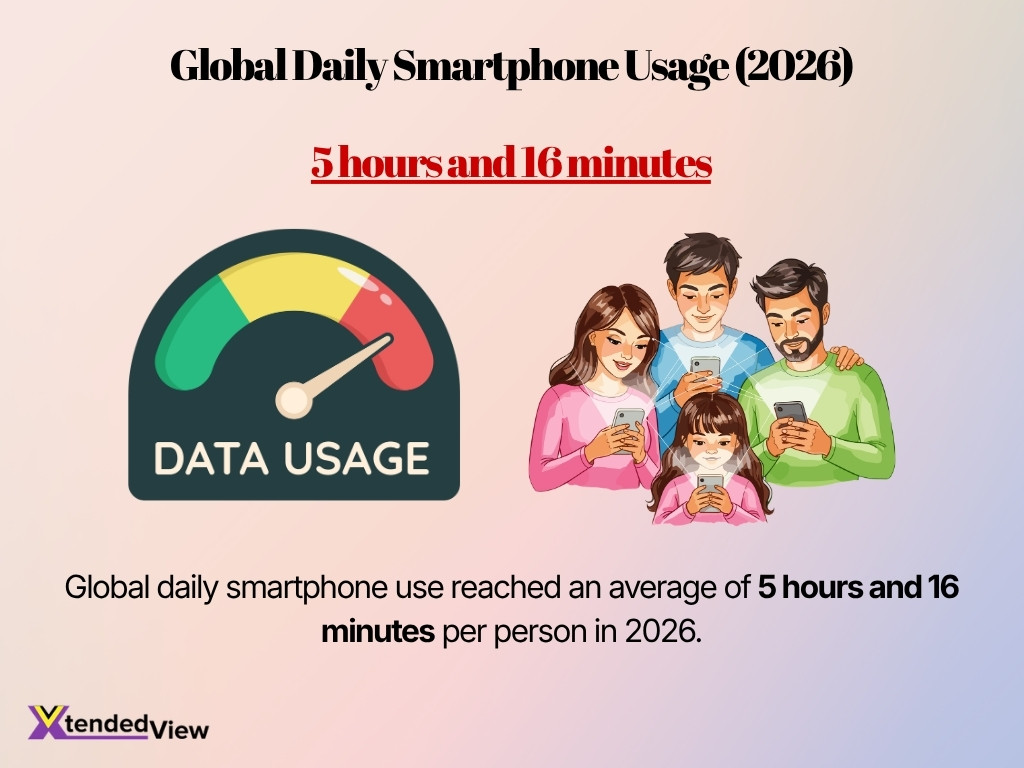
- Global daily smartphone use reached an average of 5 hours and 16 minutes per person in 2026.
- Roughly 21% of smartphone users worldwide met clinical criteria for behavioral addiction.
- A recent analysis flagged smartphone addiction as a mental health concern in over 50 countries.
- China holds the highest problematic smartphone use score globally, reaching 36.5 in 2026.
- Surveys show 57% of Americans openly admit they are addicted to their mobile phones.
- Gen Z faces the highest dependency, averaging 6 hours and 27 minutes of daily screen time.
- Around 67% of teenagers report experiencing sleep loss driven by late-night smartphone usage.
- Short 48-hour digital detoxes have been shown to improve attention span by 23%.
Smartphone Addiction Statistics in the United States
- 91% of U.S. adults owned a smartphone in the 2025 survey, while 98% owned a cellphone of some type.
- Smartphone ownership reached 97% among Americans ages 18 to 29 and 96% among those ages 30 to 49.
- Ownership remained lower among older Americans: 90% of adults ages 50 to 64, and 78% of adults 65 and older reported owning smartphones.
- About 16% of U.S. adults were smartphone-dependent internet users, meaning they owned a smartphone but did not subscribe to broadband at home.
- In the 2026 phone-habits survey, Americans checked their devices 186 times each day, compared with 205 in the preceding report.
- 45.8% of Americans described themselves as addicted to their phones in the 2026 findings, compared with 43.2% a year earlier.
- 76.3% felt uneasy when leaving their phone at home, while 84.6% checked their device within 10 minutes of waking.
- About 49.5% slept with their phone at night, and 71% checked their phone within five minutes after receiving a notification.
- Meanwhile, 72.2% used phones at work, 56.4% used them while eating dinner, and 87.4% used them while watching TV, demonstrating how phone use overlaps with other everyday activities.
- Yet a representative U.S. adult study estimated PSU prevalence at only 0.75% to 1.2% when functional impairment was required. The gap between that figure and self-reported “addiction” shows why the terms should not be treated as interchangeable.
Smartphone Addiction Prevalence by Country
- China: A 2026 meta-analysis of 67 studies and 129,996 college students estimated smartphone addiction prevalence at 28.49%.
- China: Individual studies included in that meta-analysis produced estimates ranging from 4.05% to 83.6%, emphasizing the impact of different instruments and samples.
- China: Statistical adjustment for potential publication bias raised the pooled estimate to 36.35%, although the researchers stressed that the adjusted number does not represent an observed increase in addiction.
- India: A 2025 meta-analysis of undergraduate medical students estimated a pooled smartphone addiction prevalence of 60%, with a 95% confidence interval ranging from 45% to 73%.
- India: That estimate came from 24 separate studies, but heterogeneity reached 99.4%, meaning results differed sharply across the underlying research.
- South Korea: A nationwide analysis of 54,948 adolescents found that 25.1% met criteria for problematic smartphone use.
- South Korea: In the same adolescent population, 33.2% reported anxiety symptoms, while 10.9% had seriously considered suicide during the previous 12 months. These figures describe associated outcomes and should not be interpreted as proof that smartphone use caused them.
- United States: A representative adult study found an initial PSU screening prevalence of approximately 13%, but this fell to 0.75% to 1.2% after researchers incorporated functional impairment into the definition.
- United States: Separately, 45.8% of Americans self-identified as addicted to their phones in a 2026 consumer survey. This measures perception rather than a clinical diagnosis and therefore should not be directly compared with research-based PSU estimates.
- Worldwide benchmark: Across 109 international studies, the pooled problematic smartphone-use prevalence reached 37.1%. Because prevalence varied significantly by region and measurement scale, this benchmark provides context rather than a standardized country-comparison rate.
Smartphone Addiction Rates by Age Group
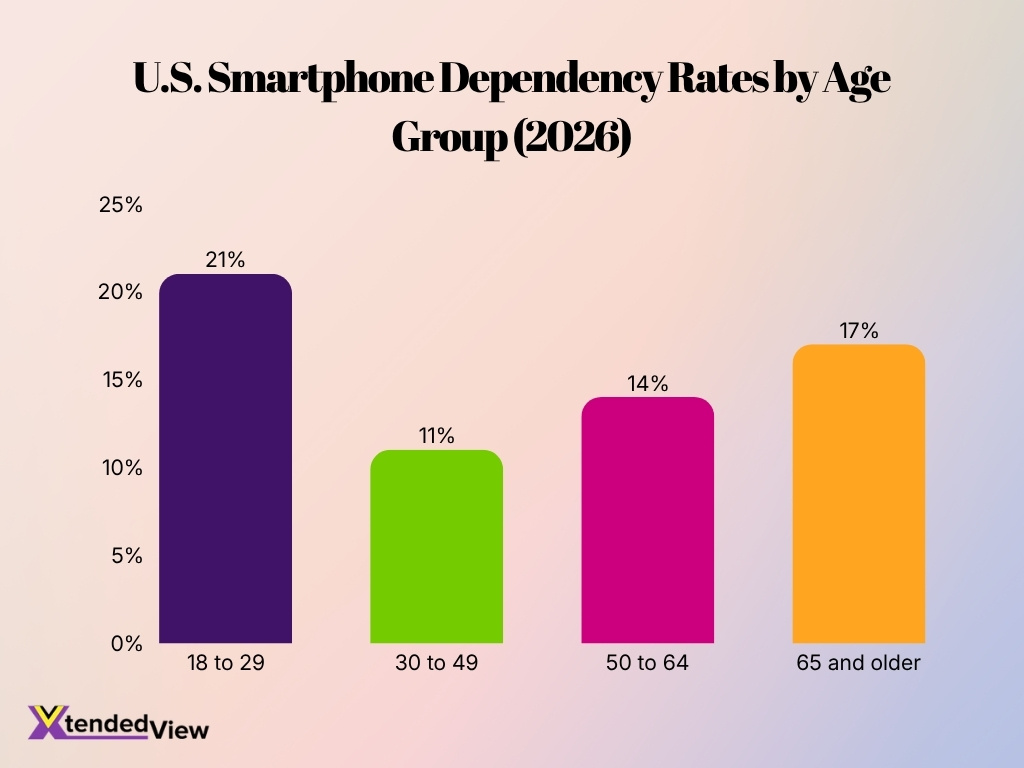
- Among U.S. adults ages 18 to 29, 21% were smartphone-dependent in 2026.
- Smartphone dependency stood at 11% among adults ages 30 to 49 in 2026.
- Among adults ages 50 to 64, 14% reported smartphone dependency in 2026.
- Adults ages 65 and older recorded a 17% smartphone-dependency rate in 2026.
- Among U.S. teens, 46% reported being online almost constantly in recent research.
- Gen Z records the highest smartphone addiction rate, averaging 6 hours and 37 minutes of daily usage.
- Millennialsself-report the highest addiction feelings, with 47.3% considering themselves addicted to their phones.
- Among adults younger than 25, 44% admit falling asleep with their smartphones in their hands.
- Across all age brackets, Americans check their phones an average of 186 times a day in 2026.
- Approximately 88.6% of Americans admit to checking their phones within the first 10 minutes of waking up.
Smartphone Addiction Statistics by Gender
- A 2026 study found smartphone addiction in 59% of male university students compared to 50% of females.
- The same 2026 research identified 43% of females and 36% of males at high risk for addiction.
- Large-scale data shows females average 166.78 minutes of daily smartphone use versus 154.26 minutes for males.
- A 2026 demographic analysis revealed that 91% of males and 90% of females currently own smartphones.
- Women in low- and middle-income countries have a 13% gender gap in smartphone ownership as of 2026.
- Adolescent females consistently log more active smartphone use than males through daily keystrokes and app activity.
- Research indicates 44% of girls and 33% of boys feel their smartphone use is overly intense.
- Among teens recognizing overuse, 41% of girls and 32% of boys have actively attempted to reduce screen time.
Smartphone Addiction Statistics Among Children
- A large U.S. study involving more than 10,500 children examined smartphone ownership and health outcomes around ages 12 and 13.
- Children who owned smartphones by age 12 had 31% higher odds of depression than children without smartphones in the study, after adjustment for multiple potential confounding factors.
- Smartphone ownership by age 12 corresponded with approximately 40% higher odds of obesity compared with not owning one.
- The largest difference involved sleep: smartphone-owning 12-year-olds had about 62% higher odds of insufficient sleep than peers without smartphones.
- Researchers also found that earlier smartphone acquisition correlated with greater risks of obesity and insufficient sleep, making age of first ownership a potentially important factor.
- Among children ages 11 to 14 in a 2026 school study, 85.1% exceeded two hours of daily screen time, with average exposure reaching 3.44 hours per day.
- Boys in that 2026 sample had nearly 3.9 times the odds of excessive screen exposure compared with girls. This statistic concerns screen time, not a smartphone-addiction diagnosis.
- Another 2026 analysis found 31.7% of children had at least four hours of daily screen time, while only 34.4% achieved adequate sleep duration.
- Longitudinal U.S. research found addictive-use patterns could emerge around age 11, with nearly one-third of participants developing increasingly addictive trajectories for either social media or mobile phones.
- A 2025 seven-year pediatric analysis found smartphone use had become progressively more problematic over time and that higher problematic-use symptoms correlated with lower quality of life among children and adolescents.
U.S. Teen Smartphone and Social Media Usage Statistics
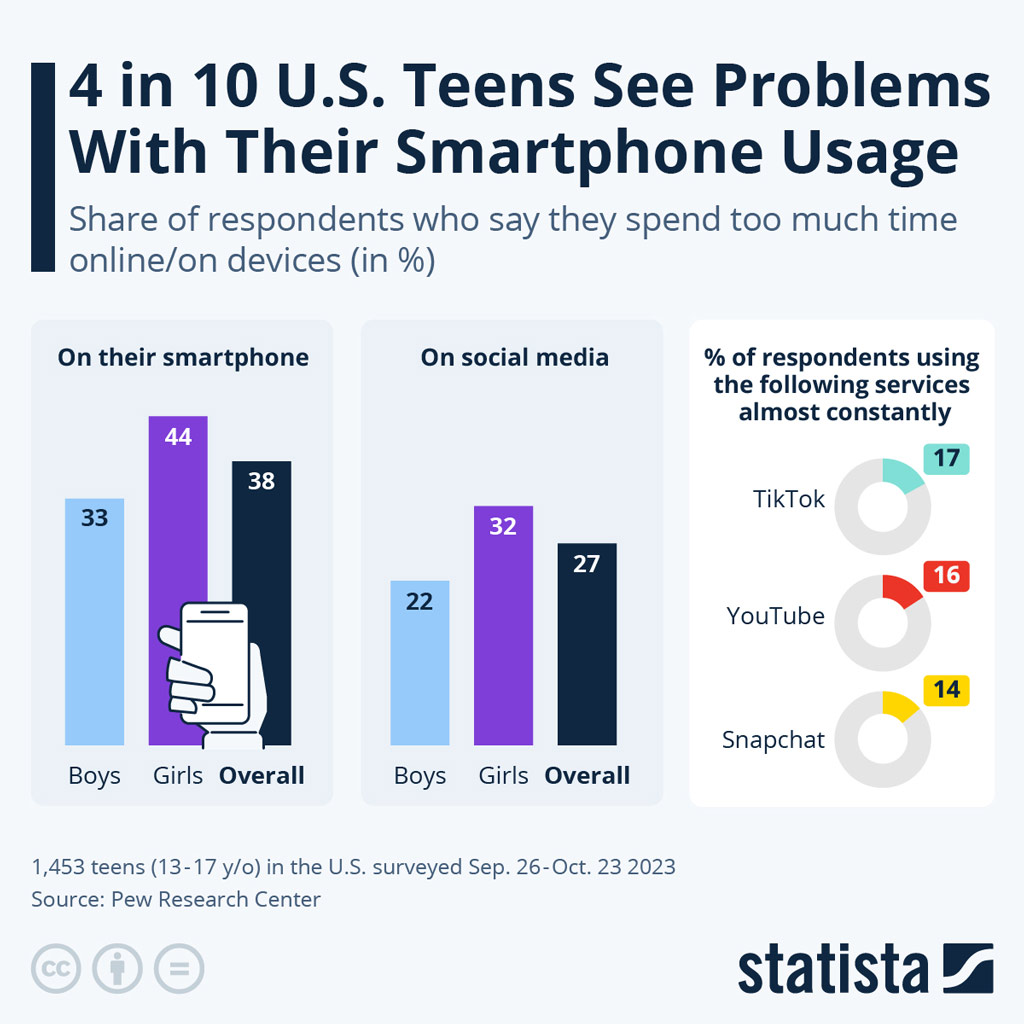
- 38% of U.S. teens overall say they spend too much time on their smartphones, highlighting concerns about excessive device use among teenagers.
- Girls are more likely to report excessive smartphone use, with 44% of girls saying they spend too much time on their phones compared with 33% of boys.
- The gender gap in perceived excessive smartphone use stands at 11 percentage points, with girls reporting the problem more frequently.
- Around 27% of teens overall believe they spend too much time on social media, lower than the 38% who report excessive smartphone use.
- Excessive social media use is reported by 32% of girls, compared with only 22% of boys, creating a 10-percentage-point gap.
- Among the platforms shown, TikTok ranks highest, with 17% of U.S. teens saying they use the service almost constantly.
- YouTube follows closely at 16%, while 14% of teens report using Snapchat almost constantly.
- The findings are based on a survey of 1,453 U.S. teens ages 13–17, providing insight into teenagers’ perceptions of their smartphone and social media habits.
Smartphone Addiction Statistics Among College Students
- A 2025–2026 survey found that 78% of university students feel emotionally dependent on their phones.
- Gen Z college students now average an estimated 6 hours and 27 minutes of daily smartphone use.
- University students check their screens 10 to 12 times per lecture, which directly impairs academic focus.
- A 2025 study revealed a 48% smartphone addiction rate among university students primarily driven by social media.
- Within that same academic study, female students (57.6%) exhibited higher addiction prevalence than males (42.4%).
- Virtual learning statistics show 41% of students actively multitask on social media platforms during live classes.
- A 2026 medical undergraduate study found that 86.1% use their smartphones for over 6 hours every single day.
- Recent educational trials prove students using phones during lectures score 13% to 15% lower on standard exams.
- Approximately 76% of Gen Z students admit they spend far more time on their devices than they desire.
Daily Smartphone Screen Time and Checking Statistics
- Americans checked their phones an average of 186 times per day in the 2026 usage survey.
- That works out to about 11.6 checks per waking hour, or roughly one interaction every five minutes during a 16-hour waking day.
- The figure dropped from 205 checks per day in the previous report, representing 19 fewer daily checks, or about a 9% decline.
- Despite fewer checks, 45.8% of Americans identified themselves as addicted to their phones in the same 2026 survey, showing that perceived dependence does not necessarily move with checking frequency.
- About 87.4% used their phones while watching TV, demonstrating how smartphone activity increasingly overlaps with other screen-based media.
- Another 72.2% reported phone use at work, making workplace smartphone engagement one of the most widespread multitasking behaviors measured.
- 67.9% used their phone while on the toilet, illustrating how smartphone sessions extend into brief periods that previously involved little or no media use.
- 60.7% had texted someone who was in the same room, an example of smartphone communication replacing some face-to-face interactions even at close physical distance.
- In the U.S. teen population, 50.4% logged at least four hours of daily nonschool screen exposure, providing another indication of heavy everyday digital engagement among younger users.
- Among university students in a 2025 study, total daily screen exposure exceeded eight hours in both smartphone-addicted and non-addicted groups, showing why duration alone cannot reliably identify addiction.
Screen Time by Demographics
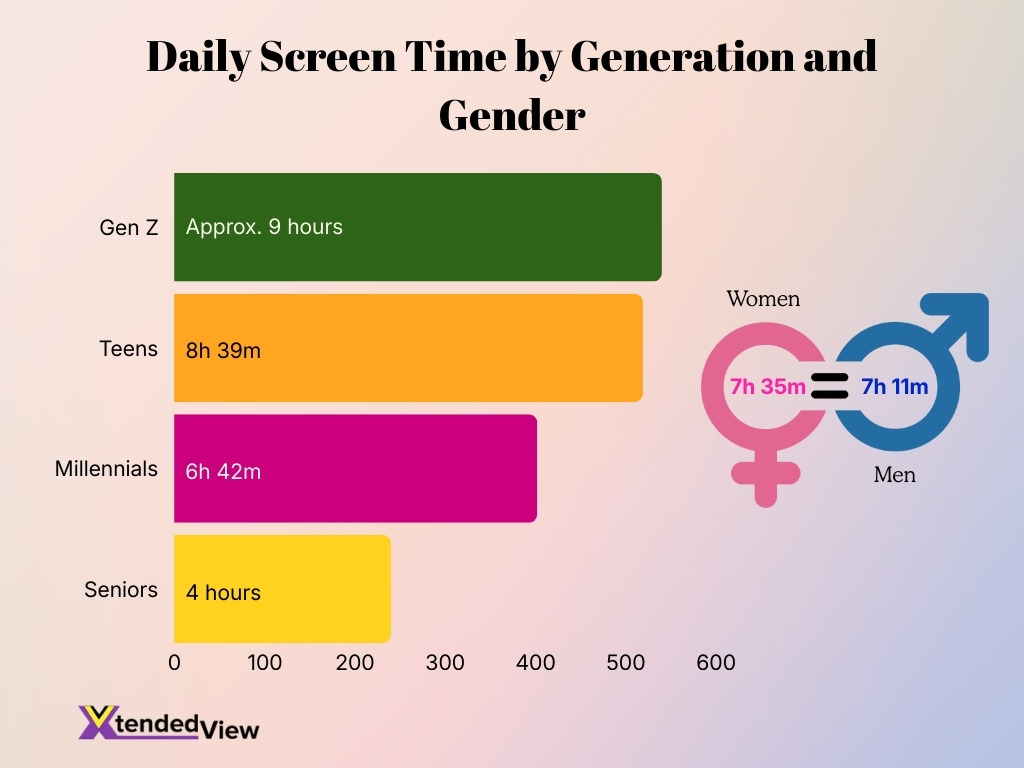
- Gen Z averages ~9 hours daily screen time, exceeding older groups.
- Teens (13-18) log 8 hours 39 minutes on entertainment screens daily.
- Adults aged 16-24: women at 7h 35m, men at 7h 11m.
- Among 18-29 year-olds, 23% hit 9-12 hours daily screen time.
- Seniors 65+ average lowest at ~4 hours daily screen usage.
- Women aged 16-24 exceed men by 24 minutes daily.
- 41% of teens surpass 8 hours daily screen time.
- 76.3% of Gen Z use phones more than desired.
- Millennials clock 6 hours 42 minutes average daily screen time.
Smartphone Usage Before Sleep and After Waking Up
- 84.6% of Americans checked their phones within 10 minutes of waking in the 2026 usage survey.
- About 49.6% slept with their phone at night, placing the device within immediate reach for nearly half of respondents.
- A separate 2026 U.S. survey found 57% of adults spent at least five hours per day looking at screens, increasing the opportunities for smartphone use to continue into the evening.
- Within that survey, 21% estimated five to six hours of daily screen exposure, while another 16% reported seven to eight hours.
- 13% reported nine to 12 hours of daily screen exposure, while 7% estimated more than 12 hours a day.
- Objective 2026 adolescent research found teens averaged about 50 minutes of smartphone use between 10 p.m. and 6 a.m. on school nights.
- More than half of tracked adolescents used smartphones between midnight and 4 a.m. at least once during the observation period.
- Social media accounted for more than 65% of nighttime smartphone activity in that adolescent study, making social platforms the dominant late-night category.
- A 2025 sleep analysis found people who used screens before bed had a 33% higher rate of poor sleep quality than people who avoided bedtime screens.
- A 2026 university study concluded that smartphone use timing, particularly before bedtime, predicted sleep disturbance more strongly than total daily exposure, underscoring why nighttime habits deserve separate attention from overall screen time.
Smartphone Addiction and Nomophobia Statistics
- In 2026, around 46% of Americans consider themselves addicted to their smartphones.
- A 2026 report shows the average American checks their smartphone 186 times daily.
- Approximately 76.3% of users in 2026 feel uneasy or anxious when leaving their phone at home.
- A 2026 meta-analysis found a pooled nomophobia prevalence of 72.3% among college students.
- In 2026, 41.3% of people report feeling panic or anxiety when their phone battery drops below 20%.
- More than 53% of smartphone users in 2026 have never gone longer than 24 hours without their phone.
- A 2026 generational breakdown reveals that 74.8% of Baby Boomers feel anxious after losing their phones.
- Global smartphone users are projected to reach 5.12 billion in 2026, expanding the exposure base for nomophobia.
- About 30% of young adults in 2026 demonstrate problematic phone use strongly linked to increased stress.
- In 2026, roughly 47.3% of Millennials self-report being addicted to their devices.
Smartphone Addiction and Mental Health Statistics
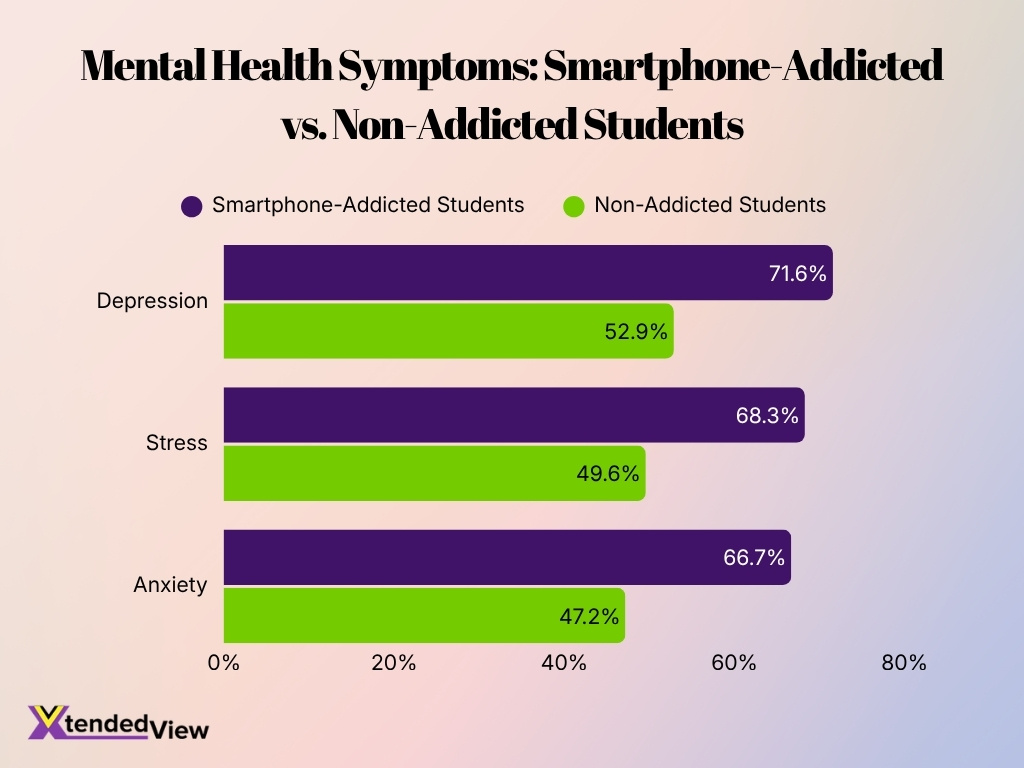
- A 2025 study of medical students found that 71.6% of smartphone-addicted participants had depression, compared with 52.9% among students without smartphone addiction.
- Anxiety appeared in 66.7% of smartphone-addicted students, compared with 47.2% among non-addicted participants in the same study.
- Stress affected 68.3% of smartphone-addicted students, versus 49.6% among those who did not meet the study’s smartphone-addiction threshold.
- Across the full medical-student sample, moderate-to-severe mental-health problems affected 56.6% for depression, 50% for anxiety, and 54% for stress.
- A major U.S. longitudinal study of 4,285 youths found that 24.6% developed an increasing addictive mobile-phone-use trajectory over four years.
- Nearly half, 49.2% of those U.S. youths, followed a persistently high mobile-phone addictive-use trajectory, while only 26.2% followed the low trajectory identified by the researchers.
- High or increasing addictive mobile-phone and social-media trajectories were associated with approximately two to three times greater risks of suicidal behaviors or suicidal ideation than low addictive-use trajectories.
- Increasing addictive social-media use corresponded with a 2.14 times greater risk of suicidal behaviors, while the high-peaking trajectory carried a 2.39 risk ratio.
- Importantly, researchers found that total baseline screen time was not associated with the suicide-related or mental-health outcomes in that study. Addictive patterns, rather than screen duration alone, showed the stronger relationship.
- A 2025 review of problematic smartphone use likewise identified recurring associations with stress, anxiety, depression and sleep disruption, while emphasizing that underlying mechanisms and direction of causation remain complex.
Smartphone Addiction and Sleep Statistics
- A 2025 medical-student study reported smartphone addiction in 47.8% of participants and poor sleep quality in 84.9%.
- Another 2025 analysis found 46.5% of medical students experienced poor sleep quality across the full study population.
- Poor sleep affected 50.8% of smartphone-addicted students, compared with 35.5% of students without smartphone addiction.
- A separate 2025 study found smartphone addiction in 55.1% of medical students and poor sleep quality in 53.9%.
- Another medical-student sample reported 46% smartphone addiction and 62% poor sleep quality; students using smartphones more than six hours daily recorded significantly worse sleep-quality scores.
- In 2026, objectively tracked U.S. adolescents averaged 50.1 minutes of smartphone use between 10 p.m. and 6 a.m. on school nights.
- In that study of 657 adolescents, 52.1% used their smartphones between midnight and 4 a.m. at least once during the monitoring period.
- Social media accounted for more than 65% of nighttime smartphone activity, making it the dominant category of overnight phone use among the tracked adolescents.
- Research published in 2025 found significant negative associations between smartphone addiction and both sleep quality and sleep duration, while objectively measured excessive use also correlated with poorer sleep outcomes.
- Bedtime timing may matter as much as total use. A recent study found smartphone overuse at bedtime associated with sleep problems even when researchers found no corresponding association with learning achievement.
Smartphone Addiction and Academic and Workplace Performance Statistics
- A 2025 study found problematic tech behavior has a 0.42 direct relationship with academic procrastination.
- The total correlation between problematic tech behavior and academic procrastination reached 0.49.
- Smartphone addiction affected 25.6% of students, with clinical-stage students scoring significantly higher.
- Adolescents spend 1.5 hours of a 6.5-hour school day on smartphones, totaling nearly one-quarter of school time.
- This school-day activity represents 27% of an adolescent’s average total daily phone use.
- A 2026 U.S. analysis estimated 1.16 hours of daily smartphone use occurs entirely during school hours.
- Workplace research involving 262 participants linked smartphone addiction directly to self-reported productivity loss.
Major Risks Associated With Smartphone Addiction
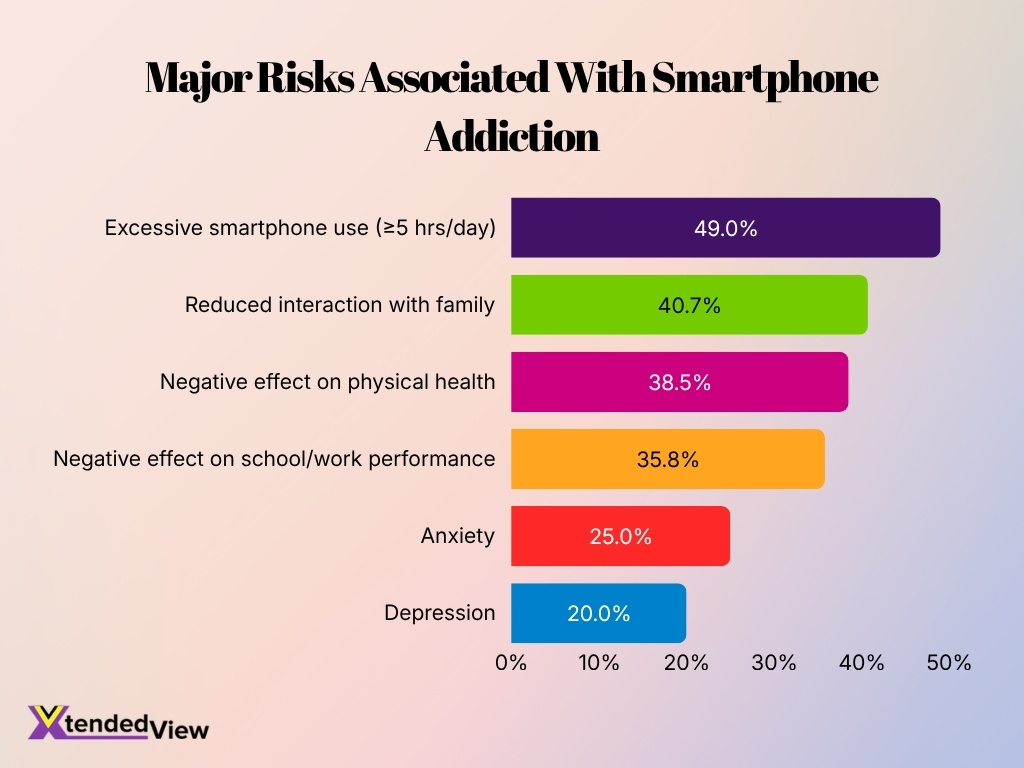
- Excessive smartphone use is the most prominent concern, with 49.0% of users spending five or more hours per day on their smartphones.
- Reduced interaction with family affects 40.7%, indicating that heavy smartphone use may interfere with face-to-face communication and family relationships.
- Around 38.5% report a negative effect on physical health, highlighting potential concerns associated with prolonged and frequent smartphone use.
- School or work performance is negatively affected for 35.8%, suggesting smartphone habits can interfere with productivity, concentration, and daily responsibilities.
- Anxiety is reported by 25.0%, making it one of the notable mental health impacts associated with problematic smartphone use.
- Depression is reported by 20.0%, representing the lowest percentage among the listed risks but still affecting one in five individuals.
Smartphone Addiction and Social Media Usage Statistics
- 31.3% of youths developed an increasing addictive trajectory for social media use between ages 11 and 15.
- Another 9.6% followed a high-peaking addictive trajectory, while 59.1% maintained low usage.
- General mobile-phone addictive use was split into 49.2% high, 24.6% increasing, and 26.2% low trajectories.
- Increasing addictive social-media use correlated with a 2.14 risk ratio for suicidal behaviors.
- A high-peaking addictive trajectory carried an even higher 2.39 risk ratio for suicidal behaviors.
- A 2026 prospective study tracked 11,286 youths across five annual assessments to examine ADHD symptoms.
- Problematic social-media use increased ADHD symptoms the following year with a standardized association of β=0.08.
- Conversely, ADHD symptoms predicted later problematic social-media use with a smaller effect of β=0.04.
- More than 65% of adolescent phone use between 10 p.m. and 6 a.m. involved social media platforms.
Frequently Asked Questions (FAQs)
45.8% of Americans considered themselves addicted to their phones in a 2026 survey.
Americans check their phones an average of 186 times per day, or about 11.6 times per waking hour.
A 2026 meta-analysis of 67 studies and 129,996 students estimated smartphone addiction prevalence at 28.49% among Chinese college students.
A 2025 meta-analysis of 36,656 participants found 51% had moderate nomophobia and 21% had severe nomophobia.
About 84.6% of Americans check their phones within 10 minutes of waking up.
Conclusion
Smartphone addiction statistics show that problematic use cannot be reduced to a single screen-time threshold. The strongest evidence points instead to loss of control, compulsive checking, emotional distress and functional impairment as more meaningful warning signs.
Current research also links problematic smartphone behavior with poorer sleep, mental-health symptoms, academic distraction and workplace interruptions. However, association does not automatically prove causation, and heavy screen time alone does not establish addiction. Overall, the evidence suggests that how people use smartphones matters more than device ownership or total screen hours by themselves.