


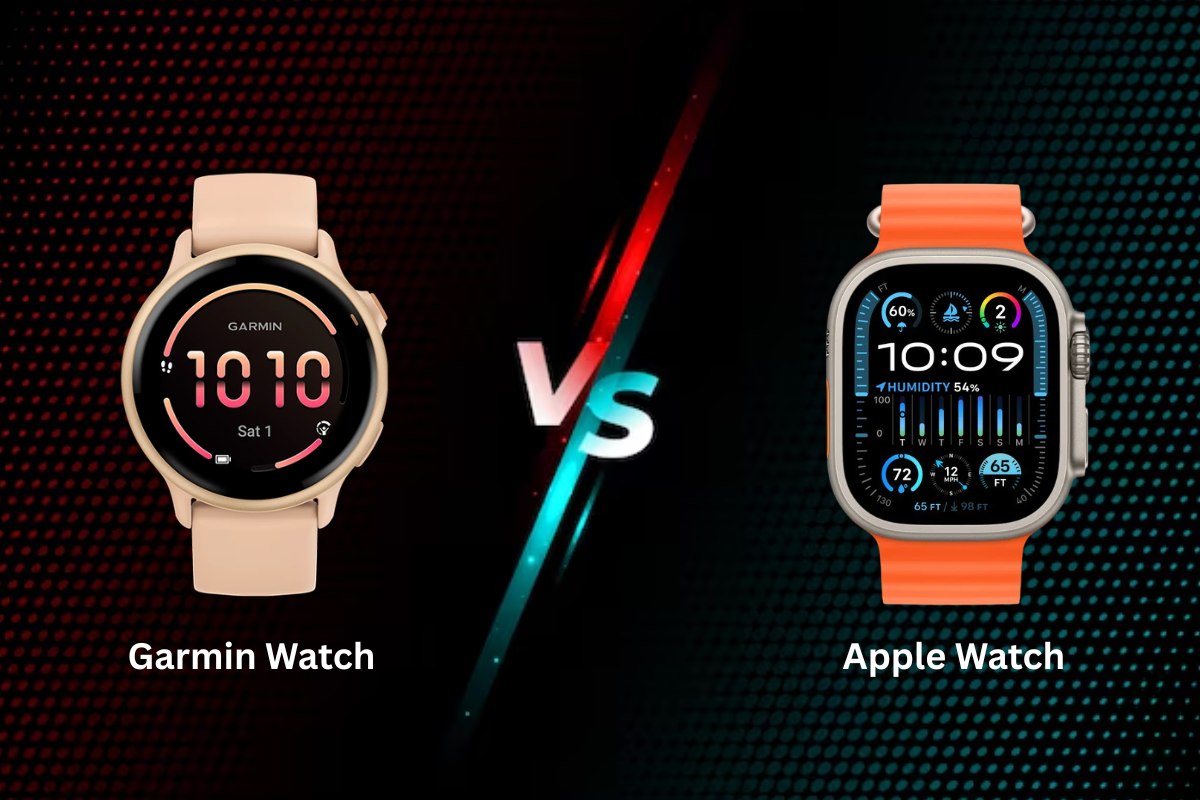
Fitness wearables have evolved from simple step counters into advanced health and training companions. Today, runners use Garmin devices to monitor recovery and endurance, while millions of iPhone users rely on Apple Watch to track workouts, heart health, and daily activity. As smartwatches become central to personal wellness and connected healthcare, understanding how Garmin and Apple Watch compare through data offers valuable insights for athletes, casual exercisers, and industry professionals alike.
Editor’s Choice
- The global smartwatch market reached approximately $62.3 billion in 2025 and is projected to continue double-digit growth through 2034.
- Apple controlled around 23% of the worldwide smartwatch market in 2025, maintaining its position as the leading smartwatch brand.
- More than 562.8 million people worldwide use smartwatches in 2026.
- Over 26% of Americans own a smartwatch, one of the highest adoption rates globally.
- More than 92% of smartwatch users say they use their devices primarily for health and fitness tracking.
- Garmin Connect users completed 8% more activities in 2025 compared with 2024, highlighting rising engagement among fitness enthusiasts.
- North America represented 38.8% of global smartwatch revenue in 2025, making it the world’s largest smartwatch market.
Recent Developments
- Apple introduced the Apple Watch Series 11, Apple Watch Ultra 3, and Apple Watch SE 3 in 2025, expanding its lineup for athletes and everyday users.
- Garmin forecasted approximately $6.8 billion in revenue for 2025, exceeding analyst expectations due to strong demand for outdoor wearables.
- Global smartwatch shipments returned to growth in 2025, increasing 4% year over year after several quarters of decline.
- Apple Watch cumulative revenue surpassed $100 billion by Q2 2025, reinforcing its position as the world’s highest-grossing smartwatch brand.
- Garmin’s shipments increased 10% year over year in Q1 2025, driven by premium fitness and outdoor devices.
- North American smartwatch shipments grew 10% year over year during Q4 2025, benefiting both Apple and Garmin.
- Apple increased its smartwatch shipments by 18% year over year in North America during Q4 2025.
- Garmin posted 11% year-over-year shipment growth in North America during the same quarter.
- The wearable technology market is expected to grow from $103.1 billion in 2026 to nearly $230 billion by 2033, creating significant opportunities for fitness-focused smartwatch brands.
Key Garmin vs Apple Watch Comparison Statistics
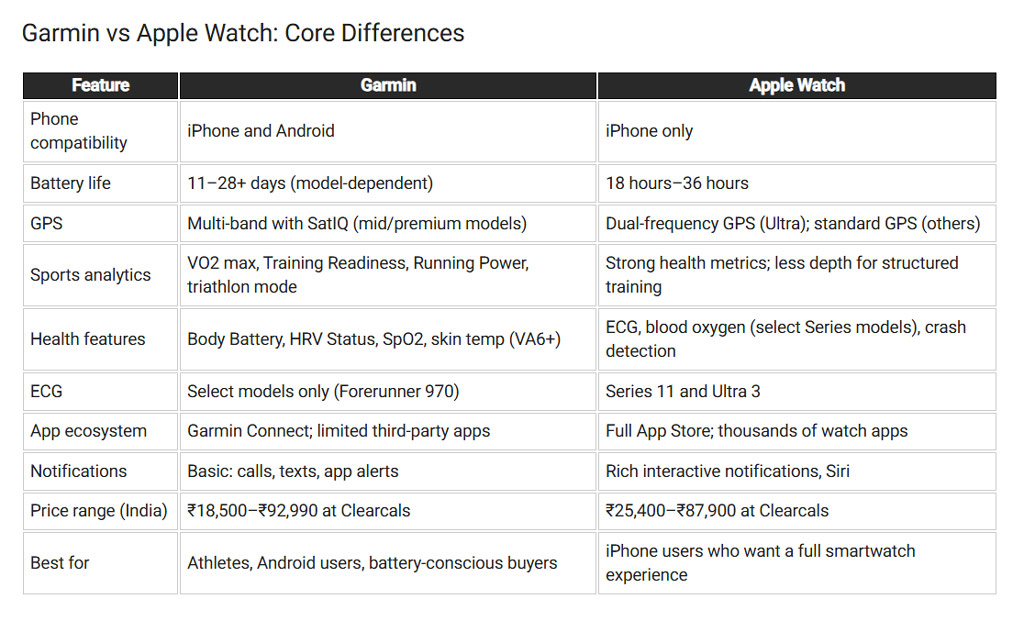
- Garmin supports both iPhone and Android, while Apple Watch is compatible with iPhone only.
- Garmin offers 11–28+ days of battery life, compared to 18–36 hours on the Apple Watch.
- Garmin features multi-band GPS with SatIQ, while Apple Watch Ultra includes dual-frequency GPS.
- Garmin provides advanced training metrics such as VO2 Max, Training Readiness, Running Power, and Triathlon Mode.
- Apple Watch focuses more on health metrics, with less depth for structured athletic training.
- Garmin health tracking includes Body Battery, HRV Status, SpO₂, and skin temperature (VA6+).
- Apple Watch includes ECG, blood oxygen (select models), and crash detection features.
- Garmin ECG is available on select models, including the Forerunner 970.
- Apple Watch offers ECG on Series 11 and Ultra 3 models.
- Garmin Connect has limited third-party apps, while the Apple App Store provides thousands of watch apps.
- Garmin delivers basic notifications for calls, texts, and app alerts.
- Apple Watch supports rich interactive notifications along with Siri integration.
- Garmin is priced between ₹18,500 and ₹92,990 in India.
- Apple Watch ranges from ₹25,400 to ₹87,900 in India.
- Garmin is best suited for athletes, Android users, and battery-conscious buyers.
- Apple Watch is ideal for iPhone users seeking a complete smartwatch experience.
User Demographics and Adoption Statistics of Garmin and Apple Watch
- More than 26% of Americans currently own a smartwatch, making the U.S. one of the most mature wearable markets globally.
- Around 27.6% of adults worldwide own at least one smartwatch device.
- More than 92% of smartwatch users rely on their devices for health and fitness tracking purposes.
- Garmin’s user base skews toward runners, cyclists, triathletes, and outdoor enthusiasts who prioritize performance metrics over smart features.
- Apple Watch attracts a broader demographic, including casual exercisers, professionals, and users seeking health monitoring and smartphone connectivity.
- Garmin Connect users completed 8% more activities in 2025 than in 2024, showing increasing engagement among existing users.
- Running remains one of the top five activities tracked on Garmin Connect, alongside walking, cycling, strength training, and indoor cardio.
- Women increasingly represent a larger share of smartwatch buyers, driven by growing demand for health tracking, sleep monitoring, and wellness applications.
- Younger adults between 18 and 34 years old remain the most active smartwatch users due to higher technology adoption and health awareness.
- The premium smartwatch segment continues to grow as more consumers invest in devices that provide advanced health metrics and sports analytics.
Heart Rate Tracking in Garmin and Apple Watch
- A 2025 review published in sports medicine literature found Apple Watch heart-rate measurements to be 98% accurate during walking activities.
- Garmin optical heart-rate sensors typically achieve 95% to 98% accuracy during steady-state exercise.
- During high-intensity training, heart-rate errors can increase to 5% to 12% for wrist-based sensors because of arm movement and sweat interference.
- Apple Watch demonstrated a mean heart-rate error of less than 2 beats per minute (BPM) during moderate exercise in several validation studies.
- Garmin’s premium devices support broadcasting heart-rate data to external cycling computers and gym equipment, a feature frequently used by endurance athletes.
- More than 80% of runners who use wearables monitor heart-rate zones during training sessions.
- Smartwatches with continuous heart-rate monitoring can detect irregular heart rhythms with sensitivity rates exceeding 90% in clinical evaluations.
- Approximately 60% of wearable users report checking heart-rate data at least once every day.
- Continuous heart-rate tracking has become one of the most-used smartwatch functions, trailing only notifications and step counting in user engagement surveys.
Global Wearable Market Share
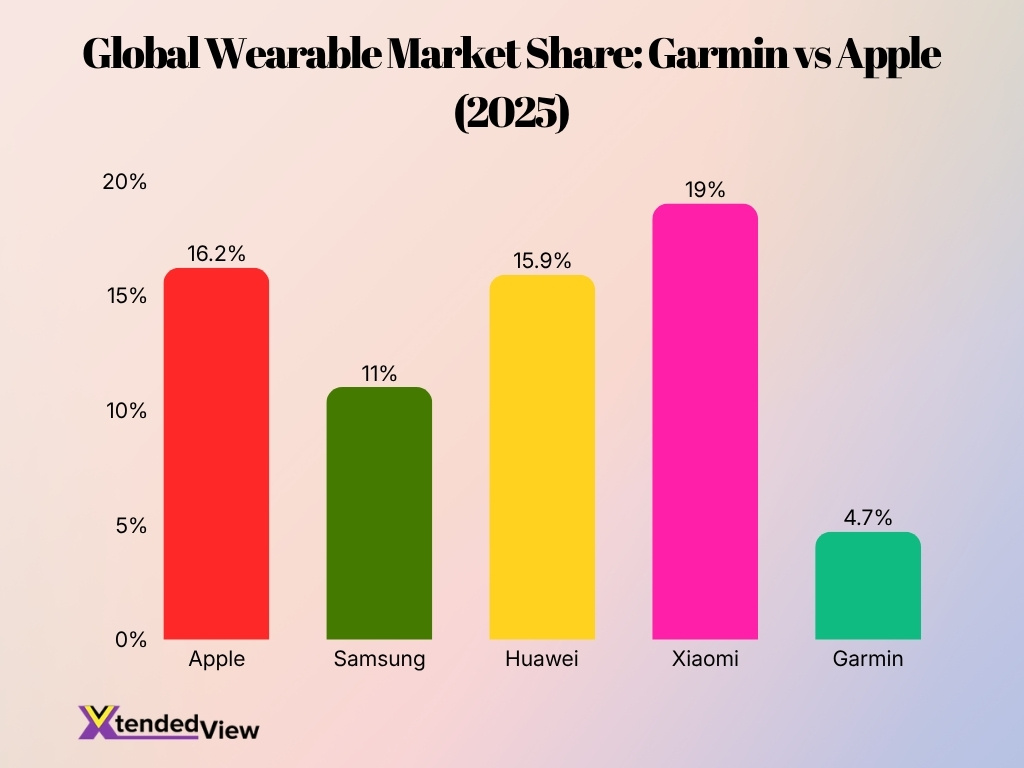
- Xiaomi led the global wearable market with the highest 19.0% market share in 2025.
- Apple ranked second with a 16.2% market share, remaining one of the industry’s leading wearable brands.
- Huawei closely followed Apple, capturing 15.9% of the global wearable market.
- Samsung accounted for 11.0% of worldwide wearable shipments, placing behind the top three brands.
- Garmin held a 4.7% market share, reflecting its focus on the premium fitness and sports wearable segment.
- The gap between Xiaomi (19.0%) and Apple (16.2%) was only 2.8 percentage points, indicating intense market competition.
- Apple, Xiaomi, and Huawei each secured more than 15% of the global wearable market in 2025.
- The combined market share of Apple, Xiaomi, Huawei, Samsung, and Garmin reached 66.8%, highlighting their dominance in the global wearable industry.
GPS Accuracy and Distance Tracking in Garmin and Apple Watch
- Garmin’s dual-frequency GPS reduces location errors to less than 1 meter in open environments.
- Both Garmin and Apple Watch record official marathon distances within a 1% deviation margin.
- Multi-band GPS technology improves tracking precision by up to 40% in dense urban environments.
- Premium Garmin devices seamlessly connect to 4 major satellite networks to ensure reliable location tracking.
- More than 65% of runners state that GPS accuracy strongly dictates their smartwatch purchasing decisions.
- GPS-enabled fitness devices account for approximately 75% of all premium sports-watch sales worldwide.
- Apple Watch Ultra utilizes 2 distinct GPS frequency bands to significantly improve route mapping accuracy.
- Premium Garmin watches can deliver over 100 hours of continuous GPS tracking for long-distance trail runners.
Running Metrics and Analytics in Garmin and Apple Watch
- Garmin offers advanced metrics such as cadence, vertical oscillation, ground contact time, and endurance score across many running models.
- More than 50 million running activities were uploaded to Garmin Connect during 2025.
- Apple Watch provides running power, cadence, stride length, and vertical oscillation metrics beginning with newer watchOS versions.
- Around 72% of regular runners use wearable technology to track pace and distance.
- Data from recreational athletes indicates that runners using wearable analytics train approximately 20% more consistently than those who do not use tracking devices.
- Garmin’s Training Readiness feature combines sleep, recovery, and exercise data to help athletes optimize training intensity.
- Nearly 60% of marathon participants now use a GPS smartwatch as their primary training device.
- Advanced running metrics have become a major differentiator in the premium smartwatch segment, especially among endurance athletes.
- More than one-third of smartwatch owners report using pace and cadence analytics at least once per week.
Fitness Tracking Accuracy in Garmin and Apple Watch
- A 2025 review of wearable validation studies found that step-count accuracy in modern smartwatches generally falls within 3% to 10% error margins under normal walking conditions.
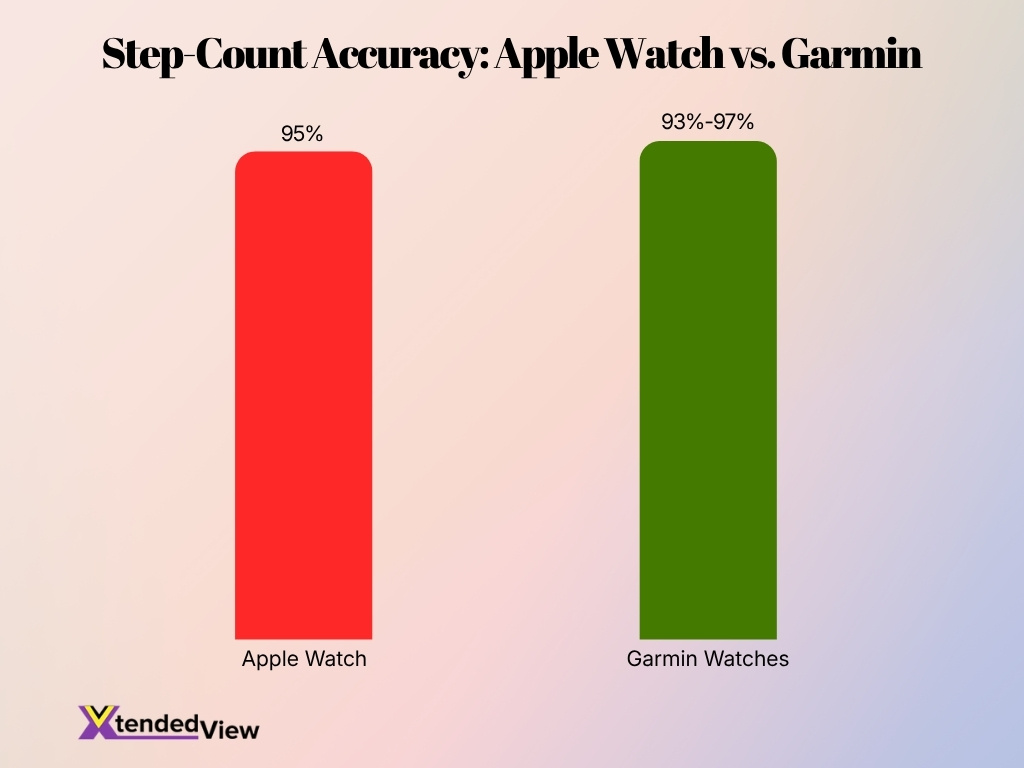
- Apple Watch consistently achieved more than 95% accuracy in step counting during controlled treadmill tests across several academic studies.
- Garmin watches typically report step-count accuracy between 93% and 97%, depending on the model and activity type.
- A 2024 study involving recreational runners found that both Apple Watch and Garmin devices recorded daily activity levels with over 90% agreement compared with research-grade accelerometers.
- During high-intensity interval workouts, smartwatch calorie estimates can vary by 15% to 30%, with Garmin often performing better for endurance exercises because of its sport-specific algorithms.
- Apple Watch’s automatic activity ring system encourages consistent movement, and studies indicate users who regularly close activity rings increase daily movement by approximately 12%.
- Garmin users logged an average of 13 activities per month in 2025, demonstrating high engagement among fitness-focused consumers.
- Wearable adoption for exercise tracking increased by nearly 18% globally between 2023 and 2025, making fitness accuracy a key purchase factor.
- More than 70% of smartwatch owners say fitness tracking is the primary reason they purchased their wearable device.
Workout Detection and Activity Tracking in Garmin and Apple Watch
- Apple Watch automatically recognizes activities such as walking, running, cycling, and swimming and prompts users to start workout recording.
- Garmin devices support tracking for more than 100 sports profiles, including skiing, rowing, strength training, and triathlon events.
- Wearable users who record workouts are approximately 30% more likely to maintain exercise routines for six months or longer.
- Smartwatch owners tracked more than 15 billion workout sessions globally during 2025.
- Garmin Connect activity uploads increased by 8% year over year in 2025, reflecting growing exercise participation.
- Strength training has become one of the fastest-growing activity categories on fitness wearables, increasing by nearly 20% over the past two years.
- Approximately 70% of smartwatch users record walking workouts at least once each week.
- Apple’s Fitness ecosystem reported continued growth in workout tracking, especially in cycling, running, and strength-training categories.
- Automatic workout detection reduces missed exercise sessions and improves activity logging consistency among casual users.
VO2 Max and Performance Insights in Garmin and Apple Watch
- VO2 max is considered one of the strongest predictors of cardiovascular fitness and endurance performance, and both Garmin and Apple Watch provide automatic VO2 max estimates.
- Studies published through 2025 found that smartwatch-based VO2 max estimates generally fall within 5% to 10% of laboratory testing results.
- Garmin offers VO2 max calculations for running, cycling, and trail running on many premium devices.
- Apple Watch users can receive cardiorespiratory fitness notifications when their estimated VO2 max falls below age-based norms.
- Research indicates that adults with higher VO2 max scores can reduce their risk of cardiovascular disease by up to 45% compared with individuals with low fitness levels.
- Approximately 65% of serious runners monitor VO2 max or equivalent performance metrics during training.
- Garmin’s Performance Condition feature can provide an early indication of whether a user is performing above or below their baseline fitness level.
- More than 50 million users worldwide now track advanced fitness metrics such as VO2 max, training readiness, and recovery through wearable devices.
- Wearables that provide performance insights experienced double-digit growth in demand between 2024 and 2025.
Training Load and Recovery Data in Garmin and Apple Watch
- Garmin calculates Training Load by analyzing accumulated exercise intensity over a rolling 7-day period.
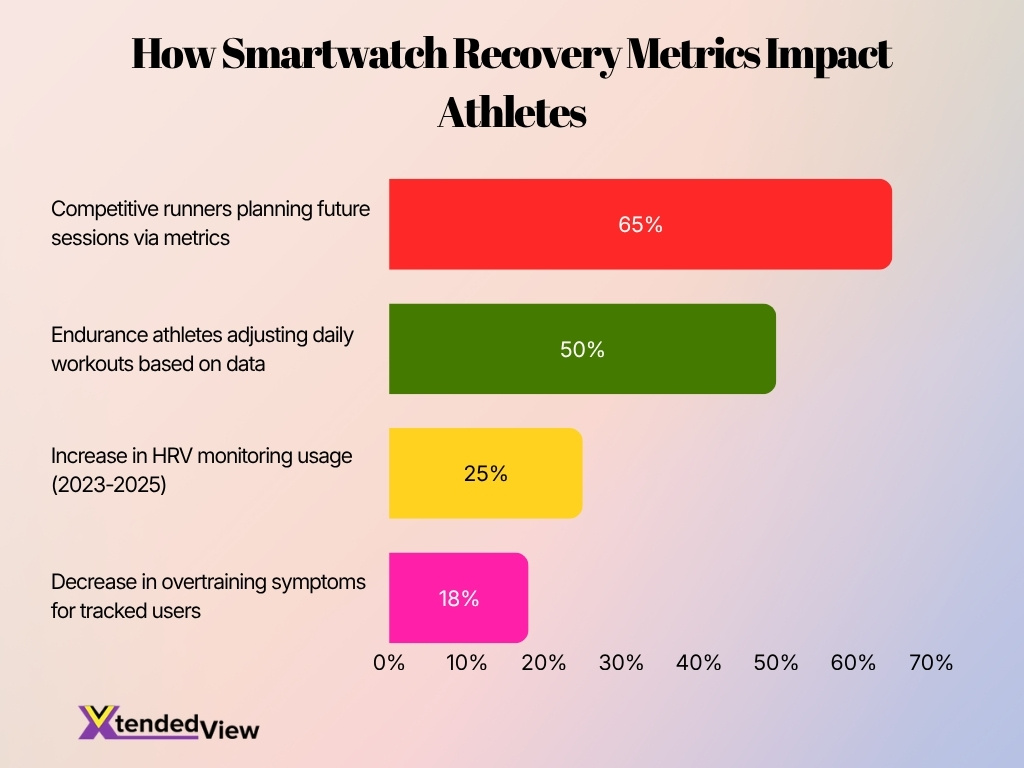
- More than 65% of competitive runners use recovery metrics to actively plan their future training sessions.
- Wearable users tracking recovery metrics report an estimated 18% decrease in overtraining symptoms.
- Nearly 50% of endurance athletes routinely adjust their daily workouts based on smartwatch recovery recommendations.
- Heart-rate variability monitoring usage among smartwatch owners increased by over 25% between 2023 and 2025.
- Garmin’s Recovery Time Advisor recommends rest periods ranging from a few hours to 96 hours depending on physiological strain.
- Sleep quality and HRV currently stand out as the top 2 metrics utilized in advanced wearable recovery algorithms.
- Apple Watch users can now compare their 7-day short-term workout intensity against a 28-day baseline in newer updates.
Sleep Tracking Statistics in Garmin and Apple Watch
- Garmin and Apple Watch sleep tracking accuracy ranges from 80% to 90% compared to clinical polysomnography.
- Watch-based sleep trackers accounted for a dominant 80.3% of the wearable sleep tracker revenue share in 2023.
- More than 35% of American adults get less than the recommended seven hours of nightly sleep.
- Approximately 62% of wearable owners regularly check their sleep data to improve overall health habits.
- Users who consistently track their sleep are 20% more likely to establish strict and regular bedtime routines.
- The global wearable sleep trackers market size is projected to reach $27.76 billion by the year 2030.
- Between 50 million and 70 million individuals globally experience persistent sleep problems that drive wearable demand.
- AI-powered sleep analytics in smartwatches are projected to grow at a massive rate of 16.87% through 2035.
Health Monitoring Features in Garmin and Apple Watch
- Apple Watch supports ECG functionality in more than 150 countries and regions, making it one of the world’s most widely available wearable heart-monitoring systems.
- More than 100 million people globally have access to wearable ECG capabilities through smartwatches.
- Studies found that Apple Watch’s irregular rhythm notifications can identify potential atrial fibrillation cases with sensitivity rates exceeding 90%.
- Garmin provides advanced health metrics including stress tracking, Body Battery energy monitoring, respiration tracking, and Pulse Ox measurements.
- Approximately 80% of smartwatch users utilize at least one health-monitoring feature beyond step counting.
- The global digital health market is expected to exceed $650 billion by 2030, with wearable health tracking representing a significant growth segment.
- Blood oxygen monitoring remains one of the most frequently used wellness features among smartwatch owners.
- Nearly 60% of consumers say health monitoring is more important than messaging or entertainment features when choosing a smartwatch.
- Wearables have contributed to earlier detection of heart rhythm abnormalities and improved patient engagement in preventive healthcare programs.
Battery Life Differences Between Apple Watch and Garmin Watches
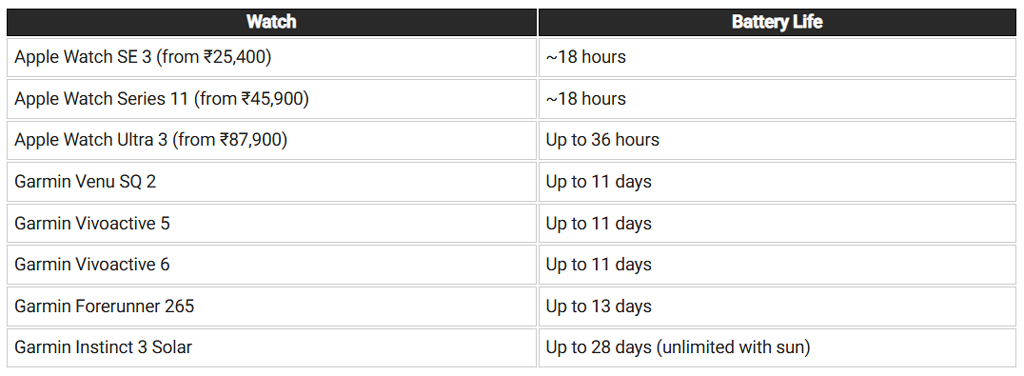
- Apple Watch SE 3 and Apple Watch Series 11 both offer an estimated ~18 hours of battery life per charge.
- Apple Watch Ultra 3 extends battery life to up to 36 hours, making it the longest-lasting Apple Watch in the comparison.
- Garmin Venu SQ 2, Vivoactive 5, and Vivoactive 6 each deliver up to 11 days of battery life.
- Garmin Forerunner 265 provides up to 13 days of battery life, exceeding the Vivoactive and Venu models.
- Garmin Instinct 3 Solar leads the comparison with up to 28 days of battery life and unlimited runtime with solar charging under suitable conditions.
- Garmin watches generally offer multi-day battery life, while Apple Watch models are designed for daily or near-daily charging.
- The battery life difference highlights Garmin’s advantage for endurance, outdoor activities, and extended travel.
- Among all listed models, the Garmin Instinct 3 Solar has the longest battery life, whereas the Apple Watch SE 3 and Series 11 have the shortest.
App Ecosystem and Data Syncing in Garmin and Apple Watch
- The Apple App Store hosts over 39,000 health and fitness apps that integrate directly with the Apple Watch ecosystem.
- Garmin’s Connect IQ platform provides more than 10,000 customizable apps and watch faces specifically tailored for athletes.
- Approximately 70% of wearable owners actively synchronize their daily fitness data with external health or training platforms.
- Apple Health aggregates metrics from over 1,000 compatible third-party apps to create a centralized and secure wellness dashboard.
- Nearly 60% of consumers claim that cross-app compatibility heavily dictates their overall wearable purchasing decisions.
- The global fitness app market is officially forecasted to reach $33.6 billion by 2033, growing at a 13.4% annual rate.
- Around 78% of smartwatch users express a strong willingness to share their tracked wearable data with personal healthcare providers.
- Global wearable device shipments exceeded 150 million units in 2023, driving immense long-term growth for data synchronization platforms.
Maps, Navigation, and Outdoor Tracking in Garmin and Apple Watch
- Garmin provides full-color topographic maps, turn-by-turn navigation, and multi-band GPS capabilities on many premium models.
- Apple Watch Ultra introduced precision dual-frequency GPS and improved navigation tools for hikers and endurance athletes.
- More than 40 million Americans participate in hiking each year, increasing demand for outdoor-focused wearable technology.
- Approximately 58 million people worldwide participate in trail running and related outdoor endurance activities.
- Garmin’s navigation features are widely used in ultramarathons, long-distance cycling events, and backcountry adventures.
- Outdoor recreation contributed more than $1.2 trillion to the U.S. economy in 2024, supporting strong demand for adventure wearables.
- Around 70% of outdoor athletes consider navigation and mapping functions important when purchasing a smartwatch.
- Garmin watches often support offline maps and extended expedition modes, features that remain unavailable or limited on many mainstream smartwatches.
- The outdoor smartwatch category continues to grow faster than the overall wearable market as more consumers embrace hiking, trail running, and adventure sports.
Smart Features for Active Users in Garmin and Apple Watch
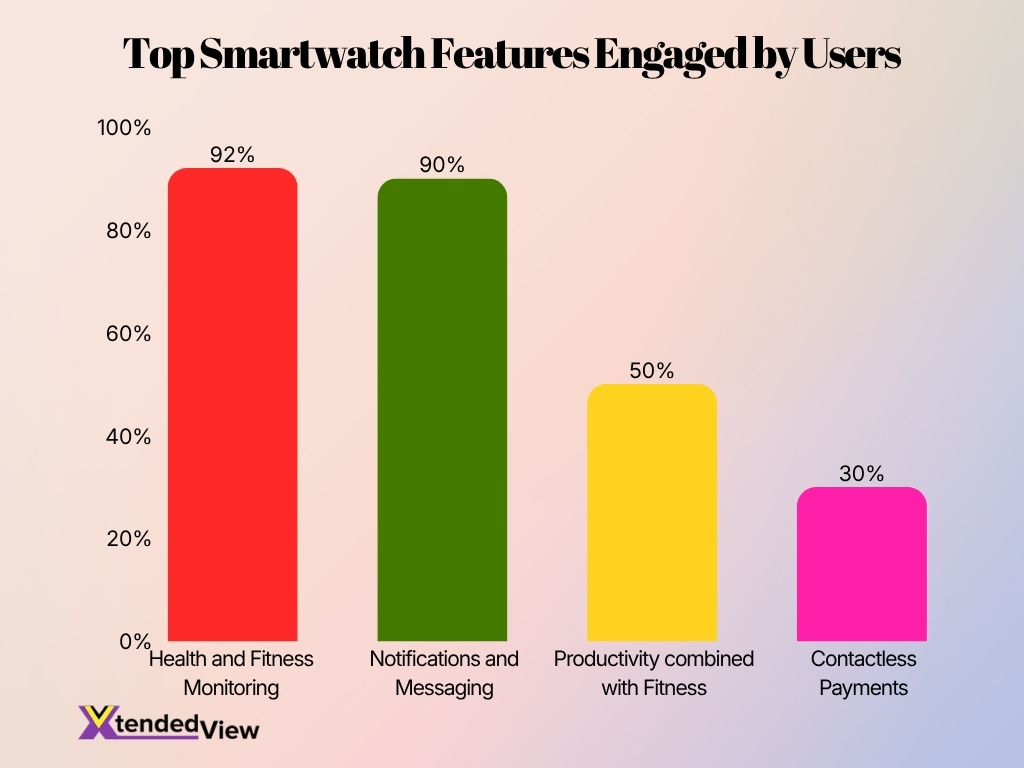
- More than 90% of Apple Watch owners regularly use notifications and messaging features.
- Approximately 65% of users say convenience features heavily influence their smartwatch purchases.
- The number of users making smartwatch contactless payments surpassed 200 million globally in 2025.
- Nearly 50% of smartwatch owners rely on their devices for both productivity and fitness.
- Health and fitness functions are engaged regularly by 83% of all smartwatch owners.
- Over 92% of smartwatch users rely on their devices to monitor health and fitness.
- Around 30% of users utilize smartwatches for contactless payments via platforms like Apple Pay.
- Fitness tracking is the top purchase reason, accounting for 39% of total smartwatch use cases.
- Apple leads the global market with a 28% share of total smartwatch shipments in 2025.
Frequently Asked Questions (FAQs)
Apple led global smartwatch shipments with approximately 23% market share in Q1 2026.
The global wearable technology market is estimated at $103.1 billion in 2026 and is projected to reach nearly $229.9 billion by 2033.
The wearable technology market is forecast to grow at a 12.1% CAGR from 2026 to 2033.
Garmin forecasted approximately $6.8 billion in revenue for 2025, surpassing analyst expectations.
More than 92% of smartwatch users report using their wearable devices mainly for health and fitness tracking.
Conclusion
The competition between Garmin and Apple Watch has intensified as both brands continue to expand their fitness and health capabilities. Apple remains the leader in overall smartwatch market share and excels in smart features, health monitoring, and ecosystem integration. Meanwhile, Garmin has built a strong position among runners, cyclists, and outdoor athletes by offering advanced training metrics, longer battery life, and superior navigation tools.
For casual fitness enthusiasts and iPhone users, Apple Watch delivers an excellent blend of convenience and wellness tracking. However, athletes who prioritize endurance training, recovery analytics, and outdoor performance often gravitate toward Garmin. As the global wearable market grows and health technology becomes increasingly sophisticated, both companies are likely to remain at the center of the fitness smartwatch industry for years to come.
