


Mobile devices now shape how people communicate, shop, learn, work, and consume entertainment. Businesses rely on mobile insights to optimize e-commerce experiences, while healthcare providers, banks, and media companies continue to expand mobile-first services to reach users wherever they are. As mobile technology evolves with faster networks, AI-powered features, and growing app ecosystems, understanding the latest usage trends has become essential. Explore the statistics below to see how mobile device usage is changing across the US and worldwide.
Editor’s Choice
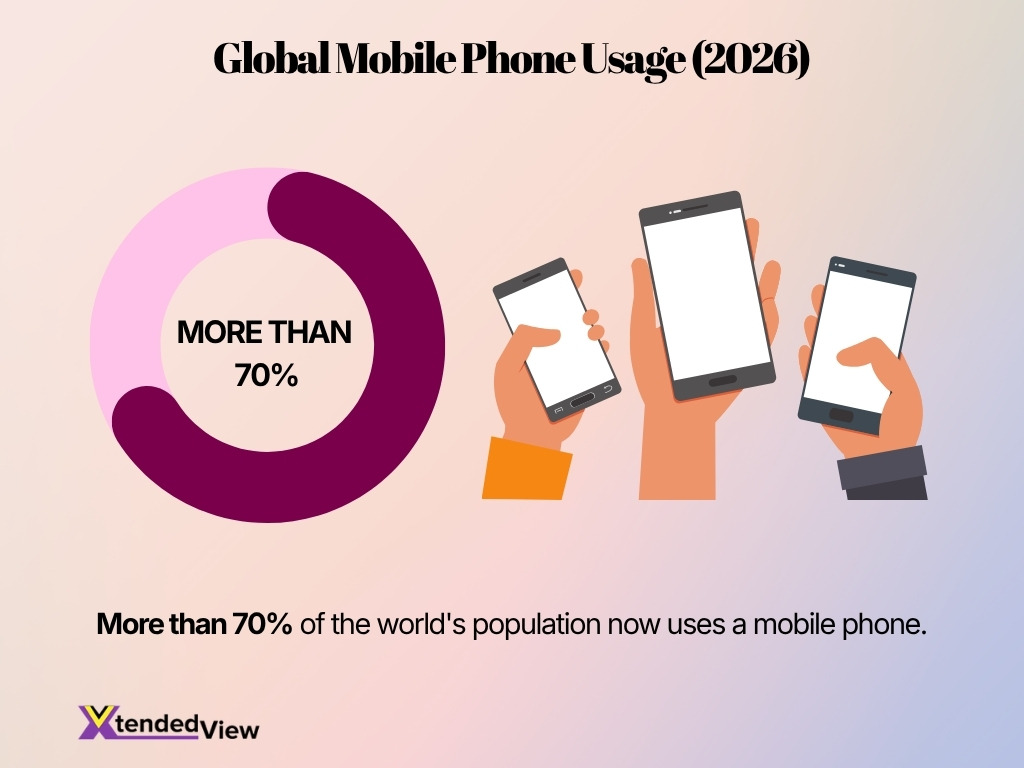
- 5.83 billion people worldwide use a mobile phone in 2026, representing 70.4% of the global population.
- Smartphones account for 89.1% of all mobile handsets currently in use worldwide.
- 85.5% of all cellular mobile connections are now smartphone connections.
- Global internet users reached 6.12 billion in April 2026, with internet penetration climbing to 73.8%.
- Mobile devices generated 51.51% of worldwide web traffic in June 2026, maintaining their lead over desktop browsing.
- More than 250 million people began using a smartphone to access mobile internet during 2024, pushing smartphone-based mobile internet users to 4.4 billion.
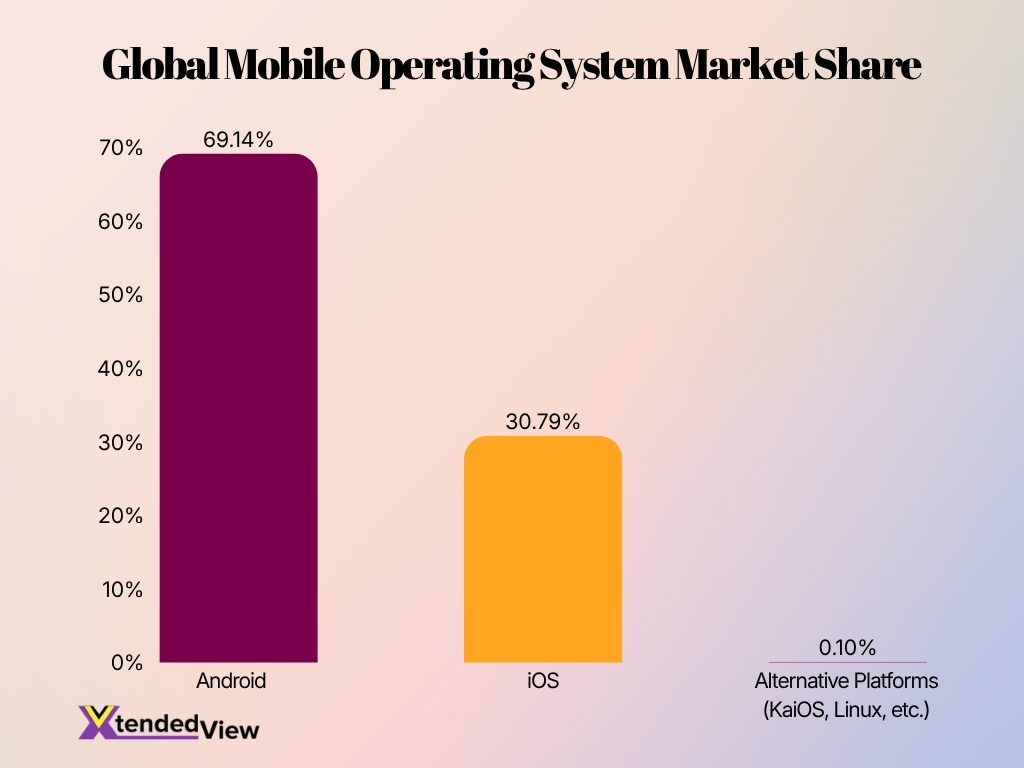
- Android remains the leading mobile operating system with a 69.14% global market share in June 2026, while iOS accounts for 30.79%.
Recent Developments
- Global unique mobile users increased by 103 million between 2025 and 2026, reflecting 1.8% annual growth.
- Smartphone adoption now represents nearly 9 out of every 10 mobile handsets worldwide.
- Mobile internet services reached 4.7 billion people in 2025, adding approximately 200 million new users during the year.
- 96% of the global population now lives within an area covered by mobile broadband infrastructure.
- Despite broad coverage, 3.1 billion people still do not use mobile internet because of affordability, skills, or safety barriers.
- Global 5G coverage surpassed 54% of the world’s population during 2025, supporting higher mobile data consumption.
- Around 350 million additional users upgraded to 4G or 5G smartphones between 2023 and 2024.
- Women in low- and middle-income countries remain 12% less likely to use mobile internet than men in 2026, highlighting ongoing digital inclusion challenges.
- There are still 810 million women without mobile internet access across low- and middle-income countries.
Mobile Device Usage Overview
- More than 70% of the world’s population now uses a mobile phone.
- Smartphones represent 85.5% of total mobile network connections worldwide.
- Over 4.4 billion people access mobile internet using a smartphone.
- Mobile devices account for over half of global web traffic, reinforcing their importance for digital experiences.
- Internet users worldwide increased by 59 million during the past year, supported largely by mobile connectivity.
- Mobile remains the primary internet access device for users across many developing economies.
- More than 80% of adults aged 16 and older globally now use the internet, with smartphones serving as the dominant access point.
- Only about 4% of the world’s population still lacks mobile broadband coverage, indicating that future growth depends more on adoption than infrastructure.
- Mobile connectivity continues to support key services including digital banking, telehealth, education, navigation, and remote work across global markets.
Global Mobile Device Adoption
- Global mobile users reached 5.83 billion in 2026.
- Mobile adoption expanded by 103 million new users over the previous year.
- Annual global mobile subscriber growth currently stands at 1.8%.
- Smartphone ownership for mobile internet access increased by 250 million users during 2024.
- 54% of the world’s population now owns a smartphone capable of accessing mobile internet.
- More than 80% of mobile internet subscribers globally use 4G or 5G smartphones.
- Approximately 1.5 billion mobile internet subscribers now use a 5G smartphone.
- Around 16% of mobile internet subscribers still rely on older 3G smartphones or feature phones, with higher shares in developing regions.
- Growth continues to shift from basic connectivity toward higher-speed smartphone adoption as more regions expand 5G networks.
Smartphone Ownership by Country
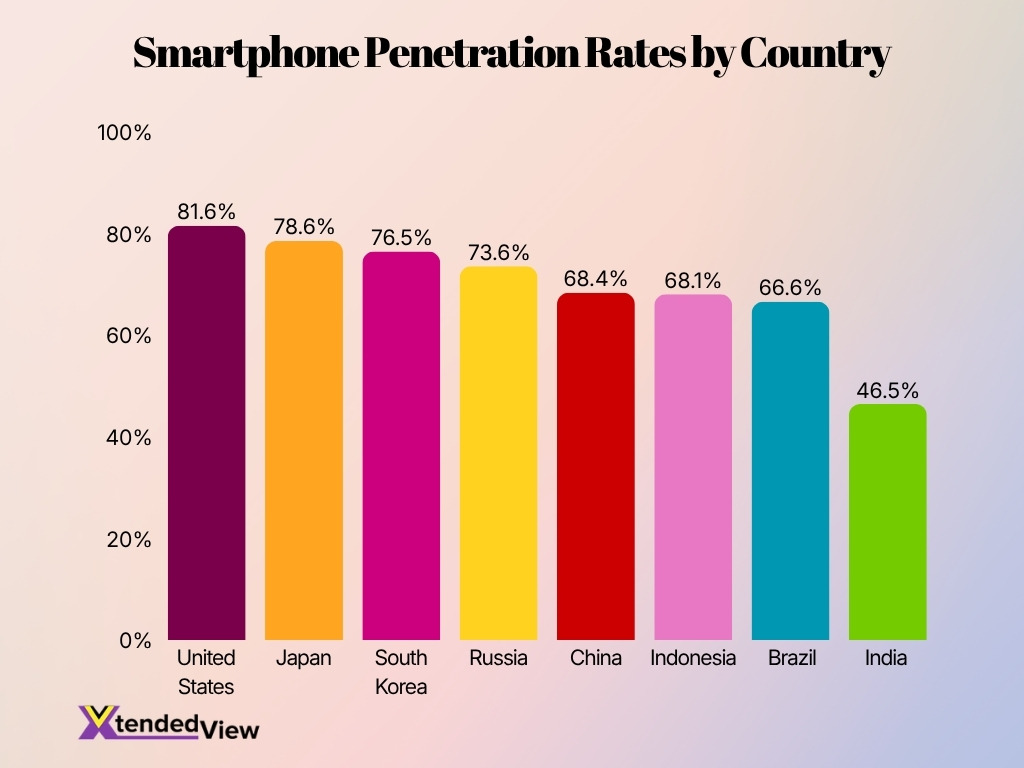
- China leads the world with 974.69 million smartphone users, achieving a 68.4% penetration rate.
- The United States boasts an 81.6% smartphone penetration, encompassing over 276 million active users.
- India currently has 659 million smartphone users, representing a 46.5% national adoption rate.
- Japan maintains a high adoption level with a 78.6% smartphone penetration rate among its population.
- Indonesia ranks fourth globally with 187.7 million smartphone users and a 68.1% penetration rate.
- Brazil accounts for 143.43 million smartphone users, translating to a 66.6% market penetration.
- Russia sees widespread adoption with a 73.6% penetration rate and over 106 million active users.
- South Korea remains highly connected with an impressive 76.5% smartphone penetration rate nationwide.
Mobile Internet Traffic Share
- Mobile devices generated 51.51% of worldwide web traffic in June 2026.
- Desktop accounted for 47.12% of global web traffic during the same period.
- Tablets contributed just 1.36% of worldwide web traffic.
- Mobile traffic has consistently remained above 50% of global internet usage throughout the past year.
- Smartphones remain the preferred browsing device for users across emerging digital markets.
- E-commerce, social networking, streaming, and messaging continue driving higher mobile web usage globally.
- Improvements in 4G and 5G coverage continue increasing mobile browsing speeds and engagement.
- Businesses increasingly prioritize mobile-first website design because mobile devices now generate the largest share of web visits.
- Mobile internet traffic growth remains strongest in regions where smartphone adoption continues to accelerate each year.
Daily Time Spent on Mobile Devices
- Internet users spend an average of 3 hours and 46 minutes per day using the internet on mobile devices.
- By comparison, users spend 2 hours and 52 minutes per day accessing the internet on computers.
- Global internet users spend an average of 6 hours and 38 minutes online each day, with mobile accounting for the largest share.
- Smartphones now represent 56.8% of total daily online time, while computers account for 43.2%.
- Adults under 45 years old continue to spend more time online than older age groups, driven largely by smartphone usage.
- People aged 55 to 64 increased their average online time over the past year, reversing earlier declines.
- Mobile internet remains the preferred device for personal browsing, while desktop usage remains stronger for workplace activities.
- The average smartphone consumes 21.6 GB of mobile data per month, reflecting continued growth in mobile engagement.
- Video streaming, messaging, and social networking account for the majority of daily mobile screen time worldwide.
Smartphone Use Trends by Generation
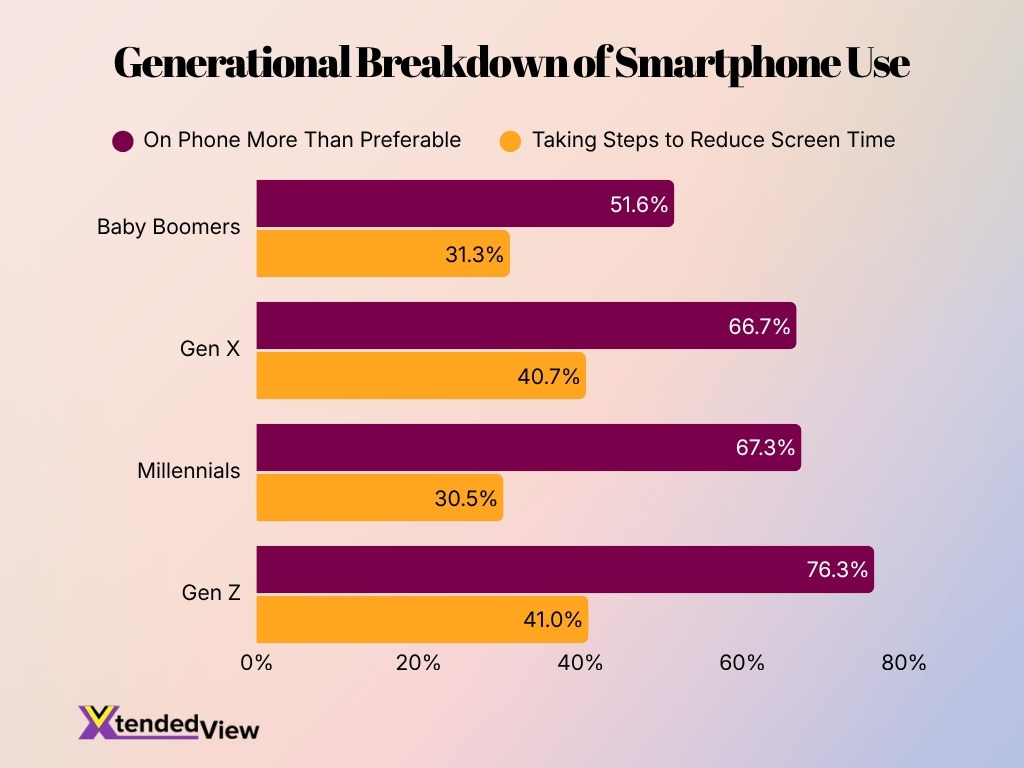
- Gen Z reports the highest excessive smartphone use, with 76.3% saying they spend more time on their phones than preferred.
- Millennials rank second for excessive phone use at 67.3%, but only 30.5% are taking steps to reduce screen time.
- Gen X shows a similar level of overuse at 66.7%, while 40.7% are actively trying to cut back.
- Baby Boomers record the lowest excessive smartphone use at 51.6%, with 31.3% working to reduce screen time.
- Gen Z also leads in screen-time reduction efforts, with 41% taking action to limit phone use.
- The data shows a clear generational gap, as younger users report substantially higher smartphone overuse than older adults.
Mobile vs Desktop Usage
- Mobile devices generate over 60% of all global web traffic, while desktops account for most of the remaining share.
- Internet users spend 54% more online time on mobile devices than on computers each day.
- Smartphones account for 56.8% of total daily online activity compared to 43.2% for desktop and laptop devices.
- Desktop computers dominate with a 2 to 3 times higher conversion rate for B2B SaaS and professional applications.
- Mobile devices drive 95% of social networking access, dominating messaging and location-based services worldwide.
- Desktops convert at a 3.5% to 4.3% rate for e-commerce purchases despite mobile driving the majority of retail traffic.
- 97% of adults aged 18 to 29 rely heavily on smartphones rather than desktop devices for daily internet access.
- Mobile apps convert at 157% higher rates than the mobile web, but desktops maintain a $155 average order value.
- Mobile internet traffic is expected to reach 70% to 80% by 2028, but desktops remain essential for commercial tasks.
Mobile Social Media Usage
- Internet users spend an average of 2 hours and 21 minutes per day on social media platforms.
- Women aged 16 to 24 spend nearly 3 hours daily on social media, exceeding every other demographic group.
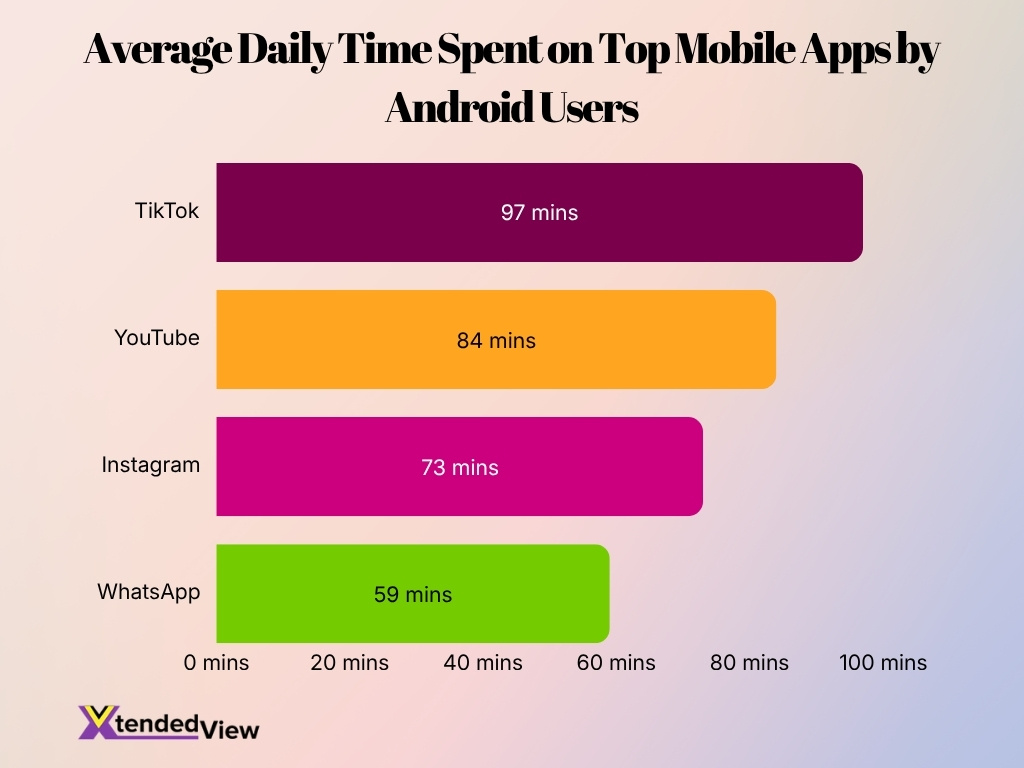
- TikTok users average 1 hour and 37 minutes per day on Android devices.
- Instagram users spend approximately 73 minutes daily on Android devices.
- Facebook remains among the few major social apps where active users spend more than one hour daily.
- WhatsApp users average 59 minutes per day, highlighting the importance of mobile messaging.
- Across surveyed countries, 88% of mobile internet users use social media on their phones.
- Around 46% of mobile internet users also use social media for business purposes in surveyed emerging markets.
- Social media remains one of the most common mobile activities alongside messaging and online video.
Mobile App Usage Trends
- Mobile internet users report daily usage rates averaging 82% across surveyed countries.
- Internet messaging, social media, online video, and entertainment rank among the most frequently used mobile app categories, each reaching 83% to 89% of users.
- Video applications generate more than 110 billion GB of mobile data traffic every month worldwide.
- Video content accounts for more than three times the mobile data volume of all other application categories combined.
- The average TikTok Android user spends 1 hour and 37 minutes per day on the platform.
- The average YouTube Android user spends 1 hour and 24 minutes per day using the app.
- Instagram users spend approximately 1 hour and 13 minutes daily in the Android app.
- WhatsApp users average 59 minutes per day in the Android app.
- Mobile apps continue expanding beyond entertainment into education, banking, healthcare, business communication, and government services.
Mobile Shopping Behavior
- Mobile commerce currently accounts for 60% of total global e-commerce sales.
- The global mobile commerce market is projected to reach $2.4 trillion by 2026.
- Digital wallet users are expected to hit 5.2 billion globally by 2026.
- Dedicated shopping apps convert at 3.5% compared to just 2% on the mobile web.
- During Black Friday 2025, a massive 70% of all sales originated from mobile devices.
- Over 75.5% of online shopping carts are abandoned by mobile users during checkout.
- AI-driven traffic to retail sites increased by 670% year-over-year on Cyber Monday.
- Approximately 76% of consumers currently make regular purchases using their smartphones.
Mobile Video Consumption
- Internet users spend 11 hours and 39 minutes per week consuming online video content.
- People now spend 14% more time watching online video than traditional television.
- Short-form videos account for 6 hours and 42 minutes per week of viewing time.
- Longer online video formats account for 4 hours and 57 minutes per week.
- Mobile video applications generate over 110 billion GB of monthly mobile data traffic worldwide.
- Video traffic represents the largest category of global mobile data consumption by a wide margin.
- YouTube users spend an average of 1 hour and 24 minutes per day using the mobile app on Android devices.
- Mobile video continues driving demand for 5G, higher-resolution displays, and unlimited data plans.
- Younger audiences increasingly favor short-form mobile video over traditional television programming.
Mobile Device Usage by Age Group
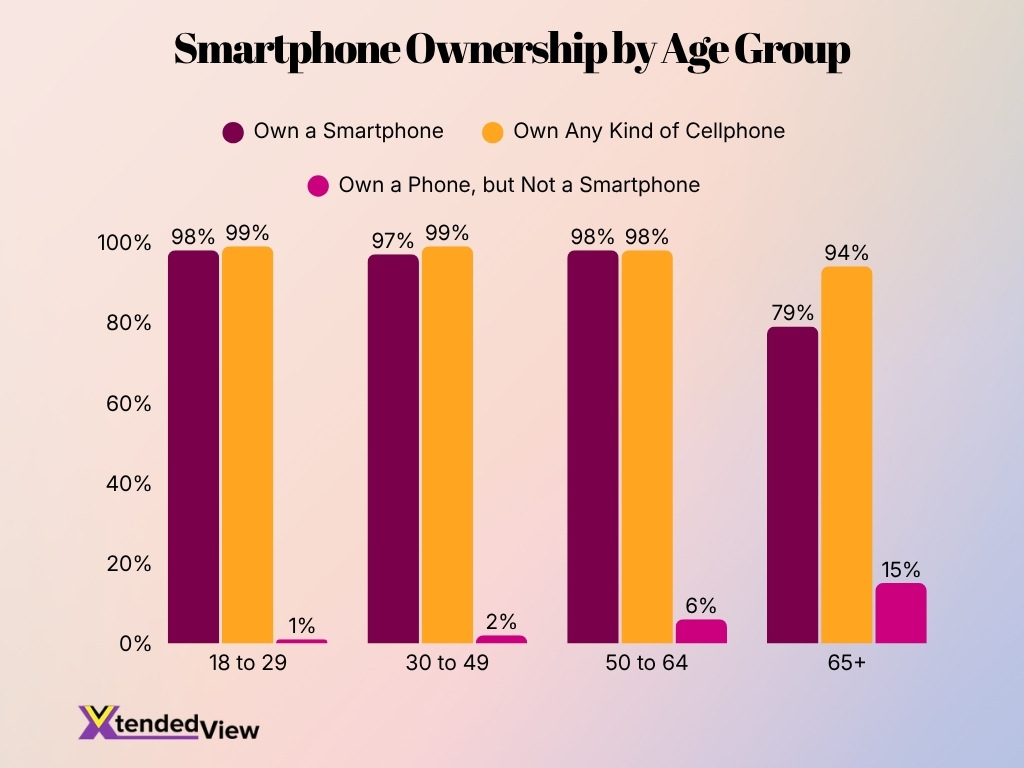
- Adults aged 18 to 29 have the highest overall cellphone ownership rate at 99%, with 98% owning smartphones.
- Among adults aged 30 to 49, 97% own smartphones and 99% own some type of cellphone.
- The 50 to 64 age group records 98% smartphone ownership, while 6% use a non-smartphone cellphone.
- Smartphone ownership drops to 79% among adults aged 65 and older, the lowest rate across all age groups.
- Adults aged 65+ are the most likely to own a non-smartphone phone, accounting for 15% of the group.
- Overall cellphone ownership remains high across every age group, ranging from 94% to 99%.
- The data indicates that smartphone adoption generally declines with age, while basic cellphone usage becomes more common.
- The introductory figures differ from the table for the 50 to 64 and 65+ groups, so the original source should be verified before publication.
Mobile Device Usage by Region
- By late 2025, North America boasted over 317 million smartphone users with a remarkable 97% market penetration rate.
- Western Europe is forecasted to experience a 15% compound annual growth rate in monthly mobile data usage per active device through 2031.
- The Asia-Pacific region is on track to reach 1.8 billion mobile internet users by 2030 due to rapid digital expansion.
- The India region led the world in data consumption, reaching an average of 37 GB per active smartphone monthly in 2025.
- Between 2016 and 2025, Sub-Saharan Africa helped drive a 5.1 percentage point increase in the global 90-day mobile money activity rate.
- Driven by regions like Latin America, global mobile money merchant payments surged by almost 50% to reach $155 billion in 2025.
- In the Middle East and North Africa, mobile internet subscribers are projected to reach 378 million by 2030, encompassing 52% of the population.
- The global transition to advanced networks saw 5G technology carrying 48% of all mobile data traffic worldwide in 2025.
Mobile Browser Usage
- Chrome currently accounts for 65.54% of all global mobile browser usage.
- Safari maintains its position as the second largest mobile browser with a 26% worldwide market share.
- Chrome dominates the Indian mobile browser market with an overwhelming 89.25% share.
- Smartphone users spend less than 6% of their device time in mobile browsers, with 94% dedicated to native apps.
- Together, Chrome for Android and Safari for iPhone control roughly 86% of the global mobile browser market.
- On Apple devices, Safari handles a massive 79% of all iOS web traffic.
- The Blink engine, which powers Chrome and others, runs approximately 71% to 73% of all mobile browsers globally.
- Mobile devices now generate between 62% and 64% of all internet web traffic worldwide.
- Mobile apps average 157% higher conversion rates compared to mobile websites accessed via browsers.
Mobile Operating System Usage
- Android held a 69.14% share of the global mobile OS market in June 2026.
- iOS captured 30.79% of worldwide mobile operating system usage during the same period.
- Alternative platforms like KaiOS and Linux each maintained less than 0.1% of the total market share.
- Android and iOS together accounted for virtually 100% of all smartphone operating systems globally.
- iOS led the United States market with a 59% share in early 2026.
- Android dominated the Indian smartphone sector with a massive 90% market share in early 2026.
- Apple iOS users accounted for approximately 70% of all mobile app consumer spending.
- Google Android powered roughly 3.9 billion active smartphones across the globe.
Mobile Device Usage in the Workplace
- 70% of employees admit that smartphones distract them during focused work hours.
- The average professional checks their smartphone 262 times on a typical workday.
- About 87% of businesses expect employees to use personal mobile devices for work apps.
- Smartphone distractions cost U.S. businesses roughly $600 billion in lost productivity annually.
- 65% of remote workers rely heavily on mobile phones to stay connected with teams.
- Over 75% of people believe their smartphones make them more productive at work.
- Each phone interruption costs an estimated 23 minutes and 15 seconds of cognitive recovery time.
- 55% of companies deploy Mobile Device Management (MDM) tools to secure employee devices.
- 91% of corporate employees regularly use at least one mobile app for business purposes.
Mobile Gaming Usage
- Mobile gaming is the largest gaming segment worldwide, engaging approximately 3.6 billion active players annually.
- Male internet users aged 16 to 24 spend an average of 11 hours and 22 minutes per week playing video games.
- Affordable smartphones helped emerging markets like India reach over 25 billion mobile game downloads.
- Faster 5G networks have encouraged 60% of players to experience seamless cloud gaming on mobile devices.
- Mobile players spent a staggering 444.6 billion hours in-game during 2025, driving massive data consumption.
- Puzzle and simulation games remain globally dominant, capturing nearly 20% of total mobile game downloads.
- In-app purchases drive global monetization, generating an estimated $130 billion in mobile gaming revenue.
- Around 50% of game studios now utilize AI tools to significantly improve player engagement and mobile graphics.
Frequently Asked Questions (FAQs)
There are 5.83 billion unique mobile phone users globally, representing 70.4% of the world’s population.
Mobile devices accounted for 51.51% of worldwide web traffic in June 2026, compared to 47.12% for desktop devices.
Android holds 69.14% of the global mobile operating system market, while iOS accounts for 30.79% as of June 2026.
There are approximately 7.64 billion smartphones in active use globally, accounting for about 89% of all mobile handsets.
Mobile technologies and services contributed approximately $7.6 trillion, equal to 6.4% of global GDP, in 2025.
Conclusion
Mobile devices continue to shape the global digital economy, with smartphone adoption, mobile internet usage, and app engagement reaching new highs. Consumers increasingly rely on smartphones for communication, shopping, entertainment, banking, healthcare, and work, while businesses continue investing in mobile-first experiences to meet evolving customer expectations. Although desktop devices remain important for productivity and complex transactions, mobile usage now dominates daily internet activity across most regions. As 5G, AI-powered applications, and advanced mobile services expand worldwide, mobile devices will remain the primary gateway to digital experiences for billions of users over the coming years.
