

Social media plays a central role in how people communicate, form communities, follow news, and discuss health. Billions of people use social platforms worldwide, while teenagers and young adults remain among the most active users. That reach gives social media substantial influence over everyday routines, including sleep, friendships, self-image, school performance and emotional well-being.
The mental health impact, however, is not uniform. Some users report stronger social connections, creative expression and access to emotional support, while others experience anxiety, compulsive use, cyberbullying, negative social comparison or disrupted sleep. Schools now use social media research when shaping phone and wellness policies, while parents and mental health professionals increasingly monitor digital habits alongside traditional indicators of stress, depression and social isolation.
Recent research also shows why simple claims about social media being either “good” or “bad” miss important differences. Outcomes can vary by age, gender, platform, type of content, time of use and existing mental health conditions. The statistics in this article examine those differences, highlight the newest findings, and show where researchers have strong evidence and where important questions remain.
Editor’s Choice
- 5.79 billion social media user identities existed worldwide by April 2026, representing 69.9% of the global population.
- 45% of U.S. teens said they spend too much time on social media in the survey published in 2025, up from 36% in 2022.
- Teen girls reported greater mental health harm than boys: 25% of girls versus 14% of boys said social media hurts their mental health.
- Sleep stands out as one of the most commonly reported harms: 45% of teens said social media hurts the amount of sleep they get.
- Among U.S. high school students, 77% used social media at least several times a day in the nationally representative 2023 survey analyzed in 2024. Frequent use correlated with sadness or hopelessness, bullying and some measures of suicide risk.
- In a 2025 young-adult cohort, one week of reduced social media use coincided with a 16.1% decline in anxiety symptoms, a 24.8% decline in depression symptoms and a 14.5% decline in insomnia symptoms.
- A 2026 longitudinal study involving 100,991 adolescents found a nonlinear relationship: moderate after-school social media use correlated with better well-being than either the highest-use category or no use in several age and sex groups.
Recent Developments
- By April 2026, global social media adoption had risen to 69.9% of the world population, up as user identities increased 5.4% over the preceding 12 months.
- An August 2026 U.S. poll of 4,505 adults found 61% support stronger government oversight of social media companies.
- In the same 2026 poll, 66% supported age-verification laws designed to protect children younger than 16.
- More than half of U.S. adults in that poll, 52%, said they spend too much time on social media, even though 70% described their experience as fun.
- A 2026 adolescent cohort analysis covered 173,533 observations from 100,991 students and found that the highest-use group had greater odds of low well-being than moderate users.
- Among girls in grades 7 to 9 in that study, the highest social media use category was associated with 3.13 times the odds of low well-being compared with moderate use.
- Among boys in grades 7 to 9, the highest-use group had 2.25 times the odds of low well-being compared with moderate users. The researchers stressed that the findings remain observational.
- In August 2026, one state court ordered $567 million in funding and remedies related to alleged harms involving young social media users, including $420 million directed toward treatment services. The ruling remains subject to appeal.
How Widespread Is Social Media Use?
- Worldwide social media user identities reached 5.79 billion in April 2026, meaning close to seven in 10 people globally were represented by an active social account identity.
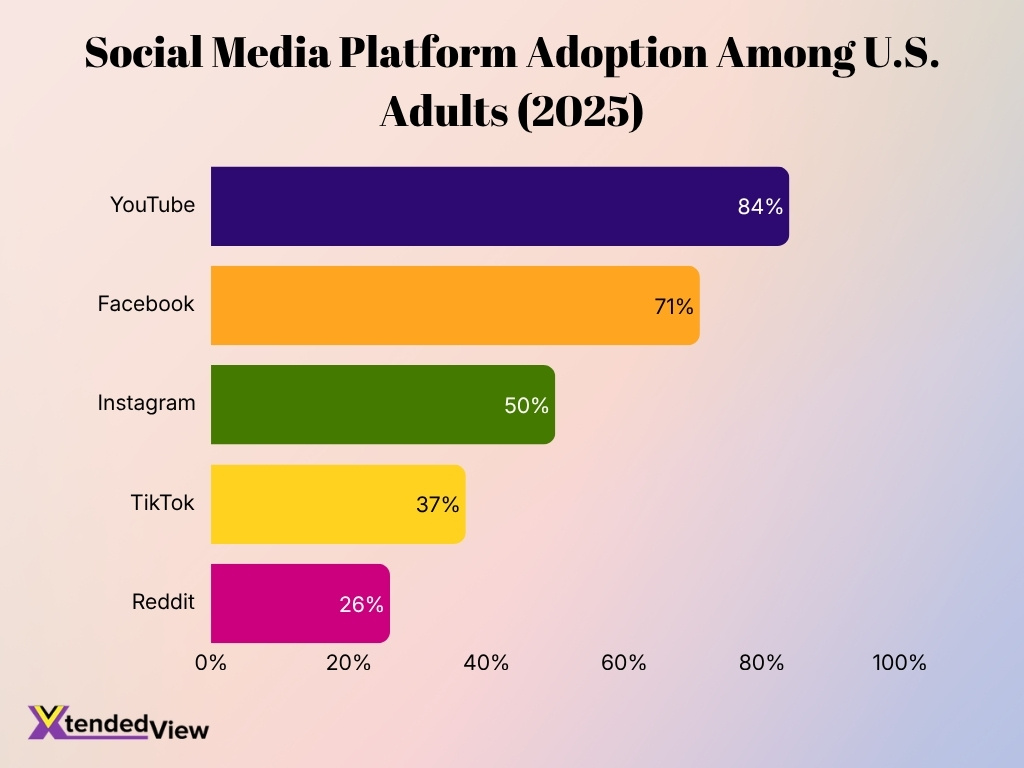
- In 2025, 84% of U.S. adults reported using YouTube, making it the most widely used platform measured in a nationally representative adult survey.
- Facebook remained broadly used, with 71% of U.S. adults reporting that they use it.
- Instagram reached 50% of U.S. adults in 2025, up from 40% in 2021.
- TikTok use reached 37% of U.S. adults in 2025, compared with 21% in 2021.
- Reddit use reached 26% of U.S. adults, compared with 18% four years earlier, while WhatsApp reached roughly one-third of adults.
- Among U.S. teens, 90% used YouTube in the 2024 survey, while roughly six in 10 used TikTok and Instagram and 55% used Snapchat.
- Teen engagement often extends beyond occasional use: 73% visited YouTube daily, around six in 10 visited TikTok daily, and roughly half visited Instagram or Snapchat every day.
- One-third of teens said they used at least one of five major platforms almost constantly, while 96% said they used the internet every day.
Social Media and Teen Mental Health, What the Numbers Say
- In the 2025 report, 48% of teens said social media has a mostly negative effect on people their age, a 16-percentage-point rise from 32% in 2022.
- 19% of teens said social media hurts their own mental health, while about half described the impact as neither helpful nor harmful.
- Gender differences were substantial: 25% of teen girls reported mental health harm from social media, compared with 14% of boys.
- Social media affected sleep even more often than self-reported mental health: 50% of girls and 40% of boys said it hurts how much sleep they get.
- 40% of teens said social media hurts their productivity, while 22% said it hurts their grades.
- Negative social comparison remains common: 27% of teens said what they see on social media makes them feel worse about their own lives.
- Girls again reported greater vulnerability to social comparison: 34% of girls versus 20% of boys said social media made them feel worse about their own lives.
- Despite those risks, 74% of teens said social media makes them feel more connected to friends, while 63% said it provides a place to express creativity.
- 52% of teens said social media makes them feel they have people who can support them through difficult periods, although that share declined from 67% in 2022.
- National high school data found 42.6% of frequent social media users experienced persistent sadness or hopelessness, compared with 31.9% of less frequent users. After demographic adjustment, frequent users had a 35% higher prevalence.
Social Media and Adult Mental Health, What Studies Show
- A 2025 U.S. study of 42,597 adults found that greater social media use, particularly frequent posting, correlated with higher irritability.
- In that adult sample, 78.2% used at least one social media platform every day. Another 24.9% reported using social media during most of the day.
- Adults who used social media during most of the day scored 1.55 points higher on an irritability scale than nonusers after researchers adjusted for other factors.
- The same study included respondents with a mean age of 46 years, showing that social media-related mental health research now extends well beyond teens and college students.
- A longitudinal U.S. adult analysis found that associations between specific platforms and later depressive symptoms differed substantially by age. Among adults 35 and older, Snapchat use was associated with 1.96 times the adjusted odds of increased depressive symptoms.
- For adults younger than 35, Facebook use was associated with approximately 2.6 times the adjusted odds of increased depressive symptoms in that study, while the association was not significant among older adults.
- Young adults remain a particularly relevant group because 80% of Americans ages 18 to 29 reported using Instagram in 2025, compared with 19% of adults 65 and older.
- In 2026 health research, 36% of U.S. adults younger than 30 rated their mental health as fair or poor, compared with 16% of adults ages 50 to 64 and 9% of adults 65 and older. This statistic does not prove a social media effect, but it defines the mental health context for the age group with some of the highest platform use.
- In the same 2026 analysis, 47% of adults younger than 30 described managing stress as a major challenge to taking care of their health.
Parents and Teens Differ on the Biggest Threats to Teen Mental Health
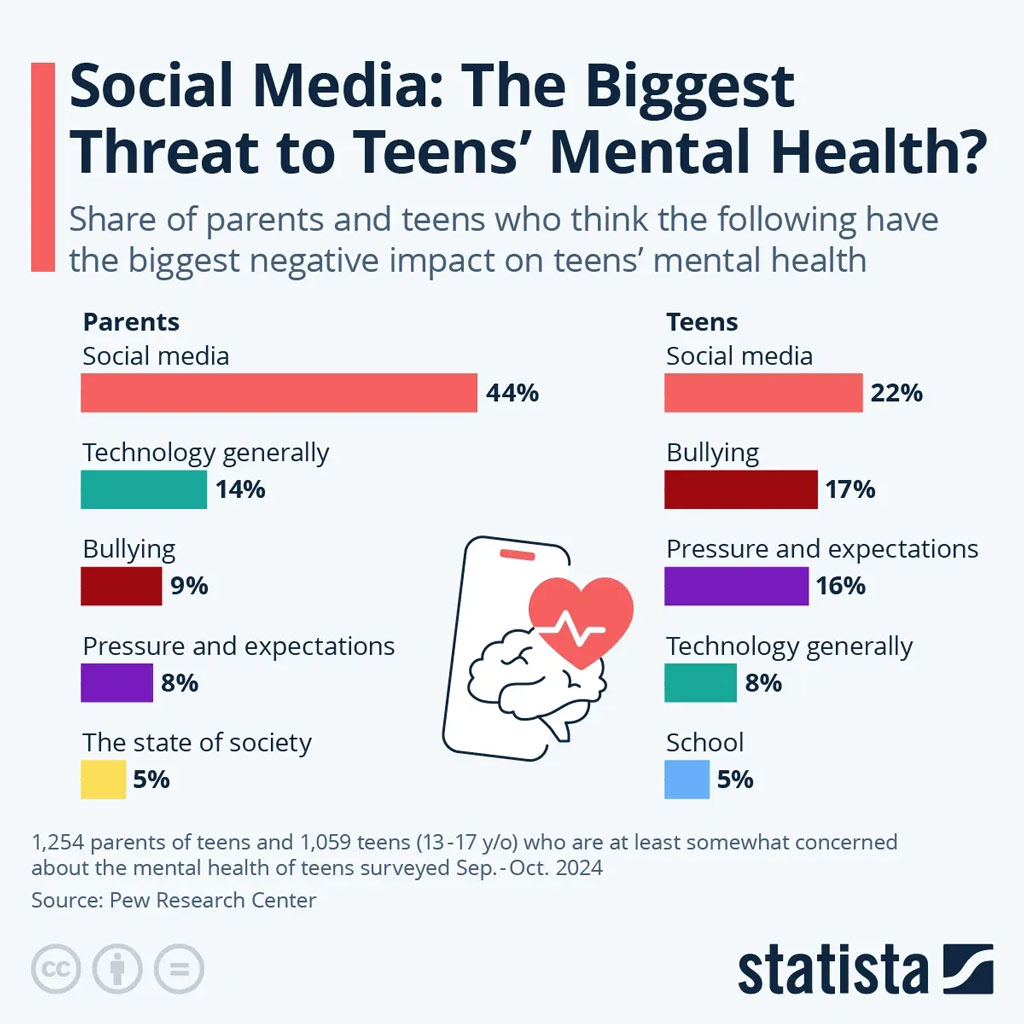
- Social media ranks as the leading concern for both groups, but 44% of parents identify it as the biggest negative influence on teen mental health compared with just 22% of teens.
- Parents are twice as likely as teens to view social media as the biggest mental health threat, highlighting a substantial perception gap between generations.
- Among teens, bullying ranks second at 17%, while only 9% of parents consider bullying the biggest negative influence on teen mental health.
- Pressure and expectations are cited by 16% of teens, double the 8% of parents who identify them as the most significant mental health concern.
- Technology is generally viewed as the biggest negative influence by 14% of parents, compared with only 8% of teens.
- 5% of parents identify the state of society as the biggest negative influence, while 5% of teens point specifically to school.
- Overall, the findings suggest parents are considerably more focused on social media and technology, while teens distribute their concerns more broadly across social media, bullying, and pressure and expectations.
Anxiety and Depression Statistics
- A U.S. young-adult cohort conducted from 2024 through 2025 found that a one-week reduction in social media use coincided with a 16.1% decrease in anxiety symptoms.
- Depression symptoms fell by 24.8% during the same one-week intervention, making the reduction larger than the observed decline in anxiety symptoms.
- Insomnia symptoms fell 14.5% during the intervention, highlighting sleep as a possible pathway connecting social media behavior with anxiety and depression.
- Of 417 enrolled young adults, 373 completed baseline assessments, and 295, or 79.1%, opted into the social media reduction period.
- The study measured use across five platforms, Facebook, Instagram, Snapchat, TikTok and X, rather than treating smartphone screen time as a single exposure.
- Among U.S. high school students, persistent sadness or hopelessness affected 42.6% of frequent social media users, versus 31.9% of students who used social media less often.
- After adjustment for age, sex, race, ethnicity and sexual identity, frequent users showed a 35% higher prevalence of persistent sadness or hopelessness than less frequent users.
- Among female high school students who used social media frequently, 55.1% reported persistent sadness or hopelessness, compared with 44.4% of girls who used it less frequently.
- Among male students, 29.5% of frequent users reported persistent sadness or hopelessness, compared with 24% of less frequent users. The adjusted prevalence ratio was 1.41.
- Current research does not establish that social media alone causes anxiety or depression. The 2025 young-adult intervention found meaningful symptom changes, but its authors noted that the durability of those effects and the role of behavioral changes need further study.
Body Image and Self-Esteem
- In a widely cited U.S. youth assessment, 46% of adolescents ages 13 to 17 said social media makes them feel worse about their body image.
- In the 2025 teen survey, 27% of teens said social media makes them feel worse about their own life, a measure that captures the broader effect of online comparison beyond appearance alone.
- Girls reported this negative comparison more often: 34% of teen girls said social media makes them feel worse about their lives, compared with 20% of boys.
- Social media does not affect confidence uniformly. 19% of teens said it helps their confidence, while 15% said it hurts and 46% reported neither a positive nor negative effect.
- Outside social media specifically, 47% of U.S. teens reported at least a fair amount of pressure to look good in a 2025 report, indicating the wider appearance-related environment in which social media operates.
- A 2025 meta-analysis synthesized 68 papers and 218 effect sizes and found a positive correlation between social media use and self-objectification of r = 0.207.
- Earlier systematic evidence covering 31,331 adolescents across 26 unique samples found a robust association between social networking use and negative body image among both girls and boys.
- A 2026 review of longitudinal research in children and preteens identified six eligible studies, and five of the six found that greater social media or related screen use predicted poorer body image or more disordered eating behaviors.
Cyberbullying and Online Harassment
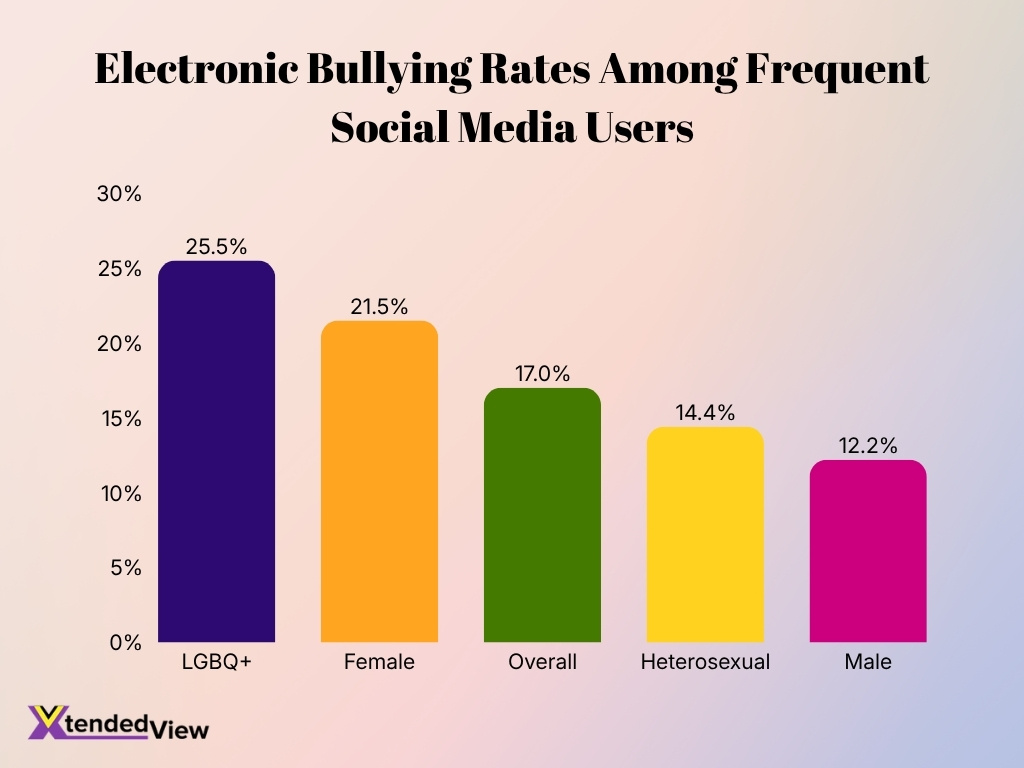
- 17% of frequent social media users in U.S. high schools reported electronic bullying in 2023, versus 15.9% of less frequent users.
- Frequent social media users had a 54% higher prevalence of electronic bullying after demographic adjustments.
- Female frequent users experienced electronic bullying at a rate of 21.5%, compared to 12.2% among male frequent users.
- 25.5% of LGBQ+ frequent users faced electronic bullying, compared with 14.4% of heterosexual frequent users.
- 34% of U.S. teenagers ages 12 to 17 experienced bullying during a 12-month span between 2021 and 2023.
- Bullying affected 47.1% of sexual or gender minority teenagers, versus 30% of non-minority teenagers.
- Teenagers with developmental disabilities reported bullying at 44.4%, compared to 31.3% of teenagers without them.
- Bullied teenagers reported anxiety (29.8%) and depression (28.5%) at rates nearly twice as common as non-bullied teens.
- Internationally, 12% of adolescents reported cyberbullying others in a recent 44-country study.
Social Media Addiction and Compulsive Use
- A 2026 meta-analysis found 25% of adolescents showed addictive or problematic behaviors.
- The pooled estimate for social media addiction had a 95% confidence interval of 14% to 36%.
- Problematic social media use among adolescents increased to 11%, up from 7% in 2018.
- Compulsive behavior rates were notably higher among girls at 13% compared to boys at 9%.
- Problematic use peaked among 13-year-olds at 12% and was lowest for 11-year-olds at 9%.
- Country-level rates of problematic use varied drastically, ranging from 22% in Romania to 5% in the Netherlands.
- While 32% were classified as intense users, only 11% met the criteria for problematic users.
- A 2025 study revealed a moderate positive association with ADHD symptoms at a correlation of r = 0.361.
- Problematic use also correlated with anxiety (r = 0.348), stress (r = 0.313), and depression (r = 0.273).
Loneliness and Social Isolation
- A 2026 mental health update reported that 28% of 15-year-old girls experienced loneliness, compared with 13% of boys, illustrating a sizable gender gap in adolescent social well-being.
- Loneliness also affects older generations: one in four adults older than 60 reported loneliness in the same 2026 regional health assessment.
- Social media can work against isolation for many teenagers. 74% of U.S. teens said social media makes them feel more connected with what is happening in their friends’ lives.
- However, 31% of teens said social media makes them feel excluded by friends, showing that online connection and social exclusion can occur within the same digital environment.
- More than half of teens, 52%, said social media makes them feel they have people who can support them through difficult periods. That figure declined from 67% in 2022.
- Outside social media specifically, 89% of U.S. teens with at least one close friend said they have a friend they can turn to for emotional support, while 11% said they do not.
- The offline support gap varies by gender: 95% of girls versus 85% of boys with close friends said they have at least one friend they can turn to for emotional support.
- A meta-analysis examining social networking and loneliness drew on 82 articles, 90 independent samples, and 48,383 participants, reflecting a large evidence base but also mixed findings about whether online networking reduces or increases loneliness.
Sleep Disruption and Mental Health
- In the 2025 U.S. teen survey, 45% of teens said social media hurts the amount of sleep they get, making sleep one of the most commonly reported areas of social media-related harm.
- Girls reported greater sleep disruption than boys: 50% of teen girls versus 40% of teen boys said social media negatively affects how much they sleep.
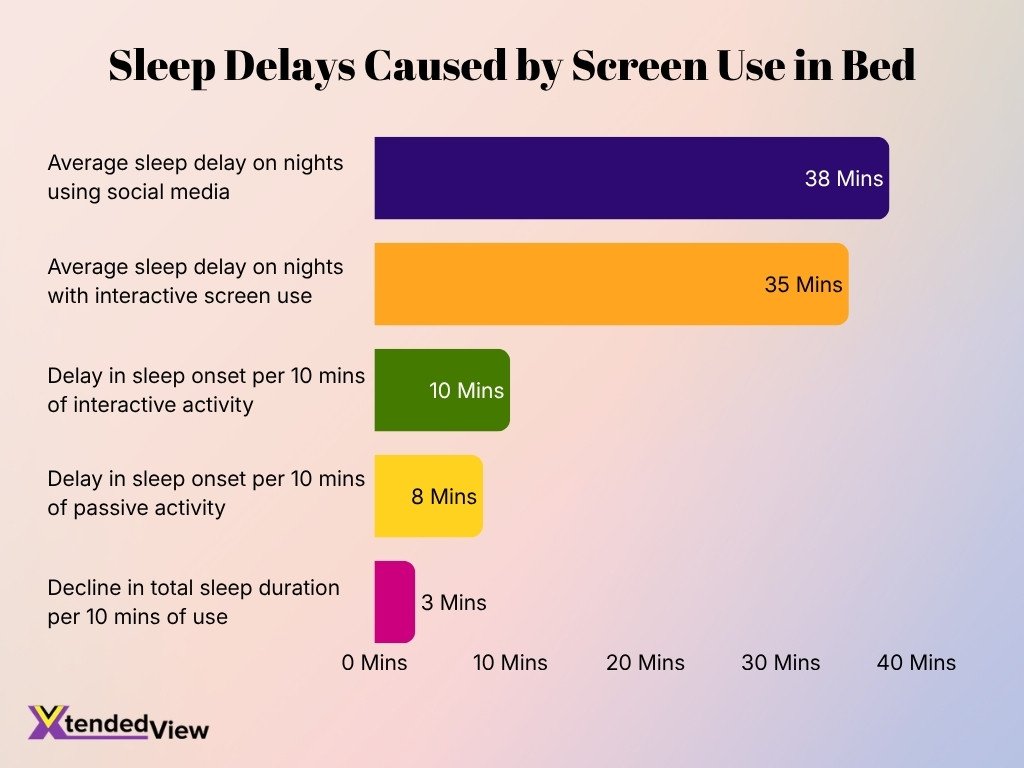
- Objective bedtime research found that using social media while in bed was associated with falling asleep an average of 38 minutes later on nights when participants used it compared with nights when they did not.
- Interactive screen activity in bed delayed sleep onset by about 10 minutes for every additional 10 minutes of use.
- On nights when young people engaged in interactive screen use, sleep onset occurred an average of 35 minutes later than on nights without that behavior.
- Passive screen activity in bed also mattered: every additional 10 minutes corresponded with an approximately 8-minute delay in sleep onset.
- Total sleep duration declined by roughly 3 minutes for every extra 10 minutes of screen use in bed, because later sleep onset generally did not produce an equivalent delay in waking.
- The distinction between pre-bedtime and in-bed use matters. Researchers found that screen use once young people were already in bed showed clearer links with delayed sleep and shorter sleep than general screen activity during the period before bedtime.
Positive Effects of Social Media on Mental Health
- 74% of U.S. teens said social media makes them feel more connected to what is happening in their friends’ lives, making connection one of the clearest benefits reported by teenagers.
- Creativity represents another common benefit: 63% of teens said social media gives them a place to show their creative side.
- 52% of teens said their social media experiences make them feel more accepted, indicating that online communities can provide social affirmation for some young users.
- The same share, 52%, said social media makes them feel as though they have people who can support them during difficult times.
- Friendship was the area where positive assessments clearly outweighed negative ones: 30% said social media helps their friendships, compared with only 7% who said it hurts them.
- Social media can also support confidence for a subset of users. 19% of teens said these platforms help their confidence, compared with 15% who said they hurt it.
- Girls reported some positive experiences more frequently than boys. 57% of girls versus 45% of boys said social media makes them feel that people will support them through difficult periods.
- Similarly, 68% of girls versus 58% of boys said social media provides a place where they can express their creative side.
- Benefits also vary by race and ethnicity. 25% of Black teens said social media makes them feel a lot more accepted, compared with 13% of Hispanic teens and 10% of White teens.
Platform-Specific Mental Health Impacts
- About 3 in 10 TikTok users feel they spend too much time on the app.
- Roughly 4 in 10 TikTok users report the platform negatively impacts their sleep.
- About 25% of Instagram and Snapchat users say those apps hurt their sleep.
- Exactly 44% of teen Snapchat users say the platform helps their friendships.
- On TikTok, 15% of users feel better about themselves, compared to just 3% who feel worse.
- About 70% of teens across platforms rate their overall experience as mostly positive.
- Roughly 3 in 10 Snapchat users have experienced some form of cyberbullying.
- Approximately 75% of teens view online harassment as a problem for their age group.
- Exactly 57% of teen Snapchat users send direct messages on a daily basis.
Gender and Demographic Differences
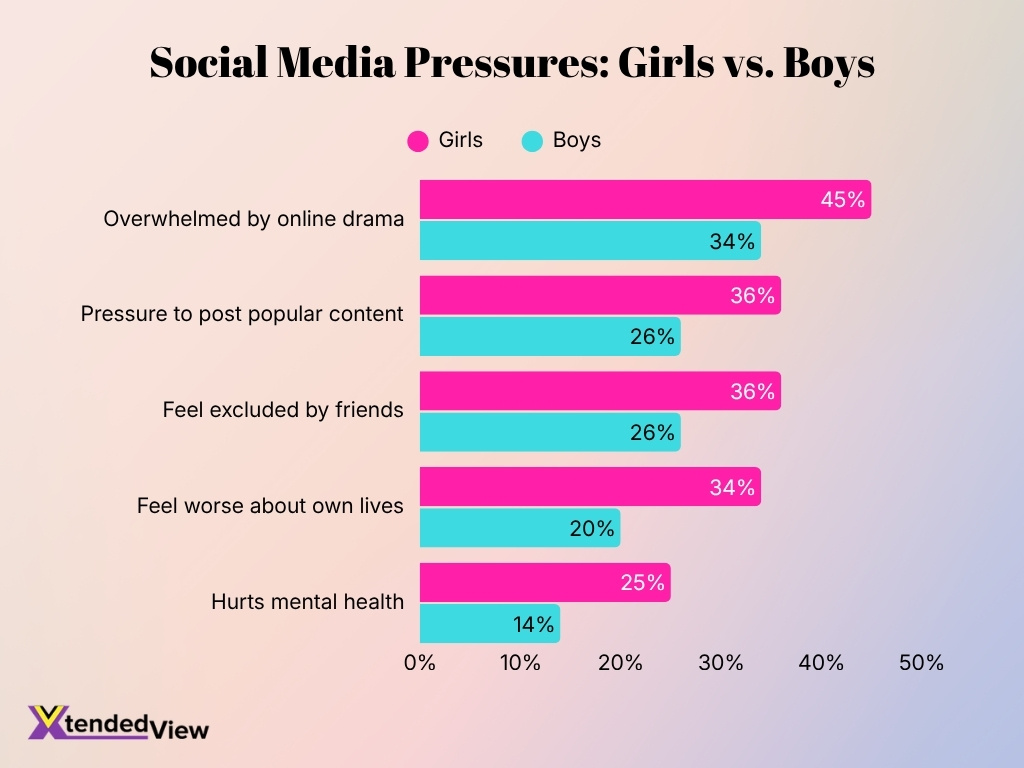
- Teen girls were more likely to report direct mental health harm from social media: 25% of girls versus 14% of boys said it hurts their mental health.
- Negative social comparison also showed a gender gap. 34% of girls versus 20% of boys said social media makes them feel worse about their own lives.
- Girls were more likely to feel overwhelmed by online drama, at 45% versus 34% of boys.
- 36% of girls versus 26% of boys said they feel pressure to post content that becomes popular, while the same 36%-to-26% split appeared for feeling excluded by friends.
- Platform use also differs by gender. 66% of teen girls used TikTok, compared with 59% of boys, while 66% of girls and 56% of boys used Instagram.
- YouTube showed the reverse pattern: 93% of teen boys reported using it, compared with 87% of girls.
- TikTok adoption varies substantially by race and ethnicity: 79% of Black teens and 74% of Hispanic teens used the platform, compared with 54% of White teens.
- Black teens were more likely to report strong online support. 26% said social media gives them a lot of support during difficult periods, compared with 15% of Hispanic teens and 12% of White teens.
- Early-adolescent research also shows widespread underage participation. In a U.S. sample of 10,092 adolescents, 63.8% of participants younger than 13 reported social media use, and under-13 users averaged 3.38 social media accounts.
- Among adolescents with social media accounts in that study, 6.3% reported having a secret account hidden from their parents, adding another demographic and family-monitoring dimension to youth social media research.
How Much Social Media Use Is Considered Excessive?
- There is no universal clinical cutoff that makes a specific number of social media minutes automatically harmful. Researchers increasingly distinguish between time spent, compulsive behavior, content exposure, sleep displacement, and the individual user’s vulnerability.
- Still, one longitudinal U.S. study of 6,595 adolescents ages 12 to 15 found that those using social media for more than three hours a day faced about twice the risk of poor mental health outcomes, including anxiety and depression symptoms.
- Earlier national evidence showed eighth- and 10th-graders averaging 3.5 hours of social media per day, illustrating that substantial daily exposure already falls within normal behavior for many adolescents.
- In that same evidence base, one in four adolescents spent at least five hours a day on social media, while roughly one in seven spent seven or more hours daily.
- Teen self-assessments provide another signal. In 2025, 45% of U.S. teens said they spend too much time on social media, up from 36% in 2022.
- Behavior appears to be changing as awareness rises. 44% of teens said they had cut back on social media use, up from 39% when the question was asked in 2023.
- The 2026 platform survey found that 28% of teen TikTok users specifically believed they spent too much time on TikTok, showing that users may view overuse differently depending on the app.
- Excessive use should not be confused with problematic use. Problematic behavior includes difficulty controlling use, interference with everyday activities, and continued use despite negative consequences; someone can therefore spend substantial time online without meeting those behavioral markers.
- Timing also matters. Nearly one in three adolescents in earlier evidence reported using screen media until midnight or later on a typical weekday, creating a potential route from digital behavior to insufficient sleep and poorer mental health.
- For practical purposes, the research supports watching for functional impairment rather than one rigid hourly limit. Lost sleep, declining school performance, inability to disengage, distress, and displacement of offline relationships can provide more meaningful warning signs than screen time alone.
What Parents Think vs. What Teens Actually Report
- The parent-teen perception gap is clear in recent U.S. data. 55% of parents said they were extremely or very concerned about teen mental health, compared with 35% of teenagers themselves.
- When concerned parents were asked what most negatively affects teen mental health, 44% identified social media as the single biggest factor. Teens offered a broader mix of explanations, including social media, bullying and social pressures.
- Parents also judge social media’s direct mental health effect more negatively. In 2026, 24% of parents said social media hurts their teen’s mental health, while only 8% said it helps.
- Teens themselves reported a somewhat different balance in the 2025 survey: 19% said social media hurts their mental health, while roughly half said it has neither a positive nor negative effect.
- TikTok illustrates the screen-time perception gap. 44% of parents of teen TikTok users said their child spends too much time on the platform, compared with 28% of teen users who said the same about themselves.
- Parents nevertheless recognize social benefits. About one in five parents said social media helps their teen’s friendships, compared with 13% who thought it hurts friendships.
- Teenagers reported an even stronger friendship benefit: 30% said social media helps their friendships, while only 7% said it hurts them.
- Communication presents another perception gap. 80% of parents said they feel extremely or very comfortable talking with their teen about the teen’s mental health, but only 52% of teenagers reported the same comfort level.
- Most parents actively discuss online behavior: 85% said they talk with their teenager about social media use, indicating that digital habits now form a routine part of parenting for many U.S. families.
- Parents’ attitudes also vary by household income. About half of parents in households earning at least $75,000 whose teen uses TikTok described that use as excessive, compared with 36% of parents in lower-income households.
Social Media and Suicidal Ideation and Self-Harm Statistics
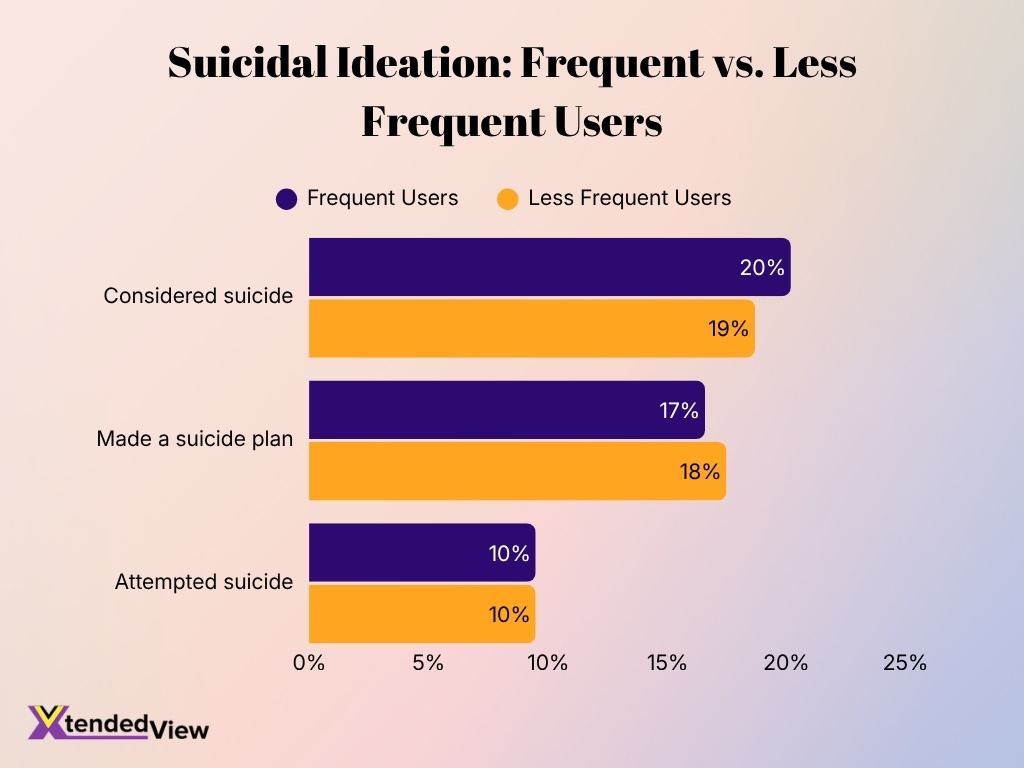
- 20.2% of frequent social media users considered suicide versus 18.7% of less frequent users.
- Frequent users showed a 21% higher adjusted prevalence of suicidal thoughts.
- 16.6% of frequent users made a suicide plan compared to 17.5% of less frequent users.
- Suicide attempts remained equal at 9.5% for both frequent and less frequent users.
- Among frequent female users, 26.4% considered suicide and 12.5% attempted it.
- For frequent male users, 13.9% considered suicide and 6.3% attempted it.
- 40.4% of frequently online LGBQ+ students considered suicide versus 13.9% of heterosexual students.
- 32.4% of LGBQ+ frequent users made a suicide plan, and 19.4% attempted suicide.
- A 2025 study found 50% of adolescents encountered self-harm content on social media.
- Regardless of use, 20% of high school students considered suicide and 9% attempted suicide overall.
Correlation Is Not Causation, Understanding the Research
- Most social media and mental health studies remain observational, which means they can identify associations but cannot prove that social media directly caused depression, anxiety, or another outcome.
- Reverse causality presents a major challenge. Adolescents already experiencing depression, anxiety, or loneliness may use social media differently, meaning poorer mental health can influence online behavior rather than simply result from it.
- A 2025 study of adolescents with and without diagnosed mental health conditions explicitly noted that its cross-sectional design could not provide causal evidence, despite identifying differences in social media experiences between groups.
- Experimental evidence remains mixed. A 2025 cohort intervention involving 373 young adults found that a one-week reduction in social media use coincided with a 16.1% decline in anxiety symptoms and a 24.8% decline in depression symptoms. However, participants opted into the reduction phase, limiting causal interpretation.
- Meanwhile, a 2025 systematic review and meta-analysis found no significant overall effect of temporary social media abstinence on positive affect, negative affect, or life satisfaction.
- Most abstinence experiments in that meta-analysis lasted about seven days, while a smaller number ranged from one to 28 days. Researchers concluded that short interventions may not capture longer-term mental health changes.
- The relationship also varies between people. Factors such as age, gender, existing mental health conditions, social support, type of content viewed, and active versus passive use can all alter the association.
- Content may matter more than raw time in some cases. Social comparison, cyberbullying, self-harm content and supportive peer interaction can produce very different experiences even among people recording the same number of daily hours.
- Researchers also face limited access to detailed platform data. Lack of transparency around algorithms, recommendation systems and user behavior continues to constrain independent analysis of mental health effects.
- Therefore, the strongest 2026 interpretation is that social media can contribute to both risk and protection, but the size and direction of the effect depend on the user, behavior and digital environment. Claims that social media either universally causes mental illness or has no meaningful effect go beyond what the evidence supports.
Frequently Asked Questions (FAQs)
In a 2025 U.S. survey, 19% of teens said social media hurts their mental health, while about half said it has neither a positive nor negative effect.
One-week social media reduction intervention coincided with a 24.8% decrease in depression symptoms, alongside a 16.1% decrease in anxiety symptoms.
In 2025, 48% of U.S. teens said social media has a mostly negative effect on people their age, up from 32% in 2022.
Recent research cited in 2026 reviews indicates that roughly 11% of adolescents show problematic social media use patterns, although prevalence varies by country, age, gender, and measurement method.
A 2025 study of 373 young adults found that a one-week reduction in social media use coincided with a 16.1% decline in anxiety symptoms and a 14.5% decline in insomnia symptoms.
Conclusion
Social media mental health statistics show a mixed and highly individual relationship between digital behavior and well-being. Heavy or compulsive use can coincide with anxiety, depression, sleep disruption, cyberbullying and suicide-related risk, while social platforms can also provide friendship, creativity, identity affirmation and emotional support.
The evidence does not establish one universal screen-time threshold or prove that social media alone causes mental illness. Instead, outcomes depend on factors such as age, gender, existing mental health, platform choice, content exposure, sleep patterns and how people interact online. The most useful approach focuses on quality of use, functional impairment and individual risk, while preserving online experiences that provide meaningful connection and support.