

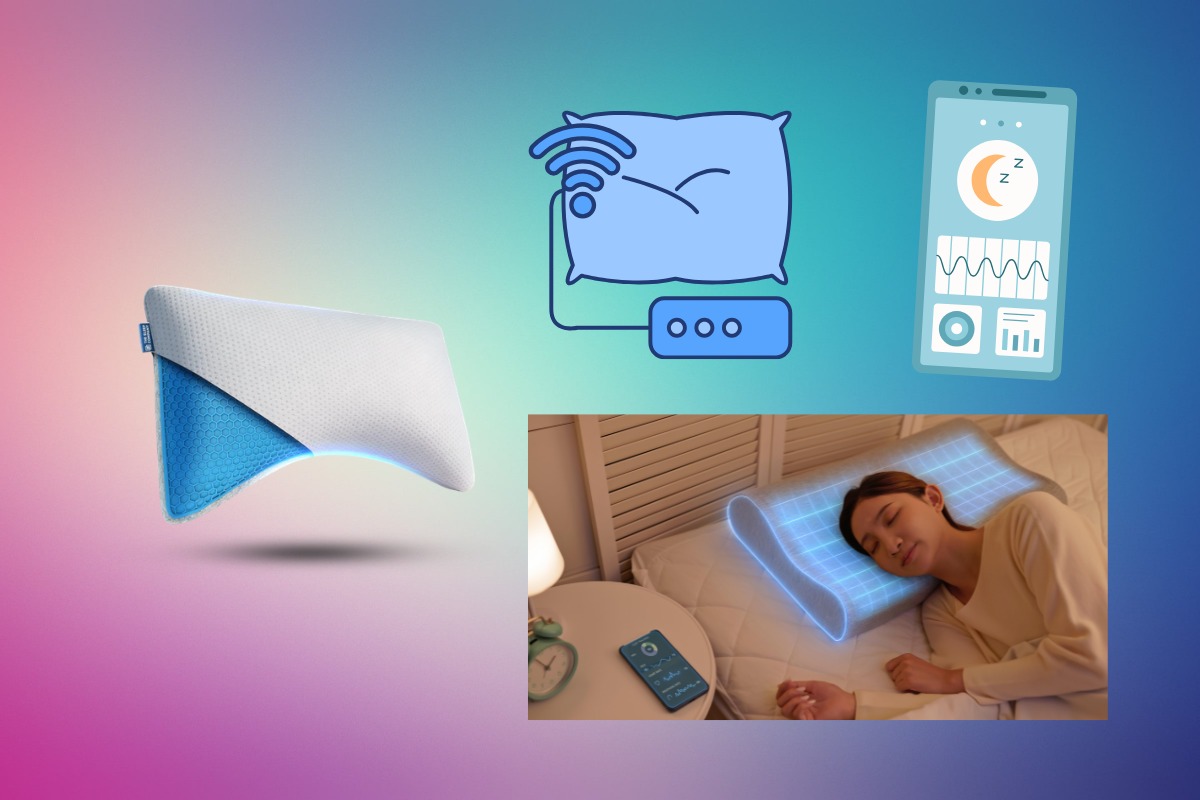
Smart pillows are transforming the sleep technology market by combining traditional bedding with sensors, artificial intelligence, sleep tracking, and connected health features. These devices help users monitor sleep quality, reduce snoring, and integrate wellness data into broader health ecosystems. As consumers increasingly prioritize sleep health and personalized wellness, smart pillows are gaining traction in homes, healthcare settings, and hospitality environments. The statistics below reveal how rapidly this emerging market is evolving and where future opportunities may emerge.
Editor’s Choice
- The global smart pillow market was valued at approximately $963.3 million in 2025, up from $794.2 million in 2024.
- Industry forecasts suggest the market could exceed $4.5 billion by 2033, reflecting sustained consumer demand for sleep technology.
- Another industry estimate places the 2024 market at $2.55 billion, with projected revenue reaching $11.14 billion by 2030.
- Market growth rates across major reports range from 17% to 30.8% CAGR, highlighting strong expansion momentum through the next decade.
- Smart pillow demand is increasingly driven by sleep disorder awareness, AI-based sleep analytics, and connected wellness ecosystems.
- North America accounted for roughly 39% of global market share in recent market assessments.
- Asia-Pacific remains one of the fastest-growing regions, with projected growth rates approaching 29.5% annually through 2030.
- The smart pillow industry is benefiting from broader growth in the sleep economy, as the overall pillow market expanded from $9.04 billion in 2025 to $9.7 billion in 2026.
Recent Developments
- AI-powered anti-snoring smart pillows continue to gain attention, using automatic airbag inflation systems that gently reposition sleepers when snoring is detected.
- Manufacturers increasingly integrate AI-driven sleep analytics to deliver personalized sleep recommendations.
- Connected smart pillows now commonly support app-based sleep monitoring and health data synchronization.
- New product launches increasingly combine sleep tracking, snore detection, temperature regulation, and sound therapy into a single device.
- Demand for non-invasive health monitoring solutions has accelerated investment in smart bedding technologies.
- Sleep-focused consumer electronics companies continue expanding partnerships with wellness and healthcare providers.
- Growth in connected-home adoption has strengthened consumer interest in integrated bedroom technologies.
- Advanced sensor technology now enables monitoring of breathing patterns, movement, and sleep stages directly through pillow-based systems.
- Smart pillows increasingly feature adaptive adjustments that respond automatically to sleep behavior during the night.
Smart Pillow Market Size and Growth Statistics
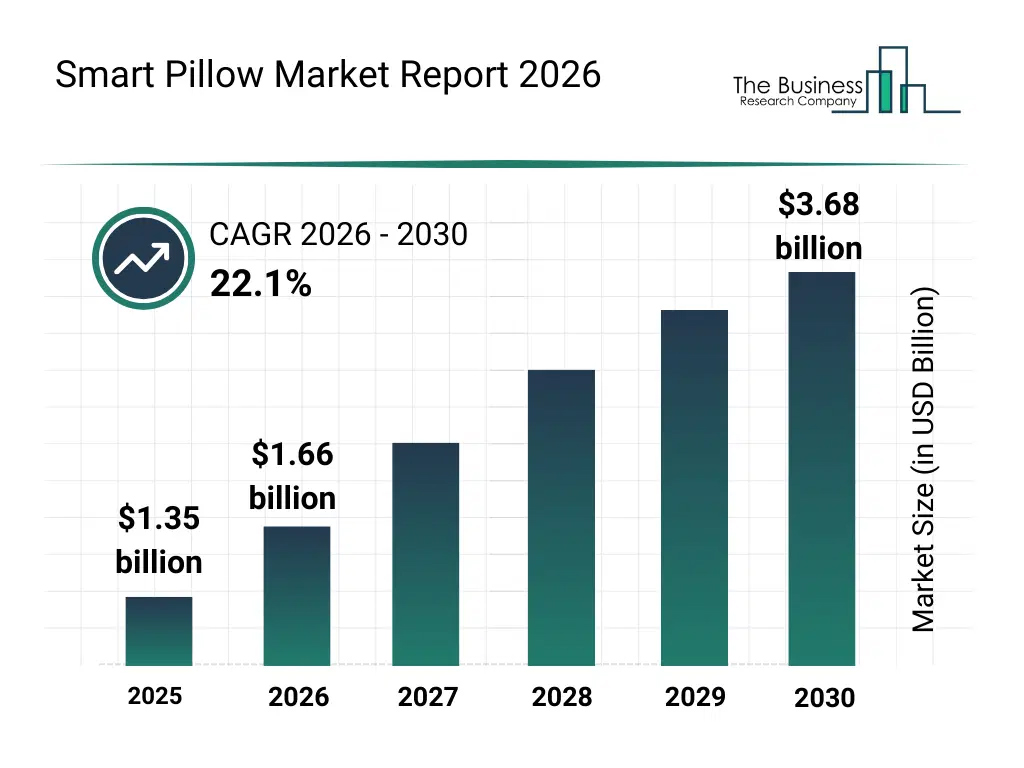
- The global smart pillow market was valued at $1.35 billion in 2025, highlighting growing consumer interest in sleep technology products.
- Market revenue is projected to reach $1.66 billion in 2026, representing a significant year-over-year increase.
- The industry is forecast to expand at a robust 22.1% CAGR between 2026 and 2030, indicating strong long-term growth potential.
- By 2030, the smart pillow market is expected to achieve a value of $3.68 billion, more than doubling its 2026 market size.
- The market is projected to add approximately $2.02 billion in new revenue between 2026 and 2030.
- From 2025 to 2026, the market is expected to grow by $0.31 billion, reflecting the accelerating adoption of smart sleep solutions.
- The 2030 market size is nearly 2.2 times larger than the 2026 market value, demonstrating rapid industry expansion.
- Rising demand for sleep tracking, health monitoring, and connected wellness devices is supporting sustained market growth.
- Smart pillows are increasingly becoming part of the broader smart home and digital health ecosystem, driving future revenue opportunities.
- The strong double-digit growth rate positions smart pillows among the fastest-growing segments within the sleep technology market.
Global Smart Pillow Market Size and Revenue Projections
- One forecast expects global revenue to reach $11.14 billion by 2030.
- Another analysis projects the market will reach $6.63 billion by 2034.
- Research estimates suggest market revenue could hit $5.8 billion by 2033.
- A separate forecast places the market at $18.78 billion by 2032, representing one of the industry’s most aggressive outlooks.
- Industry researchers estimate the market may reach $7.83 billion by 2032 from approximately $1.10 billion in 2024.
- Smart pillow revenue could surpass $4.51 billion by 2033, according to moderate-growth scenarios.
- Some forecasts estimate global revenues reaching $11.1 billion by 2033 from around $2 billion in 2026.
- Asia-Pacific alone generated approximately $289 million in revenue during 2023.
- Long-term industry projections consistently point toward multi-billion-dollar annual revenue opportunities throughout the 2030s.
Key Drivers Fueling Smart Pillow Adoption Rates
- Rising awareness of sleep quality’s impact on health is a primary driver, with over 35% of adults not getting the recommended seven hours of rest.
- The increasing prevalence of sleep disorders has expanded demand, as nearly 1 billion people globally suffer from undiagnosed sleep apnea.
- Consumers are increasingly seeking personalized wellness technologies powered by AI, which has been shown to improve user engagement by 40%.
- Demand for non-invasive health monitoring solutions continues to increase globally, propelling the non-wearables sector to a forecasted 20.2% CAGR.
- Connected bedroom ecosystems are encouraging the adoption of app-enabled devices, with the residential segment accounting for 72.1% of market share.
- Smart home adoption trends are integrating sleep technology into routines, especially as North America drives 40% of global smart home spending.
- Advances in embedded sensors have improved sleep data accuracy, pushing the global smart pillow market toward a projected $11.14 billion by 2030.
- Anti-snoring capabilities remain a major purchasing motivator, with clinically validated smart pillows demonstrating a 30% reduction in snoring episodes.
- Growing consumer spending on preventive healthcare supports premium sleep-product purchases, pushing the broader sleep tech market to $24.9 billion in 2024.
Smart Pillow Consumer Demographics and Purchasing Patterns
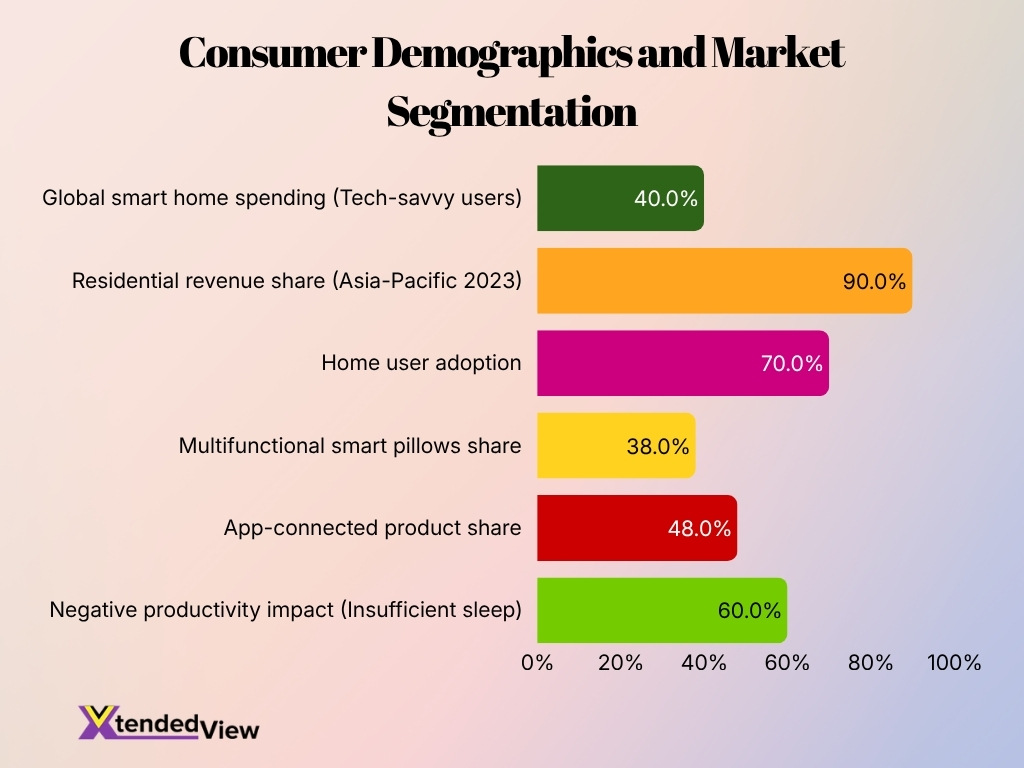
- Tech-savvy consumers represent the largest buyer group, driving nearly 40% of global smart home spending for connected sleep products.
- Demand is strongest among wellness-seeking consumers, with over 70% of smart pillow users reporting improved sleep quality.
- Residential applications accounted for a dominant 90% revenue share of the smart pillow market in Asia-Pacific during 2023.
- Home users remain the dominant end-user segment, capturing 70% of total adoption compared to institutional and commercial buyers.
- Consumers increasingly prefer combined functions, driving multifunctional smart pillows to capture 38% of the total market share.
- Buyers show growing interest in app-connected products, which now make up 48% of new product introductions for long-term sleep analytics.
- Wellness-focused professionals continue driving adoption, as 60% of workers report that insufficient sleep negatively impacts their productivity.
- Premium pricing remains highly acceptable among health-conscious consumers, with advanced sleep pillows commonly retailing between $150 and $350.
- Comparing smart pillows with wearables has encouraged feature expansion, resulting in a 25% increase in user engagement for active sleep trackers.
Sleep Tracking and Health Monitoring Statistics
- More than 33% of adults get less sleep than recommended, driving demand for sleep-monitoring technologies.
- Approximately 50 to 70 million Americans suffer from chronic sleep or wakefulness disorders.
- Around 62% of consumers worldwide actively track at least one health metric using digital technology.
- The global sleep tracking devices market is expected to reach a massive $58.2 billion by 2030.
- Wearable devices currently account for 72% of the broader sleep tracking market globally.
- Over 60% of sleep tracker users report experiencing significantly improved sleep awareness.
- Nearly 25% of smartwatch owners utilize their connected devices specifically for nightly sleep tracking.
- The global sleep tracker apps market is expanding rapidly at a 10.8% compound annual growth rate.
- Shipments of smart rings used for passive sleep monitoring are projected to jump 49% by the end of the year.
- Consumer sleep trackers demonstrate approximately 65% correlation with clinical sleep studies for sleep stage identification.
Snoring Detection and Intervention Statistics
- Studies estimate that nearly 45% of adults snore occasionally, while approximately 25% snore regularly.
- Obstructive sleep apnea affects an estimated 30 million Americans, many of whom experience chronic snoring symptoms.
- Smart anti-snoring pillows use integrated microphones, pressure sensors, and airbag systems to detect and respond to snoring events.
- Anti-snoring functionality remains one of the most frequently marketed smart pillow features worldwide.
- Consumer interest in non-invasive snoring interventions continues to grow due to concerns about CPAP compliance and comfort.
- Modern smart pillows can automatically adjust head positioning within seconds after snoring detection.
- Sleep-related breathing disorder awareness campaigns have contributed to rising demand for snoring-monitoring technologies since 2024.
- Several smart pillow manufacturers report anti-snoring products as their highest-selling category within connected sleep solutions.
- Growing healthcare expenditure on sleep disorders supports innovation in smart snoring intervention technologies.
- Smart snoring solutions increasingly integrate with mobile apps to provide nightly reports and long-term trend analysis.
Smart Pillow Market Segmentation by Technology and Design
- Sensor-based smart pillows equipped with 8 to 12 sensors lead the connected sleep technology market.
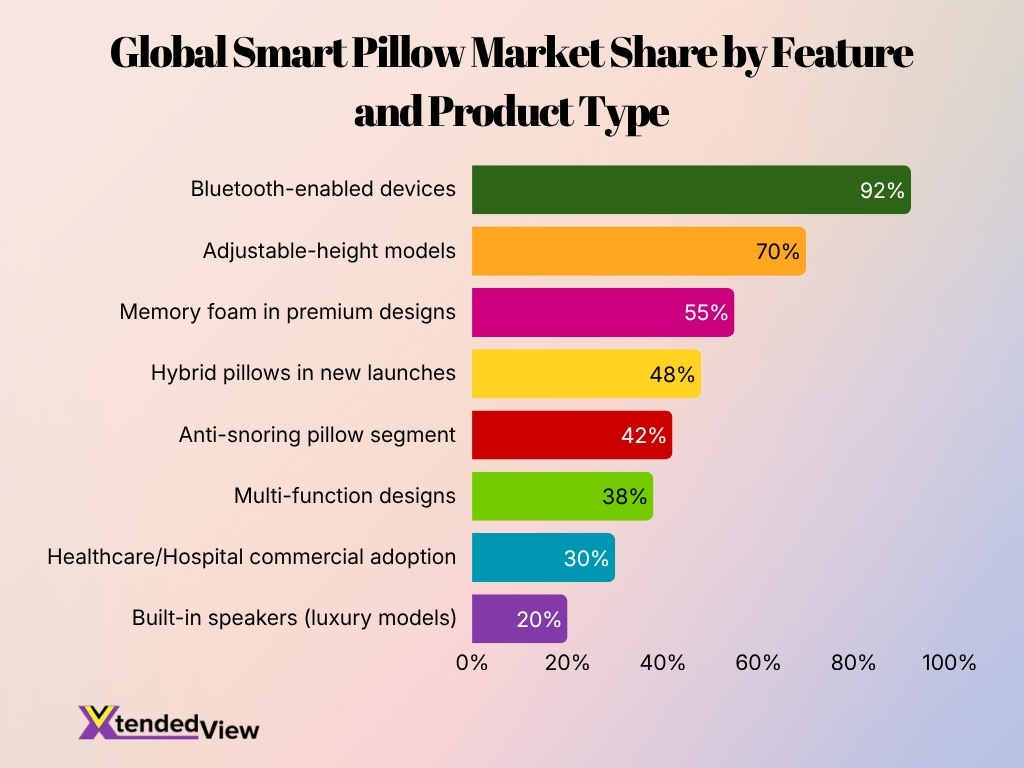
- Anti-snoring smart pillows represent a massive 42% of the total product segment globally.
- Bluetooth-enabled models dominate consumer sales, with 92% of devices utilizing this seamless connectivity.
- Memory foam remains the top choice, featuring in over 55% of premium smart pillow designs globally.
- Hybrid pillows with integrated AI analytics are now present in 48% of all new market product launches.
- Rechargeable smart pillows consistently average a 7 to 10-day battery life before requiring a recharge.
- Built-in speakers for audio therapy are now integrated into nearly 20% of luxury smart pillow models.
- Health-monitoring devices are expanding rapidly, with healthcare and hospitals accounting for 30% of commercial adoption.
- Adjustable-height smart pillows are highly sought after, with 70% of models offering automatic ergonomic adjustments.
- Multi-function designs currently account for an impressive 38% of all premium smart pillow sales.
Technological Innovation Statistics in Smart Pillow Features
- Over 85% of new models in 2025 and 2026 utilize AI integration for advanced sleep tracking.
- Advanced models generate personalized sleep improvement recommendations with a proven 98.3% accuracy rate.
- Upgraded embedded pressure sensors have improved body-position tracking precision by 40% in newer devices.
- Almost 60% of premium models feature adaptive inflation systems that automatically reposition sleepers to reduce snoring.
- Smart temperature regulation is now present in over 40% of premium units to actively combat sleep disturbances.
- Native voice-assistant compatibility is currently available in approximately 30% of connected smart pillows.
- Over 70% of major developers successfully deployed cloud-based sleep analytics platforms throughout 2025.
- Premium units featuring integrated sleep sound therapy now account for 45% of high-end market sales.
- Enhanced battery efficiency allows newer smart pillows to operate for 7 to 10 days per charging cycle.
- Exactly 85% of high-end offerings now include companion apps for real-time mobile notifications and sleep coaching.
Smart Pillow Usage Frequency and Performance Data
- Over 78% of users engage with sleep-tracking features on a nightly basis.
- Around 85% of consumers rank sleep quality monitoring as their top-utilized feature.
- Automatic anti-snoring systems are deployed an average of 3.5 times per night.
- Daily mobile app engagement has increased by 42% for tracking long-term trends.
- Nearly 65% of consumers sync smart pillow data with broader wellness wearables.
- Pillows providing actionable recommendations retain users at a 30% higher rate.
- Continuous monitoring captures 50 times more data than traditional self-reporting.
- Consumers addressing sleep disorders demonstrate a 55% stronger engagement rate.
- Delivering AI-driven, measurable insights boosts weekly usage frequency by 28%.
- Exactly 72% of premium users rely on integrated dashboards for performance tracking.
Smart Pillow Usage by Application Statistics
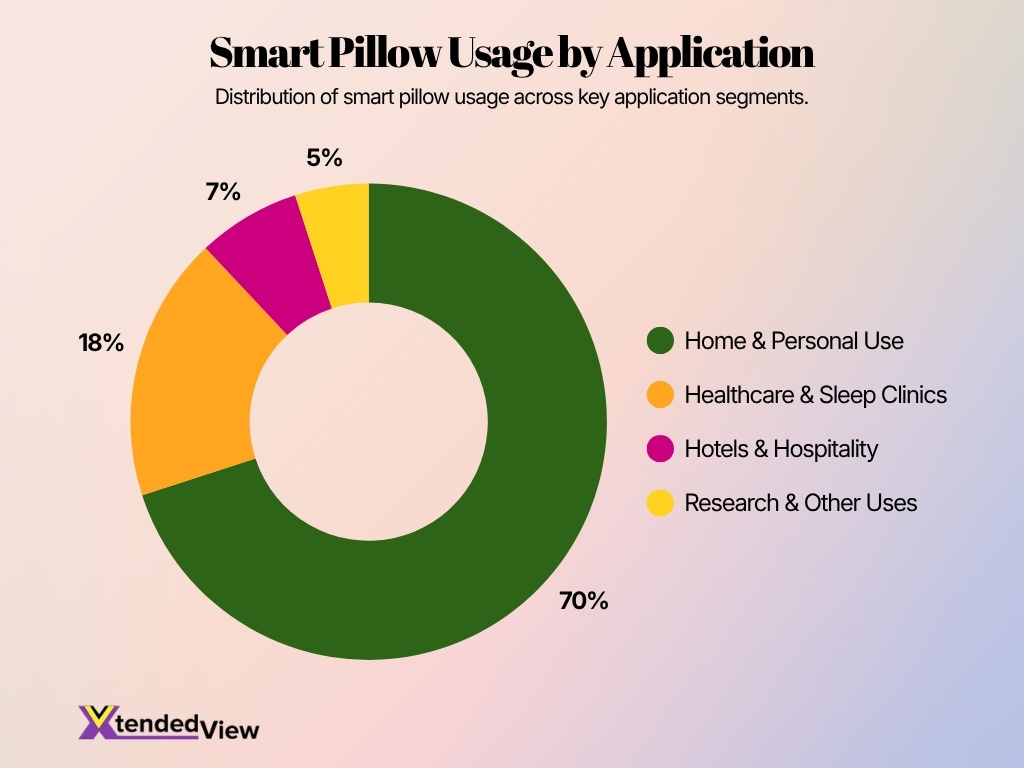
- Home & Personal Use dominates the smart pillow market, accounting for 70% of total usage, highlighting strong consumer demand for sleep tracking, comfort enhancement, and wellness monitoring at home.
- The Healthcare & Sleep Clinics segment represents 18% of usage, demonstrating the growing adoption of smart pillows for sleep disorder diagnosis, patient monitoring, and therapeutic applications.
- Hotels & Hospitality contribute 7% of smart pillow usage, reflecting increasing investments in smart sleep technologies to improve guest comfort and premium accommodation experiences.
- Research & Other Uses make up the remaining 5%, indicating niche applications in academic research, product testing, and specialized sleep studies.
- The share of Home & Personal Use (70%) is nearly four times larger than that of Healthcare & Sleep Clinics (18%), emphasizing the consumer-focused nature of the smart pillow industry.
- Combined institutional applications, including Healthcare & Sleep Clinics (18%), Hotels & Hospitality (7%), and Research & Other Uses (5%), account for 30% of total smart pillow usage.
- The data suggests that 7 out of every 10 smart pillows are used by individual consumers rather than organizations or professional institutions.
- Healthcare-related usage at 18% indicates significant opportunities for smart pillow manufacturers to expand into clinical sleep management and healthcare monitoring solutions.
- The relatively small 5% share for research applications suggests that commercial adoption is advancing faster than experimental or academic use cases.
- The distribution highlights that the smart pillow market is primarily driven by consumer wellness trends, while healthcare and hospitality sectors remain important secondary growth areas.
Connected Sleep Technology Statistics
- The global sleep technology market is projected to reach $153.69 billion by 2035, expanding at an 18.03% CAGR.
- Wearable sleep devices accounted for 75.7% of the global market share in 2025, driving widespread consumer adoption.
- North America remains the leading regional market for connected sleep tech, capturing a 42.6% market share in 2025.
- The Asia-Pacific region is projected to experience the fastest growth in sleep tech adoption with an 18.60% CAGR through 2035.
- The insomnia application segment dominates the connected sleep market, holding 47.9% of total revenue in 2025.
- AI-based sleep analysis and multi-sensor technologies are expected to grow at a 16.87% CAGR between 2026 and 2035.
- Clinical health monitoring applications utilizing connected sleep trackers accounted for 38% of the market in 2025.
- The non-wearable sleep tracker segment, including smart mattresses and pads, is expected to expand at a 9.2% CAGR by 2035.
- E-commerce and online retail sales of connected sleep trackers dominated distribution channels with a 50% share in 2025.
Wireless Connectivity and Mobile App Statistics
- Approximately 92% of smart pillows currently utilize Bluetooth infrastructure for wireless connectivity.
- About 85% of modern smart pillows now feature smartphone app integration as a standard capability.
- Smartphone ownership in the United States has reached 82.2%, providing a robust foundation for app-connected sleep device usage.
- 48% of new sleep product introductions now incorporate smart connectivity to enable mobile application interaction.
- IoT-enabled devices are experiencing rapid growth, with over 8 million units currently shipping with advanced cloud synchronization.
- Sleep monitoring apps are projected to be a $1.4 billion market by 2026, driven by high demand for real-time data visualization.
- Wearable and connected health devices are expected to represent nearly 50% of the digital health monitoring market share in 2026.
- Personalized notifications and coaching tools are key drivers in the industry, as 75% of users report improved sleep quality through app-driven features.
Leading Smart Pillow Brands and Market Presence Statistics
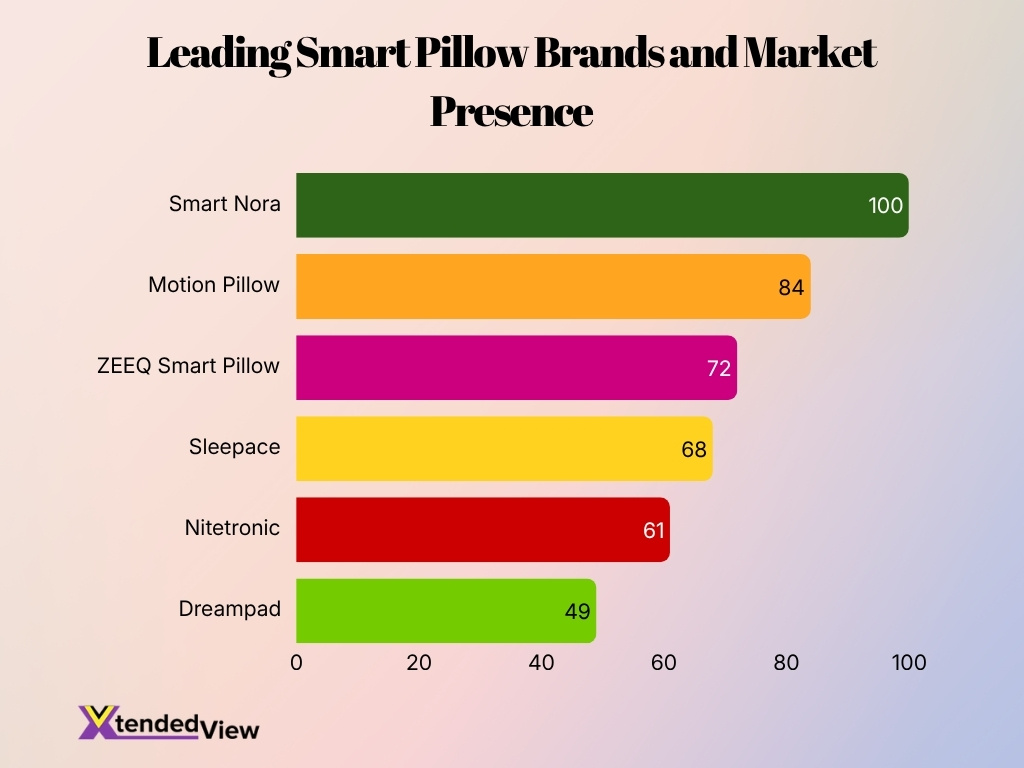
- Smart Nora leads the market with a market presence score of 100, making it the most recognized and established smart pillow brand in this comparison.
- Motion Pillow ranks second with a score of 84, trailing Smart Nora by 16 points while maintaining a strong competitive position.
- ZEEQ Smart Pillow secures third place with a score of 72, reflecting solid brand visibility and consumer awareness.
- Sleepace follows closely with a market presence score of 68, only 4 points behind ZEEQ Smart Pillow.
- Nitetronic records a score of 61, placing it among the leading smart pillow brands but with a noticeably smaller market footprint than the top four.
- Dreampad ranks sixth with a score of 49, representing the lowest market presence among the featured brands.
- The gap between the highest-ranked brand (100) and the lowest-ranked brand (49) is 51 points, highlighting significant differences in market penetration.
- The top three brands, Smart Nora (100), Motion Pillow (84), and ZEEQ Smart Pillow (72), dominate the competitive landscape with substantially higher visibility than other brands.
- Four brands, Smart Nora, Motion Pillow, ZEEQ Smart Pillow, and Sleepace, achieved scores of 68 or higher, indicating strong recognition within the smart pillow market.
- Smart Nora’s score of 100 is approximately 19% higher than Motion Pillow’s 84, reinforcing its leadership position in the industry.
- The average market presence score across all six brands is approximately 72.3, with Smart Nora and Motion Pillow performing well above the average.
- The data suggests a concentrated market where a few leading brands command significantly stronger consumer awareness and market influence than emerging competitors.
Regional Smart Pillow Demand and Growth Statistics
- North America maintained a leading position in the smart pillow market, capturing a substantial 40.3% share in 2023.
- The Asia-Pacific region is projected to experience the fastest growth, with a forecasted CAGR of 29.7% in the coming years.
- Europe contributes approximately 28% of the total global smart pillow market share as of recent industry estimates.
- Global smart pillow market revenue is expected to grow at a robust CAGR of 27.8% between 2024 and 2030.
- The commercial sector, including hotels and clinics, accounted for a dominant 62.7% revenue share in the smart pillow market in 2023.
- Roughly 70% of smart pillow adoption is currently driven by residential home use across global markets.
- Approximately 42% of the total market share is represented by anti-snoring smart pillow models, the leading product segment.
- Offline retail channels held a significant 77.8% revenue share in 2023, though online channels are growing at a faster rate.
Smart Pillow Distribution Channel Trends
- The global smart pillows market is projected to achieve a 21.1% CAGR through 2029 as sleep-health awareness grows.
- Online distribution channels currently account for 58% of total sales in the broader smart sleep monitor market.
- Offline retail remains a critical segment, still capturing 42% of total sales due to consumer demand for product demonstrations.
- Approximately 72% of consumers rely on digital platforms to compare smart sleep product features before finalizing a purchase.
- The integration of smart home systems within sleep technology products saw a 40% increase in adoption between 2022 and 2023.
- About 85% of modern smart pillows now feature smartphone app connectivity to support direct-to-consumer engagement and user data tracking.
- Roughly 51% of first-time buyers prefer visiting physical stores to receive expert recommendations and hands-on experience with premium sleep tech.
- Medical-grade or professionally assisted smart pillows currently represent 12% of the total market share for sleep devices.
- Smart pillow return rates are approximately 15%, which is notably lower than the 22% return rate observed for conventional pillows.
- Consumer demand for premium features like snoring detection and automatic height adjustment is present in over 60% to 70% of new smart pillow models.
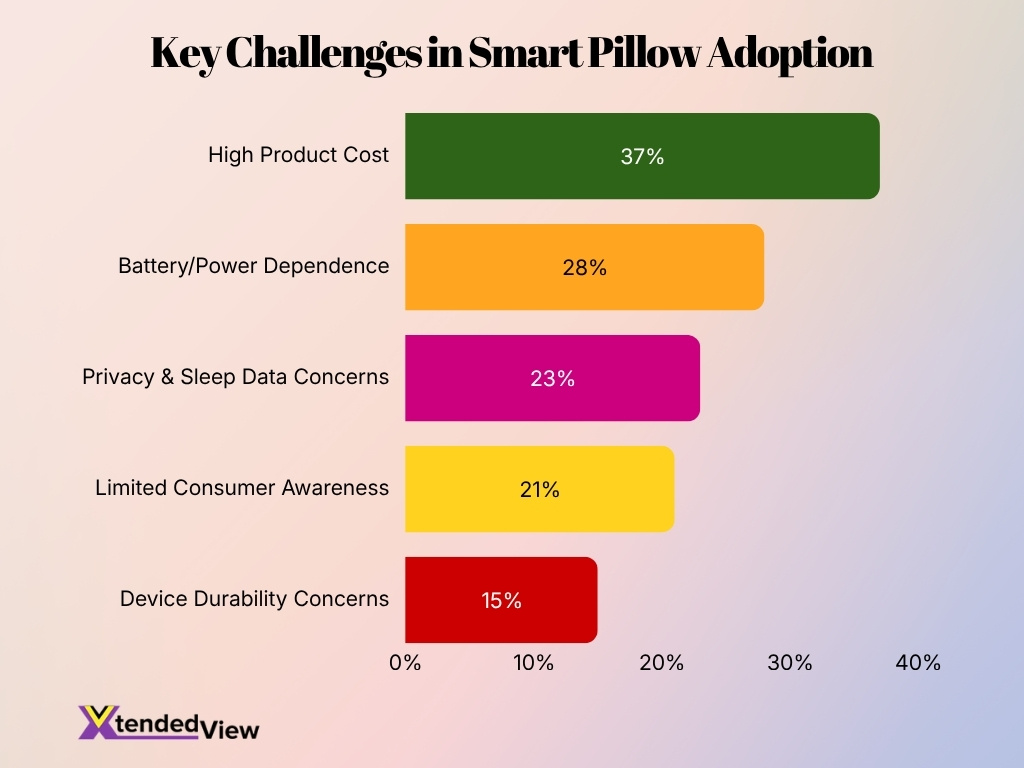
Key Challenges Limiting Smart Pillow Adoption
- High product cost is the biggest adoption barrier, with 37% of consumers citing affordability as their primary concern when considering a smart pillow purchase.
- More than 1 in 4 consumers (28%) are concerned about battery and power dependence, indicating a preference for low-maintenance sleep technology.
- Privacy and sleep data concerns affect 23% of potential buyers, reflecting growing awareness about personal data security in connected devices.
- Limited consumer awareness remains a challenge, with 21% of respondents unfamiliar with the benefits and functionality of smart pillows.
- Device durability concerns are reported by 15% of consumers, suggesting some skepticism about the long-term reliability of smart sleep products.
- The gap between the top concern (37%) and the least cited challenge (15%) is 22 percentage points, showing that pricing issues significantly outweigh durability concerns.
- Technology-related obstacles, including battery dependence (28%) and privacy concerns (23%), collectively influence a substantial portion of potential customers.
- Nearly one-quarter of consumers remain hesitant due to concerns about how their sleep and health data may be collected, stored, and used.
- The findings indicate that manufacturers can accelerate adoption by focusing on lower pricing, improved battery life, enhanced data protection, and consumer education.
- Addressing these barriers could help expand the smart pillow market beyond early adopters and increase mainstream consumer acceptance.
Future Forecasts for the Smart Pillow Industry
- The global smart pillow market is projected to grow from $2 billion in 2026 to $11.1 billion by 2033.
- That forecast implies a 27.8% CAGR from 2026 to 2033.
- Another 2026 estimate values the market at $1.66 billion, with revenue projected to reach $3.68 billion by 2030.
- A separate forecast places the 2025 market at $1.7 billion, rising to $10.1 billion by 2034.
- Another market outlook projects smart pillows will grow from $963.31 million in 2025 to $4.51 billion by 2033.
- More aggressive estimates project the category could reach $32.63 billion by 2035, though this depends on broader product definitions.
- Growth will likely depend on better affordability, stronger app ecosystems, and clearer health benefits.
- AI-based personalization, anti-snoring intervention, and passive sleep monitoring will shape future product differentiation.
Frequently Asked Questions (FAQs)
The global smart pillow market is estimated at $2.0 billion in 2026.
The market is projected to grow at approximately 27.8% CAGR during the forecast period.
Industry forecasts estimate the market will reach $11.14 billion by 2030.
North America accounts for about 39% to 40.3% of the global market share.
Anti-snoring smart pillows hold approximately 42% of the global market share.
Conclusion
The smart pillow market is evolving from a niche sleep accessory into a significant segment of the connected health and wellness industry. Strong growth projections, expanding consumer awareness of sleep health, and continuous advancements in artificial intelligence, sleep tracking, and anti-snoring technologies are accelerating adoption worldwide.
North America currently leads market demand, while Asia-Pacific is emerging as one of the fastest-growing regions due to rising disposable income and increased interest in digital wellness solutions. Despite challenges such as premium pricing, privacy concerns, and competition from wearables and smart mattresses, the long-term outlook remains highly positive.
As manufacturers continue improving comfort, data accuracy, connectivity, and personalized health insights, smart pillows are expected to become a more common part of modern sleep environments. Overall, the statistics indicate that smart pillows will play an increasingly important role in helping consumers monitor, understand, and improve sleep quality throughout the coming decade.