


Amazon Alexa and Google Assistant helped move voice control from smartphones into homes, cars, and connected devices. Their competition has shifted toward generative AI, with Alexa+ supporting more conversational requests while Google moves users from Google Assistant toward Gemini. Households use these assistants for smart-home control, while drivers and mobile users rely on voice for navigation, calling, and hands-free information.
Editor’s Choice
- Google Assistant was projected to reach 91.9 million U.S. users in 2025, placing it ahead of Alexa in overall U.S. voice-assistant reach.
- Alexa was projected to have 77.2 million U.S. users in 2025, leaving Google Assistant with a 14.7 million-user advantage in the comparable forecast.
- However, Alexa remained the leading virtual assistant within the global smart-speaker market by revenue share in 2025.
- One 2026 market assessment estimates that Alexa captured about 31% of global smart-speaker revenue in 2025.
- Alexa entered 2026 with a cumulative footprint of more than 600 million Alexa-enabled devices sold, spanning Echo hardware and other device categories.
- Alexa+ had reached tens of millions of customers by early 2026 as its availability expanded across the U.S.
- The global smart-speaker market is projected to increase from $15.8 billion in 2025 to $18.1 billion in 2026, equivalent to about $2.3 billion in additional annual revenue.
- Current forecasts put the smart-speaker market at $48.6 billion by 2033, representing a 15.1% compound annual growth rate from 2026 through 2033.
Recent Developments
- Alexa+ moved from its 2025 introduction to general U.S. availability in February 2026, marking one of Alexa’s largest platform upgrades since its original launch.
- Alexa+ costs $19.99 per month for full standalone access in the U.S., while Prime members receive the full service at no additional charge.
- A free Alexa+ chat tier also became available to non-Prime users in 2026 through the browser and mobile app, extending Alexa beyond its traditional voice-hardware model.
- By early 2026, tens of millions of customers were using Alexa+, according to the latest disclosed adoption figure.
- Alexa+ expanded beyond Echo speakers and displays to the browser, mobile app, Fire TV and other connected experiences, giving users more ways to continue the same AI interaction across devices.
- Google announced in March 2025 that it would transition mobile Google Assistant users to Gemini, making the comparison increasingly one between Alexa+ and Google’s Gemini-based assistant ecosystem.
- The Google Assistant transition continued into 2026 after the company extended its earlier timeline rather than completing the switch by the end of 2025.
- Google also began replacing Google Assistant on compatible speakers and smart displays with Gemini for Home, while extending Gemini-based assistance across Android, automotive and wearable environments.
- Alexa’s previous-generation engagement had already increased 20% year over year in 2024, giving the Alexa+ rollout an established usage base rather than requiring Amazon to build a voice audience from scratch.
Amazon Alexa vs Google Assistant Overview
- Google Assistant’s estimated 91.9 million U.S. users in 2025 exceeded Alexa’s 77.2 million, giving Google’s traditional assistant a larger overall user footprint before its migration toward Gemini.
- The difference between those 2025 estimates was 14.7 million users, meaning Google Assistant’s forecast U.S. reach was about 19% larger than Alexa’s.
- Alexa had a stronger hardware-centered footprint, with more than 600 million Alexa-enabled devices sold by early 2025.
- Alexa also led the smart-speaker market by virtual-assistant revenue share in 2025, while Google Assistant was identified as the fastest-growing assistant segment in one current market forecast.
- One 2026 assessment estimates Alexa’s 2025 global smart-speaker revenue share at 31%, reflecting its strength in dedicated home voice hardware.
- The same forecast projects the Google Assistant smart-speaker segment to expand at an 18.4% CAGR through 2035, although Google’s transition to Gemini means future products will increasingly carry different assistant branding.
- Alexa+ reached tens of millions of users by early 2026, providing a first measurable indication of consumer adoption for Amazon’s generative-AI upgrade.
- In 2026, a direct Alexa-versus-Google Assistant comparison requires an important distinction: Alexa remains an active brand through Alexa+, while Google is progressively replacing the legacy Assistant experience with Gemini on major device categories.
Voice Assistant Application Market Growth Statistics
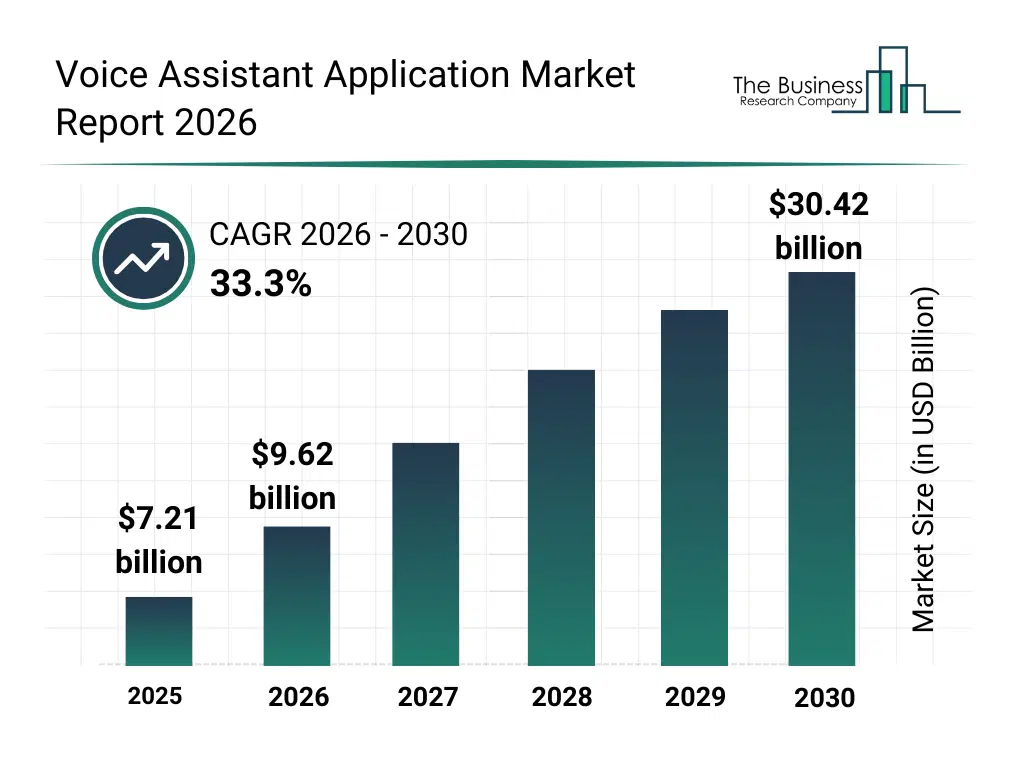
- The global voice assistant application market was valued at $7.21 billion in 2025, establishing a strong base for rapid expansion over the following years.
- In 2026, the market is projected to reach $9.62 billion, representing an increase of approximately 33.4% year over year.
- The voice assistant application market is expected to grow at a robust 33.3% CAGR between 2026 and 2030.
- Based on the stated growth rate, the market could reach approximately $12.82 billion in 2027 and $17.09 billion in 2028.
- By 2029, the voice assistant application market could approach $22.78 billion, more than doubling its projected 2026 value.
- The market is forecast to hit $30.42 billion by 2030, making it more than 4.2 times larger than its 2025 size.
- Between 2025 and 2030, the market is projected to add approximately $23.21 billion in total value.
- Overall, the figures indicate rapid market expansion, with voice assistant applications moving toward a $30 billion-plus global market by the end of the decade.
Amazon Alexa vs Google Assistant User Statistics
- Google Assistant was forecast to have 91.9 million U.S. users in 2025, up from an estimated 88.8 million in 2024.
- That represents an increase of approximately 3.1 million Google Assistant users between the 2024 and 2025 estimates.
- Alexa was estimated at 75.6 million U.S. users in 2024 and projected to reach 77.2 million in 2025.
- Alexa therefore added about 1.6 million users in the comparable 2024-2025 forecast, a slower absolute increase than Google Assistant.
- Google Assistant’s 91.9 million-user forecast exceeded Alexa’s 77.2 million by 14.7 million users in 2025.
- Despite Alexa’s smaller projected U.S. user count, more than 600 million Alexa-enabled devices had been sold globally by February 2025, reflecting a much broader cumulative device footprint than an annual active-user figure captures.
- Alexa engagement rose 20% during 2024, suggesting that activity among existing users and devices grew faster than the platform’s projected U.S. user base.
- By early 2026, Alexa+ alone had attracted tens of millions of customers, although an exact current user total has not been publicly disclosed.
- Across all brands, U.S. voice-assistant usage was estimated at roughly 153.4 million people in 2025 and is forecast around 157.9 million in 2026.
- Because one person can use multiple assistants, Alexa and Google Assistant user counts should not be added together to calculate unique users or market penetration; industry methodologies allow overlap across assistant brands.
Amazon Alexa vs Google Assistant Market Share
- Google Assistant led the 2025 U.S. comparison by user reach, with 91.9 million projected users versus Alexa’s 77.2 million.
- The resulting 14.7 million-user gap gave Google Assistant about 19% more U.S. users than Alexa in that comparable forecast.
- However, market leadership changes when the comparison shifts from total users to dedicated smart-speaker revenue: Alexa held the largest virtual-assistant share in 2025.
- One current estimate assigns Alexa approximately 31% of global smart-speaker revenue in 2025, making it the leading assistant platform in that measurement.
- Google Assistant did not lead that 2025 smart-speaker revenue ranking, but its segment carries a projected 18.4% CAGR through 2035.
- In the adjacent smart-display segment, Alexa captured an estimated 33.12% market share in 2025, while Google Assistant-based Nest products ranked behind it.
- North America represented 38.2% of global smart-speaker revenue in 2025, making U.S. platform preferences disproportionately important to the worldwide competitive picture.
- The U.S. itself accounted for the largest country-level share of the smart-speaker market in 2025, further strengthening the relevance of Alexa and Google’s U.S. ecosystems.
- Alexa’s market position also rests on scale beyond smart speakers: more than 600 million Alexa-enabled devices had been sold, while Alexa now extends across televisions, mobile experiences and browser access.
- For 2026, legacy Google Assistant market-share figures need careful interpretation because Google is migrating major parts of the Assistant installed base to Gemini. As a result, 2025 remains the latest clean year for many direct Alexa-versus-Google Assistant comparisons, while 2026 data increasingly measures Alexa+ against Gemini-powered experiences.
U.S. Smart Speaker Ownership by Brand
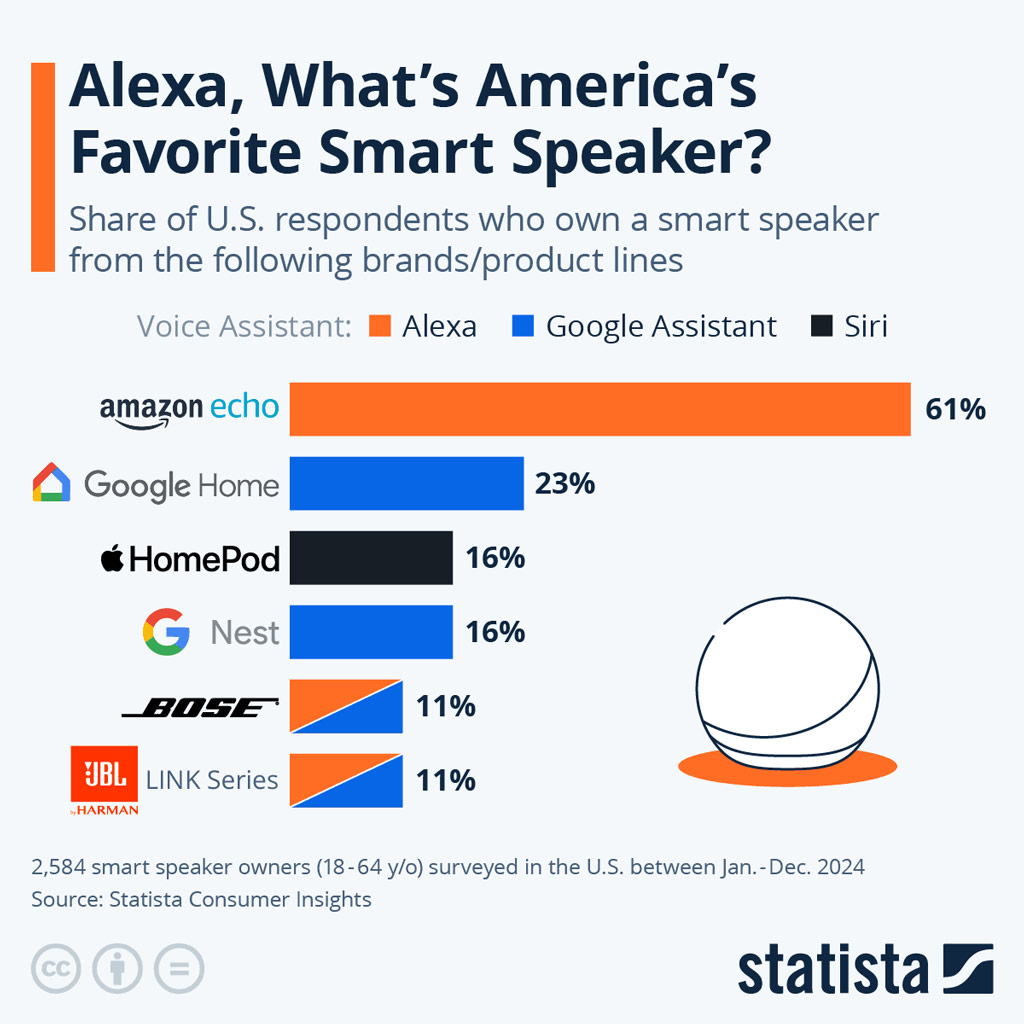
- Amazon Echo dominates U.S. smart speaker ownership, with 61% of surveyed smart speaker owners saying they own an Echo device.
- Google Home ranks second at 23%, putting it 38 percentage points behind Amazon Echo in ownership share.
- Apple HomePod accounts for 16% of U.S. smart speaker owners, giving Siri a considerably smaller hardware footprint than Alexa.
- Google Nest also holds a 16% share, matching Apple HomePod among surveyed smart speaker owners.
- Bose smart speakers are owned by 11% of respondents and support both Alexa and Google Assistant.
- JBL Link Series devices also capture 11% of surveyed owners, tying Bose among the brands shown in the comparison.
- Amazon Echo’s 61% ownership rate is more than 2.5 times Google Home’s 23%, highlighting Amazon’s strong lead in the U.S. smart speaker market.
- The findings are based on a survey of 2,584 U.S. smart speaker owners aged 18–64, conducted between January and December 2024.
Amazon Alexa vs Google Assistant Device Ecosystem and Reach
- Alexa entered the generative-AI era with 600 million active endpoints across devices, cars, offices, Fire TV and Prime Video, according to a 2026 disclosure.
- Separately, more than 600 million Alexa-enabled devices had been purchased worldwide by January 2026, demonstrating Alexa’s reach beyond Echo-branded hardware.
- Google Assistant had already expanded to more than 1 billion devices across smartphones, speakers, and other hardware by 2019. However, this historic installed-base figure should not be treated as a current active-user count.
- At that milestone, Google Assistant operated in more than 30 languages across 80 countries, illustrating how Android helped Google build broader geographic reach than a speaker-only strategy could provide.
- Google Assistant also worked with more than 30,000 connected-home devices from over 3,500 brands at the time of that disclosure. Its current Google Home compatibility catalog has since expanded considerably.
- Google Home now reports compatibility with more than 80,000 Works with Google Home devices, excluding the additional flexibility created by the cross-platform Matter standard.
- Alexa+ has extended Alexa beyond voice hardware into the web and mobile app. Users can now carry conversations, preferences and context between voice, mobile and browser interfaces.
- Google is taking a different transition path: Gemini for Home is designed to replace Google Assistant across speakers and smart displays while reaching hardware released during roughly the past decade.
- The broader Gemini ecosystem surpassed 650 million monthly app users by November 2025. That figure is not a Google Assistant user count, but it illustrates the scale of the AI platform that is increasingly replacing Assistant across Google’s ecosystem.
Amazon Alexa vs Google Assistant Smart Home Compatibility
- Google Home supports over 80,000 compatible smart devices across partner brands.
- Amazon Alexa integrates with more than 100,000 smart-home products from over 9,500 brands.
- At least 28 Echo and eero device families provide official support for Matter.
- Alexa expanded cross-platform capability by adopting Matter 1.5 in March 2026.
- Alexa’s standardized ecosystem spans 12 distinct Matter device categories, including appliances and climate controls.
- Google Home provides Matter hub functionality across 4 major hardware categories.
- Google maintains at least 4 flagship hub product lines featuring dual Wi-Fi and Thread connectivity.
- Smart-home management accounted for 68.72% of the smart-speaker market in 2025.
Amazon Alexa vs Google Assistant Voice Recognition and Command Accuracy
- There is no authoritative, standardized 2026 Alexa-versus-Google Assistant accuracy benchmark covering both platforms under identical conditions. This matters because many frequently quoted accuracy figures online come from tests conducted several years ago.
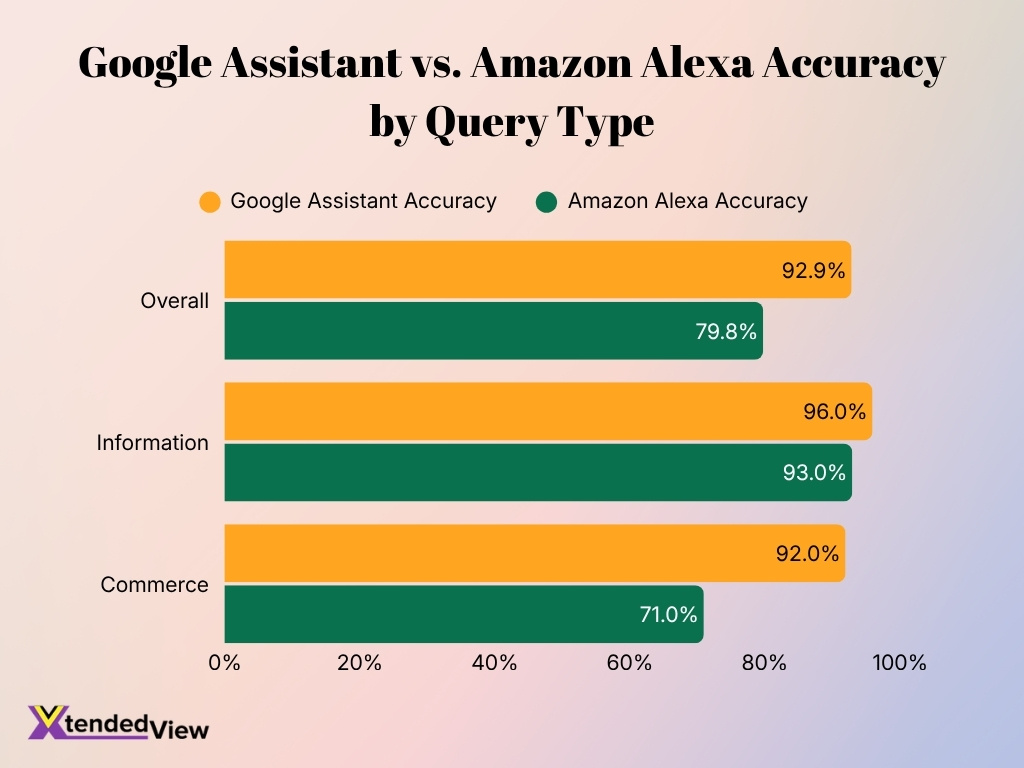
- In a well-documented 800-question benchmark, Google Assistant correctly answered 92.9% of questions, compared with 79.8% for Alexa.
- That produced a 13.1-percentage-point accuracy advantage for Google Assistant in the benchmark’s overall correct-answer score.
- Google Assistant understood 100% of the 800 questions in that test, separating speech comprehension from whether it ultimately produced the correct answer.
- Google Assistant’s overall correct-response rate increased from 85.5% to 92.9% between the comparable 2018 and 2019 tests.
- Alexa improved more sharply, moving from about 61% correct in 2018 to 79.8% in 2019, an increase approaching 19 percentage points.
- In the commerce category, Google Assistant answered 92% correctly, versus 71% for Alexa in the same benchmark.
- For information questions, Google Assistant achieved 96% accuracy, while Alexa reached 93%, narrowing the gap to only three percentage points for that category.
- These historical scores should serve as benchmarks, not 2026 performance claims. Alexa+ and Gemini for Home now use generative AI and new language models, so their current conversational performance is not directly comparable with legacy command-based testing.
Alexa Skills vs Google Assistant Actions
- Alexa’s developer ecosystem surpassed 100,000 published Skills in September 2019.
- Alexa expanded from 200 Skills at launch to over 5,000 Skills within roughly 1 year.
- More than 700,000 registered developers had built Alexa solutions by 2020.
- Alexa Skill customer engagement grew by over 100% year-over-year in 2019.
- Key Alexa categories like productivity and education achieved triple-digit growth during 2019.
- Google Assistant previously recorded over 1 million total Actions in 2018.
- Google officially terminated third-party Conversational Actions on June 13, 2023.
- Platform analytics for Google Actions ended on September 13, 2022, exactly 9 months before the shutdown.
Amazon Alexa vs Google Assistant Conversational AI Capabilities
- Alexa+ had expanded to tens of millions of customers within roughly nine months of its early rollout, providing one of the first large-scale adoption indicators for Amazon’s generative-AI assistant.
- Alexa+ users were having twice as many conversations as before, and those conversations lasted longer and covered a broader range of subjects.
- Alexa+ users also completed three times more purchases on Alexa devices, indicating that more conversational AI was translating into measurable transactional activity.
- Music streaming among Alexa+ customers increased 25%, showing that generative AI did not replace Alexa’s established entertainment uses.
- Smart-home feature use increased 50% among Alexa+ customers, a notable result because connected-home control remains a core smart-speaker use case.
- Recipe requests were running five times higher among Alexa+ users during the early rollout, illustrating how longer conversational exchanges can support practical household tasks.
- Google’s Gemini for Home began U.S. early access in October 2025, replacing Google Assistant for enrolled users on supported speakers and smart displays. Expansion was scheduled to continue during 2026.
- Gemini for Home’s advanced conversational features are tied to subscription plans starting at $10 per month, while an Advanced plan costs $20 per month.
- Google’s wider Gemini app exceeded 650 million monthly users by November 2025. Although that figure does not measure Gemini for Home specifically, it gives Google a large existing AI audience as it retires the legacy Assistant experience.
Amazon Alexa vs Google Assistant Shopping and Voice Commerce Statistics
- Alexa+ users complete purchases through enabled devices at 3x the previous rate.
- Alexa+ users interact with the assistant 2x as often, increasing opportunities for product discovery.
- During the 2025 early-access window, millions of Alexa+ customers requested personalized deal alerts.
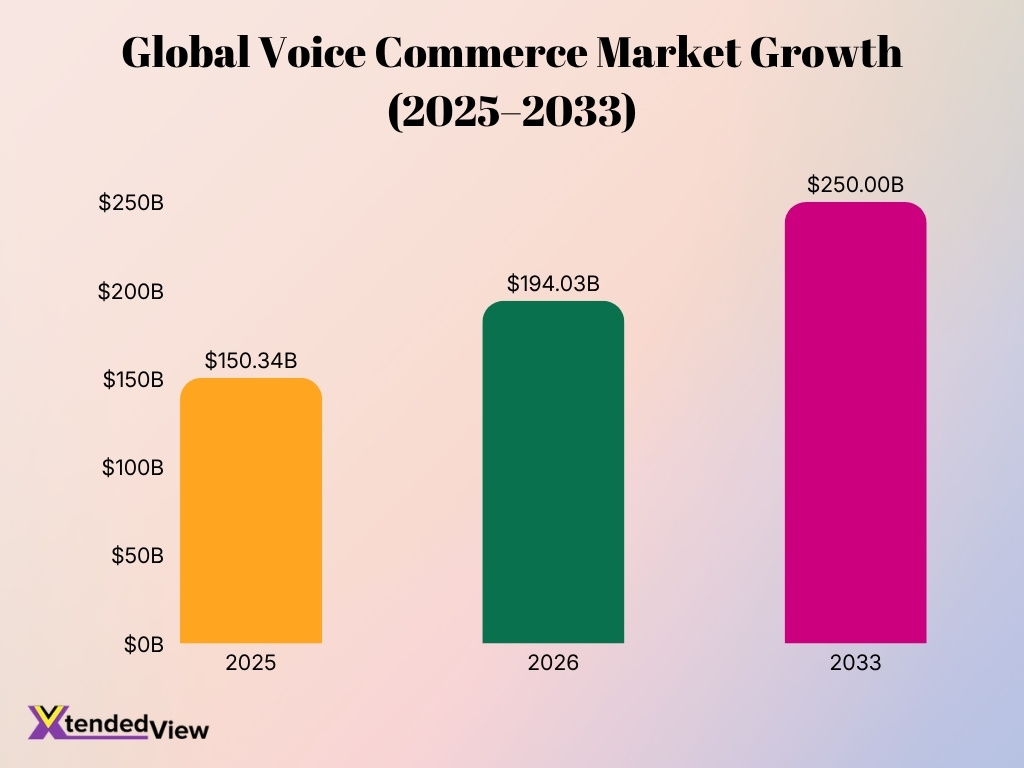
- The global voice commerce market reached $150.34 billion in 2025 and is projected to hit $194.03 billion in 2026 (29.1% growth).
- Alternative industry estimates placed 2025 voice-shopping activity at $62 billion.
- Long-term forecasts project global voice commerce to exceed $250 billion by 2033.
- Approximately 26.1% of smart-speaker users have utilized their device for purchasing.
- Across 1,000 product queries, nearly 68% featured desktop search results more relevant than Alexa’s product recommendations.
- Shoppers preferred conventional top search results over Alexa’s selected items in nearly 73% of tested queries.
- AI-driven shopping-intent models reached an F1 score of 0.91 when identifying spoken commercial purchase queries.
Amazon Alexa vs Google Assistant Voice Search and General Knowledge Statistics
- The strongest comparable historical benchmark tested each assistant with 800 identical questions, providing a controlled measure of general voice-assistant performance rather than relying on user surveys.
- Google Assistant correctly answered approximately 93% of all questions in that benchmark, giving it the highest overall score among the assistants tested.
- Alexa answered approximately 80% correctly, leaving a roughly 13-percentage-point overall gap between Alexa and Google Assistant.
- For pure information questions, Google Assistant reached 96% correct, making general knowledge one of its strongest tested categories.
- Alexa reached 93% accuracy on information questions, meaning its general-knowledge performance came much closer to Google’s than its overall score did.
- Google’s advantage was also visible in commerce-related information, where it returned correct answers to 92% of questions, compared with 71% for Alexa.
- In the U.K., 54% of adults surveyed for a 2025 audio report said they had used a voice assistant during the previous three months, showing that voice-based information access remains mainstream outside the U.S.
- Among those U.K. voice-assistant users, 66% reported using Alexa, compared with 31% using Google Assistant. The figures measure usage rather than exclusive market share, so respondents could use more than one assistant.
- Smart speakers were the leading device for voice-assistant radio requests: 54% of voice-assistant radio listeners used a smart speaker, compared with 20% who used a smartphone.
- In 2026, historical question-answering benchmarks require extra caution because Alexa+ and Gemini for Home now use generative AI rather than only legacy intent-and-response systems. Current public data provides extensive usage metrics but no independent, standardized head-to-head accuracy test comparable with the older 800-question study.
Amazon Alexa vs Google Assistant Usage and Demographic Statistics
- 62% of U.S. adults use a voice assistant on at least one device, including smartphones and smart speakers.
- U.S. voice assistant adoption is projected to reach 157 million people in 2026, up from 153.5 million in 2025.
- Annual voice assistant adoption is expected to increase by 3.6 million U.S. users in a single year.
- Around 35% of Americans aged 12 and older, approximately 100 million people, currently own a smart speaker.
- Upgraded Alexa+ users engage in 2x as many conversations compared to pre-generative AI baseline usage.
- Music streaming volume increased by 25% among active Alexa+ voice assistant users.
- Smart-home device interactions surged by 50% following generative AI enhancements to Alexa+.
- Independent evaluations of 170,000 audio samples from 1,038 speakers revealed performance gaps across age and ethnicity.
- Voice benchmark datasets spanning 166 audio hours and 9,040 labeled transcripts highlight ongoing demographic disparities.
Amazon Alexa vs Google Assistant Regional Adoption Statistics
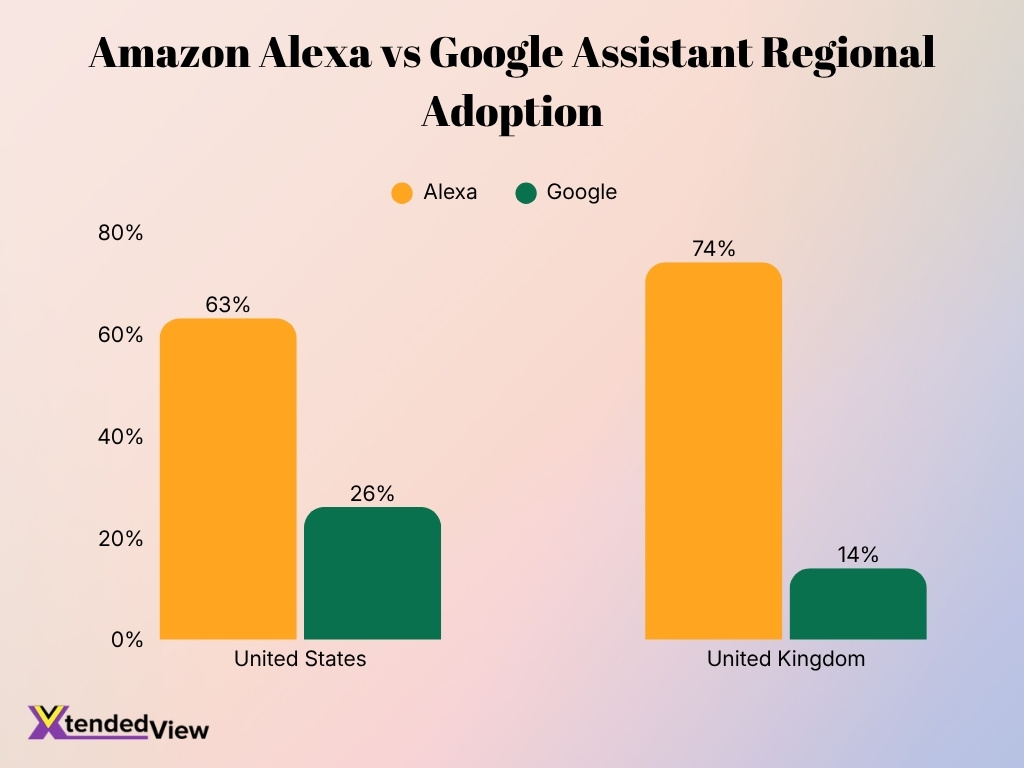
- Amazon Alexa leads Google Assistant in both the United States and the United Kingdom, showing substantially stronger adoption across the two markets.
- In the United States, Alexa has a 63% adoption rate, compared with 26% for Google Assistant.
- Alexa’s U.S. adoption is 37 percentage points higher than Google Assistant’s, making it more than twice as prevalent in the data shown.
- In the United Kingdom, Alexa reaches an even higher 74% adoption rate, while Google Assistant accounts for just 14%.
- The UK shows the widest gap between the two assistants, with Alexa leading Google Assistant by 60 percentage points.
- Alexa adoption is 11 percentage points higher in the UK than in the U.S., at 74% versus 63%.
- Google Assistant shows the opposite regional pattern, with adoption falling from 26% in the U.S. to 14% in the UK, a difference of 12 percentage points.
- Overall, the data indicates that Alexa has a particularly dominant position in the UK, while Google Assistant maintains a comparatively stronger presence in the U.S.
Amazon Alexa vs Google Assistant Privacy and Security Statistics
- Amazon paid a $25 million penalty to settle federal privacy violations involving children’s voice data.
- Over 800,000 children were found to have interacted directly through Alexa child profiles.
- Voice-interaction signals from smart speakers can drive targeted ad bids up to 30 times higher.
- Google automatically deletes specific location data and web history within 30 days.
- Google anonymizes server IP addresses after 9 months and stored cookie records after 18 months.
- In a 2026 privacy study, Google led in interface usability, while Alexa scored lower on data retention clarity.
- Alexa provides an immediate 0-day retention setting that deletes voice recordings right after processing.
- Google applies an automatic 18-month deletion default on general voice and activity data for new accounts.
Top Voice Search Usage in the US
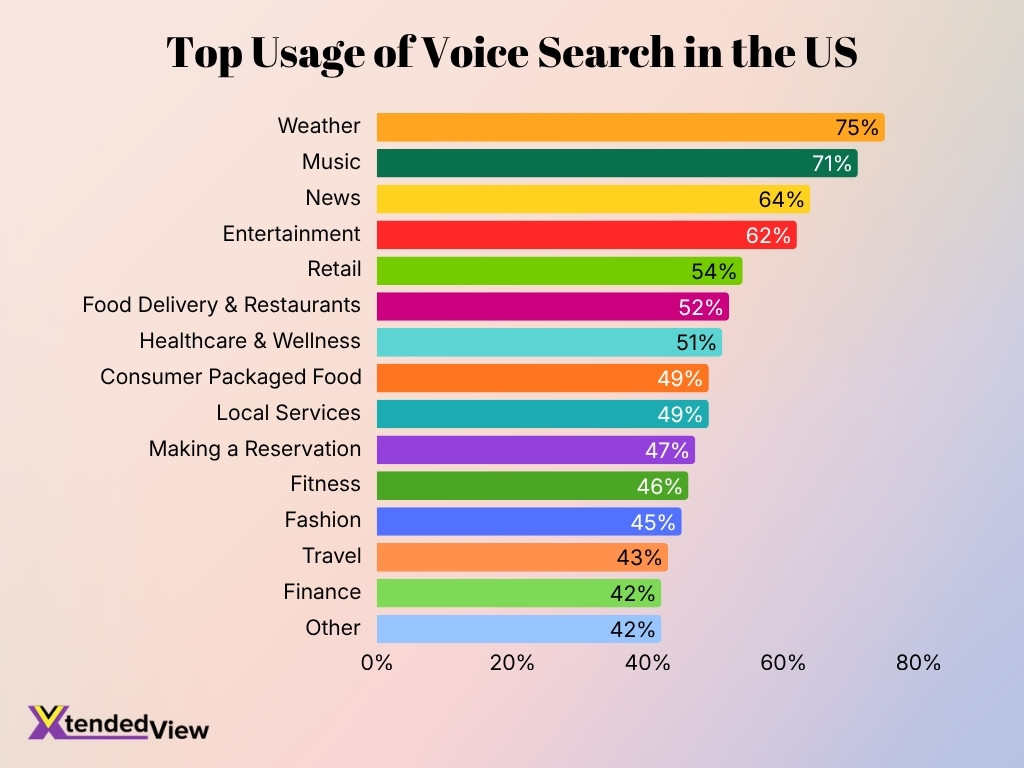
- Weather is the leading use case for voice search, with 75% of users relying on voice commands to check forecasts and weather-related information.
- Music ranks second at 71%, highlighting how frequently consumers use voice assistants to play songs, find artists, and control audio.
- Around 64% of voice search users access news, making it the third-most popular category in the US.
- Entertainment accounts for 62% of voice search usage, showing strong adoption for discovering and accessing entertainment-related content.
- Retail reaches 54%, indicating that more than half of users employ voice search for shopping and product-related queries.
- Food delivery and restaurants account for 52%, while healthcare and wellness represent 51% of voice search usage.
- Consumer packaged food and local services both stand at 49%, putting nearly half of voice search users in each category.
- Making a reservation accounts for 47% of usage, suggesting voice search has become a notable tool for booking-related activities.
- Fitness and fashion attract 46% and 45%, respectively, demonstrating substantial voice search adoption across lifestyle categories.
- Travel accounts for 43%, while finance and other searches each account for 42%, the lowest shares among the categories measured.
- Overall, the data shows that voice search is most heavily used for quick, everyday information and entertainment, while transactional and specialized categories generally record lower adoption.
Alexa Plus vs Google Assistant AI Features
- Alexa+ became generally available in the U.S. on Feb. 4, 2026, after its February 2025 announcement.
- The standalone Alexa+ service is priced at $19.99 per month for non-Prime members.
- Alexa+ customers talk to the assistant twice as much and make three times more purchases.
- Engagement metrics reveal Alexa+ users stream 25% more music and utilize smart-home functions 50% more.
- Premium Gemini for Home capabilities are available through subscriptions starting at $10 per month.
- Google released its first dedicated Gemini speaker on June 25, 2026, with a price of $99.99.
- The wider Gemini app successfully surpassed 650 million monthly users by November 2025.
- The Gemini Personal Intelligence beta connects user information across four major services.
- Gemini for Home announced early-access expansion reaching 19 countries and languages by April 2026.
Future Growth of Amazon Alexa and Google Assistant
- One current forecast values the global smart-speaker market at $16.61 billion in 2026, compared with $15.10 billion in 2025.
- Under that forecast, global smart-speaker revenue could reach $34.08 billion by 2034, representing a 9.4% CAGR between 2026 and 2034.
- A second 2026 industry forecast estimates a faster expansion, from $19.01 billion in 2026 to $37.6 billion by 2031, equivalent to a 14.62% CAGR.
- Another projection puts the market at $18.3 billion in 2026 and $75.8 billion by 2035, illustrating the considerable uncertainty surrounding long-range forecasts for AI-enabled speaker hardware.
- Under that higher-growth scenario, the overall smart-speaker market would expand at a 17.1% CAGR from 2026 through 2035.
- The Google Assistant segment is projected to grow at an 18.4% CAGR through 2035, although future products will increasingly carry Gemini branding rather than the legacy Google Assistant name.
- Asia-Pacific could achieve a 19.8% CAGR through 2035, making emerging and multilingual markets an important growth opportunity for future Alexa and Gemini-powered devices.
- The broader voice-AI market, including emerging audio interfaces such as earbuds, is projected to more than triple between 2025 and 2030, reaching approximately $34 billion by the end of the decade.
- Hardware still accounted for 79.6% of smart-speaker revenue in 2025, but rapidly expanding AI subscriptions suggest that software and recurring services may capture a larger share of future ecosystem revenue.
- The competitive landscape will therefore shift from a simple Echo-versus-Nest comparison toward Alexa+ versus Gemini-powered experiences across speakers, displays, phones, televisions, browsers and connected-home devices.
Frequently Asked Questions (FAQs)
Google Assistant was forecast to reach 91.9 million U.S. users, compared with 77.2 million for Alexa in 2025, a gap of 14.7 million users.
Alexa accounted for 40.4% of global smart-speaker revenue in 2025, ranking first by voice-assistant segment in that market estimate.
There are more than 600 million Alexa devices worldwide, providing a large installed base for Alexa+ and related smart-home services.
The global smart-speaker market is projected to rise from $16.61 billion in 2026 to $34.08 billion by 2034, representing a 9.4% CAGR.
Alexa+ costs $19.99 per month for non-Prime users seeking full access, while Google Home Premium starts at $10 per month for advanced Gemini for Home features.
Conclusion
Alexa and Google are moving voice assistants beyond basic commands and toward conversational AI. Alexa enters the year with substantial strength in smart-home hardware, commerce and a footprint exceeding 600 million Alexa-enabled devices. At the same time, Google increasingly uses Gemini to connect AI capabilities across mobile, home and other devices. With smart-speaker revenue forecasts pointing to continued growth, the next phase of competition will center on conversation quality, trusted automation, interoperability and task completion.
