


Cyber resilience has become a boardroom priority as organizations face more sophisticated attacks, expanding digital ecosystems, and stricter regulatory requirements. Unlike traditional cybersecurity, cyber resilience focuses on maintaining operations, recovering quickly, and minimizing business disruption when incidents occur.
The topic now influences everything from cloud infrastructure planning and ransomware response programs to supply chain risk management and AI governance. As businesses accelerate digital transformation and adopt AI-driven technologies, resilience capabilities increasingly determine whether an incident becomes a temporary disruption or a major business crisis. Explore the latest cyber resilience statistics to understand how organizations are adapting to a rapidly evolving threat landscape.
Editor’s Choice
- 72% of organizations reported an increase in cyber risks during the past year, highlighting the growing importance of resilience-focused security strategies.
- The average global cost of a data breach reached $4.44 million in 2025, although this was lower than the record $4.88 million in 2024.
- Organizations reduced average breach identification and containment time to 241 days in 2025, the lowest level reported in nine years.
- 94% of organizations identify AI as the biggest factor reshaping cyber risk environments in 2026.
- 87% of organizations say vulnerabilities in AI systems represent one of the fastest-growing cybersecurity threats.
- 65% of large companies now view third-party and supply chain vulnerabilities as their greatest cyber resilience challenge, up from 54% a year earlier.
- Small organizations are twice as likely as large enterprises to report insufficient cyber resilience capabilities.
- Only 14% of organizations report having the cybersecurity talent needed to meet current resilience demands.
- More than 40% of organizations experienced successful social engineering attacks during the previous year.
Recent Developments
- The 2026 global cybersecurity outlook identified AI adoption, geopolitical fragmentation, and cyber capability gaps as the three dominant trends reshaping cyber resilience strategies.
- Cyber leaders increasingly view AI-driven fraud as a major concern, with 94% recognizing AI as the most significant cyber disruptor in 2026.
- 87% of surveyed organizations reported rising concern over AI-system vulnerabilities and misuse.
- Ransomware activity reached record levels during 2025, with 124 active ransomware groups identified globally.
- Researchers documented 7,458 disclosed ransomware attacks in 2025, establishing a new annual record.
- A newly emerged ransomware group accounted for approximately 10% of all recorded ransomware attacks within less than a year of operation.
- Public-sector organizations continue to face resilience challenges, with 23% reporting insufficient cyber resilience capabilities.
- AI governance remains immature, as 63% of organizations lack formal AI governance policies.
- 97% of organizations that experienced AI-related security incidents lacked proper AI access controls.
Global Cyber Resilience Overview
- 72% of global organizations reported increased cyber risk exposure in recent surveys.
- Nearly 47% of organizations identify malicious use of generative AI as their primary cybersecurity concern.
- 54% of large enterprises identified supply chain complexity as a major cyber resilience barrier in 2025.
- That figure increased to 65% in 2026, indicating growing concern around interconnected ecosystems.
- Small organizations are approximately two times more likely than large organizations to report inadequate cyber resilience.
- 42% of organizations experienced phishing or social engineering incidents during 2024.
- Cyber resilience increasingly influences executive decision-making, with many CEOs ranking cyber espionage and intellectual property theft among their top business concerns.
- 66% of organizations expect AI to significantly affect cybersecurity programs and resilience planning.
- Only 37% of organizations assess AI security risks before deployment, creating a resilience gap.
Regional Confidence Levels in Cyber Resilience
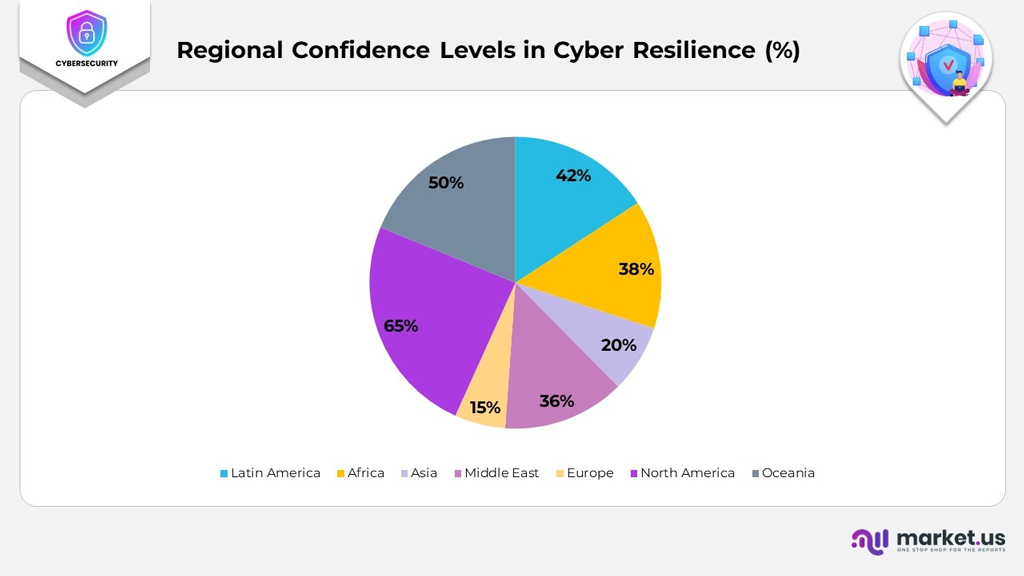
- North America shows the highest confidence in cyber resilience, with 65% of respondents expressing confidence in their region’s preparedness.
- Oceania ranks second, reporting a confidence level of 50%, indicating moderate trust in cyber resilience capabilities.
- Latin America records 42% confidence, placing it ahead of several major regions but still below the global leaders.
- Africa follows closely with 38% confidence, showing a developing but cautious outlook toward cyber resilience readiness.
- The Middle East reports 36% confidence, reflecting a relatively balanced but still limited level of cyber resilience assurance.
- Asia has a lower confidence level at 20%, suggesting that many organizations may still face challenges in cyber preparedness, response, and recovery.
- Europe records the lowest confidence level at 15%, indicating a significant gap in perceived cyber resilience strength compared with other regions.
- The gap between the highest and lowest regions is substantial, with North America at 65% compared to Europe at 15%, a difference of 50 percentage points.
- Overall, the data suggests that cyber resilience confidence varies widely by region, with stronger confidence concentrated in North America and Oceania.
- Regions such as Europe, Asia, and the Middle East may need greater investment in cyber resilience strategies, incident response, and recovery planning.
Cyber Resilience vs Cybersecurity
- Cybersecurity focuses on prevention, while cyber resilience emphasizes prevention, response, recovery, and operational continuity during attacks.
- 23% of public-sector organizations report insufficient resilience despite having cybersecurity controls in place, illustrating the distinction between security and resilience.
- 72% of organizations continue to see rising cyber risks despite increased cybersecurity investments.
- Organizations using AI-powered security tools reduced breach costs and shortened recovery timelines compared with peers lacking automation.
- Average breach containment times fell to 241 days in 2025, demonstrating the value of resilience-focused response capabilities.
- 54% of large organizations cite supply chain dependencies as resilience challenges that traditional cybersecurity controls alone cannot solve.
- Modern resilience programs increasingly incorporate business continuity, disaster recovery, crisis communication, and operational recovery metrics.
- 97% of organizations experiencing AI-related incidents lacked proper governance controls, showing that resilience requires more than technical defenses.
- Organizations with stronger resilience practices recover faster and experience lower financial losses after major cyber events.
Cost and Business Impact of Cyber Incidents
- The average global cost of a data breach reached $4.44 million in 2025.
- The equivalent figure in 2024 was a record $4.88 million, representing one of the highest costs ever recorded.
- Data breaches involving hybrid and multi-environment infrastructures cost an average of $5.05 million.
- U.S. organizations experienced average breach costs of approximately $10.22 million, the highest among major markets.
- Healthcare breaches remained the most expensive, averaging $7.42 million per incident in 2025.
- The average cost per compromised record reached approximately $160 globally.
- Indian organizations recorded an average breach cost of approximately ₹220 million in 2025.
- Organizations with AI-powered defenses reduced breach-related expenses by improving detection and containment speed.
- More than half of breached organizations reported cybersecurity staffing shortages that increased recovery costs and operational disruption.
Cyber Resilience Readiness Remains Under Pressure
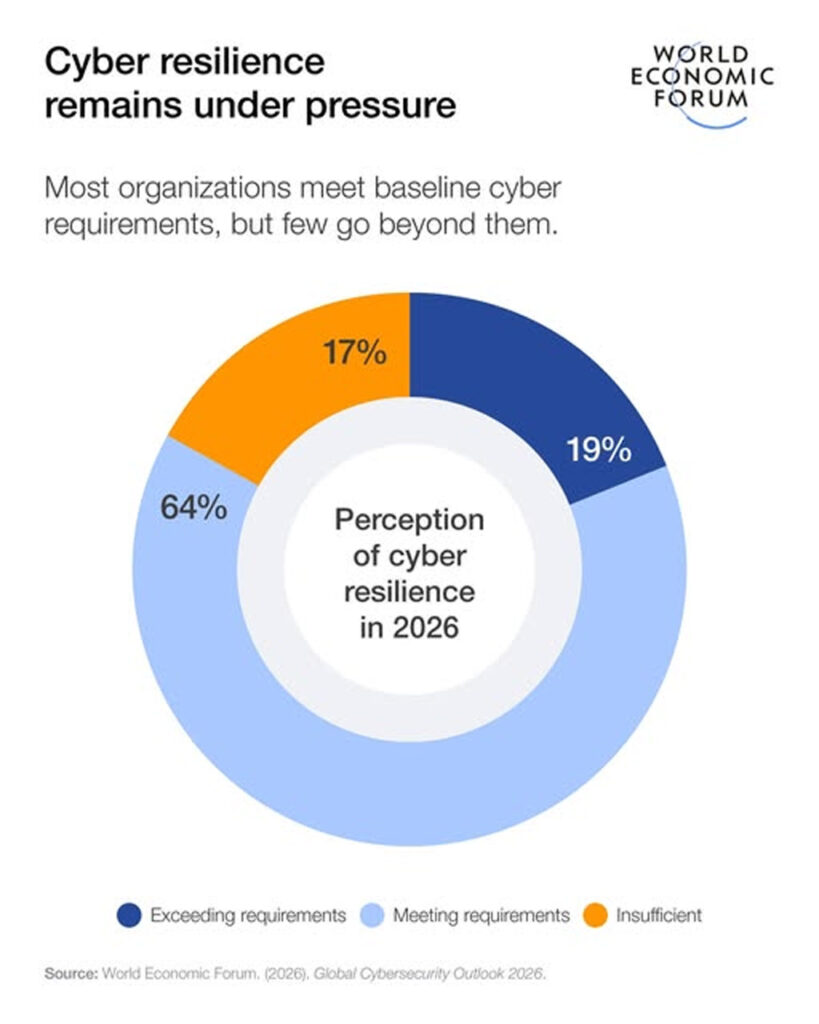
- 64% of organizations say they are only meeting baseline cyber requirements, showing that most businesses are compliant but not highly resilient.
- Only 19% of organizations report exceeding cyber resilience requirements, meaning fewer than 1 in 5 are going beyond minimum standards.
- 17% of organizations are rated as insufficient in cyber resilience, highlighting a serious gap in preparedness.
- The data suggests that cyber resilience is still largely focused on basic compliance rather than advanced protection, recovery, and continuity.
- With 81% of organizations either just meeting requirements or falling short, many businesses may remain vulnerable to major cyber disruptions.
- The small share of organizations exceeding requirements shows that proactive cyber resilience investment is still limited across industries.
- The findings indicate that businesses need to move beyond minimum controls and strengthen areas such as incident response, recovery planning, threat detection, and business continuity.
- Overall, the chart shows that cyber resilience in 2026 remains under pressure, with most organizations not yet achieving a mature or advanced resilience posture.
Frequency and Severity of Cyber Attacks
- 72% of organizations reported increasing cyber risks during the past year.
- 42% of organizations experienced phishing or social engineering incidents during 2024.
- More than 40% of organizations reported successful social engineering attacks over the previous year.
- Researchers documented 7,458 disclosed ransomware attacks in 2025, the highest annual total on record.
- An estimated 7,079 ransomware incidents occurred in 2025 that were never publicly disclosed.
- Approximately 86% of ransomware incidents remained undisclosed, limiting visibility into the true scale of cybercrime.
- The number of active ransomware groups grew to 124 in 2025, including 73 newly formed operations.
- One major national market recorded 1,536 ransomware incidents during 2025, the highest total globally.
- More than 265 million cyber attacks targeted websites in one major country during 2025, demonstrating the scale of automated attack activity.
Ransomware and Cyber Extortion Resilience Statistics
- Researchers identified 124 active ransomware groups operating globally during 2025, the highest level on record.
- A total of 7,458 publicly disclosed ransomware attacks were documented during 2025.
- Approximately 86% of ransomware incidents may never become publicly known due to underreporting.
- Manufacturing organizations remained the most frequently targeted ransomware victims in 2025.
- Organizations with tested incident response plans were significantly more likely to recover without paying ransom demands.
- Double-extortion tactics continue to dominate the ransomware landscape, combining encryption with data theft.
- More than 70% of ransomware attacks now involve data exfiltration before encryption.
- Cyber insurers increasingly require resilience assessments before issuing or renewing coverage.
- Organizations using segmented backups and recovery testing recover substantially faster after ransomware incidents.
Cyber Resilience Maturity Is Strongest Among Large Enterprises
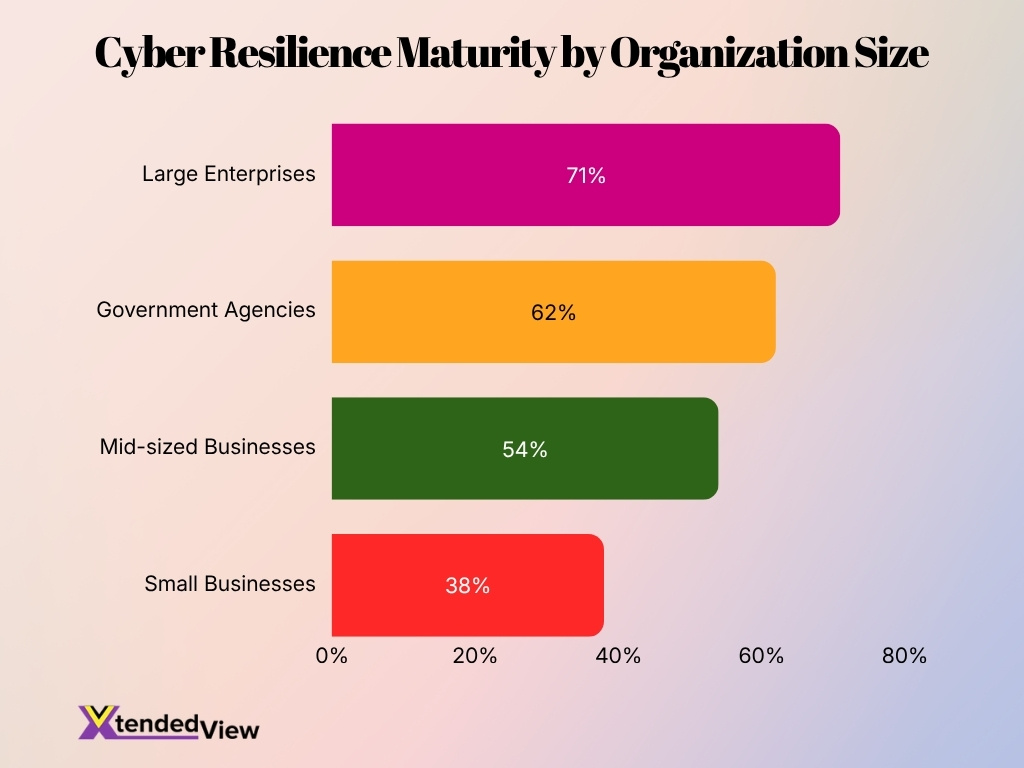
- Large enterprises show the highest cyber resilience maturity at 71%, indicating stronger preparedness, better security investments, and more structured recovery planning.
- Government agencies rank second with 62% resilience maturity, reflecting growing focus on public-sector cybersecurity, critical infrastructure protection, and incident response readiness.
- Mid-sized businesses report a moderate maturity level of 54%, showing that many organizations have resilience measures in place but may still lack advanced automation, testing, or recovery frameworks.
- Small businesses have the lowest resilience maturity at 38%, suggesting limited cybersecurity budgets, fewer dedicated security teams, and weaker disaster recovery capabilities.
- The maturity gap between large enterprises (71%) and small businesses (38%) is 33 percentage points, highlighting a major resilience divide by organization size.
- The data shows that cyber resilience improves as organization size increases, likely because larger organizations have more resources, compliance pressure, and access to specialized cybersecurity expertise.
- Smaller organizations may face higher risk during cyber incidents because lower maturity can lead to slower detection, longer downtime, and greater business disruption.
- Overall, the chart suggests that organization size plays a key role in cyber resilience maturity, with large enterprises and government agencies leading while small businesses remain the most vulnerable.
Data Breach and Data Loss Resilience Statistics
- The global average data breach cost reached $4.44 million in 2025, down 9% from the record high.
- The average breach lifecycle fell to 241 days in 2025, the shortest in nearly a decade.
- Organizations with extensive security AI and automation reduced breach costs by more than $1.7 million compared to those without.
- Stolen or compromised credentials accounted for 22% of breaches in 2025, the highest of any attack vector.
- Breaches involving public cloud environments cost significantly more than single-environment incidents due to complexity.
- Organizations identifying breaches within 200 days saved $1.14 million compared to those taking longer than 241 days.
- 77% of organizations experienced insider-related data loss over 18 months, with 21% having more than 20 incidents.
- Breaches involving shadow AI cost an average of $670,000 more than breaches without unauthorized AI deployments.
- Organizations with formal data governance frameworks improved data security by 66% and reduced compliance breaches by 52%.
Business Continuity and Disaster Recovery Readiness
- Approximately 52% of organizations maintain documented disaster recovery plans for critical systems.
- Only 38% of organizations conduct cyber crisis simulations more than once annually.
- Businesses with regularly tested recovery plans experience shorter operational disruptions after incidents.
- Nearly 60% of executives consider cyber resilience a core business continuity priority.
- Organizations that integrate cybersecurity and business continuity planning recover faster than organizations operating separate programs.
- Cloud-based backup strategies continue to gain adoption across enterprise environments.
- Around 44% of organizations lack comprehensive resilience metrics to evaluate continuity readiness.
- Recovery exercises increasingly include ransomware, supply chain, and cloud outage scenarios.
- Enterprises that test recovery capabilities multiple times per year report higher confidence in operational continuity.
Industry-Wise Cyber Resilience Statistics
- Healthcare recorded the highest average breach cost at $7.42 million per incident in 2025.
- Financial services organizations face average breach costs exceeding $6.4 million globally.
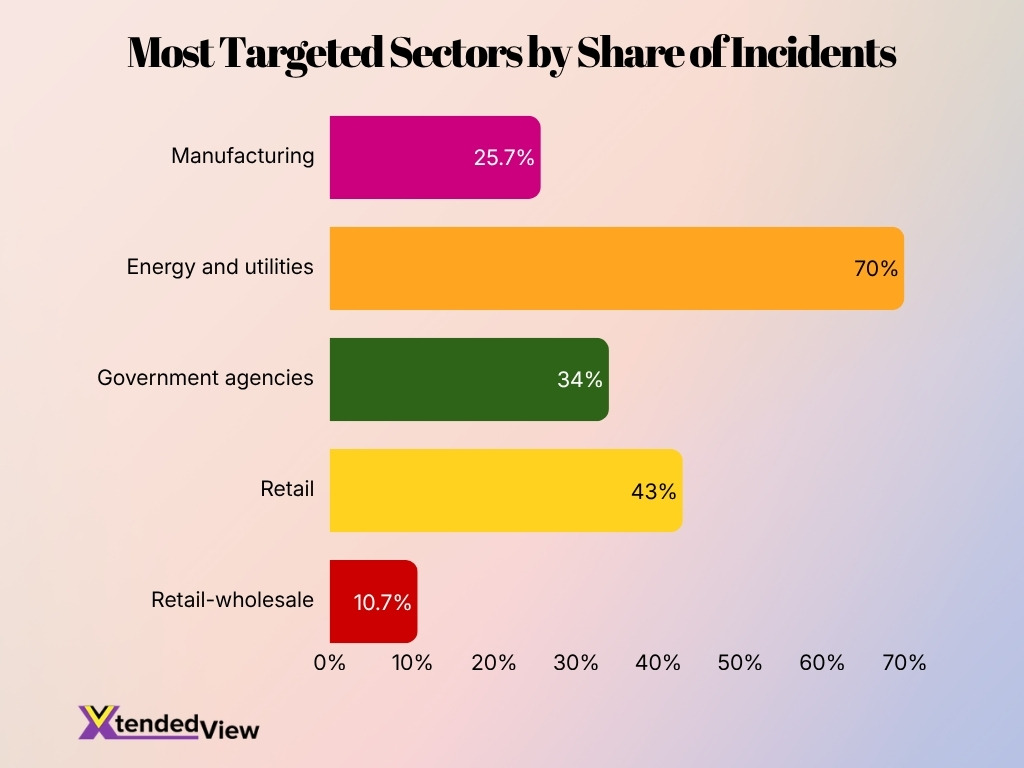
- Manufacturing accounted for 25.7% of all cyber incidents globally, making it the most targeted sector.
- Energy and utilities reported a 70% increase in operational technology-focused attacks over the last two years.
- Government agencies include 34% of organizations reporting significant cyber disruptions from ransomware.
- Retail saw 43% of incidents use valid accounts as the initial attack vector amid digital commerce growth.
- Technology companies achieve breach detection in as few as hours due to high automation adoption.
- Educational institutions face thousands of ransomware attacks annually, with elevated exposure.
- Transportation and logistics rank supply chain cyber risk as a top-three resilience concern in 2025–2026.
- Retail-wholesale ranked fifth with 10.7% of global attacks, where 50% involved malware.
Time to Detect, Contain, and Recover from Attacks
- The average global breach lifecycle reached 241 days in 2025, including 181 days to detect and 60 days to contain.
- Organizations using security AI detected and contained incidents 98 days faster than those using manual processes.
- Security automation reduced average containment timelines by 40% (about 4–6 weeks) in large enterprises.
- Breaches taking over 200 days to detect/contain cost $5.46 million, while shorter breaches cost $1.39 million less.
- Organizations with dedicated incident response teams saved $2.2 million per breach versus those without specialized teams.
- Mature cyber resilience programs achieve 60–70% faster remediation velocity after implementing automation.
- Enterprises conducting regular cyber exercises detect threats 28 days faster using threat intelligence integration.
- AI-assisted monitoring reduced the mean time to detect to 161 days vs 284 days for manual approaches in cloud/hybrid environments.
Downtime, Service Disruption, and Operational Impact
- Organizations lose an average of $5,600 per minute during critical IT downtime, although costs vary significantly by industry and company size.
- Large enterprises report that a single hour of downtime can exceed $300,000 in direct and indirect losses.
- Approximately 93% of organizations acknowledge that downtime directly affects revenue generation and customer trust.
- More than 60% of enterprises experienced operational disruption from a cyber incident during the past two years.
- Ransomware attacks continue to be a major cause of prolonged outages, with recovery often taking days or weeks rather than hours.
- Organizations with tested disaster recovery programs restore critical services substantially faster than those without recovery exercises.
- Customer-facing systems remain the most sensitive to downtime, with e-commerce, financial, and healthcare platforms reporting the highest business impact.
- Operational technology attacks increasingly affect physical operations, causing manufacturing delays and supply chain interruptions.
- Enterprises that invest in resilience automation experience shorter service disruptions after cyber incidents.
Security Automation and AI-Driven Resilience
- Organizations using extensive security AI and automation save approximately $1.76 million per breach compared with organizations lacking these capabilities.
- AI-enabled security programs reduce breach detection and containment times significantly.
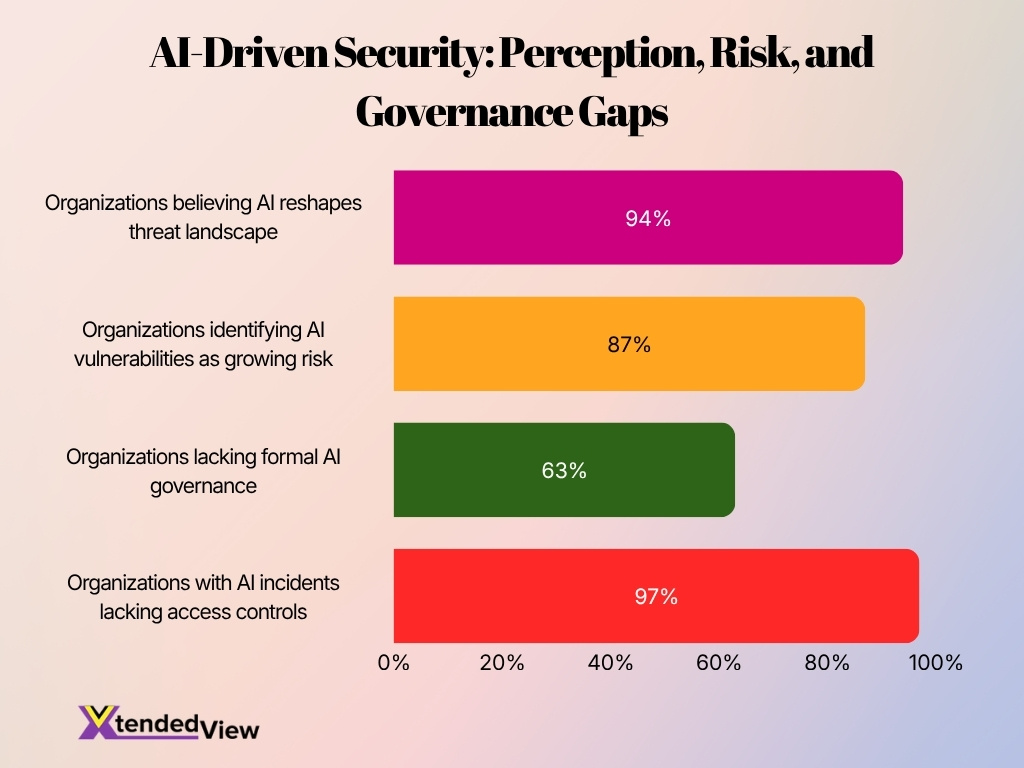
- 94% of organizations believe AI is reshaping the cybersecurity threat landscape.
- Around 87% of organizations identify AI-related vulnerabilities as a growing cyber risk.
- Organizations with mature automation capabilities respond to incidents faster and with fewer manual processes.
- AI-powered threat detection platforms improve visibility across cloud, endpoint, and network environments.
- Nearly 63% of organizations still lack formal governance frameworks for AI deployment.
- 97% of organizations experiencing AI-related security incidents lacked adequate AI access controls.
- AI increasingly supports resilience functions such as anomaly detection, threat hunting, incident prioritization, and recovery planning.
Supply Chain and Third-Party Cyber Resilience
- 65% of large organizations identify supply chain complexity as a major cyber resilience challenge in 2026, up from 54% in 2025.
- Nearly 54% of organizations cite third-party cyber risk as one of their most difficult security challenges.
- Over 40% of data breaches involve third-party access, vendors, or supply chain relationships.
- Around 62% of enterprises now require cyber risk assessments before onboarding strategic suppliers.
- Software supply chain attacks have surged by over 300% since 2021, driving stronger vendor oversight programs.
- Approximately 48% of third-party vendors maintain access to critical systems, increasing attack surface exposure.
- Only 37% of organizations conduct continuous monitoring of vendor security posture beyond annual assessments.
- Nearly 58% of critical infrastructure operators rank supply chain compromise among their top cyber resilience concerns.
- Companies with formal third-party risk management programs see up to 45% faster recovery times after partner-related incidents.
Cloud, SaaS, and Hybrid Infrastructure Resilience
- More than 90% of organizations now operate in multi-cloud or hybrid-cloud environments.
- Data breaches involving hybrid cloud environments average approximately $5.05 million in costs.
- Nearly 82% of organizations identify cloud security as a top resilience priority.
- Misconfiguration remains one of the leading causes of cloud-related security incidents.
- 94% of enterprises use SaaS applications, increasing the importance of identity and access controls.
- 78% of organizations implement cloud-native backup and recovery capabilities to improve resilience.
- Multi-cloud environments improve redundancy but increase operational complexity for 67% of teams.
- Enterprises with centralized visibility detect threats 50% faster than those managing environments separately.
- Cloud resilience investments grew 35% in 2025–2026 as organizations expanded AI workloads.
Key Challenges to Cyber Resilience
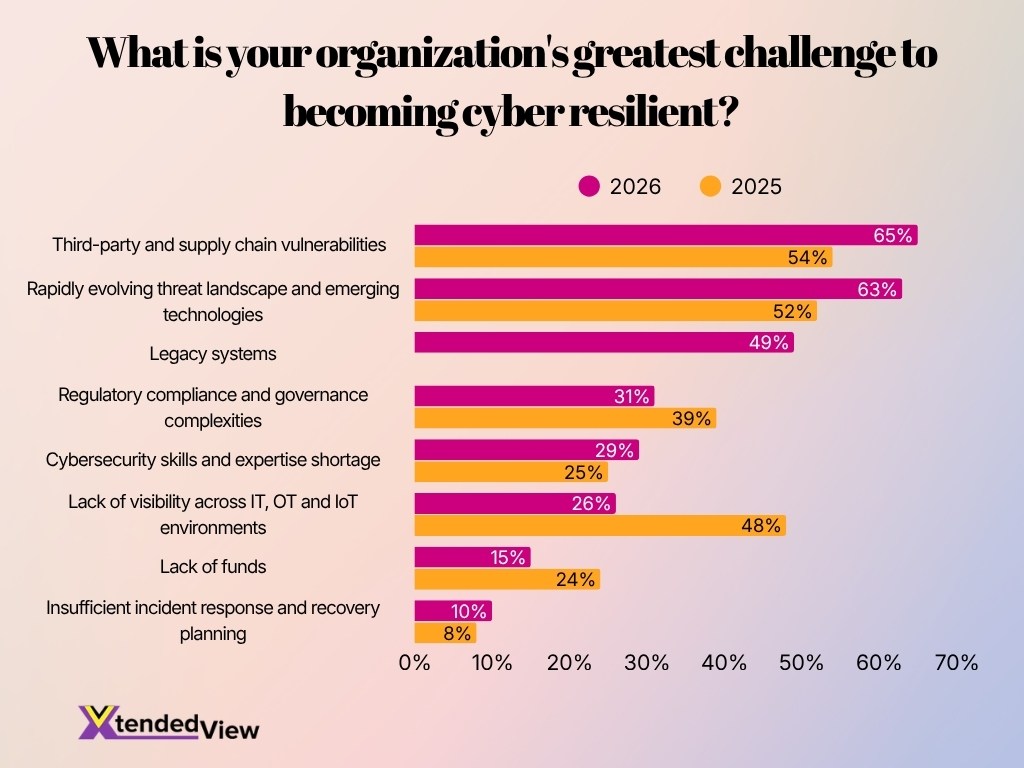
- Third-party and supply chain vulnerabilities are the biggest cyber resilience challenge, reported by 65% of organizations in 2026, up from 54% in 2025.
- The rapidly evolving threat landscape and emerging technologies ranked second, affecting 63% of organizations in 2026, compared with 52% in 2025.
- Legacy systems emerged as a major concern in 2026, with 49% of organizations identifying outdated infrastructure as a cyber resilience barrier.
- Regulatory compliance and governance complexities declined as a challenge, falling from 39% in 2025 to 31% in 2026.
- Cybersecurity skills and expertise shortages remain a persistent issue, increasing slightly from 25% in 2025 to 29% in 2026.
- Lack of visibility across IT, OT, and IoT environments saw a sharp decline, dropping from 48% in 2025 to 26% in 2026.
- Lack of funds became less commonly cited, decreasing from 24% in 2025 to 15% in 2026.
- Insufficient incident response and recovery planning was the least reported challenge, though it rose slightly from 8% in 2025 to 10% in 2026.
- The data shows that organizations are increasingly concerned about external risk exposure, especially through supply chains, third-party vendors, and fast-changing cyber threats.
- Overall, the leading cyber resilience risks in 2026 are shifting toward ecosystem vulnerabilities, emerging technologies, and legacy infrastructure, while funding and visibility concerns appear to be easing.
Cyber Skills Shortage and Talent Gap Impact
- Only 14% of organizations believe they have sufficient cybersecurity talent to meet current resilience requirements.
- Around 65% of organizations report moderate-to-critical cybersecurity skills shortages.
- Over 50% of organizations say staffing shortages increase breach costs by up to 20%.
- 70% of small businesses report cyber talent shortages, compared to 45% of large enterprises.
- Nearly 60% of security leaders struggle to hire experts in cloud security, AI governance, and threat intelligence.
- Organizations with understaffed teams face 30% longer detection and response times.
- About 67% of organizations cite cyber workforce shortages as a major barrier to resilience maturity.
- Nearly 55% of companies rely on automation and managed security services to compensate for talent gaps.
- Global demand for cybersecurity professionals exceeds supply by 3.4 million unfilled roles worldwide.
Frequently Asked Questions (FAQs)
The average global cost of a data breach was $4.44 million in 2025, down 9% from $4.88 million in 2024.
About 94% of organizations say AI is the most significant factor transforming the cyber risk landscape in 2026.
Only 14% of organizations believe they currently have the cybersecurity skills and workforce needed to meet their security requirements.
Approximately 87% of organizations report that vulnerabilities in AI systems are among the fastest-growing cybersecurity risks.
Around 65% of large organizations identify supply chain vulnerabilities as a major barrier to cyber resilience in 2026, up from 54% the previous year.
Conclusion
Cyber resilience has evolved from a technical security objective into a critical business capability. The statistics show that organizations face increasing threats from ransomware, AI-driven attacks, third-party vulnerabilities, and expanding cloud environments. At the same time, companies that invest in resilience planning, security automation, recovery readiness, and workforce development consistently reduce breach costs and recover faster from disruptions.
The data also highlights a growing gap between organizations with mature resilience programs and those still focused primarily on prevention. As cyber threats become more sophisticated, the ability to maintain operations, protect critical assets, and recover quickly will remain a defining factor in business success. Organizations that strengthen resilience today will be better positioned to manage tomorrow’s cyber risks.
