



Mobile shopping continues its rapid ascent, driven by widespread smartphone use and seamless payment options. In the retail sector, brands leverage mobile apps to capture impulse purchases while global marketplaces optimise for mobile browsers. Meanwhile, services such as mobile‑first checkout and one‑tap wallets are reshaping the in‑store to online transition. The following sections present compelling statistics that illustrate just how deep mobile shopping has become, and invite you to explore the full article for insights and implications.
Editor’s Choice
- By 2025, global mobile commerce sales are projected to be roughly $2.51 trillion, up from $2.07 trillion in 2024.
- Mobile shopping is expected to account for about 59% of global e‑commerce sales in 2025.
- About 1.65 billion people worldwide are projected to shop via mobile phones in 2025.
- In the U.S., over 76% of adults purchase via smartphone.
- Global mobile commerce revenues grew ≈21% year‑on‑year from 2023 to 2024.
- Mobile‑based transactions via apps are gaining share vs mobile browsers.
- Retailers now treat mobile as a primary storefront, not merely a support channel.
Recent Developments
- In 2024, global mobile‑ecommerce revenues increased to $2.07 trillion, up from $1.71 trillion in 2023.
- The annual growth rate of mobile commerce was approximately 21.1% in 2024.
- Mobile devices now account for 57% of global e‑commerce sales in 2024.
- In the U.S., mobile e‑commerce represented about 7.76% of all retail sales in 2024.
- Smartphone shipments globally in Q2 2025 only grew by about 1.0% year‑on‑year, indicating device saturation.
- App‑based checkouts and one‑tap payment flows are becoming standard for mobile shopping experiences.
- Retailers increasingly prioritise mobile UX and speed, as mobile has become a primary channel.
- In many markets, the transition from desktop to mobile for online retail is now fully established rather than emerging.
Global Mobile Shopping Growth
- By 2025, roughly 1.65 billion people globally are expected to shop via mobile devices.
- In 2024, mobile commerce accounted for around 57% of all e‑commerce sales worldwide.
- Forecasts suggest mobile commerce will make up about 59% of e‑commerce in 2025.
- Annual global mobile commerce revenue growth from 2023 to 2024 was approximately. +21%.
- From 2017 to 2024, mobile commerce grew from $500 billion to $2.07 trillion.
- Faster mobile networks and higher smartphone penetration strongly support this growth.
- Mobile commerce growth exceeds many traditional e‑commerce channels in multiple regions.
- Emerging markets, e.g., Southeast Asia and Africa, are seeing mobile‑first shopping behaviour, accelerating global growth.
Global Mobile Commerce Sales Growth
Here are key data insights you can use in your article based on the chart:
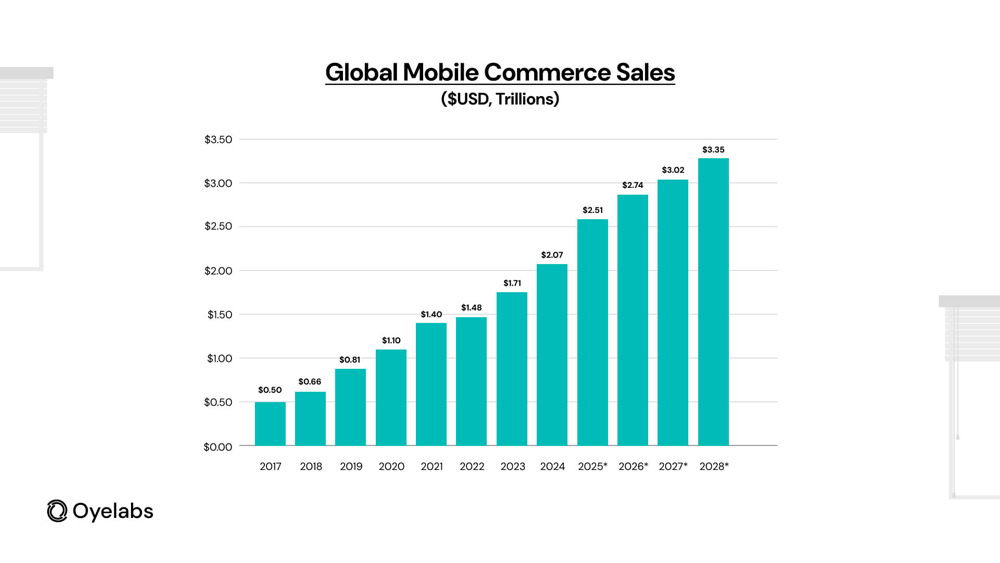
- Global mobile commerce sales have shown consistent year-over-year growth from $0.50 trillion in 2017 to a projected $3.35 trillion by 2028.
- In 2017, mobile commerce generated $0.50 trillion, increasing to $0.66 trillion in 2018 and $0.81 trillion in 2019.
- A major leap occurred between 2019 and 2020, with sales jumping from $0.81 trillion to $1.10 trillion.
- Growth continued steadily through 2021 ($1.40T) and 2022 ($1.48T), followed by a sharper rise in 2023 to $1.71T.
- 2024 marks a significant surge, reaching $2.07 trillion, indicating rising consumer trust and mobile-first behavior.
- 2025 is projected to hit $2.51 trillion, showing a 21.3% year-over-year increase from 2024.
- The upward trend is forecasted to continue with $2.74 trillion in 2026, $3.02 trillion in 2027, and $3.35 trillion in 2028.
- Between 2017 and 2028, the market is expected to grow by 570%, reinforcing mobile commerce as the dominant retail channel.
- The compound annual growth rate (CAGR) from 2017 to 2028 is estimated at 19.2%, highlighting sustained long-term momentum.
Share of Mobile in Total E‑commerce
- In 2024, mobile devices accounted for 57% of global e‑commerce sales.
- For 2025, that share is estimated to rise to about 59% globally.
- In the U.S., mobile is expected to occupy ≈44% of total e‑commerce sales in 2025.
- Some estimates cite mobile traffic generating ≈75% of e‑commerce website visits globally.
- Mobile apps vs mobile browsers account for roughly 54% of mobile commerce transactions in some analyses.
- Historically, mobile share grew from 40% in 2017 to 54% in 2023.
- The increasing share of mobile emphasises that mobile is no longer secondary; it is often primary.
- For merchants, the mobile share necessitates mobile‑first design and checkout optimisation.
Number of Active Mobile Shoppers
- One source projects 1.65 billion mobile shoppers worldwide in 2025.
- In the U.S., estimates suggest ≈180 million people have made at least one mobile purchase.
- Some data show that more than 76% of U.S. adults purchase via smartphone.
- Active mobile shopping audiences in certain markets, e.g., the UK, show 70% of online orders via mobile phones by 2023.
- Year‑on‑year growth of mobile shoppers remains strong in emerging markets.
- Retailers report mobile apps becoming primary channels for returning customers, thus “active” defines repeat behaviour.
- With global smartphone users exceeding 4.8 billion, conversion of users to “active shoppers” continues to grow.
- The sheer scale of active mobile shoppers underscores the mobile channel’s strategic importance.
Mobile Shopping Behavior Patterns
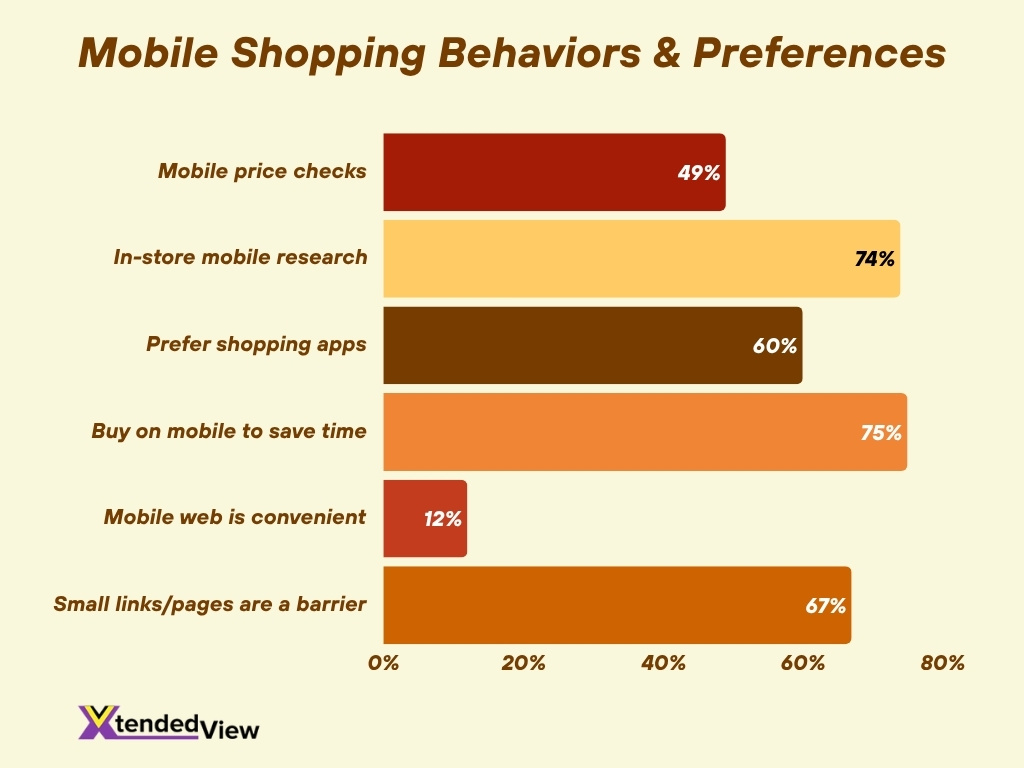
- Around 49% of mobile users say they compare product prices on their smartphone before purchasing.
- Approximately 74% of U.S. consumers use their mobile device for product research, even when shopping in‑store.
- Shopping apps lead to deeper engagement; users browse about 4.2× more products per session in apps versus mobile websites.
- Over 60% of consumers in 2025 prefer mobile shopping apps over mobile browser sites, citing smoother navigation.
- Mobile devices are used for impulse and convenience shopping; about 3 in 4 consumers say they make mobile purchases because it saves time.
- 12% of consumers say shopping on the mobile web is convenient, showing major dissatisfaction with non‑app mobile experiences.
- Among mobile barriers, 67% of users report that “pages and links being too small to click on” is a major obstacle to mobile shopping.
- Mobile shopping behavior shows strong device‑switching; many users browse on mobile, then complete purchases later on desktop.
Conversion Rates: Mobile vs Desktop
- Globally in 2025, mobile’s average conversion rate is about 1.6%, compared with 2.8% for desktop.
- On typical mobile websites, the average conversion rate sits at 1.8%, while on desktop it’s 3.9%.
- Shopping apps significantly outperform mobile web; apps convert at 3.5%, while mobile web stays near 2.0%.
- Desktop still dominates high‑value transactions; for example, mobile may generate most traffic, but desktop often secures larger purchases.
- Improvements in mobile UX reduce the mobile‑desktop gap, faster load times, and streamlined checkout flows drive higher mobile conversion.
- Many mobile sessions are research‑oriented; users often “browse on phone, buy on desktop,” which affects mobile conversion rates.
- Poor mobile experience creates abandonment; mobile visitors have a lower tolerance for friction than desktop users.
- Brands that optimise mobile checkout, guest checkout, digital wallets, and one‑tap payments report higher mobile conversion gains.
Average Order Value for Mobile Shopping
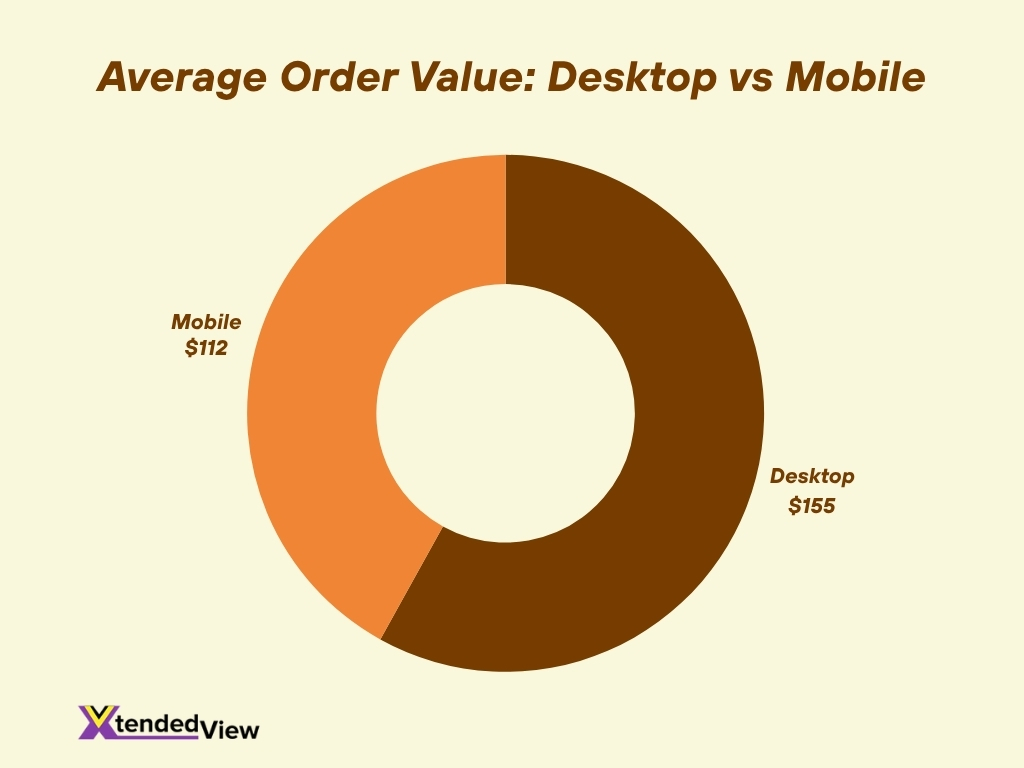
- On desktop, average order values (AOV) often run at $155, while on mobile, they hover around $112.
- Mobile shopping apps show AOVs 10‑15% higher than mobile browser sites.
- The difference in AOV reflects user comfort; larger screens and fewer distractions on desktops encourage bigger purchases.
- Mobile browser shoppers are more likely to make smaller, convenience‑driven purchases rather than high‑ticket items.
- Higher AOV on apps is partly due to saved payment information, one‑tap checkout, and pre‑stored preferences.
- Retailers with mobile‑optimised app experiences see stronger repeat purchases, which can raise AOV over time.
- The ongoing optimisation of mobile checkout, including wallets and frictionless flows, is narrowing the AOV gap between mobile and desktop.
- For many retailers, investing in app experience now offers higher value per transaction than mobile web alone.
Barriers to Mobile Shopping
Here are the major friction points affecting mobile shopping, based on consumer feedback:
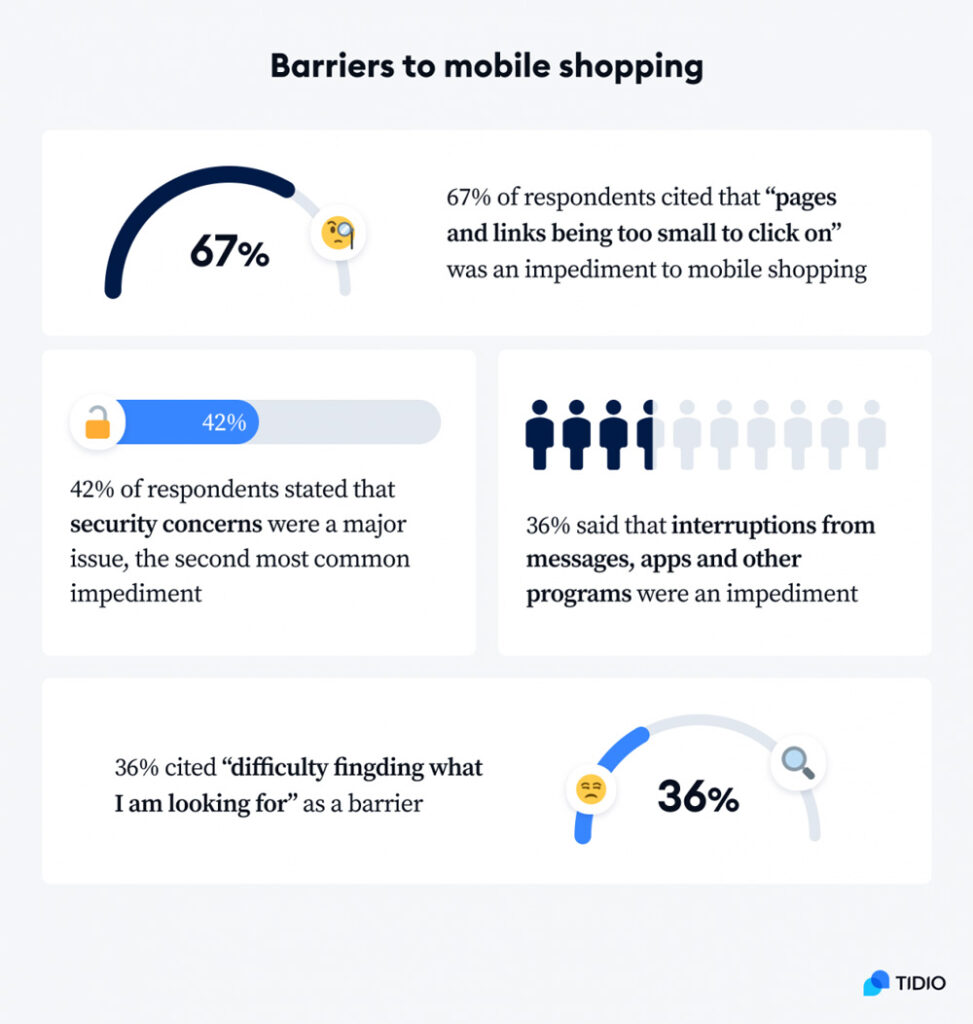
- 67% of respondents cited that “pages and links being too small to click on” was a major usability barrier in mobile shopping.
- 42% of users reported security concerns as a significant impediment, ranking as the second most common issue.
- 36% experienced interruptions from messages, apps, and other programs, which disrupted their shopping flow.
- Another 36% mentioned “difficulty finding what I am looking for” as a barrier, highlighting poor search and navigation experiences.
Time Spent in Shopping Apps
- In 2024, consumers globally spent over 41.9 billion hours using retail shopping apps, up 7.4% year‑on‑year.
- Shopping app users tend to browse longer and view more products than mobile web users, one study shows sessions of 201 minutes/month in apps vs 10.9 minutes on mobile web.
- Apps capture the majority of mobile shopping time, mobile web loses out due to poorer UX and higher abandonment.
- With smartphones averaging 4½ hours daily usage per user, a meaningful portion of that time is devoted to shopping and research.
- The high engagement in apps supports the idea that mobile shopping is moving from “just buying” to “exploring and browsing.”
- Brands that deliver compelling app experiences, personalised content, push notifications, and saved carts, see higher time‑spent metrics.
- Time‑spent statistics reinforce that mobile shopping isn’t just an afterthought; apps are becoming primary retail channels.
- Longer app sessions correlate with higher repeat visits and stronger loyalty in mobile-first shoppers.
Most Popular Mobile Shopping Apps
- Leading shopping apps in the U.S. include Amazon Shopping, SHEIN, and Walmart. Amazon topped iOS with 20.8 million daily active users.
- The download‑rank growth for major shopping apps remains strong, reflecting continued mobile‑first preferences among consumers.
- In 2025 data, shopping app sessions continue declining less than mobile web sessions, indicating higher retention.
- Mobile apps are preferred because they save login/payment info, support push prompts, and provide offline access, which mobile browsers cannot.
- App‑based purchases account for around 54% of mobile commerce transactions, compared to 46% via mobile web.
- Shopping‑app users are more likely to be repeat purchasers and brand‑loyal than mobile browser users.
- Retailers investing in mobile app features, wish lists, one‑tap checkout, and loyalty rewards significantly improve performance metrics.
- International app downloads are accelerating. In Brazil, for example, foreign‑based shopping apps accounted for 52% of downloads in a year.
Mobile Shopping App Usage Trends
- In 2025, global app downloads are projected to hit 299 billion, signalling strong mobile ecosystem growth.
- Mobile apps capture about 88% of all mobile time, compared with mobile web usage.
- Among U.S. mobile shoppers, 85% prefer using apps over mobile websites for purchases.
- Roughly 50% of U.S. consumers report having 4 or more shopping apps on their phones, and about 9% have 10+ shopping apps installed.
- Shopping apps convert at significantly higher rates, one source notes 3× higher conversion in apps compared to mobile web.
- In dedicated shopping apps, users view 4.2× more products per session than in mobile browser shopping.
- Cart abandonment is much lower in apps (20%) versus mobile web (97%) in selected markets.
- Time spent per month in shopping apps far exceeds mobile web, e.g., 201 minutes per month in apps vs 10.9 minutes via mobile site.
- Internationally, shopping app usage is gaining traction in emerging markets, driven by mobile‑first behavior and lighter‑weight apps.
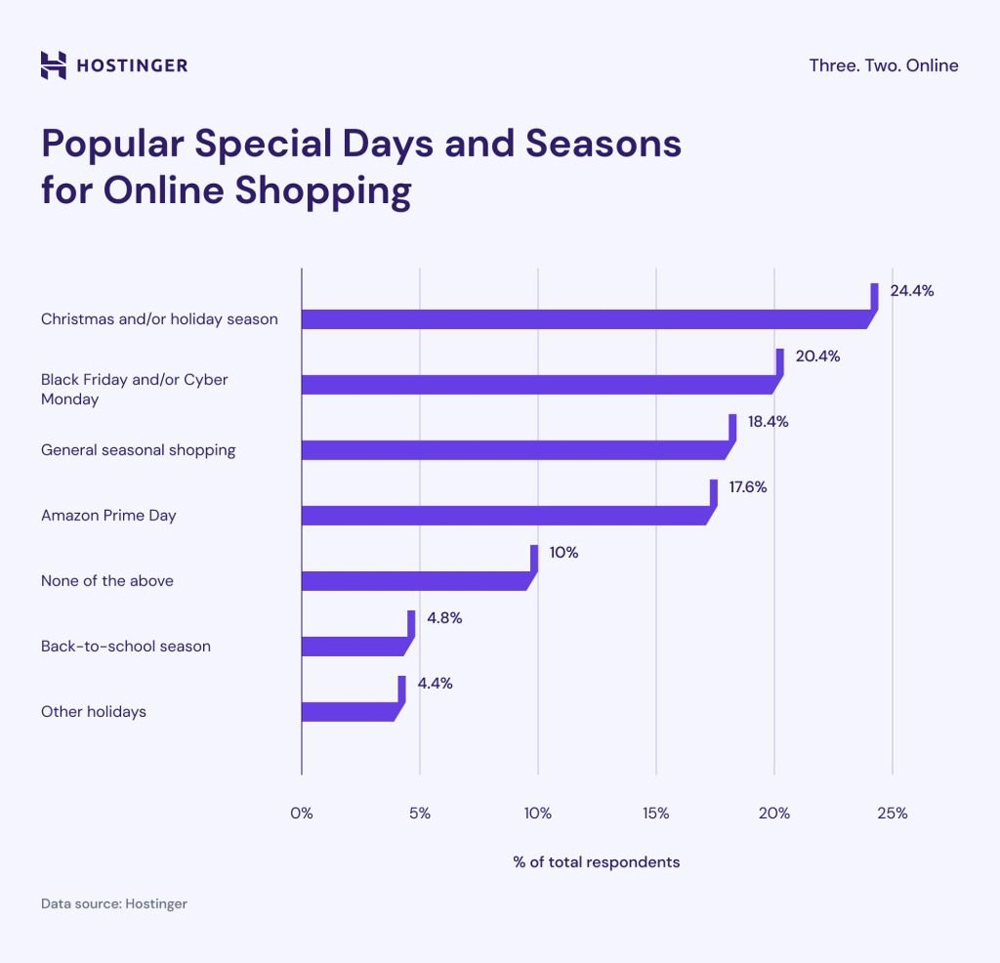
Most Popular Shopping Seasons & Days for Online Shoppers
Use the following data points to highlight consumer behavior around special shopping events:
- 24.4% of online shoppers prefer shopping during Christmas and/or the holiday season, making it the top shopping period.
- 20.4% of respondents identified Black Friday and/or Cyber Monday as their favorite time for online purchases.
- 18.4% reported that they shop during general seasonal sales, showing consistent interest beyond peak events.
- 17.6% of users said they shop most during Amazon Prime Day, reflecting the growing impact of brand-led events.
- 10% stated that none of these occasions influence their online shopping habits.
- Only 4.8% shop online during the back-to-school season, indicating it’s a niche period.
- 4.4% cited other holidays as their preferred shopping times, suggesting some cultural or regional variations.
Mobile Shopping by Demographic Groups
- U.S. adults aged 25–34 represent roughly 32% of mobile e‑commerce shoppers, the largest age group segment.
- Among U.S. mobile users aged 18‑44, 96% have at least one mobile shopping app, and 61% have more than four.
- For consumers over age 45 in the U.S., 75% have at least one mobile shopping app, and 39% have four or more shopping apps.
- Mobile shopping adoption among U.S. adults reaches 76%, meaning over three-quarters have purchased via smartphone.
- Younger consumers, including Gen Z and Millennials, are more likely to complete purchases via mobile apps and social‑commerce channels.
- In emerging markets, mobile shopping penetration is higher than desktop, driven by smartphone access in younger demographics.
- Usage patterns show that the number of shopping apps correlates with frequency; more apps equals higher engagement and spend.
- Gender and income brackets show increasing adoption across demographics, although younger and higher‑income groups still lead in frequency and basket size.
- Retention challenges persist, with only a minority of new users remaining active after 30 days, highlighting the importance of personalization.
Role of Digital Wallets in Mobile Shopping
- By 2025, digital wallets are expected to account for more than 50% of global e‑commerce transaction value, rising from earlier years.
- In 2025, mobile payments via QR codes are projected to reach $5.4 trillion, with expectations to rise toward $8 trillion in the coming years.
- Globally, more than 1 in 2 people will use a mobile wallet by 2025.
- In the U.S., about 55% of consumers prefer digital wallets for cross‑border payments in early 2025.
- Mobile wallet integration in retail apps encourages streamlined checkout, reducing friction and increasing conversion.
- Wallet‑based payments enhance repeat purchase and loyalty metrics, and saved cards, one‑tap checkout, and digital wallet rewards contribute to this.
- In major markets like China, mobile wallets dominate with around 84% of e‑commerce and 70% of POS transactions completed via mobile.
- Retailers optimizing mobile shopping increasingly offer multiple wallet options, including Apple Pay, Google Pay, and regional wallets.
Social Media Influence on Mobile Shopping
- 62% of users purchased a product after discovering it on social media.
- In 2025, global social‑commerce sales are expected to $1.37 trillion, with the U.S. segment comprising about $90.6 billion.
- About 53% of 18‑26‑year‑olds and 51.8% of users aged 14+ have made purchases directly via social platforms.
- Social media advertising spend is projected at $276.7 billion in 2025, and by 2030, 83% of that ad spend will occur via mobile.
- Among U.S. users, mobile‑triggered research via social media occurs on about 57.3% of users, with global metrics even higher.
- Mobile shopping tied to influencer‑driven content continues to rise, with about 30% of consumers making purchases after influencer endorsements.
- Younger generations trust peer reviews and social content, about 40% follow influencers, and roughly 30% bought as a result.
- Content and commerce now converge as platforms like Instagram and TikTok evolve into direct‑purchase channels rather than just discovery hubs.
In‑App Purchases vs Mobile Browser Purchases
- About 54% of mobile commerce transactions occur via shopping apps, while roughly 46% occur via mobile browsers.
- In the U.S., around 85% of mobile shoppers prefer apps for purchases versus the mobile web.
- Mobile apps deliver higher engagement and deeper browsing, 4.2× more product views per session than mobile sites.
- Cart abandonment rates show a major split, around 20% in apps compared to 97% on mobile web.
- On average, mobile conversion rates for apps significantly outperform mobile web, contributing to higher sales volume.
- Apps allow saved payment methods, loyalty features, and push notifications, all supporting higher repeat purchase rates.
- Retailers focusing on improving mobile web experiences still lag behind app‑centric strategies in user retention and transaction value.
Customer Experience in Mobile Shopping
- Speed remains critical; mobile pages taking more than 4 seconds show a steep drop‑off in engagement.
- Mobile shoppers report that a bad mobile experience reduces the likelihood of engagement, and about 52% of users avoid brands after poor experiences.
- Users expect one‑tap checkout, digital wallet compatibility, and minimal form‑fills, and retailers who offer these features see stronger results.
- Native apps deliver smoother navigation and deeper engagement than mobile websites, improving dwell time and conversion.
- Personalized recommendations, in‑app notifications, and loyalty programs enhance shopper satisfaction and retention.
- Cross‑device consistency remains important; many mobile shoppers browse on phones but complete purchases later on desktops.
- Retailers investing in mobile‑first UX, including large buttons, fast load, easy payments, report gains in retention and overall spend.
Future Outlook for Mobile Commerce
- Global mobile commerce sales are projected to reach ≈$4.01 trillion in 2025, representing 59% of total e‑commerce.
- Mobile wallet transactions and QR‑based payments will continue to surge, with wallets expected to form the majority of e‑commerce transactions by 2027.
- App‑based shopping will continue to dominate, and deeper browsing, higher conversion, and better retention will influence future retail strategies.
- Social commerce will expand further, and younger demographics will increasingly buy through social platforms as shopping becomes more integrated with content.
- Emerging markets will lead the next wave of growth, and mobile‑first shoppers in Asia‑Pacific, Latin America, and Africa will drive scale.
- Retailers failing to optimise mobile UX, checkout, and payment flows risk falling behind as mobile becomes the primary e‑commerce strategy.
Conclusion
The mobile commerce landscape is firmly shifting into a mobile‑first era. Apps, digital wallets, and social‑commerce are no longer fringe; they are central to how consumers shop today and how they will shop tomorrow. With conversion advantages, high engagement, and broad demographic reach, mobile devices continue driving the future of retail. For brands and merchants, the message is clear: optimise for mobile, integrate payments, lean into apps and social platforms. This article provides comprehensive insights to support strategic decision‑making in a fast‑moving market.
