


Gaming earbuds have rapidly evolved from simple audio accessories into performance-driven tools that directly impact gameplay. As mobile gaming, cloud gaming, and cross-platform play continue to expand, players now demand low-latency audio, portability, and seamless connectivity in a compact form factor. For example, competitive mobile titles like Call of Duty Mobile and PUBG Mobile rely heavily on real-time audio cues, while cloud gaming platforms such as Xbox Cloud Gaming and NVIDIA GeForce NOW require consistent, lag-free sound across devices.
At the same time, hardware manufacturers are innovating quickly. Features like dual wireless modes, AI-enhanced microphones, spatial audio, and extended battery life are becoming standard even in mid-range models. This shift reflects a broader trend; gamers no longer see earbuds as secondary gear, but as essential tools for both casual and competitive play. As the market matures, understanding the data behind adoption, performance, and user preferences becomes critical. Let’s dive into the key statistics shaping the gaming earbuds market.
Editor’s Choice
- The global gaming earbuds market reached approximately $2.69 billion in 2025 and continues to expand steadily.
- The market is projected to grow at a CAGR of 8.6% through 2032, driven by esports and mobile gaming demand.
- Gaming earbuds accounted for a growing share of the broader audio market, which exceeded $81.78 billion in 2025.
- The wireless earphones segment alone reached $6.63 billion in 2026, highlighting strong adoption of cable-free gaming gear.
- Global earbuds shipments increased from 0.42 billion units in 2025 to 0.5 billion in 2026, reflecting rising consumer demand.
- The overall earbuds market is expected to grow to $71.32 billion by 2032, indicating long-term category expansion.
- Gaming-specific earbuds are gaining traction due to low-latency Bluetooth and dual connectivity features becoming standard.
Recent Developments
- In 2026, brands introduced open-ear gaming earbuds, improving comfort and situational awareness for long sessions.
- New models now offer dual-mode connectivity (2.4GHz + Bluetooth) for seamless switching between devices.
- Premium gaming earbuds now support up to 40 hours of battery life with charging cases, improving usability for travel and tournaments.
- AI-powered microphones with noise reduction features have become common in 2025–2026 releases.
- Entry-level gaming earbuds now retail below $30, expanding access to budget gamers.
- Premium models can exceed $200, reflecting demand for advanced audio tuning and ANC features.
- Gaming earbuds increasingly integrate custom apps for EQ tuning and latency control, improving personalization.
- Manufacturers now emphasize cross-platform compatibility with consoles, PCs, and mobile devices.
Gaming Earbuds Market Size
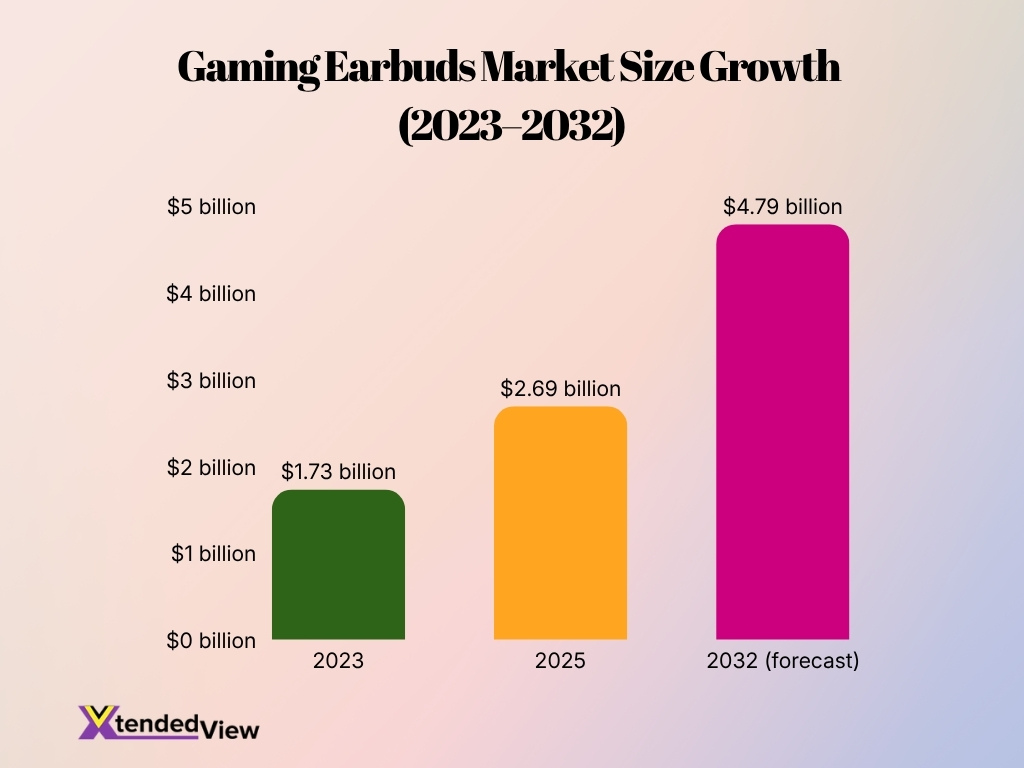
- The global gaming earbuds market was valued at $1.73 billion in 2023, showing rapid early-stage growth.
- By 2025, the market expanded to around $2.69 billion, reflecting increased adoption.
- The broader earbuds industry reached $42.15 billion in 2025, providing a large ecosystem for gaming accessories.
- The earphones and headphones segment hit $103.47 billion in 2026, indicating strong audio hardware demand.
- Gaming earbuds represent a fast-growing niche within consumer audio, benefiting from gaming hardware expansion.
- Unit shipments of earbuds are expected to reach 0.5 billion units in 2026, supporting accessory demand.
- Gaming use cases contribute to rising demand in VR, mobile gaming, and cloud gaming ecosystems.
- The gaming earbuds category is expected to approach $4.79 billion by 2032, nearly doubling from 2025 levels.
Gaming Earbuds Market Growth Rate
- The gaming earbuds market is growing at a CAGR of 8.43%–8.6%, depending on the forecast period.
- The broader earbuds market is expanding at 9.2% CAGR through 2032, slightly faster than the gaming niche.
- Wireless earphones are growing at 9.1% CAGR between 2025 and 2026, driven by Bluetooth adoption.
- The earphones and headphones market shows a higher 12.7% CAGR from 2026 to 2033, signaling strong long-term demand.
- Unit growth of earbuds is forecast at 19.33% CAGR between 2026 and 2031, indicating rising volume demand.
- Growth is fueled by mobile gaming adoption and esports participation globally.
- Increased integration of ANC and low-latency modes accelerates premium segment growth.
- Growth remains strongest in Asia-Pacific due to mobile-first gaming ecosystems.
Gaming Earbuds Market Forecast
- The gaming earbuds market is projected to reach nearly $4.79 billion by 2032.
- The overall earbuds market is expected to hit $71.32 billion by 2032, supporting ecosystem expansion.
- Wireless earphones are forecast to grow to $9.48 billion by 2030, driven by gaming and streaming usage.
- The headphones and earphones market could exceed $238 billion by 2033, indicating strong long-term demand.
- Earbuds unit shipments may surpass 1.21 billion units by 2031, reflecting mass adoption.
- Gaming-focused features like low latency and spatial audio will become standard across mid-range products.
- Cloud gaming and 5G adoption will further increase demand for portable gaming audio devices.
- Premium earbuds with AI-enhanced sound processing are expected to dominate high-value segments.
Headphone Brand Market Share in the U.S.
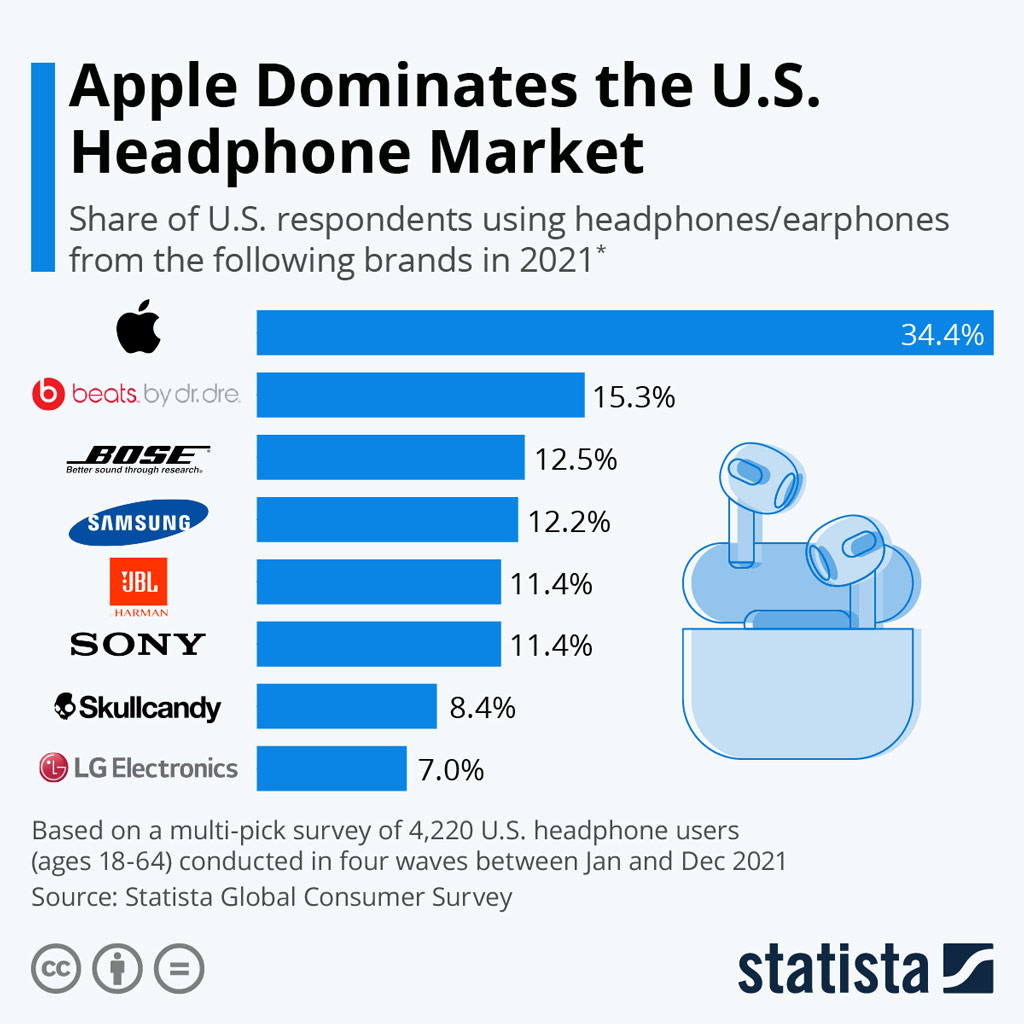
- Apple dominates the market with a massive 34.4% share, holding more than double the share of its closest competitor.
- Beats by Dr. Dre ranks second with 15.3%, reinforcing Apple’s overall ecosystem dominance in audio devices.
- Bose captures 12.5%, positioning itself as a strong premium audio brand in the U.S. market.
- Samsung follows closely with 12.2%, showing its growing presence in the wireless earbuds segment.
- JBL and Sony are tied at 11.4% each, indicating intense competition in the mid-to-premium headphone category.
- Skullcandy holds 8.4%, maintaining relevance among budget-conscious and younger consumers.
- LG Electronics records the lowest share at 7.0%, trailing behind other major brands in adoption.
- The top 3 brands (Apple, Beats, Bose) together account for 62.2% of the market, highlighting strong market concentration.
- Apple alone has a 19.1 percentage point lead over Beats, underscoring its clear leadership position.
- The data is based on a survey of 4,220 U.S. users (ages 18–64) conducted between January and December 2021, ensuring broad consumer representation.
Wireless Gaming Earbuds Market Share
- Wireless earbuds dominate the category, driven by Bluetooth and TWS adoption trends.
- The wireless earphone market reached $3.26 billion in 2026, showing steady expansion.
- True Wireless Stereo (TWS) earbuds represent the fastest-growing segment in gaming audio.
- Wireless earbuds account for a majority share of new product launches in 2025–2026.
- Dual connectivity (Bluetooth + 2.4GHz) is now a key differentiator in premium wireless gaming earbuds.
- Wireless models dominate due to mobility and compatibility with smartphones and consoles.
- Increasing demand for noise cancellation and ENC features strengthens the wireless segment share.
- The shift away from headphone jacks in smartphones continues to boost wireless adoption globally.
Wired Gaming Earbuds Market Share
- Wired gaming earbuds still account for an estimated 25%–30% of the gaming audio accessories market, especially among budget users.
- In 2025, wired earphones shipments declined by over 8% year-over-year, signaling a shift toward wireless alternatives.
- Despite the decline, wired earbuds remain popular in esports due to zero-latency audio transmission.
- Approximately 42% of competitive gamers still prefer wired audio devices for reliability during tournaments.
- Entry-level wired gaming earbuds typically cost under $20, making them accessible for casual gamers.
- Wired earbuds dominate in regions with lower wireless adoption, particularly in Latin America and parts of Southeast Asia.
- USB-C wired earbuds are gaining traction, especially after smartphone manufacturers removed headphone jacks.
- Wired earbuds continue to appeal to streamers who require consistent audio without battery dependency.
Gaming Earbuds by Price Segment
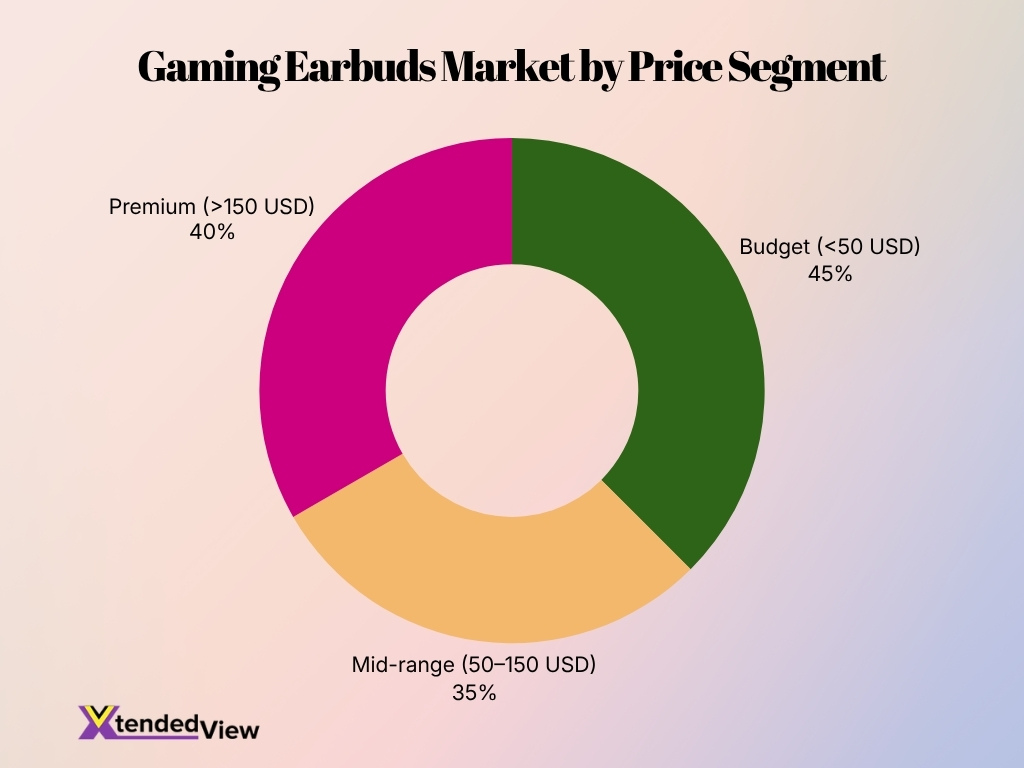
- Budget gaming earbuds under $50 account for nearly 45% of total unit sales globally.
- Mid-range earbuds priced between $50–$150 represent around 35% of market revenue.
- Premium earbuds above $150 contribute over 40% of total market value, despite lower unit sales.
- In 2026, the average selling price of wireless earbuds reached approximately $82 globally.
- Gaming-specific premium earbuds often exceed $200, driven by features like ANC and low-latency chips.
- Around 62% of consumers prioritize price over brand when purchasing earbuds.
- Subscription-based upgrades and bundled gaming accessories are emerging in mid-to-premium segments.
- Discounts during events like Black Friday drive up to 30% higher sales in budget categories.
Gaming Earbuds and Mobile Gaming Adoption
- Global mobile gaming users surpassed 3 billion in 2025, creating massive demand for portable audio devices.
- Mobile games account for nearly 50% of global gaming revenue, reinforcing earbuds usage.
- Around 70% of mobile gamers use headphones or earbuds during gameplay.
- In the US, 65% of gamers prefer mobile platforms, boosting demand for compact audio gear.
- Low-latency earbuds improve reaction times by up to 20–30 milliseconds, impacting competitive play.
- Cloud gaming adoption increased by over 40% in 2025, supporting portable gaming accessories.
- Over 80% of Gen Z gamers prefer mobile-first gaming experiences.
- Smartphones without headphone jacks exceeded 85% of shipments, pushing wireless earbud adoption.
Gaming Earbuds and Esports Growth
- The global esports audience reached over 640 million in 2025, increasing demand for gaming accessories.
- Esports revenue surpassed $1.8 billion in 2025, with continued growth expected.
- Approximately 68% of esports players use dedicated gaming audio devices, including earbuds.
- Professional esports teams often use wired or low-latency wireless earbuds for tournaments.
- Sponsorship deals for gaming peripherals increased by 22% year-over-year.
- Female esports participation grew by over 15% in 2025, expanding the target audience.
- Streaming platforms saw over 1.3 trillion minutes watched in 2025, boosting peripheral sales.
- Esports tournaments now emphasize low-latency audio setups, making gaming earbuds a viable alternative to headsets.
Gaming Earbuds by Region
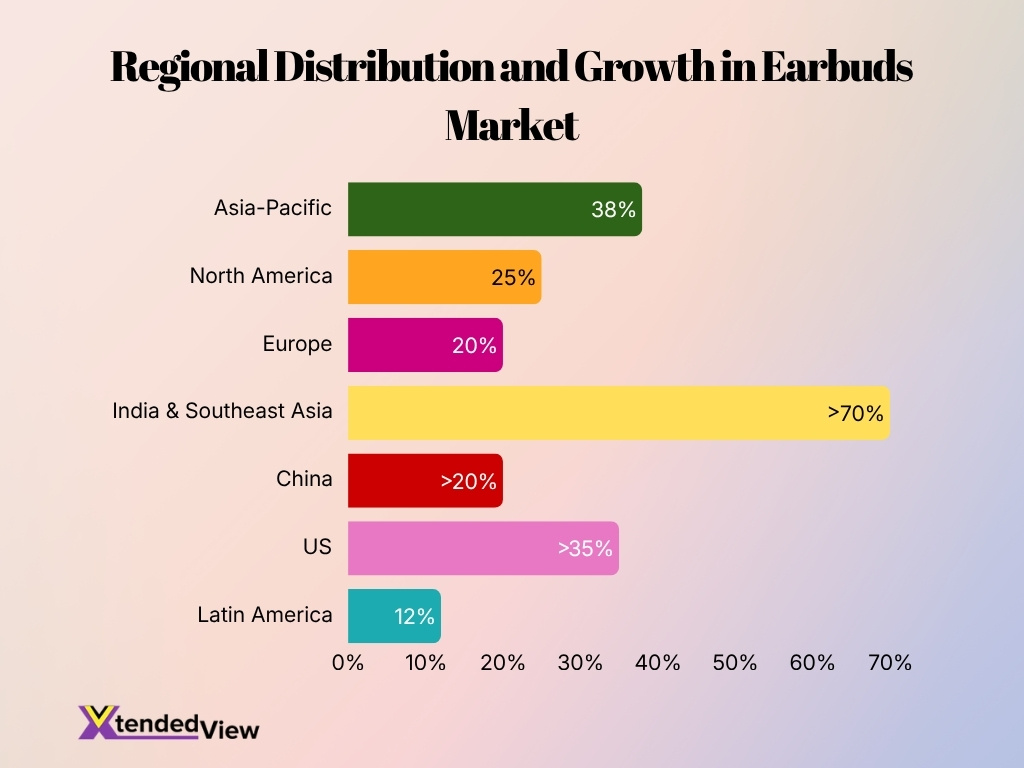
- Asia-Pacific holds the largest share, contributing over 38% of global earbuds revenue in 2025.
- North America accounts for approximately 25% of the gaming earbuds market, driven by console and PC gaming.
- Europe contributes nearly 20% of global revenue, with strong demand in Germany, the UK, and France.
- India and Southeast Asia show the fastest growth, with mobile gaming adoption exceeding 70% among smartphone users.
- China remains the largest single-country market, accounting for over 20% of global shipments.
- The US market continues to lead in premium earbuds sales, contributing over 35% of the high-end segment revenue.
- Latin America shows steady growth, with earbuds adoption rising by 12% annually.
- The Middle East and Africa markets are expanding, supported by increasing smartphone penetration and youth demographics.
Low-Latency Gaming Earbuds Statistics
- Low-latency gaming earbuds typically offer latency below 60ms, compared to 150–200ms in standard Bluetooth audio.
- Premium gaming earbuds can achieve latency as low as 20–40ms using 2.4GHz dongles.
- Around 55% of gamers consider latency the most important feature when choosing gaming earbuds.
- Bluetooth LE Audio reduces latency by up to 30% compared to older codecs.
- Gaming modes in earbuds can cut latency by 50% when activated.
- Qualcomm aptX Adaptive supports latency as low as 50ms, improving sync between audio and visuals.
- About 72% of competitive mobile gamers report improved performance with low-latency audio.
- Low-latency earbuds adoption grew by over 18% year-over-year in 2025, reflecting increased demand.
Gaming Earbuds Microphone Quality Statistics
- Around 64% of gamers consider microphone clarity a critical factor when choosing gaming earbuds.
- AI-powered noise reduction microphones improved voice clarity by up to 35% in 2025–2026 models.
- Dual-mic and quad-mic setups are now standard in over 55% of mid-to-premium earbuds.
- Background noise suppression reduces ambient sound by 20–25 dB, improving in-game communication.
- Approximately 48% of multiplayer gamers report communication issues due to poor microphone quality.
- Beamforming microphones are now integrated into high-end gaming earbuds, enhancing directional voice pickup.
- ENC technology adoption grew by over 22% year-over-year in 2025.
- Gaming earbuds with detachable or boom mics remain niche, accounting for less than 10% of total models.
Gaming Earbuds Battery Life Statistics
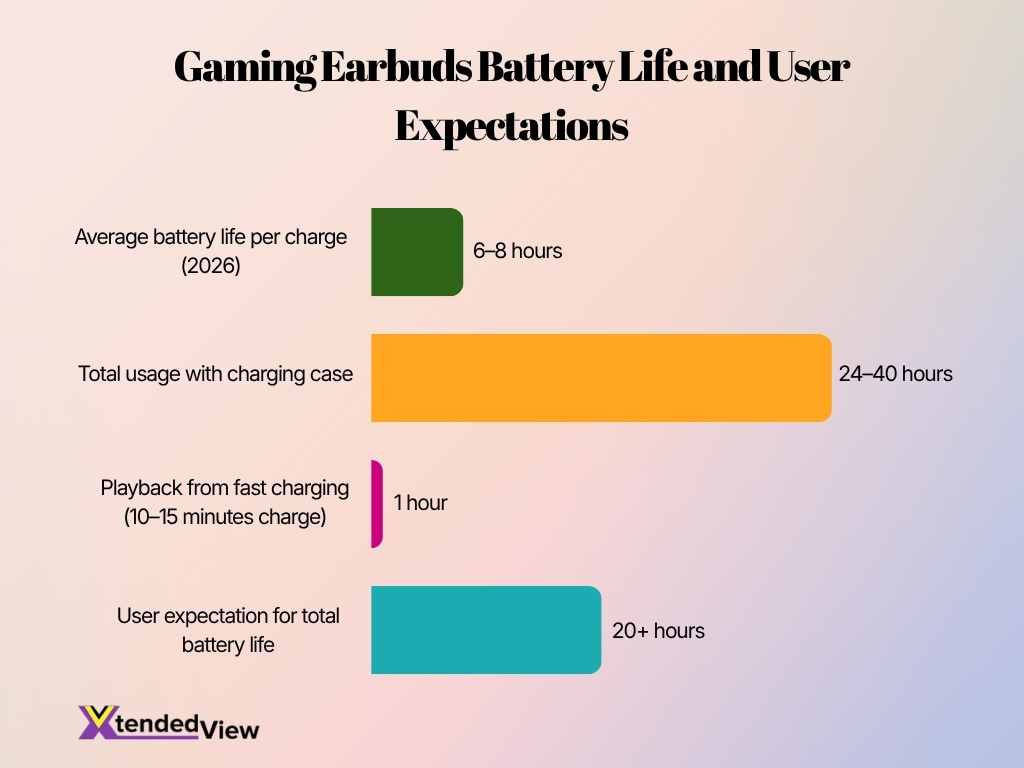
- Average battery life for gaming earbuds reached 6–8 hours per charge in 2026.
- Charging cases extend total usage to 24–40 hours, depending on the model.
- Fast charging features allow 1 hour of playback with just 10–15 minutes of charging.
- Around 58% of users consider battery life a top purchasing factor.
- Premium models now include wireless charging support, improving convenience.
- Battery efficiency improved by 15% between 2024 and 2026 due to chipset advancements.
- ANC-enabled earbuds typically reduce battery life by 20–30% when activated.
- Over 65% of users expect at least 20 hours of total battery life from gaming earbuds.
Gaming Earbuds Noise Cancellation Statistics
- Active Noise Cancellation adoption in earbuds reached over 60% in premium models in 2026.
- ANC can reduce external noise by up to 30–40 dB, enhancing immersive gameplay.
- Approximately 57% of gamers prefer earbuds with ANC for competitive play.
- Hybrid ANC systems improved performance by 20% compared to earlier single-mic designs.
- Transparency mode usage increased by 25% year-over-year, allowing situational awareness.
- Budget earbuds with ANC under $100 grew by 18% in 2025, expanding accessibility.
- ANC reduces battery life by 20–30%, influencing user preferences.
- Environmental noise reduction improves focus and reaction time in gaming scenarios.
Gaming Earbuds Comfort and Fit Statistics
- Approximately 72% of users cite comfort as a primary factor in earbud purchases.
- Ergonomic designs reduced ear fatigue by up to 30% during long gaming sessions.
- Silicone ear tips remain the most popular, used in over 80% of earbuds sold globally.
- Around 45% of gamers prefer lightweight earbuds under 5 grams per bud.
- Open-ear gaming earbuds saw a 15% increase in adoption in 2026, especially among casual gamers.
- Memory foam ear tips improve passive noise isolation by up to 25% compared to silicone tips.
- Over 60% of users experience discomfort with poorly fitted earbuds, highlighting the importance of multiple tip sizes.
- Sports-style ear hooks are gaining traction, particularly among mobile gamers and streamers.
Top Headphone Features Americans Value Most
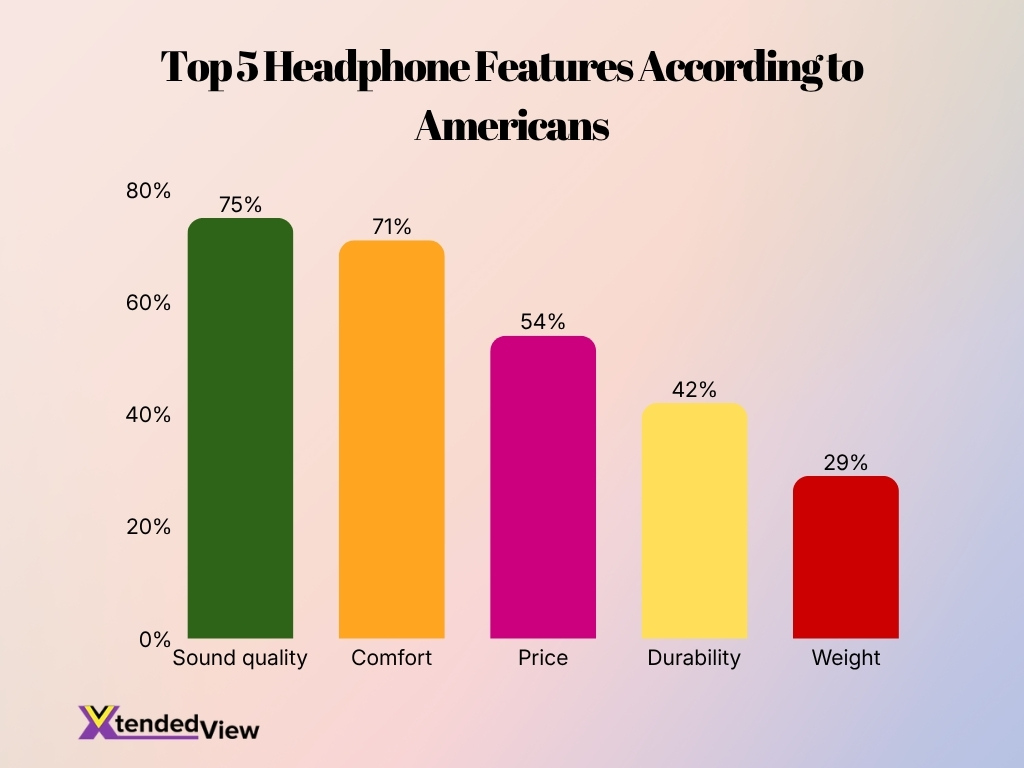
- Sound quality dominates as the top priority, with 75% of Americans considering it the most important factor when choosing headphones.
- Comfort ranks second at 71%, showing that long listening sessions require ergonomic design and proper fit.
- Price influences over half of buyers, with 54% prioritizing affordability alongside performance.
- Durability matters to 42%, indicating consumers value headphones that offer long-term reliability and build quality.
- Weight is least critical, with only 29% considering it important, suggesting portability is secondary to performance and comfort.
Gaming Earbuds Connectivity Statistics
- Bluetooth 5.2 and above is now used in over 70% of new earbuds released in 2026.
- Multi-device connectivity is supported in approximately 45% of mid-to-premium earbuds.
- Wireless range improved to 10–15 meters on average, enhancing usability.
- Dual-mode connectivity adoption increased by 28% in gaming earbuds.
- Around 68% of users report connection stability as a key purchase factor.
- Bluetooth LE Audio reduces power consumption by up to 50% while improving audio quality.
- Gaming earbuds with companion apps for connectivity control grew by over 30% in 2025–2026.
- USB-C dongle connectivity is increasingly used for low-latency PC and console gaming.
Gaming Earbuds User Preference Statistics
- Around 59% of gamers prefer wireless earbuds over wired options for convenience.
- Low latency ranks as the top feature for over 55% of competitive gamers.
- Approximately 62% of users prioritize sound quality over brand name.
- Battery life influences purchase decisions for over 58% of consumers.
- Around 47% of users prefer earbuds with customizable EQ settings.
- Gaming-specific branding influences less than 35% of buyers, indicating functionality matters more.
- Over 70% of Gen Z gamers prefer compact and portable audio solutions.
- Reviews and ratings impact purchasing decisions for over 65% of consumers.
Frequently Asked Questions (FAQs)
The global gaming earbuds market was valued at approximately $2.69 billion in 2025.
The gaming earbuds market is expected to grow at a CAGR of around 8.6% through 2032.
The global earbuds market reached about $42.15 billion in 2025, significantly larger than the gaming segment.
The gaming earbuds market is projected to reach nearly $4.79 billion by 2032.
The earphones and headphones market is expected to grow at a 12.7% CAGR from 2026 to 2033.
Conclusion
Gaming earbuds have firmly established themselves as a fast-growing segment within the global audio market, driven by the convergence of mobile gaming, esports, and wireless technology advancements. The data highlights consistent growth across market size, feature innovation, and consumer adoption, with low-latency performance, battery efficiency, and connectivity emerging as the most influential buying factors.
Moreover, regional trends, particularly in Asia-Pacific, and the rising influence of Gen Z gamers continue to accelerate demand for compact, high-performance audio solutions. At the same time, improvements in microphone quality, noise cancellation, and comfort are closing the gap between traditional gaming headsets and earbuds.
Looking ahead, the category is poised for further expansion as technologies like Bluetooth LE Audio, AI-driven sound optimization, and cloud gaming ecosystems mature. In this evolving landscape, gaming earbuds are not just an accessory; they are becoming the default audio solution for a new generation of gamers who value flexibility, performance, and everyday usability in one device.
