


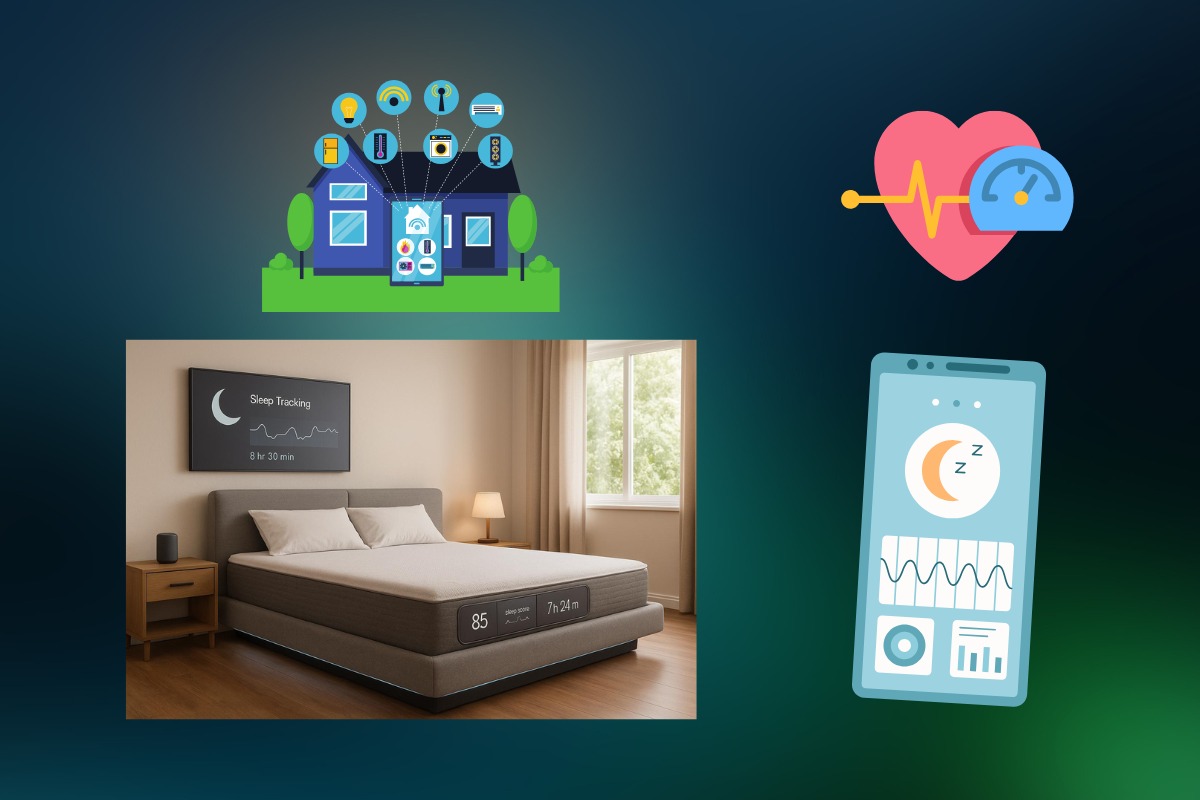
Smart beds have evolved from premium bedroom products into connected health and wellness devices that combine sleep tracking, biometric monitoring, climate control, and personalized comfort. Hospitals use smart beds to improve patient monitoring and reduce caregiver workload, while consumers rely on them to optimize sleep quality and recovery at home. As AI, connected devices, and digital health continue to converge, smart beds are becoming a larger part of the sleep technology ecosystem. Explore the statistics below to understand how this market is growing, where demand is increasing, and what trends are shaping its future.
Editor’s Choice
- The global smart bed market reached approximately $2.9 billion in 2025 and is estimated to grow to $3.1 billion in 2026.
- Forecasts indicate the market could exceed $5.4 billion by 2033, reflecting sustained long-term demand.
- The industry is expected to expand at a 6.3% CAGR between 2026 and 2033.
- North America accounted for 59.4% of global smart bed revenue in 2025, making it the largest regional market.
- Residential purchases represented 71.7% of global revenue in 2025, highlighting strong consumer adoption.
- Healthcare remains the fastest-growing application, driven by demand for connected patient monitoring and hospital automation.
- Specialty retail stores generated 66.7% of smart bed sales in 2025, although online channels continue to grow faster.
- Alternative market estimates value the industry at $3.87 billion in 2026, with projections approaching $7.27 billion by 2034, showing strong consensus on long-term expansion despite different methodologies.
Recent Developments
- During 2026, manufacturers accelerated AI-powered sleep coaching by integrating personalized recommendations based on nightly biometric data.
- Temperature-regulating sleep technology remains one of the fastest-growing premium product categories, with dual-zone cooling becoming a standard feature among flagship models.
- Smart beds increasingly combine heart rate, respiratory rate, movement, and sleep-stage tracking without requiring wearable devices.
- Healthcare providers continue expanding connected hospital beds that support remote patient monitoring and pressure management.
- More premium manufacturers now bundle smartphone apps, cloud analytics, and firmware updates as part of the ownership experience.
- Sleep technology investment continues to rise alongside broader digital health spending, with AI becoming a major differentiator in new product launches.
- Companies increasingly market smart beds as wellness products rather than traditional furniture, emphasizing recovery, stress reduction, and sleep optimization.
- Competitive pressure intensified in 2026 as established manufacturers and newer sleep-tech companies expanded their connected product portfolios.
- Advanced pressure-sensing and posture-recognition technologies continue moving from research into commercial healthcare and home applications.
Global Smart Bed Market Overview
- The smart bed market continues to benefit from rising awareness of sleep health, preventive healthcare, and connected home technologies.
- Consumer demand increasingly centers on products that combine comfort with actionable health insights instead of traditional mattress features alone.
- North America remained the world’s largest regional market throughout 2025, supported by high consumer spending and strong smart home adoption.
- Asia-Pacific represents one of the fastest-growing regions because of expanding middle-class populations and increasing digital health adoption.
- Residential buyers generate the largest share of global revenue, while hospitals contribute the fastest growth rate.
- Manufacturers continue integrating IoT connectivity, mobile apps, AI analytics, and cloud-based sleep reports into premium models.
- Growing interest in personalized wellness continues to increase consumer willingness to invest in connected sleep technology.
- Online sales channels continue expanding as consumers become more comfortable purchasing premium mattresses and smart home products digitally.
- Healthcare providers increasingly deploy smart beds for patient safety, pressure injury prevention, and continuous monitoring.
Smart Bed Market Growth Highlights
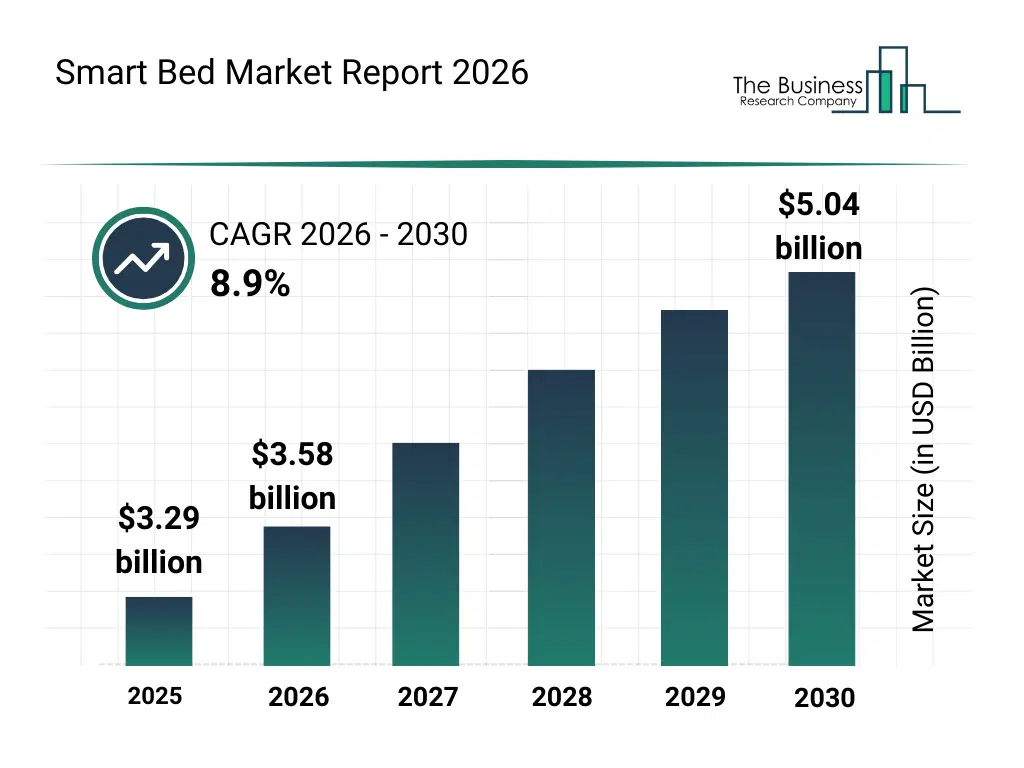
- The global smart bed market is projected to grow from $3.29 billion in 2025 to $5.04 billion by 2030.
- The market is expected to expand at a CAGR of 8.9% during the 2026–2030 forecast period.
- The market size is estimated to reach approximately $3.58 billion in 2026, reflecting steady annual growth.
- By 2028, the smart bed market is projected to surpass $4.3 billion, highlighting rising industry demand.
- The market is expected to approach $4.67 billion in 2029, before exceeding the $5 billion milestone in 2030.
- The forecast indicates consistent year-over-year growth, demonstrating increasing adoption of smart sleep technologies and connected bedding solutions.
Smart Bed Adoption and Penetration Rates
- The residential segment dominates smart bed adoption, accounting for a massive 71.7% of the total revenue share in 2025.
- The hospital sector is aggressively adopting connected sleep technology, expecting to register a fast-growing 6.8% CAGR through 2033.
- Rapid smart home penetration is fueling market growth, with connected U.S. households projected to reach 103 million by 2028.
- The integration of advanced sensors and AI algorithms in smart beds is projected to surge by over 25% in the next five years.
- Approximately 50 to 70 million adults suffering from sleep disorders are driving a substantial increase in biometric sleep-tracking adoption.
- The demand for fully electric beds remains dominant, capturing a solid 59.4% revenue share in 2025 due to consumers seeking adjustable comfort.
- Advanced smart bed technologies have proven highly effective, with some systems demonstrating a 34% boost in deep-sleep minutes for users.
- A significant 60% of consumers are now actively willing to invest in premium sleep technology and AI coaching to improve long-term wellness.
- Overall market penetration is expected to accelerate significantly, projecting the global smart bed market to reach $7.27 billion by 2034.
Smart Bed Demand in Residential and Healthcare Settings
- The residential segment accounted for 71.7% of global smart bed revenue in 2025, making it the largest application category entering 2026.
- Residential smart bed revenue reached approximately $2.09 billion in 2025 and is projected to grow to $3.85 billion by 2033.
- The residential segment is forecast to expand at a CAGR of 8.1% between 2026 and 2033, outpacing many traditional bedding categories.
- Hospitals remain the fastest-growing application, driven by investments in connected patient monitoring, pressure injury prevention, and digital healthcare infrastructure.
- Healthcare providers increasingly deploy smart beds to automate patient positioning, fall detection, and caregiver alerts, reducing manual intervention.
- Aging populations and the expansion of home healthcare continue increasing demand for medical-grade smart beds outside hospitals.
- Premium residential buyers increasingly prioritize adjustable firmness, sleep tracking, and temperature regulation over conventional mattress features.
- Healthcare organizations continue replacing conventional hospital beds with connected systems capable of continuous biometric monitoring and remote reporting.
- Rising awareness of sleep disorders and preventive healthcare continues supporting demand across both residential and institutional markets.
Regional Smart Bed Market Breakdown
- North America held 59.4% of the worldwide smart bed revenue in 2025.
- The United States smart bed market is expected to reach $1.40 billion by 2032.
- Europe accounted for a 27.6% regional share of the global smart bed market in 2025.
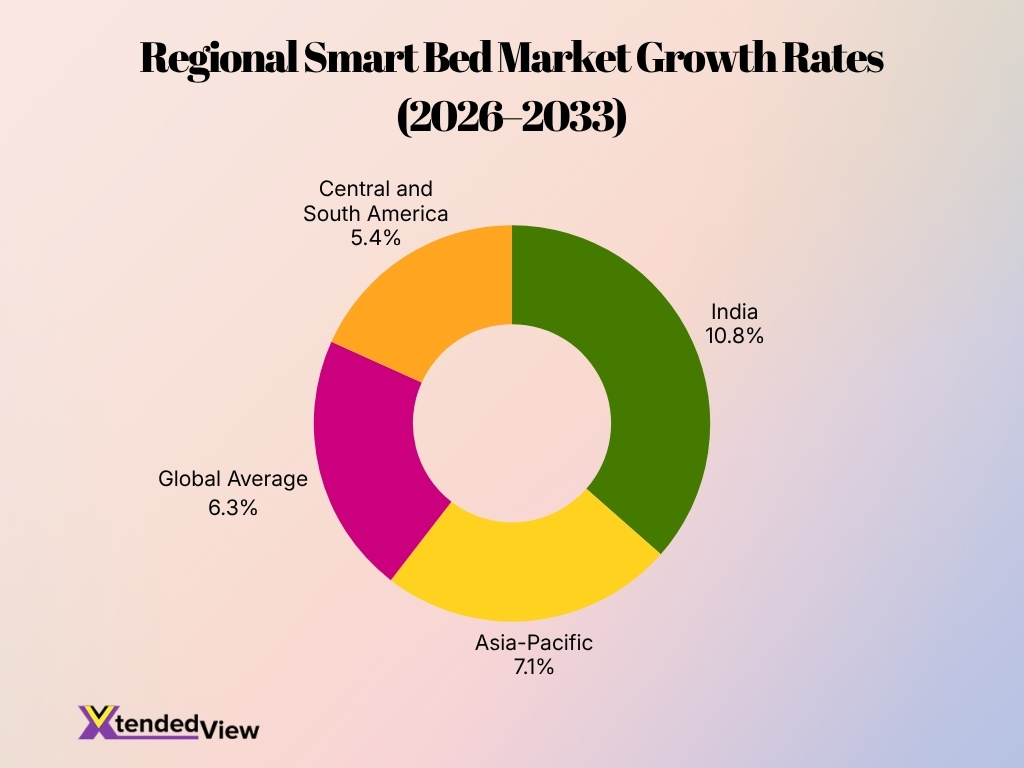
- Asia-Pacific is projected to grow at the fastest CAGR of 7.1% from 2026 to 2033.
- India’s smart bed market is expected to grow at a 10.8% CAGR between 2026 and 2033.
- The Indian market is estimated at $37.4 million in 2026, up from $34 million in 2025.
- The Central and South America region is expected to witness a 5.4% CAGR from 2026 to 2033.
- The global smart bed market is projected to reach $5.4 billion by 2033 at a 6.3% CAGR.
Leading Smart Bed Manufacturers and Brands
- The global smart bed market is projected to grow from $3.87 billion in 2026 to $7.27 billion by 2034.
- North America dominated the global smart bed market, capturing a substantial 31.64% revenue share in 2025.
- The healthcare smart beds segment is anticipated to reach $1.4 billion by 2033, growing at an 8.0% CAGR.
- Sleep Number reported net sales of $1.68 billion in 2024, maintaining a strong position in the consumer smart bed market.
- Fully electric smart beds lead product categories, accounting for 59.40% of the total revenue share in 2025.
- The commercial smart bed segment accounted for a dominant 64.30% market share globally in 2025.
- Offline distribution channels are expected to hold a leading 70.08% segmental share of the global smart beds market in 2026.
- Asia-Pacific is projected to register the fastest CAGR of 10.8% in the healthcare smart beds market from 2026 to 2033.
- Sleep Number delivered an adjusted EBITDA of $120 million for the full year 2024, highlighting solid operational performance.
- The residential smart mattress segment is scaling rapidly, forecasting a 5.95% CAGR as consumers seek enhanced sleep health tracking.
Smart Bed Integration with Smart Home Ecosystems
- The global smart home market is projected to grow from $150.26 billion in 2025 to $385.38 billion by 2030.
- The global smart bed market was valued at $2.91 billion in 2025 and is projected to reach $4.46 billion by 2032.
- Nearly 49% of smart mattresses sold in 2025 featured integrated app-based monitoring and multi-device connectivity.
- Adjustable smart beds accounted for 39.2% of the overall global market share in 2025.
- Over 50% of consumers in the premium segment consider customizable comfort features as their primary purchase driver.
- North America dominated the global smart bed market with a 38% share in 2025 driven by heavy smart home adoption.
- The global smart mattress market is forecasted to experience rapid growth to reach $17.98 billion by 2035.
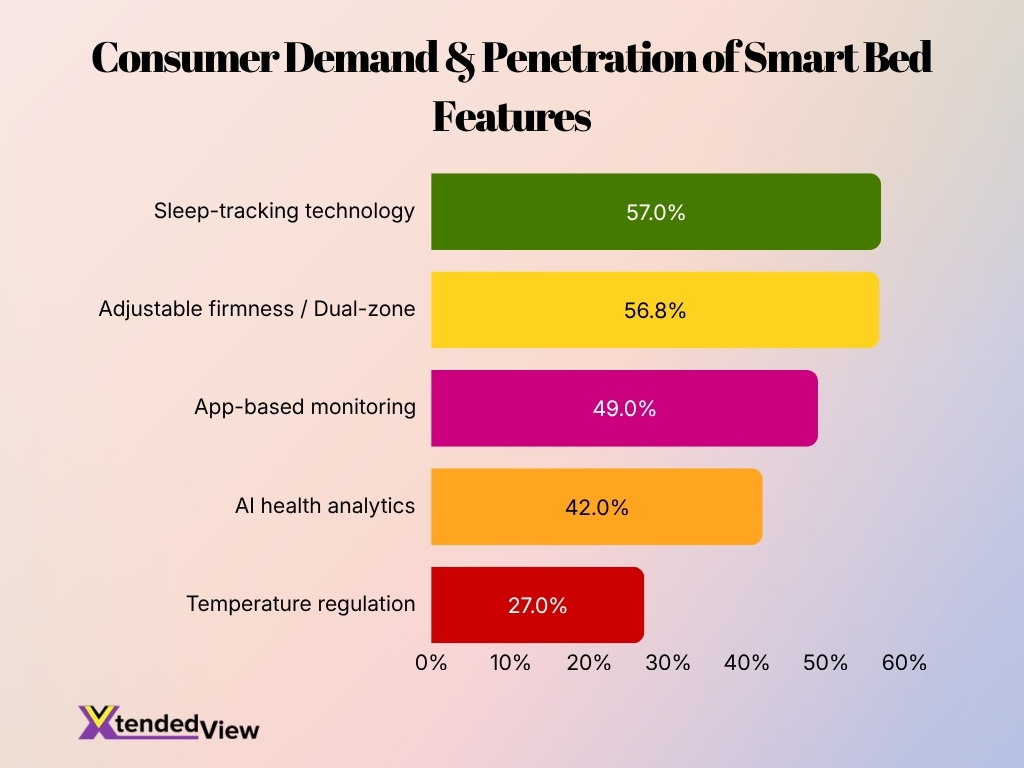
- Approximately 57% of buyers view connected sleep-tracking features as a major deciding factor in their purchase.
Pricing Ranges and Consumer Spending Statistics
- The global smart bed market size reached $2.93 billion in 2025.
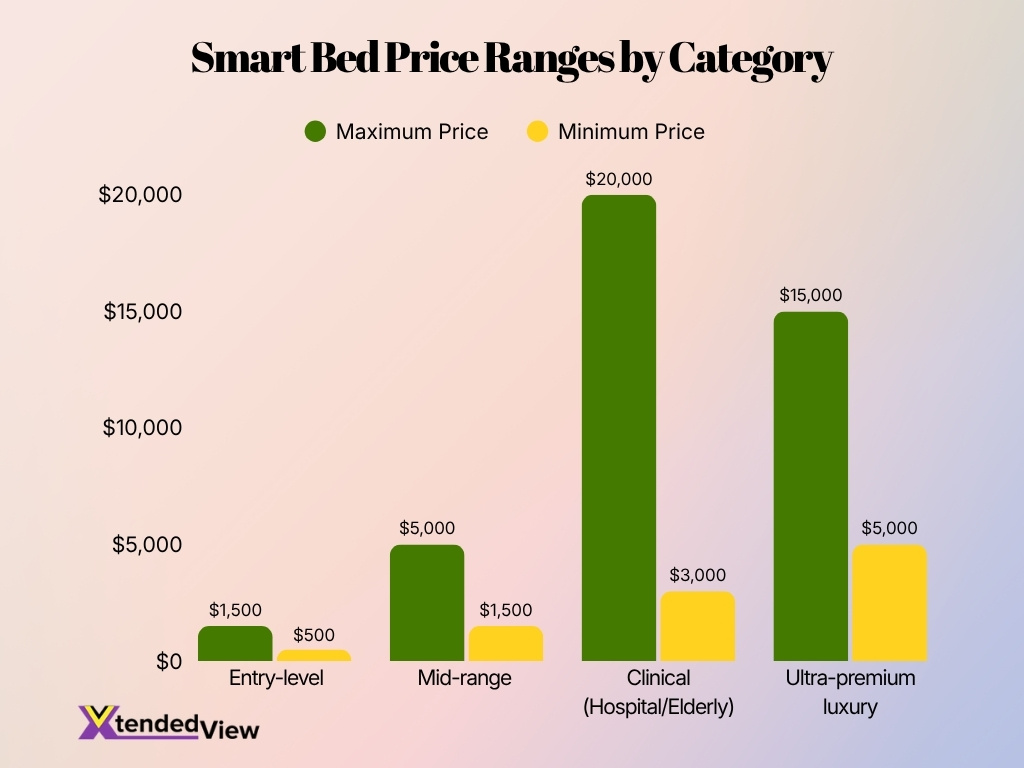
- Entry-level consumer smart beds generally range from $500 to $1,500.
- Mid-range smart beds for premium residential consumers cost between $1,500 and $5,000.
- Ultra-premium luxury smart beds are priced between $5,000 and $15,000+ per unit.
- Clinical smart beds for hospitals and elderly care range from $3,000 to $20,000+.
- Nearly 60% of consumers are willing to invest in advanced sleep technology.
- The residential segment accounted for 71.7% of total market revenue in 2025.
- Over 50% of premium consumers cite customizable comfort as a primary purchase driver.
- Electronic components and sensors make up 20% to 25% of the total manufacturing cost.
- Online sales of smart beds have increased by over 30% in the past year.
Sleep Tracking Usage Statistics
- The global smart sleep tracking device market is expected to reach $124.72 billion by 2035.
- Over 58% of consumers aged 18 to 45 use a smart device to assess daily sleep quality.
- Global adoption of advanced sleep-monitoring technology has surpassed 210 million active users.
- The non-wearable sleep trackers segment is growing by 16.04% annually due to demand for touchless systems.
- The residential segment dominated the smart bed market, capturing 71.7% of total revenue in 2025.
- The worldwide smart bed market was valued at $2.91 billion in 2025.
- The integration of AI-driven sleep analytics increased by 27% to accurately assess REM and deep sleep stages.
- Wearable sleep trackers hold 61% of market usage, while non-wearable bed sensors account for 39%.
- Hospitals using under-mattress monitoring systems successfully reduced critical code blue incidents by 86%.
- Nearly 40% of users actively check their sleep metrics at least once a week using a smart tracking device.
Health Monitoring Capabilities Statistics
- The global smart bed market size reached $2.93 billion in 2025.
- Over 51% of hospitals globally deployed contactless health monitors for remote patient care.
- Adjustable smart beds accounted for 39.2% of the global market share in 2025.
- Smart bed technologies in clinical trials achieved a 100% success rate in preventing pressure injuries.
- AI integration in contactless monitoring systems surged by 47% to enhance diagnostic accuracy.
- The global contactless health monitors market is projected to reach $109.99 billion by 2035.
- Contactless technologies estimate heart rates with a mean absolute percentage error of < 5% in older adults.
- North America dominated the global smart bed market with a 35.2% share in 2025.
Smart Bed Features and Technology Penetration Rates
- Sleep tracking and monitoring features dominate the industry, currently holding a 38% market share among all smart bed capabilities.
- A notable 57% of consumers identify integrated sleep-tracking technology as a primary factor when selecting a premium mattress.
- Adjustable firmness and dual-zone configurations capture a 56.8% market share in 2026 due to individualized comfort demands.
- Temperature regulation continues to grow rapidly, representing a 27% share of the most sought-after premium smart bed features.
- By 2026, approximately 42% of smart mattresses are projected to utilize AI health analytics for automatic comfort adjustments.
- Integrated biometric sensors in modern smart beds now comprehensively track up to 35 distinct health and sleep data elements.
- Nearly 49% of smart mattresses sold recently feature built-in app-based monitoring and multi-device wireless connectivity.
- Advanced pressure sensors and precise calibration algorithms have demonstrated a 34% improvement in overall sleep data accuracy.
Temperature Control and Adjustable Features Statistics
- The global smart bed market is projected to reach $7.27 billion by 2034, driven by demand for advanced sleep technology.
- Over 50% of premium consumers identify customizable comfort features as their primary motivation for purchasing a new mattress.
- Adjustable mattresses account for a 56.8% market share due to the growing consumer focus on pressure relief and personalized support.
- Smart adjustable beds equipped with app controls hold 42.7% of the market share within the specialized sleep technology segment.
- Sleeping on a continuously temperature-regulated mattress is clinically proven to increase nightly deep sleep by 14 minutes.
- Female users sleeping on temperature-responsive smart beds experienced a documented 12.3% increase in deep sleep percentage.
- Smart bed users who maintained cooler surface temperatures during the early night improved their REM sleep duration by 25%.
- Premium dual-zone smart beds allow couples to independently adjust their sleeping surface temperatures anywhere from 55°F to 110°F.
- The global market for adjustable smart beds is forecasted to grow at a rapid CAGR of 9.7% between 2026 and 2036.
Smart Bed Impact on Sleep Quality Statistics
- A 2026 survey shows that 46.0% of respondents have used sleep-tracking technologies.
- Exactly 48.1% of users report that tracking technology helps them better understand sleep patterns.
- Around 43.5% of individuals describe sleep-tracking technology as useful for managing sleep habits.
- Nearly 29.4% of users state that tracking tech encourages them to prioritize sleep more consistently.
- Approximately 15.4% of respondents report that these tools directly contribute to improved sleep quality.
- Only 2.3% of users feel that tracking technology worsened their sleep, indicating a low negative impact.
- Over 190 million nights of smart bed monitoring data have been used to analyze real-world recovery patterns.
Key Insights on Time Spent in Bed
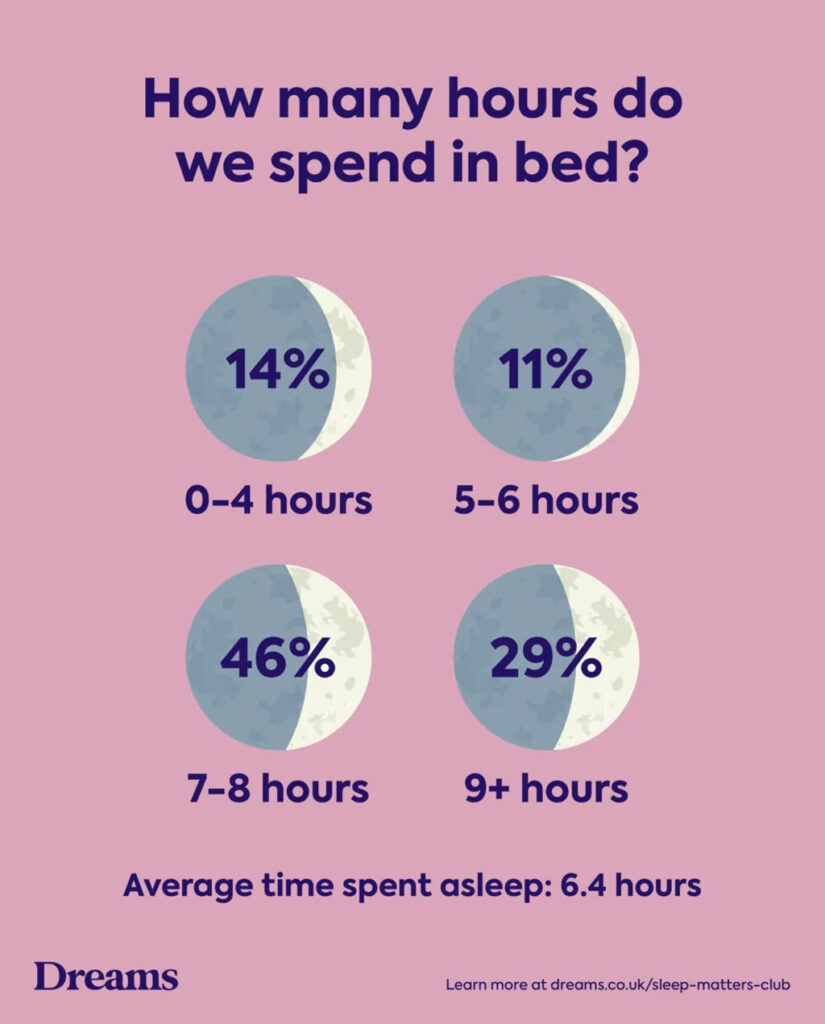
- 46% of respondents spend 7–8 hours in bed, making it the most common sleep duration.
- 29% of people spend 9+ hours in bed, representing the second-largest group.
- 14% of respondents report spending only 0–4 hours in bed, indicating a relatively small share.
- The 5–6 hours category accounts for just 11%, making it the least common sleep duration.
- The average time spent asleep is 6.4 hours, suggesting that many people sleep slightly below the recommended 7–8 hours.
App Usage and Data Analytics Statistics
- A 2026 study found that 46.0% of adults have used sleep apps or connected sleep technologies.
- Exactly 411 respondents preferred smartwatch tracking, while 65 used dedicated mobile sleep apps.
- Sleep app usage reached a high of 57.2% among adult age groups spanning 18–50.
- Adoption of digital sleep monitoring saw a significant decline to 18.3% in the oldest age group.
- The average positive-effect score reported by sleep app users was recorded at 14.57.
- In contrast, the negative-effect score for users of these sleep tracking platforms was 10.75.
- Modern smart bed applications are increasingly leveraging AI-generated sleep scores and personalized coaching.
- Cloud-based analytics currently enable users to compare weekly, monthly, and yearly sleep trends.
- Manufacturers utilize anonymous aggregated sleep data to continuously refine their predictive sleep algorithms.
Smart Bed Consumer Demographics Statistics
- Adults under 50 show a 57.2% sleep app usage prevalence.
- Exactly 20% of adults currently use sleep-tracking technology for themselves.
- About 27% of non-users are likely to adopt sleep trackers in the future.
- Only 8% of parents use sleep-tracking technology for their children.
- Sleep app usage is statistically more common among women than men.
- Younger adults are significantly more likely to adopt the technology than older consumers.
- Educational attainment shows no significant relationship with sleep app adoption.
- Insomnia status shows no significant association with sleep app usage.
- Premium smart bed sales are driven by consumers seeking connected wellness.
Barriers to Smart Bed Adoption
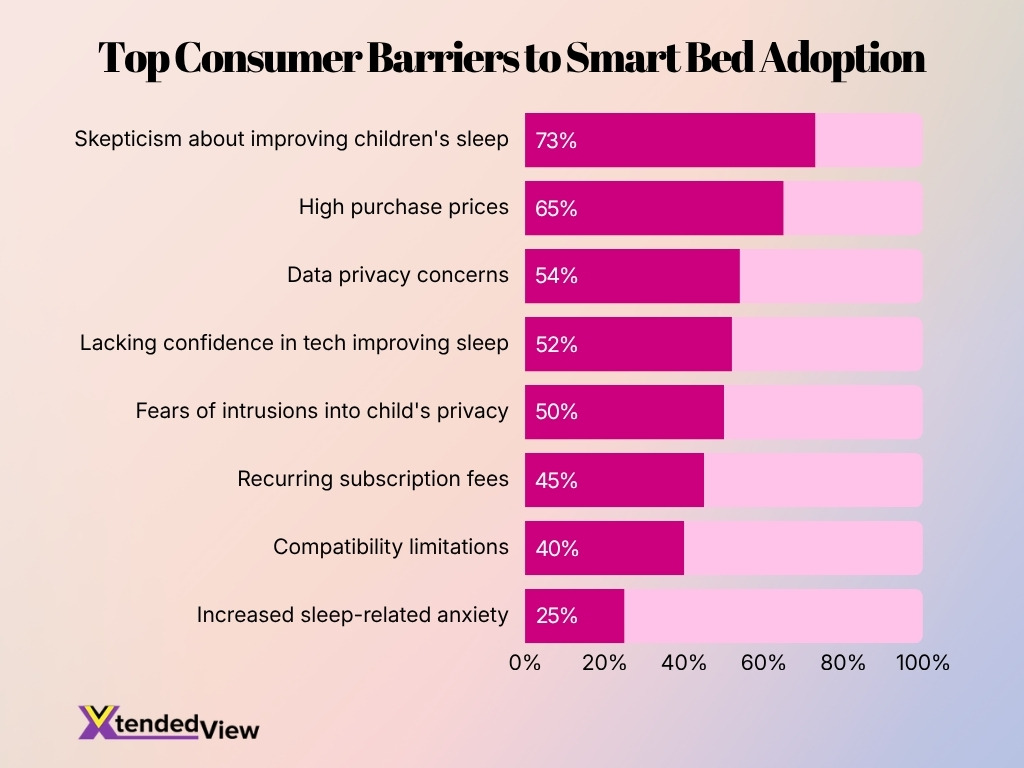
- 54% of adults expressed concerns about data privacy when using sleep-tracking technology.
- 52% reported lacking confidence that sleep technologies can meaningfully improve sleep quality.
- 73% of parents expressed skepticism about the ability of smart beds to improve their children’s sleep.
- Over 65% of consumers cite high purchase prices as the largest barrier to adopting premium smart beds.
- Nearly 45% of prospective buyers are discouraged by recurring subscription fees for advanced analytics.
- Approximately 25% of users report increased sleep-related anxiety from constant performance scoring.
- Up to 40% of consumers find that compatibility limitations with smart home ecosystems reduce the user experience.
- Over 50% of parents express significant fears regarding potential intrusions into their child’s privacy.
- Only 20% of adults currently utilize sleep-tracking technology, highlighting a gap in market penetration.
- Under 8% of older demographics adopt sleep-tracking devices, creating a noticeable age-related adoption gap.
Frequently Asked Questions (FAQs)
The global smart bed market is estimated at $3.1 billion in 2026, up from $2.9 billion in 2025.
The global smart bed market is forecast to grow at a 6.3% CAGR between 2026 and 2033.
North America accounted for 59.4% of the global smart bed market revenue in 2025, making it the leading regional market.
The residential segment held 71.7% of the global smart bed market revenue in 2025.
The U.S. smart bed market is projected to reach $2.79 billion by 2033, growing at a CAGR of 8.2% from 2026 to 2033.
Conclusion
The smart bed market continues to evolve beyond connected furniture into a broader digital health and wellness category. Growth reflects rising consumer demand for AI-powered sleep tracking, personalized comfort, health monitoring, and smart home integration. North America remains the largest market, while Asia-Pacific is emerging as the fastest-growing region. Although concerns about pricing, privacy, and data reliability continue to influence purchasing decisions, ongoing advances in sensor technology, cloud analytics, and healthcare integration position smart beds for sustained long-term expansion across both residential and clinical environments.
