



AI-powered wearables have moved beyond simple step counters and now deliver real-time health insights, personalized coaching, and hands-free AI assistance. Hospitals use these devices to monitor patients remotely, while employers and insurers rely on wearable data to support wellness programs and reduce healthcare costs. At the same time, consumer demand for smart glasses, rings, and AI-enabled watches continues to reshape the connected device market. The statistics below show how quickly this industry is expanding and where the biggest opportunities are emerging.
Editor’s Choice
- The global wearable AI market reached $48.82 billion in 2025 and is expected to climb to $61.51 billion in 2026.
- The industry is projected to hit $359.32 billion by 2034, growing at a CAGR of 24.7%.
- Another industry estimate values the wearable AI market at $56.6 billion in 2026, up from $43.6 billion in 2025.
- Worldwide wearable device shipments increased 9.1% year over year in 2025, reaching 611.5 million units.
- Asia-Pacific accounted for 32.8% of global wearable AI revenue in 2025, making it the largest regional market.
- North America held 35.1% of the global wearable AI market in 2025, driven by healthcare and premium device adoption.
- The broader wearable technology market is expected to reach $104.94 billion in 2026, reflecting strong demand for AI-enabled health and fitness devices.
Recent Developments
- Global wearable shipments crossed 611.5 million units in 2025, supported by new product launches and refresh cycles.
- Around 49 million wearable devices were sold globally during the second quarter of 2025, representing 12.3% annual growth.
- Qualcomm unveiled its Snapdragon Wear Elite platform in 2026 to support advanced on-device AI capabilities in wearables.
- The first devices powered by Snapdragon Wear Elite are expected to launch during 2026, enabling more AI processing without relying heavily on cloud computing.
- Google confirmed that its first Gemini AI Glasses will debut in 2026, signaling renewed competition in smart eyewear.
- Meta and EssilorLuxottica accelerated manufacturing plans and aim to achieve an annual production capacity of 10 million smart glasses units.
- Amazon returned to the wearable market in late 2025 with its Bee AI wearable, a low-cost device focused on continuous voice monitoring and task management.
- The latest generation of AI-powered Ray-Ban glasses introduced integrated displays and gesture controls, pushing smart glasses into mainstream consumer electronics.
- Researchers demonstrated that AI-based wearable monitoring systems improved anomaly detection accuracy by approximately 22% compared with existing methods.
U.S. AI Wearable Market Size Statistics
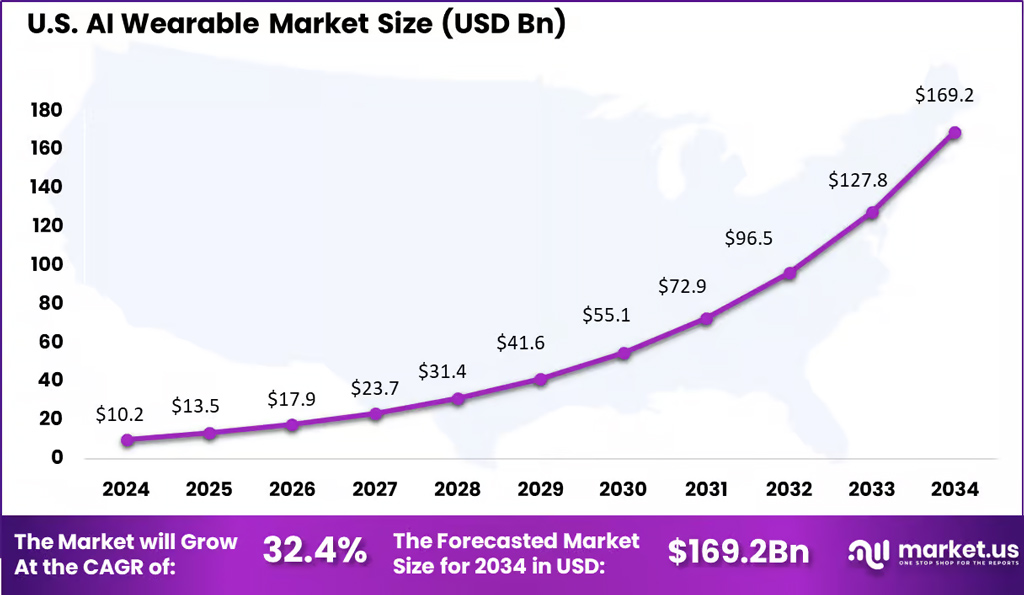
- The U.S. AI wearable market was valued at $10.2 billion in 2024.
- The market is projected to reach $13.5 billion in 2025, reflecting steady early growth.
- By 2026, the market size is expected to increase to $17.9 billion.
- The industry is forecast to grow to $23.7 billion by 2027.
- The market is estimated to surpass $31.4 billion in 2028.
- In 2029, the U.S. AI wearable market is projected to reach $41.6 billion.
- The market is expected to exceed $55.1 billion by 2030.
- By 2031, the industry is forecast to grow further to $72.9 billion.
- The market is projected to approach $96.5 billion in 2032.
- In 2033, the U.S. AI wearable market is expected to reach $127.8 billion.
- The market is forecast to attain $169.2 billion by 2034.
- Throughout 2024–2034, the market is expected to expand at a robust 32.4% CAGR.
AI-Powered Wearables Market Forecast
- The wearable AI industry is projected to reach $310.56 billion by 2033.
- Another long-term forecast values the market at $359.32 billion by 2034.
- Market analysts expect annual growth to remain above 24% through the next decade.
- The overall wearable technology market could reach $240.43 billion by 2032.
- The global market for wearable devices is expected to benefit from increasing demand for continuous health monitoring and personalized wellness solutions.
- AI-powered smartwatches and fitness bands are forecast to record the highest growth rate among wearable categories.
- Demand for health wearables alone could reach 2 billion units annually by 2050, according to academic estimates.
- The next growth phase is expected to come from AI smart glasses, rings, and ambient intelligence devices that operate independently of smartphones.
- Increasing adoption of low-power electronics and wearable payments will continue to accelerate market expansion through the end of the decade.
AI-Powered Wearables Adoption and User Penetration Statistics
- Global wearable device shipments reached 590.7 million units in 2025 and are projected to hit 614.1 million units by 2026.
- The global wearable AI market size was valued at $32.60 billion in 2025 and is predicted to grow to $39.54 billion in 2026.
- Smartwatches secured a massive 50% market share of all AI-powered wearable products sold globally in 2025.
- India leads global household wearable ownership with a 57% adoption rate, followed closely by Mainland China at 53%.
- The global user base for smartwatches reached 562.86 million in 2025, representing a strong 23.7% year-over-year increase.
- Approximately 55% of wearable manufacturers now integrate advanced AI features directly into their consumer hardware.
- Smart rings emerged as the fastest-growing category, recording an explosive 88% shipment growth driven by AI health insights.
- The healthcare application segment accounted for a significant 35% revenue share of the overall wearable AI market in 2025.
AI-Powered Wearables by Device Type
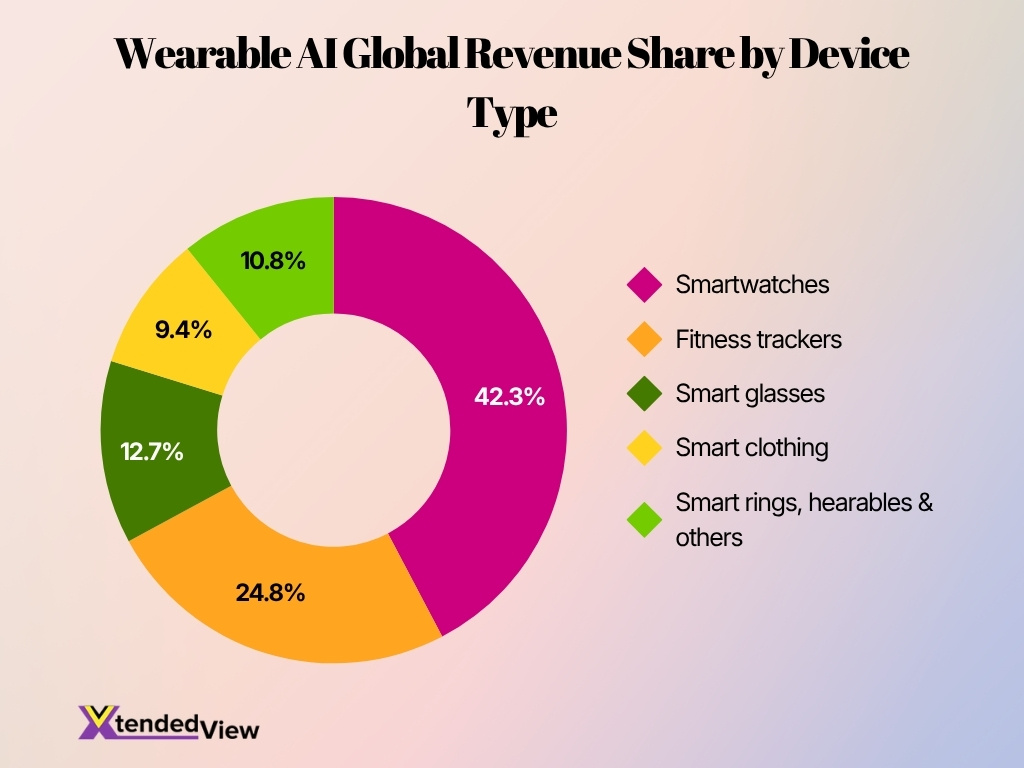
- Smartwatches remained the largest wearable category in 2025 and represented 42.3% of global consumer smart wearables revenue.
- Fitness trackers accounted for 24.8% of global wearable revenues in 2025, supported by their lower price points and longer battery life.
- Smart glasses generated 12.7% of wearable revenues in 2025 and rank among the fastest-growing categories in the industry.
- Smart clothing contributed 9.4% of global wearable revenue in 2025 as healthcare and sports applications expanded.
- Smart rings, hearables, and other devices represented the remaining 10.8% market share in 2025.
- Global smart ring shipments are forecast to reach 4.9 million units in 2026, up 12.8% year over year.
- Smart glasses are expected to ship 13.6 million units in 2026, increasing 41.4% from 2025, making them the fastest-growing wearable category.
- Worldwide wearable shipments are projected to reach 693.2 million units by 2030, driven by new AI-enabled form factors.
- The wearable market is expected to grow from $91.1 billion in 2026 to $181.7 billion by 2035, highlighting continued demand across device categories.
Smartwatches in AI Wearables Statistics
- Global smartwatch shipments are expected to reach 159.7 million units in 2026.
- Smartwatch shipments stood at approximately 151.9 million units in 2022 and increased to 165.2 million units in 2023, showing sustained demand.
- Industry forecasts indicate smartwatch shipments will surpass 208.6 million units by 2028.
- Smartwatches generated roughly $41.7 billion in revenue in 2025, accounting for 42.3% of global wearable revenue.
- In India, smartwatches captured 62.78% of the smart wearable market in 2025.
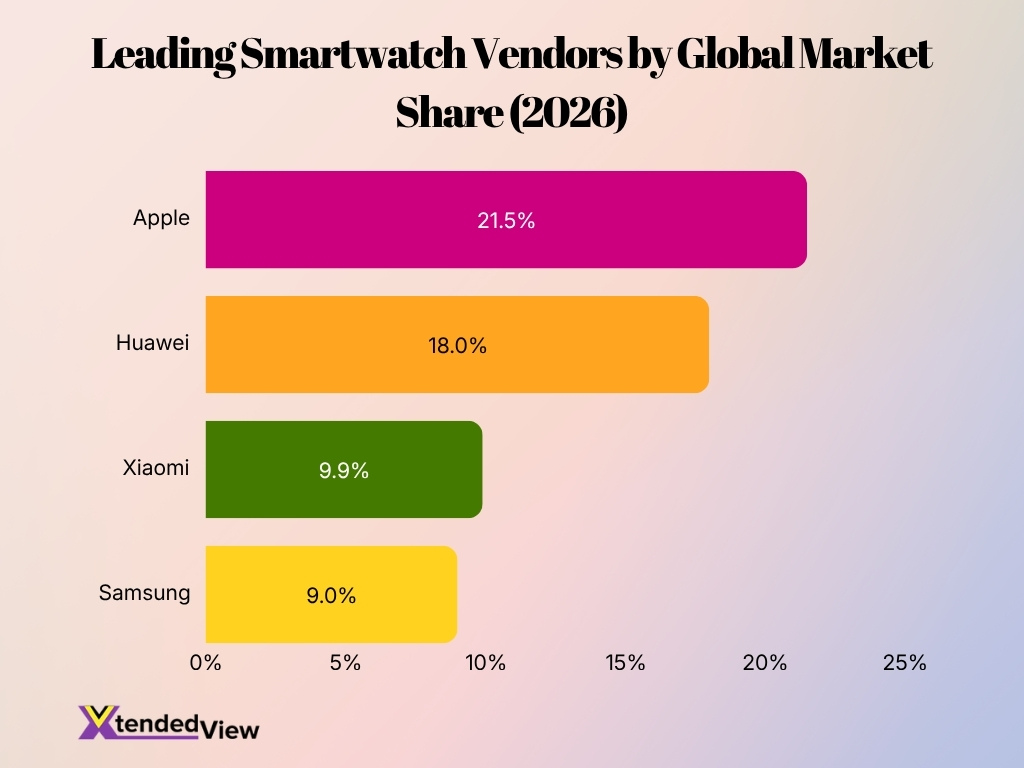
- Apple held the leading smartwatch position during the first quarter of 2026 with a 21.5% unit market share.
- Huawei ranked second globally with an 18% smartwatch market share in early 2026.
- Xiaomi controlled approximately 9.9% of global smartwatch shipments during the first quarter of 2026.
- Smartwatches are increasingly integrating AI assistants, ECG monitoring, blood oxygen tracking, and contactless payment capabilities, making them the most feature-rich wearable category.
Smart Glasses in AI Wearables Statistics
- Smart glasses shipments are projected to reach 13.6 million units in 2026, up 41.4% year over year.
- Global smart glasses shipments grew 139% year over year during the second half of 2025.
- Meta controlled approximately 82% of the smart glasses market during the second half of 2025.
- Smart glasses represented 12.7% of global consumer wearable revenues in 2025.
- Industry forecasts indicate that smart glasses will record a CAGR of approximately 22.4% through 2034.
- Meta launched a new AI-powered smart glasses line in 2026 with starting prices of $299, targeting mainstream consumers.
- Snap introduced its new Specs glasses with a launch price of $2,195, positioning them at the premium end of the market.
- Google announced that its first Gemini AI Glasses will debut in 2026, intensifying competition in AI-powered eyewear.
- Smart glasses increasingly support real-time translation, object recognition, navigation, and hands-free photography through embedded AI systems.
Fitness Trackers in AI Wearables Statistics
- Global fitness tracker shipments reached 178 million units in 2025, rising 8.3% year over year.
- The fitness tracker market value climbed to approximately $87 billion in 2025.
- Industry estimates suggest the market will exceed $95 billion in 2026.
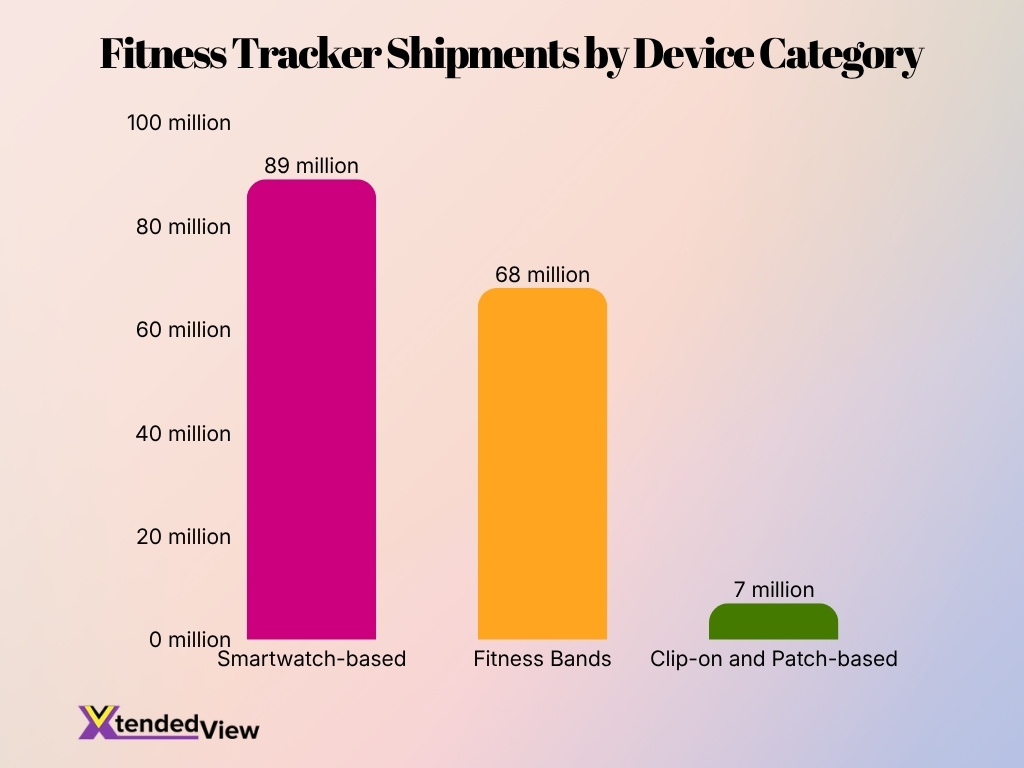
- Fitness bands accounted for 68 million shipments in 2025, representing 38% of the fitness tracker market.
- Smartwatch-based fitness devices shipped 89 million units in 2025, giving them a 50% share of the fitness tracking market.
- Clip-on and patch-based fitness wearables shipped around 7 million units in 2025.
- Global fitness tracker shipments are expected to reach 192 million units in 2026, reflecting 7.9% annual growth.
- Fitness trackers held 24.8% of consumer wearable revenues in 2025 and remain popular among first-time buyers and older users.
- Growing interest from employers and healthcare providers has expanded fitness tracker use into wellness programs and preventive healthcare initiatives.
Smart Rings and Other AI Wearables Statistics
- Global smart ring shipments are expected to reach 4.9 million units in 2026, growing 12.8% from 2025.
- The smart ring market is forecast to expand to approximately 6.3 million units by 2030.
- Smart rings accounted for about 8% of global fitness tracker shipments in 2025.
- Smart ring shipments reached approximately 14 million units in 2025, making them one of the fastest-growing wearable segments.
- The smart ring category posted a remarkable 32.5% annual growth rate in 2025.
- More than 5.5 million smart rings have been sold globally by Oura since its founding.
- Oura generated approximately $1 billion in revenue in 2025, highlighting the growing commercial potential of smart rings.
- In India, smart rings are projected to grow at a CAGR of 24.4% through 2031.
- Researchers identified 206 published studies focused on smart ring technologies and applications, demonstrating growing scientific interest in the segment.
AI-Powered Wearables in Healthcare Statistics
- The global healthcare wearable technology market is projected to reach $420.94 billion by 2035, expanding at a 16.35% CAGR.
- AI-enabled wearables are expected to be the fastest-growing technology segment, surging at a 20.98% CAGR through 2035.
- Smartwatches and wrist-worn devices dominated the healthcare wearable sector by capturing a 48.00% market share in 2025.
- The global remote patient monitoring system market is forecasted to skyrocket to $110.7 billion by 2033 at a 20.0% CAGR.
- Healthcare providers formed the largest end-user group for wearables, holding a dominant 45.00% market share in 2025.
- Continuous monitoring devices like CGM and ECG are slated to witness a robust 18.36% CAGR due to rising chronic diseases.
- Remote patient monitoring (RPM) applications utilizing wearables accounted for a significant 38.00% share of the market in 2025.
- North America leads the global remote patient monitoring devices market, accounting for a massive 48.06% share in 2025.
- The number of U.S. patients utilizing remote patient monitoring devices is predicted to reach 70.6 million by the end of 2025.
- Integrating wearable devices into care plans can improve patient engagement levels by up to 80% and boost compliance to over 70%.
AI-Powered Wearables by Region and Country Statistics
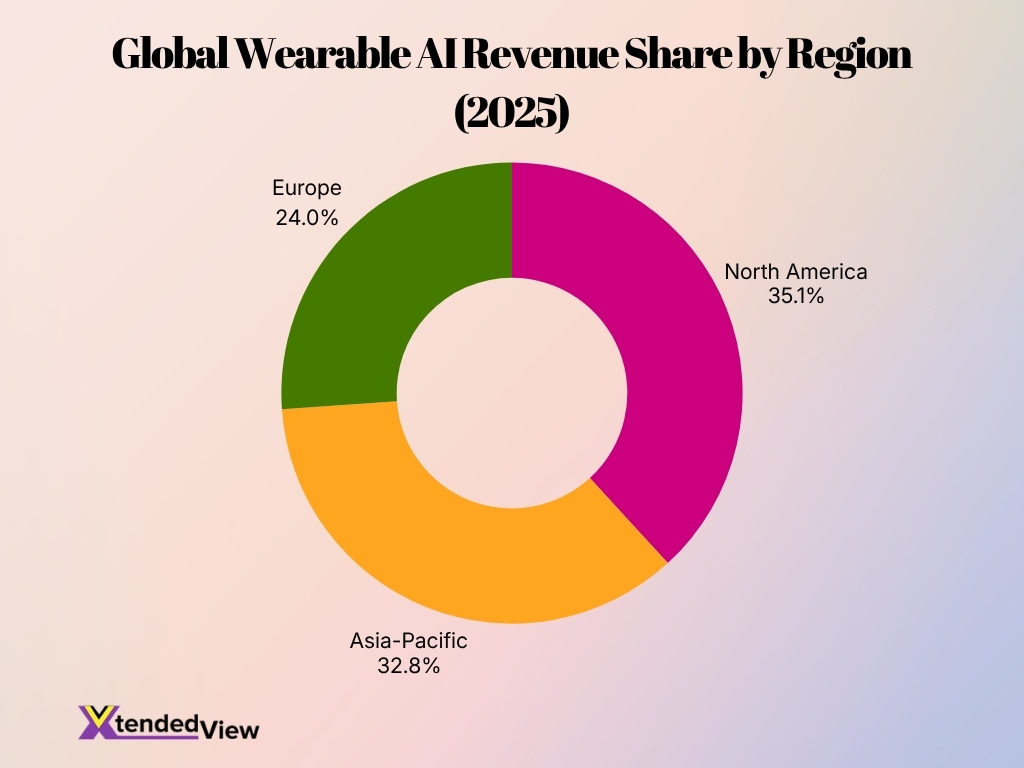
- North America held approximately 35.1% of global wearable AI revenue in 2025, supported by high healthcare spending and premium device adoption.
- Asia-Pacific accounted for around 32.8% of global market revenue and remains the fastest-growing region.
- The United States generated more than $17 billion in wearable AI revenue during 2025.
- China remained the world’s largest wearable shipment market and contributed nearly 30% of global device shipments in 2025.
- India became one of the fastest-growing wearable markets, with annual shipment growth of approximately 20% in 2025.
- Europe accounted for roughly 24% of global wearable revenues in 2025, driven by health and fitness applications.
- The Middle East and Africa wearable market is projected to grow at a CAGR of more than 18% through 2030.
- Latin America is expected to record double-digit growth through the end of the decade due to increasing smartphone penetration and affordable wearables.
- Japan and South Korea continue to lead in smart healthcare and industrial wearable adoption because of their aging populations and advanced digital infrastructure.
AI-Powered Wearables in Fitness and Wellness Statistics
- The global digital fitness and wellness market reached $98.6 billion in 2025, with AI-powered wearables accounting for a significant share of activity tracking and coaching applications.
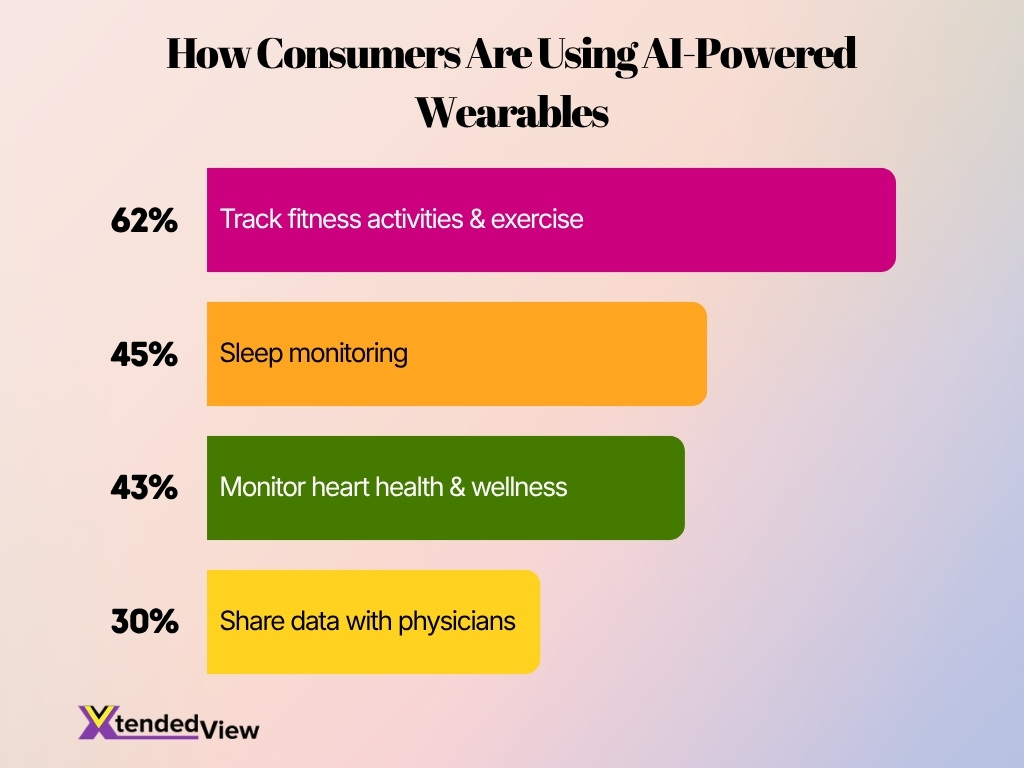
- Approximately 62% of wearable users say they use their devices primarily to monitor exercise and physical activity.
- More than 45% of smartwatch owners regularly use sleep-tracking features to improve wellness habits.
- Around 43% of consumers use wearable devices to monitor heart health and overall fitness metrics.
- The corporate wellness market is projected to surpass $100 billion by 2030, increasing demand for AI-enabled wearables in employee health programs.
- More than 70% of fitness app users connect at least one wearable device to track workouts and health progress.
- AI-powered wearables can improve exercise adherence by 20% to 30% through personalized recommendations and reminders.
- Global spending on connected fitness devices and services is expected to exceed $120 billion by 2027.
- Wellness applications remain the largest software segment within wearable ecosystems, driven by demand for stress tracking, meditation, and recovery monitoring.
AI-Powered Wearables in Consumer Electronics Statistics
- Consumer electronics represented more than 55% of global wearable AI revenue in 2025, making it the largest end-user segment.
- Worldwide consumer spending on wearable devices exceeded $95 billion in 2025.
- The number of connected wearable devices worldwide is expected to surpass 1.1 billion active units in 2026.
- Smartwatches remain the most purchased consumer wearable, accounting for approximately 43% of retail wearable sales in 2025.
- AI assistants and generative AI capabilities are becoming standard features in premium wearable devices launched in 2026.
- Consumer demand for devices with advanced health monitoring features increased by more than 30% year over year in 2025.
- Smart glasses emerged as the fastest-growing category in consumer electronics with shipment growth exceeding 40% in 2026.
- More than 60% of wearable buyers consider battery life and AI-powered health insights the most important purchasing factors.
- Integration with smartphones, smart homes, and digital payment platforms continues to drive consumer adoption across global markets.
AI-Powered Wearables Market Share Statistics
- Apple remained the leading smartwatch vendor in early 2026 with a market share of 21.5%.
- Huawei ranked second with approximately 18% of global smartwatch shipments.
- Xiaomi held around 9.9% market share in the global smartwatch segment.
- Samsung accounted for nearly 9% of global smartwatch shipments in 2025.
- Meta controlled roughly 82% of the smart glasses market during the second half of 2025.
- Smartwatches represented 42.3% of total wearable revenues, the largest share among device categories.
- Fitness trackers accounted for approximately 24.8% of wearable revenues in 2025.
- Smart glasses contributed around 12.7% of market revenue in 2025.
- Consumer electronics remained the largest application segment with a share exceeding 55% of total market revenue.
AI-Powered Wearables Revenue and Shipment Trends
- Global wearable shipments reached 611.5 million units in 2025, representing 9.1% annual growth.
- Worldwide shipments are forecast to rise to 645.7 million units in 2026.
- Annual shipments are expected to approach 693.2 million units by 2030.
- The wearable AI market generated approximately $48.82 billion in revenue in 2025.
- Market revenue is projected to increase to $61.51 billion in 2026, representing growth of nearly 26%.
- Another forecast estimates wearable AI revenue at $56.6 billion in 2026 and $72.3 billion in 2027.
- Smart glasses are expected to deliver the fastest shipment growth, exceeding 41% in 2026.
- Smart ring shipments are projected to rise 12.8% year over year in 2026.
- Health-monitoring devices continue to command premium pricing because consumers increasingly value AI-powered insights and personalized recommendations.
AI-Powered Wearables Usage Statistics
- More than 1 billion people worldwide actively use wearable devices.
- About 62% of users rely on wearables to track fitness activities and exercise performance.
- Nearly 45% of wearable owners use sleep monitoring features regularly.
- Around 43% of users monitor heart health and wellness metrics using wearables.
- Approximately 30% of wearable users share health data with physicians or healthcare providers.
- More than 70% of fitness application users sync wearable data with mobile apps and digital health platforms.
- AI-powered wearables are increasingly used for stress management, menstrual health tracking, and recovery monitoring.
- Employers increasingly incorporate wearables into wellness programs to encourage healthier behaviors and reduce healthcare costs.
- Hospitals and insurers continue to expand wearable use cases for remote monitoring and preventive healthcare initiatives.
AI-Powered Wearables Future Outlook
- The global wearable AI market is officially projected to reach $359.32 billion by 2034.
- Industry analysts forecast an impressive annual growth rate of 24.70% throughout the next decade.
- The smart glasses segment is expected to expand rapidly at a 24.5% CAGR into the early 2030s.
- Approximately 62.6% of wearable devices now process tasks via on-device AI to reduce latency and improve privacy.
- Nearly 52% of newly launched devices feature advanced biosensors designed for predictive healthcare and early disease detection.
- Demand for screenless ambient devices is accelerating, with smart ring adoption already increasing by 24%.
- Around 63% of modern premium wearables now seamlessly integrate generative AI-driven health analytics.
- Health and consumer electronics applications currently account for a massive 34.8% of all wearable AI investments.
- Global AI wearable shipments are estimated to exceed 534.6 million units annually, driven by the convergence of low-power chips and sensors.
Frequently Asked Questions (FAQs)
The global wearable AI market is projected to reach $61.51 billion in 2026, up from $48.82 billion in 2025.
The wearable AI market is forecast to grow at a 27.8% CAGR from 2026 to 2033, making it one of the fastest-growing technology segments.
North America accounted for 35.1% of global wearable AI revenue in 2025, maintaining its position as the leading regional market.
Global wearable device shipments are expected to reach approximately 645.7 million units in 2026, representing continued growth in consumer adoption.
The global wearable AI market is projected to reach $359.32 billion by 2034, highlighting the long-term growth potential of AI-powered wearables.
Conclusion
AI-powered wearables have evolved from simple fitness accessories into intelligent devices that support healthcare, productivity, and everyday decision-making. The market is expanding rapidly, fueled by advances in generative AI, health monitoring, and edge computing. Smartwatches continue to dominate shipments, while smart glasses and rings are emerging as high-growth categories with significant long-term potential.
As adoption spreads across healthcare systems, workplaces, and consumer electronics, wearable AI is becoming a critical part of the connected technology ecosystem. With global revenues expected to multiply over the next decade, the industry appears well positioned for sustained growth and continued innovation.
