


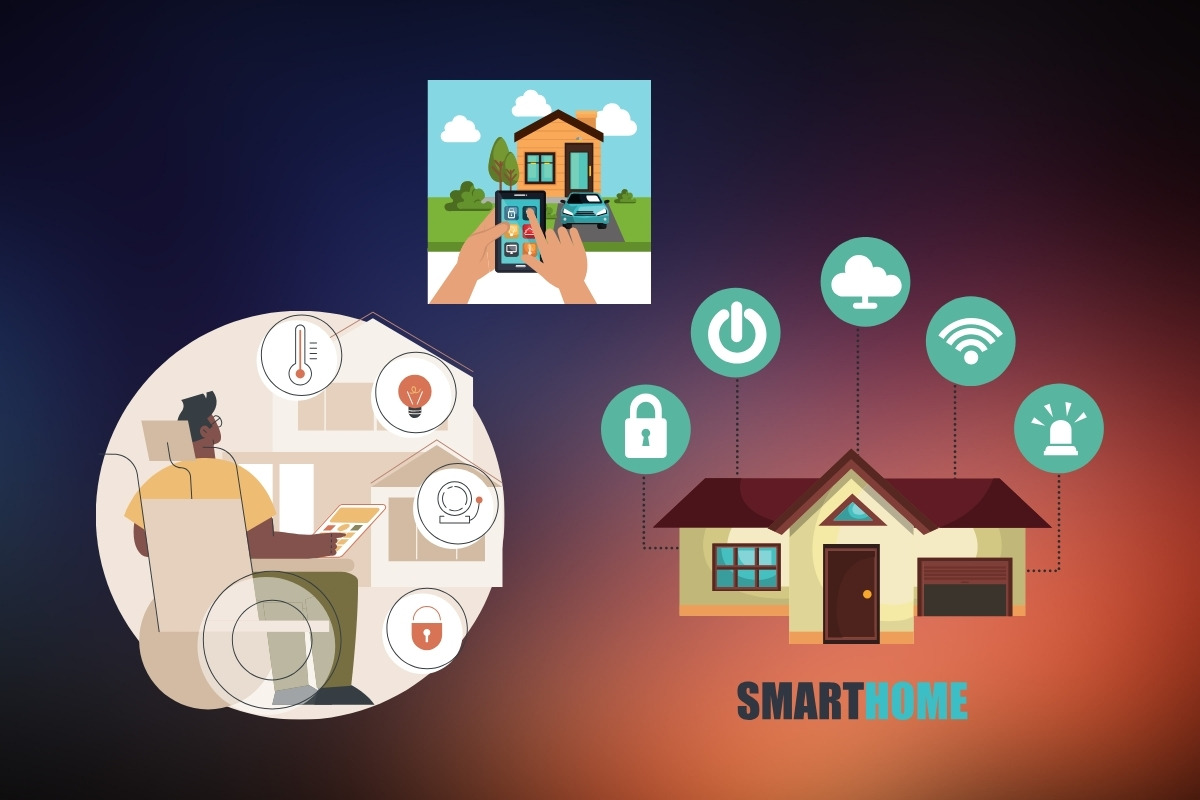
The smart home market is rapidly reshaping how people live, work, and interact with technology at home. Fueled by advancements in IoT, voice control, and AI, smart home devices that once felt futuristic are now becoming everyday essentials. From energy management systems that lower utility costs to connected security solutions that boost safety, households are seeing real benefits from smart technology integration. This transformation touches both consumers and industries, from utility providers optimizing grid loads to insurers rewarding connected‑home safety programs. Explore the following data to understand where the smart home sector stands today and where it’s headed next.
Editor’s Choice
- 63% of U.S. homes now have at least one smart home device installed.
- The global smart home devices market is expected to grow to$147.5 billion in 2025 from $126.22 billion in 2024.
- Smart home technology adoption in North America and globally continues to accelerate yearly.
- The number of connected IoT devices worldwide is forecasted to reach ~21.1 billion by the end of 2025.
- Smart home market valuations differ by source but consistently show growth into the 2030s.
- Younger consumers (18‑49) are more likely to adopt smart tech than older cohorts.
- Smart security systems in U.S. homes grew by ~38% from recent years.
Recent Developments
- Smart home adoption surveys show growth from ~49% in 2024 to ~59% in 2025 among North American households.
- Increased consumer demand for interoperable and AI‑enabled devices is shaping product strategies.
- Manufacturers are releasing higher‑integration platforms and services bundled with broadband and utility plans.
- Security and surveillance solutions continue to lead in service‑driven smart home revenue share.
- Major tech brands are enhancing voice assistant capabilities to improve usability and automation.
- Smart robot assistants and autonomous home companions are entering consumer markets.
- Research points to energy‑efficient voice control and IoT innovations as future priorities.
- Connectivity standards and protocols continue evolving to support robust smart home ecosystems.
Overview of Statistics in the Smart Home Sector
- Global smart home market size estimates for 2025 range from ~$81 billion to over $216 billion, depending on the definition and scope.
- CAGR projections commonly range from 8.5% to over 23% for 2025,2032/35 across reports.
- Market analysts predict growth toward $633+ billion by 2032 in some forecasts.
- The smart home automation segment alone is projected to reach $80.1 billion in 2025.
- Market value estimates differ significantly due to varied methodologies and product categorizations.
- Smart security and access controls consistently represent a leading revenue segment among smart home categories.
- IoT ecosystem growth underpins overall smart home expansion.
- Consumer surveys confirm rising expectations for convenience, safety, and energy savings from smart tech.
Smart Home Devices Global Market Growth Statistics
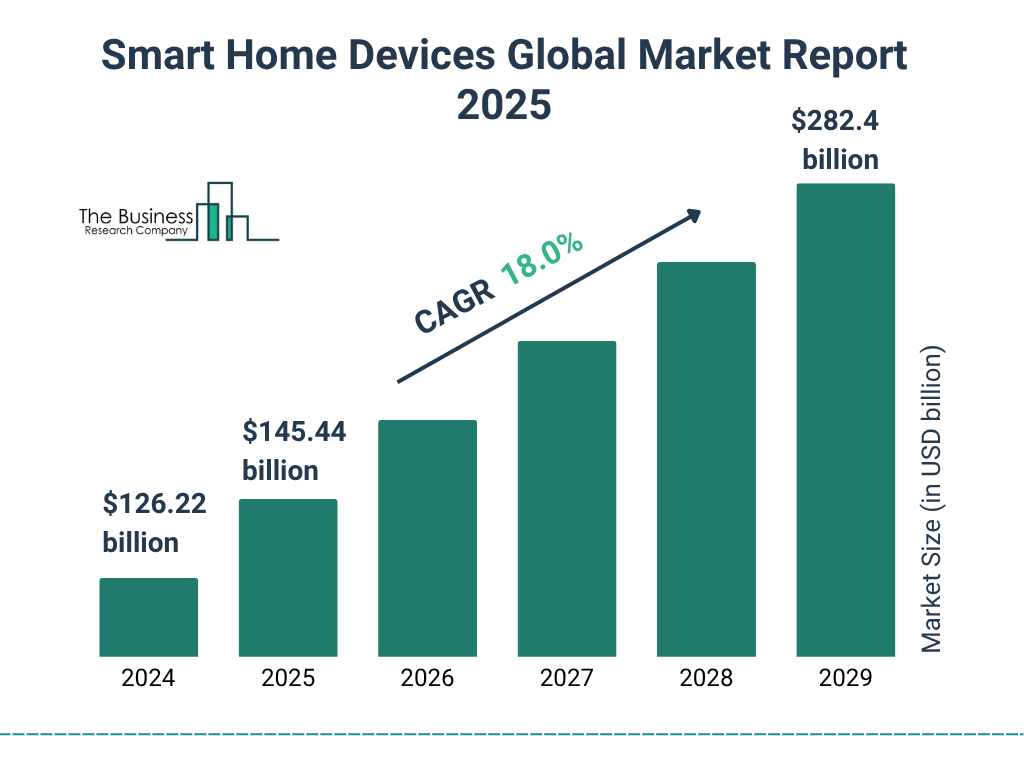
- The global smart home devices market was valued at $126.22 billion in 2024, reflecting strong early adoption worldwide.
- In 2025, the market expanded to $145.44 billion, showing consistent year-over-year growth.
- From 2026 to 2028, the market is projected to maintain a steady upward trajectory, driven by rising IoT and AI integration.
- By 2029, the global smart home devices market is expected to reach $282.84 billion, more than doubling its 2024 value.
- The market is forecast to grow at a robust CAGR of 18.0% during the 2024–2029 period.
- This rapid expansion highlights increasing consumer adoption, smart device penetration, and growing demand for connected home ecosystems.
Household Penetration and Adoption Rates for Smart Home Solutions
- 63% of American homes reported owning at least one smart device.
- Broader estimates suggest household penetration could reach ~59% by 2025.
- Some sources place penetration as high as 63% of U.S. households in 2025.
- Younger demographics (18‑34) display the highest adoption rates (~59%).
- Smart TVs remain among the most widely owned smart devices in homes.
- Penetration rates vary widely by region and income levels.
- Convenience, security, and automation lead consumer reasons to adopt smart tech.
- Broader IoT penetration supports rising connectivity in residential environments.
Users and Active Households Using Smart Home Devices
- A recent industry survey suggests smart home adoption rose from 49% in 2024 to 59% in 2025 among U.S. and Canadian homes.
- Smart home technology continues to expand globally, with an estimated 93.59 million active smart homes by 2027 from a lower baseline today.
- In 2025, an estimated ~72 million U.S. households own at least one smart speaker, making it one of the most common connected devices.
- Smart TVs remain widely present, with ~71% of connected homes reporting ownership in 2025.
- Smart thermostats are installed in ~28% of U.S. homes, reflecting growing comfort automation.
- Robot vacuum cleaners have been adopted by ~25% of households in 2025, particularly among pet owners.
- A 2025 poll found that over 80% of American homes contain at least some smart technology, including connected appliances and security devices.
- Among current smart tech owners, 55% plan to expand their technology portfolios within the next year.
Adoption by Region and Country in the Smart Home Market
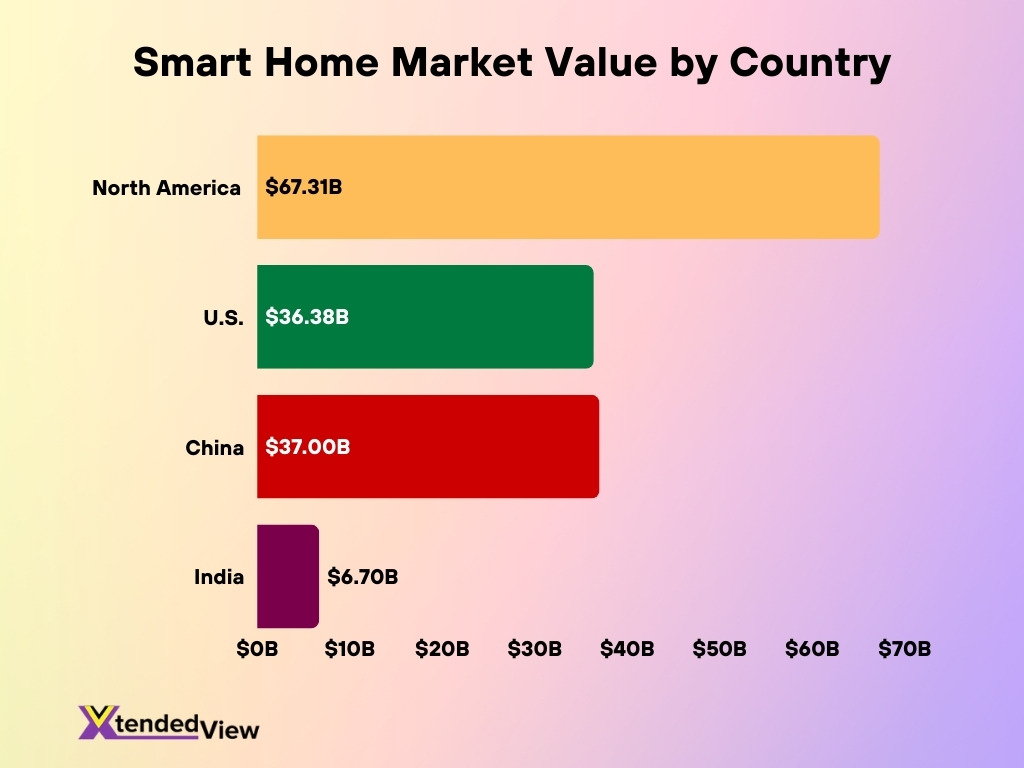
- North America dominated the global smart home market with a 35.62% share in 2024.
- The North American smart home market reached $67.31 billion in 2024, projected to hit $251.34 billion by 2032.
- U.S. smart home market valued at $36.38 billion in 2024, growing at 27.19% CAGR through 2034.
- Asia Pacific is expected to grow at the highest CAGR in global smart home platforms adoption.
- Asia-Pacific smart home market projected to reach $120.8 billion by 2032 at 16.2% CAGR.
- China’s smart home market is anticipated to hit $37 billion by the end of 2025.
- India’s smart home devices market is valued at $6.70 billion in 2024, with 24.3% CAGR through 2033.
- Europe achieved 30.7% smart home household penetration in 2024, with 72.8 million smart homes.
Device Ownership and Usage Patterns Across Smart Home Setups
- Smart speakers and voice assistants dominate device ownership globally, with tens of millions of units installed.
- Smart speaker market size is expected to grow from ~$14.25B in 2025 to $29B by 2032.
- Smart speakers & voice assistants held ~38% market share of smart home platforms in 2024.
- Smart lighting systems and energy management devices remain core components of many setups.
- Security cameras and sensors are increasingly common, reflecting safety priorities in adoption.
- Entertainment devices such as smart TVs continue to have high penetration and integration into broader smart ecosystems.
- Home automation platforms frequently bundle control of thermostats, lighting, and security functions.
- Voice control interfaces (e.g., Alexa, Google Assistant) play a central role in usage habits across many demographics.
Usage Statistics for Smart Speakers and Voice Assistants in Homes
- Global smart speakers market valued at $14.25B in 2025, projected to reach $29B by 2032 at 9.6% CAGR.
- 35% of U.S. adults (aged 12+) own at least one smart speaker in 2025.
- Amazon Echo holds 65% of U.S. smart speaker ownership as of March 2024.
- Global smart speaker shipments expected to reach 154.3M units in 2025, growing 4% YoY.
- 41% of smart speaker owners have two or more devices in their households.
- People aged 45-54 show the highest smart speaker ownership at 24% share.
- 28% of U.S. radio listeners stream stations via smart speakers.
- Over 8.4B voice-enabled devices in use worldwide by 2025.
- Household penetration for smart speakers is projected to hit 30.8% by 2026.
Lighting and Energy Management Devices Within Smart Home Systems
- The smart lighting market reached $22.45 billion globally in 2024, projected to hit $165.89 billion by 2034.
- In India, the smart home lighting market stood at $792.70 million in 2024 with 30.20% CAGR through 2033.
- Smart LED bulbs use 83% less energy than 60W incandescents, consuming just 0.05 kWh daily for 5 hours.
- Smart controls on bulbs reduce energy use by up to 37% compared to non-connected equivalents.
- LED smart bulbs save 70-90% energy over incandescents, cutting homeowner costs by $225 yearly.
- Smart lighting systems achieve 17-94% energy savings via dimming, scheduling, and motion features.
- IoT smart homes boost efficiency by 72.3%, slashing costs and CO2 emissions by 61%.
- 29% of US households use smart speakers for lighting control per 2020 RECS data.
- Motion sensor lighting market valued at $1.48 billion in 2025, growing to $2.55 billion by 2032.
Demographic and Income-Level Trends in Smart Home Adoption
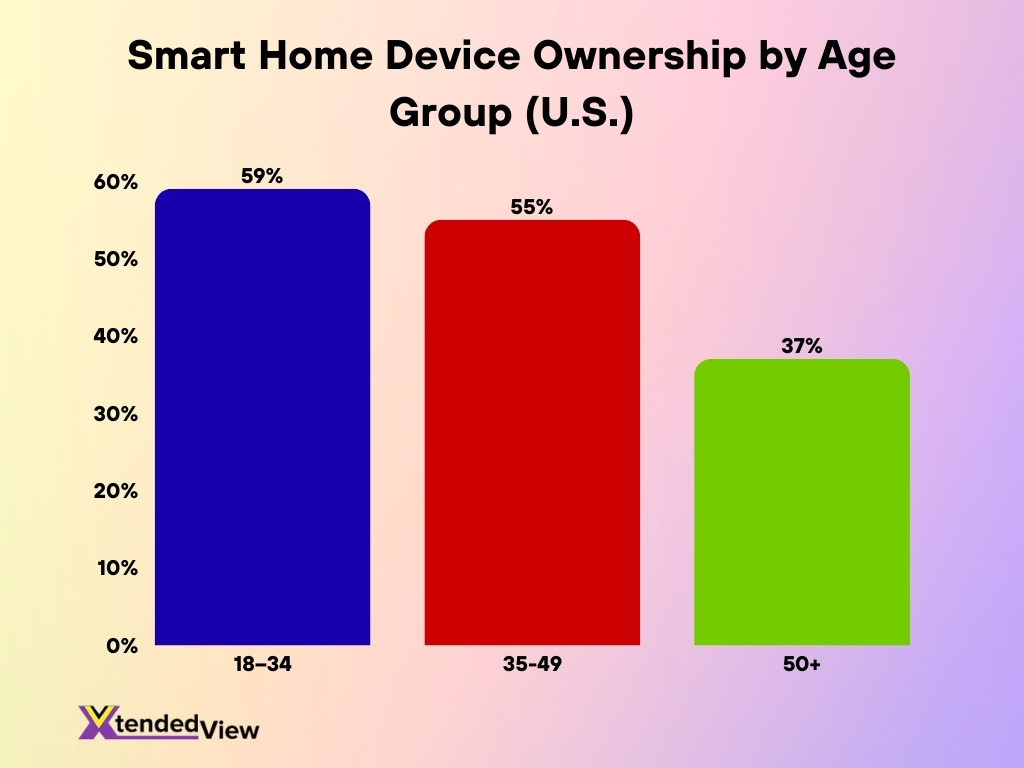
- 59% of U.S. adults aged 18–34 own smart home devices, compared to 37% of those 50+.
- 55% of U.S. consumers aged 35–49 own at least one smart home device.
- 53% of Black U.S. households own smart devices, exceeding the 41% white non-Hispanic rate.
- 59% of Latinx and 56% of Asian U.S. consumers own smart home devices.
- 63% of U.S. households with children own smart home products vs. 37% without.
- 62% of U.S. families with children have smart home devices.
- 65% of U.S. households with $100,000+ income are excited about smart homes vs. 47% under $50,000.
- 79% of homebuyers prefer smart-enabled homes, willing to pay a 7.7% premium.
- 44% of 25–34-year-old U.S. homeowners have 3+ smart devices.
- 59% of 2021 U.S. smart home buyers earn under $75,000, showing expanding affordability.
Thermostats and Climate Control Tools Used in Smart Home Settings
- Smart thermostat market reached $5.45 billion in 2025, projected to hit $30.78 billion by 2035 at 18.9% CAGR.
- US smart thermostat adoption stands at 16-17% of internet households in 2025.
- Smart thermostats save 10-15% on heating/cooling energy costs via automation.
- Smart HVAC systems improve energy efficiency by 30-50% over traditional setups.
- Smart HVAC controls market valued at $28.1 billion in 2025, growing to $160.3 billion by 2035.
- Wireless connectivity holds 68.23% share in smart thermostat technology.
- US smart thermostat sales forecast at 8.1 million units in 2030 with $1.1 billion revenue.
- Smart climate control market to expand from $69.15 billion in 2025 to $386.33 billion by 2035.
Global Smart Home Market Revenue Statistics
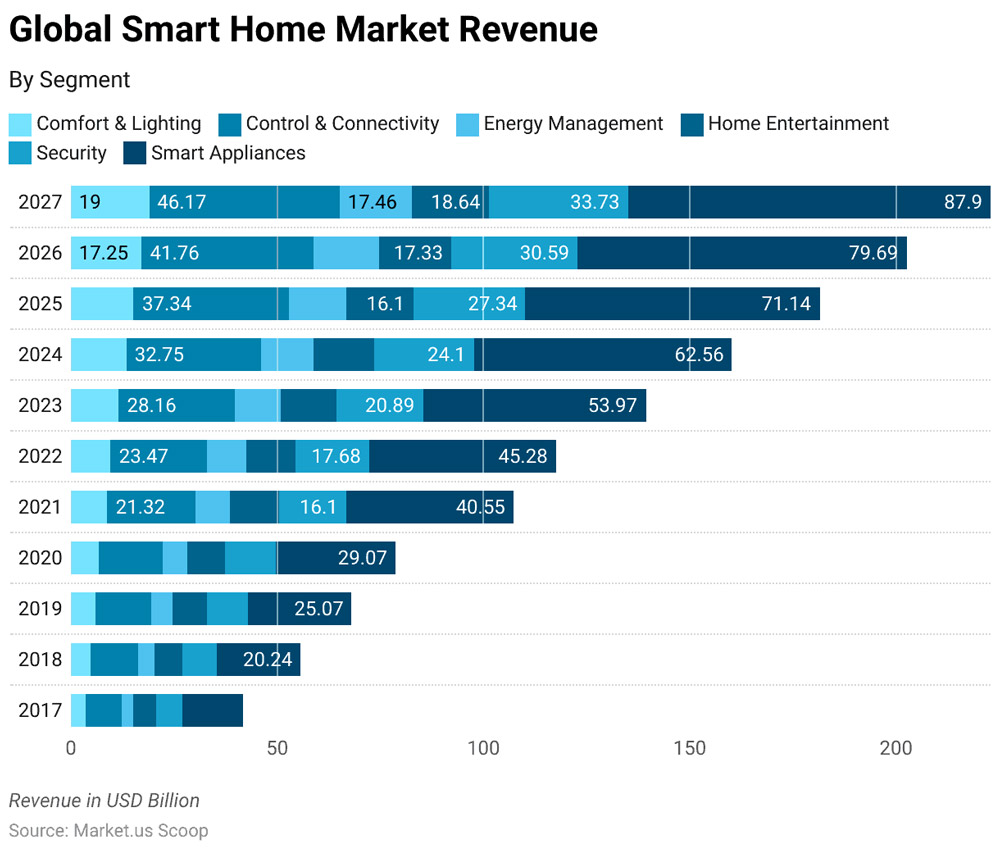
- The global smart home market revenue increased from approximately $15 billion in 2017 to $87.9 billion by 2027, reflecting strong long-term market expansion.
- Total market revenue reached $20.24 billion in 2018, rising steadily to $25.07 billion in 2019 and $29.07 billion in 2020.
- In 2021, global smart home revenue jumped sharply to $40.55 billion, marking a major acceleration in consumer adoption.
- The market continued its upward trend in 2022, generating $45.28 billion, followed by $53.97 billion in 2023.
- Global smart home revenue is projected to reach $62.56 billion in 2024, increasing further to $71.14 billion in 2025.
- Forecasts show the market climbing to $79.69 billion in 2026 and peaking at $87.9 billion by 2027.
Smart Home Revenue by Segment
- Control & Connectivity is the largest revenue-generating segment, growing from $21.32 billion in 2021 to $46.17 billion by 2027.
- Energy Management revenue increased from $16.1 billion in 2021 to $33.73 billion in 2027, driven by smart meters, thermostats, and energy optimization systems.
- Comfort & Lighting segment revenue reached $17.25 billion in 2026 and is expected to rise to $19 billion by 2027.
- Smart Appliances generated $17.33 billion in 2026, showing stable demand across connected kitchen and home devices.
- Home Entertainment revenue is projected to hit $18.64 billion in 2027, supported by smart TVs, speakers, and connected media platforms.
Appliances and Connected Kitchen Gadgets in the Smart Home Landscape
- The global smart kitchen appliances market is expected to reach $29.32 billion in 2025.
- 14% of U.S. smart homes feature connected fridges for supply notifications.
- The smart dishwasher market grows from $6.64 billion in 2024 to $7.27 billion in 2025.
- Smart plugs achieve 31.6–49.6% energy savings on refrigerators.
- Smart appliances revenue is projected at $68.7 billion worldwide in 2025.
- The smart built-in kitchen market is valued at $8.89 billion in 2025.
- The smart oven market exhibits 16.5% CAGR through 2033.
- 77.6% of smart kitchen demand stems from residential applications in 2025.
- Energy-efficient appliances save £150 annually on electricity bills.
Security Systems and Surveillance Adoption in Smart Home Environments
- The global smart home security market reached $33.94 billion in 2024, projected to hit $40.46 billion in 2025.
- Smart home security market expected to grow at a CAGR of 15.2% from 2025 to 2030, reaching $82.07 billion.
- 72% of smart home owners express concerns over personal data security collected by their devices.
- 31% of consumers cite data privacy implications as a major issue with smart home adoption.
- Smart cameras command an estimated 38% revenue share in connected home security markets in 2025.
- Motion sensors are projected to account for 25% of revenue in the home automation sensors market in 2025.
- Over 99.3% of smart home attacks exploit common vulnerabilities and exposures.
- 62% of smart home users worry about data security and privacy on their devices.
- Video surveillance leads smart home security services with 46% revenue share as of 2024.
- U.S. Cyber Trust Mark certifies IoT devices for standards like data protection and secure updates.
Ecosystem Dominance and Platform Shares in Smart Home Integration
- Amazon Alexa commands 47% of smart home security device sales through its ecosystem dominance.
- Google Home and Nest integration drives 28.3% market share in video doorbells and cameras.
- Apple HomeKit maintains premium positioning with privacy-focused hubs in 15-20% of advanced smart homes.
- Matter 1.5 now supports cameras and energy tools, boosting interoperability across 550+ companies.
- Voice assistants control 65% of smart home interfaces, with 142 million Alexa active users.
- Cross-platform Matter adoption hits 80% household penetration in developed markets by 2025.
- Routines and automations via platforms yield 12-18% average electricity savings for users.
- North America leads with 34% share in integrated smart home ecosystems.
- Partnerships expand Alexa to 150,000+ compatible products, reinforcing leadership.
Smart Home Automation Possibility for Household Tasks (2028–2033)
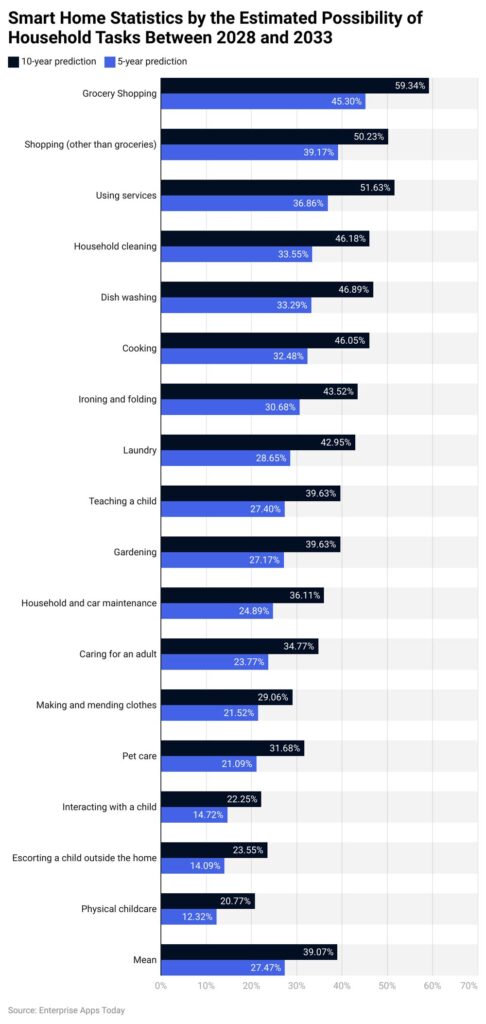
- Overall automation potential increases from 27.47% (5-year) to 39.07% (10-year).
- Grocery shopping leads all tasks, rising from 45.30% to 59.34%.
- Shopping (excluding groceries) grows from 39.17% to 50.23%.
- Using services increases significantly from 36.86% to 51.63%.
- Household cleaning rises from 33.55% to 46.18%.
- Dish washing grows from 33.29% to 46.89%.
- Cooking increased from 32.48% to 46.05%.
- Ironing and folding improved from 30.68% to 43.52%.
- Laundry automation grows from 28.65% to 42.95%.
- Teaching a child increases from 27.40% to 39.63%.
- Gardening rises from 27.17% to 39.63%.
- Household and car maintenance grows from 24.89% to 36.11%.
- Caring for an adult increases from 23.77% to 34.77%.
- Making and mending clothes rose from 21.52% to 29.06%.
- Pet care grows from 21.09% to 31.68%.
- Interacting with a child remains low, increasing from 14.72% to 22.25%.
- Escorting a child outside the home rose from 14.09% to 23.55%.
- Physical childcare stays the lowest, increasing from 12.32% to 20.77%.
- Automation favors repetitive and transactional tasks, while human-centered care tasks remain least automated.
Role of AI, IoT, and Automation in Smart Home Infrastructure
- AI in Smart Home Technology market reached $15.3 billion in 2024, projected to hit $104.1 billion by 2034 at 21.3% CAGR.
- The IoT Smart Homes market is valued at $99.3 billion in 2023, expected to grow to $755.98 billion by 2032 at 25.3% CAGR.
- Global smart home market hit $121.59 billion in 2024, forecasted to reach $633.20 billion by 2032 at 23.1% CAGR.
- Voice AI in the Smart Homes market stood at $12.7 billion in 2024, set to expand to $514.62 billion by 2034 at 44.8% CAGR.
- Smart home automation achieves up to 14% energy savings via AI-driven home energy management systems.
- AI models in smart homes deliver 20-40% energy savings through optimized lighting, heating, and ventilation.
- Voice assistants see 93% consumer satisfaction, with 162.7 million U.S. users expected by 2025.
- Machine learning anomaly detection in smart security hits 96.8% accuracy on IoT datasets.
- Connected IoT devices grew 15% in 2023 to 16.6 billion, reaching 21.1 billion in 2025.
- Smart home penetration hits 68.6% of households by 2027, totaling 93.59 million active users.
Privacy, Security, and Data Protection Challenges in Smart Home Use
- ~31% of smart home users cite privacy concerns as a major adoption barrier.
- ~26% report connectivity issues, especially with cross-brand interoperability.
- ~18% are worried about unauthorized data access, particularly from cameras and voice devices.
- ~19% say network security risks deter them from deeper automation usage.
- Difficulty managing firmware and software updates is reported by ~16% of consumers.
- A portion of online breaches demonstrates ongoing security challenges for consumer IoT devices.
- Regulatory watchdogs in the U.S. and abroad emphasize the need for stronger privacy protections.
- Voluntary labeling programs like Cyber Trust Mark aim to raise cybersecurity awareness.
Adoption Barriers and Consumer Concerns Surrounding Smart Home Tech
- Cost remains the top barrier, with over 50% of consumers naming it a concern.
- Privacy and security worries are major deterrents for additional device purchases.
- Consumers also cite glitches and reliability issues as a barrier.
- 24% avoid devices due to a lack of interoperability between brands.
- Limited internet bandwidth in remote areas limits smart home capabilities for ~5% of users.
- Complex setup and learning curves deter non-tech-savvy households.
- Skepticism about long-term value slows adoption among some older demographics.
- Fear of obsolescence leads some buyers to delay purchases until clearer standards emerge.
Forecasts and Future Trends Shaping the Smart Home Market
- The global smart home market is projected to grow from ~$147.5 billion in 2025 to $633.2 billion by 2032 at a ~23.1% CAGR.
- Some forecasts show even larger market expansion toward ~$1 trillion by the early 2030s.
- Security & access control are expected to grow fastest within the overall market segments.
- Smart entertainment, HVAC, and IoT device categories will see steady adoption increases.
- Interoperability standards like Matter are poised to accelerate integration across devices.
- AI and automation will continue enhancing personalization and predictive functionality.
- Long-term forecasts anticipate widespread adoption of full home automation routines.
- Smart home penetration in emerging markets may rise faster due to urbanization and affordability.
Frequently Asked Questions (FAQs)
The global smart home market is projected to be worth about $147.5 billion in 2025.
The smart home technologies market is expected to grow at a 23.1% CAGR from 2025 to 2032.
About 63% of U.S. households reported owning at least one smart home device in 2025.
The number of connected IoT devices is expected to reach about 21.1 billion globally in 2025.
India’s smart home market is expected to reach about $19.31 billion by 2030, growing at a 30% CAGR from 2025.
Conclusion
The smart home landscape reflects both rapid adoption and evolving challenges. Growth forecasts signal robust expansion worldwide, driven by AI, IoT, and automation that make homes more efficient and responsive. Yet consumers still cite cost, security, and compatibility barriers as hurdles to broader adoption. As interoperability standards improve and privacy safeguards strengthen, smart homes are likely to become mainstream across regions and income levels.
From energy savings to enhanced security, the smart home promises practical value, inviting homeowners, builders, and tech innovators to shape its next chapter with confidence and clarity.
