


Data breaches continue to disrupt businesses, governments, healthcare providers, and consumers across the globe. As organizations store larger volumes of sensitive information in cloud environments and connected systems, cybercriminals have expanded their attack methods and increased the scale of their operations. Data breaches now influence regulatory compliance, cyber insurance costs, customer retention, and enterprise risk management.
Two of the most visible real-world impacts include healthcare organizations protecting patient records and financial institutions safeguarding customer accounts against fraud. Meanwhile, retailers, technology companies, and public agencies continue to face growing pressure to strengthen cybersecurity defenses. Explore the latest data breach statistics, trends, and developments.
Editor’s Choice
- The global average cost of a data breach reached $4.44 million in 2025, reflecting a slight decline from $4.88 million in 2024, yet still indicating sustained financial pressure on organizations handling sensitive data.
- Organizations required an average of 241 days to identify and contain a breach, showing gradual improvement but still highlighting slow detection cycles in complex environments.
- Large-scale datasets analyzed over 22,000 security incidents, resulting in 12,195 confirmed breaches, demonstrating how widespread cyber incidents have become across industries.
- The United States recorded an average breach cost of $10.22 million, driven by stricter regulations, higher response costs, and increased litigation risks.
- Human actions, including errors and social engineering, contributed to 68% of breaches, reinforcing the importance of employee awareness and training programs.
- 44% of breaches involved ransomware, showing how attackers continue to prioritize extortion-based tactics for quick financial gain.
- Third-party involvement appeared in 30% of breaches, highlighting the growing risks associated with vendors, partners, and outsourced services.
- Approximately 3,158 U.S. breaches occurred in 2024, increasing to more than 3,300 compromises in 2025, signaling a steady rise in incident frequency.
- Organizations exposed to shadow AI environments experienced breach costs that were $670,000 higher, showing the emerging risk tied to unmanaged AI adoption.
Recent Developments
- 31% of breaches now begin with vulnerability exploitation, overtaking stolen credentials as attackers increasingly target unpatched systems.
- AI-assisted attack methods allow threat actors to scan, identify, and exploit weaknesses within hours instead of weeks, accelerating breach timelines.
- Shadow AI has emerged as a key risk factor, becoming the third most common non-malicious insider activity linked to data exposure incidents.
- One in five organizations reported at least one breach tied to unauthorized AI usage, reflecting gaps in governance and policy enforcement.
- Around 13% of organizations experienced incidents involving AI-powered tools or applications, indicating rapid adoption without corresponding security controls.
- Over 1.7 billion breach notifications were issued in 2024, largely due to several high-profile mega-breach events affecting millions of individuals.
- AI-generated phishing campaigns reduced preparation time from 16 hours to just minutes, enabling attackers to scale operations rapidly.
- Cybercrime losses are projected to exceed $15 trillion annually by 2029, positioning cyber threats among the largest global economic risks.
- 63% of organizations refused to pay ransomware demands in 2025, showing a shift toward resilience and recovery-based strategies.
Data Breach Statistics Overview
- The global average breach cost remained at $4.44 million, reflecting ongoing financial strain despite improvements in detection and response.
- The average cost per compromised record stood at approximately $160, with higher figures in regulated industries such as healthcare and finance.
- U.S. organizations consistently report breach costs exceeding $10 million, due to legal, regulatory, and operational recovery expenses.
- Healthcare organizations experienced the highest average costs at $7.42 million per breach, driven by sensitive data exposure and compliance requirements.
- Human involvement remained a key factor, contributing to 68% of breaches, including both intentional and accidental actions.
- Stolen credentials appeared in 29% of breaches, making identity-based attacks one of the most persistent threats.
- Ransomware-related incidents generated average losses of $5.08 million, excluding additional downtime and reputational damage.
- Organizations required 241 days on average to detect and contain breaches, highlighting inefficiencies in monitoring and response systems.
- Third-party compromises accounted for 30% of incidents, reflecting increased reliance on external service providers.
Data Compromise Statistics by Year
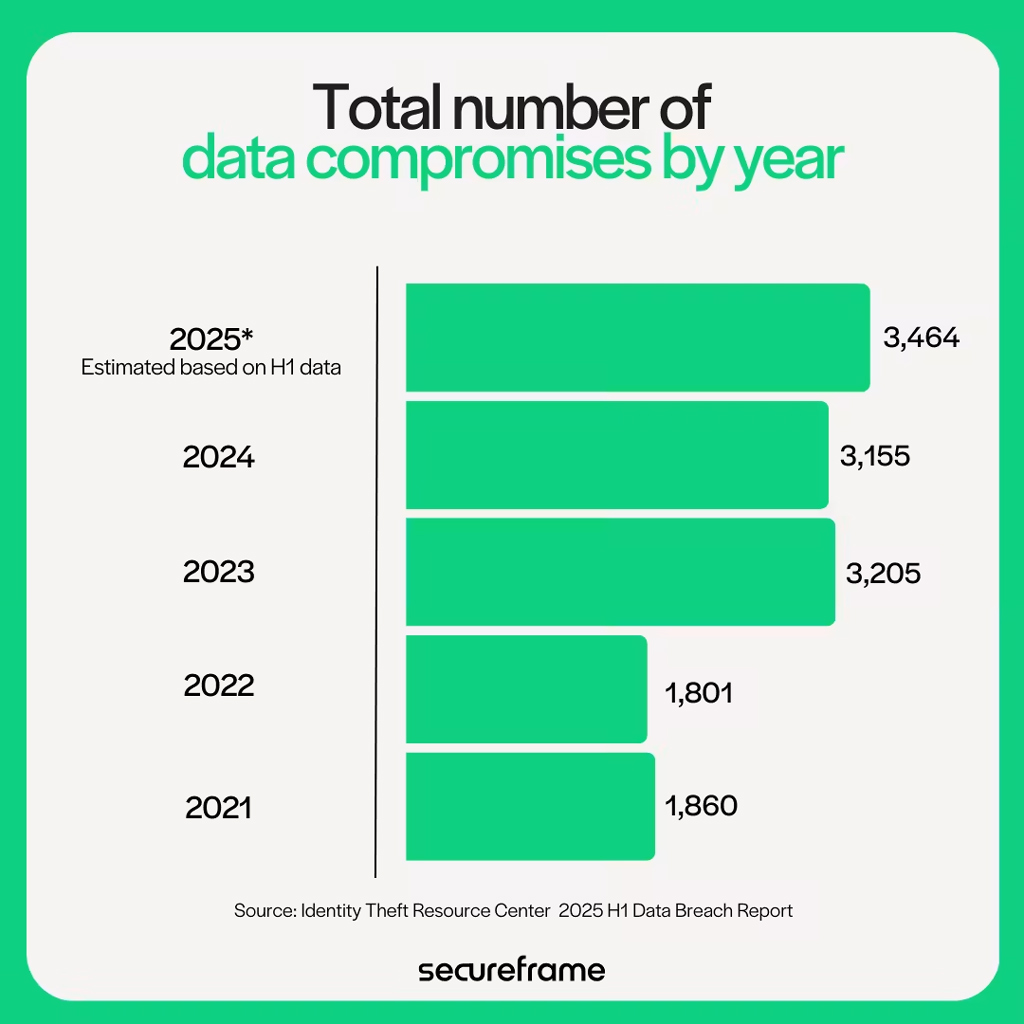
- 2025 is projected to record 3,464 data compromises, the highest level in the five years, based on H1 estimates.
- 2024 experienced 3,155 data compromises, remaining well above 3,000 incidents for the second consecutive year.
- 2023 reported 3,205 data compromises, marking a 72.3% increase compared to 2022.
- 2022 saw 1,801 data compromises, the lowest annual total in the dataset.
- 2021 recorded 1,860 data compromises, slightly higher than 2022 by 59 incidents.
- Between 2021 and the estimated 2025 total, annual data has increased by approximately 86.2%.
- The number of reported data compromises has remained above 3,000 incidents since 2023, highlighting a sustained rise in cybersecurity incidents.
- The estimated 2025 total exceeds 2024 by 309 additional compromises, indicating the upward trend is continuing.
Global Data Breach Trends
- Data breaches were reported across 139 countries, showing the global reach of cyber threats regardless of region or industry maturity.
- Over 12,000 confirmed breaches were identified in large-scale studies, emphasizing the widespread nature of cybersecurity incidents.
- The global average breach cost declined by 9% year over year, partly due to increased adoption of automation and AI-driven defenses.
- In contrast, U.S. breach costs rose by 9%, reflecting higher operational and compliance costs in regulated environments.
- Shadow AI-related breaches added approximately $670,000 to incident costs, signaling a new category of enterprise risk.
- Ransomware involvement increased significantly from 32% to 44%, highlighting its dominance as a primary attack vector.
- Third-party breaches doubled from 15% to 30%, demonstrating increased supply chain vulnerabilities.
- AI-driven threats continue to rise as organizations integrate AI tools without adequate governance frameworks.
- Long-term studies show a consistent upward trend in breach frequency over the past two decades.
Records Exposed in Data Breaches
- Over 1.7 billion individuals received breach notifications in 2024.
- Several major cyber incidents exposed massive datasets exceeding 100 million records.
- Credential information and PII are included in 70% of breached data across North America.
- Shadow AI incidents were directly responsible for exposing 65% of affected PII datasets.
- Intellectual property was compromised in exactly 40% of AI-related breaches.
- A massive single data breach in early 2024 exposed over 2.9 billion user records.
- More than 133 million healthcare records were exposed or impermissibly disclosed in 2023.
- Third-party vulnerabilities served as the primary gateway for 64% of major breaches.
- Data breaches involving cloud environments averaged over $5 million in recovery costs.
Most Common Causes of Data Breaches
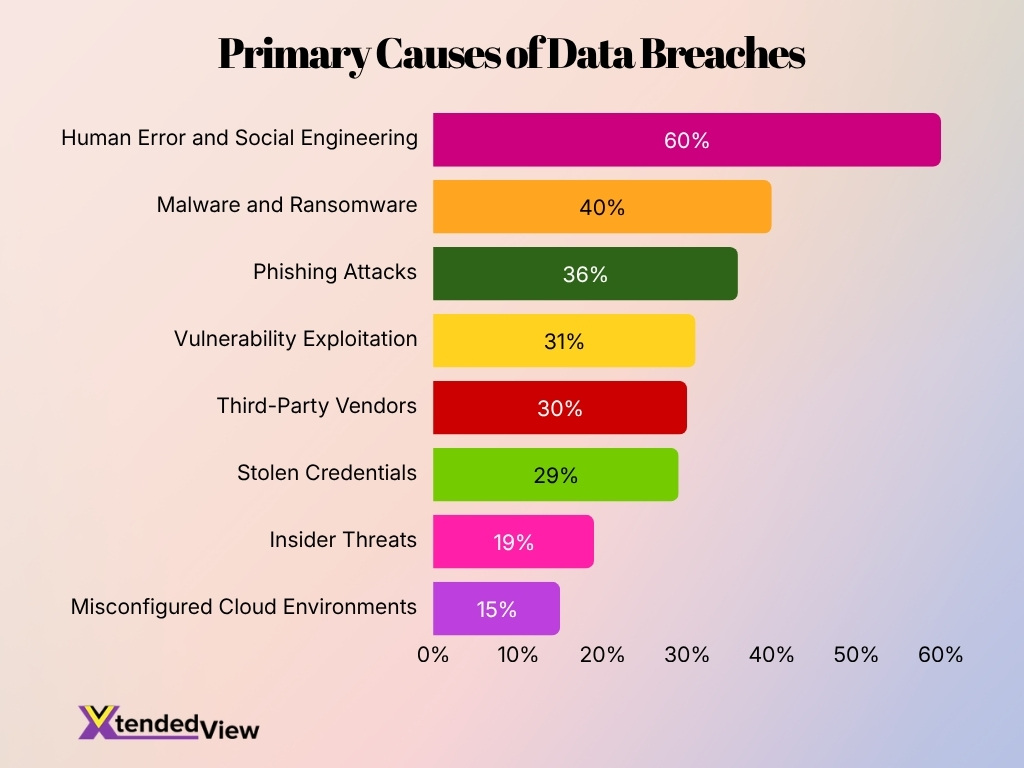
- Stolen credentials contribute to 29% of breaches, making identity security a top priority for organizations.
- Human error and social engineering account for over 60% of incidents, emphasizing the need for employee training.
- Phishing attacks appear in 36% of breaches, often serving as the initial entry point for attackers.
- Vulnerability exploitation rose to 31% of breaches in 2026, driven by delayed patching and outdated systems.
- Misconfigured cloud environments contribute to nearly 15% of exposures, particularly in multi-cloud setups.
- Third-party vendors are involved in 30% of breaches, increasing risks through supply chain dependencies.
- Insider threats contribute to 19% of incidents, including both malicious and accidental actions.
- Malware and ransomware account for over 40% of attack vectors, often used for data theft and extortion.
- Weak passwords and poor authentication practices contribute to over 80% of credential-based attacks.
Data Breach Detection Time
- Organizations take an average of 241 days to detect and contain breaches, highlighting slow response cycles.
- Breaches identified within 200 days cost nearly $1 million less, showing the financial benefit of faster detection.
- Only 33% of breaches are detected internally, with the rest identified by external parties or attackers.
- AI-driven security tools reduce detection time by up to 108 days, improving efficiency significantly.
- Ransomware attacks often go undetected for over 20 days, allowing attackers to expand their reach.
- Smaller organizations face longer detection times due to limited cybersecurity resources.
- Cloud environments increase investigation complexity, extending detection timelines.
- Security automation reduces breach costs by over $1.7 million, making it a key investment area.
- Incident response teams shorten breach lifecycle time by 54 days on average.
Data Breach Costs and Financial Impact
- The global average breach cost remains at $4.44 million, reflecting ongoing financial challenges.
- U.S. breach costs average $10.22 million, driven by regulatory and operational expenses.
- Lost business accounts for nearly 40% of total breach costs, including customer churn and downtime.
- Ransomware incidents cost organizations around $5.08 million, excluding ransom payments.
- Healthcare breaches average $7.42 million per incident, the highest across industries.
- Strong incident response strategies save $2.66 million per breach, reducing overall impact.
- Regulatory fines increase breach costs by up to 15%, particularly in highly regulated sectors.
- Zero-trust security models reduce costs by nearly $1 million, proving effective in risk mitigation.
- AI-related breaches add approximately $670,000 to overall costs.
Data Breach Costs per Record by Region
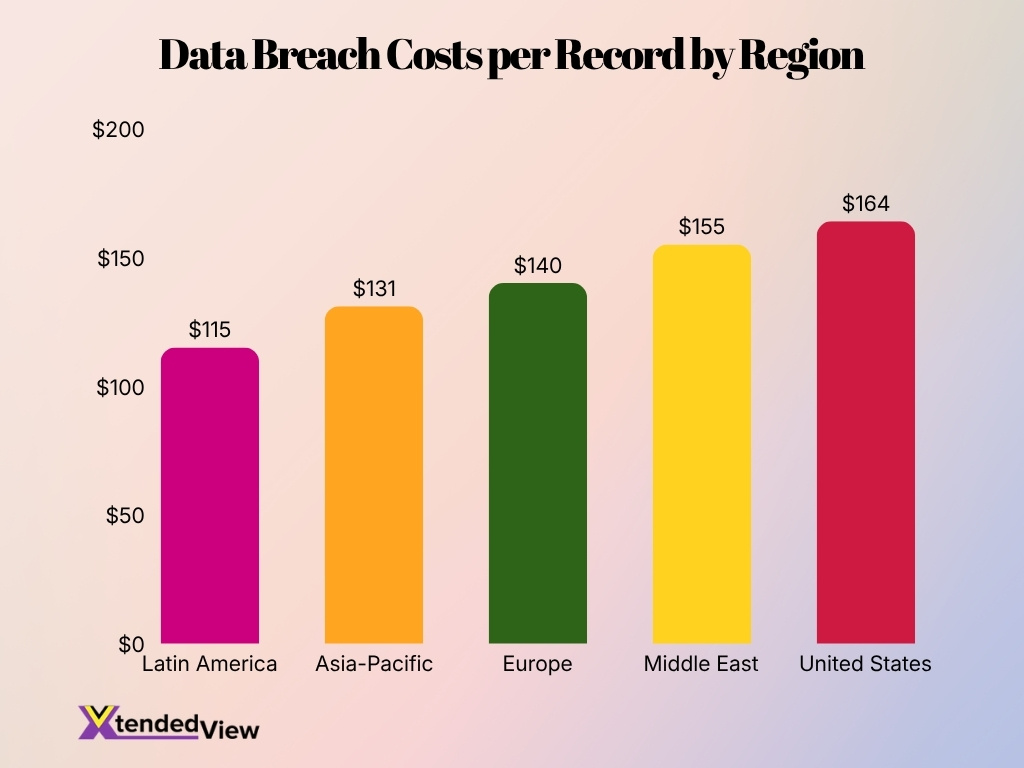
- The United States recorded the highest average cost per compromised record at $164, making it the most expensive region for data breaches.
- The Middle East ranked second, with an average cost of $155 per compromised record.
- Europe reported an average data breach cost of $140 per record, placing it in the middle among the regions analyzed.
- Asia-Pacific experienced an average cost of $131 per compromised record, remaining below both Europe and the Middle East.
- Latin America had the lowest average cost per compromised record at $115, among the five regions.
- The cost gap between the United States ($164) and Latin America ($115) was $49 per compromised record.
- All regions analyzed reported an average cost exceeding $100 per compromised record, highlighting the significant financial impact of data breaches worldwide.
- The data shows a steady increase in breach costs across regions, from Latin America to the United States, reflecting differences in regulatory requirements, response costs, and business impacts.
Data Breaches by Company Size
- Large enterprises drive the global average breach cost to an all-time high of $4.88 million.
- Small businesses are the primary target in 43% of all cyberattacks globally.
- Approximately 47% of businesses with under 50 employees operate with zero dedicated cybersecurity budget.
- The average breach cost for organizations with fewer than 500 employees has reached $3.31 million.
- Breaches taking over 200 days to contain cost large organizations an average of $5.01 million.
- Storing data across complex cloud environments accounts for 40% of all data breaches.
- SMBs face devastating financial impacts, with average downtime costs reaching $53,000 per hour.
- Exactly 40% of small businesses would permanently close if a cyberattack cost them just $100,000.
Data Breach Prevention Statistics
- AI and automation reduce breach costs by $1.76 million on average, improving response efficiency.
- Zero trust frameworks lower breach costs by nearly $1 million, strengthening access controls.
- Incident response teams reduce breach lifecycle time by 54 days.
- Security awareness training reduces phishing success rates by 70%.
- Encryption lowers breach costs by approximately $360,000.
- Strong access controls significantly reduce insider threat risks.
- Continuous monitoring improves detection speed by 30%.
- Multi-factor authentication prevents the majority of credential-based attacks.
- Regular patching reduces vulnerabilities tied to known exploits.
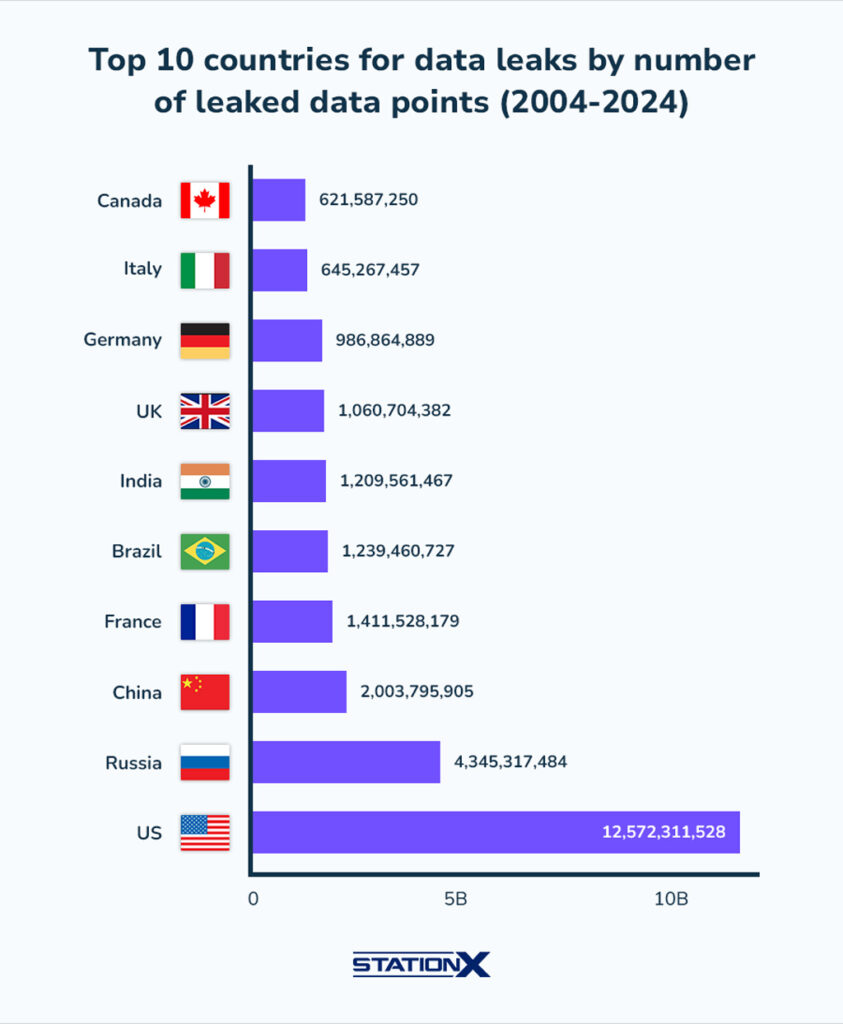
Top 10 Countries by Leaked Data Points
- The United States recorded the highest number of leaked data points, with 12.57 billion, far exceeding every other country.
- Russia ranked second with 4.35 billion leaked data points, about one-third of the U.S. total.
- China placed third, reporting 2.00 billion leaked data points during 2004–2024.
- France experienced over 1.41 billion leaked data points, making it the largest affected country in Western Europe.
- Brazil recorded approximately 1.24 billion leaked data points, ranking fifth globally.
- India followed closely with 1.21 billion leaked data points, highlighting its growing cybersecurity challenges.
- The United Kingdom accumulated more than 1.06 billion leaked data points, securing the seventh position.
- Germany reported nearly 987 million leaked data points, placing it eighth among the top 10 countries.
- Italy and Canada rounded out the list with 645.3 million and 621.6 million leaked data points, respectively.
- The United States recorded nearly 2.9 times more leaked data points than Russia and over 6 times more than China, underscoring its disproportionate share of global data leaks.
Ransomware and Data Breaches
- Ransomware is involved in 44% of breaches, making it a dominant attack method.
- The average ransomware payment reached $812,000, though many organizations refuse to pay.
- Organizations recover only 65% of their data on average after paying a ransom.
- 63% of organizations refused to pay ransom, reflecting improved resilience strategies.
- Double-extortion tactics appear in over 70% of attacks, combining data theft and encryption.
- Downtime costs exceed $1.85 million per incident, impacting business continuity.
- Manufacturing and healthcare sectors are primary ransomware targets.
- Ransomware-as-a-service models increase accessibility for attackers.
- Attackers increasingly target backup systems to prevent recovery.
Phishing and Credential Theft
- Phishing is involved in 36% of breaches, often serving as the initial attack vector.
- Credential theft accounts for 29% of breaches, highlighting weak authentication controls.
- 80% of hacking-related breaches involve stolen or brute-forced credentials.
- AI-generated phishing increases click-through rates by up to 40%, making attacks more effective.
- Multi-factor authentication blocks over 99% of automated attacks, yet adoption remains uneven.
- Business email compromise causes losses exceeding $2.9 billion annually.
- Nearly 50% of phishing emails impersonate SaaS or cloud providers.
- Credential stuffing attacks increased by 30%, driven by leaked password databases.
- 1 in 4 users clicks on phishing links in simulated environments.
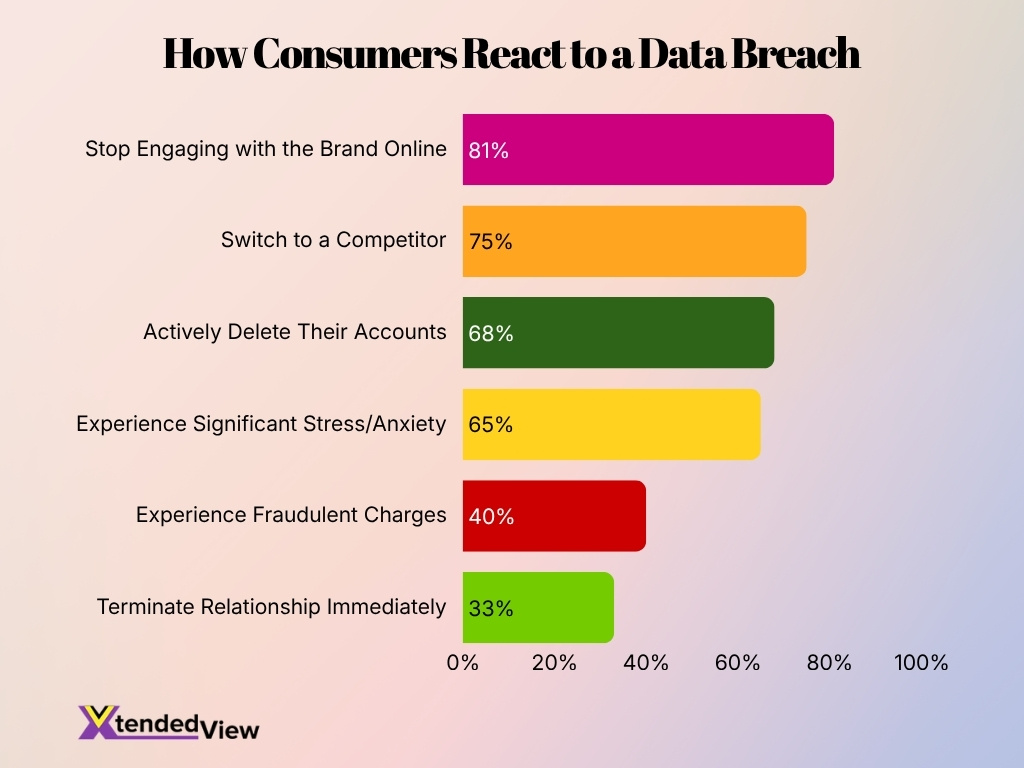
Data Breach Impact on Customers
- 81% of consumers would stop engaging with a brand online following a data breach.
- 65% of data breach victims experience significant stress and anxiety over potential fraud.
- 33% of customers terminate their relationship immediately with a compromised company.
- 75% of consumers are willing to switch to a competitor for stronger data protection.
- 50% of affected individuals spend over 10 hours resolving complex identity theft issues.
- Customer acquisition costs rise by 20% for businesses trying to rebuild trust post-breach.
- 68% of users actively delete their accounts if they feel their personal data is unsecured.
- 40% of breach victims experience fraudulent charges on their compromised financial accounts.
Insider Threats and Data Breaches
- Insider threats contribute to 19% of breaches, including both malicious and accidental actions.
- 25% of insider incidents involve malicious intent, such as data theft or sabotage.
- The average cost of insider-related breaches reaches $4.99 million per incident.
- 62% of incidents result from employee negligence, including misconfigurations and errors.
- Insider breaches take 85 days longer to detect and contain compared to external attacks.
- Privileged account misuse appears in 40% of insider cases, increasing exposure risks.
- Remote work environments increase insider risk by 20% due to weaker controls.
- Strong access controls reduce insider-related costs by over $1 million.
- Shadow IT and unauthorized tools contribute to rising insider incidents.
Cloud Data Breach Statistics
- 45% of breaches now involve cloud-based systems, reflecting widespread adoption.
- 23% of cloud incidents stem from misconfigured environments, especially in SaaS.
- Public cloud breaches occur 2× more often than private cloud breaches.
- Hybrid cloud models reduce average breach costs by $1.2M.
- Cloud breaches take 258 days on average to detect and contain.
- 30% of cloud-related breaches target SaaS platforms.
- Shadow cloud usage significantly increases exposure by bypassing IT governance.
- Multi-cloud environments add complexity, raising the likelihood of configuration errors.
- Lack of visibility into cloud assets increases breach costs by >$500K.
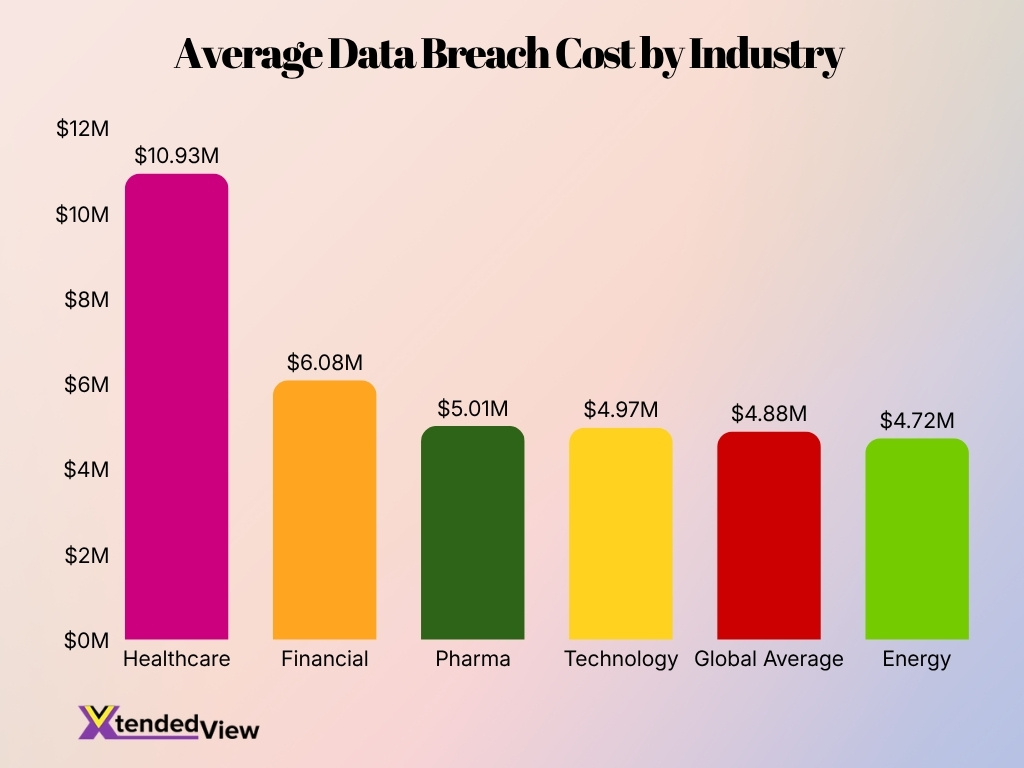
Average Data Breach Cost by Industry
- Healthcare recorded the highest average data breach cost at $10.93 million per breach in 2025.
- The Financial industry ranked second, with an average breach cost of $6.08 million.
- Pharma organizations experienced an average data breach cost of $5.01 million, slightly above the global benchmark.
- The Technology sector reported an average breach cost of $4.97 million per incident.
- The Global Average cost of a data breach stood at $4.88 million across all industries.
- Energy had the lowest average breach cost among the listed industries at $4.72 million.
- Healthcare breach costs were more than twice the global average, highlighting the sector’s high financial risk.
- The gap between Healthcare ($10.93M) and Financial ($6.08M) was $4.85 million, the largest difference among the top industries.
- Every listed industry except Energy recorded an average breach cost that was at or above $4.88 million, the global average.
- The data shows that highly regulated industries, especially Healthcare and Financial Services, continue to face the greatest financial impact from data breaches.
Healthcare Data Breach Statistics
- Healthcare breaches cost an average of $7.42 million per incident, the highest among industries.
- Healthcare organizations account for over 20% of total breaches, making them prime targets.
- More than 133 million records have been exposed in recent years.
- Ransomware affects over 60% of healthcare organizations, disrupting critical services.
- Downtime following breaches exceeds 20 days on average, impacting patient care.
- Legacy systems and outdated infrastructure remain major vulnerabilities.
- Patient data sells for 10 times more than financial data on underground markets.
- Small healthcare providers face higher risks due to limited resources.
- Compliance requirements increase remediation costs and reporting obligations.
Frequently Asked Questions (FAQs)
The average global cost of a data breach was $4.44 million in 2025, although organizations in the United States faced much higher average costs.
The average cost of a data breach in the United States reached $10.22 million, the highest recorded among all regions worldwide.
Researchers analyzed 12,195 confirmed data breaches from a dataset containing 22,052 security incidents.
Ransomware was involved in 44% of all data breaches in 2025, making it one of the most common cyberattack methods.
Organizations required an average of 241 days to identify and contain a data breach in 2025.
Conclusion
Data breaches reflect a cybersecurity landscape shaped by evolving threats, expanding digital ecosystems, and increasing reliance on cloud and AI technologies. Attackers continue to exploit human behavior, system vulnerabilities, and third-party dependencies, while organizations struggle to keep pace with detection and response demands.
At the same time, the data shows clear progress. Companies that invest in automation, zero trust frameworks, and proactive security measures consistently reduce breach costs and detection time. As businesses across healthcare, finance, retail, and technology sectors handle growing volumes of sensitive data, cybersecurity is no longer optional; it is central to operational resilience and customer trust.
Organizations that prioritize prevention, strengthen internal processes, and adopt advanced security strategies will be better positioned to navigate the risks ahead.