



Hair transplantation has evolved from a niche cosmetic procedure into a global medical industry worth billions of dollars. The treatment now influences medical tourism, cosmetic surgery clinics, and even digital health platforms that connect patients with surgeons across borders. As more people seek permanent solutions for hair loss and clinics adopt advanced technologies, the industry continues to expand at a rapid pace. Explore these statistics to understand how hair transplantation is reshaping the global aesthetics market.
Editor’s Choice
- The global hair transplant market reached $7.62 billion in 2024 and is projected to exceed $41 billion by 2033, growing at a CAGR of more than 20%.
- More than 2.22 million surgical hair transplant sessions were completed worldwide in 2023, representing a 17% year-over-year increase.
- The Asia-Pacific region accounted for 39% of global procedures in 2023, making it the largest regional market.
- FUE procedures represent around 78% of all hair transplant surgeries globally.
- ISHRS reported that the number of female hair restoration surgical patients in 2024 increased by 16.5% compared with 2021.
- Around 500,000 international patients travel to Turkey each year for aesthetic procedures, with hair transplantation representing the largest segment.
- Global hair transplant procedures now exceed 735,000 annually by conservative estimates, with some industry reports placing the number above 2 million procedures.
Recent Developments
- The average number of patients treated per ISHRS physician increased by 20% between 2021 and 2024.
- The average number of hair restoration surgeries performed per ISHRS member reached 15 procedures per month in 2024.
- Direct Hair Implantation (DHI) expanded its market share to 14% of procedures, roughly doubling over the previous eight quarters.
- Robotic systems such as ARTAS and MaX-FUE can harvest up to 1,200 grafts per hour, improving efficiency by 43% compared with manual methods.
- Robotic adoption reduced graft transection rates by approximately 6% and shortened patient downtime by an average of seven hours.
- Social media interest surged, with the hashtag #hairtransplant generating 4.4 billion views on TikTok by March 2024.
- Google searches for “female temple restoration” increased by 35% during 2024.
- ISHRS members reported that 59% of cities now have black-market hair transplant clinics, up from 51% in 2021.
- The average percentage of repair cases resulting from black-market procedures increased from 6% in 2021 to 10% in 2024.
Global Hair Transplant Overview
- The number of hair restoration procedures worldwide has increased by 76% since 2006.
- In 2010, there were 923,599 total hair restoration patients globally, including surgical and non-surgical treatments.
- The combined number of surgical and non-surgical patients increased by 156% compared with 2004 levels.
- More than 1,100 ISHRS members operate across 70 countries, highlighting the industry’s global footprint.
- Hair restoration patients in Asia increased by 345% since 2004, one of the fastest growth rates worldwide.
- The Middle East recorded an even steeper rise, with patient volumes growing 454% since 2004.
- Conservative estimates indicate between 500,000 and 1 million hair transplants are performed globally every year.
- Industry data from 2023 showed 2.22 million surgical sessions, indicating that global demand has accelerated significantly over the last decade.
- More than 95% of first-time surgical patients begin treatment between the ages of 20 and 35, demonstrating a shift toward younger consumers.
Hair Transplant Market Growth Highlights
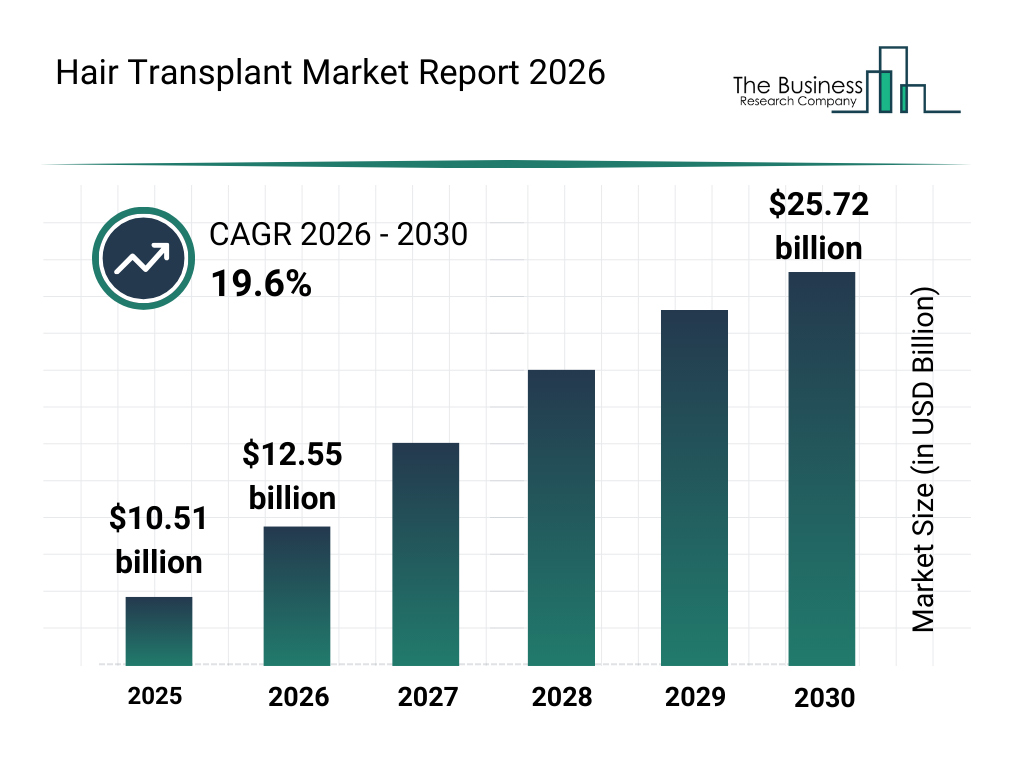
- The global hair transplant market is projected to grow from $10.51 billion in 2025 to $25.72 billion by 2030, highlighting strong long-term expansion.
- The market is expected to reach $12.55 billion in 2026, reflecting a significant increase from the previous year.
- The industry is forecast to expand at a 19.6% CAGR between 2026 and 2030, indicating rapid and sustained growth.
- The market is projected to more than double over the five-year forecast period, increasing by approximately $15.21 billion from 2025 to 2030.
- The chart shows consistent year-over-year growth from 2025 through 2030, with no projected decline during the forecast period.
- The 2030 market size of $25.72 billion represents the highest projected value in the forecast, emphasizing the industry’s strong future potential.
- Rising demand for hair restoration procedures, technological advancements, and increasing awareness are expected to support the market’s continued growth.
- The robust growth trajectory suggests strong investment opportunities and expanding adoption of hair transplant treatments worldwide.
Number of Hair Transplant Procedures Worldwide
- ISHRS estimated that 628,604 hair transplants were performed globally in 2021.
- International data reported 2.22 million surgical sessions in 2023, up 17% from the previous year.
- Global procedure estimates now range between 735,000 and 1 million annually, according to conservative industry sources.
- India alone recorded approximately 312,000 interventions in 2023, making it one of the largest national markets.
- Turkey performs an estimated 60% to 70% of all hair transplant procedures worldwide.
- Approximately 60,000 to 90,000 FUT procedures were performed globally in 2024.
- Two-thirds of physicians report that patients achieve their desired results with a single procedure.
- The average patient requires 1.5 surgical procedures to achieve the desired outcome.
- ISHRS data found that 33.1% of patients undergo a second procedure, while 9.6% require three or more surgeries.
Regional Distribution of Hair Transplant Procedures
- Asia-Pacific accounted for 39% of all hair transplant procedures worldwide in 2023, making it the largest regional market.
- Europe represented approximately 31% of the global market share, driven largely by Turkey, Germany, and the UK.
- North America contributed nearly 22% of worldwide hair transplant revenue in 2024 due to higher procedure costs and increasing demand among younger adults.
- Turkey performs an estimated 60% to 70% of global hair transplant procedures, attracting hundreds of thousands of international patients annually.
- India completed roughly 312,000 hair transplant procedures in 2023, making it one of the world’s fastest-growing markets.
- The Middle East and Africa region has experienced a 454% increase in hair restoration patients since 2004.
- Latin America accounted for approximately 6% of global procedures, with Brazil and Mexico leading regional demand.
- South Korea has emerged as a major destination for hair restoration, with cosmetic procedures growing at double-digit rates annually since 2022.
- More than 500,000 medical tourists travel to Turkey each year for aesthetic treatments, with hair transplantation remaining the leading procedure.
Hair Transplant Patient Age Demographics
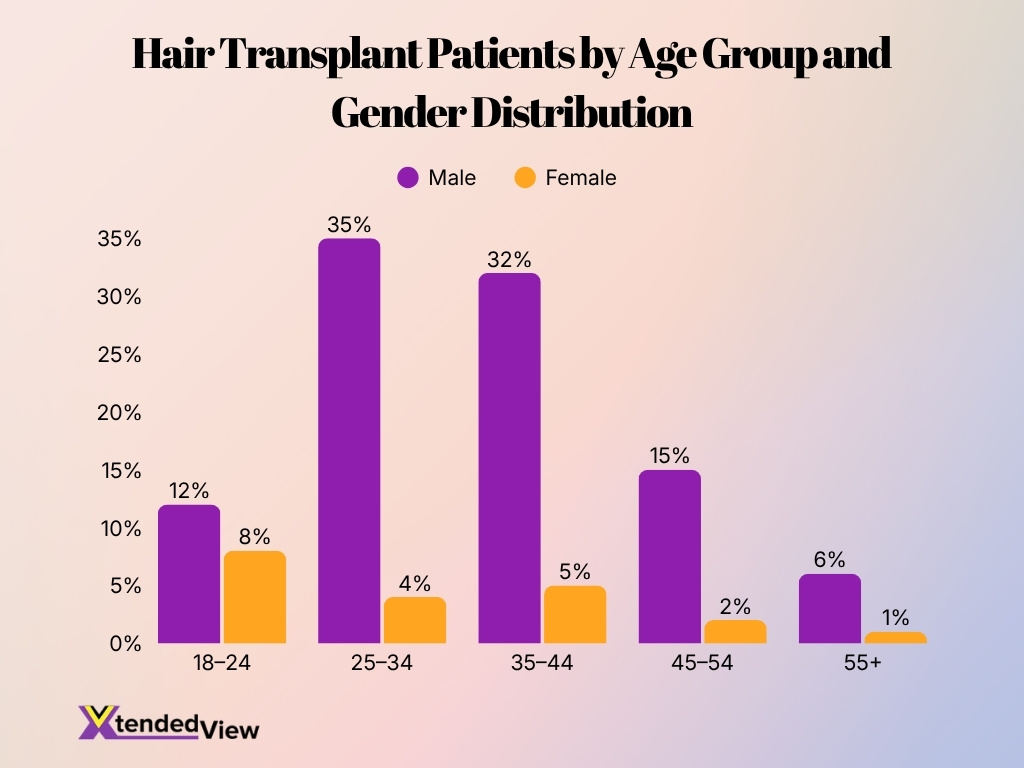
- Men aged 25–34 account for the largest share (35%) of hair transplant patients, making them the most common patient group.
- Men aged 35–44 represent the second-largest segment at 32%, highlighting strong demand among middle-aged adults.
- Among women, the 18–24 age group leads with 8%, the highest female representation across all age brackets.
- Male patients consistently outnumber female patients in every age group shown in the chart.
- The 18–24 age group includes 12% of men and 8% of women, indicating relatively higher interest among younger adults.
- Hair transplant demand declines after age 45, with 15% of men and 2% of women in the 45–54 category.
- The 55+ age group has the lowest participation, accounting for 6% of men and 1% of women.
- Female participation remains below 10% across all age groups, with the highest share reaching only 8%.
- Combined, the 25–44 age range accounts for 67% of male hair transplant patients, making it the dominant demographic.
- The data suggests hair transplant procedures are most popular among adults between 25 and 44 years old, particularly male patients.
Patient Demographics by Gender
- Men account for approximately 87% of all surgical hair transplant patients worldwide.
- Women represent around 13% of global hair transplant patients, a significant increase compared with a decade ago.
- Female hair restoration surgeries increased by 16.5% between 2021 and 2024.
- Nearly 40% of women experience visible hair loss by age 50, contributing to the rising demand for transplantation procedures.
- Among male patients, 85% experience noticeable hair thinning by age 50.
- Women now account for almost one in five consultations at many premium hair restoration clinics.
- Social media searches related to female hair restoration increased by 35% during 2024, particularly for temple and frontal hairline procedures.
- Female patients are more likely than men to seek procedures for traction alopecia and thinning around the hairline, especially among women of color.
- Men continue to dominate beard and eyebrow transplantation procedures, accounting for more than 80% of facial hair restoration surgeries.
Popular Hair Transplant Techniques
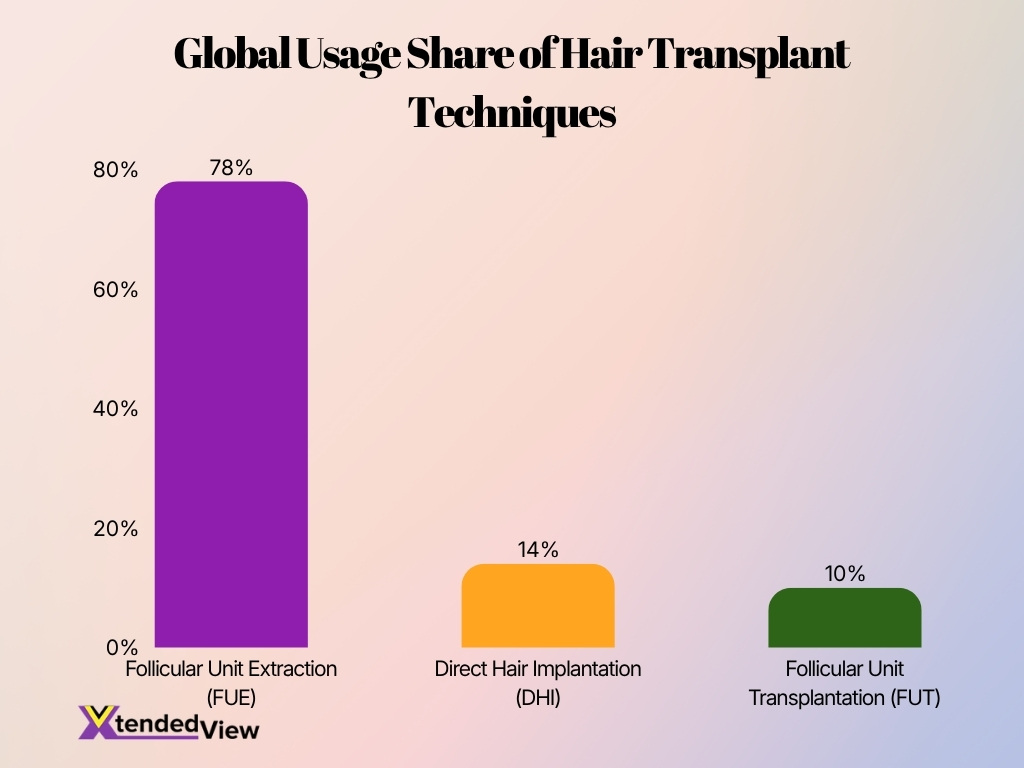
- Follicular Unit Extraction (FUE) accounts for approximately 78% of all hair transplant procedures worldwide.
- Follicular Unit Transplantation (FUT) now represents around 10% to 15% of procedures globally.
- Direct Hair Implantation (DHI) has expanded to approximately 14% of the global market share.
- Sapphire FUE procedures have grown rapidly because they reduce scalp trauma and speed recovery times.
- Robotic hair transplantation systems can harvest up to 1,200 grafts per hour, improving procedure efficiency significantly.
- Eyebrow and beard transplant procedures account for approximately 18% of non-scalp hair restoration procedures.
- Combination techniques using FUE and DHI have become increasingly popular among premium clinics in Turkey and South Korea.
- Platelet-rich plasma (PRP) therapy accompanies approximately 30% of surgical procedures to improve graft survival and healing.
- More than 90% of modern clinics now offer minimally invasive techniques, compared with less than 60% a decade ago.
FUE vs FUT Usage Statistics
- FUE represents approximately 78% of all hair transplant surgeries worldwide.
- FUT procedures have declined to around 10% to 15% of the global market due to longer recovery times.
- FUE procedures typically result in minimal linear scarring, making them particularly attractive to younger patients.
- FUT remains popular among patients requiring large graft numbers exceeding 3,000 follicles.
- Global estimates indicate only 60,000 to 90,000 FUT procedures were performed in 2024.
- FUE procedures generally require 7 to 10 days of recovery, compared with 10 to 14 days for FUT.
- Clinics report that more than 80% of patient inquiries specifically request FUE procedures.
- The average graft survival rate for modern FUE procedures exceeds 90% in leading clinics.
- FUE has become the preferred technique in Turkey, India, the United States, and the UK because it allows patients to resume normal activities more quickly.
Adoption of Newer Techniques (DHI, Robotic, etc.)
- Direct Hair Implantation (DHI) expanded to approximately 14% of all procedures worldwide by 2024.
- Robotic systems such as ARTAS can extract up to 1,200 grafts per hour, reducing procedure times considerably.
- Robotic transplantation has lowered graft transection rates by approximately 6% compared with traditional extraction methods.
- Automated systems can reduce surgeon fatigue and improve consistency during lengthy procedures exceeding six hours.
- Clinics using AI-assisted imaging report improved graft placement precision and more accurate hairline design.
- PRP and stem cell therapies now accompany roughly 30% of advanced procedures in premium clinics.
- Sapphire blade technology has become one of the fastest-growing innovations because it creates smaller recipient channels and faster healing times.
- Digital consultation platforms and AI scalp analysis tools have increased pre-surgical conversion rates at many clinics by double-digit percentages since 2023.
- High-end clinics increasingly offer hybrid procedures that combine DHI, FUE, and regenerative therapies to improve density and long-term outcomes.
Key Reasons Patients Opt for Hair Transplant Surgery
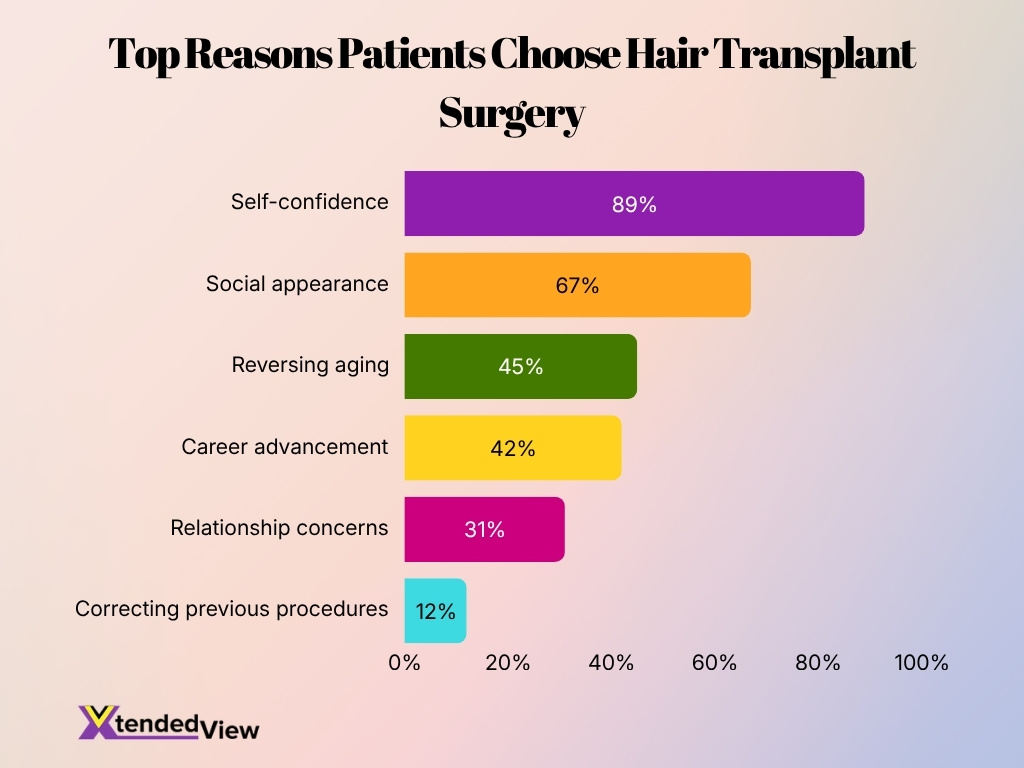
- Self-confidence is the leading motivation, with 89% of patients seeking a hair transplant to improve their self-esteem and personal confidence.
- Social appearance ranks second, as 67% of patients choose the procedure to enhance their overall appearance in social settings.
- Reversing signs of aging motivates 45% of patients, highlighting the role of hair restoration in achieving a more youthful look.
- Career advancement influences 42% of patients, suggesting that professional image can impact the decision to undergo surgery.
- Relationship concerns are a factor for 31% of patients, reflecting the influence of personal relationships on cosmetic treatment decisions.
- Only 12% of patients pursue hair transplant surgery to correct previous procedures, making it the least common reason among those surveyed.
Hair Transplant Success Rates
- Modern hair transplant procedures report success rates ranging from 90% to 95%, depending on the surgeon’s experience and the technique used.
- Leading clinics report graft survival rates exceeding 95% for FUE procedures performed under optimal conditions.
- Approximately 80% to 90% of transplanted follicles permanently survive after the first year.
- Around 85% of patients achieve visible hair growth within six to nine months following surgery.
- Studies indicate that nearly 95% of transplanted grafts begin producing new hair growth within four months.
- Two-thirds of patients achieve their desired appearance with a single transplant procedure.
- ISHRS data shows that 33.1% of patients eventually undergo a second procedure, usually to increase density or address continued hair loss.
- The incidence of major complications remains below 1% when procedures are performed by qualified surgeons.
- Hair transplant repair procedures account for approximately 10% of all surgical cases, primarily because of poorly performed operations and black-market clinics.
Patient Satisfaction Rates
- Patient satisfaction rates after modern hair transplant surgery generally range between 90% and 95%.
- A long-term study found that over 90% of patients would recommend the procedure to others experiencing hair loss.
- More than 85% of patients report improved self-esteem and confidence after surgery.
- Approximately 88% of patients say the results met or exceeded expectations after one year.
- Surveys indicate that 95% of patients would choose to undergo the procedure again if given the option.
- Patient satisfaction is significantly higher among clinics that provide comprehensive aftercare and long-term treatment plans.
- More than 70% of patients report improvements in social confidence and personal relationships after transplantation.
- Dissatisfaction rates are highest among patients who seek treatment at low-cost, unregulated clinics abroad.
- Studies have shown that realistic expectations and pre-surgical education improve satisfaction rates by double-digit percentages.
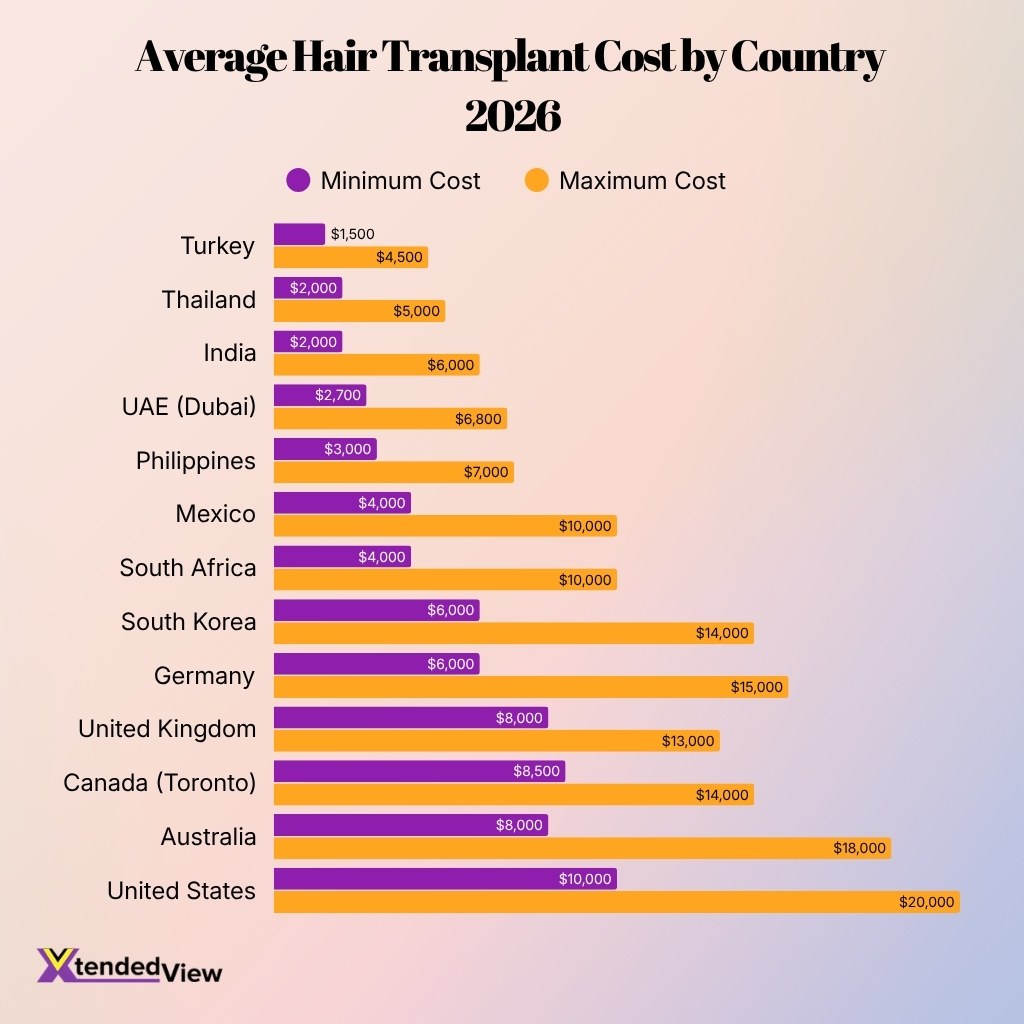
Hair Transplant Costs by Country
- The United States has the highest hair transplant cost, ranging from $10,000 to $20,000 per procedure.
- Australia is the second most expensive destination, with prices between $8,000 and $18,000.
- Germany charges $6,000 to $15,000, making it one of the costliest European countries for hair transplants.
- Canada (Toronto) has an average treatment cost of $8,500 to $14,000.
- The United Kingdom offers hair transplant procedures costing between $8,000 and $13,000.
- South Korea has average prices ranging from $6,000 to $14,000, reflecting its advanced cosmetic surgery market.
- Turkey remains the most affordable major destination, with costs of just $1,500 to $4,500.
- Thailand offers relatively affordable procedures, with average costs ranging from $2,000 to $5,000.
- India provides competitive pricing, with hair transplant costs between $2,000 and $6,000.
- The UAE (Dubai) records average treatment costs of $2,700 to $6,800.
- The Philippines offers procedures priced between $3,000 and $7,000.
- Mexico and South Africa have similar pricing, with hair transplant costs ranging from $4,000 to $10,000.
- The price gap between the least expensive and most expensive destinations reaches $18,500, highlighting significant global cost differences.
- Countries known for medical tourism, including Turkey, Thailand, and India, provide some of the lowest hair transplant costs while attracting international patients.
Medical Tourism for Hair Transplants
- Turkey receives approximately 500,000 international aesthetic patients annually, with hair transplantation representing the largest category.
- The country’s health tourism sector generated more than $3 billion in annual revenue in recent years.
- Turkey performs an estimated 60% to 70% of global hair transplant procedures, making it the world’s leading destination.
- International patient demand for Turkish hair transplant services increased by 150% year over year between 2024 and 2025.
- More than 1,200 clinics and medical facilities in Turkey offer hair restoration services to international patients.
- Medical tourists can save between 50% and 80% on procedure costs by traveling to Turkey compared with prices in the United States.
- India has become an increasingly popular destination because procedures often cost 70% to 85% less than comparable treatments in the U.S..
- Thailand and South Korea continue to gain popularity because of advanced technology and highly specialized cosmetic surgeons.
- The growing popularity of medical tourism has also increased concerns regarding unregulated clinics and repair surgeries, which now account for 10% of all hair transplant cases.
Future Trends in the Hair Transplant Market
- The global hair transplant market is projected to exceed $41 billion by 2033, more than five times its 2024 size.
- Industry forecasts predict a compound annual growth rate of 20.47% through 2033.
- Artificial intelligence and robotic systems are expected to become standard offerings at premium clinics over the next decade.
- The adoption of Direct Hair Implantation and hybrid procedures continues to increase, with DHI already representing 14% of the global market.
- Demand from women is expected to rise faster than demand from men as awareness of female hair restoration continues to improve.
- The market for regenerative therapies, including PRP and stem-cell-assisted transplantation, is expected to expand significantly through 2030.
- Financing options and subscription-based aftercare programs are making procedures more accessible to younger adults.
- Telemedicine consultations and AI-powered scalp analysis are expected to increase international patient acquisition rates.
- Emerging markets in Asia, the Middle East, and Latin America are projected to record the fastest growth rates in the global industry.
Frequently Asked Questions (FAQs)
The global hair transplant market is valued at approximately $11.11 billion in 2026.
The market is expected to grow at a 22.10% CAGR between 2026 and 2034.
Industry estimates indicate that more than 700,000 hair transplant procedures are performed worldwide annually, with some reports placing the figure above 2 million sessions.
North America accounted for more than 45% of the global hair transplant market revenue in 2024.
FUE procedures represented approximately 62% of the global hair transplant market in 2024, making it the dominant surgical technique.
Conclusion
Hair transplantation has evolved into a multibillion-dollar global industry fueled by rising awareness of hair loss, technological innovation, and expanding medical tourism. The procedure is no longer limited to middle-aged men, as younger adults and women increasingly seek permanent solutions for thinning hair and cosmetic enhancement.
The next decade will likely bring even faster adoption of robotic systems, AI-assisted planning tools, and regenerative therapies that improve outcomes and shorten recovery times. At the same time, the industry’s rapid expansion highlights the importance of choosing qualified surgeons and regulated clinics. As demand continues to rise worldwide, hair transplantation is positioned to remain one of the fastest-growing segments of the global aesthetic medicine market.
