



Robotic surgery continues to reshape modern healthcare by helping surgeons perform complex procedures with greater precision through minimally invasive techniques. Hospitals increasingly use robotic systems in specialties such as urology, gynaecology, general surgery, and cardiothoracic care, while medical device companies continue to expand AI-assisted capabilities. As investment, clinical adoption, and technological innovation accelerate, the latest statistics reveal how robotic surgery is changing patient care across the US and worldwide. Explore the data below to understand the trends driving this rapidly evolving market.
Editor’s Choice
- More than 3.15 million robotic-assisted procedures were performed using da Vinci systems worldwide during 2025, representing an 18% year-over-year increase.
- The global installed base of da Vinci surgical systems reached 11,106 by the end of 2025, up 12% from 9,902 systems in 2024.
- Surgeons have now treated over 20 million patients worldwide using da Vinci robotic systems since commercial launch.
- Intuitive projects worldwide robotic procedures to increase by approximately 13% to 15% during 2026, reflecting continued hospital adoption.
- The global robotic surgery market is estimated at approximately $13 billion to $14 billion in 2025 and is expected to exceed $50 billion by 2035.
- Intuitive generated approximately $10.06 billion in revenue during 2025, representing 21% annual growth.
- Hospitals installed 1,721 new da Vinci systems during 2025, compared with 1,526 systems in 2024.
Recent Developments
- During the fourth quarter of 2025, hospitals installed 532 da Vinci systems, compared with 493 during the same period in 2024.
- 303 of the fourth-quarter 2025 placements were the latest da Vinci 5 systems, compared with 174 a year earlier.
- Intuitive expanded its installed base by 12% during 2025, reaching 11,106 systems globally.
- Ion endoluminal robotic procedures increased by approximately 51% during 2025, reflecting growing adoption beyond traditional surgery.
- Medtronic submitted its Hugo robotic-assisted surgery platform for general surgery and gynecology indications during 2026.
- Johnson & Johnson received marketing authorization for the Ottava robotic surgical system in 2026, expanding competition in soft-tissue robotics.
- Intuitive maintained its 2026 global procedure growth forecast despite market volatility following strong second-quarter demand.
- More than 20 million patients have now benefited from robotic-assisted surgery using da Vinci technology worldwide.
What Is Robotic Surgery?
- Robotic surgery is a form of minimally invasive surgery in which surgeons control robotic instruments from a specialized console.
- The technology enhances precision, dexterity, and visualization through robotic arms and high-definition 3D imaging.
- Modern robotic systems support procedures across urology, gynecology, colorectal, thoracic, cardiac, and general surgery.
- Robotic surgery generally involves smaller incisions, helping reduce blood loss compared with conventional open procedures.
- The technology allows surgeons to filter natural hand tremors while improving instrument stability during delicate operations.
- Current commercial systems remain surgeon-controlled rather than fully autonomous, although AI-assisted features continue to expand.
- Robotic-assisted surgery has become a standard treatment option for several complex minimally invasive procedures performed globally.
- Growing surgical data collection supports continuous improvements in workflow optimization and clinical decision support.
Surgical Robotics Market Size Statistics
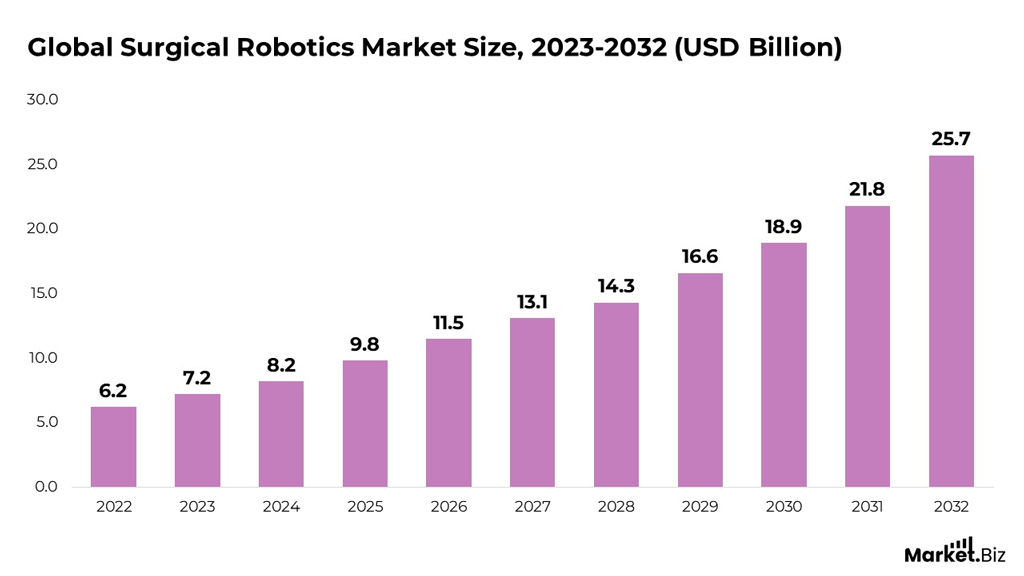
- The global surgical robotics market was valued at $6.2 billion in 2022, highlighting the growing adoption of robotic-assisted procedures across healthcare systems.
- Market size increased to $7.2 billion in 2023, reflecting continued investment in advanced surgical technologies.
- In 2024, the market reached $8.2 billion, driven by expanding hospital installations and broader clinical applications.
- The market is projected to grow to $9.8 billion in 2025, approaching the $10 billion milestone.
- By 2026, the global surgical robotics market is expected to reach $11.5 billion, demonstrating sustained year-over-year expansion.
- Market value is forecast to climb to $13.1 billion in 2027, supported by increasing demand for minimally invasive surgery.
- The industry is expected to reach $14.3 billion in 2028, as robotic systems become more widely adopted across surgical specialties.
- In 2029, the global surgical robotics market is projected to grow to $16.6 billion, marking continued strong momentum.
- The market is forecast to reach $18.9 billion in 2030, reflecting rising investments in robotic platforms and healthcare infrastructure.
- By 2031, the global market is expected to expand to $21.8 billion, surpassing the $20 billion mark.
- The surgical robotics market is projected to reach $25.7 billion by 2032, representing more than a 4-fold increase compared to its 2022 market size.
How Robotic Surgery Works
- Surgeons operate robotic instruments while seated at a computerized console, translating hand movements into highly precise instrument actions.
- Robotic systems typically provide magnified 3D high-definition visualization, improving anatomical visibility during surgery.
- Motion scaling technology converts large hand movements into microscopic instrument movements inside the patient.
- Robotic instruments provide multiple degrees of articulation that often exceed the natural movement of the human wrist.
- Most robotic surgical procedures require a bedside assistant who exchanges instruments and supports patient management.
- Advanced imaging, sensors, and navigation systems increasingly integrate with robotic platforms to improve surgical planning.
- Machine learning increasingly assists surgeons through workflow recognition, anatomical guidance, and performance analysis rather than autonomous decision-making.
- Robotic systems continue to evolve toward greater AI integration while maintaining direct surgeon control over critical procedural decisions.
Robotic Surgery Market Growth Forecast
- The global robotic surgical procedures market is projected to grow from $15.9 billion in 2026 to $53.5 billion by 2034, representing a 16.4% CAGR.
- The broader surgical robots market is expected to increase from $18.4 billion in 2026 to $59.4 billion by 2034, reflecting a 15.8% CAGR.
- Another industry forecast estimates the robotic surgery market will reach $30.3 billion by 2032, growing at a 13.8% CAGR from 2026.
- Markets tracking the sector project surgical robot revenue to rise from $13.7 billion in 2025 to $27.1 billion by 2030, nearly doubling within five years.
- Another estimate projects the surgical robots market will expand from $13.5 billion in 2026 to $29.2 billion by 2030, supported by increasing procedure volumes.
- Analysts expect general surgery to remain the fastest-growing application because hospitals continue expanding robotic-assisted colorectal, bariatric, and gastrointestinal procedures.
- The continued shift toward minimally invasive surgery, combined with aging populations and rising chronic disease rates, remains the largest long-term market driver.
- Growth is also supported by increasing investment in AI-assisted navigation, digital surgery ecosystems, and advanced imaging technologies, which continue to expand robotic platform capabilities.
Global Robotic Surgery Market Share by Region
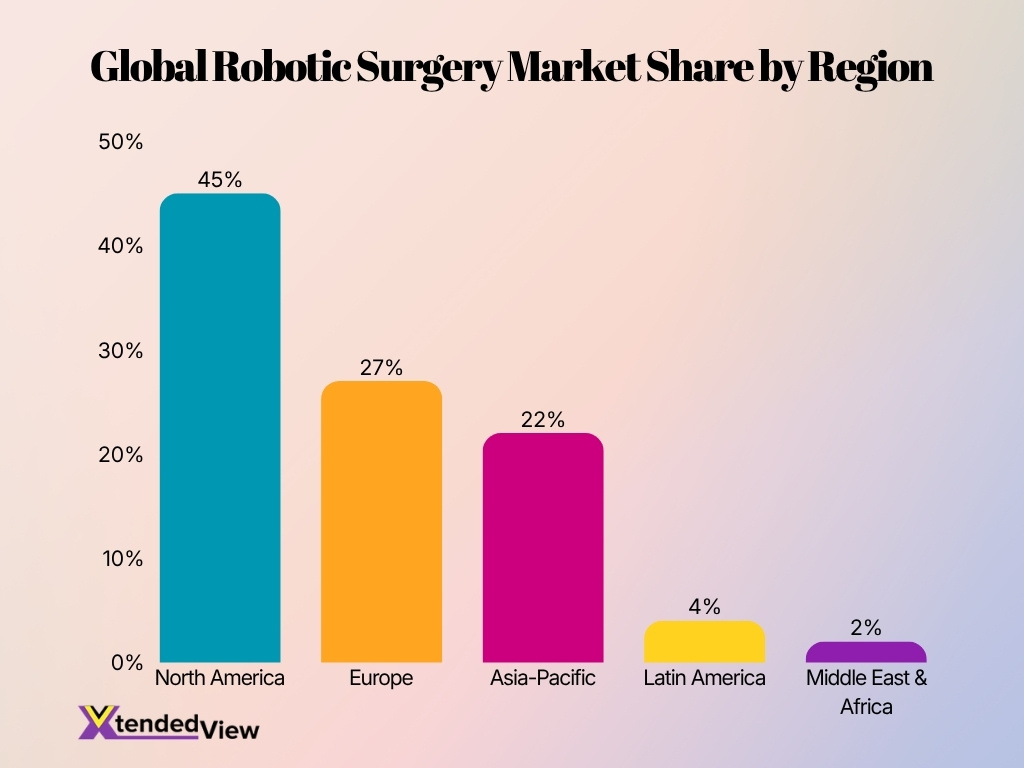
- North America leads the global robotic surgery market with a 45% market share, supported by advanced healthcare infrastructure, high technology adoption, and strong investment in robotic-assisted procedures.
- Europe accounts for 27% of the market, driven by growing adoption of minimally invasive surgery and increased healthcare spending across major countries.
- The Asia-Pacific region holds a 22% share, reflecting rapid market expansion fueled by rising healthcare investments, expanding hospital networks, and growing demand for robotic surgical systems.
- Latin America represents 4% of the global market, with adoption increasing gradually as hospitals invest in advanced surgical technologies.
- The Middle East & Africa contributes the remaining 2%, indicating an emerging market where robotic surgery adoption is still in its early stages.
- Together, North America, Europe, and Asia-Pacific account for 94% of the global robotic surgery market, highlighting their dominance in the industry.
- The market distribution shows that developed healthcare systems continue to lead robotic surgery adoption, while emerging regions present significant long-term growth opportunities.
- Increasing investments in AI-assisted surgery, surgical robotics, and minimally invasive procedures are expected to strengthen the market position of Asia-Pacific and other developing regions over the coming years.
Number of Robotic Surgery Systems Installed Worldwide
- The worldwide installed base of da Vinci systems reached 11,106 at the end of 2025, compared with 9,902 one year earlier.
- Hospitals added 1,721 new da Vinci systems during 2025, exceeding the 1,526 installations recorded in 2024.
- During the fourth quarter of 2025 alone, 532 systems were installed globally.
- More than 1,000 Ion robotic platforms have now been installed worldwide for minimally invasive lung biopsy procedures.
- Intuitive’s robotic systems are currently used in more than 70 countries, reflecting continued international expansion.
- The company maintains an estimated 60% to 70% share of the worldwide robotic surgery systems market.
- New commercial platforms from Medtronic, Johnson & Johnson, and CMR Surgical are gradually increasing the number of robotic systems available to hospitals globally.
- Industry analysts expect annual worldwide installations to continue rising as hospitals replace first-generation systems and expand robotic surgery capacity.
Robotic Surgery Procedures Performed Annually
- More than 3.15 million robotic-assisted procedures were completed worldwide using da Vinci systems during 2025, an 18% increase over 2024.
- Intuitive expects worldwide robotic procedure volumes to grow by 13% to 15% during 2026.
- More than 20 million cumulative patients have undergone da Vinci robotic-assisted surgery since commercial introduction.
- Ion robotic bronchoscopy procedures increased by approximately 51% during 2025.
- da Vinci SP procedures expanded by 94% during early 2025 as single-port surgery adoption accelerated.
- Procedure growth remained strongest in general surgery, particularly for colorectal and abdominal operations.
- International markets, including India, South Korea, and the United Kingdom, recorded above-average robotic procedure growth during 2025.
- Rising procedure volumes continue driving recurring revenue from instruments, accessories, and service contracts rather than system sales alone.
Robotic Surgery Adoption by Hospitals and Surgeons
- Over 60,000 surgeonsglobally have been trained to use da Vinci systems.
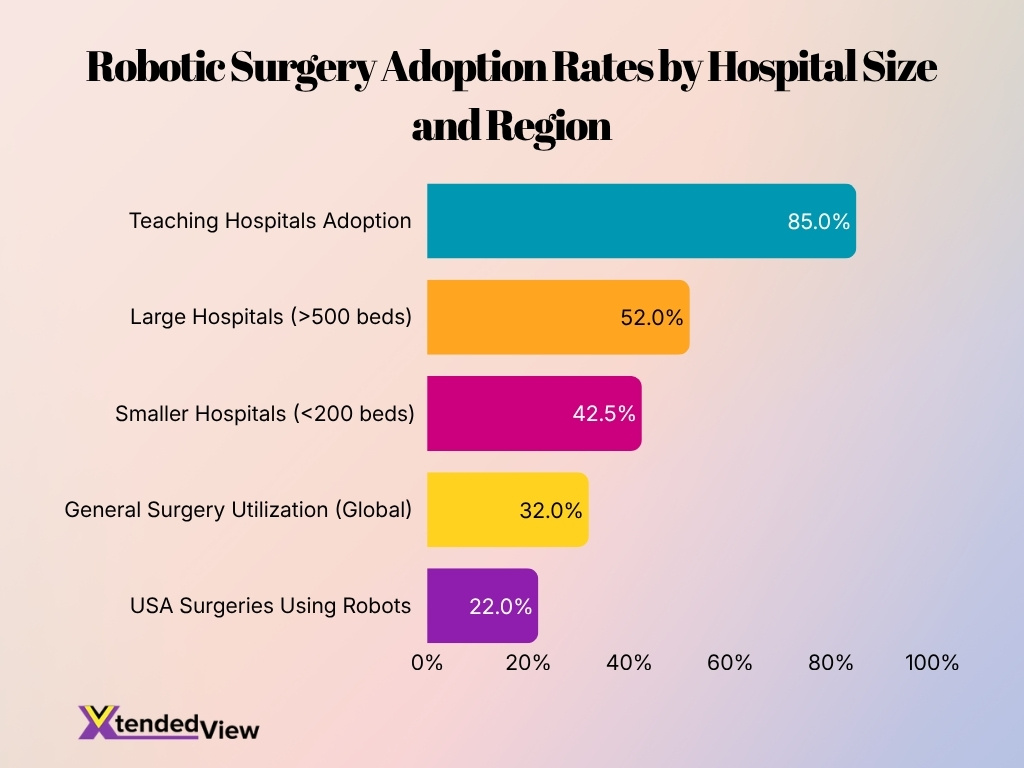
- Teaching hospitalsreport an 85% adoption rate for robotic surgery platforms.
- General surgerycurrently accounts for 32% of global robotic system utilization.
- Hospitalsmake up nearly 87% of the end-use share in the robotic surgery market.
- Over 12 millionrobot-assisted surgical procedures have been performed worldwide.
- Robotic-assisted operationsaccount for roughly 22% of all surgeries in the USA.
- Smaller hospitalswith fewer than 200 beds show a 42.5% adoption rate.
- More than 6,000 hospitalsglobally have integrated robotic surgery programs.
- Large hospitalswith over 500 beds represent 52% of total robot installations.
- North Americaholds a dominant 71.46% market share of the global surgical robots industry.
Clinical Outcomes and Safety Statistics
- A 2025 review of randomized trials found that robotic surgery reduced 30-day complications to 13.2%, compared with 23.7% after open surgery in the analyzed trial.
- The same analysis reported a median hospital stay of 5 days after robotic surgery versus 7 days after open surgery.
- Robotic surgery produced less blood loss and fewer conversions to open surgery, although long-term cancer outcomes remained similar between the approaches.
- A 2025 rectal cancer meta-analysis found that robotic surgery reduced major complications by about 30%, with an odds ratio of 0.70 versus laparoscopy.
- Patients undergoing robotic rectal cancer surgery regained bowel function approximately 0.62 days sooner than patients treated laparoscopically.
- A 2026 upper gastrointestinal review covering more than 68,755 patients linked robotic gastrectomy with lower blood loss, fewer conversions, greater lymph-node retrieval, and fewer complications.
- Safety surveillance covering an estimated 15.9 million da Vinci procedures from January 2015 through June 2025 identified 66,651 reports involving malfunctions, injuries, or deaths.
- The surveillance study calculated 55.2 reported injuries and 3.1 reported deaths per 100,000 procedures; however, voluntary reporting systems cannot establish direct causation or complete event rates.
- Reported conversion and procedure-abortion rates were 21.8 and 2.1 per 100,000 procedures, respectively, across the same database analysis.
Leading Robotic Surgery Platforms
- The da Vinci surgical platform maintains a leading installed base of over 11,100 systems worldwide.
- Intuitive Surgical reported 870 new global installations of the da Vinci 5 system during 2025.
- The Ion robotic bronchoscopy system achieved a massive 51% annual procedure growth rate in 2025.
- Medtronic’s Hugo robotic-assisted surgery system has successfully expanded its footprint into more than 35 countries.
- Johnson & Johnson captures an estimated 10% global market share as it introduces the Ottava platform.
- The Versius modular robotic system has established active operational partnerships with over 20 UK NHS hospitals.
- The broader global robotic surgery market is projected to reach an estimated valuation of $31.1 billion by 2033.
- North America currently leads the adoption of new robotic platforms with a 36% regional market share in 2026.
Robotic Surgery Market by Surgical Specialty
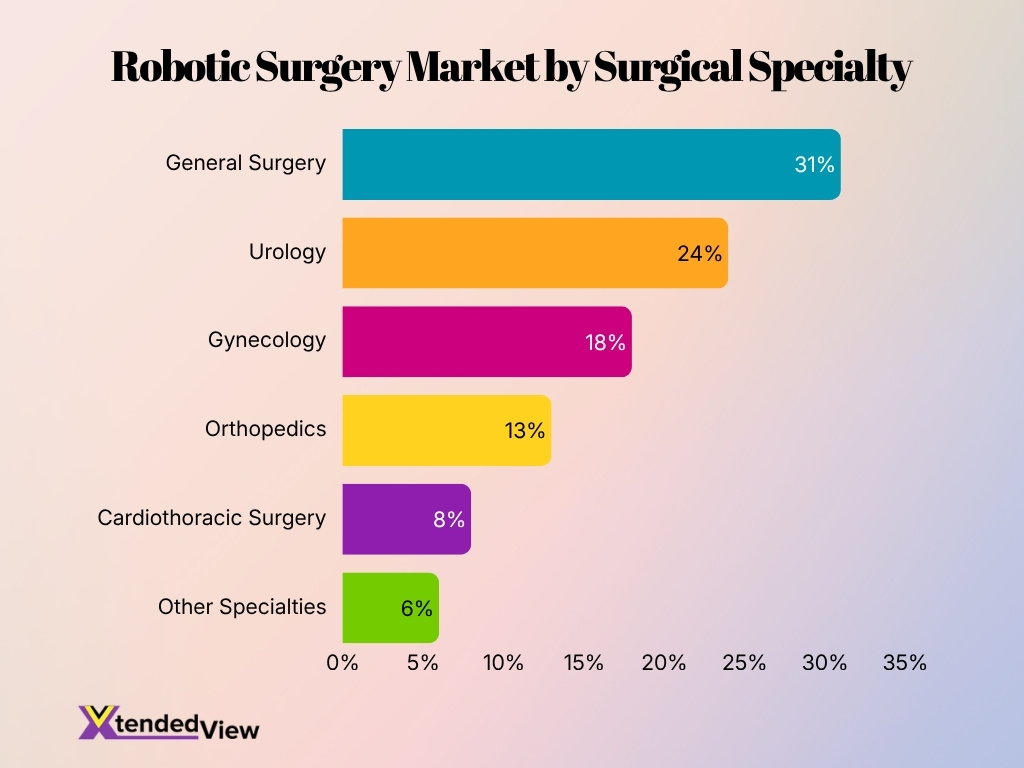
- General Surgery holds the largest share of the robotic surgery market at 31%, making it the leading specialty for robotic-assisted procedures.
- Urology ranks second with 24%, reflecting the long-standing adoption of robotic systems for complex urological surgeries.
- Gynecology accounts for 18% of the market, highlighting strong demand for minimally invasive robotic procedures in women’s healthcare.
- Orthopedics represents 13% of the robotic surgery market, driven by increasing use of robotic assistance in joint replacement and precision-based procedures.
- Cardiothoracic Surgery contributes 8%, demonstrating steady adoption of robotic technology for selected heart and chest surgeries.
- Other Specialties collectively make up 6% of the market, indicating growing interest in robotic-assisted procedures across additional medical disciplines.
- The top three specialties, General Surgery, Urology, and Gynecology, together account for 73% of the total robotic surgery market, underscoring their dominant role in adoption.
- The distribution of market share shows that robotic surgery remains most established in high-volume, minimally invasive surgical specialties where precision and faster patient recovery are key priorities.
Robotic Surgery vs. Traditional Surgical Approaches
- A clinical review encompassing 15 randomized trials and 11 prospective studies linked robotic surgery to less blood loss.
- The extensive study of 6,922 patients proved that robotic procedures yield significantly fewer surgical-site infections.
- Robotic pancreatic surgery successfully reduced patient blood loss by an average of 185.44 milliliters.
- Robotic pancreaticoduodenectomy decreased the odds of overall surgical complications by exactly 34%.
- Patients also experienced a significant 33% reduction in the odds of developing a pancreatic fistula.
- Individuals undergoing robotic pancreaticoduodenectomy left the hospital approximately 1.9 days earlier.
- These advanced robotic operations lasted approximately 64.6 minutes longer than traditional open surgeries.
- A 2025 meta-analysis on robotic total hip arthroplasty reported highly accurate implant positioning and fewer complications.
- A 2026 hysterectomy review found only modest perioperative differences and comparable cancer survival rates.
Cost and Economic Impact of Robotic Surgery
- A 2026 systematic review examined cost analyses from 38 randomized trials and concluded that many studies used incomplete or low-quality economic methods.
- One US analysis cited in 2026 found that robotic abdominal procedures added more than $2,000 in hospitalization costs compared with laparoscopic surgery.
- A 2025 bariatric surgery meta-analysis included 1,414,357 patients, including 112,363 robotic cases and 1,301,994 laparoscopic cases.
- Total hospital costs for robotic bariatric surgery were approximately $3,819 higher than for laparoscopic bariatric procedures.
- Operating room costs in that analysis were about $9,746 higher for robotic bariatric surgery, partly because robotic operations took longer.
- Robotic bariatric surgery produced small improvements in hospital stay and complication rates, but researchers rated the overall economic evidence as low quality.
- A broader 2025 economic review identified one study that estimated robotic surgery at approximately $28,860 per additional quality-adjusted life year.
- Acquisition, service contracts, disposable instruments, training, and longer operating room time remain the primary direct cost pressures for hospitals.
- Higher procedure volume can spread fixed platform and training costs across more cases, making utilization a central factor in hospital-level cost efficiency.
- Economic value varies by procedure because shorter hospital stays or fewer complications may offset part of the initial expense in complex, high-risk operations.
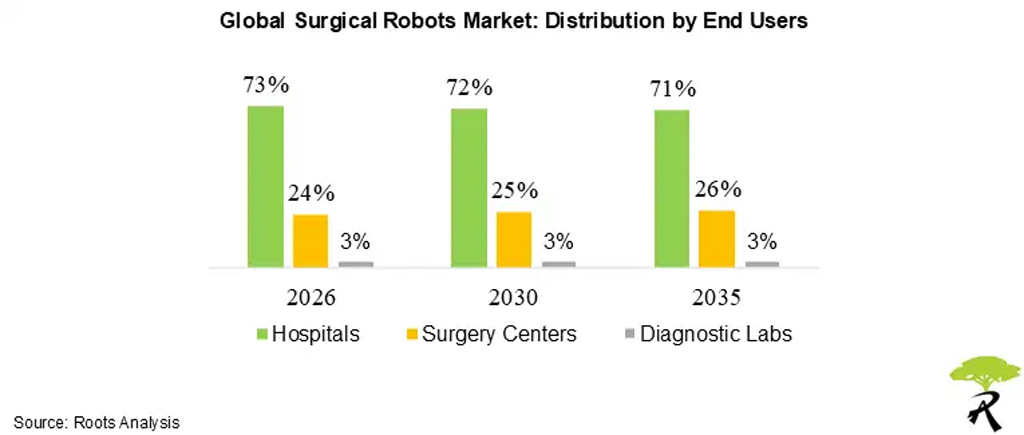
Global Surgical Robots Market Distribution by End Users
- Hospitals remain the dominant end-user segment, accounting for 73% of the global surgical robots market in 2026.
- The hospital segment is projected to decline slightly from 73% in 2026 to 72% in 2030 and 71% by 2035, while still maintaining market leadership.
- Surgery Centers hold the second-largest share, representing 24% of the market in 2026.
- The share of Surgery Centers is expected to increase steadily from 24% in 2026 to 25% in 2030 and 26% in 2035.
- The gradual growth in surgery centers suggests an increasing preference for outpatient and minimally invasive surgical procedures.
- Diagnostic Labs consistently account for 3% of the market across 2026, 2030, and 2035, indicating a stable but limited role in surgical robot adoption.
- Even with a slight decline, Hospitals are projected to retain more than 70% of the market throughout the forecast period.
- The combined market share of Hospitals and Surgery Centers remains exceptionally high at 97% in every forecast year, highlighting their dominance in the surgical robotics ecosystem.
- The 2 percentage-point shift from hospitals to surgery centers between 2026 and 2035 reflects a gradual diversification of robotic surgery adoption across healthcare facilities.
AI and Automation in Surgical Robotics
- The US regulator officially listed 3 new AI-enabled surgical systems during 2025.
- The Maestro System specifically secured 2 separate AI-enabled device listings in 2025.
- A 2025 systematic review comprehensively evaluated 32 distinct studies regarding autonomous surgical assistants.
- Endoscope guidance was identified as the number 1 most common collaborative task in research.
- A 2026 laparoscopic research platform successfully maintained submillimeter instrument deviation across multiple tests.
- An official investigation identified more than 100 reported safety incidents following an AI software upgrade.
- At least 10 patient injuries were directly associated with an AI-enabled sinus-navigation system.
Future Trends in Robotic Surgery
- The global robotic surgery market is projected to reach $45.29 billion by 2033 with a 17.1% CAGR.
- Artificial intelligencein the surgery sector is expected to surge to a $2.35 billion market value by 2034.
- Integrating AI systems into surgical workflows can successfully improve overall surgical accuracy by 40%.
- Advanced AI assistance during operations can reduce operative time by 25% and lower human error rates to 5%.
- General surgeryis projected to capture a dominant 33.5% of the global robotic surgery market share in 2026.
- Instruments and accessorieswill account for 47% of the market share in 2026 due to high consumable demand.
- Global robotic procedure volumes are confidently forecasted to maintain an 11–15% compound annual growth rate through 2030.
- Integrated robotic systems offering advanced visualization and precision will capture 53.3% of the market by 2026.
- Expanding healthcare programs are scaling infrastructure to support 500,000 robotic operations annually by 2035.
Frequently Asked Questions (FAQs)
The global robotic surgical procedures market is projected to reach $15.9 billion in 2026 and grow to $53.53 billion by 2034 at a 16.39% CAGR.
More than 3.15 million robotic-assisted procedures were performed in 2025, and global procedure volume is expected to grow by approximately 13% to 15% in 2026.
As of June 30, 2026, approximately 11,710 da Vinci surgical systems were installed globally, including 6,615 in the United States.
North America accounted for 73.89% of the global robotic surgical procedures market in 2025, making it the largest regional market.
Intuitive Surgical is estimated to hold approximately 60% to 70% of the global robotic surgery systems market, with over 11,000 installed systems across more than 70 countries.
Conclusion
Robotic surgery continues to expand because it can improve precision, visualization, and minimally invasive access during complex procedures. Evidence shows benefits such as reduced blood loss, fewer complications, and shorter hospital stays in selected operations, although robotic systems do not consistently outperform laparoscopy across every measure. Cost, surgeon experience, hospital utilization, procedure type, and patient needs will continue to determine its clinical and economic value. AI will strengthen planning and supervised automation, but trained surgeons will remain responsible for critical decisions.
