



Artificial intelligence has moved from pilot projects to a core business capability across industries. Companies now use AI to automate customer support, improve forecasting, optimize supply chains, and accelerate software development. In healthcare, AI assists with diagnostics and administrative workflows, while in marketing, it helps brands personalize campaigns at scale. As investment, adoption, and measurable business outcomes continue to grow, AI is reshaping how organizations operate and compete. Explore the latest AI in business statistics to understand where the market stands and where it is headed next.
Editor’s Choice
- The global AI market is estimated at approximately $900 billion in 2026, up from about $758 billion in 2025.
- The AI market is projected to surpass $4.2 trillion by 2035, reflecting sustained long-term growth.
- Global generative AI revenue is forecast to reach $86.7 billion in 2026.
- Worker access to AI tools increased by 50% during 2025, signaling rapid workplace integration.
- Around 66% of organizations report productivity and efficiency improvements from enterprise AI initiatives.
- Generative AI reached 53% consumer adoption globally within three years, making it one of the fastest-adopted technologies in history.
- 67% of organizations increased generative AI spending year over year entering 2026.
Recent Developments
- Several major enterprise deployments surpassed 100,000 AI licenses per company during 2026, marking one of the largest workplace AI rollouts globally.
- More than 300,000 enterprise AI licenses were deployed across three large technology firms within six months.
- A recent enterprise survey found that only 5% of companies have fully integrated AI into core operations, showing significant room for expansion.
- Approximately 25% of enterprises are actively deploying AI across multiple business functions.
- One enterprise AI startup raised $50 million in new funding in 2026, bringing total funding to $100 million.
- Enterprise AI adoption is increasingly shifting from experimentation to operational deployment, particularly around AI agents.
- AI infrastructure demand pushed one major technology provider to report 40% year-over-year revenue growth in a recent quarter.
- AI-related enterprise infrastructure backlog reached $6.3 billion for one leading vendor in 2026.
- AI concerns have begun reshaping software-sector investment decisions, contributing to reduced traditional software buyout activity in 2026.
Global AI Market Size and Growth Statistics
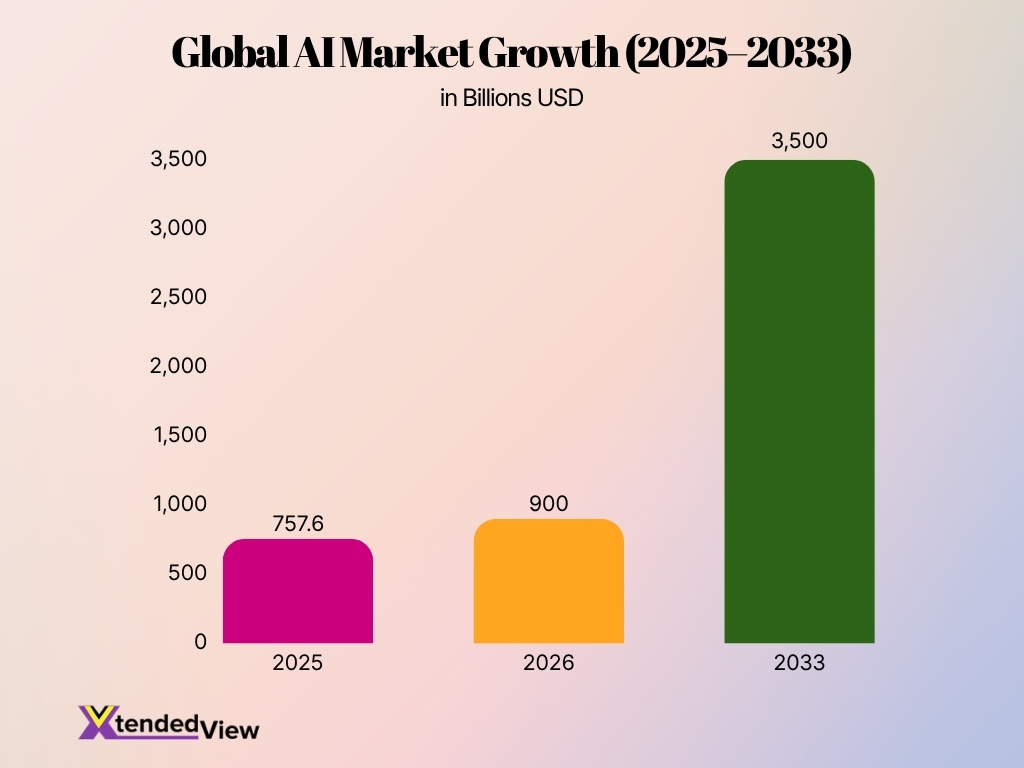
- The global AI market is estimated to reach $900 billion in 2026, compared with $757.6 billion in 2025.
- Another market forecast values the AI industry at $390.9 billion in 2025 and projects explosive growth through 2033.
- The AI market is forecast to expand at a 30.6% CAGR between 2026 and 2033.
- Industry projections indicate the market could reach $3.5 trillion by 2033.
- Another forecast estimates the AI market will reach $2.48 trillion by 2034.
- The projected annual growth rate from 2026 through 2034 stands at 26.6% in one widely cited forecast.
- AI-related business demand continues to expand due to enterprise adoption of generative and agentic AI technologies.
- The United States alone could experience a 21% net GDP increase by 2030 from AI-driven economic activity.
- AI remains one of the fastest-growing technology sectors globally, outpacing many traditional software categories.
Enterprise AI Adoption Rates
- Worker access to AI technologies increased by 50% during 2025.
- Organizations with AI deployed at scale continue to increase across most major industries.
- 66% of businesses report productivity and efficiency gains from enterprise AI adoption.
- AI adoption among OECD firms reached 20.2% in 2025, more than double the 8.7% recorded in 2023.
- AI adoption among EU enterprises climbed to 19.95% in 2025.
- Large enterprises in Europe reported 55.03% AI adoption, compared with 17% among small businesses.
- 57.3% of ICT-sector firms reported using AI, making it one of the most AI-intensive industries.
- Around 70.9% of non-adopting enterprises cite a lack of expertise as a major reason for not implementing AI.
- Enterprise leaders increasingly focus on ROI, governance, and workforce readiness as AI deployments mature.
Generative AI Usage in Business
- The worldwide generative AI market is expected to reach $86.7 billion in 2026.
- Another forecast values the generative AI market at $83.3 billion in 2026, up from $53.7 billion in 2025.
- Generative AI could grow to nearly $988.4 billion by 2035.
- A separate forecast estimates the market will reach $1.2 trillion by 2035.
- Generative AI is projected to expand at nearly 37% CAGR over the next decade.
- Around 65% of organizations now use generative AI regularly in at least one business function.
- Companies deploying generative AI report an average return of $3.70 for every $1 invested.
- Financial services organizations have reported ROI as high as 4.2x from generative AI deployments.
- Businesses implementing generative AI across three or more functions capture significantly greater value than isolated deployments.
- Generative AI tools reached 53% consumer adoption globally by early 2026, accelerating enterprise familiarity and usage.
AI Business Integration Statistics
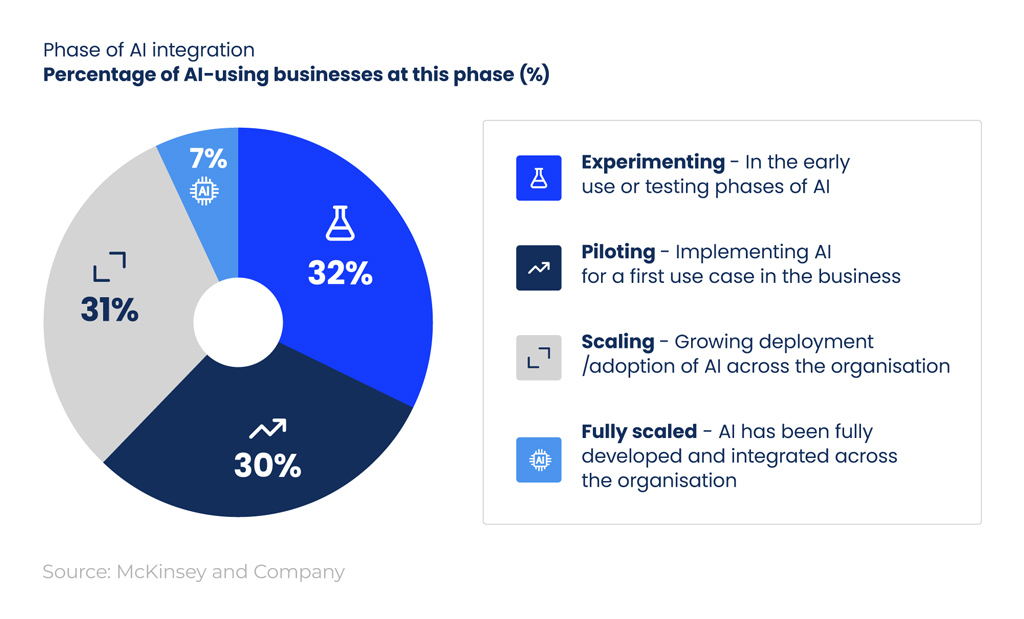
- 32% of businesses are still experimenting with AI, making early-stage testing the most common phase of adoption.
- 31% of businesses are actively scaling AI deployments across their organizations to expand operational impact.
- 30% of businesses are piloting AI use cases, indicating strong momentum toward broader implementation.
- Only 7% of businesses have reached the fully scaled AI stage, showing that enterprise-wide integration remains limited.
- A combined 62% of businesses are in the experimenting or piloting phases, highlighting that most AI initiatives are still maturing.
- Nearly 1 in 3 businesses (31%) are transitioning from trials to organization-wide AI adoption through scaling efforts.
- The gap between scaling (31%) and fully scaled (7%) businesses suggests significant challenges in achieving enterprise-wide AI integration.
- More than 9 out of 10 AI-using businesses (93%) have not yet fully integrated AI across their organizations.
- The distribution of adoption phases indicates that AI implementation is widespread, but full operational maturity remains uncommon.
- The 7% fully scaled adoption rate underscores the substantial opportunity for future AI expansion across businesses.
Economic Impact and GDP Contributions of AI
- AI could contribute up to $15.7 trillion to the global economy by 2030 through productivity gains and increased consumer demand.
- Global GDP is projected to be 14% higher by 2030 because of AI adoption across industries.
- The United States is expected to capture nearly $3.7 trillion of AI-driven economic value by 2030.
- AI could increase labor productivity growth by 1.5 percentage points annually over the next decade in advanced economies.
- Generative AI alone may add between $2.6 trillion and $4.4 trillion in annual economic value globally.
- Banking, high-tech, retail, and life sciences represent the industries with the largest projected AI-driven value creation opportunities.
- AI-powered automation could affect activities that account for 60% to 70% of employees’ work time across many occupations.
- Organizations that scale AI successfully are reporting measurable gains in revenue growth, operating margins, and customer retention.
- AI investments continue to attract significant capital as businesses seek long-term productivity and competitive advantages.
AI Effects on Jobs and the Workforce
- By 2030, AI and automation could create approximately 170 million new jobs globally while displacing around 92 million existing roles.
- The net effect is expected to be a gain of roughly 78 million jobs worldwide.
- Nearly 41% of employers expect to reduce portions of their workforce where AI can automate tasks.
- Around 77% of employers plan to reskill or upskill workers to collaborate with AI systems.
- AI specialists remain among the fastest-growing job categories globally.
- Data analysts, machine learning engineers, and cybersecurity professionals continue to see strong demand driven by AI adoption.
- More than 70% of executives expect AI to significantly change job responsibilities within the next three years.
- Customer service, administrative support, and routine data-processing roles face the highest levels of automation exposure.
- Healthcare, engineering, education, and technology roles are expected to benefit from AI augmentation rather than full replacement.
Business Impact of AI on Workforce Size
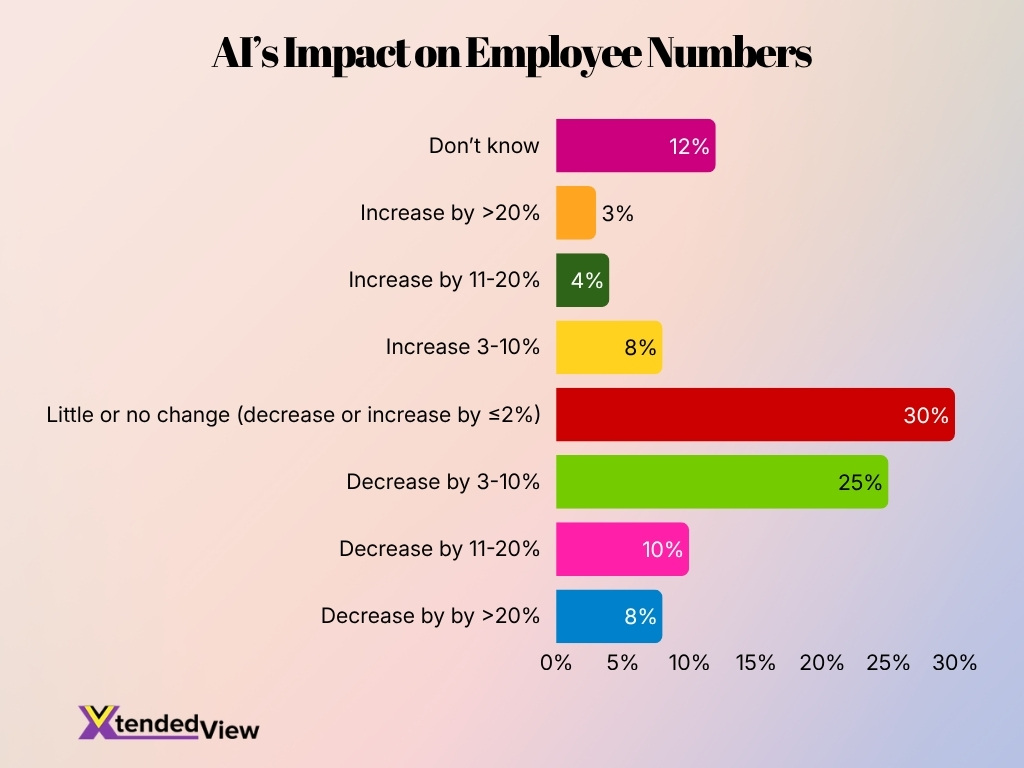
- 30% of organizations reported little or no change in employee numbers after adopting AI, making it the most common outcome.
- 25% of businesses experienced a 3%–10% workforce reduction, highlighting AI’s role in operational efficiency.
- Only 15% of organizations reported workforce growth, including 3% increasing staff by more than 20% after AI adoption.
- A combined 43% of organizations saw a decline in employee numbers, compared to 15% reporting increases.
- 12% of respondents were unsure of AI’s impact on workforce size, indicating ongoing measurement challenges.
- Just 7% of organizations achieved double-digit workforce growth (11%+ increase) following AI implementation.
- 18% of businesses reported workforce reductions of 11% or more, suggesting significant restructuring in some cases.
- The data shows AI adoption is currently associated more with workforce optimization than with large-scale hiring expansion.
- Nearly 1 in 3 organizations (30%) maintained stable staffing levels despite integrating AI into operations.
- Organizations were over 2.8 times more likely to reduce headcount (43%) than increase it (15%) after adopting AI.
AI Corporate Investment and Budget Trends
- 67% of organizations increased their generative AI budgets entering 2026.
- Average enterprise investment in generative AI reached approximately $110 million among surveyed organizations.
- 73% of insurance CEOs identify AI as their top investment priority.
- Roughly 67% of financial services firms expect meaningful AI returns within one to three years.
- About 67% of companies plan to dedicate between 10% and 20% of their budgets to AI initiatives.
- One major enterprise AI company achieved 400% net revenue retention, highlighting strong customer expansion.
- AI infrastructure demand has become a major driver of capital expenditure among cloud and enterprise technology providers.
- Governments and large enterprises account for 61% of a leading vendor’s AI backlog, demonstrating strong institutional investment.
- AI spending priorities increasingly focus on productivity, automation, analytics, and agent-based workflows.
Employee AI Usage and Productivity Gains
- Employees using generative AI complete writing and research tasks up to 40% faster.
- Customer support agents assisted by AI tools show overall productivity improvements of 14%.
- Novice and low-skilled workers experience the highest gains with a 35% increase in productivity.
- Software developers using AI assistants can complete coding tasks up to 55% faster.
- Approximately 75% of global knowledge workers currently use AI in their daily tasks.
- Nearly 46% of employees have adopted AI tools independently without formal employer direction.
- AI integration in daily workflows improves overall employee task efficiency by an average of 66%.
- Workers using AI copilots report saving an average of 1.2 hours per day on information retrieval.
Key AI Adoption Statistics by Industry
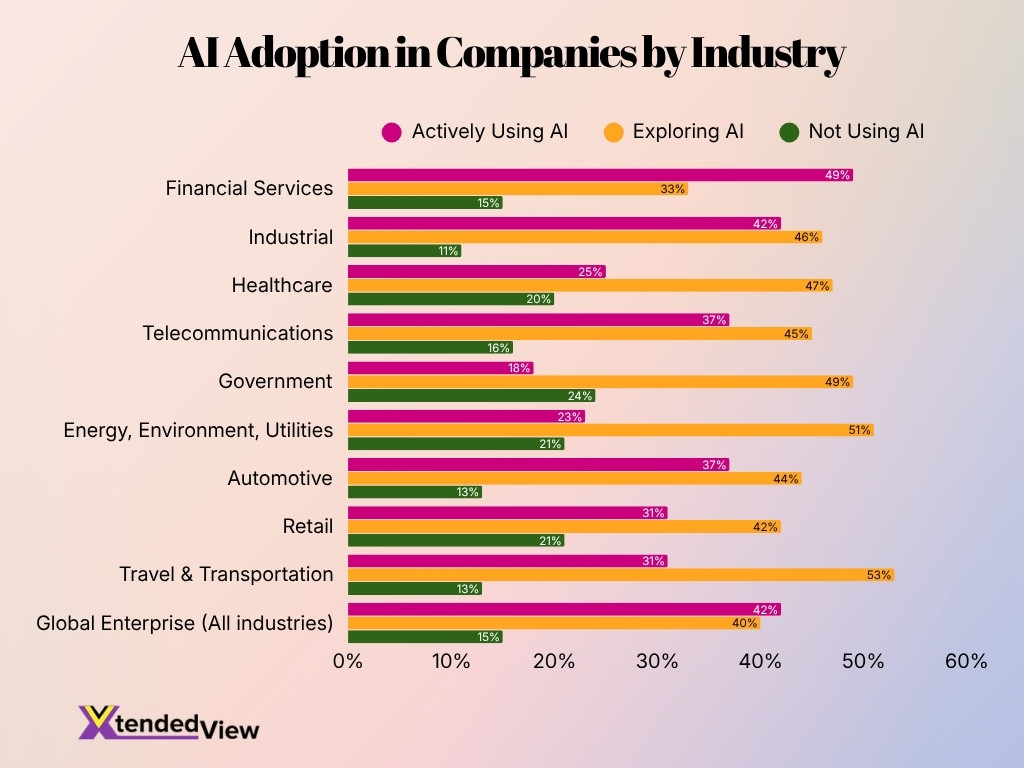
- Financial Services leads AI adoption, with 49% of companies actively using AI, the highest among all industries.
- Travel & Transportation shows the strongest future potential, with 53% of firms currently exploring AI initiatives.
- Energy, Environment & Utilities has 51% of organizations exploring AI, indicating significant upcoming adoption.
- Government records the lowest active AI usage at 18%, while 49% of agencies are still evaluating AI opportunities.
- Industrial companies are among the most advanced adopters, with 42% actively using AI and 46% exploring it.
- Healthcare lags in implementation, with only 25% actively using AI despite 47% exploring the technology.
- Telecommunications reports strong momentum, with 37% active AI adoption and 45% exploring deployments.
- Automotive firms demonstrate growing AI maturity, with 37% actively using AI and only 13% not using it.
- Retail remains cautious, with 31% actively using AI while 21% have yet to adopt the technology.
- Across the Global Enterprise landscape, 42% of organizations actively use AI, 40% are exploring it, and 15% are not using it.
AI in Marketing and Advertising Statistics
- More than 80% of marketers now use AI in at least one area of their marketing workflow.
- AI-powered personalization can increase marketing ROI by 10% to 30% in many industries.
- Around 71% of marketers use generative AI for content creation and campaign development.
- Businesses using AI-driven personalization report higher engagement and improved customer satisfaction metrics.
- Programmatic advertising, heavily powered by AI algorithms, accounts for over 90% of digital display advertising in the United States.
- AI tools increasingly assist with audience segmentation, keyword research, ad copy generation, and campaign optimization.
- Marketing teams using AI report faster content production cycles and reduced operational costs.
- Predictive analytics powered by AI helps businesses identify high-value prospects and improve conversion rates.
- Retail and e-commerce companies remain among the largest adopters of AI-driven marketing technologies.
AI in Finance and Accounting
- Generative AI could add between $200 billion and $340 billion in annual value to the global banking sector.
- 100% of surveyed finance leaders are currently adopting AI or plan to in the near future.
- Organizations anticipate that Generative AI can enhance efficiency by up to 56% across financial workflows.
- Integrating AI at scale can accelerate bank development timelines by 30% to 50%.
- The global AI accounting market is projected to grow rapidly to $6.62 billion by 2029.
- Approximately 80% of commercial banks plan to adopt targeted Generative AI solutions by 2026.
- Deploying AI for intelligent document processing can reduce the time and cost of issuing credit by up to 90%.
- Financial institutions that successfully operationalize AI report 20% to 30% productivity improvements.
- Strategic AI investments currently represent 16% of total technology spending across the banking industry.
AI in Customer Service and Support
- AI-powered chatbots will manage approximately 95% of all customer interactions by 2027.
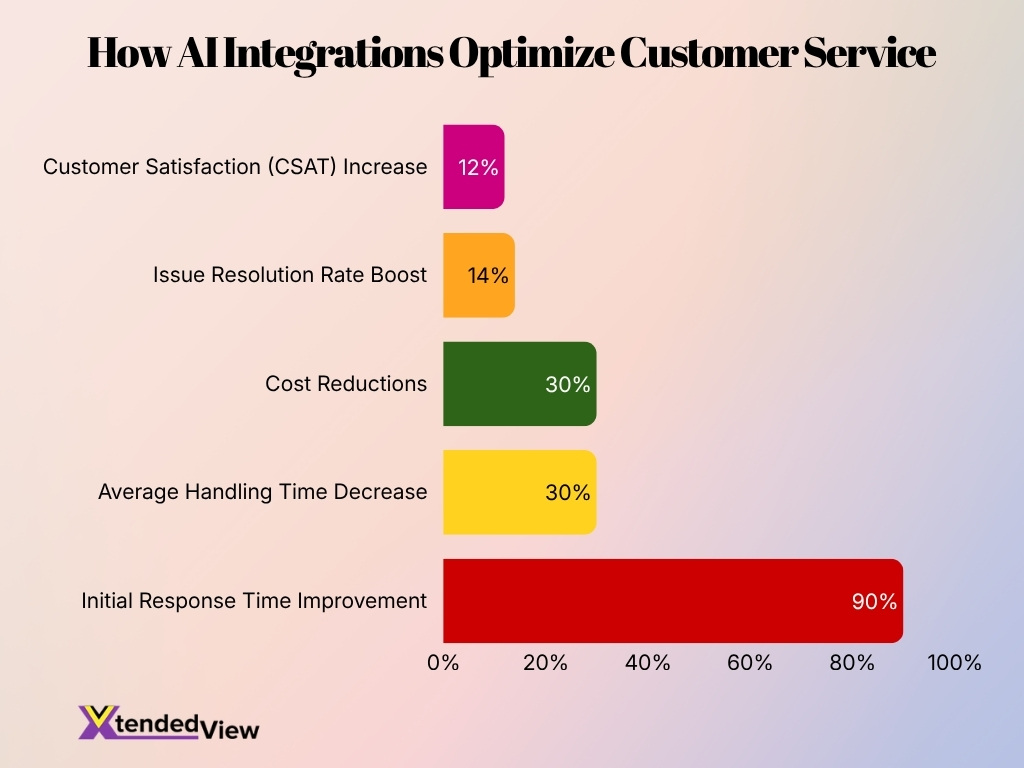
- Implementing AI customer service tools yields operational cost reductions of up to 30%.
- Generative AI integrations can successfully decrease average handling times for support agents by 30%.
- Nearly 80% of customer service leaders plan to significantly expand their AI investments within two years.
- Deploying AI-assisted agents consistently results in a 14% boost in overall issue resolution rates.
- Over 60% of consumers now actively prefer automated self-service for resolving simple inquiries.
- Leveraging conversational AI systems can improve initial customer response times by more than 90%.
- Utilizing AI for sentiment analysis increases average customer satisfaction scores by approximately 12%.
AI in Healthcare and Medical Services
- The global AI in healthcare market is projected to surge from $56 billion in 2026 to over $1 trillion by 2034.
- The U.S. FDA has officially authorized a cumulative total of 1,451 AI-enabled medical devices as of late 2025.
- Radiology strictly dominates the medical AI landscape, accounting for 76% of all FDA-cleared AI devices.
- Health systems deploying AI transcription and summarization report a 40% to 45% reduction in physician documentation time.
- AI-driven automation is projected to reduce U.S. healthcare administrative costs by an estimated $20 billion annually.
- Clinical deployments of generative AI scribes have demonstrated a 25% to 30% reduction in clinical-note error rates.
- Approximately 80% of hospitals reported actively using AI tools to enhance patient care and workflow efficiency by 2025.
- Healthcare AI investments currently deliver an average Return on Investment (ROI) of 3.2 to 1 within a 12 to 18 month payback period.
- AI algorithms for diabetic retinopathy detection achieved a 96% clinical accuracy rate during 2025 trial data evaluations.
- Robot-assisted surgery captured the largest market share for AI applications in healthcare at over 13% of total revenue in 2025.
AI in Retail and E-commerce
- 80% of retail executives are currently using or actively testing generative AI technologies in their operations.
- The global AI in retail market is projected to expand from $60.3 billion in 2025 to over $376 billion by 2035.
- AI-driven personalization leaders report revenue increases of up to 40%, with recommendations driving 25% to 35% of total e-commerce revenue.
- Traffic referred from generative AI to retail websites surged by 693% year-over-year during the 2025 holiday season.
- Retailers using AI demand forecasting experience inventory reductions of up to 20% while fully maintaining customer service levels.
- Over 51% of online consumers reported actively using generative AI tools to assist with their shopping journeys in 2025.
- Approximately 33% of online retailers are expected to deploy advanced autonomous AI shopping agents by the year 2028.
- Implementing AI-powered pricing models has been proven to deliver 5% to 10% margin improvements within 6 to 12 months.
Key Drivers Behind AI Adoption in Manufacturing
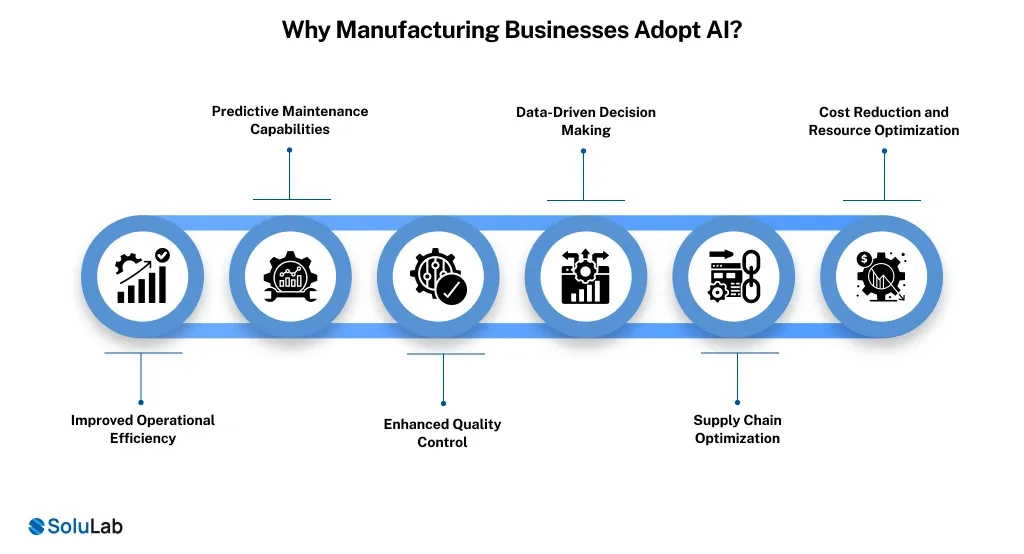
- Improved Operational Efficiency is a leading reason manufacturers adopt AI to streamline workflows, reduce downtime, and boost productivity.
- Predictive Maintenance Capabilities help businesses identify equipment issues early, minimizing costly breakdowns and maintenance expenses.
- Enhanced Quality Control enables manufacturers to detect defects faster and maintain higher product standards through AI-powered monitoring.
- Data-Driven Decision Making allows organizations to leverage real-time insights for smarter operational and strategic decisions.
- Supply Chain Optimization helps improve inventory management, demand forecasting, and logistics performance across manufacturing networks.
- Cost Reduction and Resource Optimization drive AI adoption by helping businesses lower operational costs and maximize resource utilization.
AI Security, Privacy, and Risk Statistics
- Approximately 78% of organizations report using AI in at least one business function, increasing the importance of governance and security controls.
- Around 63% of organizations identify inaccurate or biased AI outputs as a significant business risk.
- Data privacy remains one of the most frequently cited concerns during AI deployment initiatives.
- More than 50% of executives report concerns about AI-related cybersecurity threats and misuse.
- Organizations are increasingly investing in AI governance frameworks to address compliance and accountability requirements.
- AI-generated content has increased concerns about misinformation, deepfakes, and intellectual property risks.
- Regulatory frameworks for AI continue to expand globally, particularly in North America, Europe, and the Asia-Pacific markets.
- Enterprises are adopting responsible AI programs focused on transparency, explainability, and human oversight.
- Security leaders increasingly use AI-powered threat detection systems to identify cyberattacks in real time.
Key Challenges Businesses Face When Adopting AI
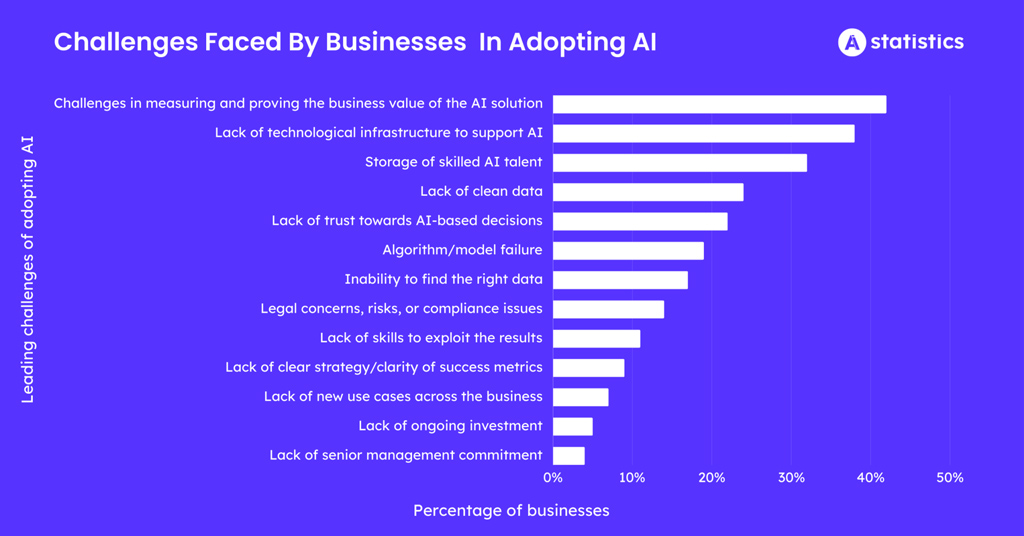
- 42% of businesses cite proving the business value and ROI of AI solutions as their biggest adoption challenge.
- 38% of organizations struggle with a lack of technological infrastructure needed to support AI initiatives.
- 32% of businesses report a shortage of skilled AI talent, making implementation difficult.
- 24% of companies face challenges due to poor data quality and lack of clean data.
- 22% of organizations indicate a lack of trust in AI-driven decisions as a major barrier.
- 19% of businesses are concerned about algorithm and model failures impacting AI outcomes.
- 17% of organizations struggle with the inability to identify and access the right data.
- 14% of companies cite legal, regulatory, and compliance risks as obstacles to AI adoption.
- 11% of businesses lack the skills required to effectively leverage AI-generated insights.
- 9% of organizations report a lack of clear AI strategy and success metrics.
- 7% of businesses struggle to identify new AI use cases across different departments.
- 5% of companies face challenges due to insufficient ongoing investment in AI projects.
- 4% of organizations report limited senior management commitment to AI adoption efforts.
Future Predictions for AI in Business
- The global AI market is projected to reach $3.4 trillion by 2033, reflecting a 30.6% CAGR.
- Generative AI could contribute between $2.6 trillion and $4.4 trillion annually to the global economy.
- More than 80% of customer interactions may involve AI-assisted systems within the next few years.
- AI adoption will expand with 70% to 90% of businesses worldwide using at least one AI tool by 2026.
- Enterprise AI workflows are expected to deliver a 25% to 55% increase in productivity across industries.
- The healthcare AI market is forecast to accelerate rapidly and reach $188 billion globally by 2030.
- AI-powered technologies are projected to boost overall labor productivity by up to 40% by 2035.
- Organizations can expect to yield $3.50 to $4.00 in returns for every dollar spent on AI solutions.
- The AI SaaS market is predicted to amount to $1.5 trillion by 2030 with a 37.6% CAGR.
Frequently Asked Questions (FAQs)
The global artificial intelligence market is projected to reach approximately $900 billion in 2026, up from $757.6 billion in 2025.
The global AI market is expected to grow by approximately 37.3% year over year in 2026.
Worldwide AI spending is forecast to total $2.52 trillion in 2026, representing a 44% increase from the previous year.
The global generative AI market is projected to reach between $55.5 billion and $91.6 billion in 2026, depending on the market model and scope used.
U.S. private AI investment reached $285.9 billion in 2025, the highest level recorded globally.
Conclusion
Artificial intelligence has evolved into a foundational business technology across nearly every major industry. The data shows that organizations continue to increase AI investments, expand enterprise deployments, and generate measurable productivity gains. From customer service and marketing to healthcare, finance, manufacturing, and retail, AI is creating new opportunities while also introducing governance, security, and workforce challenges.
Looking ahead, businesses that combine AI adoption with strong data strategies, employee training, and responsible governance frameworks are likely to capture the greatest value. As market growth accelerates and AI capabilities mature, the technology will remain a major driver of innovation, operational efficiency, and economic growth throughout the remainder of the decade.
