



Online shopping has firmly cemented its place in the global retail landscape, reshaping how businesses operate and consumers behave. From a retail executive cutting logistics costs to a consumer in a regional U.S. city choosing mobile ordering over visiting a store, the ripple effects span industries and geographies. Whether it’s a fashion brand leveraging global e‑commerce channels or a grocery chain adapting to omnichannel demand, the data below illuminates the scope and pace of change. Dive into the full article to uncover the key numbers driving this transformation.
Editor’s Choice
- Globally, an estimated 2.77 billion people will shop online in 2025.
- The worldwide e‑commerce market is projected to reach $7.4 trillion in 2025.
- Online purchases will account for around 22% of global retail sales in 2025.
- In the U.S., e‑commerce sales in Q2 2025 grew 5.3% year‑over‑year and comprised 16.3% of all retail sales.
- A recent consumer report shows that e‑commerce must deliver speed, low cost, and easy returns to meet 2025 expectations.
- More than 33% of the global population will be online shoppers in 2025.
- The number of e‑commerce stores globally exceeds 28 million.
Recent Developments
- Global online retail sales rose to $6.42 trillion in 2025, with forecasts to reach $7.89 trillion by 2028.
- The U.S. e‑commerce segment in Q2 2025 reached $304.2 billion (adjusted) and stood at 16.3 % of total U.S. retail sales.
- Consumer expectations for delivery speed and hassle‑free returns are now table stakes.
- The global e‑commerce market grew from $5.63 trillion in 2024 to $6.25 trillion in 2025, CAGR 11 %.
- Cross‑border shopping and international storefronts continue expanding, with 52 % of online shoppers looking internationally.
- AI‑driven personalisation and social commerce are emerging as major retail levers for 2025.
- While growth continues, the pace is moderating compared with the surge during pandemic years.
- Tier‑2 and Tier‑3 cities in emerging markets are showing strong adoption, shifting the growth frontier.
Global Market Size & Growth Trends
- Global e‑commerce sales are projected at $7.4 trillion in 2025.
- The market size is set to grow from $5,630.8 billion in 2024 to $6,251.3 billion in 2025, about 11% growth.
- Online shopping is expected to reach 20.5% of retail sales globally in 2025.
- Worldwide, online buyers will hit 2.77 billion by 2025, or 33% of the global population.
- E‑commerce sales globally are forecast to reach $8 trillion by 2027.
- Asia‑Pacific is expected to lead, with a 20.2% CAGR through 2030.
- U.S. e‑commerce sales in Q2 2025 totaled $292.9 billion, growing 6.2% from Q1.
- E‑commerce accounted for 15.5% of total U.S. retail in Q2 2025 (not adjusted).
- Europe’s online retail market is projected to reach $1.03 trillion in 2025.
- Over 66% of global online sales are completed via mobile devices in 2025.
Number of Online Shoppers Over the Years
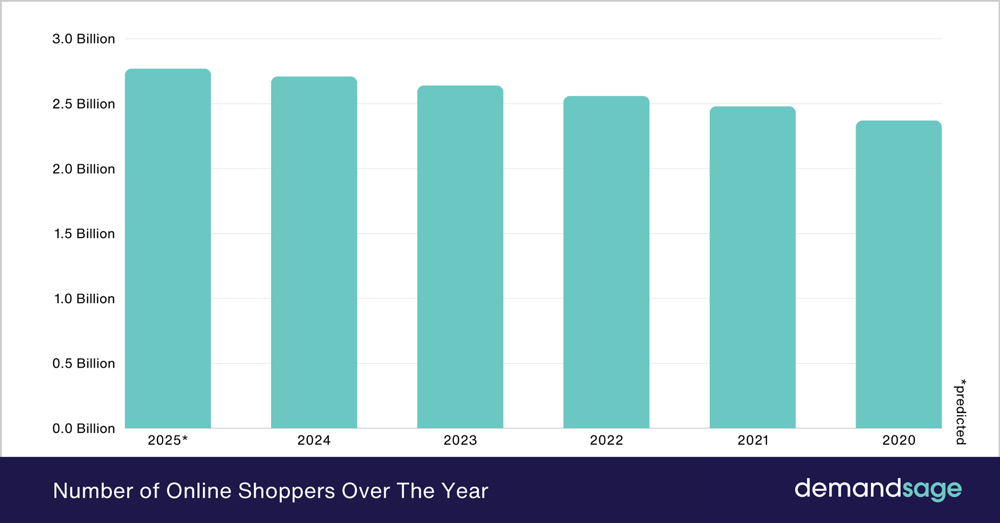
- In 2025, the number of online shoppers is predicted to reach 2.77 billion, marking the highest figure to date.
- In 2024, there were approximately 2.71 billion online shoppers globally.
- 2023 saw around 2.64 billion online shoppers worldwide.
- In 2022, the global online shopping population reached 2.54 billion.
- In 2021 recorded about 2.45 billion digital buyers.
- Back in 2020, the number stood at 2.37 billion, showing a consistent annual increase since then.
- Over the past six years, there’s been a projected growth of 400 million new online shoppers.
- This trend represents a 16.9% increase in global online shopper count from 2020 to 2025.
- The data demonstrates a steady year-over-year growth, reflecting increased internet access, mobile adoption, and global digital transformation.
Global E‑Commerce Trends by Country
- China, the U.S., and Western Europe together account for over $5.17 trillion of the global e‑commerce market in 2025.
- India’s e‑retail market value is around $60 billion in GMV in 2025, among the world’s fastest-growing.
- In India, Tier‑3 cities posted 21% growth and made up 38% of orders during the 2025 summer sale.
- Online spending per person in Africa in 2023 was about $83, underlining growth potential.
- Cross‑border e‑commerce continues to surge, with a double-digit CAGR among international shoppers globally.
- The Asia‑Pacific region is set for the fastest growth at 20.2% CAGR through 2030.
- In the U.S., e‑commerce made up about 16.3% of total retail sales in Q2 2025.
- Global online retail spend in 2024 was nearly $6.01 trillion and is projected to reach $8.9 trillion by 2030.
- The Philippines leads in growth rate at 24% YoY, followed by India and Indonesia.
- More than 2.8 billion people will shop online globally in 2025. to grow toward $8.9 trillion by 2030.
Gender-Based Online Shopping Statistics
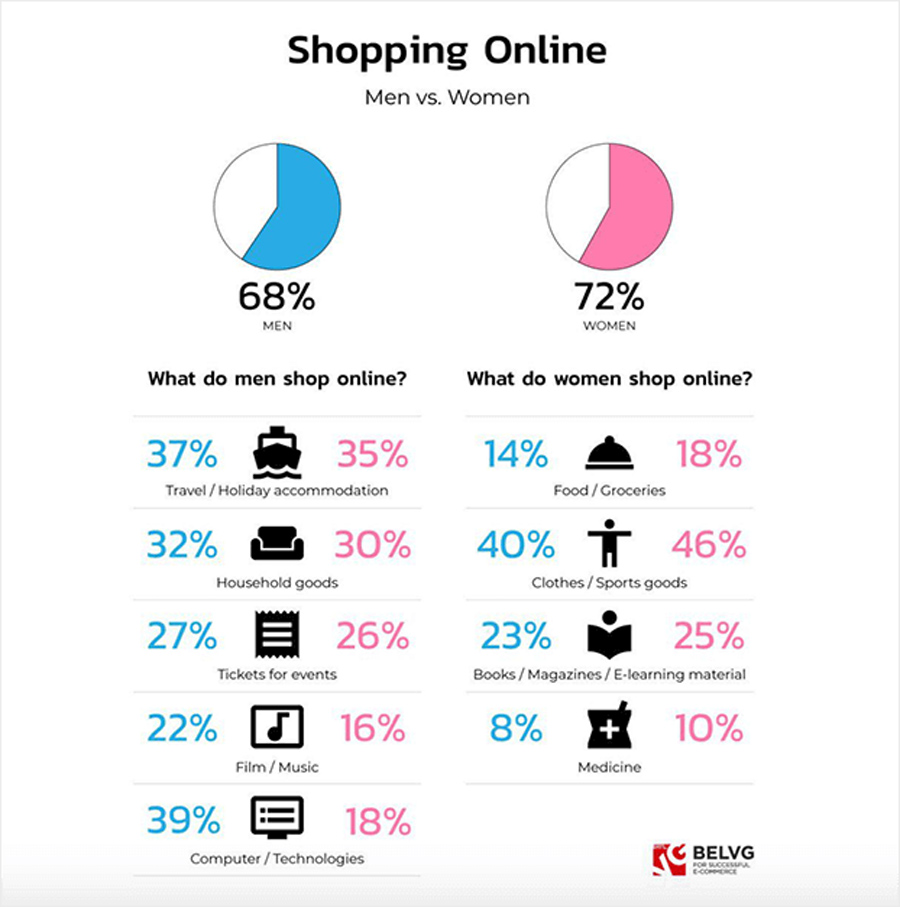
- 68% of men and 72% of women shop online, showing high engagement from both genders.
- 37% of men purchase travel or holiday accommodation online compared to 35% of women.
- 32% of men shop for household goods, while 30% of women do the same.
- 27% of men buy event tickets online, closely followed by 26% of women.
- 22% of men purchase film and music digitally, compared to 16% of women.
- 39% of men shop for computers and technology, whereas only 18% of women do.
- 14% of women buy food and groceries online, compared to 18% of men.
- 46% of women purchase clothes and sports goods, more than 40% of men.
- 25% of women buy books, magazines, or e-learning material, slightly higher than 23% of men.
- 10% of women shop for medicine online, compared to 8% of men.
Top Leading E‑Commerce Stores
- Amazon is projected to generate about $486.6 billion in U.S. web sales by 2025.
- Amazon holds approximately 37.6% of the U.S. online retail market share in 2025.
- Globally, Alibaba is estimated to hold about 23% of global e‑commerce GMV, while Amazon sits near 12%.
- In 2025, Walmart owns around 6.4% of the U.S. e‑commerce market share.
- Temu and eBay are among the fastest‑growing global marketplaces, gaining traction against leaders.
- Over 28 million e‑commerce stores operate worldwide, intensifying platform competition.
- Listing on Amazon‑owned marketplaces offers the highest global reach for sellers.
- Combining physical and online operations, hybrid omnichannel models are now standard among top retailers.
- Marketplaces invest heavily in cross-border & localised fulfilment, and over 52% of global shoppers buy internationally.
- Asia-Pacific e‑commerce platforms are growing at a 20.2% CAGR through 2030, challenging Western dominance.
Device & Channel Usage (Desktop vs Mobile vs Social)
- Worldwide, mobile devices are responsible for about 59% of all online retail sales in 2025, making mobile the dominant commerce channel.
- As of April 2025, mobile devices account for 59.7% of global website traffic.
- In the U.S., mobile devices are projected to make up around 44% of e‑commerce sales in 2025 (up from 42% in 2022).
- About 76% of U.S. adults use a smartphone to make purchases in 2025.
- Some developing markets see over 80% of internet traffic coming from mobile devices.
- Desktop still contributes higher conversion rates for categories like high‑priced goods, even as mobile leads in volume.
- Social commerce channels via mobile apps are responsible for an estimated 34% of all mobile commerce transactions.
- Retailers report that 87% have prioritised mobile‑first optimisation with responsive design, one‑click checkout, and dedicated app strategies.
- On average, consumers spend 66% of their digital shopping time on mobile vs 34% on desktop.
- In-app shopping funnels are overtaking browser-based mobile commerce for many social retail journeys.
Shopping Frequency & Consumer Behaviour Patterns
- Over 34% of global online shoppers buy products at least once a week in 2025.
- Among users of deferred‑payment methods such as BNPL, consumers are 82% more likely to enjoy online shopping and 42% more likely to order weekly than non‑users.
- In mobile‑first regions, shoppers convert significantly faster, mobile users make purchases within hours of product discovery.
- More than 52% of online shoppers say they look for products internationally.
- Weekly purchase behaviour is highest among Gen Z and Millennials, with these groups shopping online 2x more frequently than older age segments.
- Convenience, fast shipping, and easy returns are cited by over 70% of shoppers as top drivers of shopping frequency.
- Subscription models and “replenishables” fuel repeat online orders, with 30% of shoppers citing subscriptions as increasing purchase frequency.
- Across all age groups, more than 60% now use omnichannel methods, blending online and in‑store shopping in their typical buying pattern.
- Cross‑border online buying showed a 15% YoY increase in 2025, as shipping networks and payment options improve.
Mobile Shopping Trends
- Mobile commerce is projected to reach about $4.01 trillion in sales globally in 2025.
- There are approximately 1.65 billion mobile shoppers globally in 2025, representing about 30% of the digital population.
- Mobile devices are now generating over 70% of e‑commerce traffic in many markets, and one source reports 71.8% of traffic in 2025 from mobile on e‑commerce sites.
- Mobile conversions remain slightly below desktop for some categories, e.g., mobile conversion 3.0% compared to desktop 3.35%.
- Shopping app usage continues rising, and consumers spend tens of billions of hours annually using mobile commerce apps.
- Larger smartphone screens (phablets) seem to boost mobile purchase completion, e.g., 31% of smartphone users are more likely to complete a purchase if the screen is larger.
- Retailers are increasingly integrating mobile wallet payments, in‑app buy flows, and mobile‑first checkout as standard.
The Role of Social Media Platforms
- Globally, around 7 in 10 online shoppers say they have purchased via a social media‑led channel in 2025.
- About 82% of shoppers say that trending or viral product posts on social media influenced their purchase decision.
- Among global shoppers, 66% express interest in live‑streamed shopping events (via social platforms) as a buying channel.
- Social commerce is forecast to become a primary shopping channel for 71% of global consumers by 2030.
- About 54% of Gen Z shoppers use social media platforms weekly for product discovery.
- In 2025, social commerce sales are projected to reach $1.2 trillion globally.
- 68% of brands increased their social commerce ad spend in the past year.
- Over 60% of purchases made via social media occur on mobile devices.
- TikTok, Instagram, and Facebook account for more than 80% of total social commerce traffic in many regions.
- Companies report a 23% higher conversion rate from social commerce campaigns compared to traditional e‑commerce ads.
Cart Abandonment & Checkout Conversion Rates
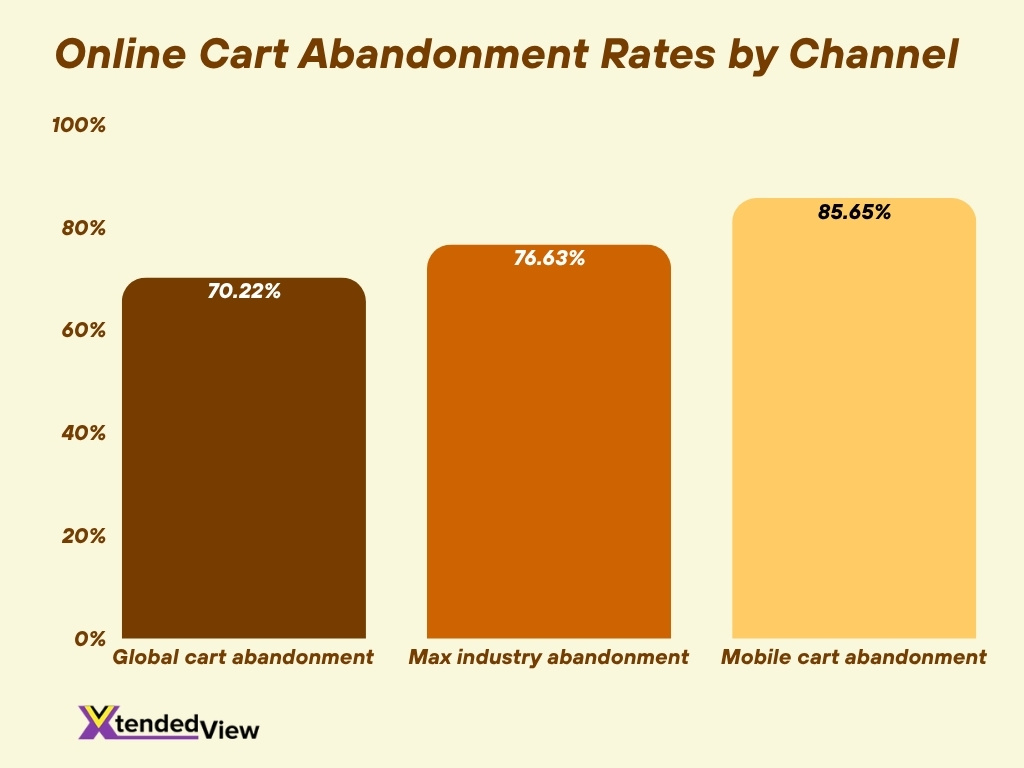
- The average global cart abandonment rate is around 70.22% in 2025, meaning about seven out of ten shopping carts are not completed.
- Some industry data show cart abandonment rates of up to 76.63% across all industries globally.
- On mobile devices specifically, the abandonment rate can reach 85.65% in 2025, far higher than on desktops.
- Primary reasons for abandonment include high extra costs (shipping, taxes), cited by about 48% of users.
- Mandatory account creation is cited as a reason for abandonment by 24% of shoppers.
- It’s estimated that up to $18 billion in annual sales is lost due to cart abandonment at a global e‑commerce level.
- Businesses that streamline checkout, remove friction, offer guest checkout, and mobile‑optimised flows typically recover significant incremental revenue.
Payment Methods & Finance Options (e.g., Buy Now Pay Later)
- The global Buy Now Pay Later (BNPL) market is projected at $560.1 billion in 2025, a year‑over‑year increase of 13.7%.
- In the U.S., monthly average spending via BNPL rose from about $201.60 in June 2024 to $243.90 in June 2025, 21% increase.
- Nearly 48% of Americans consider BNPL for purchases exceeding $200.
- BNPL users are 44% more likely than non‑users to make online purchases of more than $100.
- BNPL options are offered by thousands of online merchants, e.g., one dataset notes 277,534 U.S. websites using one BNPL provider in 2025.
- BNPL is forecast to account for 24% of all global e‑commerce transactions by 2026.
- About 60% of U.S. Gen Z adults have used a BNPL service at least once.
- BNPL transaction volumes in India are expected to reach $63 billion by 2026.
- 42% of global shoppers cite flexible payment as a reason for increased online shopping.
- Late payment rates for BNPL loans average 3.8% globally, raising regulatory and risk-management concerns.
Online Shopping During Key Shopping Events
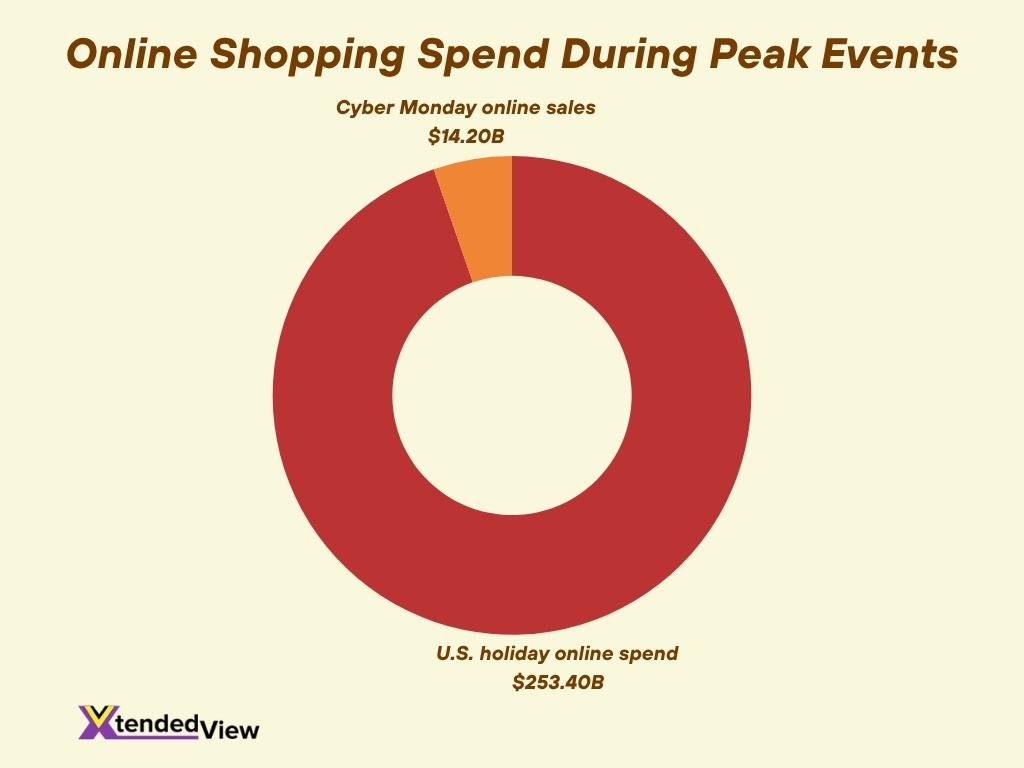
- The U.S. online retail holiday‑season spend (Nov 1 to Dec 31 2025) is forecast at $253.4 billion, up 5.3% year‑over‑year.
- On its peak day, Cyber Monday, online sales are projected to hit $14.2 billion in 2025.
- Mobile devices will account for a record 56.1% of holiday‑season online revenue this year.
- During the holiday span, Buy Now Pay Later (BNPL) is expected to drive approximately $19.8 – $20.4 billion in spending.
- Roughly 88% of consumers plan to shop at major events like Black Friday, Small Business Saturday, or Cyber Monday in 2025.
- About 30% of in‑person Black Friday shoppers said they will finish purchases on the same day in 2025.
- More than 1 in 5 U.S. online shoppers expect to spend $1,000 or more during the 2025 holiday shopping season.
- At least 65% of holiday shoppers expect to start buying gifts before Thanksgiving 2025.
- The shopping‑event season for retailers is shorter in 2025, with only 26 core shopping days between Black Friday and Christmas Day.
Social Commerce & Influencer Impact
- The global influencer‑marketing industry is projected to reach $32.55 billion in 2025.
- In the U.S., approximately 86% of marketers plan to use influencers in 2025.
- Retail social‑commerce sales in the U.S. are expected to be around $85.6 billion in 2025, up 19.5% from the previous year.
- Social‑commerce channels are expected to represent over 17% of total online sales in 2025.
- In influencer‑marketing campaigns, 80% of brands track sales or conversions tied to influencers.
- Nano‑influencers (small‑audience creators) make up 75.9% of Instagram’s influencer base by 2024/2025.
- Brands favour long‑term influencer partnerships, with 47% focusing on sustained collaborations rather than one‑off campaigns.
- In social commerce, smartphone usage accounts for over 90% of U.S. social‑commerce transactions.
- AI and social media features are being used more for “discovery‑to‑purchase” flows, especially among younger shoppers (Gen Z/Millennials).
Customer Loyalty, Retention & Return Rates
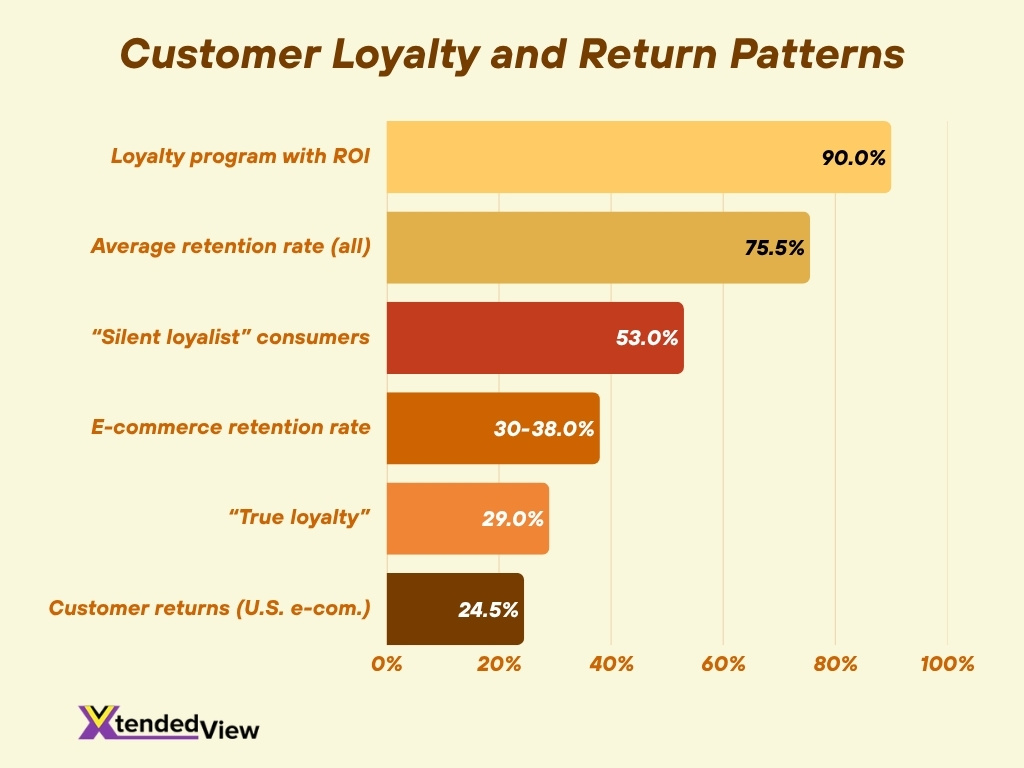
- The average customer retention rate across industries is approximately 75.5% in 2025.
- A mere 5% increase in customer retention can boost profits by 25% to 95%.
- In the ecommerce sector, typical retention rates are roughly 30%–38%, underscoring the challenge of building loyalty online.
- Loyalty programs often deliver positive ROI, 90% show returns, with top performers earning 4.8× ROI.
- 44% of companies see loyalty‑program returns begin within six months.
- 68% of consumers say they remain loyal to at least certain brands in 2025.
- “True loyalty” (deep commitment) dropped to 29% in 2025, a 5‑point decline from 2024.
- 53% of consumers fall into the “silent loyalist” category; they’re consistent buyers but not engaged publicly.
- Ecommerce return rates (online purchases returned) in the U.S. are projected to reach 24.5% in 2025.
Trust, Privacy & Security in Online Shopping
- 75% of consumers say they will not purchase from companies they don’t trust with their personal data.
- In the past year, the percentage of users worried about data privacy and security jumped from 60% to 70%.
- 68.8% express concern about how companies use their personal data, and 1 in 4 have personally experienced an online security incident.
- By the end of 2025, 60% of large organisations will use at least one privacy‑enhancing computation (PEC) technique.
- 95% of organisations believe the benefits of investing in data privacy exceed costs.
- Among online shoppers, 86% rate security as “very important” when shopping online.
- Data protection is increasingly seen as branding; if the store looks safe and acts responsibly, conversion chances improve.
- Trust‑based repeat purchases occur when customers trust a retailer, 88% will return as repeat buyers.
What Do People Buy the Most Online?
- Top‑selling category globally in 2025, apparel – followed by electronics, footwear, pet‑care, toys, and home‑improvement tools.
- Sales of dance dresses and costumes grew 46% in 2025, reflecting niche upward trends.
- Beauty & skincare online purchases saw significant uptake, especially among 25‑49‑year‑olds in the UK, where 30%+ buy online.
- In the U.S., online e‑commerce revenue was projected to climb from $1.223 trillion in 2024 to $1.382 trillion in 2025.
- Globally, the number of people shopping online in 2025 is estimated at 2.77 billion.
- In 2025, the global e‑commerce market is expected to hit $7.4 trillion in sales.
- In India, the e‑retail market reached $60 billion GMV in early 2025, marking the country’s rising buying power.
- 52% of online shoppers look for products internationally, showing strong cross‑border buying demand.
Online Shopping vs In‑Store Shopping Statistics
- In the U.S., for 2024, consumers spent $5.927 trillion in‑store and $1.337 trillion online.
- In the first half of 2025, the monthly average retail spend was $603.8 billion, of which 18.3% came from e‑commerce.
- The share of online retail sales grew by 6.36 percentage points in 2024 over 2023.
- 73% of consumers in 2025 switch between online and in‑store shopping rather than choosing only one.
- 71% of consumers say they prefer online shopping because of convenience.
- E‑commerce currently accounts for 22% of global retail sales in 2025.
- The average global e‑commerce market share has been rising at 0.32 percentage points per year since 2021.
- In markets where mobile dominates, in‑store shopping still has a role for higher‑touch or experiential purchases.
Frequently Asked Questions (FAQs)
Approximately 2.77 billion people globally will shop online in 2025.
Online shopping will represent around 22% of total global retail sales in 2025.
Global retail e‑commerce sales are projected to reach about $7.4 trillion in 2025.
In Q2 2025, U.S. e‑commerce sales accounted for roughly 16.3% of total retail sales.
Around 52% of online shoppers say they search for products from international sellers.
Conclusion
The online shopping landscape is expansive, varied, and accelerating in complexity. Major shopping events like Cyber Monday continue to drive high‑volume spend, while social commerce and influencer‑led strategies are reshaping how purchases happen. At the same time, loyalty and retention remain vital, yet challenging, and trust, privacy, and security have risen from back‑end considerations to front‑line differentiators.
Consumers continue to buy apparel, electronics, and niche lifestyle products online, and though in‑store still holds a significant share, the digital channel now commands a broad and mainstream role. Businesses that align their strategies across events, social platforms, loyalty programs, and secure experiences stand the best chance of succeeding. Explore the full article to dive deeper into each trend and row of data.
