

Digital nomadism has moved from a niche lifestyle to a mainstream work model. Companies now hire talent regardless of location, while countries launch remote work visas to attract high-income professionals and boost local economies. From software developers working from Bali to marketing consultants living in Portugal, location-independent work is reshaping employment and travel patterns worldwide. Explore these statistics to understand how digital nomads are changing the future of work and global mobility.
Editor’s Choice
- 18.5 million Americans identified as digital nomads in 2025, up 2.2% from the previous year.
- The U.S. digital nomad population has surged by 153% since 2019.
- Digital nomads now represent approximately 12% of the U.S. workforce.
- Approximately 43 million digital nomads worldwide were estimated in 2026, compared with about 35 million in 2023.
- Nearly 79% of digital nomads earn over $50,000 annually, making them an attractive demographic for host economies.
- Around 89% of digital nomads use AI tools in their daily work routines.
- More than 21 million Americans want to become digital nomads, while another 45 million are considering the lifestyle.
Recent Developments
- More than 55 countries offer digital nomad visas or special remote worker permits in 2026.
- Several countries have increased income thresholds and tightened visa requirements to attract higher-earning professionals.
- Traditional employees account for the fastest-growing segment of digital nomads, with their numbers rising by around 10% year over year in 2025.
- Approximately 13% of employed digital nomads say their employer does not know they work nomadically.
- Another 18% report that their employer lacks a formal digital nomad policy but still permits remote work abroad.
- Global rankings increasingly favor destinations with strong internet infrastructure, affordable living costs, and flexible immigration policies.
- Thailand, Portugal, Spain, and Indonesia remain among the most searched destinations for remote workers in 2025 and 2026.
- AI-powered productivity tools have become nearly universal among digital nomads, with adoption approaching nine in ten workers.
- Governments increasingly view digital nomad visas as long-term talent attraction strategies rather than temporary tourism programs.
Global Digital Nomad Population and Growth Statistics
- The global digital nomad population is approximately 43 million people in 2026, representing one of the fastest-growing workforce segments.
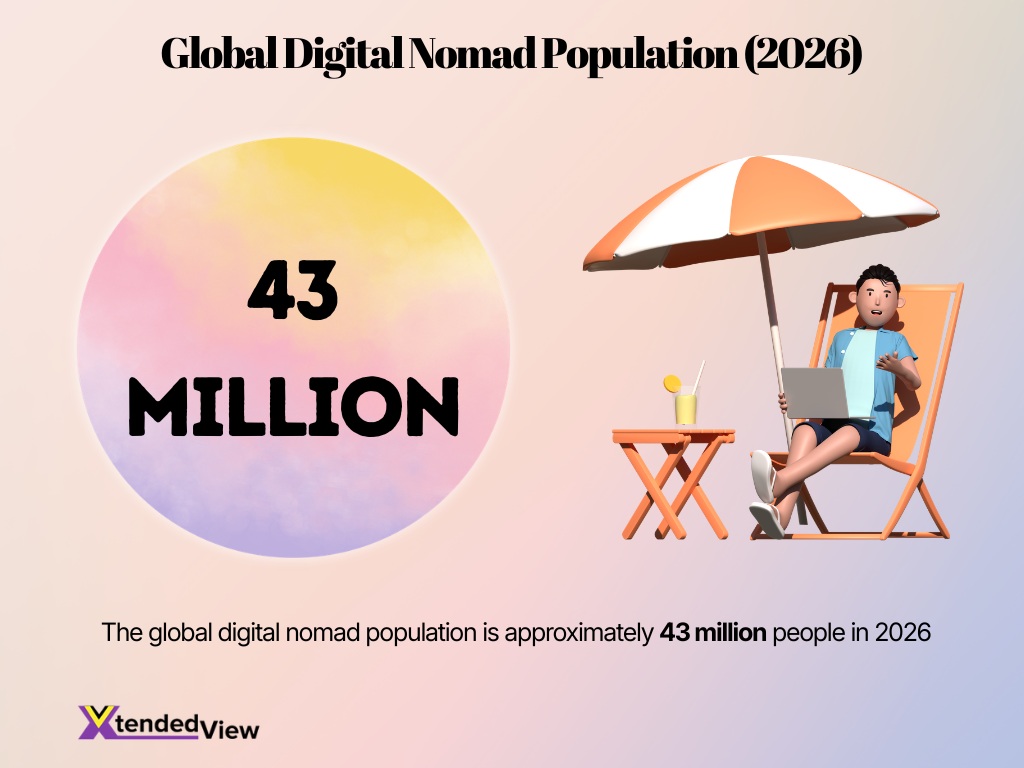
- The world had an estimated 35 million digital nomads in 2023, indicating a growth of more than 40% within two years.
- The United States accounts for nearly half of the world’s digital nomads.
- The number of U.S. digital nomads increased from 18.1 million in 2024 to 18.5 million in 2025.
- Digital nomads now represent approximately 12% of the American workforce.
- Around 66 million remote workers globally are considered potential future digital nomads.
- The U.S. digital nomad population has grown by 153% since before the pandemic in 2019.
- Industry projections suggest that continued remote work adoption could push global digital nomad numbers well beyond 60 million by the end of the decade.
- More than 45 million Americans say they are considering becoming digital nomads in the future.
Key Digital Nomad Demographics Statistics
- Millennials account for approximately 40% of digital nomads, making them the largest generational group.
- Generation Z represents roughly 35% of the digital nomad population in the United States.
- Together, Millennials and Gen Z comprise nearly 75% of all digital nomads.
- The average digital nomad is 37 years old.
- Around 12% of the U.S. workforce identifies as digital nomads.
- Approximately 56% of digital nomads hold traditional full-time jobs, reflecting the mainstreaming of remote work.
- Nearly 36% of U.S. digital nomads operate without formal employer approval.
- Americans make up nearly 50% of the global digital nomad community, far ahead of any other nationality.
- Most digital nomads are in their 30s and early 40s, showing that the lifestyle increasingly appeals to mid-career professionals rather than only young travelers.
Education, Skills, and Technology Adoption Among Digital Nomads
- Around 90% of digital nomads have completed higher education.
- About 54% hold a bachelor’s degree.
- Another 34% possess a master’s degree.
- Approximately 3% have earned a Ph.D.
- In the United States, 52% of digital nomads hold a college degree or higher, compared with 35% of the broader adult population.
- Around 89% of digital nomads use artificial intelligence tools to support their work.
- Strong digital literacy and technology skills remain among the most common characteristics of successful digital nomads.
- Cloud collaboration platforms and remote communication tools continue to drive the expansion of the digital nomad economy.
- The majority of digital nomads work in knowledge-based industries that require advanced digital skills and continuous learning.
Digital Nomad Income Statistics
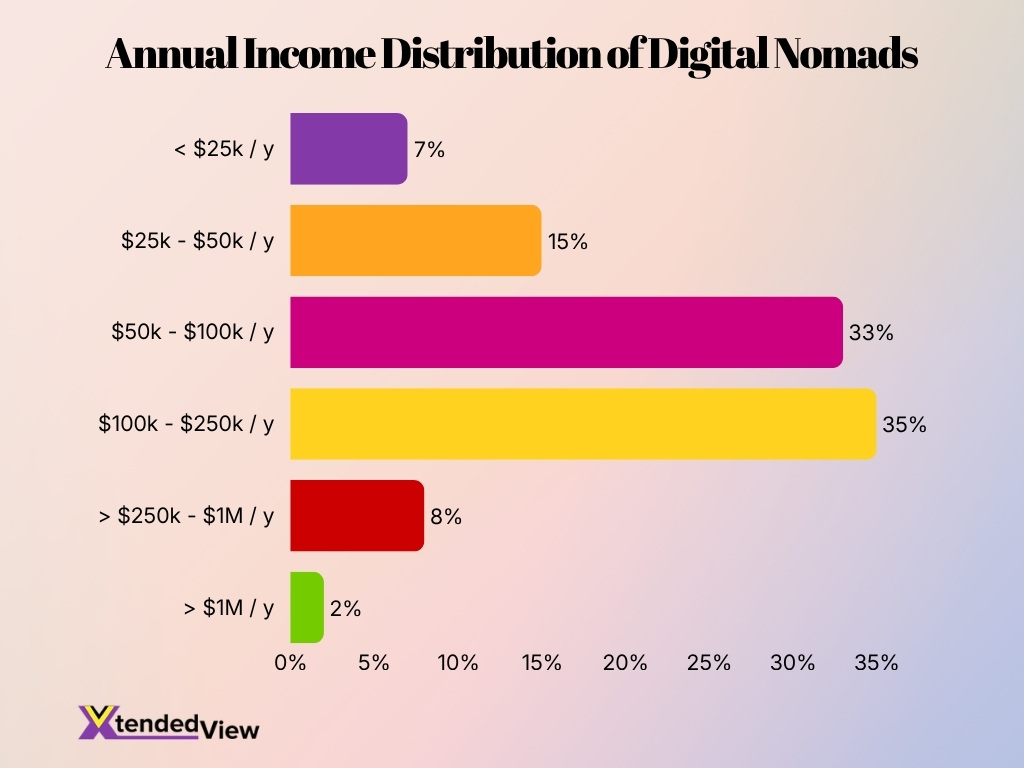
- 35% of digital nomads earn $100,000 to $250,000 per year, making it the largest income group.
- Around 33% of digital nomads report an annual income between $50,000 and $100,000.
- 15% of digital nomads earn between $25,000 and $50,000 annually.
- Only 7% of digital nomads earn less than $25,000 per year.
- A total of 8% of digital nomads earn between $250,000 and $1 million annually.
- Just 2% of digital nomads report earning more than $1 million per year.
- Combined, 68% of digital nomads earn between $50,000 and $250,000 annually.
- Only 10% of digital nomads earn more than $250,000 per year, highlighting the rarity of ultra-high-income earners.
- Approximately 22% of digital nomads earn less than $50,000 annually.
- The data suggests that middle to upper-income earners make up the majority of the digital nomad workforce.
Work Patterns and Productivity of Digital Nomads
- Around 56% of digital nomads work traditional full-time jobs, highlighting the growing acceptance of location-independent employment.
- Approximately 32% of digital nomads work between 40 and 50 hours per week, similar to conventional office workers.
- Nearly 24% report working more than 50 hours weekly, often due to time-zone differences and project-based work.
- More than 80% of digital nomads believe they are more productive while working remotely compared with working in a traditional office.
- About 74% say flexible work schedules significantly improve their productivity levels.
- Around 65% of digital nomads rely on coworking spaces at least occasionally to maintain focus and improve efficiency.
- Roughly 89% use AI-powered productivity tools for writing, coding, research, or task management.
- More than 60% of digital nomads work across multiple time zones, requiring asynchronous communication methods.
- Nearly 70% use cloud collaboration platforms daily, including project management and communication tools.
Job Satisfaction and Career Impact for Digital Nomads
- Approximately 91% of digital nomads report being highly satisfied with their lifestyle and career choices.
- Nearly 80% believe the digital nomad lifestyle has positively influenced their career growth.
- About 75% say remote work improved their mental well-being and reduced workplace stress.
- Around 68% report learning new professional skills faster while working remotely.
- Nearly 70% of digital nomads have expanded their professional network internationally.
- About 64% believe remote work offers better career opportunities than office-based employment.
- Roughly 58% changed careers or industries after adopting a digital nomad lifestyle.
- More than 50% say geographic flexibility allows them to pursue higher-paying opportunities globally.
- Around 87% intend to continue living as digital nomads for the foreseeable future.
Most Popular Destinations and Cities for Digital Nomads
- Thailand requires digital nomads to meet a financial threshold of 500,000 THB for its 5-year visa.
- Portugal accounts for 8% of all digital nomads and mandates an income of four times the minimum wage.
- Spain requires a monthly income of 200% of the minimum wage, or roughly €2,762, for its nomad visa.
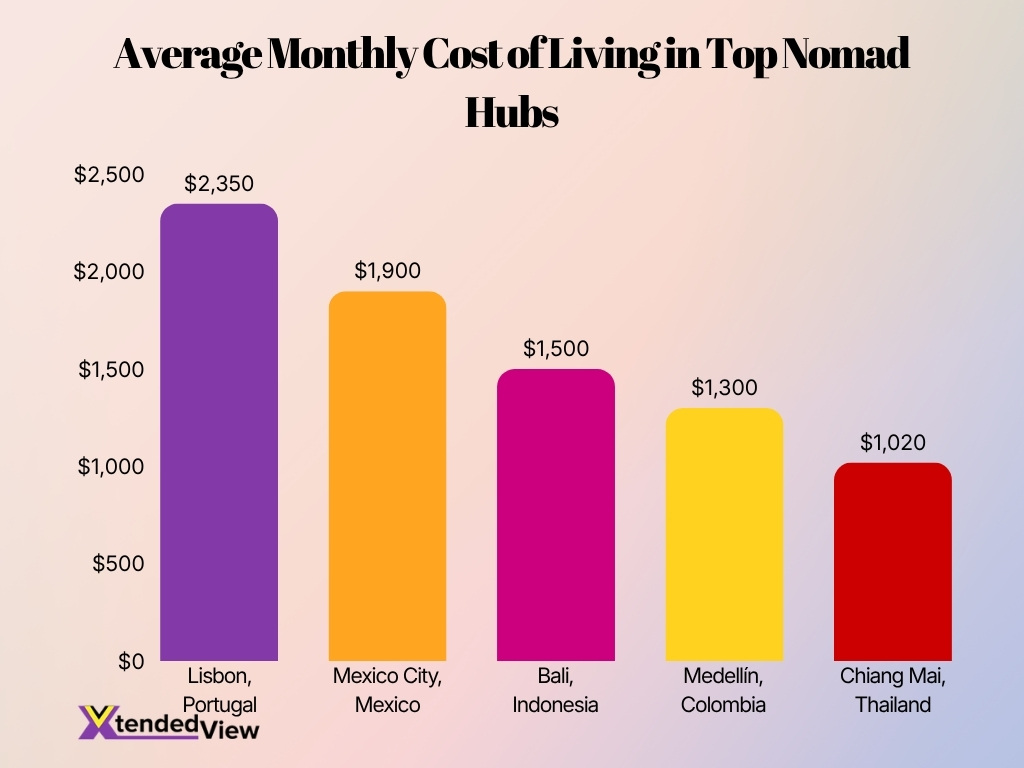
- Bali, Indonesia, features an average monthly cost of $1,500 alongside a network of over 80 coworking spaces.
- Mexico City offers an estimated monthly living cost of $1,900 and provides more than 60 coworking hubs.
- Lisbon, Portugal, stands out with over 50 coworking spaces and an average monthly expense of $2,350.
- Chiang Mai, Thailand, is highly affordable, with total monthly living expenses averaging just $1,020.
- Medellín, Colombia, remains a top value destination with an average monthly cost of living of $1,300.
- Over 55 countries now offer digital nomad visas with minimum income requirements spanning $1,500 to $4,500 monthly.
Travel Patterns and Stay Duration of Digital Nomads
- Around 40% of digital nomads stay in one location for one to three months before moving again.
- Approximately 30% spend three to six months in each destination.
- Nearly 15% remain in a single country for over six months to qualify for residency benefits or lower travel costs.
- About 70% prefer slow travel, choosing fewer destinations and longer stays instead of frequent movement.
- Nearly 60% return to favorite destinations multiple times, creating recurring economic benefits for local communities.
- More than 50% travel internationally at least three times per year.
- Roughly one-third of digital nomads combine work with tourism experiences, extending stays to explore local cultures.
- Around 25% select destinations primarily based on cost of living and internet quality.
- Nearly 20% choose locations because of the favorable climate and outdoor activities.
Visa and Legal Trends for Digital Nomads
- More than 55 countries offer digital nomad visas or remote worker permits in 2026, up significantly from fewer than 20 countries before 2020.
- Spain’s Digital Nomad Visa allows remote workers to stay for up to five years under specific conditions.
- Portugal’s digital nomad visa generally requires proof of income equivalent to at least four times the national minimum wage.
- Italy launched its digital nomad visa program in 2024, expanding Europe’s options for remote workers.
- Japan introduced a digital nomad visa in 2024, allowing stays of up to six months.
- Around 80% of digital nomads consider visa flexibility a major factor when selecting destinations.
- Nearly one-third of digital nomads report challenges related to taxation and residency compliance.
- About 13% of employed digital nomads work abroad without informing their employer, potentially creating legal and tax complications.
- Several countries have raised minimum income requirements in 2025 and 2026 to attract higher-earning remote professionals.
General Digital Nomad Work Statistics
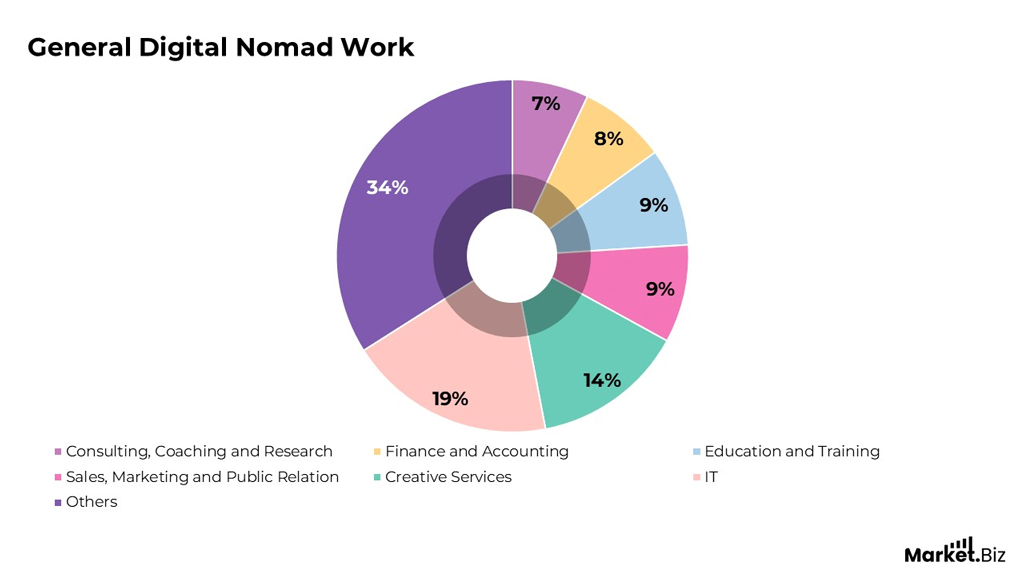
- Others account for the largest share at 34%, indicating many digital nomads work in diverse or niche professions.
- IT represents 19% of digital nomad work, making it the largest defined professional category.
- Creative Services contribute 14%, highlighting the popularity of design, writing, and multimedia careers.
- Sales, Marketing, and Public Relations make up 9% of digital nomad occupations.
- Education and Training also account for 9%, reflecting strong demand for online teaching and coaching.
- Finance and Accounting represent 8% of digital nomad work, showing growing opportunities in remote financial services.
- Consulting, Coaching, and Research comprise 7%, making it the smallest work category among those listed.
- The top three categories, Others (34%), IT (19%), and Creative Services (14%), together account for 67% of all digital nomad work.
- Knowledge-based professions such as IT, Finance, Education, and Consulting collectively represent 43% of digital nomad occupations.
- The data shows that digital nomads work across a wide range of industries, with a strong concentration in technology and creative fields.
Accommodation and Coworking Preferences of Digital Nomads
- Around 40% of digital nomads prefer short-term apartment rentals over hotels and hostels.
- Approximately 30% choose private accommodations through rental platforms because of better workspace and privacy.
- Nearly 20% stay in coliving communities designed specifically for remote workers.
- About 65% use coworking spaces at least occasionally during their travels.
- More than 50% consider reliable internet access the most important factor when booking accommodation.
- Roughly 45% choose accommodation based on proximity to cafes and coworking spaces.
- Around 35% prioritize access to gyms and wellness facilities when selecting housing.
- The global coworking industry surpassed 40,000 spaces worldwide in 2025, fueled partly by demand from remote workers and digital nomads.
- Nearly 60% of digital nomads say community and networking opportunities influence accommodation decisions.
Health and Wellbeing Trends Among Digital Nomads
- Around 75% of remote workers and digital nomads report improved mental well-being compared with traditional office environments.
- Nearly 71% of digital nomads say flexibility reduces their stress levels and improves overall happiness.
- About 45% struggle with loneliness and social isolation while living abroad.
- Approximately 38% identify maintaining work-life boundaries as a significant mental health challenge.
- More than 50% actively prioritize fitness and wellness activities when selecting destinations.
- Around 35% choose accommodation with access to gyms or wellness facilities.
- Roughly 30% of digital nomads purchase international health insurance plans specifically designed for remote workers.
- About 65% report spending more time outdoors and engaging in physical activities than before becoming digital nomads.
- Nearly one-third have experienced burnout at some point during their nomadic journey, largely due to constant travel and work demands.
Digital Nomad Lifestyle Statistics: Sports Activities and Personal Interests
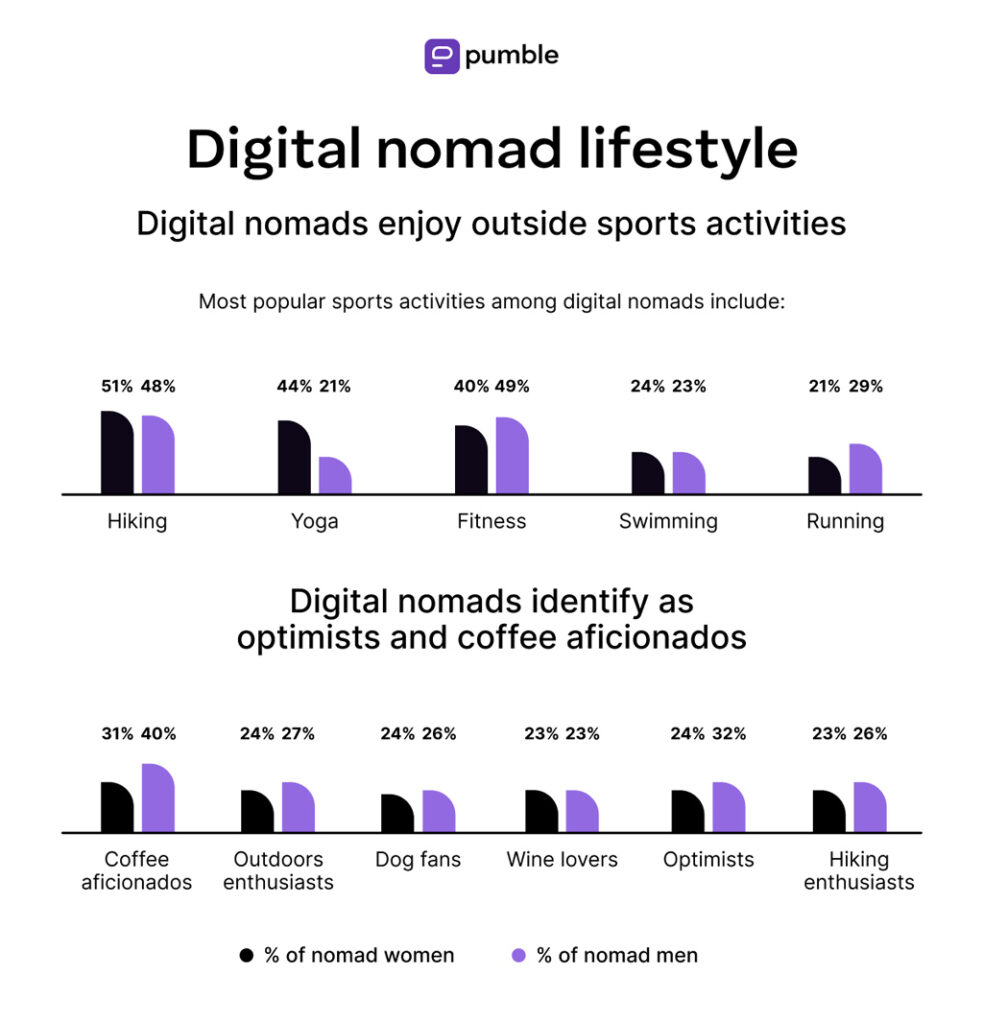
- Hiking is the most popular outdoor activity among digital nomad women at 51%, compared to 48% of men.
- Fitness is the top choice for digital nomad men, with 49% participation versus 40% among women.
- Yoga is significantly more popular with women, attracting 44% compared to 21% of men.
- Running is favored by 29% of digital nomad men, exceeding the 21% recorded among women.
- Swimming has nearly identical participation, with 24% of women and 23% of men taking part.
- 40% of digital nomad men identify as coffee aficionados, compared with 31% of women.
- Optimism is a common personality trait, with 32% of men and 24% of women identifying as optimists.
- Outdoors enthusiasts account for 27% of men and 24% of women in the digital nomad community.
- Dog fans make up 26% of digital nomad men and 24% of women.
- Wine lovers are equally represented, with 23% of both digital nomad women and men identifying with the trait.
- Hiking enthusiasts include 26% of men, slightly higher than the 23% of women.
- The data shows digital nomads commonly combine active outdoor lifestyles with interests such as coffee, hiking, and optimism.
Social and Relationship Trends Among Digital Nomads
- Approximately 45% of digital nomads travel with a spouse or partner, showing that remote work increasingly supports long-term relationships.
- Nearly 20% of digital nomads travel with children, contributing to the rise of location-independent families.
- Around 60% actively seek destinations with strong nomad communities and networking opportunities.
- About 50% say meeting like-minded people is one of the most rewarding aspects of the lifestyle.
- Roughly 40% report difficulties maintaining long-term friendships because of frequent relocation.
- Nearly 35% rely on online communities and social platforms to build connections abroad.
- About 30% say loneliness is one of the biggest drawbacks of digital nomadism.
- Around 25% have formed business partnerships through coworking spaces and nomad communities.
- More than 70% believe the lifestyle has broadened their cultural understanding and global perspective.
Financial Challenges Faced by Digital Nomads
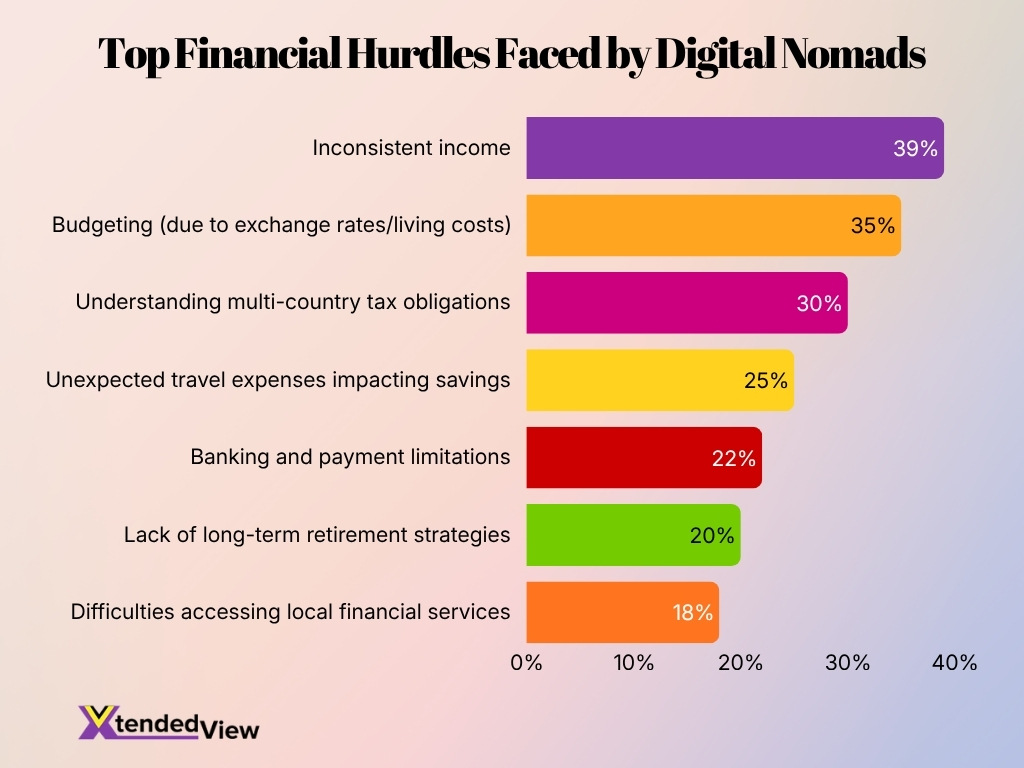
- Around 39% of digital nomads cite inconsistent income as their biggest financial concern.
- Approximately 35% struggle with budgeting due to fluctuating exchange rates and changing living costs.
- Nearly 30% face difficulties understanding tax obligations across multiple countries.
- More than 25% report that unexpected travel expenses significantly impact their savings goals.
- About 22% say banking and payment limitations remain a challenge while living abroad.
- Roughly 20% of digital nomads lack long-term retirement planning strategies.
- Around 18% have experienced difficulties accessing local financial services due to residency requirements.
- Despite these challenges, nearly 79% earn more than $50,000 annually, allowing many to maintain comfortable lifestyles.
- The average annual income for digital nomads is estimated at $124,416, though earnings vary significantly by profession and experience.
Work-Life Balance and Time Management of Digital Nomads
- Nearly 80% of digital nomads report a better work-life balance than they had in traditional employment.
- Around 74% say flexible scheduling is the primary reason they remain location-independent workers.
- Approximately 32% work between 40 and 50 hours per week, while many choose flexible schedules that fit their lifestyles.
- About 24% work more than 50 hours weekly, often because of client demands and time-zone differences.
- Roughly 65% use productivity and time-management applications daily to stay organized.
- Around 60% create structured work schedules despite traveling frequently.
- Nearly 55% prioritize destinations that support healthy work-life integration, including access to nature and leisure activities.
- About 38% still struggle to separate work from personal life, especially when working from accommodations.
- More than 70% say the ability to control their schedule is the biggest advantage of the digital nomad lifestyle.
Frequently Asked Questions (FAQs)
18.5 million Americans identified as digital nomads in 2025, representing approximately 12% of the U.S. workforce.
The number of American digital nomads has increased by 153% since 2019, rising from about 7.3 million to 18.5 million workers.
Estimates indicate there were approximately 43 million digital nomads globally in 2026, up from around 35 million in 2023.
As of early 2026, 66 countries have introduced dedicated digital nomad visa programs or remote worker permits.
Approximately 79% of digital nomads earn over $50,000 per year, highlighting the relatively high-income profile of this workforce segment.
Conclusion
Digital nomadism has evolved into a major workforce trend that influences labor markets, tourism, and economic policy around the world. Approximately 43 million people globally now embrace location-independent work, and governments increasingly compete to attract them through dedicated visa programs and remote work incentives. At the same time, digital nomads face challenges related to taxes, financial planning, and maintaining social connections.
As remote work technology improves and businesses continue hiring across borders, the digital nomad population is expected to keep growing throughout the decade. The statistics in this report highlight not only the scale of this movement but also its lasting impact on how people live, work, and travel.