


Cyberbullying remains one of the most persistent online safety challenges affecting children, teenagers, and young adults worldwide. As social media, messaging apps, gaming platforms, and digital communities become deeply integrated into daily life, harmful online behavior continues to impact mental health, educational outcomes, and social development. Schools use cyberbullying data to shape student safety programs, while policymakers rely on these statistics to develop online protection frameworks. The latest figures reveal how cyberbullying continues to evolve across platforms, age groups, and demographics. Explore the data below to understand the full scope of cyberbullying.
Editor’s Choice
- More than 1 in 3 young people globally report experiencing online bullying, according to multinational survey data.
- Around 20% of cyberbullying victims reported skipping school because of online harassment.
- Approximately 16% of U.S. high school students reported being electronically bullied during the previous 12 months.
- Nearly 58% of U.S. teens have experienced some form of cyberbullying during their lifetime, according to recent youth surveys.
- About 33% of U.S. teens reported experiencing cyberbullying within the previous 30 days, one of the highest levels recorded in recent surveys.
- Female students who experience bullying are nearly twice as likely as male students to report online or text-based bullying.
- Nearly 46% of U.S. teens report being online almost constantly, increasing exposure to potential cyberbullying risks.
Recent Developments
- Several U.S. states expanded school reporting requirements for cyberbullying incidents during 2024 and 2025.
- Major social media platforms increased AI-powered moderation tools to identify harassment, threats, and abusive content in real time during 2025 and 2026.
- Microsoft’s 2026 online safety survey identified cyberbullying as one of the most common digital threats reported by teenagers.
- About 72% of teenagers who experienced online harm reported discussing the issue with someone they trusted.
- Nearly 69% of affected teens reported taking protective actions after experiencing online harm.
- Growing concerns around AI-generated content and deepfakes have increased attention on new forms of cyberbullying.
- Schools increasingly integrate digital citizenship and cyberbullying prevention into student wellness programs.
- Research published during 2024 highlighted strong links between frequent social media use, bullying victimization, sadness, hopelessness, and suicide risk among adolescents.
- Teen perceptions of social media have become more negative, with 48% believing social platforms negatively affect people their age.
Global Cyberbullying Statistics
- More than 33% of young people across 30 countries report being victims of cyberbullying.
- One in five global victims reports school absenteeism linked to online harassment.
- Over 70% of young people worldwide now use online services regularly, increasing exposure to digital risks.
- International studies identify social media platforms as the most common environment for cyberbullying incidents.
- European youth surveys indicate that roughly half of children report some exposure to cyberbullying behavior.
- Reports from South Africa show that approximately one-third of children have experienced cyberbullying.
- Cyberbullying ranks among the leading online safety concerns reported by adolescents globally.
- International organizations continue to identify cyberbullying as a major barrier to children’s digital well-being and educational participation.
- Messaging applications, gaming communities, and social networks remain the primary channels for global cyberbullying incidents.
U.S. Cyberbullying Statistics
- More than 1 in 6 U.S. high school students reported electronic bullying during the previous year.
- Approximately 16% of high school students reported electronic bullying in the most recent federal youth survey.
- About 34% of teenagers aged 12–17 reported being bullied at least once during the previous 12 months.
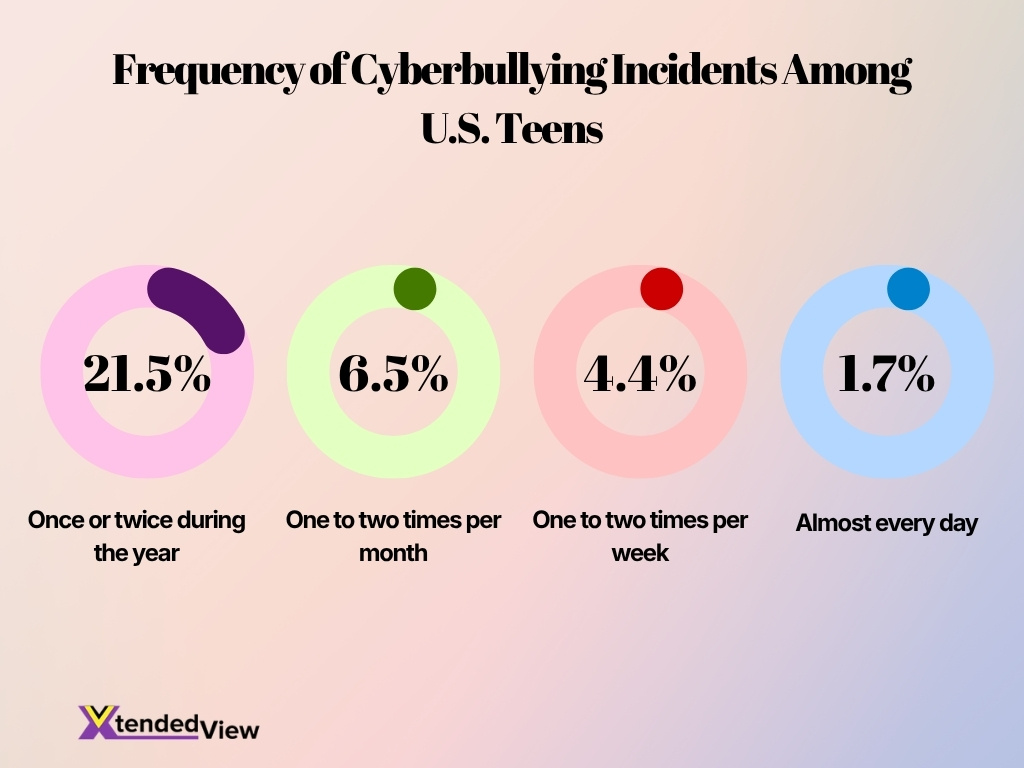
- Around 21.5% of teens reported experiencing bullying once or twice during the year.
- Approximately 6.5% reported being bullied one to two times per month.
- About 4.4% experienced bullying one to two times per week.
- Roughly 1.7% of teenagers reported being bullied almost every day.
- Lifetime cyberbullying exposure among U.S. teens remains near 58%, according to recent youth-focused surveys.
- Approximately 33% of teens reported cyberbullying experiences within the prior month.
Cyberbullying Statistics by Age Group
- 46% of teenagers aged 13–17 represent the demographic most frequently reporting cyberbullying incidents.
- 54% of older girls aged 15–17 report experiencing at least one cyberbullying behavior.
- Around 44% of older boys aged 15–17 report at least one cyberbullying experience.
- Approximately 41% of younger teens aged 13–14 report facing cyberbullying experiences.
- 32% of middle school students report rumor spreading and exclusion as common online harassment.
- 15% of older teens experience reputation damage through social media and messaging apps.
- 95% smartphone ownership among teenagers has expanded opportunities for around-the-clock harassment.
- Nearly 46% of U.S. teens report being online almost constantly, intensifying cyberbullying exposure risks.
Cyberbullying Statistics by Gender
- Female students report significantly higher cyberbullying victimization rates than male students.
- Among students who reported bullying, 27.7% of females experienced online or text-based bullying.
- By comparison, 14.1% of males reported online or text-based bullying.
- Girls aged 15–17 report cyberbullying at higher rates than boys in the same age group.
- Female victims are more likely to report false rumors and social exclusion online.
- Girls more frequently report emotional impacts linked to social media interactions and online harassment.
- Boys more commonly report harassment in online gaming environments.
- Approximately 43% of teen gamers report experiencing harassment from other gamers.
- Gender differences remain evident in both the types of cyberbullying experienced and the emotional outcomes reported.
Bullying Among Girls and Black Teens
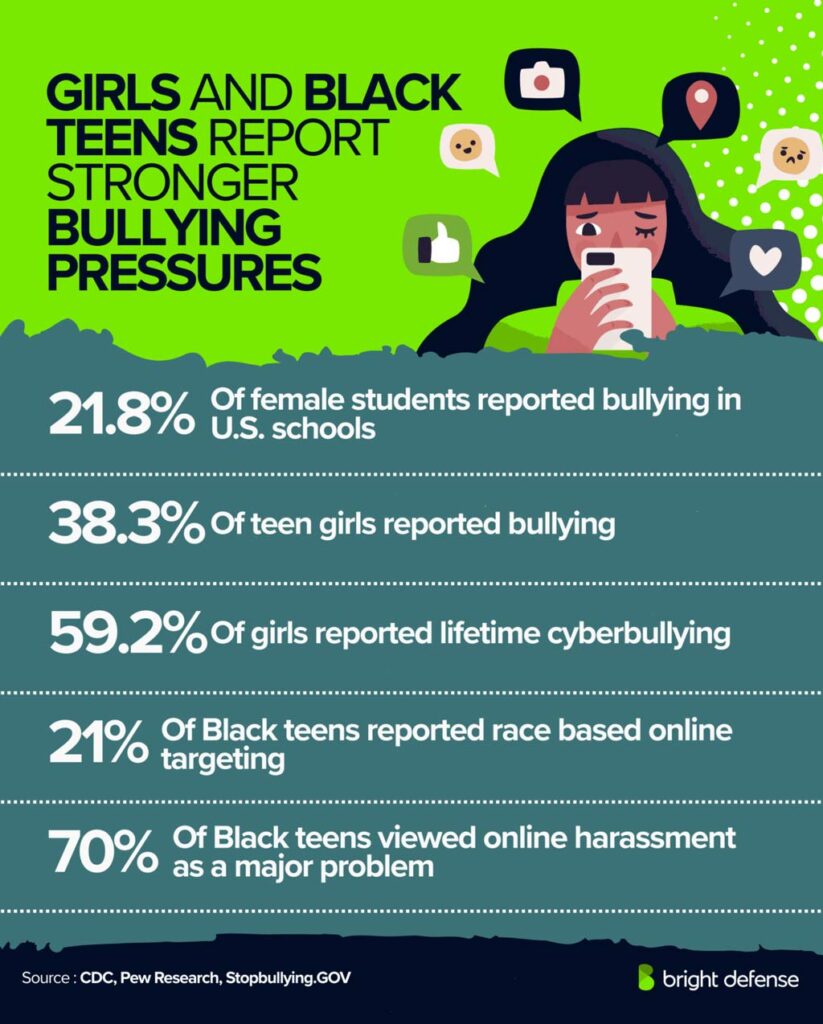
- 70% of Black teens viewed online harassment as a major problem, making it the most widely recognized bullying-related concern in the data.
- 59.2% of girls reported experiencing cyberbullying at some point in their lives, highlighting the widespread impact of online abuse.
- 38.3% of teen girls reported being bullied, indicating that more than one in three girls face bullying during adolescence.
- 21.8% of female students reported bullying in U.S. schools, showing that in-person bullying remains a significant issue.
- 21% of Black teens reported race-based online targeting, underscoring the role of discrimination in digital harassment experiences.
- Cyberbullying prevalence among girls (59.2%) was nearly three times higher than the rate of school bullying reported by female students (21.8%).
- Race-based online targeting affected 1 in 5 Black teens, demonstrating the persistent presence of racial harassment online.
- The gap between online harassment concerns (70%) and race-based targeting experiences (21%) suggests broader awareness of digital abuse among Black teens.
Cyberbullying Among LGBTQ+ Youth
- About 54% of LGBTQ+ students reported experiencing online bullying or harassment, significantly higher than their non-LGBTQ+ peers.
- Nearly 60% of LGBTQ+ young people said discrimination and harassment on digital platforms negatively affected their mental health.
- Around 39% of LGBTQ+ youth reported seriously considering suicide during the past year, with cyberbullying identified as a contributing risk factor.
- More than 70% of transgender and nonbinary youth reported experiencing online harassment related to their gender identity.
- LGBTQ+ adolescents are more likely to experience repeated cyberbullying incidents than heterosexual peers.
- Online harassment targeting sexual orientation remains one of the most frequently reported forms of identity-based cyberbullying.
- Nearly one-third of LGBTQ+ youth reported avoiding certain social media spaces because of harassment concerns.
- LGBTQ+ students who experience cyberbullying report higher levels of anxiety, depression, and social isolation.
- Research indicates that supportive online communities can reduce some negative effects associated with cyberbullying among LGBTQ+ youth.
Cyberbullying Statistics by Social Media Platform
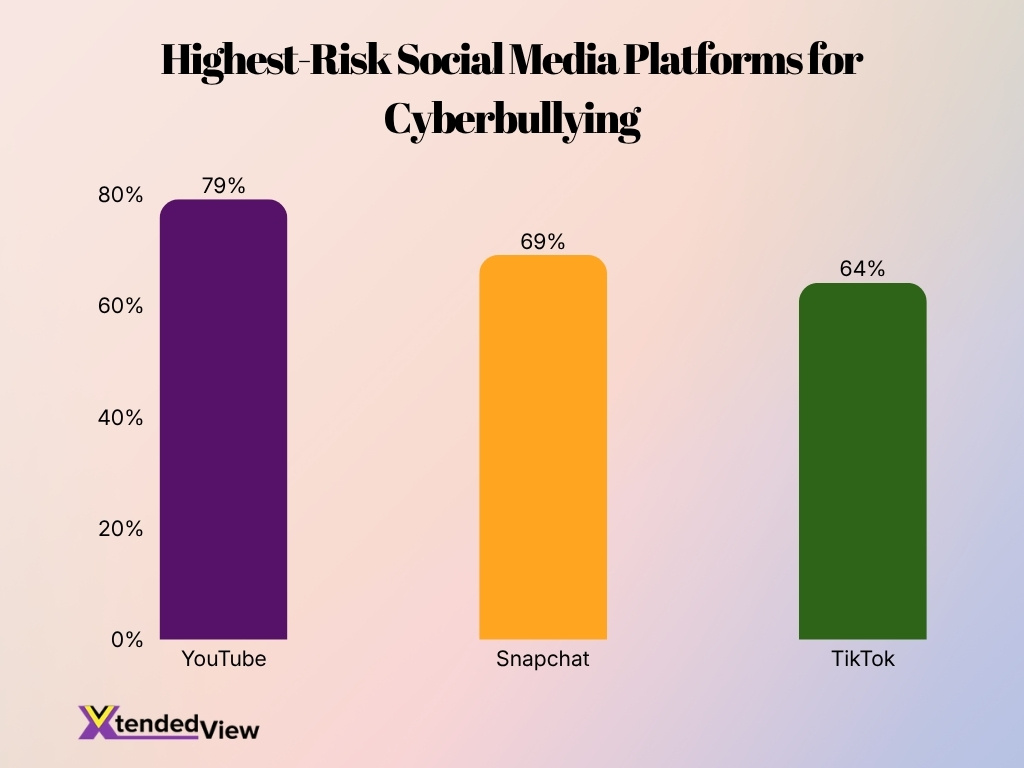
- 79% of kids report experiencing cyberbullying on YouTube, making it the highest-risk platform.
- Approximately 69% of teens have faced online harassment and cyberbullying incidents on Snapchat.
- TikTok is associated with high cyberbullying rates, affecting 64% of its young user base.
- Nearly 30% of teen Snapchat users report being called offensive names or physically threatened.
- Instagram accounts for 29.8% of the total cyberbullying incidents reported across major social networks.
- More than 4.1 million pieces of bullying content were removed from Facebook in early 2025.
- About 32.5% of teen victims report being intentionally excluded from group chats on messaging apps.
- Identity-based harassment on gaming platforms has grown to target 37% of young gamers.
- Roughly 20% of teenagers on Instagram and TikTok report facing direct online harassment.
- An overwhelming 95% of social media content creators report experiencing targeted harassment.
Cyberbullying Victimization Rates
- Approximately 46% of U.S. teens report experiencing at least one form of cyberbullying.
- Around 23% of global teens report repeated online harassment rather than isolated incidents.
- Female students experience higher victimization rates (59%) compared to male students (49%).
- Constant internet users report a 67% cyberbullying rate versus 53% for less frequent users.
- Nearly 1 in 5 (20%) students report cyberbullying severe enough to skip school or lose focus.
- Around 30% of LGBTQ+ youths face cyberbullying compared to 13% of heterosexual peers.
- An estimated 37% of cyberbullying victims report experiencing severe psychological distress.
- International surveys show cyberbullying victimization generally ranges between 20% and 40% among adolescents.
- Victims report academic struggles, with 25% of students seeing a decrease in academic performance.
- Older teen girls aged 15 to 17 experience the highest exposure at 54% overall victimization.
Cyberbullying Perpetration Statistics
- Approximately 15% to 35% of adolescents globally admit to actively participating in cyberbullying behaviors.
- Studies indicate that 16.2% of adolescent boys report cyberbullying others compared to 13.4% of adolescent girls.
- Adolescents involved in traditional physical bullying are more than twice as likely to engage in digital harassment.
- Roughly 33% of cyberbullying perpetrators report taking advantage of digital anonymity to target their online victims.
- Approximately 19% of online group violence involves coordinated and widespread cyberbullying campaigns against individuals.
- Nearly 55% of students who perpetrate online cruelty attempt to justify their hostile actions as just joking around.
- Adolescents spending more than 3 hours daily online are 5.3 times more likely to become overlapping bully-victims.
- Around 7% of middle-school students are classified as perpetrator-victims who both endure and inflict online harm.
- Posting mean comments is the most prevalent perpetration tactic utilized by over 20% of young cyberbullies.
Most Common Types of Cyberbullying
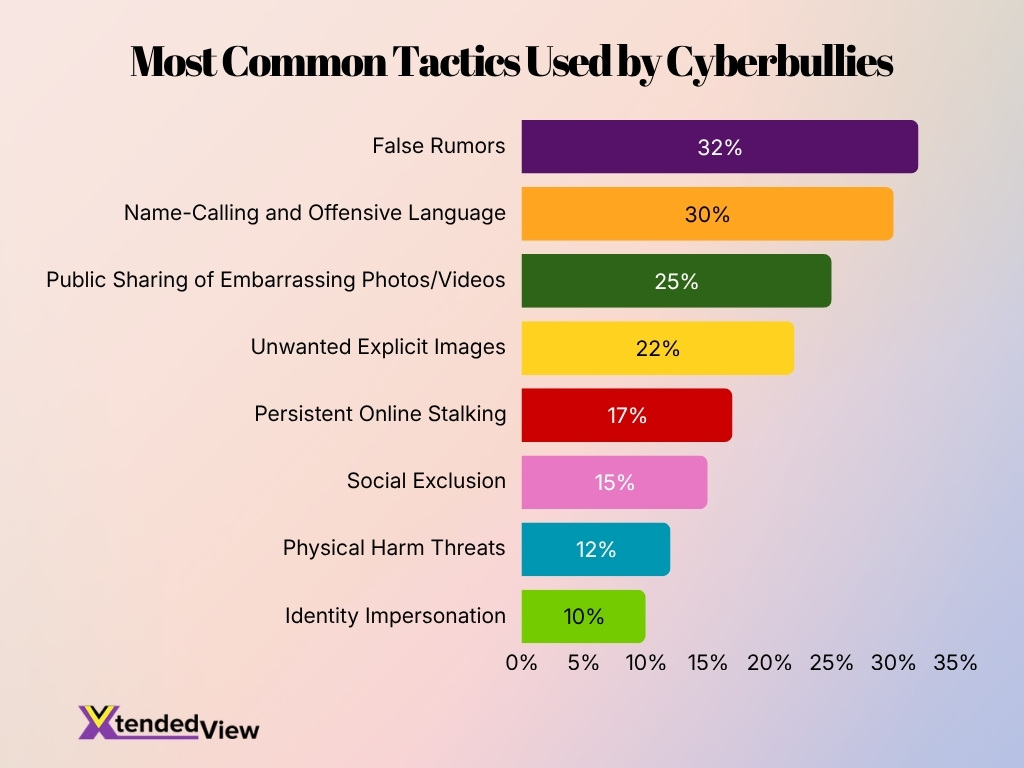
- Approximately 32% of teenagers report being the target of false rumors online.
- Name-calling and offensive language impact roughly 30% of adolescents.
- Nearly 22% of teens report receiving unwanted explicit images digitally.
- Persistent online stalking or repeated unwanted contact affects 17% of young people.
- The public sharing of embarrassing photos or videos impacts nearly 25% of youth.
- Social exclusion from private digital communities is experienced by 15% of teenagers.
- Physical harm threats represent a severe cyberbullying category for 12% of adolescents.
- Identity impersonation through hijacked social accounts affects roughly 10% of teens.
Psychological and Mental Health Impacts of Cyberbullying
- Victims of cyberbullying are 1.9 times more likely to contemplate or attempt suicide than non-victims.
- Approximately 41% of victims develop severe social anxiety following repeated online harassment.
- Teens who experience cyberbullying are two times more likely to engage in self-harm behaviors.
- Nearly 32% of young cyberbullying targets report experiencing chronic sleep disturbances or insomnia.
- Exposure to severe online bullying correlates with a 60% drop in overall self-esteem among affected adolescents.
- Roughly 37% of cyberbullying victims develop persistent depression symptoms that require psychological intervention.
- About 25% to 35% of victims experience ongoing psychological trauma lasting for several months or more.
- More than 15% of cyberbullied youth eventually develop symptoms consistent with eating disorders.
- Over 64% of cyberbullied students state that the harassment significantly impacts their daily emotional well-being.
Cyberbullying and Suicidal Behavior Statistics
- Victims of cyberbullying are 1.9 times more likely to report suicidal ideation than non-victims.
- Adolescents experiencing online harassment have a nearly twofold increased risk of attempting suicide.
- Approximately 20% of middle schoolers who are cyberbullied seriously consider taking their own lives.
- Students exposed to both physical and cyberbullying face a 300% higher risk of severe suicidal behavior.
- LGBTQ+ youth subjected to cyberbullying are 2.5 times more likely to experience severe suicidal thoughts.
- Nearly 30% of teenage girls who face persistent online abuse engage in self-injurious behaviors.
- Regular exposure to digital harassment elevates the risk of clinical depression by over 40%.
- Only 10% of adolescent victims dealing with cyberbullying-induced distress seek professional mental health support.
Workplace Abuse and Harassment Statistics by Gender
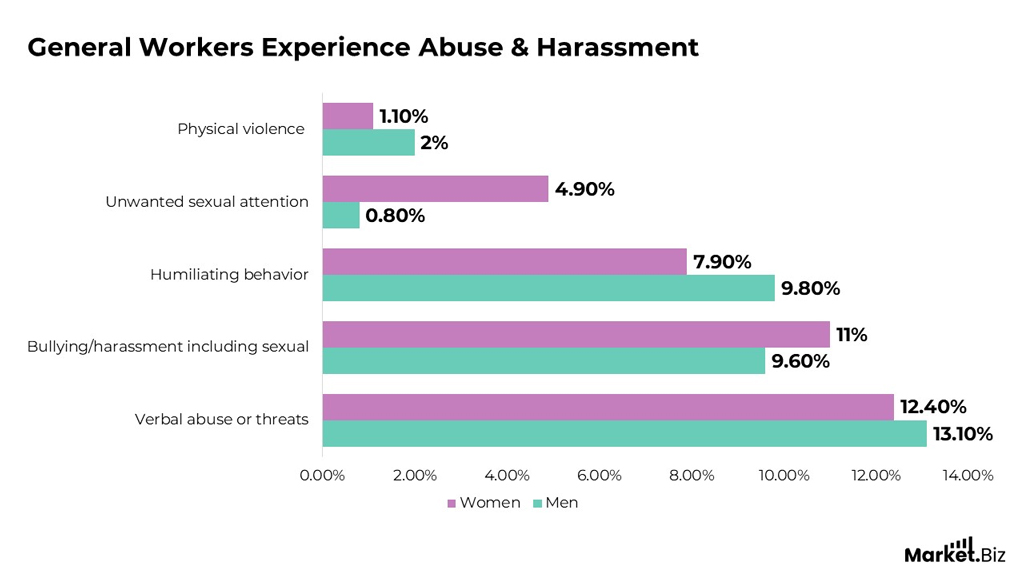
- Verbal abuse or threats were the most common issue, affecting 13.1% of men and 12.4% of women.
- Bullying or harassment, including sexual harassment, was reported by 11.0% of women and 9.6% of men.
- Humiliating behavior impacted 9.8% of men compared to 7.9% of women.
- Unwanted sexual attention was significantly higher among women (4.9%) than men (0.8%).
- Physical violence was the least reported form of abuse, experienced by 2.0% of men and 1.1% of women.
- Women reported higher rates of sexual harassment-related incidents, while men reported more verbal abuse, humiliation, and physical violence.
- The largest gender gap appeared in unwanted sexual attention, with women reporting rates more than 6 times higher than men.
- More than 1 in 10 workers experienced either verbal abuse or bullying/harassment, highlighting persistent workplace misconduct issues.
Impact of Cyberbullying on Education and Schools
- Approximately 20% of victims report missing school because of ongoing online harassment.
- Around 64% of cyberbullied students state that it severely impacts their ability to learn.
- Victims are nearly twice as likely to report lower academic achievement than non-victims.
- Roughly 1 in 5 affected students experience a noticeable drop in their grade point average.
- About 15% of bullied individuals exhibit increased rates of chronic absenteeism and tardiness.
- Nearly 10% of cyberbullying victims consider dropping out of school due to distress.
- Comprehensive anti-bullying programs can lead to a 25% reduction in online harassment incidents.
- Over 30% of victimized students report severe difficulty concentrating in class due to anxiety.
- Approximately 12% of victims initiate school transfer requests to escape toxic environments.
Regional Cyberbullying Trends
- 58% of US teens have experienced cyberbullying at some point in their lives.
- 16% of school-aged children across 44 European and Central Asian regions have faced cyberbullying.
- 34% of youth in Sub-Saharan Africa reported being victims of online bullying.
- 47.5% of adolescents in Malaysia reported experiencing verbal violence online.
- 53% of Australian children have been cyberbullied at least once.
- 30.5% of adolescents reported being bullied in a multi-national study across 83 countries.
- 33% of US teenagers were targeted by cyberbullying in just the past 30 days.
- Two-thirds of children worldwide report a recent increase in cyberbullying activities.
- One in three young people across 30 countries has been a victim of online bullying.
Parental Awareness and Response Statistics
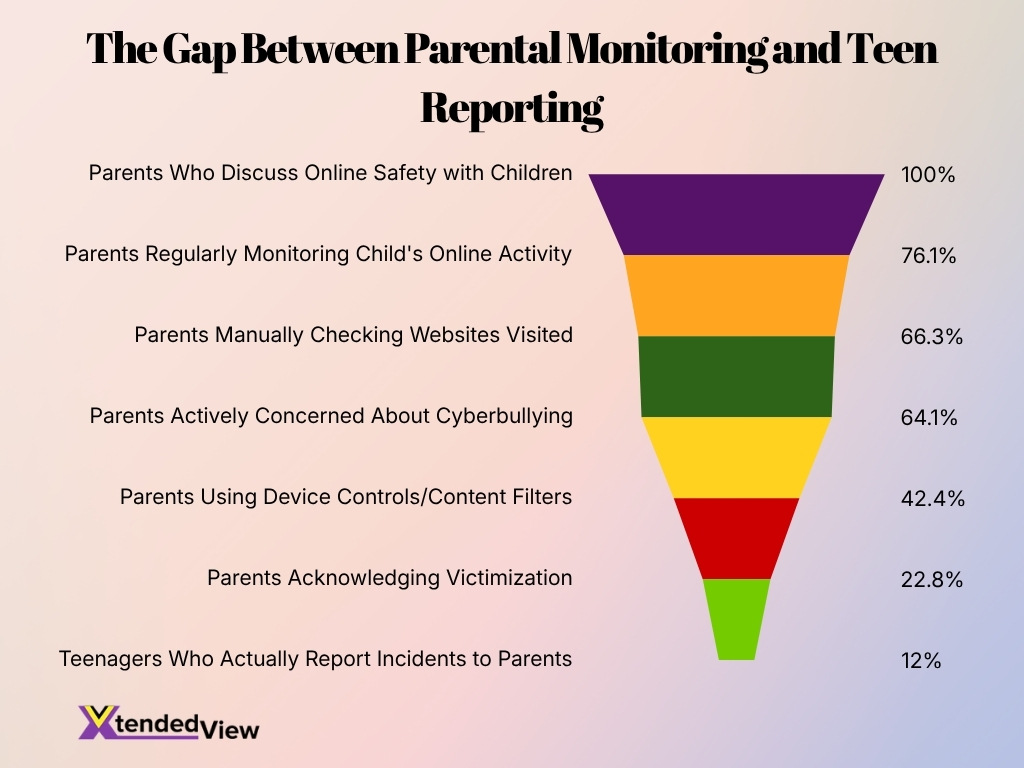
- Approximately 59% of parents report being actively concerned about cyberbullying affecting their children.
- Only 21% of parents acknowledge victimization, underestimating the frequency of cyberbullying compared to teenagers’ reports.
- Research indicates the 92% of parents who discuss online safety with their children significantly reduce cyberbullying risks.
- Around 70% of parents report regularly monitoring at least some aspect of their child’s online activity.
- Approximately 39% of parents use device controls and content filters to address online safety concerns.
- Despite parental efforts, only 11% of teenagers actually report cyberbullying incidents directly to their parents.
- Strong family support is associated with a lowering of emotional distress by nearly 50% among cyberbullying victims.
- About 61% of parents manually check the websites their teens visit rather than relying on automated monitoring tools.
- Over 80% of schools and parent organizations now collaborate to improve awareness of online harassment risks.
Cyberbullying Reporting and Intervention Statistics
- More than 60% of teens experiencing cyberbullying never report it to their parents or school authorities.
- Fewer than 40% of targeted victims formally file an official report regarding their online harassment.
- Nearly 55% of non-reporting victims cite fear of retaliation as their primary reason for remaining silent.
- Approximately 72% of teenagers facing online harm discuss the issue with a trusted individual.
- Around 69% of affected youth take proactive actions like blocking users or changing privacy settings.
- Implementing anonymous reporting tools increases student incident reporting rates by up to 45%.
- Comprehensive school intervention programs decrease overall bullying behaviors by approximately 20%.
- Active early intervention reduces the likelihood of repeated cyberbullying offenses by nearly 30%.
Frequently Asked Questions (FAQs)
Approximately 58% of U.S. teens have experienced cyberbullying at some point in their lives.
About 16% of U.S. high school students reported being electronically bullied during the previous 12 months.
Around 26.5% to 33% of teens reported experiencing cyberbullying within the previous 30 days, depending on the survey.
Nearly 46% of U.S. teens say they are online almost constantly.
Among students who reported being bullied, 21.6% said the bullying occurred online or through text messages.
Conclusion
Cyberbullying continues to affect millions of children, teenagers, and adults worldwide. The latest data shows that online harassment remains closely linked to mental health challenges, academic difficulties, social isolation, and increased suicide risk. While social media platforms, schools, employers, and policymakers have expanded prevention and reporting initiatives, cyberbullying remains a persistent problem across regions and demographic groups.
The statistics also highlight important differences by age, gender, sexual orientation, and platform usage. Young people who spend more time online, LGBTQ+ youth, and frequent social media users continue to face elevated risks. At the same time, evidence shows that strong family support, effective school intervention programs, improved digital literacy, and accessible reporting systems can significantly reduce harm.
As digital communication becomes even more embedded in everyday life, organizations, educators, parents, and technology companies will play a critical role in creating safer online environments. Ongoing monitoring, education, and prevention efforts will remain essential to reducing cyberbullying and protecting digital well-being in the years ahead.
