


Artificial intelligence is changing how businesses hire, train, and manage workers. From customer service automation and software development to finance and healthcare operations, AI now handles tasks that once required large teams. At the same time, organizations continue to create new roles focused on AI implementation, oversight, and governance. The result is a labor market experiencing both disruption and transformation. Explore these statistics to understand how AI is reshaping jobs across the United States and worldwide.
Editor’s Choice
- 170 million new jobs are expected to be created globally by 2030, while 92 million jobs may be displaced, resulting in a net gain of 78 million jobs.
- 22% of current jobs worldwide are expected to experience disruption by 2030 due to technological and economic shifts, with AI playing a major role.
- The IMF estimates that 40% of global employment is exposed to AI-related changes.
- In advanced economies, approximately 60% of jobs could be affected by AI adoption.
- 40% of employers expect to reduce workforce size in areas where AI can automate tasks.
- AI-related layoffs accounted for 22% of all announced U.S. job cuts through May 2026.
- U.S. employers have attributed 87,714 job cuts to AI through May 2026, already exceeding the full-year 2025 total.
Recent Developments
- AI became the top-cited reason for layoffs among U.S. employers in 2026.
- In May 2026, AI was linked to 40% of announced job cuts, the highest monthly share recorded since tracking began.
- U.S. employers announced 97,006 job cuts in May 2026, with technology leading all sectors.
- The technology industry reported 123,653 job cuts during the first five months of 2026, up 66% year over year.
- Employers collectively represent more than 14 million workers in the workforce survey used for major 2025–2030 job forecasts.
- Continued growth in AI-exposed occupations indicates that many firms are using AI to augment workers rather than solely eliminate jobs.
- Entry-level hiring has fallen at some consulting firms, with one major firm reducing graduate recruitment by one-third over three years because AI now performs some junior-level tasks.
- Research published in 2026 found employment in AI-vulnerable occupations was 3.6% lower after five years in regions with stronger demand for AI skills.
- New labor market studies show firms increasingly redesign jobs rather than eliminate them outright, with 39.5% of AI-related adjustments occurring through task redesign.
AI Job Replacement Forecast Statistics
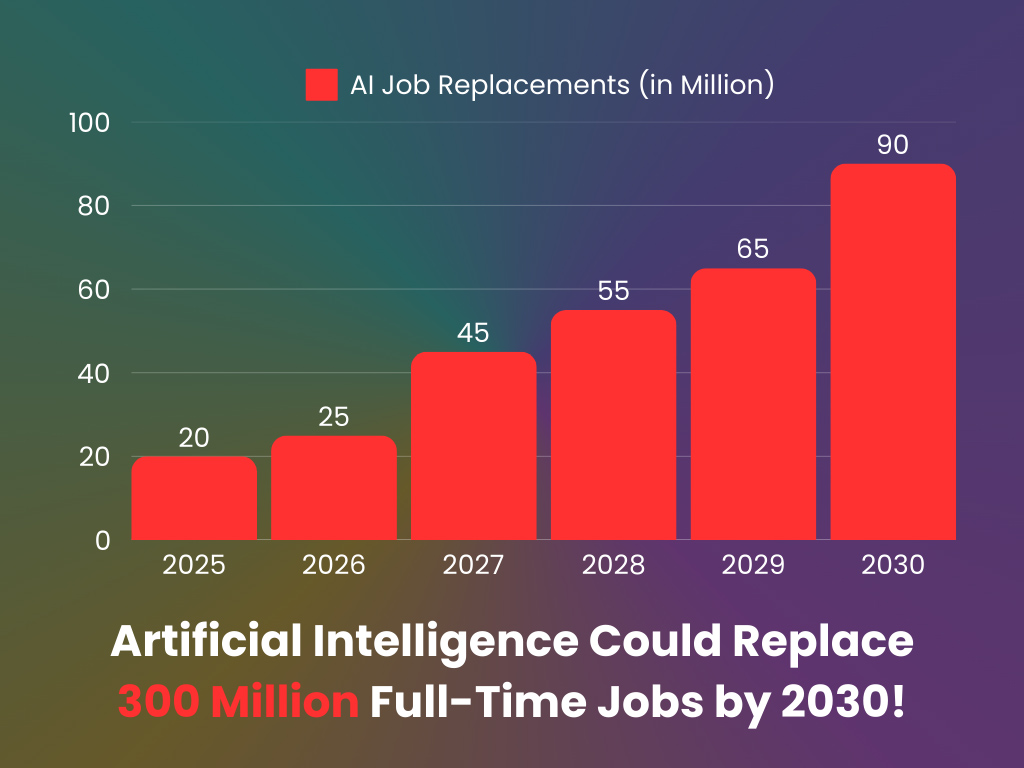
- AI-driven job displacement is projected to rise from 20 million jobs in 2025 to 90 million jobs in 2030, marking a 350% increase over five years.
- The number of jobs potentially replaced by AI is expected to grow from 25 million in 2026 to 45 million in 2027, an increase of 80% in a single year.
- By 2028, AI-related job replacements could reach 55 million, surpassing the 50 million threshold for the first time.
- The forecast indicates 65 million jobs may be replaced by AI in 2029, up 18.2% from 55 million in 2028.
- The largest annual increase is projected between 2029 and 2030, with job replacements jumping by 25 million positions.
- AI job replacements are expected to more than quadruple from 20 million in 2025 to 90 million in 2030.
- The data suggests a cumulative trend toward approximately 300 million full-time jobs being affected by AI automation by 2030.
- Between 2027 and 2030, projected AI-related job replacements are expected to double from 45 million to 90 million.
- The average annual increase in AI job replacements over the period is approximately 14 million jobs per year.
- By 2030, projected AI job replacements of 90 million would be 4.5 times higher than the 20 million estimated for 2025.
U.S. AI Job Displacement Statistics
- AI-related layoffs reached 87,714 announced job cuts in the United States during the first five months of 2026.
- The 2026 figure already surpassed the 54,836 AI-related job cuts recorded during all of 2025.
- AI accounted for 22% of announced layoffs across U.S. employers in 2026 through May.
- Technology companies announced 38,242 layoffs in May 2026 alone.
- The tech sector recorded 123,653 job cuts in the first five months of 2026.
- Research suggests AI could eventually displace 6%–7% of the U.S. workforce if adoption becomes widespread.
- Two-thirds of roles across the U.S. and Europe show some level of AI exposure, according to widely cited labor market estimates.
- Recent labor-demand analysis found that 52% of AI-driven adjustment occurs through changes in hiring patterns rather than direct replacement.
- Studies indicate that demand for novice and entry-level positions has shown measurable declines in several AI-exposed occupations.
AI Job Creation vs. Job Loss Statistics
- Global forecasts indicate 170 million jobs created versus 92 million jobs displaced by 2030.
- The projected net gain equals approximately 78 million additional jobs worldwide.
- New jobs expected from technology trends represent 14% of current global employment.
- Displaced roles represent approximately 8% of today’s global jobs.
- AI-related skills continue to command wage premiums across labor markets.
- Job growth continues in many AI-exposed occupations rather than shrinking outright.
- Research shows AI can increase worker productivity by 20% to 60% in controlled environments.
- Field studies have observed productivity gains of 15% to 30% from AI adoption in workplace settings.
- Demand for AI specialists, machine learning engineers, and AI governance professionals continues to expand globally.
Jobs Most Vulnerable to Automation
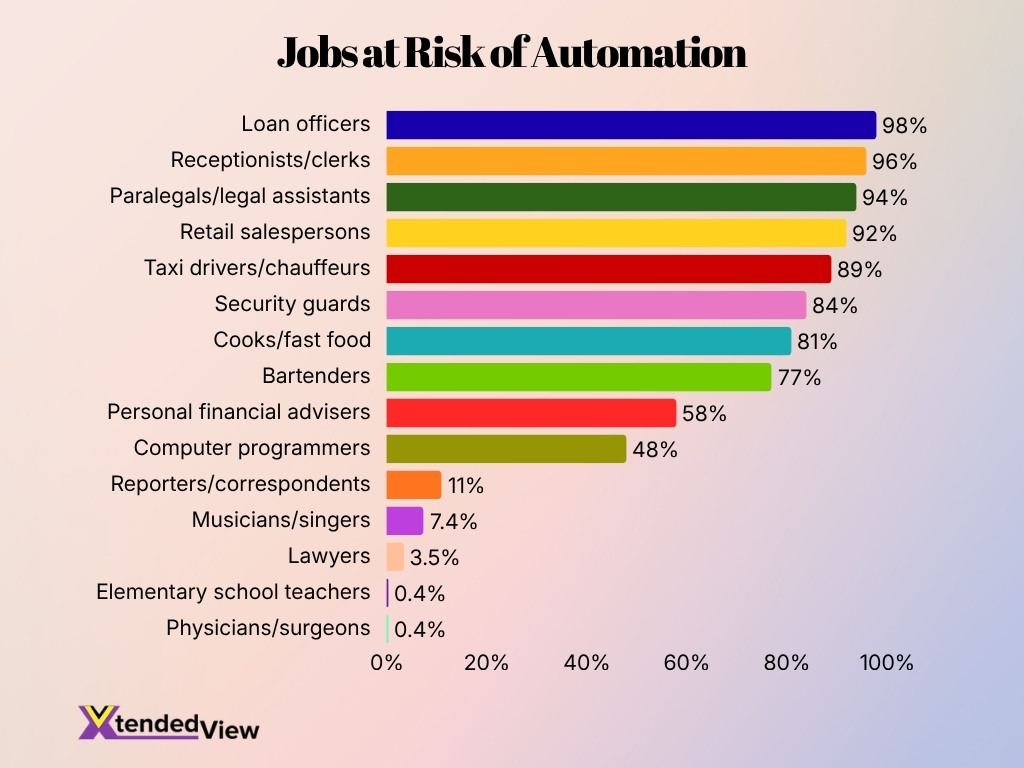
- Loan officers face the highest automation risk at 98%, making them the most vulnerable occupation in the dataset.
- Receptionists and clerks have a 96% probability of automation, highlighting the growing impact of AI on administrative roles.
- Paralegals and legal assistants show a 94% automation risk, indicating substantial disruption in routine legal support tasks.
- Retail salespersons face a 92% likelihood of automation as self-service and AI-driven retail technologies expand.
- Taxi drivers and chauffeurs have an 89% automation probability due to advances in autonomous vehicle technology.
- Security guards face an 84% risk of automation as surveillance and monitoring systems become more sophisticated.
- Cooks and fast food workers show an 81% automation likelihood, driven by robotic food preparation systems.
- Bartenders have a 77% probability of automation as automated beverage dispensing technologies gain adoption.
- Personal financial advisers face a moderate 58% automation risk despite the continued need for human judgment.
- Computer programmers have a 48% automation probability, reflecting AI’s growing ability to generate and review code.
- Reporters and correspondents face a relatively low 11% automation risk, underscoring the importance of investigative and creative work.
- Musicians and singers have only a 7.4% automation probability, highlighting the resilience of creative professions.
- Lawyers face a minimal 3.5% automation risk despite AI adoption in legal research and document review.
- Elementary school teachers have an extremely low 0.4% automation risk due to the human interaction required in education.
- Physicians and surgeons also show just a 0.4% automation probability, making them among the least vulnerable professions.
Economic Impact of AI Automation on the Job Market
- AI-driven job disruption is expected to affect 22% of global jobs by 2030.
- Advanced economies face the highest exposure, with 60% of jobs potentially affected.
- About half of AI-exposed jobs may benefit from productivity improvements rather than replacement.
- The remaining half of exposed jobs may experience lower labor demand, slower hiring, or wage pressure.
- AI capability exposure across the U.S. labor market has been valued at roughly $1.2 trillion in wages within professional and administrative occupations.
- Regions with stronger AI-skill demand have shown 3.6% lower employment in AI-vulnerable occupations after five years.
- Nearly two-thirds of businesses report skills shortages that are accelerating AI adoption decisions.
- AI-related spending increasingly focuses on productivity enhancement rather than simple workforce reduction.
- Long-term forecasts suggest AI could contribute trillions of dollars in economic value while simultaneously reshaping workforce composition.
AI Job Replacement by Demographics
- Around 29% of female-dominated occupations are exposed to generative AI, compared to just 16% of male-dominated roles.
- In high-income countries, 9.6% of women’s jobs are at high risk of AI automation, nearly triple the 3.5% risk for men.
- Younger demographics face higher exposure, with 32% of workers aged 18 to 24 worrying about AI job replacement compared to 14% of older employees.
- AI automation heavily impacts white-collar work, directly threatening 26% of administrative jobs and 20% of customer service roles.
- Global economic reports indicate that 60% of jobs in advanced economies are exposed to AI, compared to just 26% in low-income nations.
- Employees lacking digital adaptability face severe displacement, as evidenced by over 77,000 tech job losses directly attributed to AI in early 2025.
- Minority demographic groups experience heightened vulnerability, with 38% of Asian and 35% of Hispanic workers expressing deep concern over AI-driven obsolescence.
- Workers successfully adapting to these changes command a massive 56% wage premium compared to peers in the exact same occupations without AI skills.
Highest-Paying Jobs That AI Can’t Replace
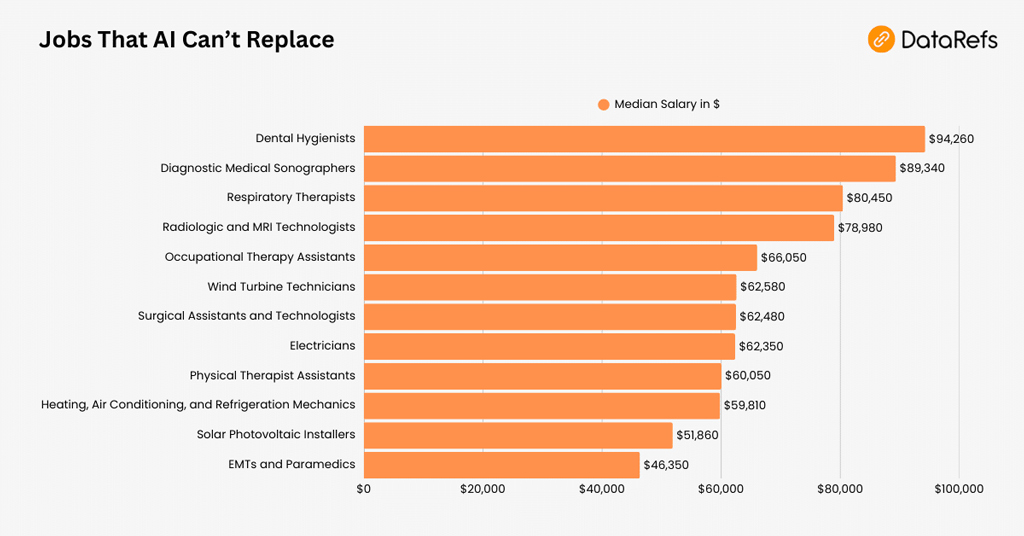
- Dental Hygienists lead the list of AI-resistant careers with a median salary of $94,260, the highest among all occupations analyzed.
- Diagnostic Medical Sonographers earn a median salary of $89,340, highlighting strong demand for specialized healthcare expertise.
- Respiratory Therapists command a median income of $80,450, making them one of the few non-automatable healthcare roles with high earnings.
- Radiologic and MRI Technologists receive a median salary of $78,980, reflecting the value of hands-on patient care and technical skills.
- Occupational Therapy Assistants earn $66,050, benefiting from work that requires human interaction and personalized treatment.
- Wind Turbine Technicians make $62,580, showing that skilled renewable energy jobs remain difficult for AI to replace.
- Surgical Assistants and Technologists earn $62,480, underscoring the importance of precision and real-time decision-making in healthcare.
- Electricians report a median salary of $62,350, demonstrating the continued need for skilled trade professionals.
- Physical Therapist Assistants earn $60,050, with patient-focused rehabilitation work remaining highly resistant to automation.
- HVAC Mechanics receive a median salary of $59,810, as complex on-site repairs still require human expertise.
- Solar Photovoltaic Installers earn $51,860, reflecting growing opportunities in the clean energy sector.
- EMTs and Paramedics earn $46,350, proving that emergency response roles continue to rely heavily on human judgment and care.
Worker Sentiment and Fears About AI Job Loss
- 52% of workers worry about the future impact of AI on their long-term job security.
- Over 50% of employees expect AI to significantly alter daily responsibilities within five years.
- Only 36% of workers report receiving adequate AI training needed to remain competitive.
- Nearly 71% of employees are concerned about AI being used in human resources decision-making.
- Around 40% of early-career workers are considering changing career paths due to AI advancements.
- Just 39% of the workforce currently feels optimistic about AI integration in their jobs.
- Roughly 32% of professionals fear that AI will reduce overall opportunities for career advancement.
- Approximately 77% of individuals express concern over immediate job loss caused by AI automation.
- About 30% of workers are actively worried that their specific roles will be eliminated by AI.
Corporate Layoffs Directly Attributed to AI Adoption
- U.S. employers announced 87,714 AI-related job cuts during the first five months of 2026.
- The 2026 total already exceeded the 54,836 AI-related layoffs reported during all of 2025.
- AI accounted for approximately 22% of announced U.S. layoffs through May 2026.
- In May 2026 alone, AI represented nearly 40% of all announced job cuts.
- Technology companies recorded more than 123,000 layoffs during the first five months of 2026.
- Several major firms publicly stated that AI-driven efficiency gains influenced workforce restructuring decisions during 2025 and 2026.
- A growing number of organizations now cite AI adoption as a formal reason in layoff announcements.
- AI-enabled customer service automation has reduced staffing requirements in support operations across multiple industries.
- Financial services firms increasingly automate document processing, compliance reviews, and reporting tasks previously handled by large teams.
- Analysts expect AI-related workforce restructuring announcements to continue increasing through the remainder of 2026.
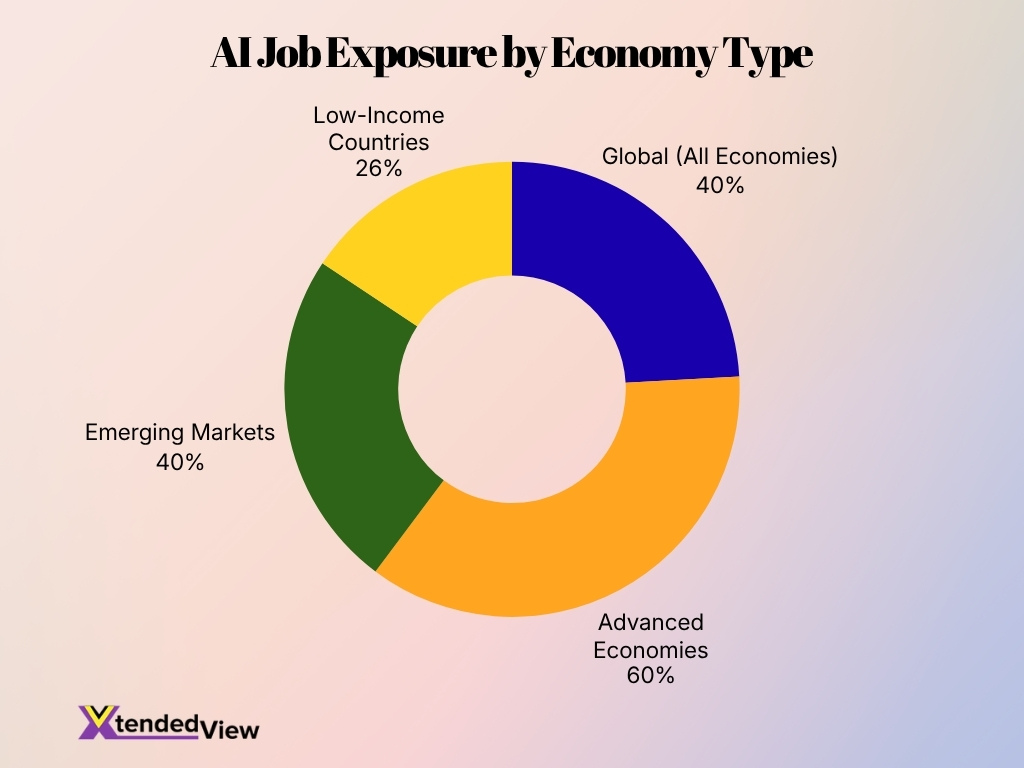
AI Job Exposure by Economy Type
- Advanced economies face the highest AI job exposure at 60%, indicating a greater likelihood of workplace automation and AI-driven task transformation.
- Global AI job exposure stands at 40%, suggesting that nearly two-fifths of jobs worldwide could be affected by AI technologies.
- Emerging markets also report 40% AI job exposure, matching the global average and highlighting growing automation potential in developing economies.
- Low-income countries have the lowest AI job exposure at 26%, reflecting lower digitalization and automation adoption levels.
- The 34 percentage point gap between advanced economies (60%) and low-income countries (26%) underscores significant differences in AI readiness and workforce impact.
- Workers in advanced economies are 1.5 times more exposed to AI-related changes than the global average (60% vs. 40%).
- AI exposure in emerging markets is 14 percentage points higher than in low-income countries (40% vs. 26%), indicating faster technological integration.
- The data suggests that higher-income economies are likely to experience the most significant workforce restructuring due to AI adoption.
- Despite varying exposure levels, all economic types are expected to see measurable impacts from AI on employment and job functions.
- The findings highlight a growing need for reskilling and workforce adaptation, particularly in economies with 40%+ AI job exposure.
AI Impact on Freelancers and the Gig Economy
- Demand for freelance writing jobs fell by 30% following the widespread adoption of generative AI tools.
- 84% of independent professionals now regularly integrate AI tools into their daily work routines.
- Freelancers executing AI-related projects command a premium by earning 44% more per hour.
- 52% of gig workers report that AI assistance helps them complete their tasks significantly faster.
- The demand for online graphic design work dropped by 17% due to the rise of AI image generation.
- 63% of businesses actively hire freelancers specifically for AI integration and automation tasks.
- Freelancers utilizing advanced AI models complete tasks 25% faster with 40% higher quality results.
- 31% of skilled gig workers successfully position themselves as specialized AI-enabled freelancers.
- The volume of AI-related freelance work grew by 60% year-over-year on major digital labor platforms.
- Early adapters of AI workflows now earn between 40% to 60% more per hour than traditional freelancers.
Employer Adoption and Workforce Transformation Statistics
- 86% of employers expect AI and information-processing technologies to transform their businesses by 2030.
- 77% of employers plan to reskill or upskill workers between 2025 and 2030.
- About 40% of employers expect workforce reductions where AI can automate tasks.
- Nearly 70% of employers plan to hire workers with AI-specific skills over the next five years.
- AI literacy is becoming a priority competency across industries, particularly in knowledge-based occupations.
- Employers increasingly redesign jobs around human-AI collaboration instead of full automation.
- Research shows that organizations using AI extensively report stronger productivity growth than companies with limited adoption.
- More businesses now require AI proficiency for roles that previously had no technology specialization requirements.
- Workforce transformation strategies increasingly combine automation, retraining, and internal mobility programs.
- Employers report that skill gaps, rather than technology costs, remain one of the largest barriers to successful AI deployment.
AI Productivity and Workforce Efficiency Statistics
- Employees using generative AI tools can complete professional tasks 25% to 56% faster.
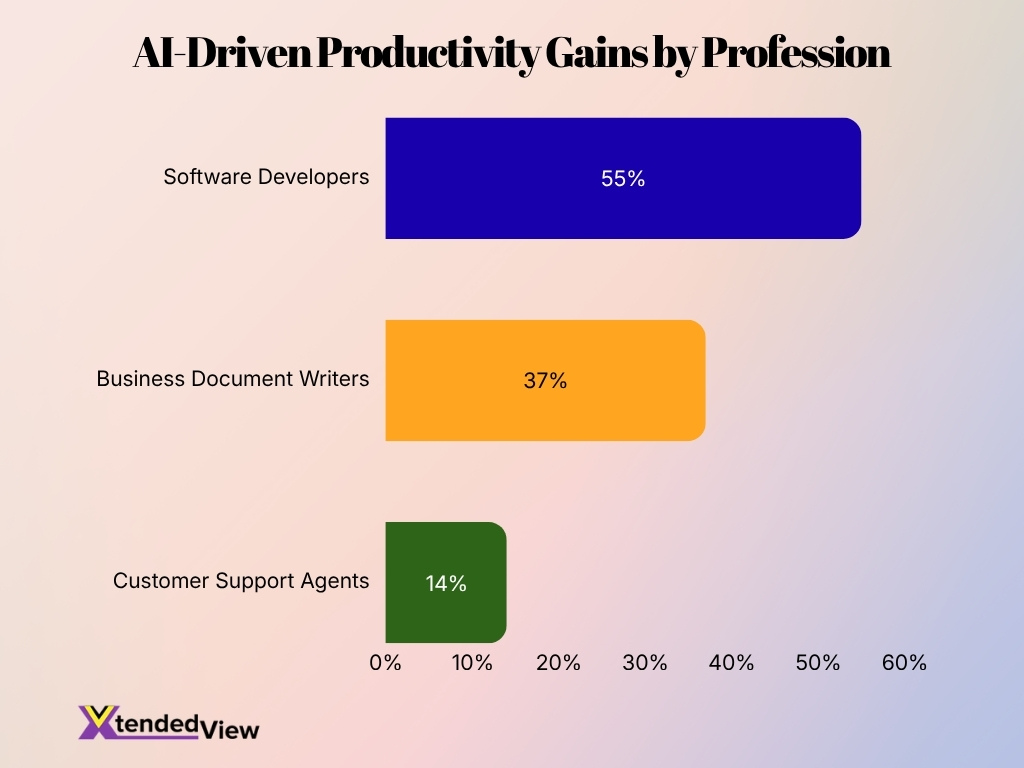
- Customer support agents using AI assistants increased productivity by an average of 14%.
- Software developers using AI coding tools completed tasks up to 55% faster.
- Business professionals using AI improved document-writing speed by approximately 37%.
- Generative AI has the potential to automate up to 60% to 70% of current workplace activities.
- Professionals utilizing AI achieved a 40% improvement in their overall task performance quality.
- Routine use of AI saves knowledge workers an average of 3.6 hours per week on administrative tasks.
- Implementing AI in marketing and sales workflows has been shown to boost revenue by 3% to 15%.
Reskilling and Upskilling Statistics
- 77% of employers plan to reskill or upskill employees between 2025 and 2030 to prepare for AI-driven changes.
- About 59% of the global workforce will require training by 2030 due to technological transformation.
- Employers estimate that nearly 39% of workers’ current core skills will become outdated or transformed by 2030.
- Approximately 74% of organizations have initiated plans to upskill or retrain employees in response to AI adoption.
- The global market for AI software spending is forecast to reach $18.0 billion by 2025 to support workforce capabilities.
- Around 80% of the global workforce will need to acquire new AI-related skills by 2027 to remain competitive.
- Job disruption is expected to affect 22% of total jobs by 2030, creating 170 million new roles and displacing 92 million.
- Greater investment in reskilling and upskilling programs could boost global GDP by $6.5 trillion by 2030.
- Upskilling existing employees rather than hiring new ones yields an average cost saving of 70% to 92%.
- About 61% of workers actively desire more AI-related training at work to keep pace with changing job tasks.
White-Collar Job Displacement Statistics
- Up to 300 million full-time jobs globally face exposure to generative AI automation.
- Approximately 46% of administrative tasks and 44% of legal tasks are susceptible to AI displacement.
- Generative AI is projected to impact 4.5 times more white-collar jobs than blue-collar roles.
- Nearly 19% of all employees hold positions highly exposed to advanced cognitive automation tools.
- Up to 30% of current office work hours could be fully automated by the year 2030.
- Around 80% of the workforce will see at least 10% of their daily tasks affected by AI.
- Over 40% of global professionals will require substantial reskilling within three years due to AI integration.
- Artificial intelligence directly accounted for nearly 4,000 corporate job cuts during a single month in 2023.
- Roughly 83 million traditional roles are projected to be eliminated globally by automation by 2027.
Entry-Level Employment Trends in the AI Era
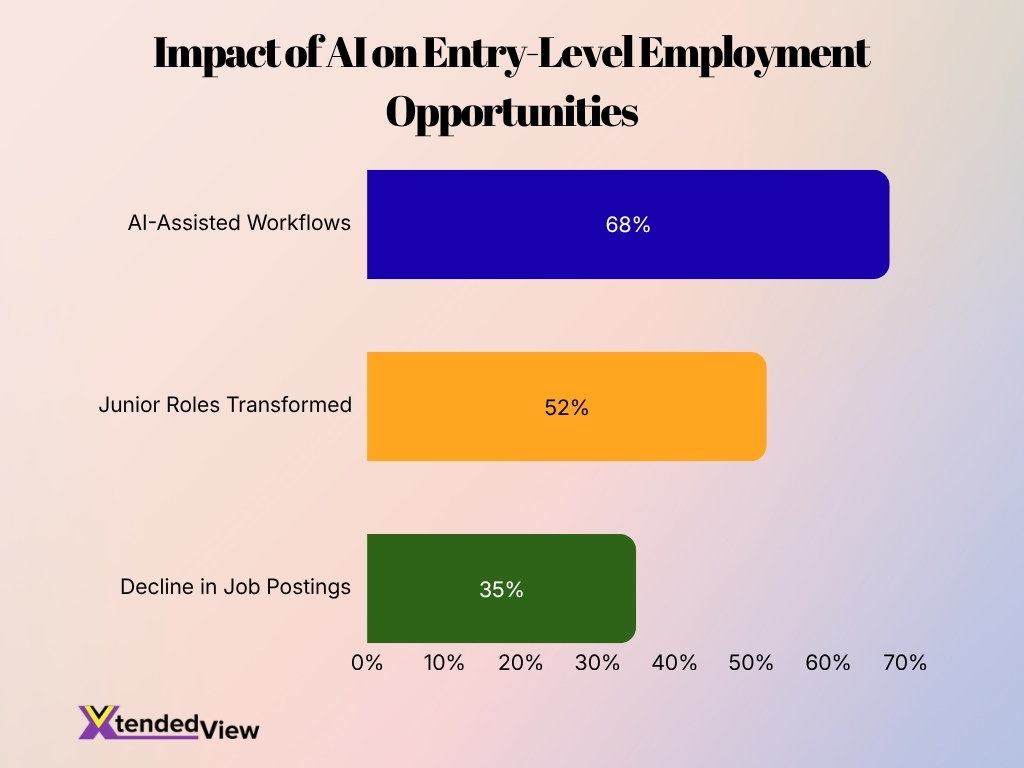
- 68% of organizations have increased AI-assisted workflows, highlighting the growing integration of AI into daily business operations.
- 52% of companies report that AI has transformed junior-level roles, reshaping responsibilities for entry-level employees.
- Entry-level job postings have declined by 35%, indicating reduced demand for traditional beginner positions as automation expands.
- More than half of employers (52%) are redesigning junior job functions to incorporate AI tools and technologies.
- The 68% adoption rate of AI-assisted workflows suggests businesses are prioritizing efficiency and automation across teams.
- The 35% drop in entry-level vacancies reflects the increasing impact of AI on hiring patterns for new workforce entrants.
- AI-driven workplace changes are affecting both job availability and job responsibilities, particularly at the entry level.
- The gap between AI workflow adoption (68%) and job posting decline (35%) underscores AI’s growing influence on workforce planning.
Future Timelines and Predictions for AI Job Disruption
- By 2030, 22% of current jobs are expected to undergo significant transformation because of technological and economic shifts.
- Global forecasts project 92 million jobs displaced and 170 million jobs created by 2030.
- AI and automation could contribute a net gain of 78 million jobs worldwide by the end of the decade.
- Goldman Sachs estimates that generative AI could automate work equivalent to 300 million full-time jobs globally.
- The IMF estimates that approximately 40% of global employment is exposed to AI-related transformation.
- Nearly 60% of jobs in advanced economies may experience AI-related impacts.
- AI specialists, machine learning engineers, and data professionals are projected to remain among the fastest-growing occupations through 2030.
- Analysts expect workforce transformation to accelerate between 2026 and 2028 as AI adoption moves beyond pilot projects into enterprise-wide deployment.
- Human-AI collaboration models are expected to become the dominant workforce structure across many industries by the end of the decade.
- Economists generally expect AI to reshape more jobs than it completely eliminates, with skill adaptation serving as the key determinant of career resilience.
Frequently Asked Questions (FAQs)
Around 92 million jobs are projected to be displaced globally by 2030, while 170 million new jobs are expected to be created, resulting in a net gain of 78 million jobs.
Approximately 22% of current jobs worldwide are expected to experience disruption from AI and other macroeconomic trends by 2030.
U.S. employers attributed 87,714 job cuts to AI during the first five months of 2026, exceeding the total recorded for all of 2025.
AI accounted for about 22% of all announced U.S. layoffs in 2026 through May, making it the most-cited reason for job cuts.
The IMF estimates that roughly 40% of global employment is exposed to AI-related changes, rising to around 60% in advanced economies.
Conclusion
Artificial intelligence continues to reshape the global labor market at a pace few technologies have matched. The latest forecasts suggest that while millions of jobs may disappear or change significantly, AI is also expected to create substantial new employment opportunities across technology, data, healthcare, cybersecurity, and emerging digital fields.
The data shows that the greatest risk falls on occupations built around repetitive, predictable, and information-processing tasks. At the same time, jobs requiring human judgment, emotional intelligence, creativity, leadership, and physical presence remain more resilient. For U.S. workers and employers alike, the central challenge is no longer whether AI will affect the workforce, but how quickly organizations and individuals can adapt.
Looking toward 2030, successful workforce strategies will likely depend on continuous learning, AI literacy, and large-scale reskilling initiatives. Workers who embrace AI as a productivity tool rather than view it solely as a threat may be best positioned to benefit from the next phase of labor market transformation.