


Smart rings have evolved from niche wearable gadgets into a fast-growing segment of the connected health market. Consumers now use these compact devices to track sleep, monitor recovery, measure heart rate, and enable contactless interactions without wearing a smartwatch. Healthcare providers, fitness companies, and wellness platforms increasingly rely on smart ring data to support preventive health programs and personalized coaching.
As sensor accuracy improves and adoption expands worldwide, smart rings are becoming a significant force within the wearable technology industry. Explore the latest statistics, market trends, and growth insights shaping the smart ring market.
Editor’s Choice
- The global smart ring market is projected to reach approximately $518.9 million in 2026, up from $416.9 million in 2025.
- Industry forecasts suggest the market could grow to $3.77 billion by 2034, reflecting strong long-term demand.
- Global smart ring shipments are expected to exceed 4 million units in 2025, more than doubling from 2024 levels.
- Oura reportedly sold more than 5.5 million smart rings cumulatively worldwide by late 2025.
- Oura generated approximately $1 billion in revenue during 2025, highlighting the growing commercial value of smart rings.
- North America accounted for roughly 45.1% of the global smart ring market revenue in 2025.
- Several industry forecasts project an annual smart ring market growth rate above 20% through the next decade.
Recent Developments
- Oura launched the Oura Ring 5 in May 2026 with a design that is approximately 40% smaller than the previous generation.
- The Oura Ring 5 maintains a battery life of up to 6 to 9 days despite its reduced size.
- Oura introduced AI-powered Health Radar capabilities for monitoring cardiovascular and respiratory trends.
- The company reported approximately 5 million paying subscribers by 2026.
- Oura’s valuation reached roughly $11 billion ahead of its planned IPO.
- Industry analysts forecast smart ring shipments to rise from 1.8 million units in 2024 to more than 4 million units in 2025.
- New-generation smart rings increasingly include support for blood pressure trend monitoring, hormone tracking, and medication tracking.
- Smart ring manufacturers expanded availability across more than 150 countries during 2025.
- Researchers introduced open-source platforms such as τ-Ring, enabling multimodal physiological sensing and accelerating wearable innovation.
Global Smart Ring Market Size and Growth Forecasts
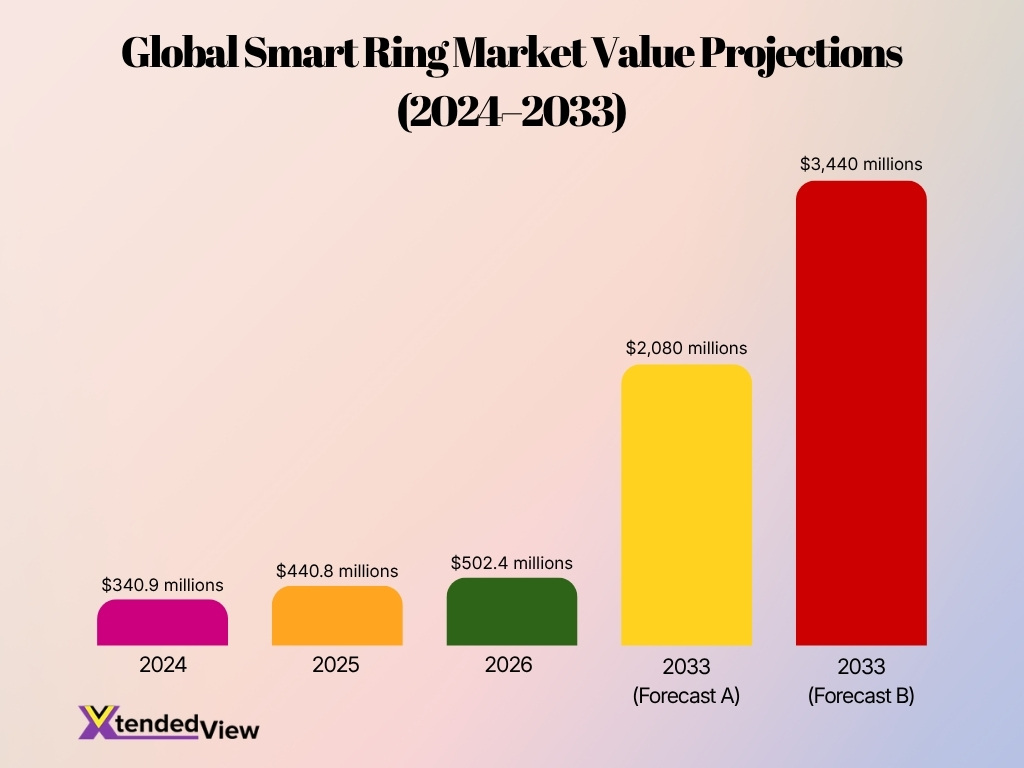
- The global smart ring market was valued at approximately $340.9 million in 2024.
- Market value increased to about $440.8 million in 2025, representing strong year-over-year growth.
- Forecasts place the market at $502.4 million in 2026.
- One industry forecast expects the market to reach $2.08 billion by 2033.
- Another forecast projects $3.44 billion by 2033, highlighting aggressive expansion expectations.
- Market researchers estimate a 22.5% CAGR from 2026 to 2033.
- Some forecasts anticipate growth rates approaching 29.3% annually through 2034.
- The broader wearable technology market is projected to reach $176.8 billion by 2030, creating a favorable environment for smart ring adoption.
- Industry estimates place the smart ring market near $697.6 million in 2025 under higher-growth scenarios.
Smart Ring Revenue Statistics
- Oura reported annual revenue of approximately $500 million in 2024.
- The company expected revenue to exceed $1 billion during 2025, effectively doubling year over year.
- Global smart ring market revenue reached an estimated $417.5 million in 2025, according to one industry assessment.
- Another industry forecast estimated $421.4 million in market revenue for 2025.
- Market revenue is expected to rise to approximately $508.6 million in 2026.
- Analysts project global revenue could surpass $1.14 billion by 2030.
- Some forecasts place total market revenue at nearly $1.9 billion by 2032.
- Long-range projections estimate market revenue could reach $2.8 billion by 2035.
- Premium smart rings continue to command pricing between $399 and $499, supporting higher revenue per device.
Smart Ring Shipment Statistics
- Global smart ring shipments exceeded 850,000 units in 2023.
- Shipments grew to approximately 1.8 million units in 2024, more than doubling year over year.
- Industry analysts forecast shipments of more than 4 million units in 2025.
- The first half of 2025 alone generated roughly 1.6 million units shipped.
- IDC-based industry commentary indicated smart ring shipments increased approximately 49% during 2025.
- Global smart ring shipments reached roughly 4.3 million units in 2025, according to industry estimates cited during CES 2026 discussions.
- Oura sold more than 2.5 million rings between mid-2024 and late 2025, demonstrating accelerating demand.
- Oura’s cumulative sales surpassed 5.5 million units worldwide by late 2025.
- Despite rapid growth, smart rings remain a smaller category than smartwatches, which shipped approximately 163 million units in comparison.
Smart Ring Market Share by Key Brands and Manufacturers
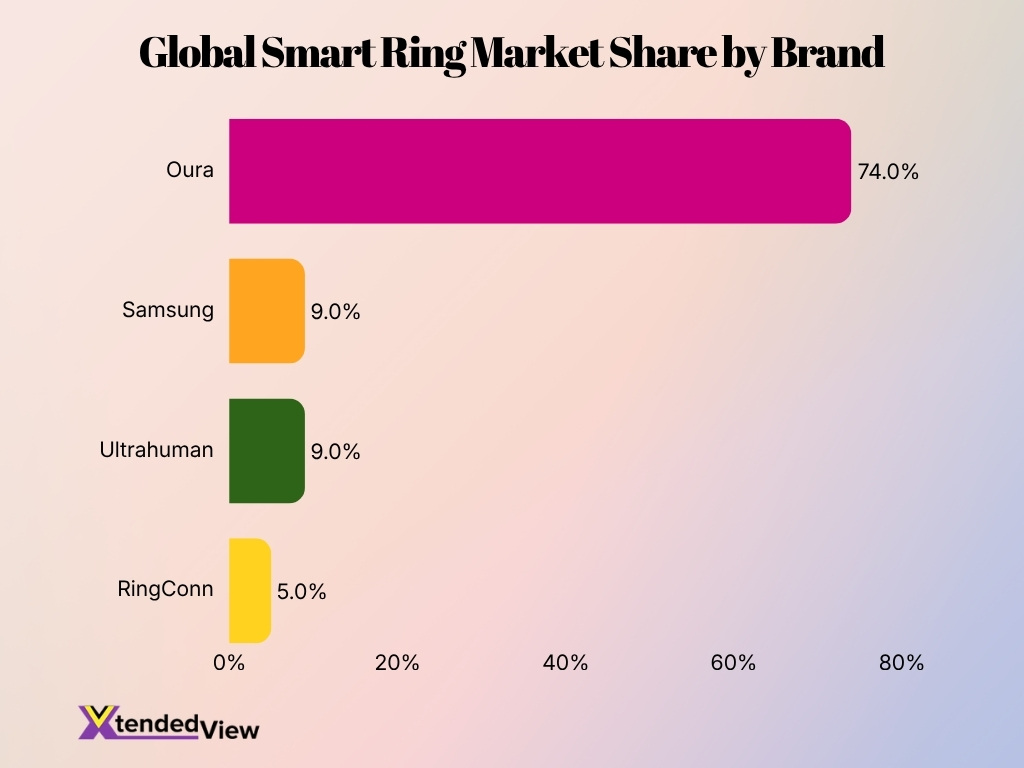
- Oura maintained the dominant smart ring manufacturer position in 2025, accounting for an estimated 74% market share of global shipments based on industry analyses.
- Samsung entered the category with the Galaxy Ring and quickly secured a 9% market share globally within the first half of 2025.
- Ultrahuman emerged as a leading competitor, capturing a 9% share of global smart ring shipments by mid-2025.
- RingConn expanded its distribution globally to claim a 5% market share of shipments, positioning it as the leading subscription-free brand in 2025.
- Industry analysts estimate that the top manufacturers collectively controlled over 85.9% of the global smart ring revenue in 2025.
- Oura expanded its financial footprint significantly, positioning itself to surpass $1 billion in annual sales revenue during 2025.
- The overall global smart ring market size grew rapidly to reach an estimated valuation of $697.6 million by the end of 2025.
- North America remained the dominant consumer region, capturing a 45.1% portion of the global smart ring market share in 2025.
- Health and wellness tracking features dominated consumer demand, commanding a 35.9% majority application share in 2025.
Smart Ring Adoption Statistics by Consumer Demographics
- Adults aged 25 to 44 years accounted for the largest share of users, commanding 45.89% of the individuals and professionals market segment.
- Health-conscious professionals and general individuals drove rapid category growth, making up 44.32% of the application market for health and fitness tracking.
- More than 60% of smart ring purchasers reported buying the device primarily for wellness reasons, closely aligning with broader trends where 75% of buyers prioritize health metrics.
- Female consumers expanded their market presence significantly, commanding a large portion of the 57.38% share held by the leading unisex product category.
- Millennials remained the leading buyers in North America, which secured the largest regional footprint with a 47.28% global market share.
- Gen Z adoption accelerated online, helping direct-to-consumer e-commerce channels capture 68.0% of all device distribution.
- High-income households dominated sales due to premium pricing, keeping the market concentrated among the top five premium brands, which held an 85.9% market share.
- Remote workers and tech-savvy individual buyers looking for non-intrusive tech led the consumer group segment, capturing 11.8% of the total market.
- Consumer surveys confirmed a massive preference for discreet form factors, helping specialized health and wellness monitoring applications dominate 50% of the industry.
Smart Rings vs. Smartwatches: Adoption and Usage Trends
- Global smartwatch shipments reached approximately 163 million units in 2025, compared with about 4 million smart ring shipments.
- Smart rings represented one of the fastest-growing wearable categories, with annual shipment growth exceeding 100% in some markets.
- Battery life for many smart rings ranges from 5 to 9 days, compared with 1 to 3 days for many smartwatches.
- More than 50% of smart ring users report wearing their device continuously, including during sleep.
- Smartwatches continue to dominate notification, communication, and app-related use cases, with some users checking them 150 times per day.
- Smart rings lead in overnight health monitoring because they are up to 70% lighter than traditional smartwatches.
- Consumer surveys found that comfort was among the most frequently cited reasons for switching from smartwatch-only use to combined smartwatch-and-ring usage.
- Hybrid ownership is increasing, with market reports showing smartwatches accounting for over 60% of tech wearables while smart rings hold less than 1%.
- Industry forecasts indicate smart rings will expand at a CAGR of over 20% through the end of the decade, growing faster than smartwatches.
Smart Ring Market Size by Region
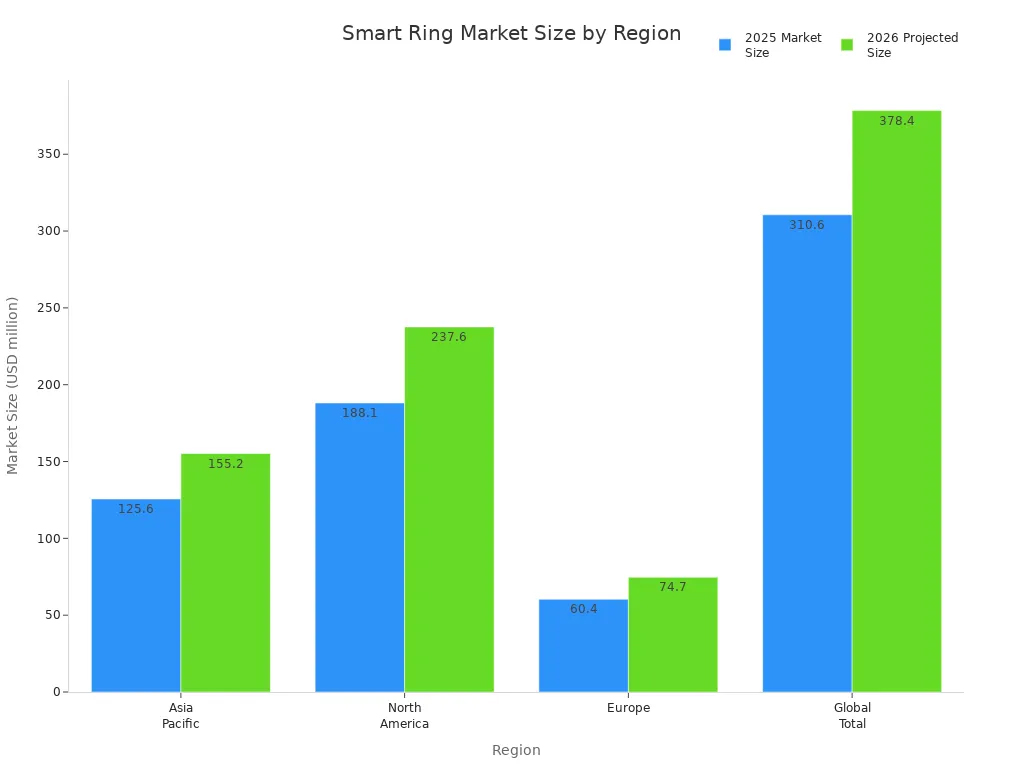
- The global smart ring market is projected to grow from $310.6 million in 2025 to $378.4 million in 2026.
- The market is expected to add around $67.8 million in new value between 2025 and 2026.
- North America is the largest regional market, rising from $188.1 million in 2025 to $237.6 million in 2026.
- North America is expected to gain $49.5 million, making it the strongest contributor to regional market growth.
- Asia Pacific is projected to increase from $125.6 million in 2025 to $155.2 million in 2026.
- Asia Pacific is forecast to add $29.6 million, showing strong demand for smart wearable technology.
- Europe has the smallest market size among the listed regions, growing from $60.4 million in 2025 to $74.7 million in 2026.
- Europe is expected to add $14.3 million, indicating steady but smaller-scale smart ring adoption.
- The global total remains higher than each region, highlighting broad-based growth across multiple markets.
- Overall, the data shows that smart ring adoption is expanding across all regions, with North America leading in market size and growth momentum.
Health and Wellness Tracking Usage Statistics
- Health monitoring drives more than 70% of primary purchase motivations for modern smart rings.
- Sleep tracking has a high 93% to 96% sensitivity rate, making it the most used feature.
- Over 50% of market share applications focus purely on continuous health and daily activity monitoring.
- High-accuracy heart rate sensors maintain a near 100% integration standard across all premium 2025 and 2026 releases.
- Advanced biometric platforms achieved a massive 98% to 99% internal accuracy score for recovery tracking.
- Mobile app user retention drops from 80% at three months to 43% by twelve months of daily tracking.
- Built-in biometric sensors can successfully detect wellness abnormalities up to 2.75 days before physical symptoms appear.
- Women’s health tracking applications are expanding rapidly within a market projected to reach 1.01 billion dollars by the end of 2026.
Cardiovascular and Biometric Sensor Accuracy Data
- Validation studies have shown that smart ring heart rate measurements achieve 97% to 99% correlation with electrocardiogram (ECG) reference systems during resting conditions.
- Research evaluating photoplethysmography (PPG) sensors found heart rate error rates typically remained below 3 beats per minute during normal daily activities.
- Several clinical studies reported resting heart rate accuracy above 98% when compared with medical-grade monitoring equipment.
- Blood oxygen (SpO2) monitoring in premium smart rings generally achieves accuracy within 2% to 3% of clinical pulse oximeters.
- Skin temperature sensors in smart rings can detect changes as small as 0.1°C, supporting illness and recovery monitoring.
- Heart rate variability (HRV) measurements from smart rings have demonstrated strong agreement with ECG-based assessments in sleep and recovery studies.
- Researchers reported that overnight biometric tracking accuracy tends to outperform daytime measurements because of reduced motion interference.
- Modern smart rings typically collect biometric readings hundreds of times per second during designated monitoring periods.
- Independent evaluations found smart ring resting heart rate measurements often exceeded the accuracy levels of wrist-based wearables.
- New-generation sensor arrays introduced in 2025 and 2026 improved signal quality while reducing power consumption by approximately 20% to 30%.
Wearable Sleep Tracking Accuracy
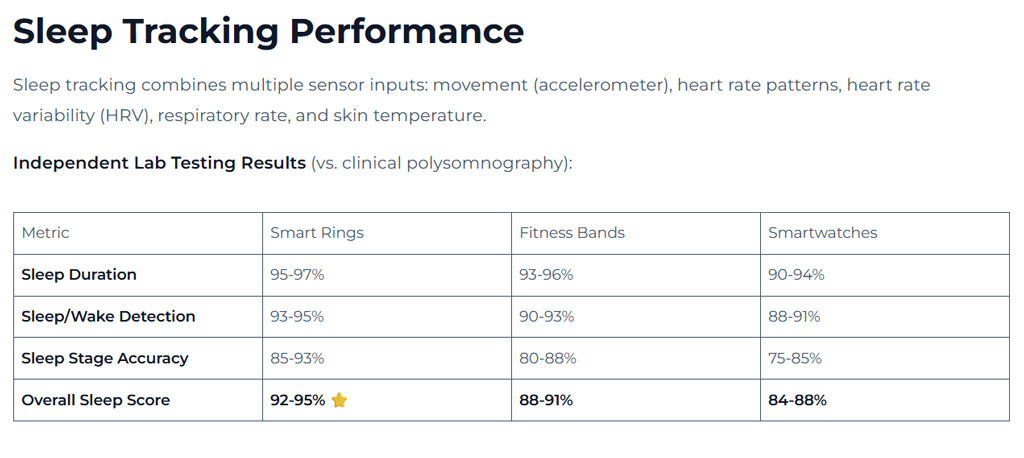
- Smart rings deliver the strongest sleep tracking performance, with sleep duration accuracy of 95–97%.
- Fitness bands perform closely behind smart rings, recording 93–96% accuracy for sleep duration.
- Smartwatches show the lowest sleep duration accuracy among the three device types, at 90–94%.
- For sleep/wake detection, smart rings again lead with 93–95% accuracy, making them highly reliable for basic sleep tracking.
- Fitness bands track sleep/wake status with 90–93% accuracy, while smartwatches range between 88–91%.
- The biggest performance gap appears in sleep stage accuracy, where smart rings reach 85–93%, compared with 80–88% for fitness bands and 75–85% for smartwatches.
- Overall sleep scores are highest for smart rings at 92–95%, showing stronger consistency across multiple sleep metrics.
- Fitness bands provide a solid overall sleep score range of 88–91%, making them a reliable mid-tier option.
- Smartwatches record an overall sleep score of 84–88%, suggesting they may be less precise for detailed sleep analysis.
- The data shows that smart rings outperform fitness bands and smartwatches across all listed sleep tracking metrics.
Early Disease and Clinical Predictive Capabilities Data
- Smart rings identified physiological changes associated with illness 3 days before symptoms appeared during COVID-19 research.
- Illness prediction accuracy rates exceeded 80% in models utilizing temperature and heart rate variability data.
- Wearable sensor platforms detected infection-related physiological deviations with sensitivity levels above 90%.
- Continuous temperature tracking detected 100% of early fever spikes and mapped recovery progression trajectories.
- Longitudinal biometric monitoring identified cardiovascular risk factors 5 years earlier than traditional periodic screening.
- Over 60% of major healthcare institutions now incorporate wearable sensor data into remote patient monitoring.
- Severe sleep irregularities captured by smart rings correlated with a 2.5-fold increase in cardiovascular risks.
- Ongoing clinical trials for respiratory and chronic disease monitoring expanded by 45% across research institutions.
- AI-driven predictive health models integrated into wearable platforms saw a 300% market expansion through 2025 and 2026.
Smart Ring Technology Market Share: Bluetooth vs. NFC
- Bluetooth-enabled smart rings dominated the technology segment with a 68.72% revenue share in 2025.
- The Bluetooth Low Energy (BLE) segment alone is projected to capture 55.81% of the total market share by 2026.
- The health and fitness tracking application segment, heavily reliant on Bluetooth, held the largest market share of 44.32% in 2025.
- NFC-enabled smart rings are expected to grow at a rapid CAGR of 21.6% from 2026 to 2033.
- Approximately 37% of newly launched smart rings integrate NFC communication for contactless payments and digital access.
- Industry leader Oura surpassed 2.5 million rings sold, using Bluetooth to sync advanced health-tracking data.
- A single premium brand, McLear Ltd, holds an 18% share of global installations using NFC payments across 30 countries.
- The overall global smart ring market is scaling quickly, rising from $417.5 million in 2025 to a projected $2,079.3 million by 2033.
Smart Ring Market Share by Operating System Compatibility
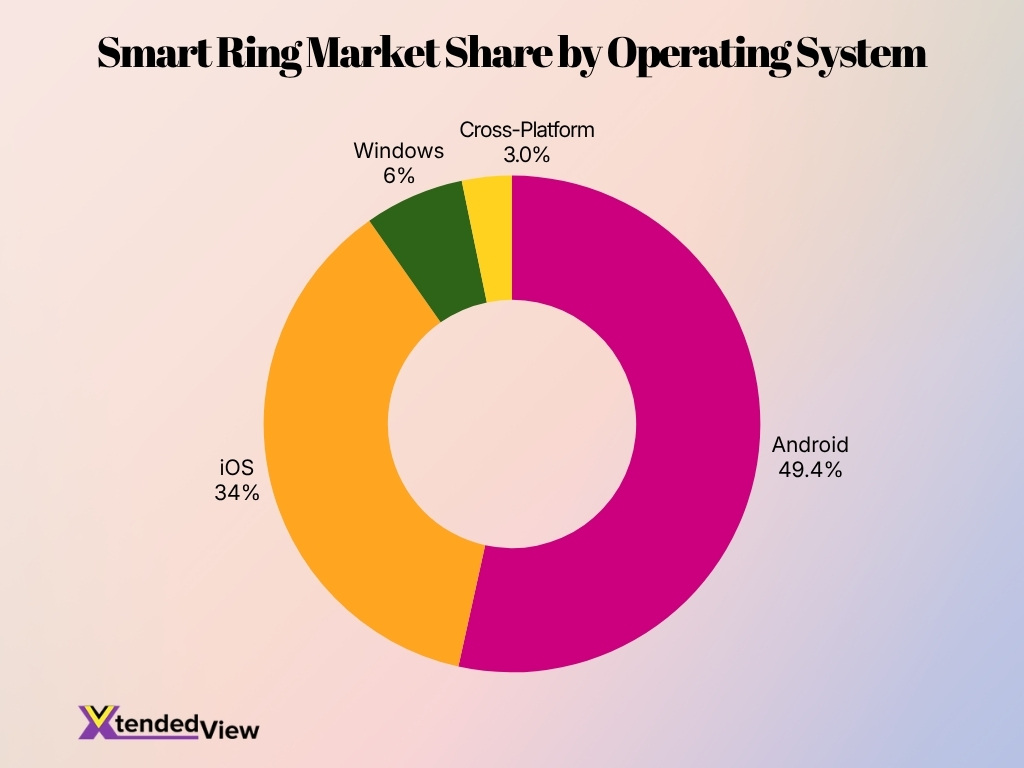
- Android-compatible smart rings lead the global market, capturing a 49.4% revenue share.
- Devices with iOS integration account for approximately 34% of active global installations.
- Cross-platform smart rings that support both operating systems simultaneously make up roughly 3% of the market.
- Smart rings designed with Windows-based connectivity represent a minor historical segment of 6%.
- Over 57% of all active smart ring hardware units globally provide native Android device support.
- Global market volume for Bluetooth-enabled cross-platform synchronization reached a dominant 68% share.
- Approximately 32% of first-time wearable tech buyers cite device compatibility concerns as a major purchase barrier.
- Wearable technology research indicates that 41% of premium iPhone owners use at least one connected health tracker.
Smart Ring Application Share: Health Tracking vs. Contactless Payments
- The health and wellness tracking segment dominated the market, accounting for 43.88% of global revenue.
- A recent consumer study highlighted that 75% of buyers prioritize health and fitness tracking features.
- The segment for NFC-enabled smart rings is projected to experience a strong 21.6% CAGR from 2026 to 2033.
- The payment/contactless application segment is anticipated to expand rapidly at the highest CAGR of 23.1%.
- Over 47% of academic and clinical smart ring research focuses directly on validating sleep monitoring applications.
- Wearable research confirms smart rings deliver 93% to 96% accuracy in digital sleep detection metrics.
- Clinical studies show smart rings can predict infectious disease symptoms up to 2.75 days before diagnosis.
- Early smart ring adoption is led heavily by tech-savvy young adults, with 50% of users aged 25–44.
- Market forecasts project the global smart ring industry will grow at a 22.5% CAGR to reach $2,079.3 million by 2033.
Smart Ring Battery Life and Hardware Performance Benchmarks
- Most premium smart rings released in 2025 and 2026 offer battery life ranging from 5 to 9 days on a single charge.
- The latest generation of smart rings can fully recharge in approximately 20 to 90 minutes, depending on the model.
- Oura Ring 5 advertises battery performance of up to eight days under normal use conditions.
- Several leading devices weigh between 3 and 6 grams, significantly lighter than most smartwatches.
- Water-resistance ratings commonly range from 50 to 100 meters, allowing use during swimming and showering.
- Titanium remains the most widely used premium smart ring material because of its durability and low weight.
- Sensor miniaturization improved substantially during 2025, enabling thinner designs without sacrificing functionality.
- New chipsets reduced energy consumption by approximately 20% compared with previous-generation wearable processors.
- Hardware improvements contributed to higher continuous monitoring accuracy while extending battery longevity.
Smart Ring Price Comparison
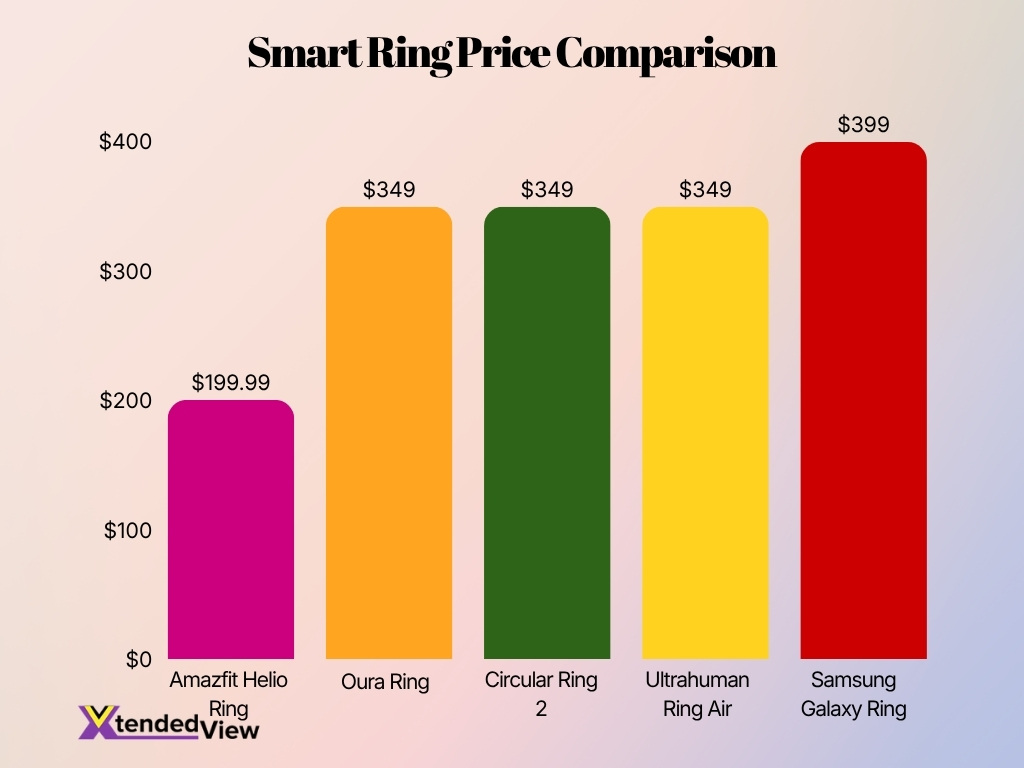
- Samsung Galaxy Ring is the most expensive smart ring in the comparison, priced at $399.
- Oura Ring, Circular Ring 2, and Ultrahuman Ring Air are priced equally at $349 each.
- Amazfit Helio Ring is the most affordable option, priced at $199.99.
- The price gap between the cheapest and most expensive smart ring is about $199.01.
- Samsung Galaxy Ring costs around 14% more than the three mid-priced models at $349.
- Amazfit Helio Ring is nearly 43% cheaper than the $349 smart rings.
- The data shows that most premium smart rings are clustered around the $349 price point.
- For budget-focused buyers, the Amazfit Helio Ring stands out as the lowest-cost option.
- For premium buyers, the Samsung Galaxy Ring sits at the top end of the pricing range.
- The smart ring market shows a clear price split between entry-level pricing near $200 and premium pricing between $349 and $399.
Smart Ring Funding, Investments, and Startup Valuations
- Oura’s valuation reached $11 billion in 2026 following a massive $900 million Series E funding round.
- The company generated $1 billion in annual revenue during 2025, doubling its $500 million performance from 2024.
- Oura raised a cumulative total of $1.2 billion across 8 funding rounds before its planned public offering.
- Ultrahuman secured $35 million in Series B venture funding to expand manufacturing and international distribution.
- Venture capital investment in wearable health technology spiked significantly, with the global smart ring market size climbing to $1.55 billion in 2026.
- Digital health startups attracted massive capital, helping the industry reach a projected valuation of $8.92 billion by 2034.
- Smart ring manufacturers increasingly attract investment because 44.32% of the market share is driven by high-margin health and fitness tracking applications.
- Healthcare-focused wearable startups remain fast-growing, with 52 million Americans utilizing wearable health monitoring devices.
- Industry analysts expect continued activity as the top 12 major wearable firms already control nearly 63% of all global device shipments.
Frequently Asked Questions (FAQs)
The global smart ring market is projected to reach $518.9 million in 2026, up from $416.9 million in 2025.
Industry forecasts estimate a 22.5% to 29.3% CAGR through the next decade, depending on the forecast model used.
Global smart ring shipments are forecast to exceed 4 million units in 2025, compared with approximately 1.8 million units in 2024.
North America accounted for approximately 45.1% of the global smart ring market revenue in 2025, making it the largest regional market.
Oura is estimated to have generated approximately $1 billion in revenue during 2025, doubling from about $500 million in 2024.
Conclusion
Smart rings have evolved into one of the most promising segments of the wearable technology industry. Market forecasts indicate strong double-digit growth through the next decade, supported by expanding consumer interest in health monitoring, sleep tracking, recovery insights, and preventive wellness. While smartwatches continue to dominate overall wearable shipments, smart rings are carving out a distinct position through superior comfort, longer battery life, and increasingly accurate biometric monitoring.
The latest data shows rapid shipment growth, rising revenues, expanding geographic adoption, and stronger clinical validation of health-tracking capabilities. As sensor technology improves and artificial intelligence enhances predictive health insights, smart rings are expected to play an increasingly important role in personal wellness, remote healthcare, and digital health ecosystems worldwide.
