


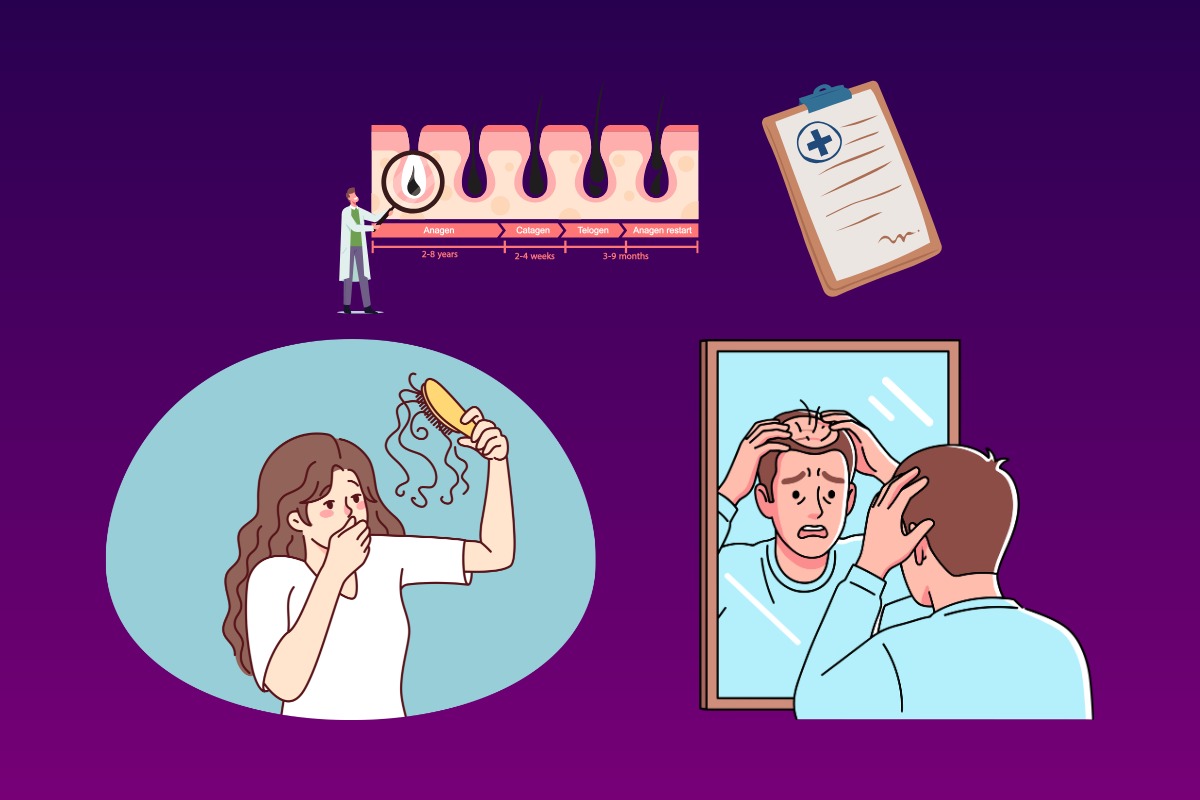
Hair loss affects millions of people each year and influences healthcare, consumer spending, and workplace confidence. Dermatology clinics increasingly use digital scalp imaging and AI-assisted diagnostics to identify hair disorders earlier, while pharmaceutical companies continue investing in new therapies to meet rising demand. As awareness grows across both medical and cosmetic industries, understanding the latest statistics helps patients, healthcare professionals, and businesses make informed decisions. Explore the data below to see how hair loss trends continue to evolve.
Editor’s Choice
- Around 80 million Americans experience hereditary or pattern hair loss, making it one of the country’s most common dermatological conditions.
- Male pattern hair loss (androgenetic alopecia) remains the most common form of hair loss worldwide and accounts for most permanent hair loss cases.
- Approximately 85% of men experience noticeable hair thinning by age 50.
- About 40% of women develop visible pattern hair loss by age 50, with prevalence increasing after menopause.
- Researchers have identified more than 380 genetic loci associated with androgenetic alopecia, highlighting the complex genetic basis of hair loss.
- In 2025, multiple late-stage clinical trials advanced new topical and regenerative hair loss therapies, representing the largest innovation wave in decades.
- The global androgenetic alopecia treatment market reached an estimated $3.51 billion in 2025 and is projected to continue expanding through the next decade.
Recent Developments
- During 2025, several companies advanced new hair-loss treatments into Phase II and Phase III clinical trials, expanding options beyond traditional medications.
- Researchers continued investigating stem cell activation and follicle regeneration as potential long-term solutions for pattern hair loss.
- The FDA issued a 2025 safety communication regarding compounded topical finasteride after receiving 32 adverse event reports between 2019 and 2024.
- Clinical research in 2025 focused on therapies designed to stimulate dormant follicles instead of only slowing hair loss progression.
- Digital scalp analysis powered by artificial intelligence continued gaining attention for earlier diagnosis and monitoring of alopecia severity.
- Several investigational therapies targeted androgen receptors with topical formulations to reduce systemic side effects associated with oral medications.
- Regenerative medicine approaches using molecular signaling pathways attracted increased investment during 2025 as developers sought longer-lasting hair restoration.
- Clinical experts continued recommending minoxidil and finasteride as first-line evidence-based therapies while newer treatments undergo regulatory review.
Hair Loss Overview
- Hair loss can result from genetics, hormones, autoimmune disorders, medications, nutritional deficiencies, stress, and aging.
- Pattern hair loss develops gradually through progressive shrinking of hair follicles, eventually producing thinner and shorter hair strands.
- Men generally experience recession around the temples and crown, while women more often develop diffuse thinning across the scalp.
- Hair loss can begin as early as the late teens in genetically susceptible individuals, although prevalence increases with age.
- Dermatologists classify androgenetic alopecia as a non-scarring hair loss disorder because follicles remain present despite reduced activity.
- Temporary hair shedding often occurs after illness, childbirth, surgery, or significant emotional stress, differing from permanent pattern hair loss.
- Early diagnosis improves treatment outcomes because hair follicles respond better before extensive miniaturization occurs.
- Psychological effects such as reduced self-esteem and anxiety frequently accompany visible hair loss in both men and women.
Key Hair Loss Statistics and Insights
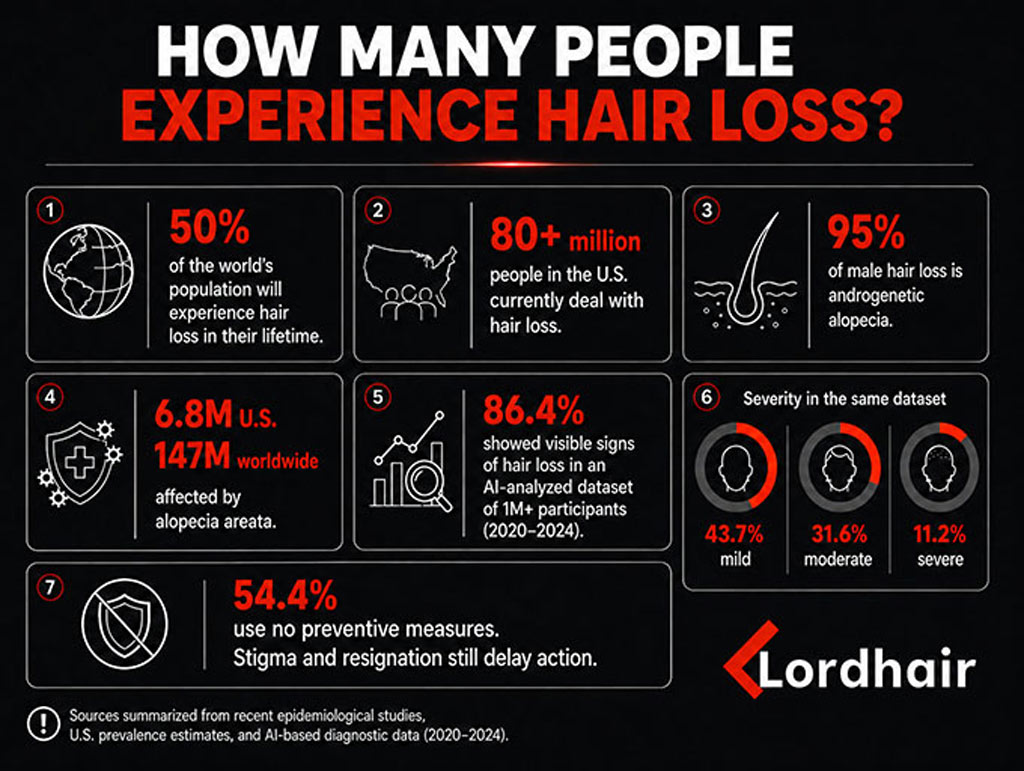
- Around 50% of the global population is expected to experience hair loss at some point in life.
- More than 80 million people in the U.S. currently deal with some form of hair loss.
- Approximately 95% of male hair loss cases are linked to androgenetic alopecia.
- Alopecia areata affects about 6.8 million Americans and 147 million people worldwide.
- An AI-analyzed dataset found that 86.4% of participants showed visible signs of hair loss.
- Within the same dataset, 43.7% had mild hair loss, making it the most common severity level.
- About 31.6% of participants experienced moderate hair loss, while 11.2% had severe symptoms.
- More than half of people, or 54.4%, use no preventive measures for hair loss.
- The data suggests that stigma and resignation may delay early action and treatment.
- The AI-based findings covered more than 1 million participants between 2020 and 2024.
Hair Loss by Gender
- Up to two-thirds of men experience some degree of hair loss by age 35.
- Around 85% of men have significantly thinning hair by the age of 50.
- Approximately 50% of women will experience noticeable hair loss in their lifetime.
- Less than 45% of women go through life with a full head of hair.
- About 25% of men who suffer from male pattern baldness begin the process before they reach 21.
- Nearly 40% of all hair loss sufferers are actually women.
- Female pattern hair loss affects an estimated 30 million women in the United States.
- Male pattern baldness accounts for more than 95% of all hair loss in men.
Hair Loss by Age Group
- Around 25% of men with a genetic predisposition begin losing hair before age 21.
- By age 35, roughly two-thirds of men experience measurable hair loss.
- Nearly 50% of men will experience mild hair loss by the time they reach age 40.
- Around 40% of women develop noticeable hair thinning by age 50.
- By age 50, approximately 85% of men show significant thinning or balding.
- Over 50% of women will experience noticeable pattern hair loss during their lifetime.
- By age 60, up to 80% of women experience some degree of measurable hair loss.
- Individuals over age 60 universally experience higher rates of follicle miniaturization.
Key Hair Loss Symptoms and Trends
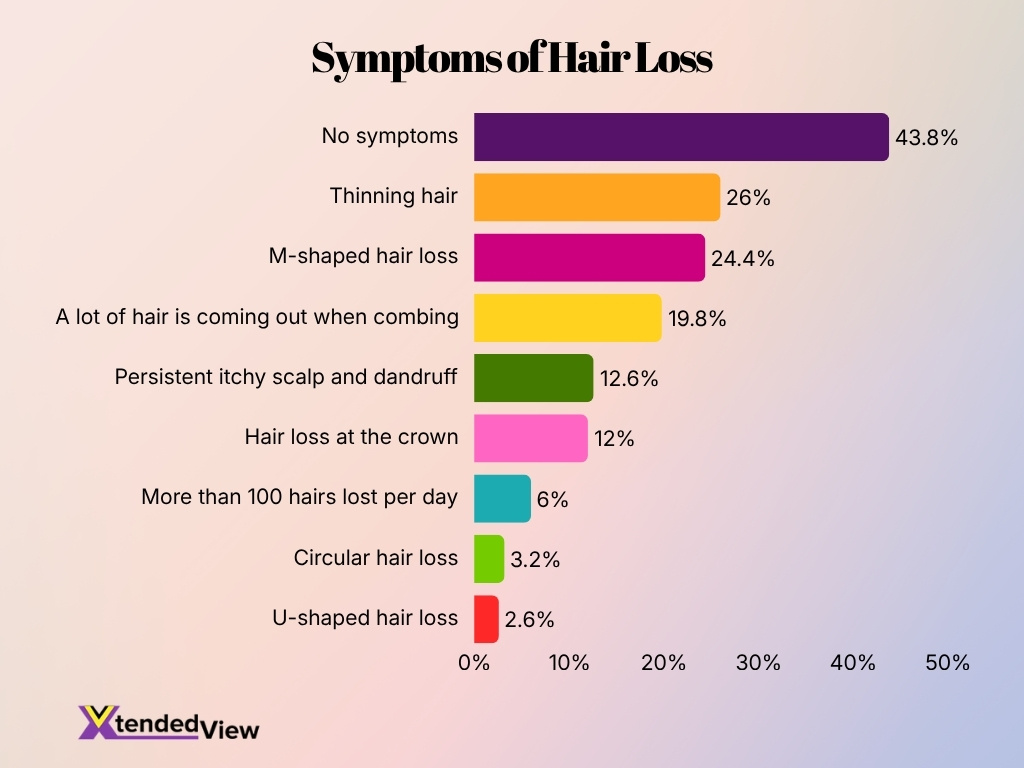
- No symptoms were reported by 43.8% of respondents, showing that a large share had not yet noticed clear signs of hair loss.
- Thinning hair affected 26% of respondents, making it the most commonly reported visible symptom of hair loss.
- M-shaped hair loss was experienced by 24.4%, highlighting the prevalence of a receding frontal hairline pattern.
- Heavy hair shedding while combing was reported by 19.8% of respondents, indicating noticeable daily hair loss.
- Persistent itchy scalp and dandruff affected 12.6%, suggesting that scalp discomfort often accompanies hair-related concerns.
- Hair loss at the crown was reported by 12% of respondents, making it a significant pattern of visible thinning.
- Losing more than 100 hairs per day was reported by 6%, which may indicate excessive shedding beyond the normal range.
- Circular hair loss affected 3.2% of respondents, making it one of the least frequently reported symptoms.
- U-shaped hair loss was reported by only 2.6%, making it the least common hair loss pattern in the survey.
Most Common Types of Hair Loss
- Androgenetic alopecia impacts approximately 50% of males and females progressively after puberty.
- Alopecia areata affects an estimated 10.29 million adults and 4.76 million children globally.
- The global prevalence of alopecia areata stands at 1.98% in adults and 1.83% in children.
- Telogen effluvium accounts for roughly 40.7% of clinical hair loss diagnoses, making it the leading temporary cause.
- Traction alopecia affects approximately 31.7% of adult African women due to prolonged styling tension.
- Scarring alopecia represents a smaller percentage of cases but causes permanent follicle destruction without early treatment.
- Anagen effluvium occurs in approximately 65% to 80% of patients receiving chemotherapy treatments.
- Anagen effluvium triggers rapid shedding that results in up to 90% hair loss within just a few weeks.
Causes of Hair Loss
- Hereditary hair loss affects approximately 50 million men and 30 million women in the United States alone.
- The average adult naturally sheds between 50 and 100 hairs every single day during a healthy growth cycle.
- Postpartum hormonal fluctuations trigger noticeable hair shedding in roughly 40% to 50% of women after childbirth.
- Alopecia areata is an autoimmune condition that impacts about 2% of the global population during their lifetime.
- Clinical data indicates that nearly 30% of women experiencing diffuse hair loss suffer from an underlying iron deficiency.
- Chemotherapy medications induce temporary but severe hair loss in approximately 65% of all cancer patients.
- Severe emotional or physical stress can suddenly force up to 70% of scalp hair into the shedding phase.
- Fungal scalp infections like ringworm account for over 90% of pediatric hair loss cases in certain clinical demographics.
Hair Loss by Country
- The United Kingdom, Saudi Arabia, Iraq, and Egypt show the highest prevalence rates for alopecia areata.
- Reliable epidemiological data for hair loss remains unavailable for nearly 89% of countries.
- The United States currently has an estimated 80 million people experiencing hereditary hair loss.
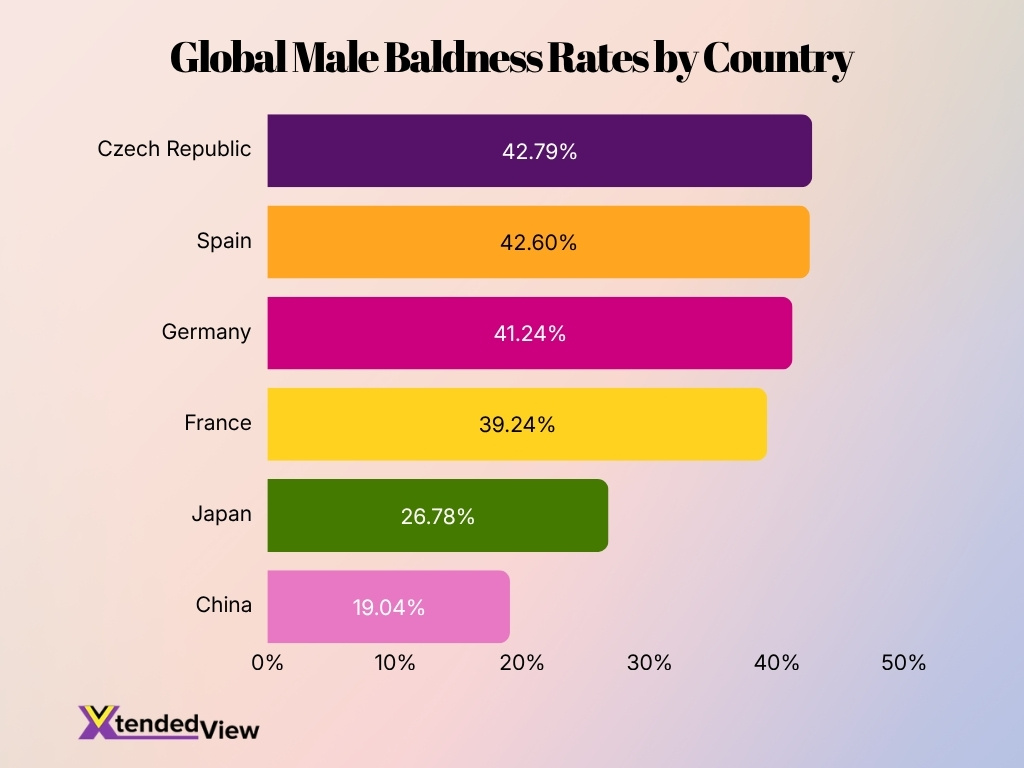
- The Czech Republic has the highest global male baldness rate at exactly 42.79%.
- Spain ranks second globally with a male hair loss prevalence reaching 42.60%.
- Germany reports that 41.24% of men experience significant male pattern baldness.
- France ranks notably high in Europe with a baldness prevalence of roughly 39.24%.
- Japan has the highest balding rate in Asia, affecting 26.78% of its adult men.
- China reports a much lower male hair loss rate, averaging just 19.04% nationwide.
Genetic Hair Loss Statistics
- Genetics account for up to 80% of a person’s predisposition to baldness.
- Over 95% of all male hair loss is caused by androgenetic alopecia.
- Approximately 50% of men experience significant genetic hair loss by age 50.
- Around 25% of men with hereditary baldness begin showing signs before age 21.
- By age 35, roughly 66% of men experience some degree of appreciable hair loss.
- Men with a bald father are 5 to 6 times more likely to lose their hair.
- Female pattern hair loss affects an estimated 30 million women in the United States.
- By age 60, approximately 80% of women experience some degree of genetic hair loss.
Hair Loss and Lifestyle Factors
- Smokers are two times more likely to experience severe pattern hair loss than those who do not smoke.
- Up to 70% of hair follicles can be forced into the shedding phase due to high cortisol levels from chronic poor sleep.
- Rapid weight loss and highly restrictive dieting trigger telogen effluvium in approximately 30% of individuals.
- Over 50% of people using frequent heat styling and harsh chemicals experience significant hair shaft breakage.
- Regularly wearing tight hairstyles increases the risk of traction alopecia in nearly one-third of women.
- Preventable nutritional deficiencies from poor diets are found in over 40% of women experiencing temporary hair shedding.
- Frequent chemical bleaching compromises elasticity and reduces the tensile strength of hair by up to 60%.
- Correcting underlying iron or zinc deficiencies successfully halts lifestyle-induced hair loss in up to 72% of affected patients.
Hair Loss Concerns Among UK Men by Age
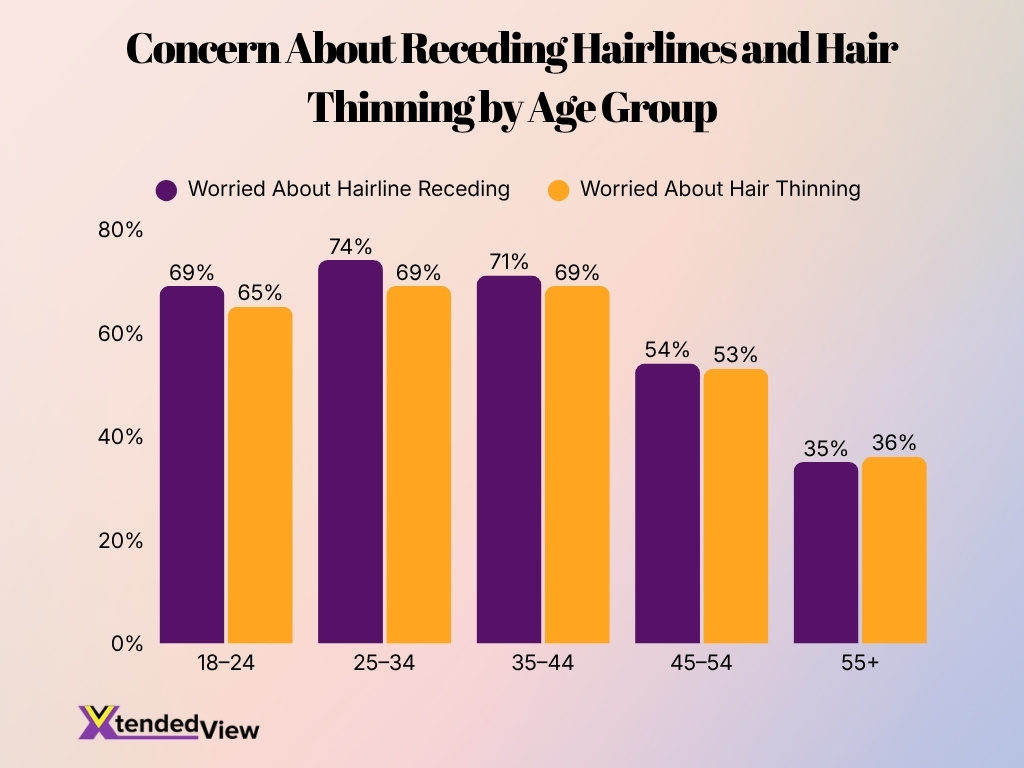
- Men aged 25–34 showed the greatest concern about a receding hairline, at approximately 74%.
- Concern about hair thinning also peaked among men aged 25–34, reaching around 69%.
- About 71% of men aged 35–44 worried about hairline recession, while 69% expressed concern about thinning hair.
- Among men aged 18–24, approximately 69% were concerned about a receding hairline and 65% about hair thinning.
- Concern declined noticeably among men aged 45–54, with 54% worried about recession and 53% about thinning.
- Men aged 55 and older recorded the lowest concern levels, at roughly 35% for a receding hairline and 36% for thinning hair.
- Across most age groups, concern about a receding hairline was slightly greater than concern about hair thinning.
- The data suggests that hair loss anxiety is strongest among men aged 25–44 and decreases substantially after age 45.
Hair Loss and Stress
- 95% of telogen effluvium cases resolve independently within a few months after removing the stress trigger.
- Women facing severe stress are 11 times more susceptible to experiencing sudden hair loss.
- Highly stressful events can force up to 70% of active hair follicles into a premature resting state.
- An episode of stress-induced telogen effluvium can cause shedding in up to 50% of overall scalp hair.
- Clinical surveys indicate that 73.8% of individuals cite chronic stress as a major contributor to their hair thinning.
- While normal shedding is 50 to 100 hairs daily, severe stress shifts over 30% of hair into the shedding phase.
- Research on young adults shows that 59% of those with elevated anxiety experience pathological hair loss.
- Patients typically observe a significant reduction in hair shedding roughly three to four months post-stress recovery.
Hair Loss and Nutritional Deficiencies
- Research shows that 65% of women experiencing diffuse hair loss are currently in an iron-deficient state.
- Clinical studies indicate that up to 54% of patients diagnosed with alopecia areata suffer from a measurable vitamin D deficiency.
- Because hair fibers are composed of approximately 90% keratin protein, inadequate dietary protein directly halts active follicular production.
- Routine laboratory testing reveals clinically significant zinc deficiency in up to 30% of individuals presenting with unexplained hair shedding.
- Crash diets and severe calorie restriction can prematurely force up to 70% of actively growing hairs into the shedding phase.
- Noticeable hair shedding triggered by extreme nutrient depletion typically peaks 2 to 4 months after a severe diet begins.
- Nearly 52% of individuals with suboptimal nutrient stores report zero systemic symptoms, highlighting the danger of excessive supplementation without proper testing.
- Women with blood ferritin levels at or below 30 ng/mL face a 21 times higher risk of developing severe hair shedding.
- Correcting nutritional stores to optimal levels of 40 to 70 ng/mL for ferritin yields visible hair density improvements within 6 to 12 months.
Psychological and Social Effects of Hair Loss
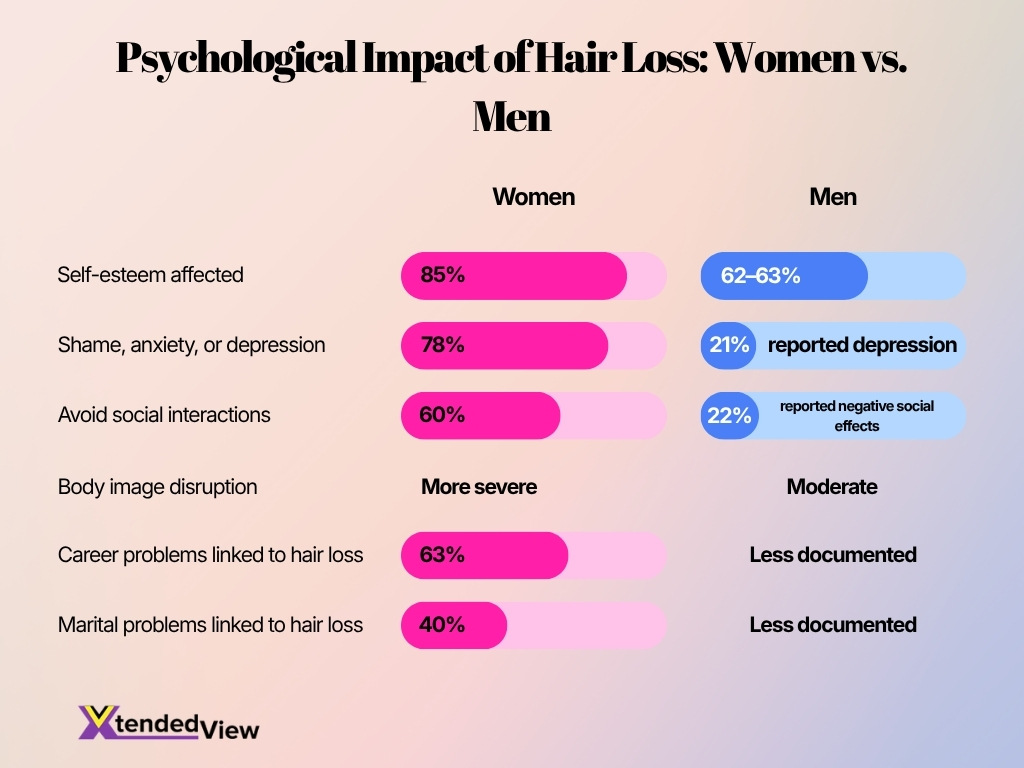
- Hair loss affects self-esteem in 85% of women, compared with approximately 62% to 63% of men.
- Around 78% of women report shame, anxiety, or depression, while 21% of men report depression.
- About 60% of women avoid social interactions because of hair loss, compared with 22% of men experiencing negative social effects.
- Body image disruption is described as more severe among women, while the impact on men is generally considered moderate.
- Nearly 63% of women experience career-related problems linked to hair loss, while evidence for men remains less documented.
- Approximately 40% of women report marital problems associated with hair loss, whereas comparable findings for men are less documented.
Hair Loss and Medical Conditions
- Alopecia areata, an autoimmune disease, affects an estimated 160 million people worldwide over their lifetime, making it one of the leading medical causes of non-scarring hair loss.
- Thyroid disorders, including both hypothyroidism and hyperthyroidism, commonly cause diffuse hair thinning, with hair changes often improving after hormone levels normalize.
- Approximately 30% to 50% of people with systemic lupus erythematosus experience hair loss during the course of their disease.
- Hair loss is a frequent symptom of polycystic ovary syndrome (PCOS), which affects an estimated 6% to 13% of women of reproductive age worldwide.
- Chemotherapy-induced alopecia affects approximately 65% of patients receiving cytotoxic chemotherapy.
- COVID-19 studies published through 2025 continue to report telogen effluvium as one of the most common post-infection dermatological complications.
- Iron-deficiency anemia remains one of the most frequently diagnosed medical conditions associated with diffuse hair shedding, particularly among women.
- Diabetes has been linked to increased hair thinning because prolonged high blood glucose levels may damage small blood vessels supplying hair follicles.
Hair Loss Medication Usage
- Topical minoxidil commands over 45% of the global over-the-counter hair loss market.
- Over 2.4 million prescriptions for oral finasteride are dispensed annually in the United States.
- Medication adherence for hair loss treatments drops below 42% after the first 12 months.
- Off-label prescriptions for low-dose oral minoxidil surged by nearly 300% between 2023 and 2025.
- Up to 40% of women with female pattern hair loss utilize anti-androgen medications alongside minoxidil.
- Combination therapy of finasteride and minoxidil yields a 94% improvement rate versus 59% for monotherapy.
- Telehealth platforms have driven a 68% increase in prescription hair-loss consultations since 2024.
- The global hair loss medication market is projected to exceed $3.8 billion by the end of 2026.
Hair Loss Treatment Statistics
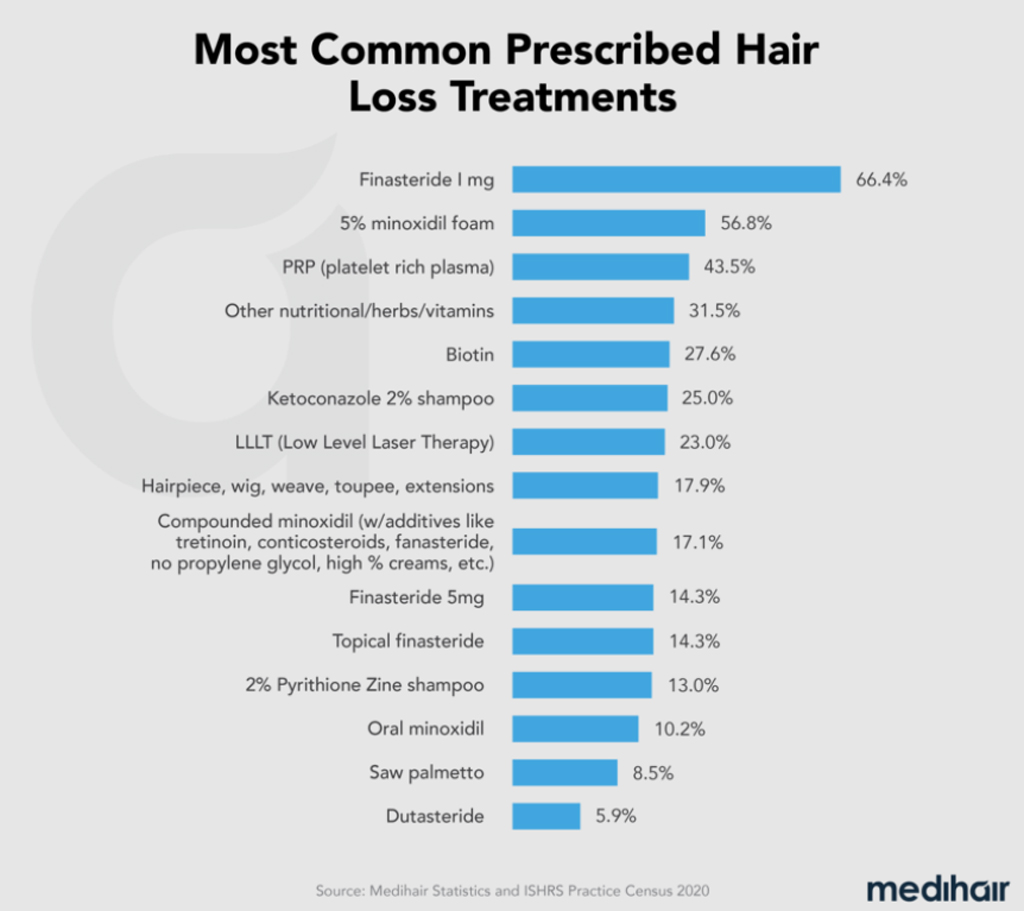
- Finasteride 1 mg was the most commonly prescribed hair loss treatment, used by 66.4% of physicians.
- 5% minoxidil foam ranked second, with 56.8% of physicians recommending or prescribing it.
- Platelet-rich plasma, or PRP therapy, was used by 43.5%, making it the leading procedure-based treatment.
- Nutritional supplements, herbs, and vitamins were recommended by 31.5% of physicians for hair loss management.
- Biotin remained a popular supplement, with a prescription or recommendation rate of 27.6%.
- Ketoconazole 2% shampoo was used by 25.0%, while low-level laser therapy followed at 23.0%.
- Cosmetic hair solutions such as wigs, hairpieces, weaves, toupees, and extensions were recommended by 17.9%.
- Compounded minoxidil with additives accounted for 17.1% of treatment use among physicians.
- Both finasteride 5 mg and topical finasteride recorded the same prescription rate of 14.3%.
- 2% pyrithione zinc shampoo was recommended by 13.0%, while oral minoxidil was used by 10.2%.
- Herbal and alternative treatments were less common, with saw palmetto at 8.5% and dutasteride at 5.9%.
- Overall, the data shows that finasteride and minoxidil dominated physician treatment choices, while surgical, cosmetic, and alternative therapies had substantially lower usage rates.
Hair Loss Surgery Statistics
- Globally, 703,000 hair restoration procedures were performed in 2021.
- Worldwide hair transplantation surgeries increased by 16% between 2019 and 2021.
- Men constitute 87% of the global surgical hair restoration patient base.
- Women represent approximately 13% of all hair transplant patients worldwide.
- Follicular Unit Extraction (FUE) is currently the most common surgical technique used.
- Advancing surgical techniques have steadily increased the average grafts transplanted per session.
- Turkey ranks as a leading global destination for hair transplant medical tourism.
- Robotic assistance and digital planning have significantly improved graft survival rates.
- Appropriately selected candidates report patient satisfaction rates exceeding 90% for modern FUE.
Hair Loss Market Size and Growth
- The global hair loss treatment market was valued at approximately $8.9 billion in 2025.
- Industry forecasts project a compound annual growth rate (CAGR) of 8% to 9% through 2032.
- North America continues to hold the largest market share at nearly 38% of global revenue.
- The Asia-Pacific region is projected to be the fastest-growing market with a CAGR of over 8.5%.
- Online pharmacy sales of hair-loss medications are expected to grow at an 8.2% CAGR from 2024 onwards.
- Shampoos and conditioners dominate the product segment by capturing roughly 87% of the total market share.
- The female demographic is a rapidly expanding segment, projected to grow at a 9.1% CAGR through the next decade.
- The male segment currently dominates the market by accounting for approximately 58% of all hair loss treatments.
Frequently Asked Questions (FAQs)
Around 80 million Americans are affected by hereditary or pattern hair loss.
Approximately 85% of men have noticeable hair thinning or hair loss by age 50.
About 40% of women experience visible pattern hair loss by age 50.
The global alopecia market is projected to grow at a 12.8% CAGR between 2026 and 2033.
The global alopecia market is forecast to reach approximately $26.8 billion by 2033.
Conclusion
Hair loss continues to affect millions of people across the United States and around the world, making it one of the most common dermatological concerns. Recent data show steady growth in treatment adoption, research investment, and consumer awareness, while advances in regenerative medicine, AI-assisted diagnosis, and targeted therapies are expanding available options. Although genetics remains the leading cause of permanent hair loss, factors such as stress, nutritional deficiencies, medical conditions, and lifestyle choices also play significant roles.
As innovation accelerates and access to evidence-based treatments improves, patients and healthcare providers are better equipped to diagnose hair loss early, personalize treatment plans, and achieve improved long-term outcomes.
