



Digital banking has shifted from a convenience to a core part of how consumers manage money. People now open accounts, pay bills, apply for loans, and invest directly from their phones, while banks use digital platforms to cut costs and improve customer experiences. From mobile wallets powering everyday purchases to AI-driven banking apps helping users manage finances, digital banking continues to reshape the financial industry. Explore the latest statistics to understand how this market is evolving.
Editor’s Choice
- 3.6 billion people worldwide use digital banking services, representing nearly half of the global population.
- The global digital banking platform market reached $37.5 billion in 2025 and is projected to hit $44 billion in 2026.
- Around 77% of U.S. consumers prefer managing bank accounts through digital channels such as mobile apps and computers.
- Mobile banking users worldwide climbed to 4.2 billion in 2026, equal to roughly 66% of the global population.
- The digital banking market is forecast to grow at a 19.8% CAGR between 2026 and 2033.
- Approximately 73% of U.S. adults actively use online banking services.
- Global spending on digital banking infrastructure is expected to exceed $100 billion by 2026.
- Smartphones are projected to account for 91% of all mobile connections by 2030, supporting continued banking digitization.
Recent Developments
- In 2026, digital banking platforms are expected to add $32.23 billion in new market value by 2030, driven by hyper-personalization technologies.
- The digital banking market is projected to reach $17.9 billion in 2026, with long-term forecasts exceeding $90 billion by 2035.
- Digital banks reported 5.71% net interest income growth in 2024, outperforming many traditional banks.
- Fintech company Chime reported a 19% year-over-year increase in active members, reaching 9.5 million users in early 2026.
- Chime also recorded a 16% increase in purchase volume, reaching $35.3 billion.
- AI initiatives helped Chime reduce service costs by nearly 30% over the past three years.
- More than 80% of banks have implemented advanced digital payment systems and automated fund transfer services.
- Open banking regulations and fintech partnerships continue to accelerate digital product launches and customer acquisition across major banking markets.
- Digital identity systems and blockchain technologies are increasingly integrated into banking platforms to support financial inclusion initiatives.
Digital Banking Platform Market Growth Statistics
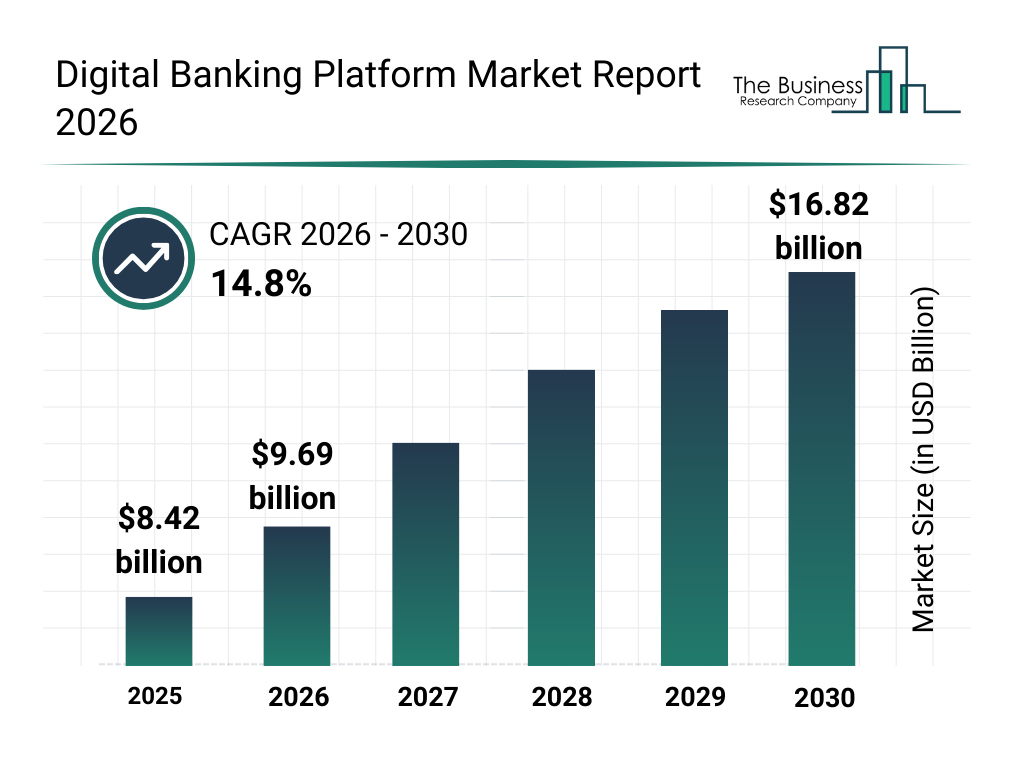
- The digital banking platform market is projected to grow from $8.42 billion in 2025 to $16.82 billion by 2030, nearly doubling in value.
- The market is expected to reach $9.69 billion in 2026, marking the beginning of a strong growth period.
- Between 2026 and 2030, the industry is forecast to expand at a robust 14.8% CAGR.
- By 2027, the digital banking platform market is estimated to surpass $11 billion, reflecting sustained demand.
- The market is projected to exceed $13 billion in 2028, driven by continued digital transformation in banking.
- In 2029, the industry is expected to approach $15 billion, maintaining its steady upward trajectory.
- 2030 is forecast to record the highest market value of $16.82 billion, highlighting long-term industry expansion.
- The chart indicates consistent year-over-year growth with no projected market decline between 2025 and 2030.
Digital Banking User Growth Statistics
- The number of global digital banking users reached 3.6 billion by 2024, up sharply from approximately 2.5 billion in 2021.
- U.S. digital banking users are projected to reach 216.8 million in 2025, up from 203 million in 2022.
- Around 79% of adults worldwide now have a financial account, creating a larger addressable market for digital banking.
- Nearly 80% of U.S. bank transactions are expected to occur through digital platforms in 2025.
- Millennials remain the most digital-first banking generation, with 80% preferring digital banking channels.
- Generation Z has reached 72% digital banking preference, narrowing the gap with millennials.
- Approximately 85% of banking customers globally use online channels for at least some transactions.
- Financial institutions increasingly target underserved populations, helping digital banking adoption spread into emerging markets.
- The number of mobile internet users is expected to increase from 4.7 billion in 2024 to 5.5 billion by 2030, supporting future digital banking growth.
Mobile Banking Adoption Statistics
- Global mobile banking users reached 4.2 billion in 2026, equivalent to approximately 66% of the world’s population.
- Mobile banking users worldwide are projected to exceed 3.8 billion by 2025, according to long-term forecasts.
- Around 76% of U.S. adults use mobile banking apps.
- 54% of U.S. consumers now consider mobile apps their primary method of banking.
- Approximately 70% of individual users prefer mobile-based banking solutions because of convenience and round-the-clock access.
- Mobile banking has become the fastest-growing segment, expanding at a CAGR of 25.6%.
- Smartphone connections are projected to account for 91% of all global mobile connections by 2030.
- Researchers continue to identify convenience and unrestricted access as the primary drivers behind mobile banking adoption.
- Banks increasingly integrate budgeting tools, biometric authentication, and AI-powered financial insights into mobile applications to improve engagement.
Online Banking Adoption Statistics
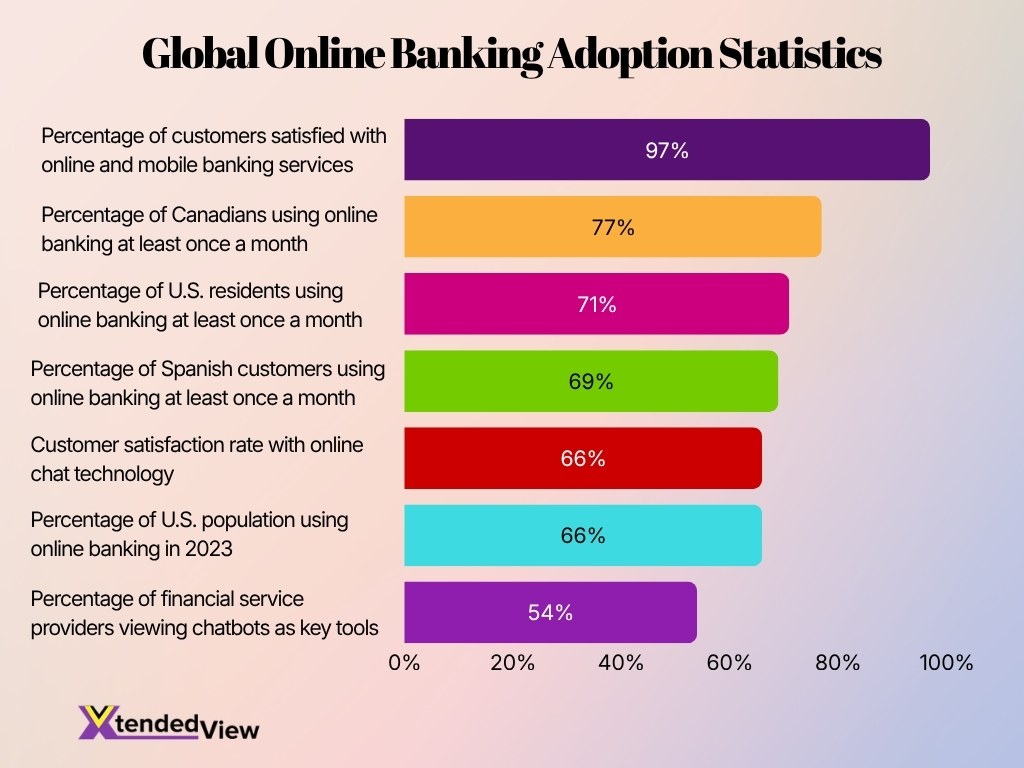
- 97% of customers are satisfied with online and mobile banking services, highlighting strong consumer confidence.
- 77% of Canadians use online banking at least once a month, reflecting widespread digital banking adoption.
- 71% of U.S. residents access online banking monthly, showing it has become a routine financial activity.
- 69% of Spanish customers use online banking at least once a month, indicating high digital engagement.
- 66% of users report satisfaction with online chat technology, emphasizing the importance of digital customer support.
- 66% of the U.S. population used online banking in 2023, demonstrating its mainstream acceptance.
- 54% of financial service providers consider chatbots to be key tools for enhancing banking services.
Digital Wallet Usage Statistics
- The number of digital wallet users worldwide is expected to reach 5.8 billion in 2026, representing more than 70% of the global population.
- Digital wallets accounted for 50% of global e-commerce transaction value in 2025, up from 49% a year earlier.
- In-store purchases made through digital wallets represented 39% of global point-of-sale transactions in 2025.
- The U.S. digital wallet market is projected to surpass 221 million users in 2026, compared with approximately 196 million users in 2023.
- Global digital wallet transaction value is forecast to exceed $17 trillion in 2026.
- Nearly 53% of consumers worldwide used a digital wallet for online purchases in 2025.
- More than 60% of Gen Z consumers prefer digital wallets over physical cards for everyday purchases.
- Mobile wallets are expected to process more than 60% of e-commerce spending by 2027, highlighting their growing role in digital banking.
- Asia-Pacific remains the largest digital wallet market, accounting for nearly 70% of global wallet transaction value.
Digital Payments Growth Statistics
- The global digital payments market is expected to process transactions worth $20.37 trillion in 2026, up from approximately $17.7 trillion in 2025.
- The digital payments sector is projected to grow at a 15.9% CAGR between 2026 and 2030.
- The number of digital payment users worldwide is expected to reach 6.2 billion by 2026.
- Revenue from digital payments is projected to exceed $3 trillion globally by 2028.
- In the United States, noncash payments increased by 8.9% annually between 2021 and 2024.
- Real-time payment transactions worldwide surpassed 266 billion in 2024, a figure expected to continue rising in 2026.
- The Asia-Pacific region accounted for 49% of global digital payment transaction volume in 2025.
- Cross-border digital payments are expected to exceed $290 trillion by 2030, driven by e-commerce and digital banking services.
- More than 90% of consumers in developed markets now use at least one form of digital payment method.
Banking Channel Preferences Statistics
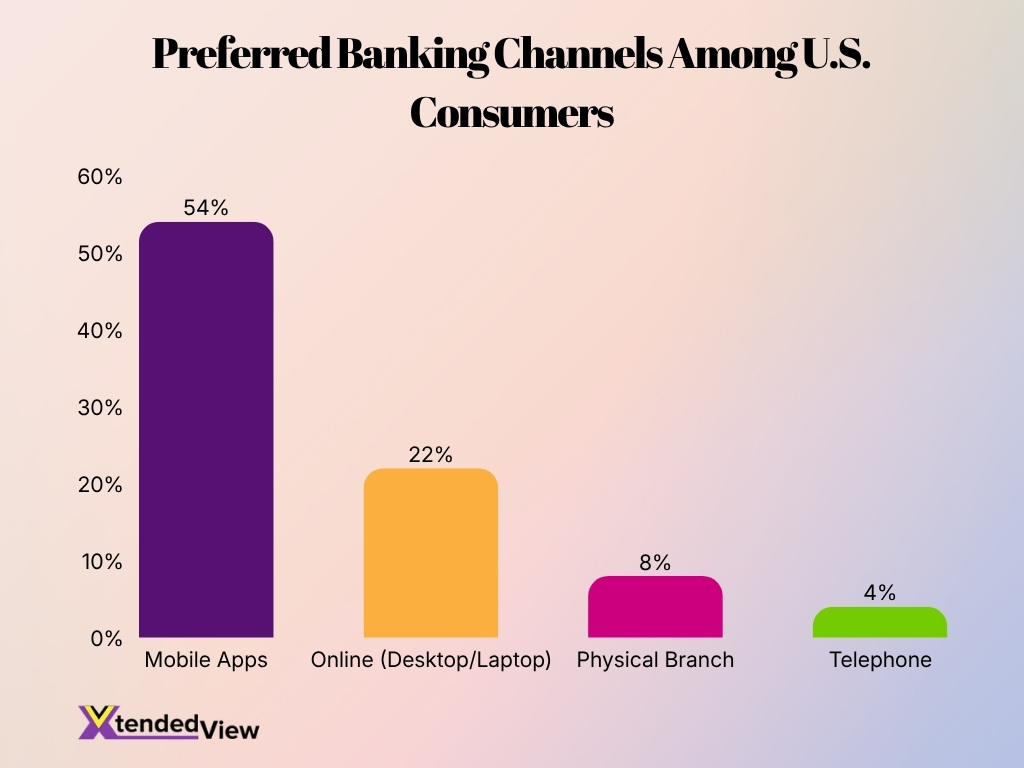
- According to recent surveys, 54% of U.S. consumers prefer mobile apps as their primary banking channel.
- About 22% of Americans still favor online banking through desktop and laptop devices.
- Only 8% of consumers prefer visiting a physical branch for routine banking activities.
- Around 4% of customers prefer telephone banking services.
- More than 77% of U.S. consumers now use digital channels for most banking activities.
- Approximately 60% of millennials rarely visit a physical bank branch.
- Nearly 70% of Gen Z customers consider mobile experience a key factor when choosing a bank.
- About 58% of banking customers worldwide use multiple channels, including mobile apps, branches, and websites, depending on the service needed.
- More than 80% of banks have increased investment in omnichannel banking experiences since 2023.
Contactless Payment Adoption Statistics
- Global contactless payment transaction value is projected to surpass $10 trillion in 2026.
- Approximately 74% of consumers worldwide used contactless payments in 2025.
- In the United States, nearly 67% of cardholders have used contactless payments at least once.
- Contactless payments accounted for more than two-thirds of in-person card transactions globally during 2025.
- The number of contactless-enabled payment cards worldwide exceeded 12 billion in 2025.
- More than 80% of merchants in developed markets now accept contactless payment methods.
- The average contactless transaction value increased by more than 20% between 2022 and 2025.
- Over 40% of U.S. consumers prefer tapping a card or mobile device over inserting a card into a payment terminal.
- Contactless mobile wallet payments are projected to grow by 150% between 2025 and 2030.
Customer Satisfaction in Digital Banking Statistics
- Around 78% of digital banking users report satisfaction with mobile banking experiences.
- Customers who use digital banking apps weekly are 30% more likely to report high satisfaction than infrequent users.
- Approximately 84% of consumers expect a seamless experience across all banking channels.
- More than 70% of customers say ease of use is the top factor influencing satisfaction with digital banking platforms.
- Banks that provide personalized digital experiences report customer satisfaction scores that are 20% higher than industry averages.
- Nearly 66% of consumers are willing to switch banks for a better digital experience.
- Around 55% of customers prefer banks that offer instant payment notifications and financial insights through mobile apps.
- Digital-first banks continue to achieve some of the industry’s highest customer satisfaction scores because of faster onboarding and lower fees.
- More than 60% of customers expect banking issues to be resolved digitally without visiting a branch.
Digital Banking Security Statistics
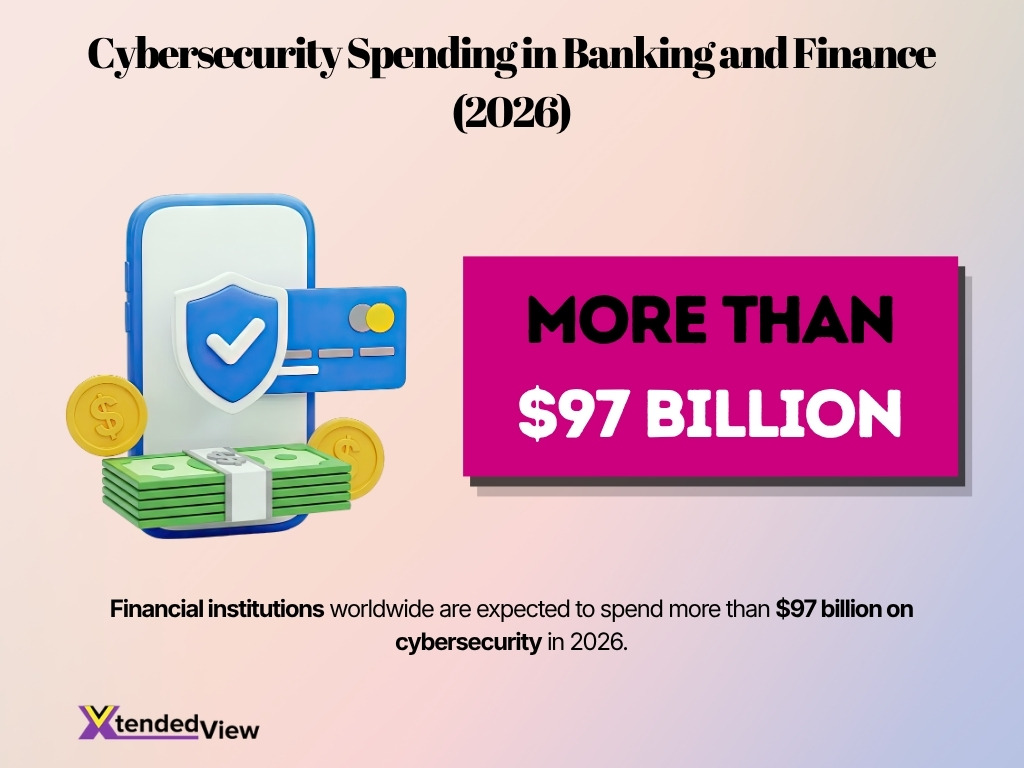
- Financial institutions worldwide are expected to spend more than $97 billion on cybersecurity in 2026.
- About 71% of banks have increased cybersecurity budgets since 2024.
- More than 80% of banking apps now support biometric authentication methods such as fingerprint and facial recognition.
- Approximately 44% of banking customers consider security the most important feature of a digital banking app.
- Multi-factor authentication can block up to 99.9% of automated cyberattacks on user accounts.
- Nearly 68% of consumers feel more comfortable using digital banking when biometric security is available.
- Artificial intelligence systems now monitor billions of banking transactions every day to identify suspicious activity.
- More than 90% of large banks use AI-driven fraud detection systems in some form.
- Financial institutions worldwide reported a 30% increase in investments in identity verification technologies between 2023 and 2025.
Fraud and Cybercrime in Digital Banking Statistics
- Global cybercrime costs are projected to reach $10.5 trillion annually by 2026.
- Financial services remain the second-most targeted industry for cyberattacks worldwide.
- Account takeover fraud increased by more than 20% year over year in digital banking channels during 2025.
- Global payment fraud losses are expected to exceed $40 billion by 2027.
- Phishing attacks account for nearly 36% of all data breaches affecting financial institutions.
- More than 80% of organizations in the financial sector experienced at least one cyber incident during the past year.
- Synthetic identity fraud is expected to generate losses exceeding $23 billion globally by 2030.
- U.S. consumers reported losing more than $12.5 billion to fraud in 2024, up significantly from the previous year.
- Banks increasingly deploy AI and behavioral analytics because automated fraud detection systems can reduce fraud losses by up to 40%.
Global GenAI Spending in the Banking Industry
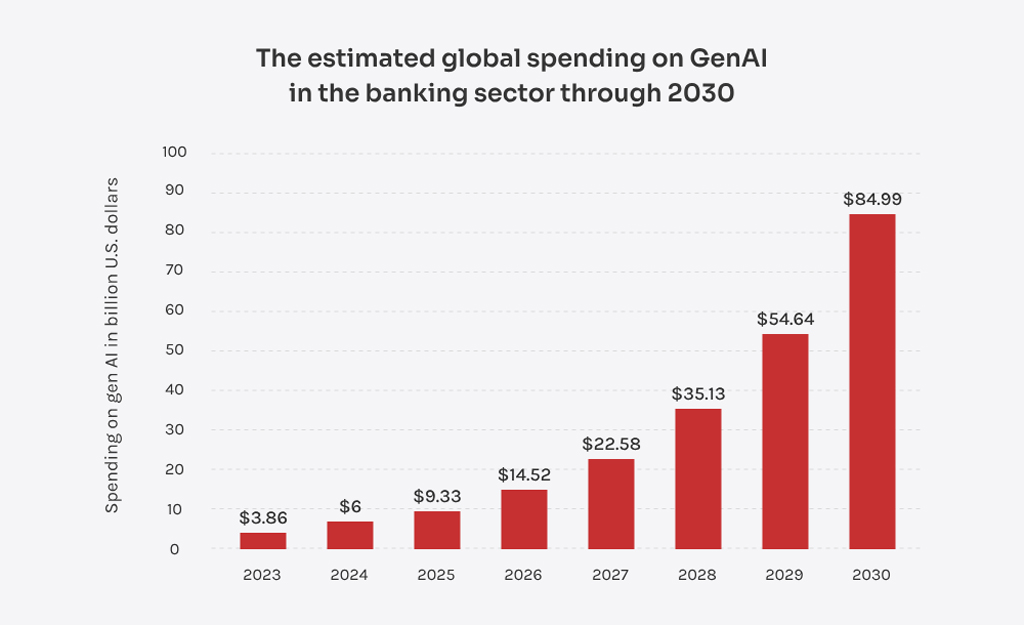
- Global GenAI spending in the banking sector is projected to grow from $3.86 billion in 2023 to $84.99 billion by 2030, representing a dramatic long-term increase.
- Investment is expected to rise from $6 billion in 2024 to $9.33 billion in 2025, reflecting continued adoption of AI-driven banking solutions.
- By 2026, spending is forecast to reach $14.52 billion, crossing the $10 billion milestone for the first time.
- Global banking investment in GenAI is projected to increase to $22.58 billion in 2027, highlighting accelerating enterprise deployment.
- Annual spending is expected to surpass $35.13 billion in 2028, indicating rapid scaling of AI powered banking technologies.
- The market is forecast to exceed $54.64 billion in 2029, marking a significant jump in GenAI investment across financial institutions.
- By 2030, global spending is expected to reach $84.99 billion, more than 22 times higher than the 2023 level.
- The data highlights a consistent year-over-year growth trend, underscoring the banking industry’s increasing reliance on Generative AI for innovation, automation, and customer services.
Open Banking Adoption Statistics
- The number of open banking users worldwide is expected to exceed 132 million in 2026, up from around 95 million in 2024.
- The global open banking market is forecast to reach $43 billion in 2026.
- More than 70 countries have introduced open banking regulations or industry frameworks.
- In the United Kingdom, over 11 million consumers and small businesses actively use open banking services.
- Nearly 60% of banks globally are investing in API-driven ecosystems and open banking partnerships.
- Open banking payment volumes are expected to surpass $330 billion in 2027, representing rapid adoption among merchants and consumers.
- Around 55% of financial institutions believe open banking will significantly improve customer acquisition.
- The European region accounts for nearly 40% of global open banking activity, supported by strong regulatory initiatives.
- Approximately 46% of consumers are willing to share financial data in exchange for personalized financial services.
Branchless Banking Trends Statistics
- Approximately 77% of U.S. consumers now prefer digital channels instead of branch visits for routine banking activities.
- The number of bank branches in the United States has fallen by nearly 15% over the past decade.
- Around 60% of millennials report visiting a bank branch less than once per month.
- More than 30 countries have introduced branchless banking initiatives to improve financial inclusion.
- Branchless banking services have helped provide financial access to hundreds of millions of previously unbanked consumers worldwide.
- Banks can reduce operating costs by up to 40% by migrating customers to digital channels.
- Nearly 70% of banking executives expect branch networks to shrink further over the next five years.
- Digital onboarding processes can reduce account opening times from days to less than 10 minutes.
- The number of self-service banking transactions now exceeds branch transactions by a margin of more than 10 to 1 in many developed markets.
Neobank Growth Statistics
- The global neobank market is projected to reach $722.6 billion by 2028, growing at a CAGR above 50%.
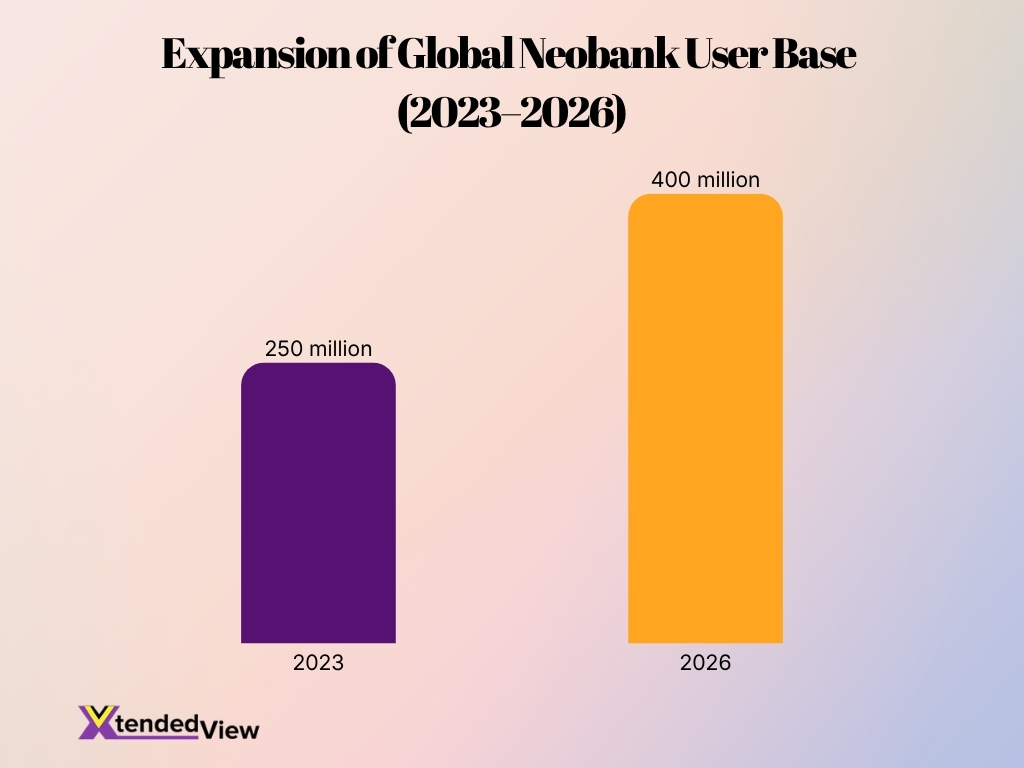
- The number of neobank users worldwide is expected to exceed 400 million in 2026, compared with fewer than 250 million in 2023.
- North America accounted for more than 35% of global neobank revenue in recent market assessments.
- Digital-only banks generated more than $20 billion in revenue globally in 2025.
- Around 47% of Gen Z consumers use a neobank as either their primary or secondary financial institution.
- Customer acquisition costs for many neobanks remain 30% to 50% lower than those of traditional banks.
- More than 60% of neobank customers cite lower fees as the main reason for opening an account.
- The Asia-Pacific region is expected to deliver the fastest neobank growth through 2030, with a CAGR above 55%.
- Some leading neobanks now serve more than 20 million customers individually, highlighting the sector’s increasing scale.
Cross-Border Digital Banking Statistics
- Global cross-border payment flows are expected to exceed $290 trillion by 2030, with digital banking platforms driving much of the growth.
- Cross-border e-commerce sales are projected to surpass $7.9 trillion by 2030.
- More than 50% of small businesses now use digital banking tools for international transactions and supplier payments.
- The value of digital remittances worldwide is expected to exceed $300 billion in 2026.
- Real-time international payment networks now operate in more than 70 countries.
- Cross-border payment fees have declined by nearly 30% over the past decade due to digital innovation and fintech competition.
- Around 60% of banks are investing in blockchain-based payment technologies to improve cross-border settlements.
- The global B2B cross-border payments market is projected to exceed $56 trillion by 2030.
- Digital banking providers increasingly use cloud infrastructure and APIs to accelerate international payment processing and currency conversion services.
Future of Digital Banking Statistics
- The global digital banking market is expected to exceed $155 billion by 2033.
- Worldwide spending on financial technology is projected to surpass $400 billion by 2030.
- More than 90% of banks are expected to adopt generative AI tools by the end of the decade.
- Embedded finance revenues could reach $384 billion by 2029, creating new digital banking opportunities.
- Nearly 75% of banking interactions are expected to take place through mobile devices by 2030.
- Open finance ecosystems are projected to serve more than 500 million users globally by 2030.
- Digital identity verification spending in banking is forecast to exceed $18 billion by 2030.
- More than 60% of financial institutions expect cloud-native banking platforms to become their primary infrastructure model by 2030.
- The number of digital banking users worldwide could approach 5 billion by 2030, supported by increasing smartphone penetration and financial inclusion initiatives.
Frequently Asked Questions (FAQs)
The global digital banking platform market is projected to reach $44 billion in 2026, up from $37.5 billion in 2025.
The global digital banking platform market is forecast to grow at a 19.8% CAGR from 2026 to 2033.
The number of digital banking users globally is estimated to have reached 3.6 billion people.
Approximately 73% of U.S. adults actively use online banking services.
There are more than 750 digital banks globally, serving approximately 1.8 billion customers.
Conclusion
Digital banking continues to redefine how consumers and businesses interact with financial services. Mobile banking, digital wallets, AI-powered tools, and open banking ecosystems are creating faster, more personalized, and more accessible experiences for users worldwide. At the same time, banks continue to invest heavily in cybersecurity and fraud prevention as digital transactions become the industry standard.
Looking ahead, the next phase of digital banking growth will likely come from embedded finance, real-time payments, and branchless banking models that expand financial access to underserved populations. As adoption accelerates and technology evolves, digital banking is positioned to become the dominant form of financial interaction across both developed and emerging markets.
