


Firefox remains one of the world’s most recognizable web browsers, even as competition from Chrome, Safari, and Edge continues to intensify. The browser plays a major role in privacy-focused browsing, open-source software development, and enterprise environments that require customization and enhanced security controls. Organizations use Firefox for secure web access, while developers rely on its debugging tools and standards-based approach to web development. Explore the latest Firefox statistics to understand how the browser is evolving and where it stands in the global browser market.
Editor’s Choice
- Firefox’s global browser market share stood at approximately 2.33% in March 2026, making it the world’s fourth-largest browser.
- Firefox’s desktop browser market share reached 4.21% globally in 2026, considerably higher than its mobile share.
- The browser has an estimated 138 million active users worldwide in 2026.
- Firefox’s mobile browser share remains limited at only 0.64% globally.
- Firefox achieved its all-time peak market share of 31.82% in November 2009.
- In the United States, Firefox accounts for 5.5% of desktop browser usage as of May 2026.
- Firefox has surpassed 100 million downloads on Android’s Google Play Store, highlighting its continued mobile presence.
- Mozilla’s public reports indicate that Firefox still serves more than 200 million monthly active users across desktop platforms in some reporting periods.
Recent Developments
- Mozilla introduced an AI strategy for Firefox in late 2025, with all AI features remaining optional and fully switchable off by users.
- Firefox continues to position itself as the only major independent browser not backed by a large technology company.
- The browser’s global market share improved slightly from 2.25% to 2.26% between 2025 and 2026, indicating stabilization after years of decline.
- Firefox’s annual market share decline slowed to roughly 13% between 2025 and 2026, down from steeper losses in previous years.
- Mozilla appointed a new CEO in December 2025, signaling a renewed focus on product innovation and AI integration.
- Privacy remains Firefox’s primary differentiator, with built-in tracker blocking and optional AI features designed to preserve user control.
- Firefox remains the default browser on most Linux distributions, helping maintain a loyal user base among technical users.
- Mozilla’s public data dashboards continue to provide transparent reporting on user activity and browser adoption trends, an approach few competitors offer.
- Firefox still ranks among the top four browsers globally, despite intense competition from Chromium-based alternatives.
Browser Market Share Worldwide Highlights
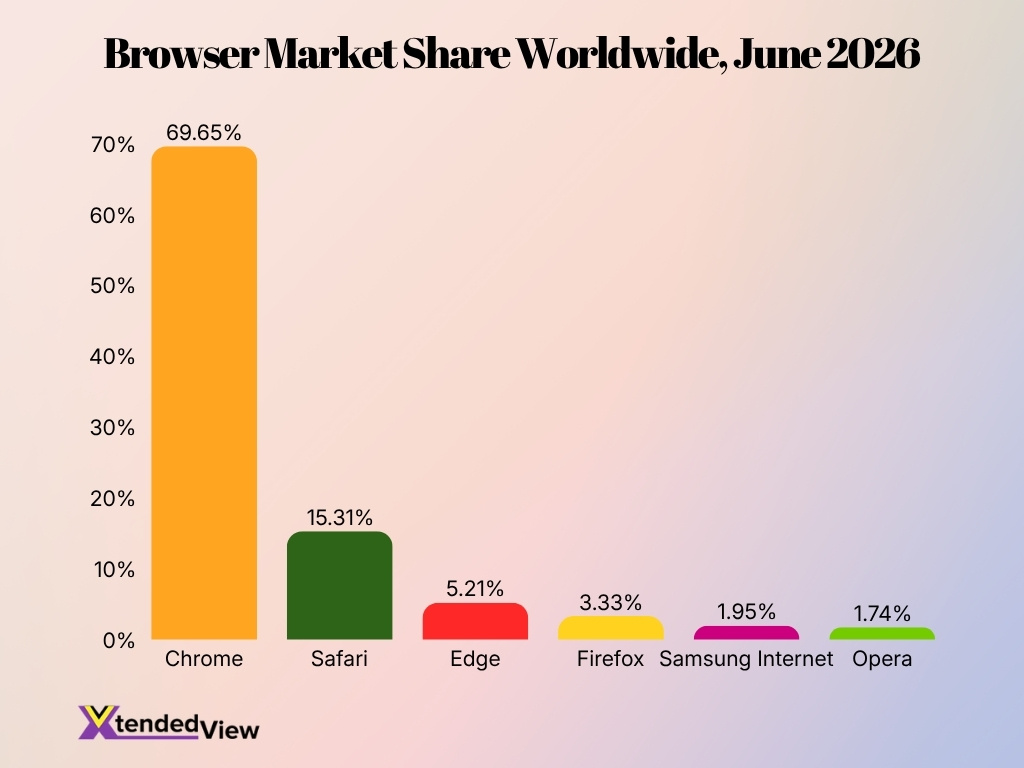
- Chrome remained the world’s leading browser with a dominant 69.65% market share.
- Safari ranked second globally, accounting for 15.31% of the browser market.
- Edge secured the third position with a 5.21% worldwide market share.
- Firefox held 3.33% of the global browser market, placing fourth overall.
- Samsung Internet captured 1.95% of the worldwide browser market.
- Opera rounded out the top six browsers with a 1.74% market share.
- Chrome’s 69.65% share was more than 4.5 times larger than Safari’s 15.31%.
- The combined market share of Edge, Firefox, Samsung Internet, and Opera reached 12.23%.
- The top two browsers, Chrome and Safari, together controlled 84.96% of the global browser market.
- Chrome led the market by a margin of 54.34 percentage points over Safari, its closest competitor.
Firefox Market Share
- Firefox held 2.33% of worldwide browser usage in March 2026 across all devices.
- The browser’s global market share was approximately 2.26% in April 2026, nearly unchanged from the previous year.
- Firefox represented around 2.18% of worldwide browser usage during 2024, indicating modest stability.
- On desktop devices, Firefox captured 4.21% of the global browser market in 2026.
- Firefox’s mobile market share remained below 1% worldwide, limiting its overall market position.
- In the United States, Firefox accounted for 3.64% of browser usage across all devices in January 2026.
- Firefox’s desktop share in the United States reached 5.5% in May 2026, outperforming its global average.
- The browser’s market share has fallen from over 8% in 2016 to just above 2% in 2026.
- Firefox remains ahead of several niche browsers, including Samsung Internet and Brave, in overall worldwide usage rankings.
Firefox Usage by Device
- Firefox’s total global market share stands at 2.26%, but only 0.64% comes from mobile devices.
- The browser enjoys a significantly stronger position on desktop, where it controls 4.21% of global usage.
- Firefox’s mobile market share in February 2025 was approximately 0.53% globally.
- More than 100 million Android users have downloaded Firefox from Google Play.
- Firefox remains one of the few major browsers available across Windows, macOS, Linux, Android and iOS.
- Desktop users account for the vast majority of Firefox’s active audience due to the browser’s popularity among professionals and developers.
- Firefox performs especially well on Linux devices, where it often ships as the default browser.
- Mobile adoption remains constrained because Chrome dominates Android devices and Safari dominates Apple’s ecosystem.
- Firefox’s desktop share in the United States reached 5.5%, more than double its global all-device market share.
Firefox User Base and Audience Statistics
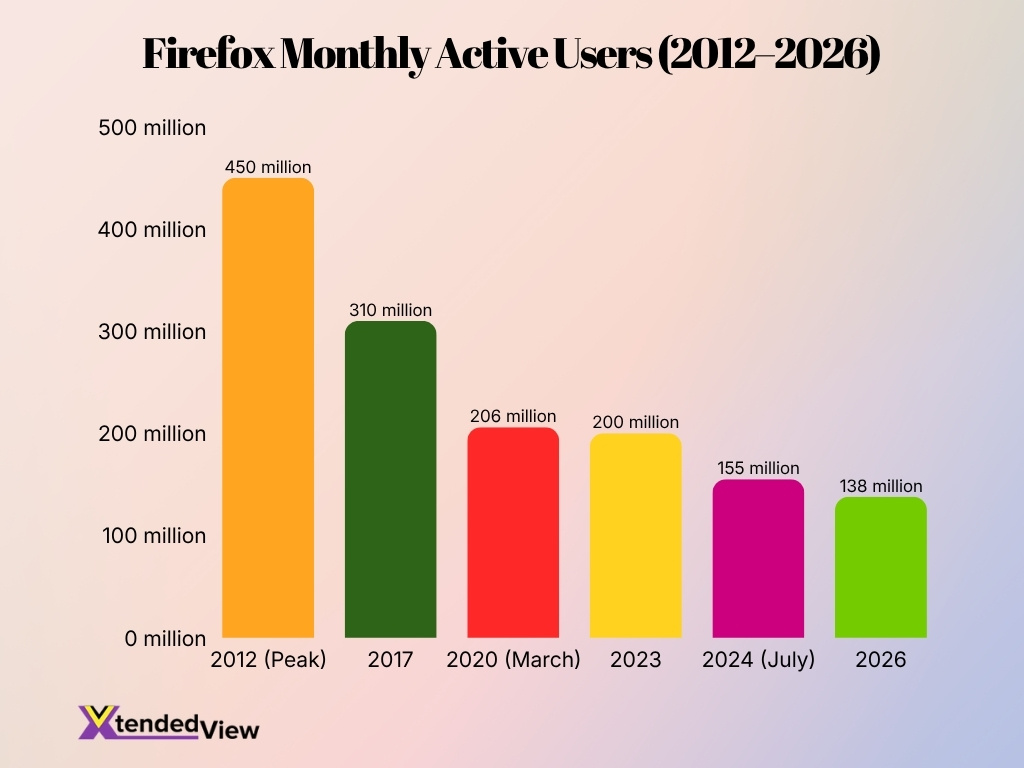
- Firefox currently serves an estimated 138 million users worldwide.
- Mozilla’s public reporting showed approximately 155 million monthly active users in July 2024.
- Firefox had around 206 million monthly active users in March 2020, meaning it lost over 50 million users in four years.
- Mozilla’s desktop client activity declined from roughly 310 million users in 2017 to around 200 million in 2023.
- At its peak, Firefox served more than 450 million users globally in 2012.
- The browser remains particularly popular among privacy-conscious consumers and open-source software enthusiasts.
- Firefox continues to maintain a loyal audience among Linux users and web developers, despite its shrinking market share.
- The browser still ranks as one of the top four browsers worldwide by active user count.
- Industry estimates suggest Firefox users spend five to six hours per day browsing online in several major markets, including the United States and Russia.
Firefox Usage by Operating System
- Firefox supports Windows, macOS, Linux, Android and iOS, keeping it available across the major consumer and business operating systems.
- Firefox no longer supports Windows 8.1 and below through its standard desktop download path, users on older Windows versions need the ESR channel.
- Firefox version 115 remains the last supported version for Windows 7, Windows 8 and Windows 8.1 users.
- Firefox also dropped standard support for macOS 10.14 and below, with ESR recommended for affected Mac users.
- Firefox 145 ended support for 32-bit Linux in November 2025, while those users can stay on Firefox 140 ESR until September 2026.
- Firefox’s desktop browser share reached 6.31% worldwide in June 2026, showing that its strongest device category remains traditional computers.
- In the United States, Firefox reached 13.96% of desktop browser usage in June 2026, making its US desktop position much stronger than its global average.
- Firefox 140 ESR, first offered in June 2025, continued as a key enterprise release line through 2026.
- Firefox 140.12.0 ESR was first offered on June 16, 2026, keeping enterprise deployments on a maintained security track.
Firefox Usage by Region
- Firefox held 4.42% of total browser usage in Europe in June 2026, outperforming its worldwide all-device share.
- In Europe, Firefox ranked behind Chrome, Safari and Edge, but ahead of several smaller browser brands in June 2026.
- Firefox’s worldwide browser share reached 3.33% in June 2026, placing it fourth globally across all platforms.
- North America remains one of Firefox’s stronger regions because its US desktop share reached 13.96% in June 2026.
- Firefox’s European share of 4.42% was higher than its worldwide all-device share of 3.33%, indicating stronger regional adoption in Europe.
- Chrome led Europe with a 62.69% share in June 2026, giving Firefox a smaller but still visible position in a highly concentrated market.
- Safari held 17.8% of Europe’s browser market in June 2026, which limited Firefox’s growth among Apple device users.
- Edge held 7.02% in Europe in June 2026, staying ahead of Firefox by 2.6 percentage points.
Firefox.com Website Traffic Demographics
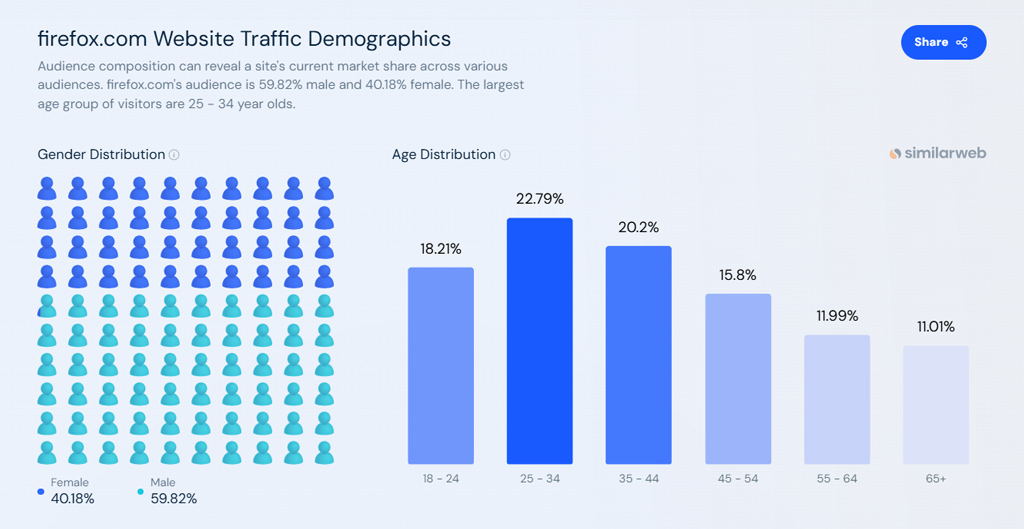
- Male visitors account for 59.82% of Firefox.com’s website traffic, compared to 40.18% female visitors.
- Men represent nearly 6 in 10 Firefox.com visitors, making them the platform’s largest audience segment.
- The 25–34 age group is the largest audience, contributing 22.79% of total website traffic.
- Users aged 35–44 make up 20.20%, making them the second-largest visitor group.
- The 18–24 age segment accounts for 18.21% of Firefox.com’s audience.
- Visitors aged 45–54 contribute 15.80% of the site’s total traffic.
- The 55–64 age group represents 11.99% of Firefox.com’s visitors.
- Users aged 65 and older account for 11.01% of overall website traffic.
- Visitors between 25 and 44 years old collectively make up 42.99% of Firefox.com’s audience.
- Firefox.com’s audience is primarily composed of adults aged 25–44, highlighting its strongest demographic reach.
Firefox Growth Over Time
- Firefox reached its historic usage peak at around 32.21% in November 2009, before Chrome reshaped browser competition.
- By June 2026, Firefox’s worldwide browser share stood at 3.33%, showing a long-term decline from its late-2000s peak.
- Firefox’s desktop share remained stronger at 6.31% worldwide in June 2026, compared with its all-device share.
- In October 2024, Firefox held 6.39% of desktop browser usage in one major global measurement set, close to its June 2026 desktop level.
- In August 2025, Firefox held 2.26% of all-browser usage in one global dataset, then reached 3.33% by June 2026 in the current monthly reading.
- Firefox’s US desktop share climbed to 13.96% in June 2026, giving it a stronger domestic desktop footprint than its worldwide share suggests.
- Firefox’s European all-device share reached 4.42% in June 2026, showing stronger regional resilience than the global average.
- Firefox’s long-term growth story now centers less on mass-market expansion and more on privacy, ESR deployments, Linux users, and developer-friendly features.
Firefox Search Engine Usage
- More than 80% of Firefox users rely on Google as their primary search engine.
- The search agreement with Google contributes approximately 86% of Mozilla’s annual revenue.
- Recent financial disclosures indicate the search partnership generated roughly $585 million for Mozilla.
- Firefox processes web searches for an estimated global base of 142 million active users.
- The browser currently holds a 3.36% market share of the total global internet browser market.
- Firefox maintains a notably higher 5.3% market share within the global desktop device category.
- Over 40% of users install browser extensions to customize their default search and web experience.
- The Firefox mobile application has surpassed 100 million downloads on the mobile application store.
- Over 20% of users enable Enhanced Tracking Protection to secure their search activity from profiling.
Firefox Adoption by Country Statistics
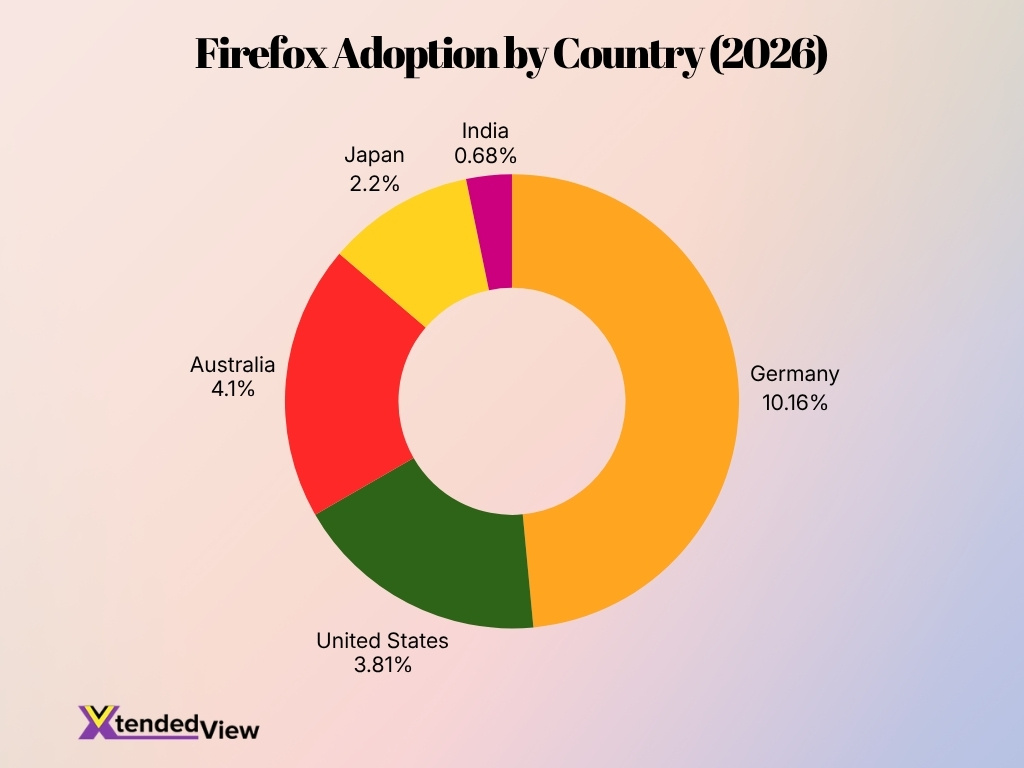
- Germany leads Firefox adoption with 10.16%, the highest share among the listed countries.
- Australia ranks second with a Firefox adoption rate of 4.1%.
- The United States records 3.81% Firefox adoption, placing third in the comparison.
- Japan accounts for 2.2% Firefox adoption, showing a moderate user base.
- India has the lowest Firefox adoption rate at 0.68% among the countries shown.
- Germany’s 10.16% adoption rate is more than 2.5 times higher than Australia’s 4.1%.
- The gap between Germany (10.16%) and the United States (3.81%) is 6.35 percentage points.
- India trails Japan by 1.52 percentage points in Firefox adoption.
- The data highlights Germany as Firefox’s strongest market among the selected countries.
- Firefox adoption varies significantly across countries, ranging from 0.68% in India to 10.16% in Germany.
Firefox Privacy and Security Statistics
- Firefox’s Enhanced Tracking Protection has successfully blocked over one trillion third-party trackers since its introduction.
- The browser automatically stops over 10 billion tracking attempts across its global user base every single day.
- Mozilla Monitor has actively assisted over 10 million users globally in discovering if their personal data was exposed.
- Over 40% of Firefox users enhance their privacy and browsing experience by utilizing at least one installed add-on.
- The breach database integrated into Firefox Monitor scans against over 12 billion compromised accounts to alert and protect users.
- Firefox Relay allows users to generate up to five free random email aliases to hide their real identity from spammers.
- Firefox prevents fingerprinting across the web where 81% of web traffic is actively tracked by major data brokers.
- The built-in protection effectively stops trackers on 62% of the top 10,000 websites that attempt to load tracking scripts.
Firefox Add-ons and Extensions Usage
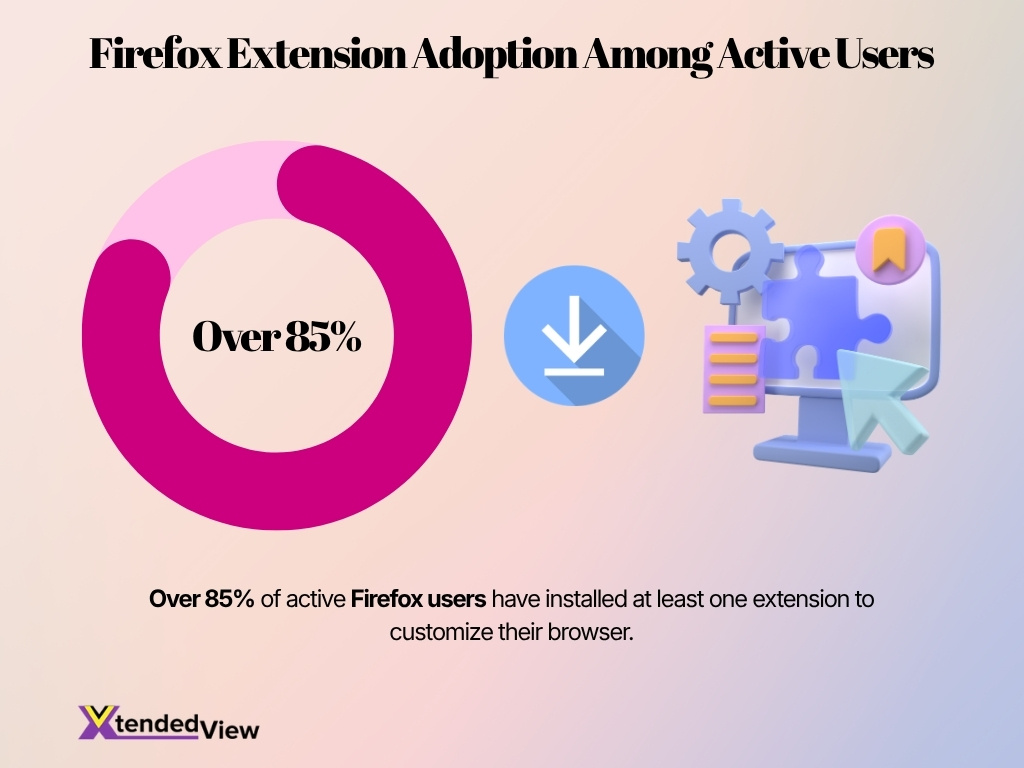
- Over 85% of active Firefox users have installed at least one extension to customize their browser.
- The official marketplace currently hosts more than 100,000 active extensions available for direct installation.
- Analytics show that users maintain an average of 5 installed extensions simultaneously on their daily profiles.
- Leading ad-blocking tools consistently record an audience of over 30 million daily active users.
- The platform successfully processes and delivers more than 100 million extension downloads every single year.
- Essential privacy and password management utilities represent roughly 20% of the top-ranking add-ons.
- The marketplace has served more than 2.5 billion total downloads since its initial global launch.
- The modern WebExtensions API ensures structural compatibility with approximately 70% of existing Chromium extensions.
Firefox User Retention Statistics
- Firefox’s desktop market share declined from 5.88% in May 2025 to 3.79% in May 2026.
- The browser currently maintains a 2.26% global market share across all platforms in 2026.
- It is estimated that 138 million active users continue to rely on Firefox globally today.
- The introduction of new browser choice screens recently helped Firefox gain 6 million new users.
- Firefox has experienced a 113% rise in users within the Apple ecosystem over the past year.
- The typical Firefox desktop client averages around 4.5 hours of active use per day.
- Users generally engage with the desktop browser for an average of 3.5 days per week.
- Over 20% of users actively utilize the Enhanced Tracking Protection feature for privacy.
Firefox Popularity Among Developers
- Firefox holds a global browser market share of around 3%, but its adoption among developers frequently exceeds 10%.
- Over 65,000 developers participated in recent industry surveys where Firefox ranks as the second most preferred browser.
- Mozilla’s official developer documentation network receives over 15 million monthly visits from engineers seeking reliable resources.
- The average Firefox power user spends approximately 4.5 hours daily browsing, reflecting high engagement from technical audiences.
- Major browser updates are deployed roughly every 30 days to quickly integrate experimental APIs and emerging web standards.
- More than 90% of major Linux distributions feature Firefox as their default pre-installed web browser for system administrators.
- The browser’s 100% open-source codebase attracts thousands of direct code contributions from independent software engineers annually.
- Nearly 80% of professional developers test cross-browser compatibility using the browser’s dedicated experimental features.
Firefox Browser Version Statistics
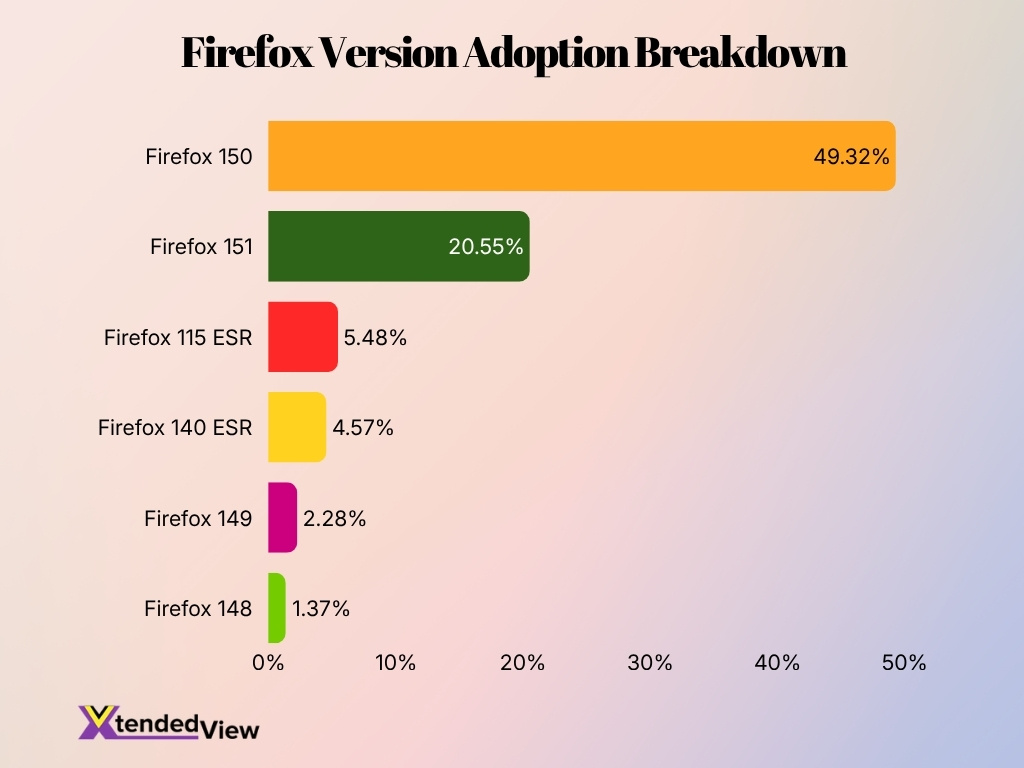
- Firefox 150 captures a leading 49.32% share among all active versions.
- Firefox 151 holds a strong 20.55% of the total browser usage.
- Firefox 115 ESR maintains a 5.48% share by supporting legacy operating systems.
- Firefox 140 ESR accounts for 4.57% of the enterprise installation distribution.
- Firefox 149 represents exactly 2.28% of the recent version adoption rate.
- Firefox 148 makes up a smaller 1.37% segment of the user base.
- Desktop Firefox retains a dedicated 6.4% share of the worldwide desktop market.
- Firefox‘s overall market share across all devices sits at 2.6% in 2026.
Firefox Distribution and Install Base
- Firefox has exceeded 100 million downloads on Google Play, demonstrating its continued mobile reach.
- The browser remains preinstalled on many Linux distributions, including Ubuntu and Fedora.
- Firefox’s estimated user base stood near 138 million active users worldwide in 2026.
- Mozilla’s desktop ecosystem still serves well over 100 million monthly active users, despite years of market-share declines.
- Firefox was downloaded more than 500 million times within its first few years after launch, establishing one of the largest browser communities in history.
- The browser is distributed in 90-plus languages, helping maintain global accessibility.
- Firefox ESR remains a preferred deployment option for governments, educational institutions and businesses requiring long-term support.
- Mozilla continues distributing Firefox through direct downloads, app stores and enterprise deployment channels.
- Firefox remains one of the few major browsers distributed under an open-source model, allowing community participation in development and security reviews.
Frequently Asked Questions (FAQs)
Firefox holds approximately 3.33% of the worldwide browser market as of June 2026, ranking as the fourth most-used browser globally.
Firefox has an estimated 138 million active users worldwide in 2026, although some datasets place its user base above 300 million depending on the measurement methodology.
Firefox reached its all-time peak browser market share of 31.82% in November 2009, before the rapid rise of Google Chrome.
Firefox accounts for just 0.64% of worldwide mobile browser sessions in 2026, highlighting its relatively small presence on smartphones.
The Firefox app has surpassed 100 million downloads on Google Play, making it one of the most downloaded privacy-focused browsers on Android.
Conclusion
Firefox no longer commands the market share it enjoyed during its peak years, but it remains a significant force in the browser industry. The browser continues to attract millions of users through its privacy protections, open-source approach and strong developer tools. Desktop usage remains particularly resilient in markets such as the United States and Europe, while enterprise and Linux communities continue to support long-term adoption. As AI features, privacy concerns and regulatory scrutiny reshape the browser landscape, Firefox’s independent position gives it a distinct role that few competitors can replicate.
