


Data loss continues to rank among the most expensive and disruptive risks facing organizations. Businesses lose critical information through cyberattacks, employee mistakes, system failures, cloud misconfigurations, and ransomware incidents. The impact extends beyond IT teams, affecting healthcare providers protecting patient records, financial institutions safeguarding transactions, and enterprises managing customer data. As organizations generate and store more information than ever before, understanding the latest data loss statistics can help leaders strengthen resilience and reduce operational risk. Explore the latest figures and trends shaping the data loss landscape.
Editor’s Choice
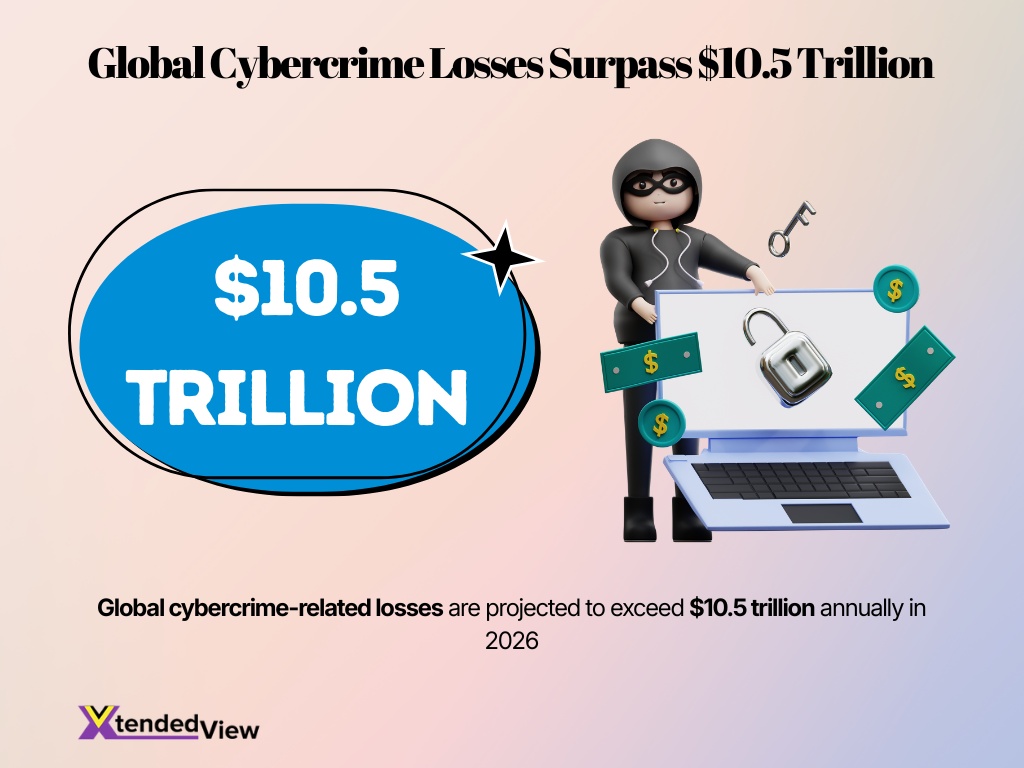
- Global cybercrime-related losses are projected to exceed $10.5 trillion annually in 2026, highlighting the growing financial consequences of data loss and cyber incidents.
- Ransomware appeared in 44% of all reported data breaches in 2025, up from 32% the previous year.
- Manufacturing accounted for 34.7% of cyber incidents, making it the most targeted industry for data-related attacks.
- The average healthcare data breach reached $11.2 million in 2025, among the highest costs across all industries.
- Businesses lose an average of $53,000 per hour during ransomware-related downtime.
- More than 52% of organizations hit by cyberattacks report losing over 5% of annual revenue from a single incident.
- Weekly cyberattacks in some high-risk regions exceeded 3,100 attacks per organization in early 2026, illustrating the scale of threats facing modern enterprises.
- Only 28% of organizations fully restore all affected data after ransomware incidents despite high confidence in recovery capabilities.
- Data theft now drives 56% of healthcare cyberattacks, reflecting the growing value of sensitive records on underground markets.
- Around 80% of security professionals express concern about sensitive information leaking through generative AI tools.
Recent Developments
- AI-powered cyberattacks have accelerated in 2026, enabling threat actors to automate reconnaissance and exploit vulnerabilities at machine speed.
- Security operations centers increasingly rely on AI-driven automation, with some organizations automating up to 90% of routine threat triage tasks.
- Supply-chain-related breaches doubled to 30% of incidents in 2025, increasing exposure to third-party data loss events.
- Shadow AI usage contributed to approximately 20% of breach incidents, creating new pathways for unauthorized data exposure.
- Organizations using AI-powered security tools reduced breach costs by approximately 34% compared with organizations lacking automation.
- More than 71% of security leaders expect collaboration platform attacks to negatively affect business operations in 2026.
- Around 53% of organizations reported increased phishing volumes during the past year.
- Nearly 48% of organizations observed growth in business email compromise attacks targeting employees and executives.
- Cybersecurity spending is forecast to reach $240 billion globally in 2026, reflecting increased investment in data protection and resilience.
- Approximately 60% of organizations remain unprepared with dedicated strategies for emerging AI-driven threats.
Data Loss Statistics Overview
- Data loss remains one of the leading consequences of cyberattacks, ransomware infections, insider threats, and cloud security failures.
- Ransomware-related breaches cost organizations an average of $5.08 million when extortion and data theft occur together.
- Financial institutions now face average breach costs of approximately $6.4 million per incident.
- Healthcare organizations reported more than 275 million breached records during 2024, setting a record for the sector.
- Data breaches involving exploited software vulnerabilities increased by 34% year over year.
- Credential theft contributes to 78% of financial-sector incidents, making account compromise a major source of data exposure.
- More than 3.26 million cybercrime complaints were filed over a recent five-year period, resulting in billions of dollars in losses.
- Data loss events increasingly involve both encryption and exfiltration, allowing attackers to demand ransom while threatening public disclosure.
- Organizations affected by cyber incidents frequently report customer disruption, financial losses, and prolonged operational outages.
- Modern data loss incidents often originate from cloud applications, third-party vendors, remote work environments, and AI-powered tools.
Data Loss Prevention Market Size Highlights
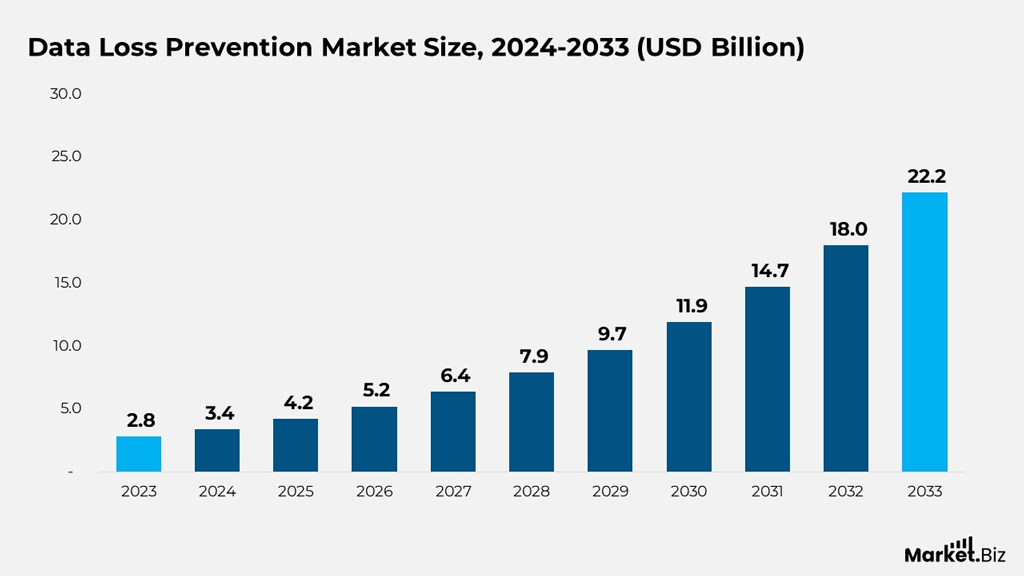
- The Data Loss Prevention market is projected to grow from $3.4 billion in 2024 to $22.2 billion by 2033.
- The market is expected to increase by over 6.5 times between 2024 and 2033.
- The industry is forecast to reach $5.2 billion by 2026, reflecting strong early growth.
- The market is projected to surpass $10 billion in 2030, reaching $11.9 billion.
- By 2031, the global market size is expected to expand to $14.7 billion.
- The market is forecast to reach $18.0 billion by 2032, highlighting accelerating demand.
- The 2028 market size is estimated at $7.9 billion, nearing the $8 billion milestone.
- The market is expected to grow from $9.7 billion in 2029 to $11.9 billion in 2030.
- The forecast indicates continuous year-over-year growth throughout the 2024 to 2033 period.
- The projected $22.2 billion market size in 2033 reflects the rising importance of data loss prevention solutions worldwide.
How Common Is Data Loss?
- Ransomware now affects 44% of all breaches, making data loss a widespread organizational challenge.
- Approximately 35% of cyberattacks involve ransomware activity that can result in data encryption, theft, or destruction.
- More than 88% of healthcare organizations experienced at least one cyberattack during the previous year.
- The FBI continues to rank phishing, extortion, and personal data breaches among the most frequently reported cybercrime categories.
- Third-party breaches expanded to 30% of incidents, demonstrating how common indirect data loss has become.
- Around 96% of cybersecurity professionals expect email security challenges to persist throughout 2026.
- Nearly 45% of organizations reported rising attacks targeting workplace collaboration tools that store sensitive business data.
- Healthcare providers recorded 1,230 reported data breaches in 2025, illustrating the scale of exposure across a single industry.
- Government-sector data breaches nearly tripled between 2020 and 2024, demonstrating sustained growth in public-sector data exposure.
- Cyberattacks continue to affect organizations of every size, industry, and geographic region, making data loss a universal business concern.
Data Loss by Company Size
- Small businesses account for nearly 43% of cyberattack victims, making them highly vulnerable to data loss.
- Around 60% of small companies shut down within six months of a major data loss incident.
- Mid-sized organizations experience an average breach cost of approximately $3.9 million per incident.
- Enterprises with over 5,000 employees face average data breach costs exceeding $5 million due to larger attack surfaces.
- Small businesses typically spend 50% less on cybersecurity, significantly increasing their exposure to data loss risks.
- About 70% of SMBs lack a formal incident response plan, which drastically slows recovery from data loss events.
- Large enterprises detect breaches much faster, with average identification times reduced by 74 days compared to smaller firms.
- Nearly 80% of small companies mistakenly believe they are unlikely targets, despite consistently rising attack rates.
- Data loss incidents in startups have increased by over 25% year over year, driven by rapid scaling and weak security controls.
- Companies with mature security frameworks reduce breach impact costs by up to 30% compared to less-prepared organizations.
Causes of Data Loss
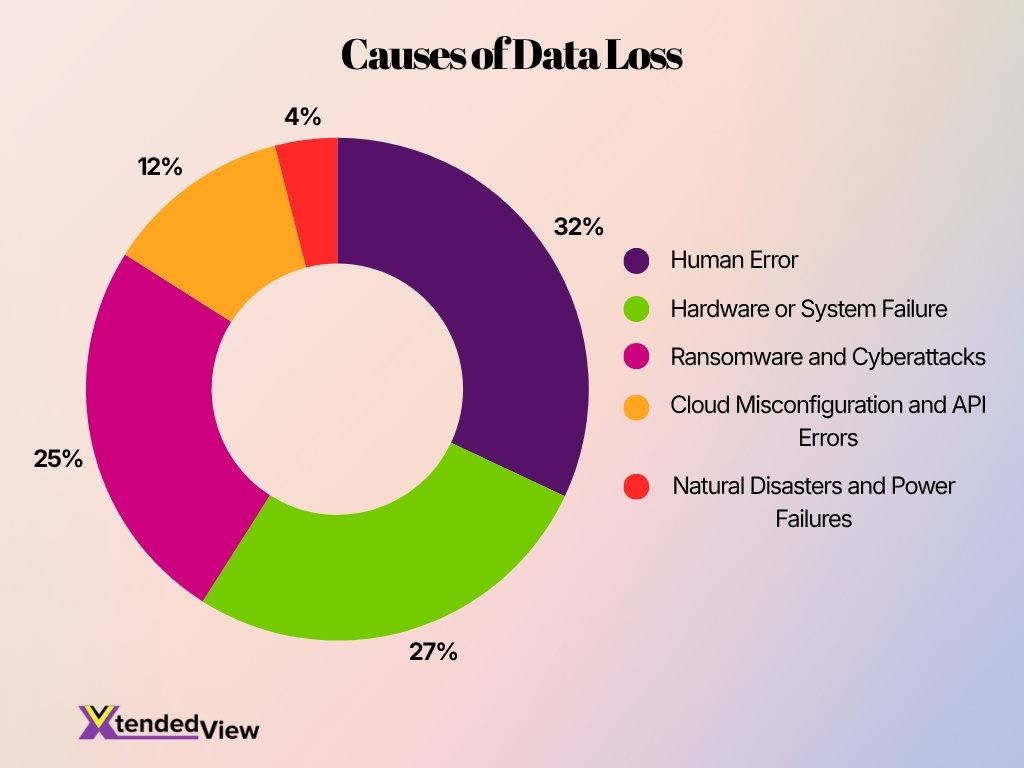
- Human error is the leading cause of data loss, accounting for 32% of all reported incidents.
- Hardware or system failures contribute to 27% of global data loss events, making infrastructure reliability a major concern.
- Ransomware and cyberattacks are responsible for 25% of enterprise data loss cases, highlighting growing cybersecurity risks.
- Cloud misconfigurations and API errors cause 12% of modern data loss incidents, emphasizing the need for secure cloud management.
- Natural disasters and power failures account for 4% of data loss cases, but their impact is increasing due to extreme weather events.
Human Error and Data Loss
- Human error accounts for approximately 82% of data breaches, making it the leading cause of data exposure across industries.
- Around 30% of data loss incidents stem from accidental deletion or misplacement of files by employees.
- Misconfigured databases and cloud storage remain a top issue, contributing to nearly 19% of breaches globally.
- Nearly 47% of employees admit to clicking on suspicious links or emails at least once during their work tenure.
- Poor password practices, including reuse and weak credentials, contribute to over 60% of compromised accounts.
- Approximately 20% of employees have sent sensitive data to the wrong recipient via email.
- Lack of cybersecurity training leads to 2.5x higher breach likelihood among organizations without awareness programs.
- Insider mistakes in healthcare environments account for nearly 25% of data exposure incidents.
- Organizations with regular employee training reduce human-error-related incidents by up to 70%.
- Remote work has increased human-related data risks, with 38% of employees using personal devices for business data access.
Cyberattacks and Data Loss
- Cyberattacks now occur every 39 seconds on average, exposing organizations to constant risk of data loss.
- The average cost of a data breach reached $4.45 million in 2025, marking a steady year-over-year rise.
- More than 2,200 cyberattacks occur daily, targeting enterprises, governments, and individuals alike.
- Malware-based attacks account for roughly 30% of all cyber incidents involving data compromise.
- Distributed denial-of-service attacks increased by 31% in 2025, often used as distractions during data exfiltration.
- Organizations with poor endpoint protection face 3x higher risk of data breaches.
- Nation-state attacks have increased significantly, targeting critical infrastructure and sensitive national data systems.
- More than 60% of organizations report experiencing at least one cyberattack annually.
- Attackers increasingly use zero-day vulnerabilities, which grew by over 50% year over year.
- Automated attack tools now enable even low-skilled attackers to launch large-scale data theft campaigns.
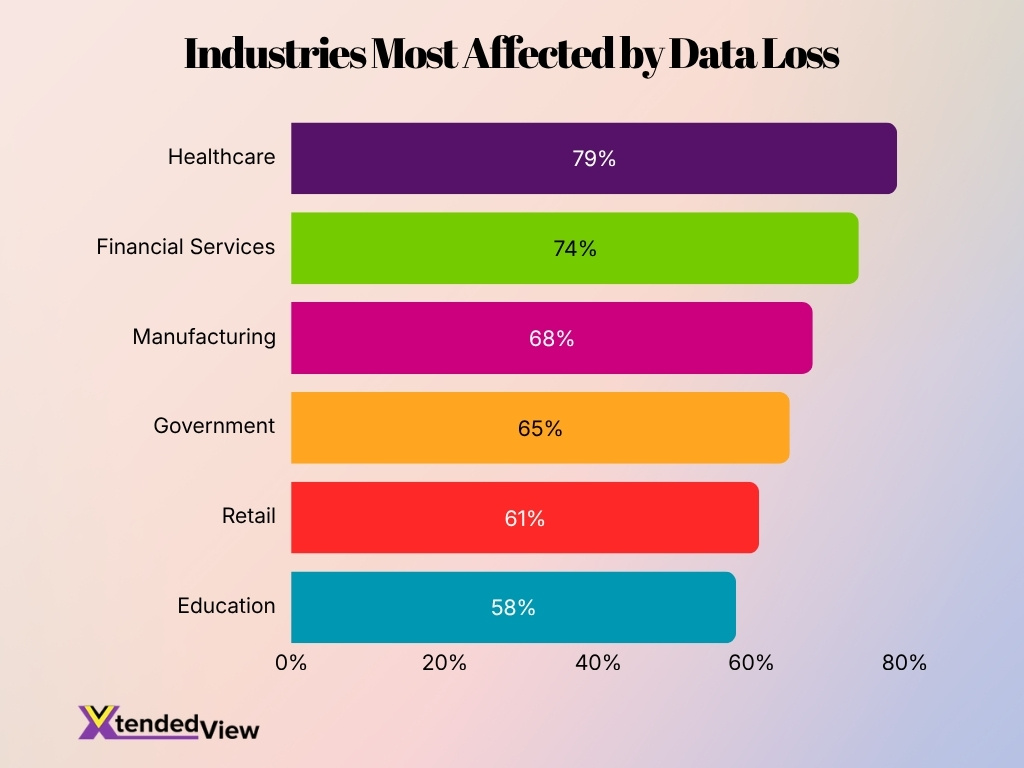
Industries Most Affected by Data Loss
- Healthcare is the most affected industry, with 79% of organizations experiencing data loss incidents.
- Financial Services follows closely, with 74% of organizations reporting data loss challenges.
- Manufacturing ranks third, as 68% of organizations have been impacted by data loss.
- Government organizations report a significant 65% data loss rate, highlighting ongoing cybersecurity risks.
- Retail sees 61% of organizations affected, reflecting increasing exposure to digital data threats.
- Education records the lowest among the listed sectors, yet 58% of organizations still experience data loss.
Ransomware and Data Loss
- Ransomware attacks increased by 13% in 2025, a jump equal to the previous five years combined.
- The average ransom payment reached approximately $1.5 million in 2025, reflecting higher stakes in data extortion.
- Only 65% of encrypted data is typically recovered after paying a ransom.
- Double extortion tactics now appear in over 70% of ransomware incidents, combining encryption with data leaks.
- Small businesses represent nearly 43% of ransomware targets, showing attackers’ focus on less-protected organizations.
- The average downtime from ransomware attacks ranges between 16 to 24 days.
- Around 94% of organizations report attempts to compromise backup systems during ransomware attacks.
- Healthcare ransomware incidents increased by over 50% year over year, putting patient data at risk.
- Nearly 80% of ransomware victims experienced repeat attacks, indicating persistent vulnerabilities.
- Law enforcement agencies advise against paying ransoms due to low recovery guarantees and increased repeat targeting.
Phishing-Related Data Loss
- Phishing accounts for approximately 36% of all data breaches, making it one of the most common attack vectors.
- Over 3.4 billion phishing emails are sent daily worldwide.
- Around 83% of organizations reported at least one phishing attack in the past year.
- Spear-phishing attacks targeting executives increased by 55% year over year.
- Nearly 22% of phishing emails are opened by recipients, highlighting ongoing susceptibility.
- Business email compromise scams caused losses exceeding $2.7 billion annually.
- Mobile phishing attacks grew by over 60%, driven by increased smartphone usage in remote work settings.
- Approximately 1 in 5 users fails phishing simulation tests, even in trained organizations.
- Phishing attacks increasingly use AI-generated content to mimic real communications and evade detection.
- Multi-factor authentication reduces phishing-related breaches by up to 99%, yet adoption remains inconsistent.
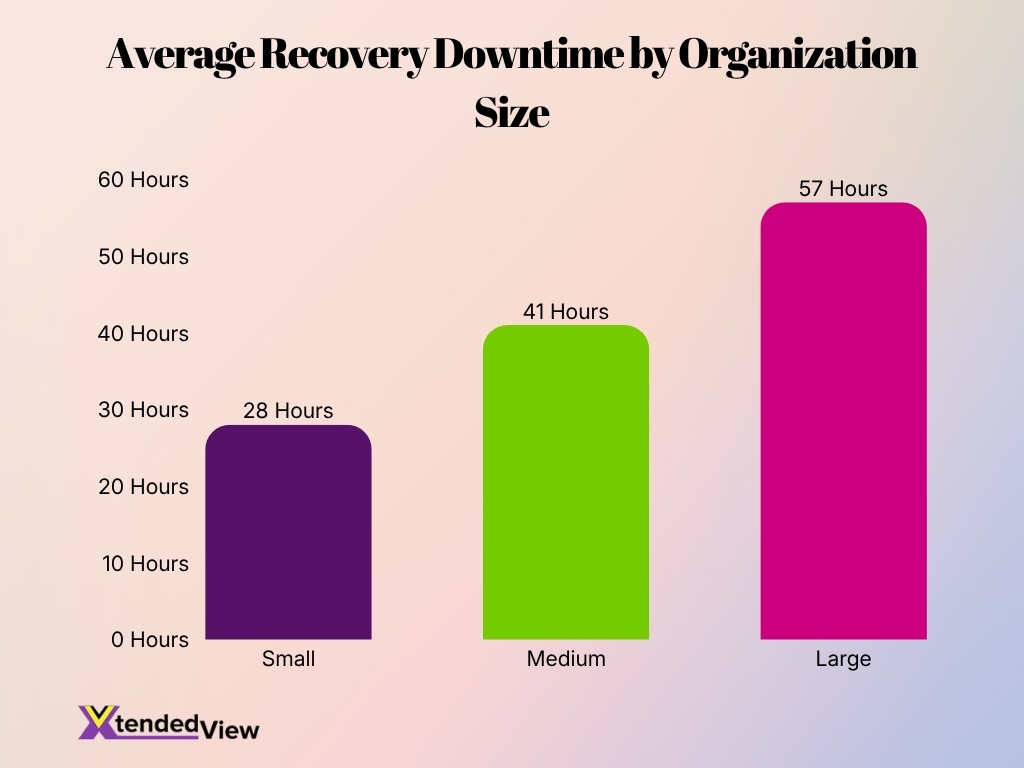
Average Downtime After Data Loss by Organization Size
- Large organizations experience the highest average downtime after data loss incidents, reaching 57 hours.
- Medium-sized organizations face an average recovery downtime of 41 hours, highlighting significant operational disruption.
- Small organizations recover the fastest, but still experience an average of 28 hours of downtime.
- The downtime gap between small and large organizations is 29 hours, showing that recovery becomes more complex as organizations grow.
- The data indicates that larger organizations generally require longer recovery times due to more complex IT infrastructure and operations.
Insider Threats and Data Loss
- Insider threats account for roughly 20% of all data breaches, including both malicious and accidental actions.
- The average cost of insider-related incidents exceeds $15 million annually per organization.
- Negligent employees contribute to nearly 56% of insider incidents, outpacing malicious insiders.
- Organizations take an average of 85 days to contain insider-related data breaches.
- Privileged account misuse plays a role in over 40% of insider attacks.
- Remote work has increased insider risk exposure by over 30% due to decentralized access points.
- Data exfiltration incidents often involve file-sharing tools, USB devices, and cloud storage services.
- More than 60% of organizations lack full visibility into insider data movement.
- Insider threats in financial services increased by over 25% year over year.
- Behavioral analytics tools can reduce insider threat risk by identifying anomalies in user activity patterns.
Cloud Data Loss Statistics
- Approximately 45% of data breaches now involve cloud-based assets, reflecting widespread cloud adoption.
- Misconfigured cloud storage caused the exposure of billions of records in recent years.
- Around 80% of companies experienced at least one cloud security incident in the past year.
- Nearly 27% of organizations cite lack of visibility as the biggest cloud security challenge.
- Multi-cloud environments increase complexity, raising the likelihood of configuration errors and data leaks.
- Approximately 61% of sensitive data stored in cloud environments remains unprotected.
- Cloud-related data breaches increased by over 35% year over year.
- Unauthorized access accounts for a large portion of cloud data loss incidents due to weak identity controls.
- Data stored in SaaS platforms is often not backed up adequately, increasing recovery challenges.
- Encryption gaps remain a major concern, with many organizations failing to encrypt sensitive cloud data at rest.
Remote Work and Data Loss
- Remote work environments increased data breach risks by over 25% compared to traditional office settings.
- Around 38% of employees use personal devices for work-related tasks, increasing exposure to data loss.
- Nearly 47% of remote workers admit to falling for phishing attempts at least once.
- Home networks lack enterprise-grade security, making them a frequent entry point for attackers.
- VPN usage increased by over 40%, yet misconfigurations still expose sensitive data.
- Collaboration tools store vast amounts of sensitive information, with 45% of organizations reporting increased attacks targeting them.
- Remote work led to a 300% rise in cybercrime complaints during the peak pandemic years, with continued elevated levels.
- Endpoint security gaps in remote environments contribute to higher data leakage risks.
- Employees working remotely are more likely to bypass security protocols for convenience, increasing risk exposure.
- Organizations investing in secure remote access solutions report reduced breach frequency and faster incident response times.
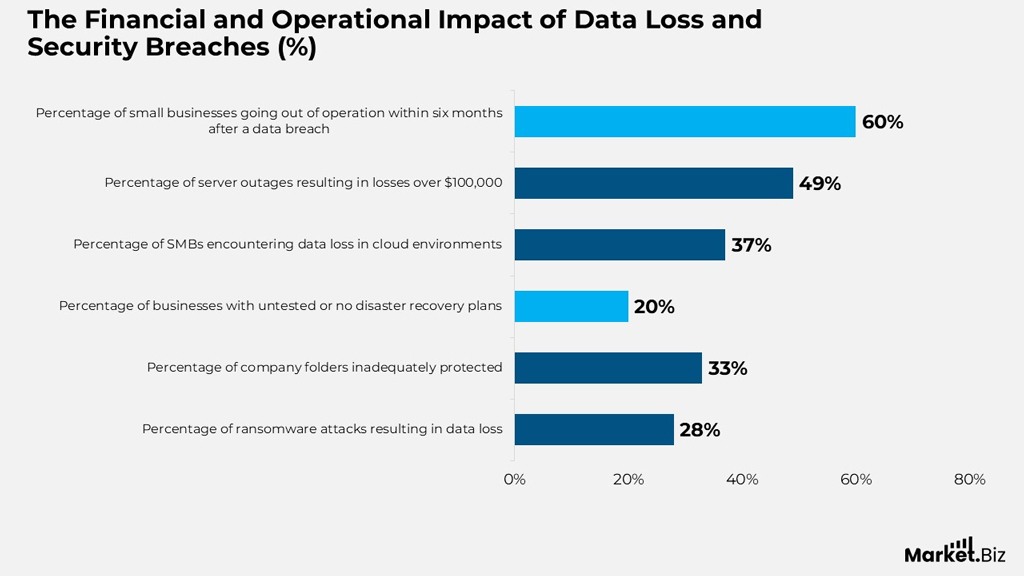
Financial and Operational Impact of Data Loss and Security Breaches
- 60% of small businesses go out of operation within six months after experiencing a data breach.
- 49% of server outages result in financial losses exceeding $100,000.
- 37% of SMBs experience data loss in cloud environments, highlighting cloud security risks.
- 33% of company folders remain inadequately protected, increasing the risk of data exposure.
- 28% of ransomware attacks lead directly to data loss for affected organizations.
- 20% of businesses have untested or no disaster recovery plans, reducing their ability to recover from incidents.
Backup and Recovery Statistics
- Approximately 94% of companies that suffer catastrophic data loss do not survive long-term without backups.
- Only 58% of organizations perform regular data backups across all systems.
- Around 72% of businesses rely on cloud-based backup solutions for critical data protection.
- Backup failures occur in nearly 23% of recovery attempts, highlighting gaps in backup strategies.
- Organizations with automated backup systems recover data 3x faster than those relying on manual processes.
- About 30% of companies have never tested their disaster recovery plans.
- Immutable backups are becoming standard, with adoption increasing by over 40% year over year.
- Nearly 50% of organizations store backup data in multiple locations to improve redundancy.
- Backup encryption is implemented by less than 60% of companies, leaving sensitive data exposed.
- Organizations that test backups regularly reduce recovery failures by up to 60%.
Data Loss Prevention Trends
- The global data loss prevention market is expected to reach $7 billion by 2026, driven by rising data security needs.
- Over 65% of organizations increased investment in data protection technologies in the past year.
- AI-driven security tools are now used by over 50% of enterprises to detect anomalies and prevent data loss.
- Zero-trust security models are being adopted by more than 60% of organizations to reduce unauthorized access.
- Endpoint data protection solutions saw adoption growth of over 35% year over year.
- Data classification tools help organizations reduce sensitive data exposure by up to 40%.
- Encryption adoption continues to grow, with over 70% of enterprises encrypting sensitive data at rest.
- Regulatory compliance initiatives drive significant investment in data protection, especially in healthcare and finance sectors.
- Organizations implementing DLP strategies report reduced breach frequency and faster incident response times.
- Cloud-native security tools are increasingly integrated with DLP systems to protect distributed data environments.
Frequently Asked Questions (FAQs)
The average global cost of a data breach is approximately $4.44 million to $4.88 million, depending on the reporting methodology used.
Ransomware and extortion-related incidents now appear in 44% of all reported data breaches, up from 32% in the previous year.
Global cybercrime costs are projected to reach approximately $10.5 trillion annually, making cybercrime one of the world’s largest economic threats.
Organizations take an average of 241 to 277 days to identify and contain a data breach, depending on the type and complexity of the incident.
Only 28% of organizations fully restore all affected data following a ransomware attack, despite high confidence in their recovery capabilities.
Conclusion
Data loss remains a persistent and costly challenge for organizations, driven by cyberattacks, human error, and expanding digital environments. The statistics show a clear pattern: businesses that invest in proactive security measures, employee training, and robust backup systems significantly reduce both the likelihood and impact of data loss incidents. As data volumes grow and threats evolve, organizations must prioritize resilience, adopt modern security frameworks, and continuously refine their strategies to protect critical information and maintain operational continuity.
